Feeds:
Posts
Comments

Archive for the ‘War’ Category

SOUNDTRACK: DANGER MOUSE AND SPARKLEHORSE present: Dark Night of the Soul (2010).

Seems like most things that Danger Mouse touches involve lawsuits.  I’m not entirely sure why this disc had such a hard time seeing the light of day.  But it is due for a proper release in July.  Although by now, surely everyone has obtained a copy of the music, so why would anyone give EMI any money for the disc (since they hid it away in the first place).

The name that is not listed above is David Lynch, who is an important contributor to the project.  He creates all the visuals (and the visuals in the book that was the original release format).  He also contributed vocals to two tracks on the CD.  (His vocals are weird and spacey, just like him…and if you remember his voice from Twin Peaks, just imagine Gordon singing (but with lots of effects).

The rest of the disc is jam packed with interesting singers: Wayne Coyne (from The Flaming Lips), Gruff Rhys (from Super Furry Animals), Jason Lytle (from Grandaddy) on my two favorite tracks, Julian Casablancas (from The Strokes), Black Francis, Iggy Pop, James Mercer (from The Shins), Nina Persson (from The Cardigans), Suzanne Vega, and Vic Chesnutt.

I’m not sure if Danger Mouse and Mark Linkous wrote the music already knowing who the singers were going to be, but musically the tracks work very well.  And yet, despite the different sounds by the different singers, the overall tone and mood of the disc is very consistent: processed and scratchy, melodies hidden deep under noises and effects.   Even the more “upbeat” songs (James Mercer, Nina Persson) are dark meanderings.

It took me a few listens before I really saw how good this album was.  On the surface, it’s a samey sounding disc.  But once you dig beneath, there’s some really great melodies, and it’s fascinating how well the songs stay unified yet reflect the individual singers.

EMI is going to have to pull out all the stops to make it a worthy purchase for those of us who have already found the disc.  Since The Lynch book was way overpriced for my purchase, (and they surely won’t include it with this CD), they need to include at least a few dozen Lynch photos (and more).  And with a list price of  $19 (NINETEEN!) and an Amazon price of $15, the disc should clean your house and improve your wireless connection too.

[READ: June 1, 2010] Bloom County Vol. 1

Boy, did I ever love Bloom County.  Back in high school I had more drawings of Opus and crew in my locker than anything else.  (I used to reproduce the cartoons by hand, I was never one of those “cut out of the paper” people.)  And so, there are tons of punch lines that I still remember twenty-five years later.

And yet, despite my fondness for the cartoon (and the fact that I owned (and read many times)) all of the collected books, I was amazed at how much of the early strips I had no memory of, at all.  True, some of the really early ones are here for the first time in collected form (according to an interview there are hundreds of comics in collected form for the first time in these volumes).   But those early 1980 comics…wha? (more…)

Read Full Post »

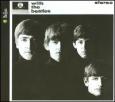
SOUNDTRACK: The Beatles-With the Beatles (1963).

Reading the liner notes to these discs gives me a greater appreciation for what the Beatles did.  They put out these first two records in the span of eight months and recorded both of the discs in a matter of like 26 hours each.  That’s pretty amazing.

I’m also starting to think that mono may be the way to go with these early discs.  I mean I’m a stereo guy, but I’m listening to these discs in the car, and it’s weird to have all the instruments on my side and all the vocals over by the passenger seat.

As for this disc itself, again, I was surprised by how many songs I didn’t know on it.  It’s also funny to hear so many cover songs (although it makes sense this early in their career).  Especially since, for the most part, their originals are quite a bit better.  It’s also funny how many of these covers I think of as Beatles songs.  Especially, “Money.”  This disc closer is like “Twist and Shout” in that it really rocks the house down at the close of the disc.  It’s not quite as intense as “Twist” but it’s close.

The only real dud on the disc is “Roll Over Beethoven” which is remarkably stiff for a song about rock and roll.

Whether it’s the production or the amount of time they spent in the studio, this disc sounds more accomplished than the first.  And I can really see  what all the excitement must have been about.  Four good-looking guys singing about love.  What could be better than that?

[READ: May 11, 2010] “Free Fruit for Young Widows”

After reading the Holocaust-based story in McSweeney’s (post coming soon), and the Holocaust section of 2666, the last thing I was ready for was another Holocaust story.  And what a doozy this one is.

Sometimes, when reading a Holocaust based story, I worry that my emotions about the Holocaust will overshadow the quality of the story.  In other words, is it a cheap ploy, an easy setting to get a reaction from the reader.  This story definitely is not. (more…)

Read Full Post »

I’ve waited to post this, my wrap up of ideas abut 2666, until I saw what others had to say about it.  Which is kind of a cop out but also kind of understandable.  This book is a giant mess of information, and I’m not entirely sure how to process it all.  So I’ve been looking for help.  And I’ve gotten some, but it’s all kinds of contradictory.  Most people seemed to hate the book.  A few people enjoyed it somewhat, and one or two people really felt moved by it.

I think I fall squarely in that middle camp.  As anyone who has been reading here knows, I became obsessed with Bolaño’s books, and read all of his short fiction (saving Savage Detectives for a read in a few weeks).  And yet I’m not exactly sure WHY I felt compelled to read these stories.  (I’m very glad I did…there will be more on Bolaño himself in a day or two).

I’ve decided to look back over what I wrote to get a sense of what I thought of the book (I knew these posts would come in handy). (more…)

Read Full Post »

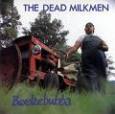
SOUNDTRACK: THE DEAD MILKMEN-Beelzebubba (1988).

Why the hell do you think they call it a burrow owl anyway?

Beelzebubba is pretty close to the pinnacle of The Dead Milkmen’s career.  Of the 17 songs, there’s only one or two that fall flat.  But there are so many that rise to greatness.  The wholly un-PC James Brown-mocking song “RC’s Mom” which is pretty much all about beating your wife is in hugely questionable taste, but the funk is quite funky.

The brilliant “Stuart” is the culmination of all of the white trash mocking/spoken word nonsense songs.  And then there’s the outstanding single “Punk Rock Girl.”  It is simultaneously catchy as all hell and yet whiny and kind of off-key.  It’s really magnificent and was suitably lauded.

The strange thing to me is that the actual released “single” was for “Smokin’ Banana Peels” (an EP with that title was released with an absurd number of dance remixes).

“Sri Lanka Sex Hotel” is an angry rant that references The Killer Inside Me and talks about having sex with everything.  It’s pretty bizarre, but is musically fantastic.

True, the back half of the disc suffers somewhat (“Howard Beware” and “Ringo Buys a Rifle” are just okay), but the disc ends with the sublimely vulgar “Life is Shit” a gospel-tinged song that matches Monty Python’s “Always Look on the Bright Side of Life” for faux uplift.

Future DM discs would feature some good songs, but the band pretty much peaked with this one.  I’m so bored I’m drinking bleach.

[READ: Week of April 5, 2010]  2666 [pg 637-701]

What a difference a week makes.  The style and writing of Part 5 is markedly different from Part 4.  It is far more laid back and focuses primarily on one individual, Hans Reiter (who we know from Part One is Archimboldi).

The Part opens with information about his parents: his father had one leg (he lost the other in WW1) and his mother was blind in one eye.

Hans’ father, after losing his leg, was in the hospital, expounding on the greatness of smoking.  (He even gives a smoke to a man wrapped head to toe in bandages–and smoke pours out from all the cracks).  When he left the hospital, he walked home–for three weeks.  And when he arrived back home he sought the one-eyed girl in the village and asked for her hand in marriage.

Hans Reiter was born in 1920. He proved to be unreasonably tall: (At 3 he was taller than all the 5 year olds etc).  And he was most interested in the seabed.  There is much information from his childhood of his love of the sea (when his mother bathed him, he would slip under the water until rescued).  At six he stole a book, Animals and Plants of the European Coastal Region, which he more or less memorized and was the only book he read.  And then he began diving, investigating the shoreline.

His father evidently hates everyone and thinks all nations are full of swine (except the Prussians).

Hans also enjoyed walking and he would often walk to the surrounding towns: The Village of Red Men (where they sold peat), The Village of Blue Women , The Town of the Fat (animals and butcher shops); or in the other direction, he went to Egg Village or Pig Village.  Or even further along was the Town of Chattering Girls (who went to parties and dances).

He almost drowned twice.  The first time he was initially mistaken for seaweed as he was floating in the water.  (After he had discovered laminaria digitata).  He also began to draw seaweed in his book.  (The seaweed connection is pretty thorough as he was described as looking like seaweed when he was born).  The tourist who saved him was named Vogel.  He believed in the general goodness of humanity, but he felt that he was a bad person for initially mistaking Hans for seaweed.  Vogel also talked endlessly about the virtues of masturbation (citing Kant as an example). (more…)

Read Full Post »

SOUNDTRACK: THE DEAD MILKMEN-Bucky Fellini (1987).

C’mon, I’m the walrus, damnit.

Bucky Fellini ups the ante from Eat Your Paisley in that the band sounds really accomplished at this point.  The songs are still silly, but they’re not quite as jokey (except for the hit single, but more on that in a second). There’s even lap steel guitar, violin and backing vocals!

Dave Blood’s bass is really something of a force at this point, propelling songs with interesting riffs.  Rodney  “Cosloy” Anonymous sounds great.  And, Joe Jack Talcum gets quite a number of songs to sing: the mellow (and very twisted) “Watching Scotty Die” and the more rocking “Rocketship.”

“Big Time Operator” is a supremely silly song based on a very simple blues riff.  It features the first (utterly wretched) DM guitar solo (look out Stevie Ray Vaughn!) and even showcases a “humming” solo from Rodney (just me!).  While  on the other end of the spectrum, “Surfin’ Cow” is mostly instrumental which is catchy and full of surprising intricacy.

“Instant Club Hit (You’ll Dance to Anything)” was indeed a club hit.  It’s snarky and silly (complete with a drum machine) and it name-checks some of the most prominent college radio bands of the time.  You could easily have built a good collection of British college rock from their list of who you’ll dance to. (instead of giving your money to a decent American artist like himself).

The Dead Milkmen keep getting better and better.  They’re still funny, but they’ve proven themselves to be far more than a novelty act.  Blow it out your hairdoo cause you work at Hardees.

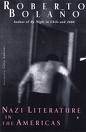
[READ: April 1, 2010] Nazi Literature in America

I’ve read a lot of books that are, shall I say, weird.  But this one is definitely the most unusual when I think:  what would possess a person to write it?

Nazi Literature in the Americas is written as an encyclopedia of Nazis writers who have lived in North, Central and South America.  Except that all of the writers are fake.  So, essentially Bolaño has invented 30 characters, and created rich, fully detailed biographies about all of them.

Some of them are very short (a couple of pages) while a few are over ten pages long, with details of books/poems published, critical reception and even untimely deaths.   The biographies are grouped according to categories (The Mendiluce Clan; Itinerant Heroes or the Fragility of Mirrors, Forerunners and Figures of the Anti-Enlightenment; Poètes Maudis; Wandering Women of Letters; Two Germans at the End of the earth; Speculative and Science Fiction; Magicians, Mercenaries and Miserable Creatures; The Many Masks of Max Mirebalais; North American Poets; The Aryan Brotherhood; The Fabulous Schiaffino Boys; The Infamous Ramírez Hoffman).

And although they are not chronological, Luz Mendiluce (whose bio I read separately) features prominently as a constant “reference point” and creator of one of the prominent Nazi publishing houses.  She had created a publishing empire where Nazi works were spread throughout the continent, and it seems that everyone had a title published by her company Fourth Reich.

What’s so weird about the book is that the people are fake, everything about them is fake (although they are placed firmly within history) and yet their stories are still compelling.  Bolaño has employed a mildly sympathetic tone to these people.  Not sympathizing with the Nazi aspect, but sympathizing with them as humans.

There were one or two who I didn’t really enjoy.  And I admit that I enjoyed the North Americans more; since I know more about North than South America, the facts surrounding these authors resonated more.  But I thoroughly enjoyed most of these biographies.

Of course, just when you think the book is all the same, the final biography changes everything.  In this one, Bolaño himself appears as the writer of the book.  He writes about Ramírez Hoffman in the first person, mentioning himself by name and getting personally involved in the story of this final, skywriting author.  It completely subverts the work before it and leaves you more confused than when you started (although a lot happier for having read it).

The final section of the book is an Epilogue foe Monsters.  It provides a brief biography for all of the secondary characters mentioned in the main body.  It also details the publishing houses and magazines, and finally lists  a bibliography of all books published.  The amount of detail that Bolaño created here is staggering.

But aside from all the Nazism, the book can be quite funny.  Like the conclusion for Luz Mendiluce Thompson, which ends with her driving a car into a gas station.  The final line: “The explosion was considerable.”

It’s tempting to say that this “novel” is not representative of Bolaño’s writing, but I think that’s false.  From what I’ve read so far, Bolaño doesn’t conform to any style in his books: each book is designed differently.  But like this one, they all deal with South America, with violence, with politics and are filled with humor.  So, yes, I guess this is pretty representative.

Oh, and the translation by Chris Andrews is, once again, fantastic.

For ease of searching I include: Bolano

Read Full Post »

SOUNDTRACK: KATHLEEN EDWARDS: Back to Me (2005).

This is Kathleen Edwards’ middle disc.  It continues in the vein of her first, although I think her voice sounds smokier and better.  The opening two tracks are stellar, catchy, snarky/funny and just fantastic.

She has a few mellower songs on this disc (and I’m not a big fan of mellow country folky music).  But as with some of my other favorite singers, her passion and her lyrics make even a slower song interesting.

“Summerlong” is another song that seems like it was a hit long ago.  It just sounds so comfortable and catchy that I feel like I’ve known it forever.   BUt even better is the slide guitar fueled “What Are You Waiting For?”

Strange as it sounds, I think I like her first album overall better than this one; however, there are more songs on Back to Me that I like more than those on Failer.  Whatever the case, Edwards is a great songwriter with a wonderful voice.  And I certainly look forward to more from her in the future.

[READ: April 3, 2010] Echo

I have been reading Echo since Issue 1.  But my subscription lapsed, and I wound up missing an issue.  So I put off reading it until I managed to get the back issue.  Which I finally did.  Phew!

And now I was lucky enough to read a huge chunk up through issue 20.  And I have to say tit is absolutely preferable to read Terry Moore in large chunks rather than one issue at a time.  (Of course, I’ll still be subscribing and reading as I go, because missing that issue killed me!).

Several new developments have occurred since Issue 11 or so.  The most important one is that it is clear that Annie and Julie’s DNA are merging.  Julie is able to hear more and more of Annie’s thoughts.  But also, because Annie has melded with this alloy (and the alloy is, for lack of a better scientific way to explain it…magic), Julie has gained healing powers (in addition to crazily explosive powers). (more…)

Read Full Post »

SOUNDTRACK: BLUE ÖYSTER CULT-compilations and live releases (1978-2010).

For a band that had basically two hits (“Don’t Fear the Reaper” and “Burnin’ for You”) and maybe a half a dozen other songs that people might have heard of, BOC has an astonishing number of “greatest hits” collections.

Starting in 1987 we got Career of Evil: The Metal Years (1987), Don’t Fear the Reaper (1989), On Flame with Rock n’ Roll (1990), Cult Classic (which is actually the band re-recording their old tracks (!)) (1994), and the two cd collection Workshop of the Telescopes (1995).  There’s even Singles Collection, (2005) which is a collection of their European singles & Bsides.

This doesn’t include any of the “budget price” collections: E.T.I. Revisited, Tattoo Vampire, Super Hits, Then and Now, The Essential, Are You Ready To Rock?, Shooting Shark, Best of, and the 2010 release: Playlist: The Very Best of).

The lesson is that you evidently won’t lose money making a BOC collection.

I don’t know that any of these collections are any better than the others.

The 2 CD one is for completists, but for the most part you’re going to get the same basic tracks on all of them.

And, although none of them have “Monsters” for the average person looking for some BOC, any disc is a good one.

Regardless of the number of hits they had, BOC was tremendous live.  And, as a result, there have also been a ton of live records released.  Initially the band (like Rush) released a live album after every three studio albums. On Your Feet or On Your Knees (1975) Some Enchanted Evening (1978) and Extraterrestrial Live (1982) were the “real releases.”

Then, in 1994 we got Live 1976 as both CD and DVD (which spares us nothing, including Eric Bloom’s lengthy harangue about the unfairness of…the speed limit).  It’s the most raw and unpolished on live sets.  2002 saw the release of A Long Day’s Night, a recording of a 2002 concert (also on DVD) which had Eric Bloom, Buck Dharma an Allan Lanier reunited.

They also have a number of might-be real live releases (fans debate the legitimacy of many of these).  Picking a concert disc is tough if only because it depends on the era you like.  ETLive is regarded as the best “real” live disc, although the reissued double disc set of Some Enchanted Evening is hard to pass up.  Likewise, the 2002 recording is a good overview of their career, and includes some of their more recent work.

If you consider live albums best of’s (which many people do) I think it’s far to say that BOC has more best of’s than original discs.  Fascinating.  Many BOC fans believe that if they buy all the best of discs, it will convince Columbia to finally reissue the rest of the original discs (and there are a number of worthy contenders!) in deluxe packages.  I don’t know if it will work, but I applaud the effort.

[READ: October 2009-February 2010] State By State

This is a big book. And, since it’s a collection essays, it’s not really the kind of big book that you read straight through.  It’s a perfect dip in book.  And that’s why it took me so long to get through.

I would love to spend a huge amount of time devoting a post to each essay in the book.  But, well, there’s 51 (including D.C.) and quite a few of them I read so long ago I couldn’t say anything meaningful about.  But I will summarize or at least give a sentence about each essay, because they’re all so different.

I’ll also say that I read the Introduction and Preface last (which may have been a mistake, but whatever).  The Preface reveals that what I took to be a flaw in the book was actually intentional.  But let me back up and set up the book better.

The catalyst for the book is the WPA American Guide Series and sort of Steinbeck’s Travels with Charley.  The WPA Guides were written in the 1930s as part of the Works Progress Administration.  48 guide books were written, one for each state.  Some famous writers wrote the books, but they were ultimately edited (and many say watered down) by a committee.  I haven’t read any of them, but am quite interested in them (and am looking to get the New Jersey one).  Each guide was multiple hundreds of pages (the New Jersey one is over 800).

State By State is written in the spirit of that series, except the whole book is 500 pages (which is about 10 pages per state, give or take).  And, once again, famous writers were asked to contribute (no committee edited this book, though).  I’ve included the entire list of authors at the end of the post, for quick access.

So I started the book with New Jersey, of course.  I didn’t realize who Anthony Bourdain was until I looked him up in the contributor’s list (I’m sure he is thrilled to hear that).  And his contribution was simultaneously exciting and disappointing,.  Exciting because he and I had quite similar upbringings: he grew up in North Jersey (although in the wealitheir county next to mine) and had similar (although, again, more wealthy) experiences. The disappointing thing for me was that Bourdain fled the state  for New York City (and, as I now know, untold wealth and fame (except by me))  I felt that his fleeing the state, while something many people aspire to, is not really representative of the residents of the state as a whole.

And that dissatisfaction is what I thought of as the flaw of the book (until I read the Preface).  In the Preface, Matt Weiland explains that they asked all different authors to write about states.  They asked some natives, they asked some moved-ins, they asked some temporary residents and they asked a couple of people to go to a state for the first time.  In reality, this decision makes for a very diverse and highly entertaining reading.  In my idealized world, I feel like it’s disingenuous to have people who just stop in to give their impression of an area.  But hey, that’s not the kind of book they wanted to compile, and I did enjoy what they gave us, so idealism be damned.

For most of the book, whenever I read an essay by someone who wasn’t a native or a resident of a state, I assumed that there weren’t any famous writers from that state.  I’ve no idea if that played into anything or not.  From what I gather, they had a list of authors, and a list of states (I was delighted to read that three people wanted to write about New Jersey-if the other two writers ever decided to put 1,000 words  to paper, I’d love to read them (hey editors, how about State by State Bonus Features online, including any extra essays that people may have wanted to write).

From New Jersey, I proceeded alphabetically.  And, I have to say that I’m a little glad I did.  I say this because the first few states in the book come across as rather negative and kind of unpleasant.  Alabama (written by George Packer) comes across as downtrodden, like a place you’d really have to love to live there.  Even Alaska, which ended up being a very cool story, felt like a veil of oppression resided over the state (or at  least the part of the state that Paul Greenberg wrote bout.)  But what I liked about this essay and the book in general was that the authors often focused on unexpected or little known aspects of each state.  So the Alaska essay focused on Native fisherman and the salmon industry.  Obviously it doesn’t do justice to the rest of that enormous state,  but that’s not what the book is about.

The book is meant to be a personal account of the author’s experiences in the state. (more…)

Read Full Post »

SOUNDTRACK: BLUE ÖYSTER CULT-Agents of Fortune (1976).

After the release of their first official live album On Your Feet or On Your Knees, it’s unsurprising that the band would put a concert photo on the back cover of this disc (On Your Feet…was their first Top 40 disc).
What is surprising is the piano fueled second track “True Confessions” which is as delicate as the title suggests  (Eric Bloom even hits a falsetto note AND there’s a saxophone solo(!)).  Combine this with  “Debbie Denise” a tender (!) song about lost love (!) and you have quite a tender an un-heavy metal album.

Of course, the disc opens with “This Ain’t the Summer of Love” which is certainly a strong heavy track.  But that’s mostly it.  There’s a lot more piano/keyboard on “E.T.I. (Extra Terrestrial Intelligence)” although the guitars definitely come to the fore during the wailing solos.  And then, frequent contributor Patti Smith gets a vocal inclusion “The Revenge of Vera Gemini” (her voice works quite well with the spooky psychedelia of the band).  “Sinful Love” is an almost disco-ey dance track (the falsetto backing vocals are weird, to say the least!).

The later songs on the disc sound like 70s rock.  There’s rather little heavy metal involved at all.  In fact, “Tenderloin” comes close to sounding like Kansas.  That’s not necessarily a bad thing, it’s just kind of a shock coming from these heavy metal pioneers.

Oh, and I almost forgot, it also contains the biggest BOC song in the universe, “(Don’t Fear) The Reaper.”  [When my friend Lar saw a BOC Greatest Hits disc he asked if it was just this song 12 times).  Of course, you probably know the song, but if you haven’t heard in a long time, it sounds even better than you remember.  I have to assume that that track alone absolved the band of all the mellow tracks on this disc.

The bonus tracks on the remastered edition include a truly bizarro version of “Fire of Unknown Origin” and a demo of “Reaper.”

[READ: February 22, 2010] Crogan’s March

I enjoyed the first book in this series so much that I couldn’t wait for number two.  And how lucky for me that it was already available!

The premise of this series is that the Crogan family (who live in contemporary America) are a fairly normal family: happily married, two young kids who squabble a lot, etc.  This family aspect of the story bookends the main body of action (their father tells them a story about one of their ancestors to prove a point or make an argument).

In this case, a fight between the boys is summed up by their dad: “Some people believe that everyone should be given the freedom to make their own choice and others that everyone should be held to the same moral standards.”  So, let’s hear the story of Peter Crogan, member of the French Foreign Legion circa 1912.

When I was a kid, the foreign legion was this sort of mythical entity.  The phrase, “run away and join the foreign legion” seemed to be bandied about a lot as a means of escape.  I don’t know why it was, or why it seems to no longer be, but suffice it to say that I haven’t thought about the foreign legion in twenty years.

So, this story about a legionnaire was a welcome surprise from the get go. (more…)

Read Full Post »

SOUNDTRACK: CUPPA JOE-Busy Work EP (1993).
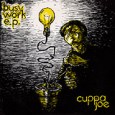
This EP was one of the first releases on the Dromedary label.  It contains 3 songs.  Whenever I think of cuppa joe, I think of them being a somewhat lightweight band; charming and fun, but lightweight.

And I think most of this is due to the lead singer’s voice.  It’s quite delicate and veers towards, but never quite reaches whiny territory.  Comparisons to They Might Be Giants are not unfounded.

But the thing is that, musically, the band plays a wonderfully diverse selection of styles, some of which emphasize the singer’s delicate voice, and others which play in a wonderful contrast to it.

Take their brilliant first song on the EP, “Bottlerocket”.  The chords are masterful and intriguing as the song opens, moving towards a fast, propulsive verse and an insanely catchy chorus (with backing vocal harmonies!).  It’s a tremendous song, and cuppa joe could easily rest on their laurels after creating such a masterpiece.

The other two songs on the EP are more of that delicate style that I think of as distinctly cuppa joe.  “French Toast” is a very quiet little ditty about, yes french toast.  It’s catchy and seems to be an ideal b-side, sounding almost like a demo.

The third track, “Surface Area” starts out almost as an homage to R.E.M. “I am Superman” with the jangly guitars and all, but the jazzy bassline totally changes the tone of the song.  Overall it splits the difference of the other two, being a fully realized song that gets a surprise lift from loud and raucous guitars about halfway through.

It’s a really great representation of this cool indie band.  And it will be available for download in a few days right here.

[READ: February 17, 2010] 2 Poems

These are the first two Bolaño pieces that I found while looking around online.  These poems are very likely published elsewhere.  However, since I’m not a big reader of poetry, I don’t think I’ll be reading his poetry collections in full.

Both poems were translated by Laura Healy. While it’s impossible to know if she did a good job of translation (since I can’t do it myself), all I can comment on is the quality of the English words. And in both cases, she chooses very exhilarating words to convey these images. (more…)

Read Full Post »

Howard Zinn [1922- 2010]

The death of J.D. Salinger totally overshdowed the death of Howard Zinn (which I just found out about today while reading a tribute to Salinger).

Howard Zinn was one of my favorite political writers, and I would have to say the one who has influenced me the most.  I first learned about him through You Can’t Be Neutral on a Moving Train, and have read most of his works since then.

His People’s History of the United States is an amazing read, and will make you rethink what you learned (or didn’t) about American history.    Zinn always spoke up for the underdog, and he tried to get people to see history (and current events) through the eyes of the average worker, not just the people who make and write history.

He was also a very outspoken anti-war activist.  He even spoke publicly against “popular” wars; railing against the military industrial complex and the inevitable injustices that war creates.

And in all of his writings and speeches, he was never stodgy or dull.

I’m not sure who will pick up the torch that he has now dropped.  But he will surely be missed.

Read Full Post »

« Newer Posts - Older Posts »