Feeds:
Posts
Comments

Archive for the ‘Violence’ Category

SOUNDTRACK: HELLBENDER-Footprint of the American Chicken (1996).

This disc opens with a funny quote from a movie I have never heard of called Highway 61 (thank you, internet, back in 1996, know one would have known where “Lady, you can’t cheat at bingo. If you could, I would, but you can’t. I won because I was lucky – lucky to wind up in a town full of losers!” came from).

This disc fees like a progression from Hellbender’s debut–mostly in production values, but also in song textures and vocals.  The band is still angry, still aggressive, playing choppy punk (although with most songs clocking in at over 3 minutes it’s a different kind of punk).   Al Burian, the lead vocalist is still angry–and still hard to understand, he sounds very much like California punk circa the mid 80s.

But the thing that impressed me is that on some songs there’s another singer (I assume Wells Tower, or maybe it’s Burian’s “other singing voice?”).  He is more melodic, less screamy and he really lets you hear the lyrics.

So the first song (shouty singer) has a great title “Unsolicited Anthem for the Portand Hipsters,” but I have no idea what the words are except the chorus of “It’s raining again.”  But “Tourist Trap” has some great lyrics (as well as more melodic sound):

“The quiet Americans who are my friends/ laugh at the loud ones on the other end/ of the room/ and watch them spend and spend/ acting rude/ being defeated by foreign food/ being defeated by waiters who pretend/ not to speak/ a word of their language.  We draw the line between us and them as best we can

It goes on like this with some more great imagery and then it ends with a cool detuned chord.  This song is a major highlight on the album.

The disc continues with a mix of faster, harder songs and slightly more melodic ones.  As on their debut, they throw in some nice drums breaks and great dynamics to keep the songs from becoming predictable.

“New Wounds” is more melodic, almost, but not quite, poppy with a cool guitar riff and interesting lyrics “Stay up all night counting cancers as if the counting could cut them out”

“Until It Peaks” sounds like yet another singer (man I wish I had liner notes…or could find anything about this album online anywhere…come on people!).  “Half Driven” has some interesting backing vocals and some cool “ticking” sounds instead of drums. “Pissant’s Retrospective” has a new sound for the disc: scratchy guitars.  That “third” vocalist is also singing again.   And at 5 minutes long, it stands out for having a slow instrumental section for the last minute or so.

I also really like the lyrics to “Dumb Waiter.”  It opens with a false intro (I love that) and more cool lyrics:  “cross the street which separates losers from jocks…this is just like high school again.”  I also like the chorus “I’m not lighting candles. I curse their darkness.”

The final song “I Thermostat” features three vocals at once–a harmony vocal and another voice singing a third line.  Very cool.  This album shows some major progress for the band.  They released one more disc before breaking up.

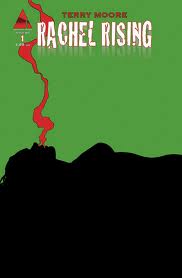
[READ: January 31, 2012] Rachel Rising

My subscription to Terry Moore’s Echo ran out with issue 27 and I never got around to renewing it.  So I totally missed the ending.  I ordered the last issues from him but, gah, 28 is sold out, so I need to wait to finish it.  But when I was on the site I saw that he has a totally new series cooking called Rachel Rising.

There were very dark tones in Moore’s most famous work, Strangers in Paradise.  And Echo is all about nuclear annihilation, so he’s clearly no stranger to darkness.  But wow, Rachel Rising a dark, dark work.

The opening sequence (a stunning words-free nine pages) shows a woman rising from the earth.  She’s beautiful and not at all zombie-like, although the whites of her eyes are dark and she has clearly been strangled.  She stumbles home (actually she gets a ride from a concerned guy whom she totally ignores) and tries to figure out what the hell happened.

We see a brief flashback of her visiting her friend Jet at the garage where she works.  But when she goes to visit Jet’s house, her housemates (or whatever they are) not only say that Jet isn’t home, they say that Jet is out playing a gig like she does every Thursday.  But Rachel thinks it’s Tuesday.  So what the hell happened to her?

In Issue two she visits her Aunt Johnny who works at a mortuary. Terry doesn’t hold back with some of these scenes.  Johnny thinks that Rachel is a figment–she gets visited by lots of ghosts in her line of work.  Rachel convinces her to go look at the site where she was buried.

In the meantime, we get another storyline.  A young girl in pigtails is visited by a woman in white.  I have to say that this is a confusing development.  The woman in white looks a lot like Rachel and I can’t decide if I’m suffering from “a lot of Terry’s characters look alike” syndrome or if this is supposed to be Rachel in another incarnation, or what.  Anyway, we don’t see what the woman tells the girl, but several pages later when that storyline resumes, we see that the woman has had a powerful impact on the girl’s behavior.

In Issue 3, Rachel visits Jet at her gig.  While they are all in the bar, Rachel and the woman who looks like Rachel but is in white both interact with a couple who are getting married soon.  Both women say things that are not very nice about the institution of marriage.  Although Rachel’s seems unintentional, the woman in white’s seems deliberate (and we notice smoke coming off of her finger).

A little later when there is an accident, Rachel is involved and the woman in white is a witness.

In Issue #4 the storylines collide somewhat.  Rachel is at the hospital after her fatal accident.  But she soon wakes up–to the astonishment of Johnny and Jet who saw that she was dead.  Doctors said she was pronounced dead at the scene.  But Rachel has a pulse, a very faint one, and Jet and Johnny are simply at a loss.
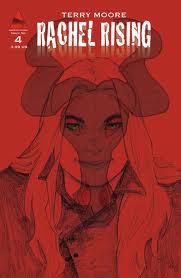
Meanwhile, the young girl (who we find out is named Zoe) is finishing up the act that she started in Issue #2 (which includes stealing her sister’s car even though she is waaay too young to drive).  She drives out to the field where Rachel was buried.  There she runs into the man who was supposed to get married.  As we’re starting to get into the plot here, I’m not going to say anymore, except that violence abounds and it’s fairly clear now that Zoe and the woman in white know each other from some kind of past experience.

Issue #4 came out in December.  I have no idea how long the series is expected to run, but it seems like it’s got a long way to go.

This is a very dark series…Terry seems to be exorcising some demons here.  But man is it good.  Terry’s art is (as always) beautiful.  And (as always) he creates real women and gives them good roles.  And as with everything that Terry has done, I cannot wait to see where he goes with this series.

My only word to Terry is that for as long as I have been reading him, he uses “it’s” instead of “its” I hope someone will correct him someday.

Read Full Post »

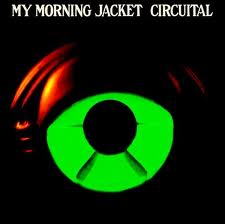
SOUNDTRACK: MY MORNING JACKET-Circuital (2011).

I have really gotten into My Morning Jacket with their last couple of albums.  I know that they are quite different from their earlier releases, so I’m not quite as surprised by the diversity that’s on them.  With each release, they keep exploring new territory, although it’s all held together nicely by Jim James’ (or Yim Yames’) amazing voice.

The first half of the disc is much more wild than the second half, with longer songs, and more unusual textures.  The second half slows things down and feels almost, but not quite, acoustic.

“Victory Dance” is a slinky song and a cool intro to the disc.  It’s quickly followed by “Circuital,” a 7 minute long epic with two distinct parts.  The first is a kind of quiet echoey introduction, but when the guitars roar in at around 2:30, it turns into a big anthemy song…very ctahcy

“The Day is Coming” opens like a 70s AM radio song, with lots of da da das.  It’s a mellow song, the kind of song the MMJ flesh out with wonderful vocals so it never gets dull.

“Wonderful” is a simply beautiful song.  A gentle ballad about feeling wonderful.  I just found out that this song was originally intended for The Muppet Movie.  It would have been perfect.  Of course, the band are on the soundtrack doing a cover, so I guess that’s kinda close.

“Outta My System” is another catchy little number, also reminiscent of 70s AM radio, although it’s all about doing bad things as a youth and getting them out of your system.  Musically it would also work very well for the Muppets, but I suspect lyrically it might be a bit outré for the movie (granted I haven’t actually seen it so I can’t say for sure).

All the recent MMJ albums have one crazy track and on this one it’s “Holdin’ on to Black Metal.”  So the title is pretty unexpected but it’s nowhere near as unexpected as the content of the song.  It is complete with a children’s chorus and what sounds like horns, although I suspect they are keyboards.  It’s full of blasts of sound and woah woah ohs.  It’s crazy.  I love it.  Much like I love the crazy song, “Highly Suspicious”  from the previous album.  And I just found out that this song is more or less a cover (although with different words of “E-Saew Tam Punha Huajai” by Kwan Jai & Kwan Jit Sriprajan from the album Siamese Soul: Thai Spectacular 1960s-80s Volume 2.  More on that tomorrow.

  After that bizarre track, the album really settles down into an easy groove.  “First Light is a pretty traditional, simple song.  It also has lots of horns.  “You Wanna Freak Out” is also unexpected for the title, as it’s a pretty straightforward rocker. “Slow Slow Tune” doesn not belie its title.  It has a kind of 70s Pink Floyd feel and continues the more mellow second half od the disc.  The disc ends with “Movin’ Away” a slow, piano ballad.

  Although the album has a very comfortable, familiar feel, MMJ have little tricks (great soaring guitars and, again, James’ voice) to make it rise above the ordinary.  It’s great disc that warrants multiple listens.

[READ: January 28, 2012] How I Became a Nun

I didn’t love Aira’s Ghosts because it was too ephemeral for me (as befitting a book called Ghosts, right?).  How I Became a Nun is the exact opposite: a terrifically visceral story that is straightforward and easy to follow, except for perhaps two things.

The first thing is something that’s mentioned on the back of the book (so I’m not threatening a spoiler here).  The main character is named César.  Whenever someone talks to him, they address him as César or boy or him.  And yet, the whole book is written from the point of view of young César, and César describes himself as a girl.  In the fourth paragraph, the narrator states, “I was a devoted daughter.”  And yet, shortly thereafter, another character says about the narrator, “Is it my fault if the boy didn’t like it?”

This goes on throughout the story–not a lot–but enough to keep it in your mind.

The second thing is the ending.  Which I don’t want to spoil.

So what is this wonderfully titled story about?  Well, six-year old César begins, “My story, the story of ‘how I became a nun’ began very early in my life.”  The opening chapter tells the story of César’s first experience with ice-cream.

It is a wonderful chapter, with César’s father promising the wondrous delights of ice cream and taking them both out for a cone.  César’s father enjoys his cone very much, but César, although instantly in love with the pink strawberry color is instantly disgusted by the taste. He even retches a little bit. (more…)

Read Full Post »

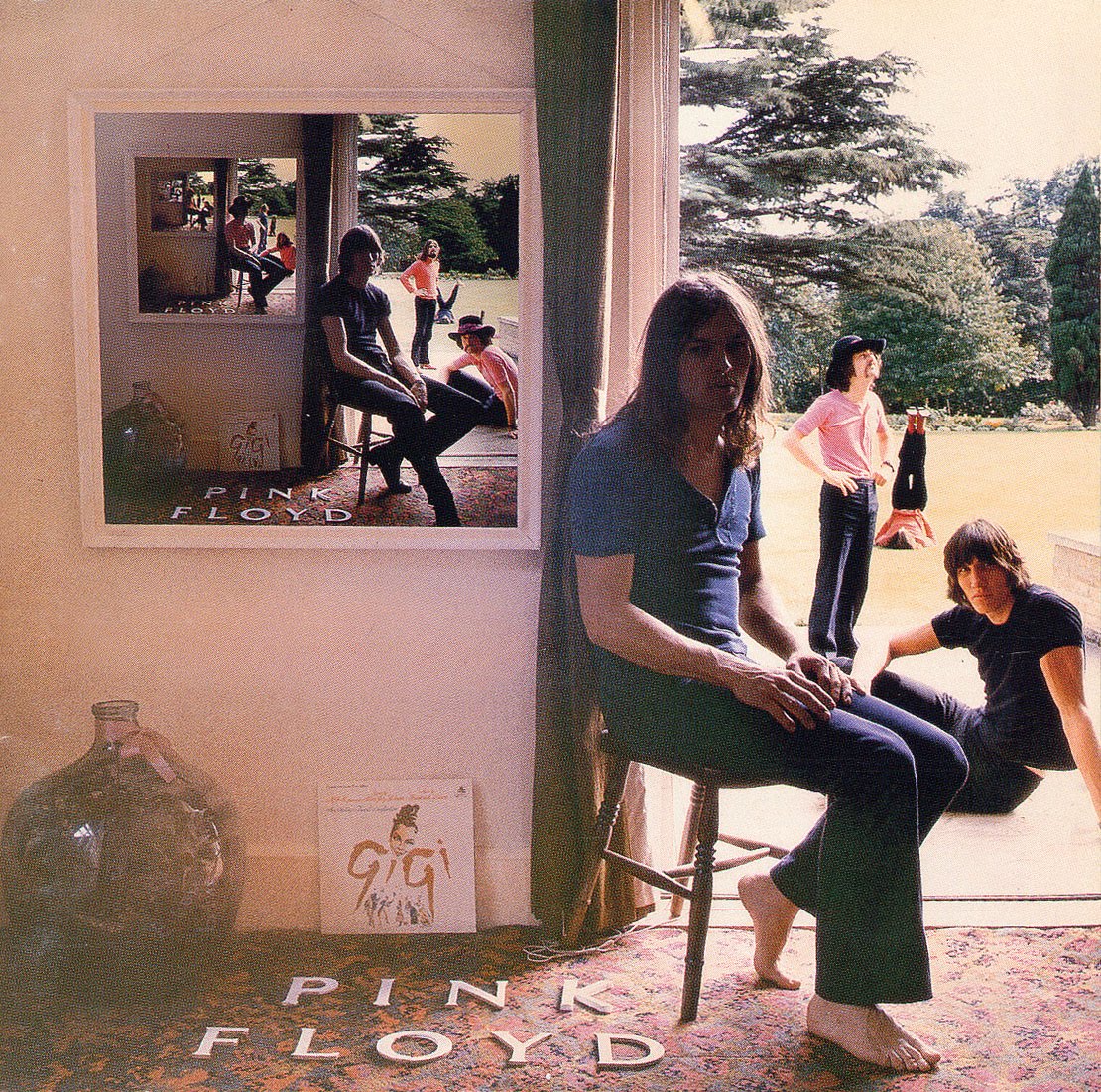
SOUNDTRACK: PINK FLOYD-“Several Species of Small Furry Animals Gathered Together in a Cave and Grooving with a Pict” (1969).

I‘ve mentioned this song a few times here so I figured I’d talk about it itself.  This bizarre song comes from PinkFloyd’s bizarre album Ummagumma.  Back in high school we ranked albums by a very specific content rating and this one received the highest: SDI-seriously drug induced.

Disc One is a live album but disc two contains compositions by each of the band members.  They each received about thirteen minutes of time to do what they wanted.  And they really seemed to go to town.

Roger Waters created this track, and it is very, very weird.  I’ve always loved it, probably because it is so audacious.  Wikipedia gives us this:

The track consists of several minutes of noises resembling rodents and birds simulated by Waters’ voice and other techniques, such as tapping the microphone played at different speeds, followed by Waters providing a few stanzas of spoken word in an exaggerated Scottish burr.

The Picts were the indigenous people of what is now Scotland who merged with the Scots.

You can hear it in all its glory (and then marvel that the guy who made it later when on to make some of the most famous music ever released) in this video.

I also love that someone liked this bizarre thing enough to put it on a Pink Floyd compilation (Works) as well.

And the wind cried Mary.

[READ: January 25, 2012] “Terminator: Attack of the Drone”

I found a link to this story somewhere, I can’t recall where, now.  It was mentioned with excited breath that Moshin Hamid, who I don’t know, had written this exclusive short story for The Guardian.  Hamid has been shortlisted for the Man Booker prize and has written two novels: The Reluctant Fundamentalist (2007) and Moth Smoke (2000).

This story was not quite what I expected from the brief biography I’d read.  Because of the ominous title, I assumed it might have something to do with Iraq (I realize that this came out before the recent downing of the U.S. drone in Iraq, but it still seemed plausible).  Rather, what we get is a bit of sci-fi about smart machine that are on a murderous rampage.

The story is not really as sci-fi as all that, except that what I wrote is true. But it’s more about two boys as they try to deal with this new world of death, machines and heroism.

It begins with the note that “the machines are huntin’ tonight.”  (There’s an interesting dialect in the story, especially from someone who lives in Lahore, New York and London.  We get lines like “Sky’s light enough so’s we’d maybe see the machine but all’s quiet and it ain’t about,” which I register as Southern American.  And yet the characters are named Omar and Yousuf.  I can’t decide if that’s an attempt to show a future world of total integration or just a total disconnect.)

There aren’t many humans left–his Pa is dead, his ma got her leg blown off by a landmine.   But at least his sisters are still alive–that’s more than most people have.

The machines come thundering through, crushing everything in their sight.  They also fly–you can’t see them, but you can hear them.  No one has ever killed a machine. (more…)

Read Full Post »

SOUNDTRACK: MITCHMATIC-“D-Bags” (2011).

On the show New Girl, my favorite joke in the pilot (which was brought back in a recent episode) is the douchebag jar.  Every time someone in the house (well, Schmitt, really) says something a douchebaggy, money goes in the jar.

This song has a crazily simple bass line–which sounds like “Another Bites the Dust,” but isn’t.  It’s unclear from the beginning exactly what the song is about.  But once the chorus comes in, the song is just perfect: “D-Baaaaaags: Hey I’m calling from a handicapped stall, dude; D-Baaaaaags:oh I’m a jerkwad? I’m a jerkwad?  D-baaags, Don’t tell me how to carb load, I know how to carb load.”

There are three rappers in the song.  Mitchmatic takes the first verses.  Mikey Maybe gets the best line: “say irregardless while trying to seem smart.”  The Joe has a really fast delivery that reminds me of Paul Barman (in lyrics and style).

I’m really enjoying Mitchmatics’s beats.  You can download Two Week Off for free.  Or you can watch the video (which seems to have the studio version of the song over a live video)

The video goes on a little long after the song, but the song is pretty great.  It might actually do to give it a proper video.


[READ: January 24, 2012] “Shore Ting”

When I signed up to receive Narrative magazine, I also signed up for their emails.  And the January 9 email contained this story (as well as many other things).  This story was chosen as their Story of the Week.

I really wanted to not like this story.  There were so many things about it that seemed like they should be red flags to me: a tourist getting entwined with a local urchin; the tourist “doing good” for the urchin when none of the locals want anything to do with him; a wife who is very Christian; and the implication of forthcoming violence throughout the story.  Not to mention a piece of foreshadowing that I assumed gave away the ending (although it doesn’t).

The story opens with an interesting scene.  The tourist, Dale, gives the urchin (named Sammy, although this was obviously a name for tourists) a cigarette and then realizes that he has personally started this boy on a lifetime of smoking. And he feels bad about that.

Sammy hits up Dale for work.  Dale doesn’t have work, but since he is looking into renting a sailboat, he more or less hires Sammy to help him on the boat.  Dale asks Sammy if he can do various things and whatever he asks, Sammy replies, “Shore Ting.” (more…)

Read Full Post »

SOUNDTRACK: tUnE-yArDs-Tiny Desk Concert #179 (December 1, 2011).

tUnE-yArDs perform three songs in this Tiny Desk concert.  Merrill Garbus doesn’t chat a lot between songs, but she’s clearly having a good time (witness them all jumping at the end of “You, Yes You” and how much she smiles at the end of the set.  This is a wonderful opportunity to see and hear her live sampling technique in a small setting (with close up cameras!).

Her voice sounds great–she pulls off all of those voices that she conjures on the record.  And her ability to sample herself and make it work is wonderful to witness (I never imagined that some of those “sirens” and “keyboards” are actually her voice).

The live band is also really hot.  The bassist really hold everything together and the horns sound great–duplicating the sound of the record with just enough flare to keep it original.

And to think she’s making all of  that guitar noise with a ukulele!  It’s pretty groovy.

Watch it here.

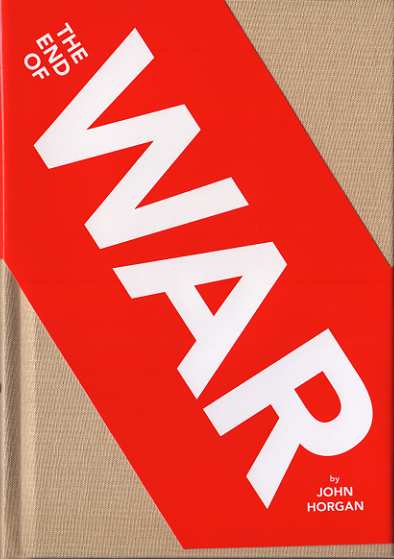
[READ: January 21, 2012] The End of War

This is a non-fiction book in which Horgan believes that in the not too distant future (his lifetime I believe), we will see the end of war.  Not the end of violence, nor anger nor aggression–he’s not crazy–but military campaigns against another country could be ended if we reversed our fatalism about war’s inevitability.

Horgan is a writer for Scientific American and in this book he uses the scientific method to show that ending war is utterly possible.  Now, although Horgan is himself kind of a pacifist (he’s not entirely one, this interview explains), his family is not–his father and grandfather are both veterans and his son is looking to enlist in the army.  Nevertheless, Horgan feels that war is not a viable way to solve problems and that the cost of human life is never worth it.

His research shows him that war should be thought of as a solvable, scientific problem—like curing cancer.  The difference is that cancer is outside of our control, while war is not.  But like cancer, war can infect any society–there is no “reason” for it, but it is like a virus–it infects all cultures, even peaceful ones.  If one culture is aggressive the peaceful neighbors need to prepare for war or move away.

Horgan anticipates skepticism, indeed, many of the sources he quotes are skeptics, and he deals with all of their arguments accordingly.  He looks at those who say that war is genetically part of humanity (as many people believe) or that the best way to prepare for peace is to prepare for war (as just about everyone seems to believe).  He looks at those who say that scarcity causes war (not necessarily true), to those who say that as long as there are guns there will be war (he disagrees).  He has a reasonable, believable argument for all of these doubts.  He even shows that the whole “alpha male, XXY chromosome” argument has been disproven and while men are more prone to violence, they are not more prone to wage war.

He also shows scientific evidence that war has not been around as long as people (or even apes) have existed.  Indeed, the first evidence for “war” (as opposed to violence) is 10,000 years ago (not much in humanity’s timeline).

He culls data from previous wars to show that the causes of wars can never be narrowed down to one thing.  And yet, rather than seeing this as a negative–that so many things cause war, he sees it as a positive–that causes of war are not monolithic and impervious to breakdown.

I was skeptical of this book when I started reading it.  I was willing to accept the various scientific answers that he showed (that war is not innate, for example) but my skepticism came because of what I guess you call the military industrial complex–that our military budget is huge and is not going to go down any time soon.  Just see how much protest is garnered by the miniscule amount that President Obama wants to reduce it.  [Everybody knows this truth but it’s worth seeing in print–our military budget is more than almost every other country combined.  China, who spends the next largest amount on their military has a budget that is 1/6 the size of ours.  That is shocking and depressing and a horrific waste of money].

But his point is that like with so many other things that we have outlawed or abolished over the years: slavery, apartheid, monarchy (as opposed to democracy), acceptance of torture; if we have enough consensus we can also abolish war.  He gives examples that it’s actually not as hard as we might think.  Germany and Japan become pacifist virtually overnight (it was forced on them, but they have taken to it with no problem) and even better, Sweden and Switzerland are pacifist voluntarily.

He also points out that war is already on the wane–although the United States was in two wars very recently, the warlike nature of the world is much less than it was even as recently as the first half of the 20th century.  The number of casualties from war has dropped dramatically compared to World War I.  We simply need to find ways to solve crises that do not involve killing people.

All of the chapters were interesting in this book (the book is more or less set up to deal with an issue per chapter).  Some of the chapters were a little long but at 186 pages (plus a bunch of citation pages) this book is short overall.  I appreciate all of his scientific rigor and his ability to show the arguments and then knock them down.

For me, the most interesting and satisfying chapter was the one that found that preparing for war, despite claims that it is necessary, actually does not keep a people safe. That the allocation of resources towards war removes resources from things that actually make people’s lives  better: art, culture, medicine, health.  Preparing for war doesn’t keep us safe, it actually harms us.

Similarly, he shows that competition for resources is not necessarily a cause for war.  To the contrary they have found that in some cultures scarcity brings out altruism.

In short, he says that the only thing that prevents us from abolishing wars is our fatalism that war is inevitable.  The more fatalistic we are about war the more we accept hawkish ideas which perpetuates more war. Once we stop believing that and we try to work towards the end, he believes that we war can end very quickly.

Horgan doesn’t really calm my fears about the military industrial complex–but who knows with enough popular opinion, maybe voters can change things.  It’s a wonderful thought.  And here’s hoping that this post can spread the good word.

And here’s an interview with Horgan that addresses a lot of these questions.

Read Full Post »

SOUNDTRACK: WILD FLAG-Live at the Black Cat, October 20, 2011 (2011).

It’s interesting to compare this show by Wild Flag with their SXSW show.  This set is longer, but they retain the same raw energy and intensity.  It also sounds as though the tour has been rough on Carrie’s voice, which sounds a bit strained and hoarse (even when she talks!).

They play most of their debut album, but they also throw in a couple of new songs and even a few covers.  Perhaps the most fascinating part is the 15 minute (!) version of “Racehorse.”  There’s a lengthy noodling section as well as a cool part where Carrie goes a little crazy asking about money.

Janet Weiss is absolutely amazing here too.  And the keyboards, definitely complement everything well, but they are always the most notable flubs, and there’s the same one as in the SXSW show (not as bad, but noticeable).

Without a doubt the most interesting thing is the hearing that Mary Timony gives guitar lessons in Washington DC.  She lives there and evidently earns extra cash by doing guitar lessons.  Wow.  How cool would that be?

Check out the show here.

[READ: January 15, 2012] The Influencing Machine

Brooke Gladstone is one of two reporters who works on NPR’s On the MediaOn the Media is an awesome show which dissects things that happen in the world and examines the way the media portrays the events.  They work pretty hard to see who is reporting bias, who is exposing bias and how things are getting out to the average media consumer.  It’s worth anyone’s time to read (it doesn’t take very long).  And it’s also fun and enjoyable.  As anyone who has heard the ending of On the Media: “and edited [dramatic pause] by Brooke” knows, there’s always a smirking grin attached to the program.

When I heard that this book came out I was pretty excited to read it.  And then I promptly forgot all about it.  Lucky for me, my wife can take a hint, and she got it for me for Christmas.

The first surprise of the book is that it is written as a graphic novel–illustrations by Josh Neufeld (who has drawn for Harvey Pekar’s American Splendor).  The funny thing about the illustrations is that I have no idea what Brooke Gladstone looks like (which I rather prefer about my NPR announcers), but I really like the cartoony style of her avatar (which reminds me of Elaine from Seinfeld and which inspired me to draw a kind of similar version on my drawing site.

On to the book.

This book works as a primer for understanding media ownership, media consolidation and media power.  The opening few chapters are going to be nothing new for anyone who has read Chomsky or Vidal on the media.  But since most people haven’t, it’s a wonderful way into some of these thorny issues of who tells us what and why. (more…)

Read Full Post »

SOUNDTRACK: ADELE-Tiny Desk Concert #112 (February 17, 2011).

Adele is one of the few pop superstars who I not only like but who I like quite a lot.  21 is a really great album.  And what this Tiny Desk Concert proves is that, whatever she is marketed as, she is not just a pop singer.

Adele sings three songs here (and she has a cold or something).  She does the biggie, “Someone Like You” which sounds even more naked and unprotected in this version, because the piano is mixed quite low.  Next is “Chasing Pavements,” a song I knew from when it was first released two years ago.  It’s got a straightforward adult alternative vibe and sounds great here.

The final track is “Rolling in the Deep” which is one of my favorite songs lately, even if I don’t quite understand what the lyrics mean.  But this is where you know that Adele’s voice is amazing.  She belts this song out like she’s in a massive concert hall, not a tiny office.  And she sounds incredible.  It’s a wonderful version of the song.

The funniest thing about this Tiny Desk Concert is hearing Adele talk.  I don’t know a thing about her.  And I had no idea that her speaking voice was so heavily accented. She sounds like some crazy teen from a British sitcom.  Especially when she cackles.  To hear her prattling on about something and then shift in a second to that amazing singing voice is a moment of mystery to behold.

Check it out here.

[READ: January 13, 2012] “A Brief Encounter with the Enemy”

Saïd Sayrafiezadeh has written some very cool stories (and some cool pieces for Five Dials).  But I have to admit I was a little concerned when I saw that this was going to be a military story.

Lately I’ve been reading outside of my comfort zone quite a bit.  And this is another one.  I just don’t like military stories.  I’m not a war guy, I don’t really like guns, and in my limited experience, military stories are about little more than degradation, death and violence, glorious violence.

But as I said, I’ve enjoyed Sayrafiezadeh’s varied stories quite a lot, so I wondered what his take on the issue would be.  And I was pleasantly surprised by the story.  Even though, really, the story (the bulk of it anyway) is kind of a downer.  (more…)

Read Full Post »

SOUNDTRACK: BELLE & SEBASTIAN-Write About Love (2010).

I’ve enjoyed Belle and Sebastian’s music since their debut album all those years ago.  For some reason I didn’t get into this album as much as previous releases.  In part it’s because the band has morphed quite a lot from what they used to do.  It’s true that I have really enjoyed their more rocking songs on their more recent albums, and this one is full of them.  It’s also true that a band needs to evolve, but somehow this album just never really gripped me.  I think it’s because the album takes so long to start.  The fade in is like 20 seconds!  But I’ve listened again with renewed interest recently and I’m changing my mind a bit about it.  There are plenty of great songs on this disc. 

“I Didn’t See It Coming” is a classic B&S song (after that awful delay).  It’s a wonderful duet with Sarah Martin (this is how to do a duet, guys–the ending is fantastic!).  “Come on Sister” is one of the great faster B&S songs.  The “gotta have a little FAITH” line is great and then the unexpected shift into the third part of the sing is just stunning.  I also love “Calculating Bimbo” first because who would every have thought there’d be a song with that title but also because Murdoch sings it so wonderfully.  I generally don’t like slow music, but there’s something about slow B&S song that I find myself leaning in instead of tuning out.

“I Want the World to Stop” is another wonderful “rocker.”  It’s a fast paced little ditty with great backing vocals (and it always makes me go “two, three, four” before the chorus kicks in–always the sign of a great song).

“Little Lou, Ugly Jack, Prophet John” slows things down really far.  Possibly too far for me. It’s a duet and it reminds me just a little too much of a Beautiful South duet (not a particular song, just their style).  And I have to say that The Beautiful South would have done it better.  After looking at the liner notes I realized that Norah Jones is the duettist here.  I like that Jones has been providing her services across a wide spectrum of music (Foo Fighters, OutKast etc) but I really just don’t have anything good to say about her.  The melody is nice though.  I also didn’t realize that the sing came out on Norah’s disc before the B&S disc.

The album quickly redeems itself with “Write About Love,” a great keyboard fueled rocker (with backing vocals from Carey Mulligan who I don’t know, but who nails the song “I haaate my job”).  “I’m Not Living in the Real World” has lots more keyboards and oooh vocals (it reminds me of a Who songs from Sell Out) and it’s sung by Stevie. 

From the there, the disc kind of slows down.  “The Ghost of Rockschool” is the least memorable song on the disc for me (although the horn section is nice).  “Read the Blessed Pages” is so quiet (even for B&S) that it kind of gets lost on the disc.  (The instrumental break is pretty though).  “I Can See Your Future” opens with a catchy horn blast that kind of wakes you from the slumber of the previous song.  “Sunday’s Pretty Icons” opens with a cool guitar riff, but it’s not all that memorable either.   While these last few songs are fine, they’re not as strong as the beginning of the album.  They kind of meld together. 

So I guess what I’m saying is that the first half of the disc is great and the second half is okay.  The  good songs are worth it though.  I’ll stop being so hard on the disc.

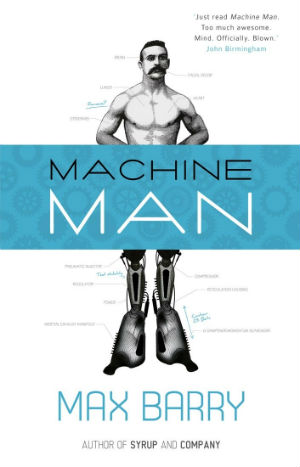
[READ: January 5, 2012] Machine Man

Don’t worry if you’re suffering from Barry blog overload, this post is about Barry’s new novel, which I just finished.

I have enjoyed Barry’s previous novels quite a lot.  They typically deal with corporate skewering and this book is no exception.  Except that the corporate skewering takes a back seat to the major sci-fi elements of the story.  Before I mention the story itself, I wanted to mention the origin of the story.  In the Acknowledgements at the end of the book, Barry explains that his fans had been nudging him to write something.  And while he had been doing projects, he hadn’t written a book in a while.  So he decided to write the book online.  He wrote a few hundred words a day and posted them online.  And then he sat back and waited for the comments to come in.

He talks about how he’s basically showing everyone his rough draft of a story and letting people tear it apart.  But he found that his fans were supportive and even offered ideas (which he then callously stole, muhahaha).  And so the story online is actually rather different from what appeared as the final draft.  (No, I’m not going to read the online version, but you can.  It’s available here).

Anyhow, as the story opens, Dr Charlie Neumann (I just got the bad pun of that name, shame on him and shame on me for not seeing it sooner) loses his phone.  He feels totally cut off without his phone.  The scene seems a little over the top (he checks his car while wearing only a towel) but it shows how technologically dependent he (and we) feel most of the time.  This kind of mild slapstick scene resolves itself in a shockingly brutal way.  When Dr Neumann gets to his office (he’s an engineer at Better Future) he finally sees where he left his phone.  Unfortunately, he has already started an industrial vice and he’s distracted by his phone long enough to have his leg crushed by said vice.

When he wakes up in the hospital, he is surrounded by people trying to help him–nurses, doctors, therapists, but he’s really just distraught about the loss of his leg.  And then he sees Lola Banks, who is bringing him a pile of artificial legs.  Lola is quite possibly the first woman who Charlie has ever spoken to who seems in any way empathetic to him (Charlie is, admittedly a pretty cold and cerebral individual). She shows him some prosthetics which he’s not too thrilled by.  But when Lola reveals that Better Future is paying for top of the line stuff for him, she shows him the highest end of the high end legs.  And Charlie falls in love (with Lola and the legs). 

Lola Banks proves to be an interesting person.  Not ony does she not recoil from Charlie and his handicap (it is her job), but she seems to almost admire Charlie for seeing the beauty in the prostheses.  Lola proves to be the kind of woman who falls for certain kinds of men, but with Charlie it’s different.  Really, it is.  Shut up, it is.

Although Charlie does see the beauty in the prostheses, he can’t help but see how they can be improved (he is an engineer after all).  And so, he sets out to make the artificial legs not just replacements but better than their human counterpart.  Better Future is on board with helping Charlie recover (which is quite nice, and somewhat unexpected coming from corporation hater Barry), but we see that Better Future knows what it has with Charlie–a single-minded, focused engineer. A man who only wants things to be more efficient.  So when Charlie starts outfitting the prosthetics with motors (and considers putting in wifi) the company is kind of impressed.  And so is Charlie.  The leg is heavy and a little unwieldy, and it’s not very pretty (it has hooves), but it sure works. 

The problem, as Charlie sees it, is that his intact leg is holding back his new invention.  How can he fully test the artificial legs if his human leg is less than the prosthetic? (more…)

Read Full Post »

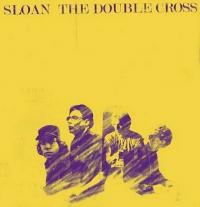
SOUNDTRACK: SLOAN-The Double Cross (2011).

Sloan never fail to make enjoyable punky pop songs.  Surely it has something to do with having four songwriters in the band (which must minimize clunkers).  I can never decide who my favorite songwriter of the group is as they all do fairly varied work.

“Follow the Leader” is a fast rocker (with a very cool guitar solo bit and a nice acoustic break in the middle).  While “The Answer Was You” is a bouncy piano-based song that starts out fast and then settles into one of the more recognizable Sloan voices (I wish I knew who was who–even after twenty years I have never quite determined who was singing what).  This song also has a great third part, minor keys and very dramatic structure.  It’s the first of several songs that hover around the 2 minute mark, as well.

“Unkind” is a simple guitar based song and man is it catchy, with a chorus that sticks with you.  “Shadow of Love” is a great fast rocker and even at only 2 minutes long it has several great parts.  “She’s Slowing Down Again” has some great bah bahs and a strong chorus.  “Green Gardens, Cold Montreal” actually slows things down, with a gentle acoustic ballad.  But it’s followed by one of their screaming punk tracks, “It’s Plain to See,” simply put, it’s two minutes of adrenaline.

The album changes somewhat with “Your Daddy Will Do,” a catchy disco song.  Yes, disco.  How else do you explain those keyboards riffs?  And man is it catchy.  “I Gotta Know” may be the stupidest song they’ve recorded yet.  How many times is the phrase “I gotta know” repeated in 82 seconds?  Still, you can’t deny how catchy it is.  “Beverly Terrace” returns to that cool pizzicato piano that they do so well.

“Traces” is the longest song (almost 5 minutes) and is one of the longer Sloan songs in general.  It feels like  an old classic rock song for many reasons (including Doors-y keyboards), and yet it doesn’t feel retro at all.  Neat trick, that.  The disc ends with “Laying So Low,” a piano ballad with a great catchy melody.  It slows the album to a nice ending.

12 songs in 33 minutes.  Multiple genres, multiple styles, multiple singers.  All of it wonderful.  Just an other typical Sloan album. Great jobs guys, here’s to twenty more years.

One word to yeprock records, though.  If you offer “free bonus” songs for purchasing their album, I would suggest in the strongest possible terms that the four bonus songs should not be one song each from their previous records.

[READ: December 29, 2011] Chew: Volume Three

We were quite excited to get this book–we were on the Hold list forever at the library.  So I’m surprised to see it came out back in 2010!  I assumed it was much newer than that.  I guess there’s a Volume Four out already (yes it came out, and they have just published issue 22 in single issues).  Volume three covers issues 10-15.

This mini-arc, as they call it, isn’t so much of an arc as a continuation of the awesome story line.

For those in the dark, read the first two posts.  But in a nutshell, Tony Chu is a Cibopath, which means that anything he tastes he knows the entire history of, be it vegetable, meat (ew) or, since he is a cop, human (bleagh, but hey it’s a comic book, right?).  His partner, John, is part machine now, having been practically blown up and then put back together.  And, as we start Chapter One (Issue #11), Tony is out on his first date with Amelia Mintz (alright, they got together!).  Amelia Mintz is a Saboscrivner which means she can write about food so wonderfully that you can literally taste it. (more…)

Read Full Post »

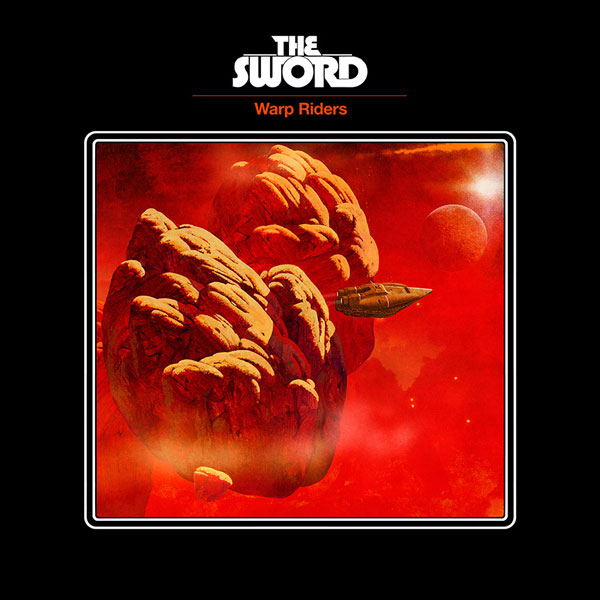
SOUNDTRACK: THE SWORD-Warp Riders (2010).

I have heard some great things about this disc from The Sword–that it was old school metal who usually sang about swords (duh) and sorcery but were warping into the future on this disc.  I put the disc on and was blown away by the opening track, the instrumental “Acheron/Unearthing The Orb.”  It sounds very 80s metal: heavy guitars, and great riffs coupled with tremendous solos.  The second song opens just as strong but then something weird happened.  I hated the lead singer’s voice (my discussion of their previous disc came to the same conclusion).  It doesn’t do ANYTHING that 80s metal should do–it’s neither growling nor yelly nor operatic.  In fact, once the vocals kick in, the song takes on a distinctly non-metal feel.  More specifically, it feels like heavy classic rock from the 70s.  The guitars are still heavy as anything, but the melody and vocals change things.

I really didn’t like the album all of a sudden, until I listened a few times and accepted that this blend actually worked.  Once I acknowledged that it wasn’t what I thought it would be, I wasn’t disappointed by it anymore, and I was able to really enjoy it.  “Tres Brujas” has a simply wonderful sing along chorus that I can’t get out of my head.  And it continues in this vein–heavy riffs (the guitars on “The Chromancer 1: Hubris” and “The Chromancer II: Nemesis” (love the names!) are really heavy) and surprisingly catchy choruses. 

The biggest surprise comes with the song “Night City” which sounds like, well, like Thin Lizzy.  The macho riffs, the swagger, the lyrics, it’s all Lynott.  And once I realized that, I really understood what The Sword was all about, and the disc has been in heavy rotation ever since.  I don’t mean to say that I had to analyze the disc to “get” it, but once it all clicked, it clicked really well.

[READ: December 13, 2011] “The Pharmacist from Jena”

This is my first story from Michael Dahlie and I have to say that I was hooked from the start. 

The story is set in 1912, when the narrator was sent from his home in Stockholm to Winslow, Indiana.  He was sent to work with his uncle as a pharmacist’s assistant. 

It’s in the second paragraph, after the exposition, that things take off: “My uncle was a passionate lover of cocaine and had situated himself in such a way that he supplied nearly all the nearby interested parties.”  He was also renowned as a great “voluptuary and eroticist.”

There is a real plot, which gets established late in the story, but in the beginning, the story is all about the narrator’s adjustment to this life.  How his aunt seemed to believe he was a girl and decorated the room accordingly.  How his uncle had a fight with a bear (long story) in that very girl-themed room (long story) and how the room was soon, no longer girl-themed.

One thing I really liked about the story was the narration.  Like: “At the time I was living in Winslow, it was fashionable for wives of wealthy men to suffer from mental disorders.”

His uncle experimented with shock therapy, but he mostly used it for erotic experimentation.  The end of the shock experiments occurred when a local husband found out what the good doctor was doing (from the burns that his wife received at the doctors hands).  (more…)

Read Full Post »

« Newer Posts - Older Posts »