Feeds:
Posts
Comments

Archive for the ‘Translation’ Category

SOUNDTRACK: KING GIZZARD AND THE LIZARD WIZARD-I’m in Your Mind Fuzz (2014).

Even though this record came soon after Oddments, this has been considered the first major release by KGATLW (maybe that’s because it was the earliest recording that was still in print (until the reissues).  This album is a major step forward in their psychedelic garage rock sound.

The first four songs are more or less a continuous suite.  Not really, but all four songs contain the same breakneck drum pace and rumbling bass line and each one segues into the next.

“I’m in Your Mind” has a simple guitar riff, lots of wickedly distorted harmonica and a catchy vocal line.  It segues into “I’m Not in Your Mind” which is a three-minute jam based around a guitar solo.  The tone has changed slightly, but only slightly.  The solo features the main melody from “The Streets of Cairo or The Little Country Maid” (which we in the States think of as the Egyptian song or the snake charmer song because it was in every cartoon from the 1950s). The end of the song features a bass rumble which segues into the intro to the classic KGATLW song “Cellophane” (where the lyrics are nearly all nonsense singing and the word “cellophane”–catchy as anything).  The quartet returns to the opening song with the reprise called “I’m in Your Mind Fuzz.”   The same guitar melody and tempo resume with a similar-sounding chorus.

A click opens the next song, “Empty,” which halts the fast-paced bass and drums and grows much slower.  With a new rhythm and a more staccato delivery, this song maintains the fuzzy sound and distorted vocals and adds, I believe, a flute.  It’s followed by the wonderful “Hot Water.”  It’s an uptempo song with muted delivery in the vocals and guitars.   It’s also got the simple chanted chorus of “Hot Water” all surrounding this cool 70s sounding melody.

“Am I in Heaven” begins as a folkie acoustic song.  It’s pretty gentle for about 45 seconds until it turns into a screaming and thumping rocker with all kinds of wailing—guitars, vocals, harmonica.  Then at 3 minutes it returns briefly to that original folkie melody until, once again, the loud rocking just overtakes the whole thing with psychedelic soloing.

“Slow Jam 1” slows things down a lot. “I need to slow my mind down” is the lyrical opening.   It is slow and hazy for a few gentle minutes.  “Satan Speeds Up” sounds like it might be an old lost psychedelic/metal song–a cool vibrato guitar riff and flutes play this excellent opening.  The verses are gentle–falsetto singing as the band chills out around it.

“Her and I (Slow Jam 2)” returns to that acoustic mellow sound, this time with some extra fuzzy notes sprinkled around the song.  After about a minute and a half (of the 8 minute song), the tempo picks up and there’s a cool guitar solo which returns a couple of times by the end adding harmonica and wah wah guitar.

This is a very cool album that really shows what KGATLW is all about.  At least until their next release.

[READ: February 18, 2019] “White Out”

This issue of Harper’s had two stories and I didn’t really enjoy either one.

This first one was written in Korean and was translated by Deborah Smith.  What I didn’t like about it was that I wasn’t sure if these nine short pieces were sections of a big story or individual (somewhat) connected stories.  Either way the blocks of text were all quite short and not always complete.

Frost
This tells us that she was born on a day of frost but her father chose seol, snow, as one of the characters for his daughter’s name.  I found that pretty interesting and would have liked to know more about that. (more…)

Read Full Post »

SOUNDTRACK: MOUNTAIN MAN-Tiny Desk Concert #824 (February 13, 2019).

I had only heard of Mountain Man from an earlier Field Recordings Session on NPR–back in 2012!  Since then the individuals have all gone to different successes but they have reconvened for a new album and this Tiny Desk Concert.  We’ll also be seeing them at Newport Folk Festival this summer.

Mountain Man is endearing.  And they are so quiet.

Mountain Man is the perfect band for a Tiny Desk concert. These three women make the most intimate music; and behind the desk, the voices of Amelia Meath, Molly Erin Sarlé and Alexandra Sauser-Monnig were the stars. Adorned by only light, rhythmic acoustic guitar, they sing songs that conjure a simpler life: dogs, friends, moonlight, sunlight, skinny dipping, beach towels and sand.

These dear friends have known each other for more than ten years, since their college days in Vermont. They released their first album in 2010 called Made The Harbor and only recently had a follow-up with the pleasantly surprising, 2018 fall release of Magic Ship.

They play three songs.  “Rang Tang Ring Toon” has a two note guitar melody from Alexandra Sauser-Monnig.  While she plays, she sings the first verse.  Then the other two join in (that’s Molly Sarlé on the really high notes).  It’s a very simple guitar melody–so simple that when she plays a kind of solo (also very simple) it really jolts you out of the gentle melody.

There’s a true kinship that happens in this trio. Things get quiet, sometimes funny and playful or, at moments, awkward, especially when they talk about “savory oatmeal.”

It’s Alexandra who talks about the savory oatmeal (with wild mushrooms, fried garlic, poached egg and chives).  It was delicious–although Molly says, “I had a different thing.”

For “Moon,” Molly plays guitar.  Her playing is more strumming.  She sings very high and the others join in.  One fascinating thing about most of these songs is the nonsense syllables they sing.  Obviously the first song (just the title alone), but even this one has a refrain of:  “Dai dai dai dai dai dai dai dai.”

For the last song Amelia Meath (yes, of Sylan Esso) sings a capella.  Before the song she says she’d like to dedicate it to “all my NPR crushes–anyone who works at NPR who has looked me in the eye and asked me questions about myself.” The song starts with all of them humming.  Then Amelia sings and they accompany her with their hums until they all sing amazing harmonies.  It’s all so quiet and sweet, you just want to lean in to hear them better.

In the eight years between Mountain Man records, Amelia Meath went on to create Sylvan Esso with Nick Sanborn. Molly Sarlé, meanwhile, was in a meditation center in California — at a cliffside trailer in Big Sur — and worked on her own, beautiful solo album, which is due out soon. And Alexandra Sauser-Monnig worked with Hiss Golden Messenger, released her own music under the name ASM and has a new record coming as well.  There’s a tour about to happen, and hopefully they won’t vanish after that for another eight years. There’s no other band like them.

[READ: February 12, 2019] “The Confession”

The confession in this story is a rape.

The narrator is the rapist.  He can’t reveal his name or the rural village where it happened because his father is a feared and respected man and he doens’t want to bring shame on him.

The summer this happened, the boy says his father didn’t want him to be idle, so he was sent to the countryside for hard work with the villagers.  The villagers were illiterate and there was no electricity.  He was bored out of his mind.  The only entertainment was the story that the boys all told about a girl from the area who had been rejected by her clan because of her sexual behavior.

One afternoon he went with one of the older men to the plains to gather grass for the animals.  The man treated the boy with deference because of the boys father, but he did show him how to do the work efficiently.

Then they both saw off in the distance, a young woman crossing the plains.  They both imagined it was the girl from the stories.  So immediately the man ran up to the girl.  She didn’t react to the man–she was too tried to resigned to her fate,  He threatened to hit the her if she screamed and then he tore of the girl’s harem pants.  He then presented the girl to the boy like a gift. (more…)

Read Full Post »

SOUNDTRACK: LAU NOAH-Tiny Desk Concert #823 (February 11, 2019).

Lua Noah is a Spanish singer/guitarist with a fascinating story.  She sings mostly in Spanish (with subtitles!).

Lau Noah’s journey as a songwriter and guitarist occurred by happenstance. She was born in Reus, Spain barely a few hours drive from Barcelona. She speaks and now sings in Catalan, Spanish, English and sometimes Hebrew. She’d played piano growing up (never guitar) and left Spain for New York City five years ago while in her late teens.

On a visit to Montreal in 2016, Lau hoped to go to a Patrick Watson concert with friends. But the performance sold out and she was left alone in an apartment while her friends went to the show. Then a snowstorm ensued. The apartment had two guitars and, with nothing else to do, she picked one up and began to play. She wrote her first song, “Pequitas,” which means “Little Freckles.”

Her songs are quite short.  “El Jardinero (The Gardener)” is barely 2 minutes long.  She plays complex chords but not in an elaborate way–just making lovely sounds in beautiful patterns.  The speed of her singing is somewhat at odds with the gentle playing, but it all works, as if she needs to get these passionate words out.

There’s a magical aura that surrounds Lau Noah as she sits behind my desk and embraces her guitar with one foot propped unnaturally high on a stool. As melodies pour from the strings, she sings these words in Spanish: “On the verge of the soul, there is a red petal, attached to the skins of mortals.” A few lines later in the song she continues, “a fragile petal that drinks the water of the most cruel stories: children who have never heard a fairytale, lovers who love, dressed in regret.” This is the sort of poetic tale that captured my heart amongst the thousands of entries I watched during the Tiny Desk Contest in 2018. Her song she submitted for the contest is called “La Realidad.”

I love the way in “La Realidad (The Reality)” she returns to a part where she plays a low note that rises and falls while everything else stays the same as she sings.

She says thats she is from Catalonia and was always afraid to sing in Catalan, so she sang mostly in English.  She is very happy to sing the next song “L’Adéu (The Goodbye)” in Catalan.  It has a beautiful melody and sounds very differrent from the other two songs.

She re-tunes her guitar for “La Belleza (The Beauty)” which has a very different fingerpicking style–faster and a bit more intense.  The melody rises and falls both from her fingers and from her voice.  It’s a mesmerizing song.

Before she played her final song, “Red Bird,” (in English) she quoted Spanish writer Miguel de Cervantes Saavedra, from his novel Don Quixote: “When life itself seems lunatic, who knows where madness lies,” Lau said, reading from her notes. “Perhaps to be too practical is madness. To surrender dreams is madness. And maddest of all: to see life as it is and not as it should be.”

She sounds just as lovely singing in English as she does in her other languages.

[READ: February 11, 2019] One Day a Dot

I don’t normally post about children’s picture books.  But this one has two things going for it.  It’s published by First Second and it’s pretty awesome.

This is, as the cover says, “the story of you, the universe, and everything.”  All in 40 pages.

It begins: One day a dot appeared.  And it was so excited to be there that it burst.

And that is the children’s version explanation of the big bang. (more…)

Read Full Post »

SOUNDTRACK: JÜRGEN MARCUS-“Ein Festival der Liebe” (1973).

Schlager (see the end of the book entry below) has become a catch-all term for (European) inoffensive pop music.  But apparently in the 1970s it had a slightly different and more specific connotation/sound.  The more I dove into this explanation, the more confusing it became.  Until someone posted a link to this song.

It’s easy to see how people reacted against the music back when it was super popular–it is so safe and inoffensive as to be totally offensive to any one with artistic sensibility.  But now that pop music has become something so radically different, often aggressive and vulgar and very electronic, this kind of bland, fun sing along is actually charming and kind of appealing.

The chorus is easy to sing along to, you can clap along without anything complicated going on and it’s all happy and sweet (even the ahhs in the backing vocals are super happy).  The music is soft, even the little piano “riff” in the middle is obvious.  I love that the song gets a little “risky” in the end third with a “drum solo” and Jürgen singing a kind of tarzan yell, but it’s all returned safely to th end.

The video is spectacular with Jürgen’s brown suit, big hair and even bigger collars.   It’s quintessential warming cheese.  It’s the school of music that ABBA came from as well.  It’s Eurovision!

And I find it quite a relief from the pop schlager of today.  This song was given example of contemporary German schlager:  Helene Fischer “Atemlos durch die Nacht”.  Her delivery is inoffensive by the music is so contemporary and dancefloor that it doesn’t feel anywhere near as delightful as the 1970s song,

[READ: February 9, 2019] How to Be German

I saw this book at work–the German side–and it looked like it might be funny.  I wished I could read more than the very little German that I know.  And then I flipped the book over and discovered it was bilingual!  Jawohl!

This manual is a very funny book about being German.  It was written by a British ex-pat who moved to Germany many hears ago and has settled down in the country he now calls home.  The book gently pokes fun at German habits but also makes fun of his own British habits and cultural components.

I studied German for one year which makes me in no way qualified to judge the quality of the humor or the accuracy of the cultural jokes.  The book does a very good job of cluing the unfamiliar in on what he’s talking about.  Although there are about a dozen exceptions where no context is given to the ideas that he’s talking about, which is quite frustrating, obviously.

I’m not going to go through all 50 of these ideas, but there are some that are particularly good and some that I found especially funny. (more…)

Read Full Post »

SOUNDTRACK: NEW ORDER-“Ceremony” (live) (1981).

Recently, Peter Hook was in Philly to play some New Order music with his band The Light.  I wonder how much different that show sounded from this one.

New Order formed out of the ashes of Joy Division in 1980.

Their first single, “Ceremony,” was actually written with Joy Division prior to Curtis’ suicide. It popped up as a single in advance of New Order’s 1981 debut album, Movement, which is about to receive the deluxe-reissue treatment; to commemorate the occasion, the band is circulating a little-seen performance of “Ceremony,” recorded live at Manchester’s CoManCHE Student Union.

Imagine having been at that show in 1981?

The music sounds amazing here–the guitar sound is perfect, the bass and drums are spot on.  But the vocals are terrible.  Practically inaudible.  I realize that he’s mostly speak/singing at this time, but you really can’t really hear him at all on the first verse.  It’s a little better on the second verse, but it’s the instrumental break that’s the real high point.

You can read about the re-release here.

[READ: January 23, 2019] “Cream”

The first line of this story sounds like it could describe most of Murakami’s stories:

So I’m telling a friend of mine about a strange incident that took place back when I was eighteen.  I don’t recall exactly why I brought it up.  It just happened to come up as we were talking.

Murakami is all about the strange incident.

He gives some details about himself at the time–finished high school, not yet in college–when he received an invitation to a piano recital.  The invitation came from a girl who was a year behind him in school but who went to the same piano teacher. They once played a piece together but she was clearly much better.  He’d stopped playing and obviously she had gone on to give a recital .

The recital hall was at the top of a mountain in Kobe.  He took a train and then a bus and then had a short walk to get to the venue.  It was a weird, inconvenient place for a concert venue.  He brought flowers to show his appreciation. (more…)

Read Full Post »

SOUNDTRACK: HAROLD LÓPEZ-NUSSA-Tiny Desk Concert #812 (December 14, 2018).

This was the final Tiny Desk Concert of the year and it featured a pretty traditional jazz trio (piano, bass, drums) from Cuba.  There have been a number of Cuban musicians on Tiny Desk, but I always defer to the blurb:

Cuba is known as much for their pianists as their percussionists — you’ll see why with this performance.

They play three songs.  The first is “Elegua” which opens

with some help from a recording of famed Afro-Cuban folkloric singer Lázaro Ros. Ros is both a musical and spiritual guide for this performance; the trio dug deep into the ritual music of santeria for inspiration with “Eleguá,” a tribute to one of the Afro-Cuban deities.

After about two minutes, Harold plays a nifty staccato riff on the piano while the bass plays a cool  related melody.  The song runs about six minutes and mid way through Ros returns to recite over the music.

When the song is over, Harold introduces his “brothers.”  His literal brother Ruy on drums and his brother from an other mother and father Gastón on bass.

(Special mention should be made of Harold’s brother, Ruy López-Nussa, on drums, and bassist Gastón Joya, who both fill the spaces between the beats while elegantly leaving breathing room within the performances.)

Joya is a treat to watch as he has a contented smile on his face for much of the set.  But it’s Ruy who is the most fun.  With his suit and bow tie and the unconventional way he holds the sticks he is fascinating to watch.  He looks like he is trying to be funny, the way he is playing.  Maybe he is just having fun but his playing is spectacular.

“Preludio (to José Juan)” is shorter–quiet and pretty.  It opens with a lovely melody on the piano.  There’s brushes on the drums and a quiet, subtle bass solo on the middle.  The song is much shorter and the closing minute is just beautiful.

“Hialeah” has the recognizable piano riffs — called guajeos — that we can recognize as originating with Cuban dance music, but the trio deftly melds that rhythm to a complex jazz exploration, without compromising its dance able pulse.

The melodies are recognizable, and yet he is basically riffing with them.  The piece opens with frenetic finger work on the piano with some complex drumming.  The rhythm is playing a dancey melody with some wild soloing on his right hand.  By around 14 minute into the set, he is an amazing blur pf speed and melody.  After a brief one second pause they come back with a phenomenal little drum display.

[READ: January 11, 2019] “All Rivers”

I have really come to enjoy Amos Oz’s stories–they are never about what I think they will be about.

This one was surprising for the way it was constructed as well.

The narrator, Eliezer is fondly remembering a woman ,Tova, who has a profound impact on his life. He says the name Tova was simple and popular and, he felt, didn’t suit her, a young poetess.  He doesn’t remember the color of her eyes, although he does remember the color of her trousers–dark blue/gray and tattered coarse material.

As he is describing her he interrupts himself.  He explains that he wants to be systematic and do things in order, but that he keeps getting ahead of himself  Every time he thinks about her, everything rushes to be first. (more…)

Read Full Post »

SOUNDTRACK: KASVOT VÄXT-“Stray Dog” (1981/2018).

Back in 1994, Phish started covering a classic album for its Halloween costume. In 2015 they covered the Disney album: Chilling, Thrilling Sounds Of The Haunted House, which pretty much meant all bets were off.  So in 2018, they decided to cover an obscure Scandinavian prog rock band called Kasvot Växt and their sole album, í rokk.  This proved to be a big joke–they were a nonexistent band.  They had so much fun creating this band, that they even enlisted others to expand the joke.  This included impressively thorough reviews from WFMU and from AllMusic.

The joke is even in the name: when translated together Kasvot Växt and í rokk means “Faceplant into rock.”.

Here’s some more details they came up with:

The Scandinavian prog rock band purportedly consists of Jules Haugen of Norway, Cleif Jårvinen of Finland, and Horst and Georg Guomundurson of Iceland.  The album’s label, Elektrisk Tung, supposedly went out of business shortly after the LP’s release and little information about the record appears on the internet. Bassist Mike Gordon made a tape copy of í rokk in the mid-’80s and Phish would play it “over and over in the tour van in the early ’90s.” In the Playbill, guitarist Trey Anastasio insisted, “Every time the Halloween discussion comes up, we talk about Kasvot Växt. We honestly were worried we wouldn’t have the chops to pull it off or do justice to the sound, but when it came down to it, we just couldn’t resist any longer.”

The decision to go with an obscure album few have heard or even heard of appealed to the members of Phish. “We’ve paid tribute to so many legendary bands over the years, it felt right this time to do something that’s iconic to us but that most people won’t have heard of,” Gordon said as per the Phishbill. “And with these translations we’re really performing songs that have never been sung in English before.” Keyboardist Page McConnell added, “I love the mystery surrounding this whole thing. If those guys ever hear we did this I hope they’re excited because we absolutely intend it as a loving tribute.” As for what Phish fans can expect? “A weird, funky Norweigan dance album! Get out there and put your down on it!” exclaimed drummer Jon Fishman.

While the listings for the 10 tracks on the original í rokk were in a Scandinavian language, the titles appear in English in the Playbill. Phish called upon a Nordic linguist to translate the lyrics to English for tonight’s performance.

These songs do not really sound like a Norwegian prog rock band.  They do sound an awful lot like Phish (although with a more synthy vibe overall. The band has this part of their live show streaming on Spotify under the Kasvot Växt name.  And I’m ending the year by talking about each song.

This song seems to eschew the whole Scandinavian prog-rock joke entirely.  It’s a pretty conventional bluesy song and it’s the shortest one.  There’s really nothing un-Phishy about this song excpet for possibly some of the synth sounds.

This might be the least interesting song of the set, but it sets up for some good upbeat jamming.

[READ: December 2, 2018] “Literary Customs”

I enjoy Zambra’s works, both fiction and non-fiction.  This, like many of his pieces, was translated by Megan McDowell and it is a treat to read.

Zambra talks about how he always takes books with him when he travels. He takes two or three books that he feels safer having around: “I can forget my medicine or the cloth for cleaning my glasses, but i never forget these novels.”  He also brings a book he hasn’t read–a large tome that he thinks will captivate him, but which usually never does.

We shouldn’t travel with books because they take up some much space–better to bring a second pair of shoes–you’re more likely to need a second pair of shoes.  Plus, since books are more expensive in Chile, every trip Chileans take is an opportunity for shopping–an anxious tour of bookstores.  And yet oftentimes no purchases are made, because there is so much to buy it feels not like you are getting something but that you are now more aware of what you don’t have.

And then there is the guilt that you won’t even read them.  But that doesn’t stop him.

On this trip to Mexico he started off well, reading what he bought, but he soon began “collecting” again.

Then there’s always the trip home–the suitcase is a mini library and the only way to make room is to leave pounds worth of clothes at the airport–sometimes you must walk around terribly dressed but draped in the very best literature.

Read Full Post »

SOUNDTRACK: CHRISTMAS AT DOWNTON ABBEY (2014).

We enjoyed Downton Abbey quite a lot, so it seemed natural to get the Christmas CD collection.  Well, it turns out you don’t need to have any appreciation of the TV show to enjoy this CD.

Aside from the opening Downton theme, everything else on the disc is a traditional British Christmas carol–secular and non-secular.

But it’s not an awkward cast recording.  There are a couple of cast members who sing, but they were known for the singing already:

Julian Ovenden who played Charles Blake sings a lot of songs.  Ovenden has sung musical theater with many orchestras.  His voice is great.  Elizabeth McGovern, who played Cora, has also had a singing career.  Between them, they sing six songs–all classic carols.

The rest of the album features The King’s College Choir Of Cambridge on fourteen songs and Kiri Te Kanawa who sings 6 songs.  There is more classical instrumental (and not) music that fills out this 2 CD set (45 tracks in all).

It’s not to say that there is no connection to the show.  Jim Carter (Mr Carson) recites ‘Twas the Night Before Christmas over some music.  It’s quite lovely and he has a great voice for recitation.

As far as tie-ins to TV shows go, this one is fantastic.

But if you like old-fashioned Christmas carols, this is a great album for Christmas.

[READ: December 18, 2018] “Strategies Against Sleeping”

Once again, I have ordered The Short Story Advent Calendar.  This is my third time reading the Calendar (thanks S.).  I never knew about the first one until it was long out of print (sigh).  Here’s what they say this year

Fourth time’s the charm.

After a restful spring, rowdy summer, and pretty reasonable fall, we are officially back at it again with another deluxe box set of 24 individually bound short stories to get you into the yuletide spirit.

The fourth annual Short Story Advent Calendar might be our most ambitious yet, with a range of stories hailing from eight different countries and three different originating languages (don’t worry, we got the English versions). This year’s edition features a special diecut lid and textured case. We also set a new personal best for material that has never before appeared in print.

Want a copy?  Order one here.

Like last year I’m pairing each story with a holiday disc from our personal collection.

I loved the way that this story (translated from the Spanish by Miranda France) started as one thing and slowly turned into something else entirely.

Señora Eloísa was in a car getting driven back home.  She was very tired from her travels and wished to just close her eyes and let the soothing engine noise take her away.  She was on the verge of sleep several times, but the driver of the car kept pressing her to stay awake.

She felt compelled to make small talk with the driver, but regretted it instantly.  She felt she had given away too much information.  So when he asked if he could smoke, she allowed allowed it as an act of consiliation.  She regretted not taking the coach.

The driver kept saying how happy he was to have someone to talk to.  He himself was quite tired having not slept very well the night before and he felt that she was keeping him awake.  “Please talk to me” he said.

She talked about the rain and then about an essay she wrote once.  It had to do with beggars–about which she clearly knew very little.  She wrote in her essay that rain was a blessing for beggars–since they live under a blazing sun all day long, they must love the rain.

Even with this, whenever she paused she heard “Please talk to me.”  Annoyed, she pressed on.

She told the story of a woman, possibly a beggar but possibly not–she did have on nice clothes, anyone could see.  The woman was standing in the middle of a traffic jam in the heat.  Señora Eloísa’s husband didn’t see the woman but Señora Eloísa couldn’t take her eyes off of her standing in the street with that heavy baby .

She hadn’t mention the baby at first and the driver was puzzled. She snapped that of course she had mentioned the baby.  She then proceeded to admonish the driver and her (absent) husband for not understanding how hard it is to carry a heavy baby in the heat.

As the driver trues to change the subject, she quickly pulls it back to the heavy baby and the story suddenly changes into something else entirely.

This was a strange story to be sure, and there’s a lot there for one to unpack.

To learn more about this piece, here’s a Q&A with Liliana Heker.

Read Full Post »

SOUNDTRACK: THE INNOCENCE MISSION-Tiny Desk Concert #807 (November 28, 2018).

I bought the third Innocence Mission album, glow, back in 1995.  The single “Bright as Yellow” was (and is) absolutely gorgeous.  It was a lovely, dream pop album.  But they took four years to make their next album and I guess I forgot all about them.

So what a delightful surprise to hear and see that they are still playing music together in their more or less original lineup.  After glow, their drummer left and they continued as a trio without drums.

The three songs they play are different in style, but not intent from “Bright As Yellow.”  “Bright” has a hazy/dreamy electric guitar sound.  These three song are gentle folk songs all on acoustic guitars.

The Innocence Mission, ever the most careful cultivators of quiet, encouraged us to come closer, to discover the “thing beautiful enough” in the moment it’s delivered.

They do not play “Bright as Yellow” (I wonder if they ever do anymore).  Instead they play two new songs and one old song.

The trio — now three decades into its existence — bookends this performance with two songs from 2018’s Sun on the Square. “Green Bus” and “Light of Winter” thread the long and winding needle of Karen Peris’ evocative words with her husband Don Peris’ decorative-but-nuanced guitar and Mike Bitts’ deft bass lines.

“Green Bus” sounds a lot like the recorded version, but warmer, somehow.  The end of the blurb says that Peris is a little under the weather.  It makes her voice seem even more fragile, which somehow makes the lyrics and the song even more intimate.

In some of my favorite lyrics of the year, Karen Peris tangles the tender and the tempestuous:

And what could I bring you,
now in the meantime?
Fruit from the sunlight,
quartz from the bay?
And where will I find this,
perfect and wondrous?
I look into shops,
I slip into rain.

Between those newer songs, The Innocence Mission plays “Tomorrow on the Runway,” the opening cut from 2003’s Befriended.  This song has a lovely guitar melody and Peris; delicate voice sounds wonderful.

Nursing a small cold, Peris’ voice slightly breaks when she sings, “Did you still leave the darkness without me? You’re always miles ahead” — but the humbling effect, however unintended, lingers in your being.

“Light of Winter” has a stunning chorus–the way the music weaves with her voice is gorgeous.  The verses are quiet and subtle but the way that chorus comes us–wow.

It was great to hear them again, and I think they may need to get added to a nightly bedtime rotation..

[READ: December 13, 2018] “Time for Their Eyes to Adjust”

This is a story of a woman’s relationship with her father.  A relationship that is strained and tested by many factors.

The narrator says she is 48, the same age her father was when she was born.  She is aware of her parents’ time together, but mostly through hearsay:

you can never know much about other people’s lives, least of all your parents’, especially if your parents have made a point of turning their lives into stories that they then go on to tell with God-given ability of not caring in the least about what’s true and what’s not.

Her recollection of her parents is that she was his child and her child, but never their child.  She spent a lot of time with her mother and then 1 month every year with him at Hammars, or Djaupadal (Sweden), as it was known in the old days. (more…)

Read Full Post »

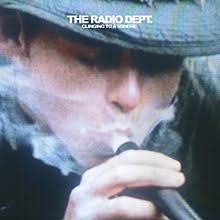
  SOUNDTRACK: THE RADIO DEPT.-Clinging to a Scheme (2010).

In this final book, Karl Ove mentions buying a record on a whim by The Radio Dept.  Given the timing of the book, I assume it’s this record.  So I’m going to give it a listen too.

I really enjoyed this record which has a feeling of a delicate My Bloody Valentine fronted by The Stone Roses.  The key word in all of this is delicate.  It’s a very soft and gentle record (except for one song).  It hits all the buttons of 90s Britpop and to me is just infectious.

“Domestic Scene” opens the disc with pretty guitars intertwining with an electronic thumping.  After the first listen I was sure the whole record was synthy, but this track has no synths at all, just like five or six guitar lines overdubbing–each opener just as pretty as the others.  The voice sound a lot the guys from The Stone Roses on the more delicate tracks.

“Heaven’s on Fire” opens with bouncy synths and a sampled (from where?) exchange:

People see rock n roll as youth culture.  When youth culture becomes monopolized by big business what are the youth to do.  Do you have any idea?
I think we should destroy the bogus capitalist process that is destroying youth culture.

Then come the jangling guitars and the introduction of synths.

“This Time Around” has a cool high bass line (and what sounds like a second bass line). I love the overlapping instruments on this record.  I couldn’t decide if it was a solo album or a huge group, so I was surprised to find it’s a trio.

“Never Follow Suit” continues this style but in the middle it adds a recorded voice of someone speaking about writing.

“A Token of Gratitude” has some lovely guitars swirling around and a percussion that sounds like a ping-pong ball or a tap dancer.   The last half of the song is a soothing gentle My Bloody Valentine-sque series of washes and melody.

“The Video Dept.” is full of jangly guitars and gentle blurry vocals while “Memory Loss” has some muted guitar notes pizzicatoing along and then what sounds like a muted melodica.

David is the one song that sounds different from the rest.  It has strings and synth stabs and drums that are way too loud.  Most of the songs don’t have drums at all, but these are deliberately recorded too loud and are almost painful.

The final two songs include “Four Months in the Shade” which is an instrumental.  It is just under 2 minutes of pulsing electronics that segues into the delicate album closer “You Stopped Making Sense.”  This song continues with the melody and gentleness of the previous songs and concludes the album perfectly.

I really enjoyed this record a lot.  It’s not groundbreaking at all, but it melds some genres and styles into a remarkably enjoyable collection.

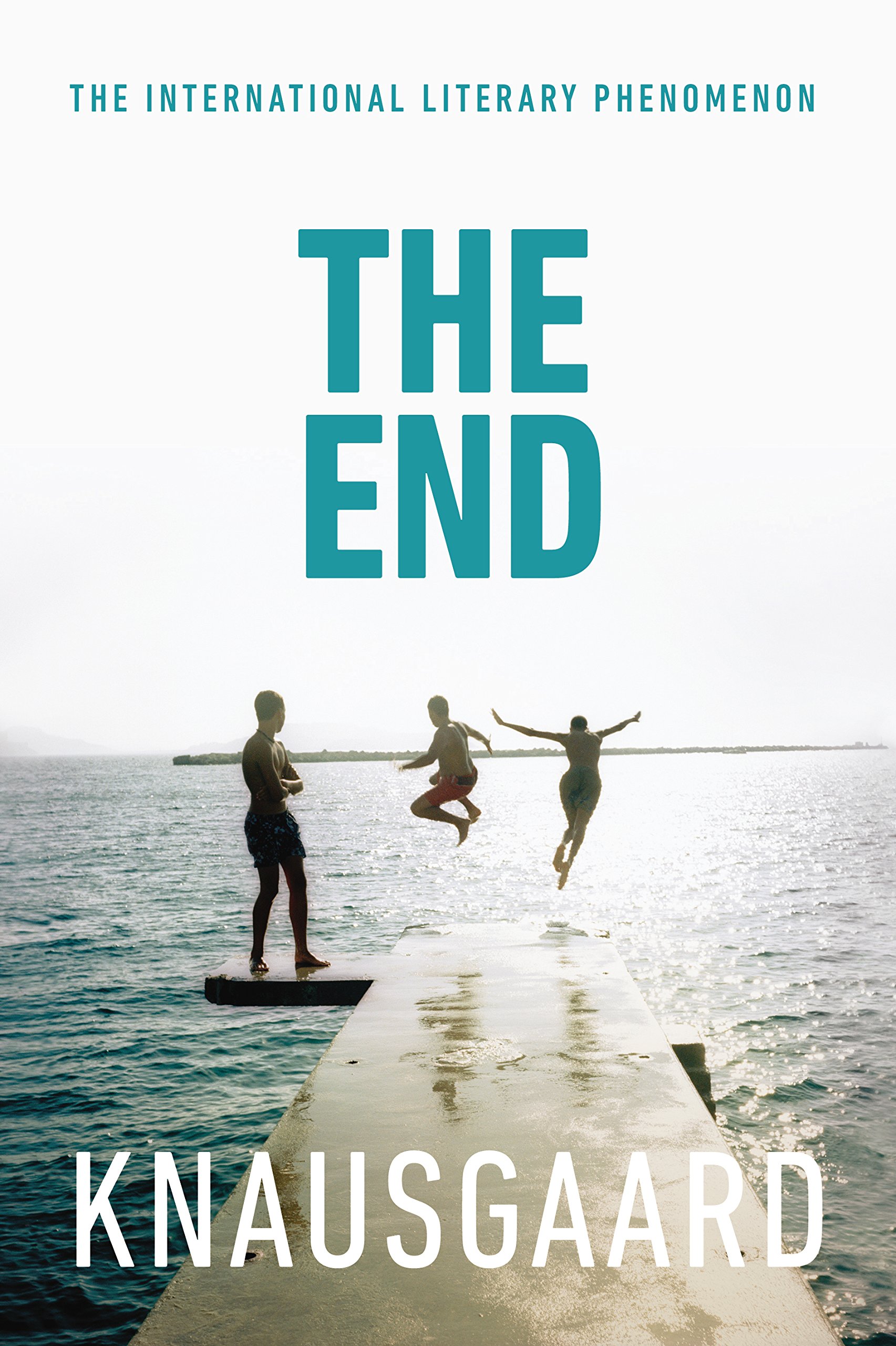
[READ: September and October 2018] My Struggle Book Six

Here is the final book in this massive series.  It was funny to think that it was anticlimactic because it’s not like anything else was climactic in the series either.  But just like the other books, I absolutely could not put this down (possibly because I knew it was due back at the library soon).

I found this book to be very much like the others in that I really loved when he was talking conversationally, but I found his philosophical musings to be a bit slower going–and sometimes quite dull.

But the inexplicable center of this book is a 400 plus page musing on Hitler.  I’ll mention that more later, but I found the whole section absolutely fascinating because he dared to actually read Mein Kampf and to talk about it at length.  I’m sure this is because he named his series the same name in Norwegian.  He tangentially compares Hitler to himself as well–but only in the way that a failed person could do unspeakable things.

But in this essay, he humanizes Hitler without making him any less of an evil man.  His whole point is that in order to fully appreciate/understand Hitler’s evil, you have to realize that he was once an ordinary person.  A teenager who had dreams about becoming an artist, a boy who was afraid of sex and germs.  If you try to make him the inherent embodiment of evil, it’s easy to lose sight of the fact that he was a child, a teen, a young man who was not always evil.

Why Karl Ove does this is a bit of a mystery especially contextually, but it was still a fascinating read especially when you see how many things gibe with trump and how he acts and behaves–especially his use of propaganda.  It’s easy to see how people could be swayed by evil ideas (and this was written before trump was even a candidate). (more…)

Read Full Post »

« Newer Posts - Older Posts »