Feeds:
Posts
Comments

Archive for the ‘Translation’ Category

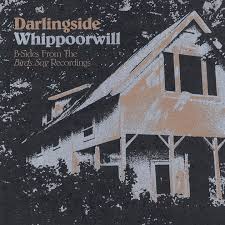
SOUNDTRACK: DARLINGSIDE-Whippoorwill EP (2016).

This EP is a collection of some B-sides and Outtakes from their fantastic album Birds Say.  There are five songs, included a stunning cover of Smashing Pumpkins’ “1979.”

The other four songs are the lovely “Whippoorwill” punctuated by scratches from the mandolin and guitar at the end of each line.  Lead vocals seem to be from Auyon, but there’s very rarely one lead vocalist here.  And just when you think the song is a pretty folk song, the end gets bigger, with a cool bass line and louder harmonies.

“Fourth of July” is all about harmonies and a propulsive chorus.  And “Open Door” is almost a capella.  The only music for a time is the scratching of Harris Paseltine’s guitar strings as a rhythm while all four sing beautifully.  This song is faster than many of their others and even features a whistling solo.  There is some minimal violin on this track but it really feels fully a capella.

“Blow the House Down” is an old song (from their debut–when they had a drummer!) reissued here as a foursome.  What’s notable about it is that vocals are supplied almost exclusively by bassist David Senft.  Rather interesting humming bass backing vocals are supplied by everyone else.  It ends with a wailing (for them) noisy solo from Don Mitchell’s electric guitar and Auyon’s violin (it’s even more intense live).

The final song is their terrific cover of “1979.”  I’ve always thought the music for this song was wonderful.  But hearing their version of it I realized how much Corgan’s voice kinda ruins the song.  Hearing these guys harmonize the verse is pretty great.  But hearing them sing full-out on the chorus “I don’t even care” is utterly gorgeous.  Their version is the gold standard for this song now.  It’s a great EP (and three of the guys signed it for me!).

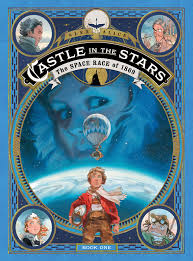
[READ: November 5, 2017] Castle in the Stars

This gorgeous graphic novel was originally published in French and was translated by Anne and Owen Smith.

The title is an intriguing one and while initially confusing, it makes perfect scene when you realize the book is about ballooning: “1868: The Age of Progress, an era of industry… beyond the blue of the sky, where the cold freezes the breath, where the air disappears…the mysetry begins.”

For this story is not just about ballooning, it is about The Secret of Aether.

The story is about young Seraphin. As the book opens, his mother is going into the balloon. His father is yelling at her that she is crazy to go up in the is weather (gorgeous ominous clouds fill the full page). He tries to guilt her into not going.  But her balloon is equipped with a bulb that will light when it gets to the aether, which is her quest.  Then she is up in the air writing in her journal.

She rises to 12,000 meters but… nothing. She’s about to give up when at 12,900 meters the bulb shines brightly and then explodes.  She found it! And she is never seen again. (more…)

Read Full Post »

SOUNDTRACK: JOHNNY CASH-Christmas with JOHNNY CASH (2003).

I am not really a fan of Johnny Cash, but Sarah really likes him.  But we both found this album to be pretty awful.  Someone on Amazon said “This CD was mostly the “droning” Johnny Cash, rather than the compelling Johnny Cash.”  And I have to agree.

The music is pretty spare, almost nonexistent.  And Johnny barely sings at all–it’s either sing-speaking or just narrating.  You will not feel uplifted by this disc in any way.

I will say that the story songs “The Christmas Guest” and “Christmas as I Knew It” are quite moving–but nothing you’d want to hear more than once a season.

The fact that he made so many Christmas discs makes me laugh as well because I can’t help but hear

I love thee, Lord Jesus; look down from the sky
But I shot a man in Reno just to watch him die.

I Heard The Bells On Christmas Day
The Christmas Guest
Hark The Herald Angels Sing
The Gifts They Gave
Blue Christmas
Merry Christmas Mary (this song is not meant for Catholics, as Catholics do not forget Mary at all).
O Come All Ye Faithful
Away In A Manger
The Christmas Spirit
Joy To The World
Silent Night
Christmas As I Knew It

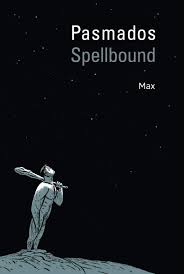
[READ: July 21, 2017] Pasmados/Spellbound

Max is an illustrator from Spain (his full name is Max Bardin).

This book collects a number of his prints and places them next to texts from A Map of Astonishment, an unpublished work by Oliver Veek.

It doesn’t really explain that the two items weren’t designed together, so it was a little hard to see how all of the items connected.  The drawings are cool, for sure, and sometimes you can see a connection, but not always.  I also wasn’t sure if the book was sequential in any way (it’s not).

Max has a great cartoon style–big thick lines and oversized/undersized character traits.  The first panel is of a giant, staring goggle eyed at a small skull.  The caption “So it was me who was the weirdo?” doesn’t exactly work, but you could see it connecting–and certainly setting the tone. (more…)

Read Full Post »

SOUNDTRACK: THE FLAMING LIPS-Christmas on Mars (2008).

Title aside, and despite the Lips’ love of Christmas, there is nothing Christmassey about this recording.

It’s a soundtrack to their film and it is composed of 12 instrumental pieces.  The disc (which is short) sounds like interstitial Flaming Lips pieces–songs that might appear at the end of or in between songs.

The tracks run the gamut from spooky outerspacey dirges to pretty choral numbers.  But the overall tone of the soundtrack is dark and foreboding (the movie isn’t very happy after all).

Some of the tracks (3 and 4 in particular) are prettier than other–with pretty harps and tubular bells.  But do not put this in your Christmas music rotation unless you really dislike Christmas music.

[READ: June 21, 2017] Adios, Cowboy

Hot on the heels of the depressing Sorry to Disrupt the Peace come this depressing story by Olja Savičević Ivančević (her full name according to Goodreads) translated from Croatian by Celia Hawkesworth.  In Peace, the narrator’s brother killed himself and the narrator wants to find out why.  In Adios, Cowboy, the narrator’s brother kills himself and she want to find out why.

The difference is that this book is set in Croatia, has multiple characters, multiple stories and a huge amount of confusion.

Dada (the narrator) lives in Zagreb, but she is called home to Old Settlement by her sister to help with their aging mother.  She is intrigued at the thought of going home  again after so many years.  But when she gets there, her mother has been taking all kinds of pills, her sister has pretty much given up as evidenced by her chain-smoking, their long-dead father’s shoes still lined up on the steps, and their dead younger brother’s cowboy posters of are still on the walls.  (The dead brother’s name is Daniel.  The fact that one of the characters in the previous book also about the suicide was also named Daniel really didn’t help this much). (more…)

Read Full Post »

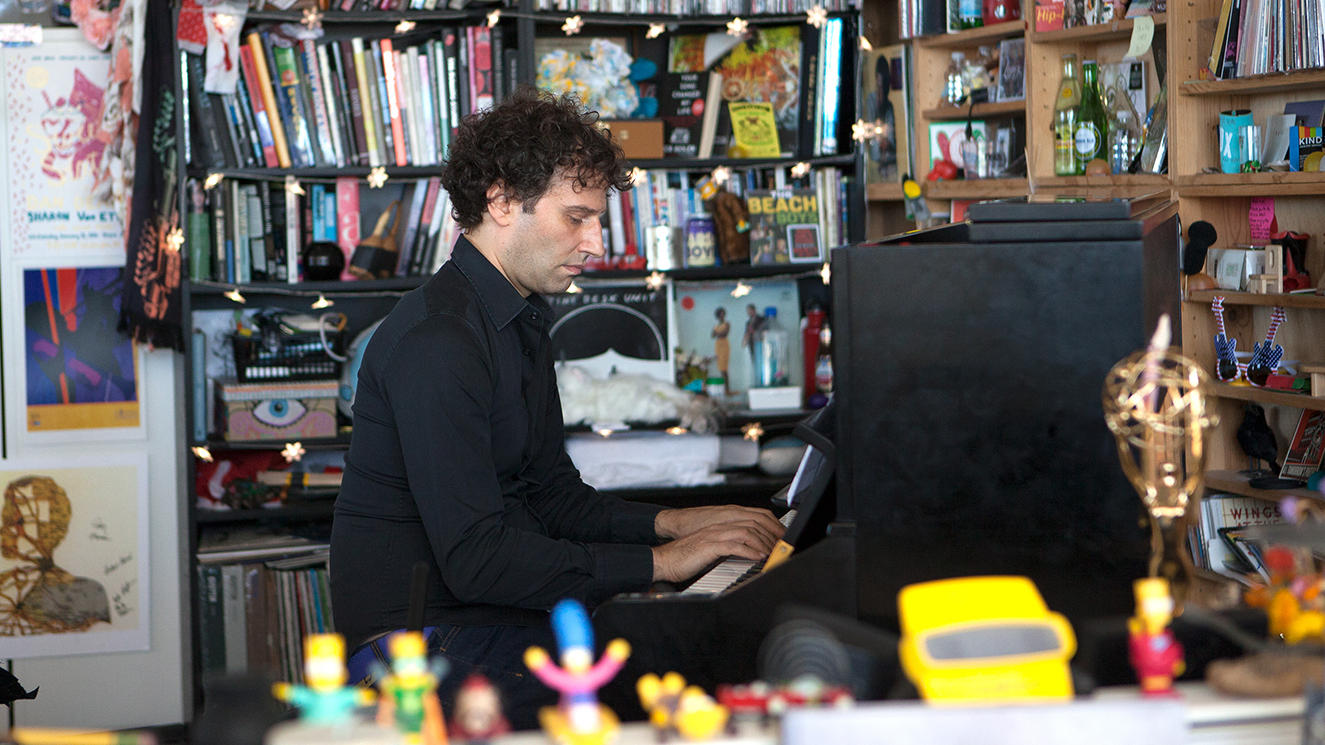
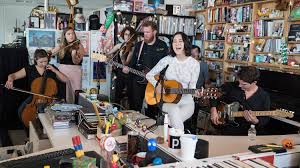
SOUNDTRACK: PHOEBE BRIDGERS-Tiny Desk Concert #677 (November 27, 2017).

Phoebe Bridgers has an incredibly delicate voice.  And yet despite its delicacy it is also really powerful (as evidenced by the note she holds at the end of “Motion Sickness”).

I know the original of “Motion Sickness” which has a big raw guitar and a powerful chorus.  Her entire sound is stripped down here, with just pianist Ethan Gruska and violinist Rob Moose accompanying her on her quiet guitar.

Together, they celebrated the occasion with languid renditions of three of the album’s best songs: the sad and seductive “Demi Moore,” a drastically muted “Motion Sickness” and a piano-driven take on Bridgers’ first-ever single, “Killer.”

“Demi Moore” has some interesting synthy sounds accompanying Phoebe’s gentle guitar.  I really like the way the violin is playing somewhat unsettling notes rather than gentle accompaniment.  I cannot figure out what this has to do with Demi Moore, though.

As noted, “Motion Sickness” is very different.  It’s a little less catchy somehow (I really like the contrast of the guitars and her voice on the original).  But the song sounds really pretty this way (and I am charmed at the way she seems to be smiling throughout the song).

She describes “Killer” as being about murder.  It includes an unsettling conversations about Jeffrey Dahmer and Bridgers singing without her guitar.  It’s a stark piano song that really lets you hear how pretty her voice is.

I’m very curious to know what she typically sounds like live.

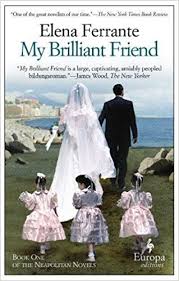
[READ: May 13, 2017] My Brilliant Friend

In what I thought was the final issue of The Believer (it went on hiatus for a couple of years), Nick Hornby says he really enjoyed My Brilliant Friend.  So I decided to check it out (since it’s part of a series and was compared tangentially to My Struggle, I decided to keep a running tally of pages just in case I decided to read all four of these books).

I haven’t read a ton of Italian writers, I gather.  And while that doesn’t really impact the quality of the story (or the translation by Ann Goldstein) the book does talk about locations that I’m pretty unfamiliar with.

Evidently there is intrigue about the identity of Elena Ferrante (the name is a pseudonym).  I didn’t know that until after I read the book and looked up to see how many more books there were.  Ferrante (I’ll go with she, because why not) has written four books in this series and three other books with out her identity being discovered.  I suppose the reason her identity is interesting is because this book seems to be autobiographical.  Of course what do you call an autobiography by a pseudonym? (more…)

Read Full Post »

SOUNDTRACK: DAVID GREILSAMMER-Tiny Desk Concert #676 (November 24, 2017).

It has been quite a while since there has been a classical pianist on Tiny Desk.  I’m unfamiliar with the Israeli pianist David Greilsammer, but his playing is wonderful and his selections are quite fun and diverse.

For this Tiny Desk appearance, Greilsammer begins with his muse Domenico Scarlatti, the 18th-century Italian whose 500-some keyboard sonatas are compelling, colorful snapshots of his decades-long service to Spanish royalty. In the “Sonata in E, K. 380” you can hear a little street band processing along with trumpet fanfares.

Greilsammer describes the piece as sounding very contemporary.  Scarlatti lived 300 years ago and his music sounds ahead of its time.  He says it’s almost jazzy or pop-like harmonies.  He says it feels like he is playing a Beatles song.

Greilsammer follows by jumping ahead 175 years to the eccentric Frenchman Erik Satie, who not only owned seven identical gray velvet suits but, with a freewheeling spaciousness and humor in his music, is often thought of as the precursor to everything from minimalism to new age. His series of mysterious pieces called Gnossiennes strike a particularly sedate mood, capable of neutralizing any source of anxiety.

Greilsammer plays “Gnossienne No. 3” which he describes as full of pop and jazz and colors and harmonies.  He was writing these strange short pieces that at the time people in Paris didn’t understand.  Everybody loves Satie now but just over 100 years ago he was completely misunderstood.

I absolutely love the way the final notes ring out in this room–they are quite haunting

Lastly, Greilsammer takes a left turn to Leoš Janáček, the idiosyncratic Czech composer from the early 20th century, acclaimed for his operas. He set one of them on the moon; another, the dramatically taut and emotionally wrenching Jenůfa, is perhaps the most undervalued opera of a generation. But Janáček also wrote in smaller forms. His piano cycle On An Overgrown Path plays out like a diary of musings, nervous tics, simple pleasures and mysteries. Within the claustrophobic tension that pervades “The Barn Owl Has Not Flown Away,” you can hear the rustling of wings and the repeated four-note bird call.

Greilsammer says that Janáček lived in the Romantic period and all of his music is enigmatic, with many secretive things.  He wrote things related to dreams and wild scenes with things obsessively haunting him.  In “The Barn Owl Has Not Flown Away” (from On An Overgrown Path) the theme of the owl comes back many times.  Every time you try to get away from it, it comes back.

For Greilsammer, who recently performed in a working crypt in Harlem, threading these disparate musical fabrics together comes as naturally as, well, playing behind a desk in an office building.

These are some really beautiful and nicely unexpected pieces.

[READ: May 31, 2017] Audubon

I have really enjoyed most of the French graphic novels that come across my desk.  This book, translated by Etienne Gilfillan, is no exception.

It is a biographical sketch of John James Audubon (born Jean-Jacques Audubon in Haiti in 1785).  His story, aside from the whole birding aspect, is quite fascinating in itself. He was an illegitimate child (his father has seduced a servant) who was eventuality adopted by his father (!) and called Forgèére (which means fern).  His father wanted him to escape military conscription, so the boy was sent to Mill Grove in he United States in 1803.  He became a US citizen and there met his wife Lucy Bakewell.

The book actually begins in 1820 with Audubon and two other men sailing on the Mississippi river.  They hit bad weather but all he cares about are his drawings.

Then we jump back to 1812 in Kentucky.  Audubon climbs into a tree to study the swallows who are living in it–some 9,000. He took home more than 100 birds to study them.  And then he tagged some others to study their migratory patterns.

As the end of the book points out, Audubon was one of the world’s greatest naturalists who did a lot for birding. Except he was also responsible for the death of thousands of birds.  There’s a section where he kills two ivory billed woodpeckers.  He is so excited at his luck because they are becoming a rarity. (more…)

Read Full Post »

diaSOUNDTRACK: JAPANESE BREAKFAST-Tiny Desk Concert #663 (October 25, 2017).

I had it in my head that Japanese Breakfast was a weird band–psychedelic or wacky indie or something.   And maybe they are.  But certainly not here.

For this concert, the band is all acoustic (except for the electric bass).  For the first two songs there is a sting section.  Interestingly, the string section is Rogue Collective who also performed with Landlady on a recent Tiny Desk.   [Landlady’s Adam Schatz told Zauner that the Rogue Collective make pretty great Tiny Desk partners].

So the blurb corrects me about the band, describing their music as having “gauzy, astral synths.”  Those are clearly not present here.

As Japanese Breakfast, Michelle Zauner writes sparkling, opulent dream pop about grief and love (and, occasionally, robots). After releasing its debut album, Psychopomp last year, the band returned with this year’s stunning Soft Sounds From Another Planet. Where Psychopomp, written in the immediate aftermath of the death of Zauner’s mother, zeroed in on the experience of Zauner’s grief, Soft Sounds widens her aperture, featuring paeans to her coping mechanisms, ruminations on crooked relationship dynamics and said sci-fi robot fantasy.

“Boyish” aches with sadness (“your boyish reassurance is not reassuring”).  The melody (her guitar and Deven Craige’s bass to start) is lovely and heartbreaking.  Then the strings really punctuate the sentiment of these great lines.  And there’s some great backing vocals from drummer Craig Hendrix.

If you go to her don’t expect to come home to me.
I can’t get you off my mind /I can’t get you off in general
I want you and you want something more beautiful
I can’t get you off my mind / you can’t get yours off the hostess

I love the opening lines to ‘Till Death,’ which really sums up the end of 2016:

all our celebrities keep dying / while the cruel men continue to win.

She says the song is about marriage (and then chuckles).  The blurb says she sings “as she often does, in a way that strains her voice to the crackling, taut edge of heartbreak.”  This song is really lovely–the melody is a knockout.  The piano and bass start the song.  After the first verse the strings come in and Hendrix adds more backing vocals.

I love a song that ends with this final line:

PTSD, anxiety, genetic disease, thanataphobia

Everybody leaves for the final song, “This House.”  Except Hendrix moves from drums to piano.

Another great lyric opens the song:

This house is full of women
playing guitar cooking breakfast
sharing trauma doing dishes
and where are you

The song describes moments in love that are more fearful labor than bliss, the hazy space where commitment, confusion and longing intersect. Like much of Japanese Breakfast’s music, the performance shows Zauner looking unblinkingly at fear and pain, daring us to do the same.

Interestingly, for this concert, Rogue Collective has a different lineup.  They are a trio: Alexa Cantalupo (violin) and Natalie Spehar (cello) are back but Kaitlin Moreno (violin) is there while Livia Amoruso (violin) and Deanna Said (viola) are not.

In a cool footnote, the blurb says “The Collective practiced with Japanese Breakfast the day before the Tiny Desk, and was a featured guest later that night at the band’s D.C. show.”

I enjoyed this Concert a lot and will have to give a closer listen to their new album.

[READ: March 1, 2017] El Dia Mas Largo del Futur

This book came across my desk at work and I loved the look of it right away.  I can stumble through some Spanish books, but imagine my delight to see that this one had no words at all!  It is a wordless graphic novel (novela gráfica).

I especially liked the look of it because it reminded me in some ways of Chris Ware–very detailed, incredibly crisp lines, and really pleasing shapes.  It is also very dark, like Ware’s work.

But the comparison ends there.  This story is set in a dystopian future where violence is the norm, where robots can be easily programmed to kill and where love seems an unlikely prospect.

And NOW, after having read it, I have just learned the total history of this book.  It was originally written in French as Le Jour Le Plus Long du Futur.  Varela is from Argentina.  It has also been published in English as The Longest Day Of The Future by Fantagraphics books.  So even though I felt proud about “reading” the book in Spanish, I could have just found it in English too.  Well, I’m keeping with my original post, so….

You can see more details of the book from the publisher website.

But here’s what the site says (in Google-translated English, no the irony is not lost on me): (more…)

Read Full Post »

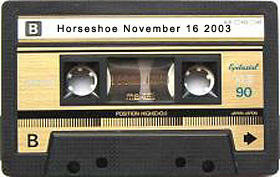
SOUNDTRACK: RHEOSTATICSFall Nationals The Horseshoe Tavern Toronto, ON. Night 7 of 13 (November 16, 2003).

 This was the all ages Sunday afternoon 7th show of the Rheostatics 13 night Fall Nationals run at the Horseshoe.  Rheostatics Live has recordings of nights 1, 3, 4, 5 and 7.

This is the final concert available on Rheostatics Live for the 2013 Fall Nationals.  It was an all-ages show and as such was a bit more delicate than some of the other shows.

Hip Lingo opened the night. And then the band begins with a sweet mostly acoustic version of “Song of the Garden.”  Then Tim says, “This song “Loving Arms” was written by Dot, our good friend.

Once again, during “Aliens,” at the “distraction” line, someone starts playing the guitar melody from “When Winter Comes” and it does serve as a kind of distraction–they flub the song a bit.   Later, in the quiet part Tim starts playing the melody for “Artenings Made of Gold” on the bass.

“Tarleks” is described as the second in the Alien trilogy.  Mike asks if Martin has another yet to come.  Martin says, “I got a pack of em.”  They miss the segue to the middle but just play one more measure and catch up.

Tim says “we brought some spongy earplugs down if anyone needs them.”  (They’re so nice).

Dave has a question for the kids in the audience.  “Ozzy Osbourne funny or scary?”  Kids:  funny.  Martin:  funny and sad.  Dave says this is a song about the twilight of Ozzy’s career (Martin: and his awareness).

“King of the Past” is a quieter version.  You can really hear Martin doing great backing vocals.

They acknowledge Maureen at the craft table–it’s make your own DVD night.  Martin: She’ll give you a dirty look ’cause shes really mean.

A pretty “Northern Wish” and then a gentle “PIN.”  After the song, Martin plays the riff to PIN one more time.  Mike says: always time to practice.  And then a lovely “Mumbletypeg.”

There’s some joking and then someone says, “By the end of this run we hope to have beautifully constructed spice rack. There’s one shot of Mike on the DVD where mike looks like this.  We call it building the spice rack.  When you can’t come up with any more intense ideas at the end of a song so you just end up pounding the wall.”

This is a song about a girl.  “Claire.”  Was she a girl or a hallucination?  Or was she a really fast car?

For “Take Me In Your Hand,” it’s Mike and Martin singing gently with acoustic guitar.

During a pause Dave says, in case anyone is interested, Edmonton is beating Montreal 24-21 in the 3rd quarter of the Grey Cup.  Good game, jeez, we should get this over with.  Just kidding.  Strangely here’s a song about the CFL [“Palomar”].  We’re trying to get Tim to stop writing songs about football but he can’t.  It’s like a virus with him.  It’s quiet with some great backing vocals especially at the end.

“Here’s a song about nutrition.  More bands should write about nutrition.  A song about nutrition with a political sensibility.”  They start “Brea, Meat, Peas and Rice.”  Dave gets excited: “Really.  A clapping crowd, eh?”

He says Hi to his daughter Cecilia and then says “My dad is here.  Do you wanna watch the Grey Cup?  It’s on in the dressing room.”  Mike says, “Supportive father, extra supportive son.”

Before the next song, Martin says, “This is the actual Fender Strat that Jimi Hendrix ate at Mariposa.  See there’s the bandage.   He used to put pastrami in his sweatband so he could get nourishment while he was playing.”  It’s a beautiful “Here Comes the Image” with a special thanks to MPW on keys.

“Little Bird” starts very quietly with percussion in the form of “shhs” but it gets big by the middle.

Introducing “Stolen Car,” Martin says, “This is a song about stealing really expensive stuff… or dreaming about stealing it.”
Dave: “Sort of like The Bob Newhart show.  It was all a dream.”
Martin: “Really? the last Bob Newhart?  How old is Bob Newhart?  He must be like 95 [he was 74!].  He’s been going forever.  He looks the same.  He was on the TV.”
Dave: “Wow he’s going places if he’s on that thing.  Although I don’t think it will supplant the radio.”

Then Dave tells a story about his friend who had two interesting concepts:

what if the telephone followed the internet and people thought wow I can finally actually talk to someone!

But even better: what if when you farted it was colored.  It would make life way more interesting–Stand at the top of the CN tower and watch all the colors.  At night the CN Tower would be gorgeous.”

Martin says, “This is a very serious song.”
Dave: “It wouldn’t be very serious if you did it in Donald Duck voice.  It would have a whole new feel.”
Martin: “I can’t do Donald Duck voice.”
Dave: “Ala George Jones.  He talked in Donald Duck voice for a year.  My friend saw him play in the States and he did five songs in Donald Duck voice and that was it.  And they loved it.”
Martin: “Was he bitter or is he really funny?”
Dave: “I think he just liked the voice.”
Martin: “That’s a pretty high commitment.”

Even though the song is serious, when he sings he build a fence for all his friends, he throws in “all two of them.”

During the encore, Dave thanks everyone under 18 who came out.

Then comes “Harvest,” sung by Dave’s daughter or son (it sounds like he says Hi Sessi.  She/he is adorable (four/six years old depending).  She says “Harvest by Neil Young.”  How’s it feel to be onstage?  Good.  She does a really good job.  And then it’s over and she says over and over “I wanna do it again, Can I?”  he starts crying a bit, Dave says, “We’ll do one next year a longer one next year.  Your father needs to sing some now.”  “NO!”

They play a boppy version of “Home Again,” in which Martin mutters something about “living in the ass of an uncaring god.”  And they end with a romping version of “Legal Age Life at Variety Store”

[READ: February 10, 2017] Self-Control 

Did I pick up this book by Stig Sæterbakken because his name is Stig and his last name has a character I can’t pronounce?  Yes.  But also because I had heard about Stig from Karl Ove, my favorite Norwegian writer.  He had raved about Stig (and is blurbed on this book).

This book is evidently the second book in the “S” trilogy.  Although as I understand it they are only loosely connected–same characters but the stories aren’t directly sequential.

Andreas Feldt is a conflicted man–primarily internally conflicted.  I’m not sure if book one tells us about this, but as this book opens we learn that Andreas hasn’t seen his adult daughters in many years–talked to one of them, but not seen her.  He is meeting her for lunch.

The talk is awkward, certainly, and eventually he blurts out “Your mother and I are getting a divorce.”  Her reaction is fairly flat.  And later we learn that it is not even true–he just said it. (more…)

Read Full Post »

pinballSOUNDTRACK: RHEOSTATICSFall Nationals The Horseshoe Tavern Toronto, ON. Night 5 of 13 (November 14, 2003).

This was the 5th night of the Rheostatics 13 night Fall Nationals run at the Horseshoe.  Rheostatics Live has recordings of nights 1, 3, 4, 5 and 7.

It’s Big R night (see below).

There’s an introduction by J.C. who says he used to be the owner of the legendary Horseshoe Tavern “but as of tonight I am the owner of the R club.”  As he’s saying there’s a burst of “It’s Not the End of the World from Super Furry Animals–probably a mistake).

“Last night this band was here and they didn’t sing a single lead vocal the entire night.”  J.C. also mentions upcoming shows at the Horseshoe: Skydiggers will be doing an annual residency, Luther Wright, The Sadies, Royal City, Northern Pikes and the last two Watchmen shows ever.”

Then back to Rheos: “Next Wed will be the wheel of fortune–all requests by spinning the great wheel and next Thursday is all covers night.”  I’d love to see the set lists from these nights.

One of the greatest legendary Canadian bands:

“Power Ballad for Ozzy” is fairly mellow with lots of acoustic guitars.  It segues right into “PIN” where Martin recites “In the dirty boulevard” during the end chords.

“Aliens” brings a bit more loudness.  In the middle of the song, someone starts playing the melody for “When Winter Comes.”  The band starts grooving it but Martin will not be hijacked and he finishes “Aliens.”

A funky, percussion-heavy version of “Marginalized” is followed by a sweet “Loving Arms.”

As Dave starts playing the opening jazzy guitar to “I Dig Music,” Martin sings “The bed’s to big without you” (which fits pretty well).

Then you hear Dave say, “please sir don’t touch the setlist.”
Mike: “It’s still drying.  It’s like an infomercial for inverted reading.”
Dave: “Did it feel good to touch?”

“The Tarleks” has a really raucous guitar ending with lots of noisy loud chords.

Dave explains that “Tonight is giant R night.  The giant R was in Martin’s parents basement for the last 13 years–Otobicoke cultural prison–since the “Aliens” video.”  And since they’re returning to the olden says they’ll do an old song: Woodstuck.”  There’s a false start, wrong temp, but then they play a solid version.  Martin repeats “Hippie child” and Dave says “little protest song there.”

Then we learn that Dave is now playing drums.
Tim: “All because Michael showed up late for practice one day.” [rim shot].
Dave: “Anyone else want a rim shot–it’s not what you think–it’s the first thing they teach you in amateur drummer school.”

Tim sings “Here comes the Image” with MPW on keys with a great solo.

Someone shouts “Bad Time to Be Poor” which is followed by someone else shouting “Yeah! ‘Bad Time to be Poor!”

But they play a ripping version of “Fishtailin'” which Dave says they recorded in the Bahamas.  Someone growls and Dave says it’s about a giant cat–the mascot of the Bahamas.

The first surprise comes when Tim starts playing the then there the bassline that can only be a cover of “Teenage FBI” (!) by Guided By Voice.  They play a respectable version of the song with Tom on lead vocals.

Dave: “Yup, Guided By Voices.  Since we can’t be there we figured we’d simulate the experience.”  (GBV were at the Opera House in Toronto that night).  Were doing a covers night next Thursday so were working through a few tonight.  From then on someone keeps shouting “Horses” but they will not hear that song.  Next song is “From that up and coming Greenwich Village folk duo Simon & Garfunkel.  It ends with someone loudly going “doh duh duh doh duh duh doh duh duh doh…as  wrote.”

Someone yells do you plan to do any Rush covers?  Martin says, “If we had enough time I so wanted to do “Closer to the Heart” or “Red Barchetta.”  Mike says they might have time.  And Dave says, “No but we’ll do about four I Mother Earth tunes.  Mike says, “Why because that’s the equivalence weight?”

One more scream for “Bad Time to be Poor” Martin says, “Okay, we know.”
Mike asks if anyone knows what a ballyhoo is: When they sweep the lights over the audience like at the beginning of a game show.  He says the stars are doing that tonight–whatever he’s talking about.

Then Martin says to Dave: “I see you’re selling hockey cards of yourself”
Dave: Sold out!  Just get a picture of yourself, charge 50 cents, people will buy anything.
Martin: “Dirty player… you see how mean he looks on that card.”
Dave: But off the ice, the meanest are the most loving and good to their fellow citizens.”
Mike: “When you play you’re not a goon, right?”
Dave: “Just a dirty suck.”
Martin: “You told me you’re a fun loving player.  You jab people, but its friendly.”
Dave: “A gentle tickle.”
Martin: “Some of them don’t have a sense of humor.  Some of them should try harder to get a sense of humor.
Dave: Kenny Linesman was called “the rat.”  Me I’m more of a monkey. I’ll bite you, but I’m a monkey.  I’m not all bad.”

They finally play “Bad Time to Be Poor” and then a rocking “CCYPA.”  And then after a wild and rocking intro to “Song of the Garden.” the song rocks too.

Then Martin says, “Gonna slow burn on this one.”  It’s one of the best versions of “Stolen Car” I’ve heard–the climactic section is so intense.  I love the way Martin sings “drive a…  way!” at the end.

Before “RDA” Dave says, “Send this one out to Bono, coz he’s the man.”  Martin says “Rock Death America starts with R.”  Dave has a wild middle section in which he starts yelling thing like:
“Gonna be in a big fucking band with big fucking people playing for big fucking people, big beautiful guns, big beautiful hockey pucks made of fudge.  It’s a silly war, it’s an insidious war, it’s a stupid war.”  At the end, Mike says, “Good rocking, Dave.”

Staying political, Dave says, “Congratulation to the Liberal dynasty, the Liberal monopoly, the Liberal empire of Canada.  Don’t fucking get it wrong.  “We’re gonna gave to retire this song because it was written about a bunch of assholes in the past.  We’ll have to put it behind us.”  Sadly People in the States need to bring it back for Betsy DeVos and her own shitty people.  “Hands Off Our Schools” is an outtake from 2067 : “Hands off our schools politician scum.”  At the end of the song Tim says , “you lose.  ha ha.”

Tim says, “We’re going try to put music back in the schools.  Next Tuesday we’re raising money for an alternative public school for their music program.”

After the encore Dave says, “We’d like to thank The Imponderables for playing before us.  Up and coming young funnymen.”  Then

Dave: We have T-shirts Fall Nationals T-shirts. Martin’s two solo records and 2 of my books and most of our CDs.  Hockey cards sold out.  We have mugs too so if you don’t like us buy a mug and throw it as us.  Nothing says I hate you like a mug to the head.
Martin: nothing says you’ve made it more than having a cup of coffee with your band’s name on it in the morning.  You know, Chapters won’t stock my album [Operation Infinite Joy] because they think the image on the front might offend some people. [Boos].
Dave: “We were supposed to do an in store there but we got bumped for Lady Di’s butler.  Double lame.”

Anybody here from the prairers?  Really?  All of them!  A rocking excellent version of Saskatchewan that segues into “The Mayor of Simpleton” with MPW on drums and vocals. It’s pretty good although his vocals are too quiet and he forgets some words and he seems winded by the end.  A quiet “Little Bird” is followed by a moody and intense “Shaved Head.”

Dave thanks George Stroumboulopoulos for nominating Whale Music for Best Canadian album for the CBC.

During the second encore break, Serena Ryder comes out  and yells at the crowd to get the band back up there.  Then she sings a cool, spooky version of “Digital Beach.”  It’s followed by a fun bouncy version of “Mumbletypeg.”

There’s some discussion and you hear Mike say “So many songs.  There’s a bullion of them and you just cant think of one, sometimes.”  Not sure what they were talking about playing but they settle on “In This Town” and then a wild version of “Me and Stupid.”  They play a verse and MPW stops the song.  Dave says “Sounded pretty good to me MPW Dot Com.  Dave starts talking about the fish in the song: “when those pike start going when they start thrashing you can hear them a mile away.”

For the final song, they thank Canadians and Americans “we’re gonna do a Ron Koop song.”  Koop sang “Introducing Happiness” the night before.
As they head out they announce, “Tomorrow night, Tim Vebron and Rheostar.  You don’t wanna miss it.”

Tim Vebron and Rheostar were the Rheostatics dressing up in crazy outfits playing synth songs.  You can see some pictures here.  Wish there wad a recording of it.


[READ: December 30, 2016] Pinball 1973

In the introduction of this book. Murakami devotes a page to Pinball and says he wrote a sequel the following year.  He was still running the jazz bar.  Soon after finishing this he decide to stop writing at his kitchen table and then wrote his first full length A Wild Sheep Chase which “I consider to be the true beginning my career as a novelist.”

He describes the text as “a novel about pinball,” but also explores themes of loneliness and companionship, purposelessness, and destiny. As with the other books in the “Trilogy of the Rat” series, three of the characters include the protagonist, a nameless first-person narrator, his friend The Rat, and J, the owner of the bar where they often spend time.

The plot is sort of beside the point although it is more present than in Hear the Wind.

Before the story starts properly we get this little introduction in which the narrator says the story is about “me” but also about a guy called “Rat.” That autumn the two of them were living four hundred miles apart.  This novel begins in 1973.

The story begins with Pinball and Raymond Moloney.  In 1931 Moloney made the very first pinball machine (this is true). (more…)

Read Full Post »
pinballSOUNDTRACK: RHEOSTATICSFall Nationals The Horseshoe Tavern Toronto, ON. Night 4 of 13 (November 13, 2003).

This was the 4th night of the Rheostatics 13 night Fall Nationals run at the Horseshoe.  Rheostatics Live has recordings of nights 1, 3, 4, 5 and 7.  It was guest vocalists night with this lineup: Reid Jamieson, Mike Bell, Andy Maize, Dennis Ellsworth, Justin Rutledge, Jen Foster, Ron Koop, Kurt Swinghammer,  Donna Orchard, Serena Ryder, Matthew Crowley, Paul Linklater, Leslie Stanwyck, Ford Pier, Dylan Hudecki, Jonathan Seet, Selena Martin, Amer Diab,  Jason Plumb, Jose Contreras, Silas White, Greg Smith Sounds, Paul MacLeod.

The show opens with the instrumental introduction of “Four Little Songs” which turns into a lovely version of “Song of Flight.”

The rest of the show sounds very different from other shows.  Obviously because of the different singers, but the band is quite restrained.  Not phoning it in, but holding back, allowing the singers to really stand out.  Songs are slower, fills are quieter and the band does feel more like a backing band (without the songs suffering).

And then the guest vocalists come in.  Reid Jamieson sings “PIN.” He has the same tone as Martin.  It’s a nice version.  As he gets off the stage he says. “I’m naming my first child Rheostatics.”  Someone warns him: “think of the school grounds.”

Mike Bell (from Dunville, Ontario and the post-hardcore band Chore) says “I just did a big shot of Buckley’s so bear with me.”  He sings “King of the Past” but has rather flat vocals.  The pace is slower too.

Dave tells the audience that it’s all guest vocalists and they are flattered that this could happen.  And then there’s Andy.  Andy Maize of Skydiggers sings “We Went West,” and says, “I lent my teleprompter to Mr Chretien for his farewell address, so I apologize for all my reading.”  He sings raspy and great and I think adds some gravitas to the song.

Dennis Ellsworth sings “Northern Wish.”  Dave asks him, “Do you favor the Melville version of the song?”  “I do.”  He has some gentle singing that works well with this song.  When it’s over, Dave announces, “Ladies and gentleman Ward MacLaurin Cornell [a Canadian broadcaster noted for hosting Hockey Night in Canada] because of Dennis’ jacket I guess.

Justin Rutledge sings “Feed Yourself.”  Dave says it’s not the first time he has fronted the group.  “The first time was 4 days after I turned 19 (that would be 1998) at the Rivoli.  He has a gravelly voice that sort of works with the song although he’s a little slow, maybe.  But he really gets into it.

Next up, “Here’s Jen Foster everybody.”  She sings the new song “The Tarleks” and adds an interesting spin to it with hr voice and delivery. There’s some fun wild guitar at the end.

Then Dave says, “Uh oh here’s the big money.”  Ron Koop of Tim Mech’s Peepshow sings “Introducing Happiness” but first he asks, “Is this Star Search?  I feel under-dressed.”  Dave says, “I want to know is there a name for your beard?”  “Dudley?” “Gunther?”  Dave says just “The Koop.”   He says, “I’m a backup singer I don’t know what to do without a bass in front of me.”  Dave notes air bass didn’t really take of like air guitar did.  Koop says he loves this song, and while not really lead vocal quality, he does a really fun job with it.

Kurt Swinghammer is a Canadian singer-songwriter and visual artist.  He and Dave have a chat about a club owner named Jimmy Scopas, it’s pretty funny.  While singing “It’s Easy To Be With You,” there’s a bunch of ad libs in the middle of the song.

Donna Orchard sings a kind of operatic “Jesus Was Once A Teenager, Too” which works nicely for the high notes.

Serena Ryder “The stage hog… can’t keep you away.  How’d your set go tonight?  “Really fun. I really enjoyed it a lot.”  Dave: “You guys like it?”  “That’s what they call popular acclaim.”  She does a cool trippy rendition of “Digital Beach.”

Matthew Crowley is a mumbly singer of this mumbly song, “Earth/Monstrous Hummingbirds.”  It’s a hard song and this version is a little disappointing.

Paul Linklater comes up to sing “California Dreamline.”  Dave shouts “Hey, Link, those dirty Toronto winters will get you every time.”   “You’re the bridge the half way point.”  This version is echoey and trippy and sounds very different, Linklater gets a little crazy carried away by the end.

Leslie Stanwyck from The Pursuit of Happiness and Universal Honey is gonna do a song [“Claire”] that appeared on two records…
Tim: “Is it not on the live record?”
Dave: “I don’t think so?” [It is]
Martin: “We like this one a lot.”
Dave to Leslie: “Are you familiar with the Howl Brothers version or the Rheostatics?”  Rheostatics!  Her version sounds great.

Ford Pier comes out and they tell him he’s got a lot of nerve going back into the archives.  Ford: “Entirely my own idea.”  They play “Chemical World,” a song from 1986, from “our second demo tape ever.”  They do a good job with it too.

Dylan Hudecki wonders, “How can I beat that?  This is so awesome.  I feel privileged.”  Tim describes the night as “Karaoke with a capital K.”  Hudecki says this a song [“Satan is the Whistler”] for all the people who went to Whistler and wondered what went wrong.  There’s lots of fun vocal nonsense at he end Martin even gets out his mechanical robotic voice.

Jonathan Seet does a sweet version of “Take Me in Your Hand,” and then Selena Martin comes out: “The word is dazzling.”

Selena says, “Pretty fuckin 70s, eh?”  Dave: “Look at you in your 70s outfit.  Any particular reason you chose “Dope Fiends?”  She says a friend made her a mixtape and “then I heard this fuckin’ song.   The rest is history.”  I wonder if it’s in a odd key—no one seems to be able to hit the notes.

Amer Diab gets the beloved “Horses.”  And he does a good job, but not as angry as Dave does it.

Jason Forrest Plumb was the lead singer and front man of the Waltons.  Dave asks how things are in Saskatchewan.  “Cold, snowy and the ‘Riders aren’t making it to the cup this year.   Bad calls all day that day.”  They play a slow and moody “Shaved Head.”

Jose Contreras, frontman for By Divine Right, José Contreras says, “Rheostatics changed my life.”  Dave: “for the better I hope.”  Jose: “For the better.   They taught me and a lot of other people a great lesson to dare to be glorious.”  He notes that this [“Triangles on the Wall”] is an autobiographical [he can’t get the word out] song.  “Am I singing this in the first person?  It’s kind of waltz in the key of D.”  He gets really into it with a bunch of ad-libbed jokes and whatnot.

Silas White does a good version of “Queer.”  In the end of the song Dave asks twice, Silas do you miss British Columbia?”  But we never hear the answer.

Dave says he’ll pay acoustic for this one.  Greg Smith the bassist Weakerthans, makes “Self Serve” sound a bit more twangy–“what went wrong with martin?  Is he on some kinda drug or something?”  As the song ends, they introduce Paul MacLeod also of Skydiggers (he sounds just like Martin at beginning of “Record Body Count.”  The song starts chaotic and fun and it’s a great ending to the main set.

Dave says they sent out an email about a week ago but since there are a lot of luddites among us, some people didn’t respond to the request to come up here.  So,”we will invite as may people as can fit on stage.  Don’t be shy.  Purple shirt guy be the first.  Lots of room, folks.”  They wonder if they can get the entire bar on stage.

The whole club sings “Legal Age Life,” with occasional singers stepping up to the mic.  And Dave shouting in the last verse: “Eagleson ripped off Bobby Orr.”

[READ: December 30, 2016] Hear the Wind Sing

After reading the Madras Press Murakami Slow Reader issue.  I decided it was time to read some more from the man himself.

So I decided to start with his first book–which I’d read about in the New Yorke essay.  Incidentally, the New Yorker essay that talks about his writing style is expanded on in the introduction to this version of the book (which is technically called Wind/Pinball and is a collection of the first two stories).

The essay is called “The Birth of My Kitchen-Table Fiction.”  While the New Yorker essay covers a lot of his life, this essay focuses on his early days–and gives more detail to some of the ideas he mentioned.  He says he hated the idea of working for a company so he opened a jazz club (it cost a lot less to do this back in 1974).  He shares details of the club and talks about how hard he worked.

Then he talks about the baseball game that inspired him to write.  In that previous essay he mentioned the game, but in this essay we get a lot more detail. He went to the Central League season opener: the Yakult Swallows vs the Hiroshima Carp (he was a Swallows fan, despite their perennially poor record).  He says he stretched out on the lawn with a beer and when he heard the crack of a bat, “for no reason and based on no grounds whatsoever, it suddenly struck me: I think I can write a novel.” (more…)

Read Full Post »

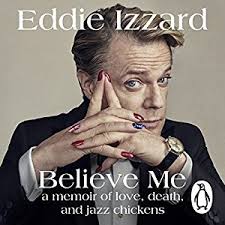
[LISTENED TO: September 13, 2017] Believe Me

When I saw that Eddie Izzard had a book out I was pretty interested to read it.  I have loved his stand-up since 1997 or 1998 and I was lucky enough to see him on his Circle Tour (on the date they recorded it!).  I have been keeping up with his career and trying to see him in whatever he does (although I like my comedy more than drama and he has certainly made the shift towards drama in recent years).

I thought an autobiography or memoir by him would be pretty interesting (even if he claims to be boring).  But when I saw that he read the audiobook, I knew I had to give it a listen (even if it was 12 discs)!

Amusingly, there was a long delay at the library.  The lady at the counter (who is not the librarian–we librarians know the difference) said if I knew his voice, I could just read the book to myself in his voice.  It was an amusing thought, and I possibly could do that, ….yes, but Eddie’s voice is just so fantastic that it never would have worked properly.  Plus, he throws in easily an extra hours worth of footnotes and rambles that aren’t in the print book!  That’s right, an extra hour’s worth of nonsense if you do the audio.   True you don;t get to see the pictures, but it’s a fair trade-off.

Well the book finally came in and I had plenty of driving time to make short work of this 12 hours behemoth.  And I laughed and laughed.  And cried and cried.

Because while Eddie Izzard is an action transvestite (transgender, now) and one of the best stand-ups around, he is also an extremely warm and thoughtful person. He worked very hard to become the success he is.  And he has used his fame to do some absolutely wonderful things for humanity–including raising millions of dollars.  Not bad for an atheist who is sometimes in girl mode and sometimes in boy mode. (more…)

Read Full Post »

« Newer Posts - Older Posts »