 SOUNDTRACK: SIGUR RÓS-() (2003).
 After a staggeringly successful tour, Sigur Rós took some time off. They returned about four years after their successful album with (). I like to think they were trying to make it easier for English speakers to not have to pronounce their Icelandic words, but perhaps they were just being more difficult. For they have made an album title that is hard to search for and hard to say. To make it worse, there are no song titles on the record either. (Although the band did have I guess unofficial titles for them):
- 1.”-” (“Vaka”) 6:38
- 2.”-” (“Fyrsta”) 7:33
- 3.”-” (“Samskeyti”) 6:33
- 4.”-” (“Njósnavélin”) 6:57
- 5. “-” (“Álafoss”) 9:57
- 6. “-” (“E-Bow”) 8:48
- 7. “-” (“Dauðalagið”) 12:52
- 8. “-” (“Popplagið”) 11:43
While looking for these song tracks, I learned that a lot of people think this album is mopey and depressing. And I couldn’t disagree more. I find the songs to be wonderful builders of drama. Track 1 opens with lovely piano and vocals. It’s a pretty melody that is punctuated with odd, squeaky voices. Track 2 is slower, with a nice guitar melody instead of pianos. Track 3 opens with organs and more lovely pianos. The pianos are slow which I usually don’t like, but there’s something about the simplicity and solitariness of their pianos that I find really captivating. I love that it is repetitive and building, edging towards a dramatic conclusion. Track 4 has low drumming that propels the echoing song.
Each of these 4 songs is around 7 minutes long. And while they are not vastly different from Ágætis byrjun, they show the band experimenting within the form. Also, Ágætis byrjun contained several different styles mixed between their epics, whereas this album is all epic.
After the 4th song there is 30 seconds of silence. Which signifies something of a change for the second half of the album.
Track 5 is the slowest, saddest music on the album. But it builds slowly, growing out of that sadness with a cathartic explosion at the end. Track 6 opens with very loud drums (the percussion is spectacular on this album) and drones. It builds and builds with more catharsis at the end. Track 7 is the 12 minute epic that opens with organs and washes of guitars. The opening is slow but you get the sense that it is building towards something–there is tension in the music, especially when it shifts to a minor key around 3:30. It takes over 4 minutes to get to the chorus. And then the song repeats and builds again. The end is an unholy racket until Jonsi is left singing by himself. It’s incredibly satisfying. The final track is 11 minutes long and opens with an upbeat guitar sound. It’s a good song and then the drums kick in around 6:20 and the song gets even better.
So yes, this is a long album full of long songs. And none of it is in English. Not exactly a pop seller, and yet there is something magical about the music on it.
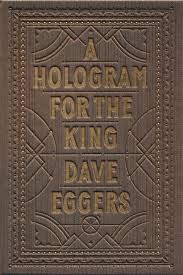
[READ: October 10, 2013] A Hologram for the King
I had been putting off reading this book because I didn’t really like or get the title. Sarah laughed at me when I said this, because the title is very explicit, but I honestly didn’t know what it was supposed to mean. My mind reeled with the metaphorical possibilities. So imagine my surprise when the title is indeed very literal.
The book is about a man named Alan Clay who is an IT sales person. He will be doing a presentation–which will include an interactive hologram–to Saudi Arabia’s King Abdullah. So, a hologram for the king. Simple.
And indeed, the story is quite simple. I had read an excerpt from it in McSweeney’s 38 and enjoyed it quite a bit–not realizing that it was from this book, of course. The excerpt has been changed since then but most of the elements have been incorporated. About the excerpt I said:
a man named Alan is on a flight to Saudi Arabia for business. We learn through the course of the chapter that he has very little money left, that he is divorced and that his daughter is now fighting with her mother (his ex-wife). He composes letters in his head to her trying to figure out the best way to placate the scenario. But he also knows how important this deal is, both for him and for his daughter who needs money for school. So he tries to put everything out of his mind so he can sleep. There’s a lot of wonderful details in this chapter.
None of those details have changed, except we don’t really see as much of the flight.
Alan has landed in Saudi Arabia after not sleeping for 60 hours. He misses the shuttle bust to KAEC (pronounce cake) the King Abdullah Economic Center. So he calls for a taxi. Instead, he gets a young man name Yousef who drives him the 60 or so miles to KAEC. Along the way, Alan and Yousef talk a lot and they hit it off. Yousef has been to America (he studied for a year there) so he understands Americans. He also has no hope for the future of the KAEC. Alan likes Yousef and is dismayed by his attitude about KAEC, but finds him to be enjoyable company (Yousef enjoys jokes and, as a salesman, Alan is full of them). (more…)
Read Full Post »
 SOUNDTRACK: RATBOY JR.-“Champion of the Universe” (2013).
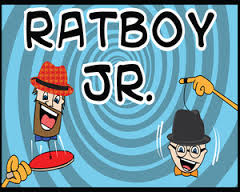 Ratboy Jr was also in the Top Ten of WXPNs 2013 Kids Corner countdown (and was also on the Kids Corner CD). This is a fun song told in a story. It opens slowly with acoustic guitars and tells the story of a young boy with a very big head who wants to be a luchador.










 I Just Read About That...