Feeds:
Posts
Comments

Archive for the ‘Suicide’ Category

SOUNDTRACKKeiyaA-Tiny Desk (Home) Concert #168 (February 11, 2021).

I had not heard of KeiyaA (and have no idea how to say her name), but i was quite stuck by this performance.

KeiyaA is a new performer, and her debut album

Forever, Ya Girl, appeared last year with kismet timing, unveiling her as a fully formed star. The 2020 release is a meditation on the thin line between solitude and loneliness, one that KeiyaA traces and teeters on while defining her Black womanhood.

The set opens with “Do Yourself a Favor.”  For this track KeiyaA sits behind the keyboard a while 13th Law plays a slow funky bass line plays accompanied by finger snaps and backing vocals from the amazingly named Nelson Bandela.

KeiyaA comes out front for the rest of the tracks.

Cornrows braided back with the precision of an architect. Stiletto nails commanding a sampling machine. Gold-glinted lids to match her light-up Beads Byaree earrings. With every move, KeiyaA shines so bright, it’s impossible to look away. And while your eyes are fixated on her person, the music KeiyaA conjures inside Brooklyn’s Electric Garden is what leaves you completely spellbound.

On “Hvnli,” Nelson Bandela plays keys behind a new slow funky bass line.  Keenyn Omari played guitar on the first song but he plays saxophone on this one.  It starts with soft bursts and then he really starts wailing.  With the sax and the syncopated drums from Buz “Hvnli” sounds like a spare jazz song.  She sings:

Gone for so long I prefer to spend time in my pain, hey / Gone for so long I can barely recall the last my phone rang,” she sings on “Hvnli.”

Her album

is a meditation on the thin line between solitude and loneliness, one that KeiyaA traces and teeters on while defining her Black womanhood. Whether it’s through jazzy woodwinds, heavy synths or prickly staccato, the singer-songwriter and multi-instrumentalist shares waves of anguish, depletion, love and elation in a swirling stream of consciousness.

She says that “Most of the work that has carried me has been the writing of Black women Jayne Cortez and Ntozake Shange [she holds up their books] who both speak unabashedly of the plight and joys and general experiences of the Black femme woman.  And those writings are paramount in my work.”

She opens “Finesse Without a Trace” with a wobbly sample and The 13th Law plays some bass chords and splashy drums.  The sample turns into some quotes while Omari plays some wild distorted flute.

The song ends with an improvised flute solo which KeiyaA accompanies with samples and some oohing.  The song slowly morphs into “Rectifiya” a funky piece with response vocals on the chorus.

She ends the whole set with the sampled quote from Nina Simone.

“Everybody is half-dead. Everybody avoids everybody. All over the place…in most situations, most of the time. I know I’m one of those everybodys. And to me it is terrible. And so all I’m trying to do, all the time, is just to open people up so they can feel themselves and let themselves be open to somebody else. That is all. That’s it.”

Apparently the album sounds very different than this Tiny Desk: (The “album version of these tracks boast much of KeiyaA’s own production, affirmations and layered vocals in chorus”).  Perhaps I’m better off just enjoying this and not looking further.

[READ: April 5, 2021] Parable of the Sower [end]

The end of the book provides something of a skeptical feeling of hope for our travelers.   I read in the Foreword that Earthseed was meant to be a trilogy; however, Butler only finished a sequel (and an unrelated novel) before she died.  The Foreword (by N.K. Jemisin also gives a spoiler to Parable of the Talents–uncool!  Even if the books are over twenty years old.

By the way, Jemisin sounds pretty interesting.  Anyone read her?

To me, it is astonishing how many big questions go unanswered in the book.

I had mentioned wondering about the Mars mission and there’s no mention of that again.  We never find out anything about any state east of Central California and we never find out What Happened.  Obviously that information is irrelevant for the characters–they just have to move on–but it’s frustrating not to have even a hint.  [I accept that it wasn’t relevant to Butler, but I’m still curious].  We never hear anything about the community that the corporation bought, either–although there is a kind of follow up with someone from a similar community telling about how badly it turned out for the people living there.

This section starts off with an earthquake.  Earthquakes are bad news in general but in this situation they are much worse because earthquakes tend to cause fires.  And we know who fires attract.  Zahra thinks that they might be able to scavenge for something they can use, but Lauren suspects, rightly, that it would be a dangerous thing to do–druggies and people more violent than they are would be there.  And this proves to be true.

In fact, it proves to be very smart to move on because they wind up putting some distance between themselves and the violent crowds that scavenged the burnt out houses. (more…)

Read Full Post »

SOUNDTRACK: MESHELL NDEGEOCELLO–Tiny Desk (Home) Concert #167 (February 10, 2021).

I bought Meshell Ndegeocello’s Plantation Lullabies back in 1993 on the strength of “If That’s Your Boyfriend,” a funky track that is still pretty great.  I didn’t realize she had been steadily putting out music ever since.

This Tiny Desk (home) concert … includes songs from throughout her career framed by her thoughts on the importance and influence of James Baldwin: “He deserves flowers every day. Most of all because he was willing to discuss things that were painful, hard to look at, hard to see, hard to accept.”

Ndegeocello is a bad-ass bass player with a serious funk edge.  And yet in this Tiny Desk Concert, she strips almost all of that away.

The first song comes from Lullabies, but in this version of “Step Into the Projects” she strips away all the music and turns the song into a spoken word piece (although she does keep the rhythm of the original).

For the next three songs she is accompanied by her longtime guitarist Chris Bruce.

“Price of the Ticket,” is from Ndegeocello’s recent project, Chapter & Verse: The Gospel of James Baldwin, “a 21st century ritual toolkit for justice” inspired by Baldwin’s The Fire Next Time.  In the track, it’s just Bruce’s gentle guitar and Meshell’s quiet voice.

“Forget My Name” from Comet Come To Me (2014) is stripped down from its original reggae arrangement and lays bare the haunting imagery in the lyrics.

She plays some spare bass, but musically it’s all about Bruce–the cool low riff and the pretty high melody.

“Fool of Me,” from her acclaimed album Bitter (1999), ends the set with just vocals and guitar.

Like the other songs, it is spare and beautiful, allowing you to really hear the words.  I love Meshell’s funk, but this is a beautiful set.

[READ: March 29, 2021] Parable of the Sower [2026-2027 (chapter 19)]

I have not read Cormac McCarthy’s The Road, and I don’t intend to.  But I feel like this book acts as a precursor to that one.  And that is something I did not in any way expect.

2026 opens in June, almost seven months after the previous entry.  I’m curious about the distance between entries.  It’s possible that Lauren has dozens and dozens of pages that just said, “today sucked” and we don’t need to see that.  But I am curious about the time jumps.

Is it a way for Butler to move us ahead quickly so that something that needed to take a few years to happen is given the time to do so?  I’m thinking about Mars a bit.  In two years a lot can happen with the space program.  Of course, the President was supposed to cancel the program.  So who knows what’s going on there.  Aside from basic passage of time, did we need to wait six months to see what came next?  I’m not sure.

In June Keith is back–bigger and more confident.  He’s not yet 14, but he’s very successful, bringing home money and gifts (but none for his father).  He has ingratiated himself into a gang by being the only literate one in the group:

They’re all older than me, but not one of them can read or write anything.  They stole all this great stuff and they couldn’t even use it.  Before I got there they even broke some of it because they couldn’t read the instructions. (105)

Lauren and Keith have a heart-to-heart–really their first ever.  He learns a bit about her and while he gains a little more respect he also tells her that she’d never survive out there–she doesn’t know enough.  He also tells her about these new crazies called Paints who paint their skin green or blue or yellow and eat fire and kill rich people.

Keith comes back on her birthday and gives her a present.  A month later he is dead–killed in a horrific and gruesome way.  He was clearly tortured and left to be found.  His death was a message for someone–a rival gang, probably.

But they don’t call the police:

cops liked to solve cases by “discovering” evidence against whomever they decided must be guilty.  Best to give them nothing.  They never helped when people called for help.  They came later and more often than not, made a bad situation worse. (114)

In October, a new component to the story crops up.

Kagimoto, Stamm, Frampton and Company (KSF) has taken over a nearby town called Olivar.  It is small and well to do.  The citizens voted to let their town be taken over–privatized.  They intend to set up energy resources in the community–solar, wind, desalinization.  They mean to own great industries in an area that people have given up on.

Kagimoto, Stamm Frampton: Japanese, German, Canadian.  When I was young, people said it would come to this. Well why shouldn’t other countries buy what’s left of us if we put it up for sale. (121)

This is another aspect of the story that confuses me.  Is it basically that Los Angeles has exploded and the rest of the country is okay?  There’s talk about work up north, but why?  What happened to the country that they/we would let L.A. collapse but nothing else.  Or maybe it’s the entire South West?  Nobody knows anything about the East Coast, apparently.   I’m hoping that they will get explained a bit later on.

Olivar was accepting applications to live there.  They were looking for educated people.  And here we learn that both of Lauren’s parents have PhDs [a commentary on the invisibility of Black scholars?].  Her stepmother thinks it’s a great idea to go to Olivar.  They would be guaranteed safety and security.  But her father is against it, calling it “half antebellum revival and half science fiction” (122).

Anyone KSF hired would have a hard time living on the salary offered. In not very much time, I think the new hires would be in debt to the company.  That’s an old company-town trick–get people into debt, hang on to them and work them harder.  Debt slavery. That might work in Christopher Bonner’s America. Labor laws, state and federal are not what they once were. (121)

Come November, the Garfields have been accepted at Olivar.  The Garfieds include Joanne, Lauren’s one time best friend (who misplaced Lauren’s trust by tattling to her father).  Joanne has been serious with Harry Balter.  But Harry is staying in Rebledo.  Lauren suggests they get married and then Harry can move in with them, but she says that Harry wants to get married and travel north.  He thinks they way Lauren’s father does about Olivar.

But the Garfields are still going: “conservative and sensible and mature and wrong” (128).

In November, Lauren’s father did not come home one night.  They spend days looking for him with no luck.  The search parties uncover all kinds of remains, some of which they think might be her father’s but which turn out not to be.

The search also reveals an aspect of Lauren’s hyperempathy that we didn’t know–sound doesn’t trigger it (she hears a man screaming), only sight does.

Five days alter they have a Sunday survive that turns more or less into a memorial.  Lauren speaks at he service and proves to be powerful preacher.  She speaks of God but presumably she means her own god–the earthseed god.  By mid-December they have a formal funeral–they accept that he would have found his way home by now.

Later, when KSF came for the Garfields, it was in an armored truck

The two movers were a black and a white, and I could see that Cory considered that hopeful.  Maybe Olivar wouldn’t be the white enclave that Dad had expected. (139)

All along Lauren has been romantically involved with Curtis.  People anticipated that she would get married an have a baby with him–something she strongly resisted.  Indeed, her plan all along was to leave Rebledo without him.  But now with Lauren’s father gone (he was the reason she hadn’t left yet–she didn’t want to hurt him), Curtis suggests that they both go.  He’s upset that she wanted to go without him, but she explains that she didn’t want to force him to make that choice.

Two days later, someone burned down the Payne/Parrish house; while that was going on. they robbed three of the other houses including Lauren’s.

I’ve been frightened at the phrases that Butler says that prove eerily prophetic to the last few years:

People are setting fires because they’re frustrated, angry, hopeless. They have no power to improve their lives, but they have the power to make others even more miserable.  And the only way to prove to yourself that you have power is to use it.  (143)

Interestingly, the drug that gave Lauren her hyperempathy–Paracetco–was initially a legitimate drug intended to help victims of Alzheimer’s disease.  Pyro was an accident–a homebrew on the East coast it made it was away across the country.

People on the fire drug get off on watching things burn.  Blaze, fuego, flash, sunfire.  The most popular name is pyro short for pyromania [I’m fascinated that she needed to spell that out as I feel that in 2021 (and much earlier) it was a common abbreviation].

As the year ends, the families try to make due with what they have left.

Then we enter 2027.  Once again it’s six months into the year.  And this is when things change dramatically.   Thieves drove a truck through their wall and set everything on fire.  Nearly everyone in the community was killed.  [I did wonder if it was worthwhile learning anyone’s names, and it was two people I didn’t think twice about who survived].  The description is a violent orgy of death, rape, fire and who knows what else.  It is brutally described.  Lauren escaped.  She had the forethought to run back in and put on clothe and shoes and grab her bug out bag.  No one else in her family had done so. She saw them n bare feet and pajamas and then she didn’t see them any more.  She managed to get outside and to hide until the next day,

She crept back into her community and went to her house which was being looted and stripped. She knew where there were some hiding places and she managed to get clothes for her family as well as money that was hidden in the ground.  She grabbed a gun and got out, looking like all the other miserable looters.

Lauren was sure she was alone.  Then out of the rubble came Harry Balter and Zahra Moss–the youngest wife of Richard Moss the polygamist.  Zahra’s baby was killed (brutally) and an attacker was about to (or had begun to) rape her when Harry saved her (and got beaten for his help).  Neither one had planned for anything like this and they are pretty hopeless.  Lauren decides that three is safer than one and invites them to go North with her.

Zahra’s backstory is interesting.  Richard bought her from her mother who was a drug addict and a prostitute.  Zahra has lived on the streets and she knows what’s what.  She takes them to Hanning Joss, the biggest secure store complex.  I’m fascinated to learn that there are are still megastores and that they have security allowing people to shop safely there–commerce always wins.

Then they do what everybody else does–they head North.  Lauren has decided to pass as a man.  She’s tall and muscular and can do so, so she cuts her hair short.  They encounter much danger and violence but manage to get relatively far north.  Harry is a trusting guy, trying to avoid violence in any way possible.  But Lauren (and Zahra) knows the reality of the situation–kill or be killed; steal or be stolen from.  And with Lauren’s hyperempathy, she can’t afford to let people around her suffer.  She winds up cutting a man’s throat to stop the hurting that he (and she) are feeling.  Harry is appalled at her.  So she finally admits to her hyperempathy assuming they’ll abandon her.  But they do not–three is better than two.

Zahra and Harry become a couple and have unprotected sex (what harm could come from that?)

Then the trio meet another family who seems to be tagging along after them.  Everyone is out for themselves, but Lauren takes pity on this mixed race couple with a baby.  She helps them out at the second Hanning Joss and a few days later, when Lauren saves their baby from a feral dog, they agree that five (or six) is better than three and two (or three).

The new people are Travis Charles Douglas, Gloria Natividad Douglas and six month old Dominic. They are going to Seattle where Travis’ aunt lives.  Travis is quite taken aback when he learns that Lauren is a woman–especially since she saved them, but he’s going to have to get over it.

All of this time, Earthseed has been running around in Lauren’s head, but it hasn’t really shown up.

Then in chapter 18, Lauren starts talking to them about Earthseed.  Travis is a (surprisingly) intelligent man–he knows about entropy.

Travis’s mother was a live in cook for a rich man.  But before that she had written for newspapers and magazines.  She taught Travis to read. The man she worked for had a library and she would sneak out one book at a  time–he didn’t want Travis touching his stuff.

Of course. Slaves did that two hundred years ago.  They sneaked around and educated themselves as best they could sometimes suffering whipping, sale or mutilation for their efforts. (218)

Natividad was a maid and the rich man let them marry:  The son of the cook marrying one of the maids. That was like something out of another era too.

They discuss her poems–Earthseed.  Travis pushes back against her ideas, although never in an aggressive way.

She argues that here is no pore pervasive power than change.  Travis says that nobody is going to worship change.  Lauren says she hopes not

This excerpt from God is Change summarizes this discussion nicely:

“I was looking for God. I didn’t know whether there was a god to find, but I wanted to know. God would have to be a power that could not be defied by anyone or anything.”
“Change.”
“Change, yes.”
“But it’s not a god. It’s not a person or an intelligence or even a thing. It’s just … I don’t know. An idea.”
“It’s a truth. Change is ongoing. Everything changes in some way— size, position, composition, frequency, velocity, thinking, whatever. Every living thing, every bit of matter, all the energy in the universe changes in some way.”
“Sort of like saying God is the second law of thermodynamics?”
“That’s an aspect of God. There are all kinds of changes in the universe.”
“But why personify change by calling it God? Since change is just an idea, why not call it that? Just say change is important.”
“Because after a while, it won’t be important. People forget ideas. They’re more likely to remember God— especially when they’re scared or desperate.”
“Your stuff isn’t very comforting.”
“It is after a while. I’m still growing into it myself. God isn’t good or evil, doesn’t favor you or hate you, and yet God is better partnered than fought.”
“Your God doesn’t care about you at all.”
“All the more reason to care about myself and others. All the more reason to create Earthseed communities and shape God together. ‘God is Trickster, Teacher, Chaos, Clay.’ We decide which aspect we embrace— and how to deal with the others.”
“But nobody’s going to worship change.”
“I hope not.  Earthseed deals with ongoing reality, not with supernatural authority figures. Worship is no good without action. With action, it’s only useful if it steadies you, focuses your efforts, eases your mind.”
“Praying makes people feel better even when there’s no action they can take. I used to think that was all God was good for.”
“That isn’t what God is for, but there are times when that’s what prayer is for. And there are times when that’s what these verses are for. God is Change, and in the end, God prevails. But there’s hope in understanding the nature of God— not punishing or jealous, but infinitely malleable. There’s comfort in realizing that everyone and everything yields to God. There’s power in knowing that God can be focused, diverted, shaped by anyone at all. But there’s no power in having strength and brains, and yet waiting for God to fix things for you. Best to understand that and return the effort: Shape God.”

Lauren thinks he might join her movement.  Zahra is already on board.

She imagines finding and isolated place on the coast and making a deal with the owners–if there were more of them and they were better armed, they could provide security as well as education.

This fantasy, this plan gives the first sign of hope in this bleak world of Lauren’s.  It seems impossible.

Read Full Post »
SOUNDTRACK: MR. BUNGLE-The Raging Wrath of the Easter Bunny Demo (2020/1986).

In 1986, Mr. Bungle released a demo tape called The Raging Wrath of the Easter Bunny.

In 2020, after a reunion tour of sorts, the band rerecorded the album, with some slight personnel changes. Original singer Mike Patton was still there as was masterful guitarist Trey Spruance and bassist Trevor Dunn.  But they had two impressive guests stars (who also performed live with them), Scott Ian (from Anthrax) on rhythm guitar and Dave Lombardo, drummer extraordinaire.

And thus they re-recorded the initial demo.  Fans of Mr. Bungle’s later genre bending work would be a little disappointed because this was pretty much a heavy heavy metal record.  But it is Mr. Bungle so you know there’s gonna be some weird stuff too.

The only song they don’t play from the original is “Evil Satan” which is more or less a goof anyway.

“Grizzly Adams” opens the album with a very pretty guitar instrumental. Spruance really shines with this moody, weird piece.  But even when the full band joins in in the last 30 seconds, it doesn’t prepare you for the heaviness to come.

“Anarchy Up Your Anus” is old school metal–heavy guitars with an Anthrax/Slayer vibe.  There’s even a lengthy scream after the opening drum fills.  This song has an opening narration by Rhea Perlman.  Yes.  Rhea Perlman.  The narration comes from the Chilling, Thrilling Sounds Of The Haunted House Disney album (on the demo they just played the audio from the record).

“Raping Your Mind” is out of sequence from the demo (it was originally song 6).  It continues with the heavy Anthrax-like riffage and some serious drumming.  There’s a cool middle moment where there’s two guitar solos and just bass and drums in the back–there’s some seriously wicked guitar soloing going on.

“Hypocrites /Habla Español o Muere” was originally a longer song, but they decided to shorten it and add this humorous cover of the Stormtroopers of Death song.  The title is mentioned in the first few seconds, then after 30 seconds, the song jumps into a bit of “la Cucaracha” and then segues into “Speak Spanish or Die.”

“Bungle Grind” is really heavy with some classic mosh sections and faster riffage.

“Methematics” is a new song.  It’s a bit more standard heavy metal and not so much early thrash until the double bass drums kick.  There’s lots of parts including a classic punk style in the middle.  This is more akin to the later, adventurous Mr. Bungle, but at 8 minutes it is a little long.

“Eracist” is another new song.  This one is great.  Really catchy with some good old fashion metal riffs and chanted chorus.  There’s a seriously heavy middle section, too.

“Spreading the Thighs of Death” was the third song on the demo.  It’s some good fast thrash with wicked chord changes and massive double bass drum.  There’s some really wild guitar soloing too.

“Loss For Words” is a Corrosion of Conformity cover.  It’s a pretty serious cover version.  Patton’s vocal delivery is even a little different.

“Glutton for Punishment” is another new song that fits into the classic riff an thump thrash.  There’s a whispered vocal part where you can actually hear the words!  And a fascinatingly fiddly guitar solo that left me wondering how he did it.

“Sudden Death” ended the demo and ends this as well.  A heavy chugging riff and super fast thrashing–it’s impressive that they can keep it up for seven plus minutes.  I rather liked the “yes/no” chanting at the end.

This album isn’t for everyone (as most Mr. Bungle albums aren’t).  But it does show off some quality old school metal and some serious skill for a band covering themselves 30 years later.

[READ: March 24, 2021] Zed

I saw this book in Barnes & Noble and fell in love with the cover.  I made sure to look for it at the library and was pretty psyched when it came in.

And I was pleased as soon as I started reading.

Set in the not too distant future, one tech company, Beetle, dominates the world.  I thought that Beetle was pretty inspired name.  It could be Apple (who have a connection to The Beatles, with Apple Records) and it looks a lot like the word Google, although I suppose it is probably closest to being about Amazon–with their online assistant Athena.

Nearly every citizen (the book takes place in London, but Beetle is global) wears a BeetleBand which monitors everything you do–like a Fitbit or Apple Watch on steroids.

It tells you when you are stressed or when you should hydrate or that you shouldn’t have that donut.  Indeed, everything is now really “smart”: fridges, doors, cars.  Everything in your house is monitoring you. And everyone has a Veep, a personal assistant who does everything for you (except for physical things, since it has no body). You pay for all the best stuff in Beetle bucks–the cryptocurrency that replaced actual  money as the dominant currency.  If you didn’t convert your pounds, euros or dollars, when the rate was good, you’re just stuck.

When the book says everyone, it’s really mostly everyone. There are some people who can’t afford such extravagance.  People who don’t work for Beetle get paid in regular money which isn’t very useful.  There are also neo-Luddites who want nothing to do with Beetle.  But they are carefully monitored by Beetle.

Most people work and communicate in a virtual world with avatars that are some version of themselves.  And most importantly, every person has a Lifechain–the algorithm that determines the longevity and happiness you should experience.  This predictions are pretty much never wrong and everyone uses them to judge people–employers, police, etc. Everything you do, every decision you make changes our Lifehchain, which changes you likelihood of doing x y or zed. (more…)

Read Full Post »

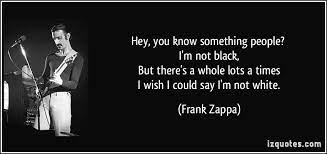
SOUNDTRACK: THE MOTHERS OF INVENTION-“Trouble Every Day” (1966).

Frank Zappa and the Mothers of Invention would play all kinds of music over the course of their existence (even more genres added when Frank went solo).  It’s not even entirely clear how you’d describe their first album Freak Out!

This song opens up side three of the double album and is a bluesy song based around a four note (and one bent note) melody and includes harmonica solo.  The song runs almost 6 minutes long and doesn’t change much until after about five and a half the tempo increases dramatically until the song fades.

It was written after the Watts Riots.  It was an accurate description and also sadly prescient.

Right in the middle of the song Frank states:

Hey you know something people I’m not black But there’s a whole lots a times I wish I could say I’m not white

That seems like it was a pretty powerful thing to say (and something you’d be unlikely to hear on the radio) back in 1965.

The chorus sticks with us

So I’m watchin’ and I’m waitin’
Hopin’ for the best
Even think I’ll go to prayin’
Every time I hear ’em sayin’
That there’s no way to delay
That trouble comin’ every day
No way to delay
That trouble comin’ every day

He certainly predicted the state of 24 hour news

Well you can cool it, You can heat it…
Cause, baby, I don’t need it…

Take your TV tube and eat it
‘N all that phony stuff on sports
‘N all THOSE unconfirmed reports
You know I watched that rotten box
Until my head began to hurt
From checkin’ out the way
The newsmen say they get the dirt
Before the guys on channel so-and-so
And further they assert
That any show they’ll interrupt
To bring you news if it comes up
They say that if the place blows up
They’ll be the first to tell
Because the boys they got downtown
Are workin’ hard and doin’ swell,
And if anybody gets the news
Before it hits the street,
They say that no one blabs it faster
Their coverage can’t be beat

Things haven’t changed since this song was written

And it’s the same across the nation
Black & white discrimination
They’re yellin’ “You can’t understand me!”
And all the other crap they hand me
In the papers and TV
‘N all that mass stupidity
That seems to grow more every day
Each time you hear some nitwit say
He wants to go and do you in
Because the color of your skin
Just don’t appeal to him
(No matter if it’s black or white)
Because he’s out for blood tonight

Perhaps the theme verse for recent events

Don’t you know that this could start
On any street in any town
In any state if any clown
Decides that now’s the time to fight
For some ideal he thinks is right
And if a million more agree
There ain’t no great society
As it applies to you and me
Our country isn’t free
And the law refuses to see
If all that you can ever be
Is just a lousy janitor
Unless your uncle owns a store

It’s a shame this song still resonates.

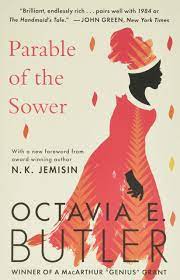
[READ: March 22, 2021] Parable of the Sower [2024-2025]

I found Kindred to be an enjoyable (not exactly the right word, I know) novel.  I thought the premise was really cool and I thought the content was impactful and was conveyed really well.  It was a powerful story that did not shy away from brutality.

But it in no way prepared me for Parable of the Sower.

I didn’t know anything about this book at all before starting.  At first I thought it was neat that it was set in 2024 (hey that’s so close!)  And that, coincidentally, myself and my daughters are almost the same ages as the main character and her father (will this be our future?).

But then, holy crap, Butler doesn’t hold back.

The brutality of Kindred was based on reality.  It was horrible and, in retrospect, hard to believe that people could do such things.  The brutality of Sower, however, is all based on the future projection.  The book was written in 1993. Basically, she posits that in 30 years, America has become a rotting hellscape.  And while we haven’t reached quite the levels that she imagines, there are some pretty eerie accuracies.  I have to assume, given the natural of the elected politicians, that some things are going to get very very spookily prescient.

The book opens in 2024 with a quote from Earthseed.  We don’t know what that is yet, but by the end of this week’s read we’ll learn that Earthseed is a sort of manifesto written by the main character, Lauren Oya Olamina–I didn’t realize her name was given after the first quote from Earthseed until looking back on it.  Each chapter has another quote from Earthseed and then the story unfolds as a series of diary entries. (more…)

Read Full Post »

SOUNDTRACKADITYA PRAKASH ENSEMBLE-GlobalFEST Tiny Desk (Home) Concert #135 (January 13, 2021).

Aditya Prakash EnsembleGlobalFEST is an annual event, held in New York City, in which bands from all over the world have an opportunity to showcase their music to an American audience.  I’ve never been, and it sounds a little exhausting, but it also sounds really fun.
The Tiny Desk is teaming up with globalFEST this year for a thrilling virtual music festival: Tiny Desk Meets globalFEST. The online fest includes four nights of concerts featuring 16 bands from all over the world. 

Given the pandemic’s challenges and the hardening of international borders, NPR Music and globalFEST is moving from the nightclub to your screen of choice and sharing this festival with the world. Each night, we’ll present four artists in intimate settings (often behind desks donning globes), and it’s all hosted by African superstar Angélique Kidjo, who performed at the inaugural edition of globalFEST in 2004.

The second band on the third night is the Aditya Prakash Ensemble.

Performing from their home base in Los Angeles, Aditya Prakash Ensemble highlights songs borne from South India’s Carnatic tradition. Prakash uses his voice as an instrument to tell powerful, emotive stories — which he reimagines in a fresh, dynamic way. Aditya Prakash Ensemble’s modern take on traditional music mixes in jazz and hip-hop and features a diverse L.A. ensemble.

The Ensemble is a quintet.  With Julian Le on piano, Owen Clapp on Bass, Brijesh Pandya on drums and Jonah Levine on trombone and guitar.

As “Greenwood” starts, I can’t quite tell if he’s actually singing words (in Hindi or some other language) or if he is just making sounds and melodies.  It sounds great either way.  He sings a melody and then the upright bass joins in along with the trombone.  He displays a more traditional singing and then Le plays a jumping piano solo which is followed by a trombone solo.  The ending is great as he sings along to the fast melody.

“Vasheebava” is a song about seduction.  Levine plays the guitar on this song.  It starts with gentle effects on the cymbals (he rubs his fingers on them).  Prakash sings in a more traditional Indian style and Levine adds a really nice guitar solo.

“Payoji” is a traditional devotional song and Prakash sings in a very traditional style.  But musically it’s almost a kind of pop jazz.  It’s very catchy with a nice trombone solo.

This conflation of Indian music with jazz is really cool.

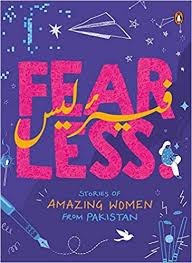
[READ: January 11, 2021] Fearless.

“If one man can destroy everything, why can’t one girl change it?”-Malala Yousafzai

This book begins with this wonderful sentiment:

Not long ago, a wave of exciting books uncovered stories of women through history, known and unknown, for young dreamers around the world.  Women who had been warriors, artists and scientists.  Women like Ada Lovelace, Joan of Arc and Frida Kahlo, whose stories changed the narrative for girls everywhere. Readers around us were thrilled to discover this treasure trove. But there was something missing. They rarely saw women of color and even fewer South Asian women in the works they were reading.

It’s a great impetus for this book which opens with a timeline of Pakistani accomplishments (and setbacks) for women.  The timeline is chronological in order of the birth years of the woman in the book.  Interspersed with their births are important events and the year they happened.

Like in 1940 when women mobilized and were arrested or in 1943 when the Women’s National Guard was formed. In 1948, a law passed recognizing women’s right to inherit property.  In 1950, the Democratic Women’s Association formed to demand equal pay for equal work (it doesn’t say if it was successful).

In 1973 the Constitution declared there could be no discetrmaton on the basis of race, religion, caste or sex.

But in a setback in 1979, the Hudood Ordinance passed which conflated adultery with rape, making it near impossible to prove the latter–and the punishment was often death.

And yet for all of the explicit sexism in Pakistan, the country accomplished something that America has been unable to do–elect a woman as leader. In 1988 Benazir Bhutto became the first female Prime Minister of Pakistan.

The woman in this book are given a one-page biography and a cool drawing (illustrations by Aziza Ahmad).  They range from the 16th century to today.  (more…)

Read Full Post »

SOUNDTRACKSOFIA REI-GlobalFEST Tiny Desk (Home) Concert #133/140 (January 11, 2021).

Sofia ReiGlobalFEST is an annual event, held in New York City, in which bands from all over the world have an opportunity to showcase their music to an American audience.  I’ve never been, and it sounds a little exhausting, but it also sounds really fun.

The Tiny Desk is teaming up with globalFEST this year for a thrilling virtual music festival: Tiny Desk Meets globalFEST. The online fest includes four nights of concerts featuring 16 bands from all over the world. 

Given the pandemic’s challenges and the hardening of international borders, NPR Music and globalFEST is moving from the nightclub to your screen of choice and sharing this festival with the world. Each night, we’ll present four artists in intimate settings (often behind desks donning globes), and it’s all hosted by African superstar Angélique Kidjo, who performed at the inaugural edition of globalFEST in 2004.

The third band on the first night is Sofia Rei.  Rei is

an award-winning Argentine vocalist and songwriter [who] blends South American folk traditions with experimental pop and electronic music. That mix of tradition and modernity extends to her surroundings, which features traditional iconography, exuberant plants and looping pedals.

Rei plays three songs.  “Un Mismo Cielo” (The Same Sky) opens with her looping her voice.  Big electronic drums are added and then JC Maillard is messing around with their electronics to create interesting sounds and textures.   After a quiet introduction, Jorge Glem adds lovely cuatro and Leo Genovese plays a trippy electronic flute-sounding keyboard solo.  I enjoy watching Maillard playing the electronic melodies on the keys and then the quick switch to bass guitar for a funky riff.

“Negro Sobre Blanco” (Black On White) is about putting things into perspective.  Rei picks up the charango as the drums echo in.  The charango plays a delightful echoing melody.  Ana Carmela Rodriguez Contramaestre sings backing vocals and platys percussion.  The middle jam with some wild electronics then Maillard picks up guitar a plays kind of spaghetti western melody.  Then the song returns to the original melody with an even fuller sound.

Saving the best for last, Jorge Glem takes an amazing solo on the cuatro.  His hands move so fast and he simultaneously plays high chords along with percussive strumming.  At the end of the solo he does so fascinating strumming with his fingernails to make a trippy psychedelic sound.  It’s phenomenal.

The set ends with “Escarabajo Digital” (Digital Beetle), a fun dancing song.  The juxtaposition of the fast cuatro with the grooving bassline is fantastic.

I enjoyed this set a lot and want to hear more from her (and Glem who has several of his own albums out).

[READ: January 11, 2021] Okay, Okay, Okay

This story is set around Adamastor University in South Africa.  The focus is on Simon, a former teacher (now an administrator) and his family.  Also his assistant Viwe (and his family).  There’s also Vida, a sound technician for live theater.  She is unrelated to them but she gets pulled into their drama.

The story initially seems to be about how Simon (the “Head of Effective Communication”) is desperately hoping to get promoted into a more plum position. He is currently in a very good position financially, although his former colleagues feel like he threw his soul away when he became an admin.  But the story grows bigger–tackling University policies as well as racism and sexism in South Africa.

But the book opens on Vida. Vida is a sound engineer.  She is familiar with University politics because she has been to a few of Professor Bruno Viljoen’s academic parties.  Viljoen is head of the drama department and invited Vida along because she has done sound work for them.

The one thing I didn’t care for in this book was some of the younger characters occasional throwing in text speak (WTF, LOL).  While those are certainly things people of that age might say (although Vida is in her 40s), it was jarring to see text speak in a character’s thought process:

A dinner party full of academics: WTF, she’d had more fun driving her car around with nowhere to go.

Why not write it out?  It just seemed odd.

Aside from that, Vida is a wonderful character–no nonsense, takes no crap from anyone.  She loves sound and is great at her job.  She also has two dogs and two cats and she is crazy about them.  There’s at least five times when she speaks her mind and it’s terrific.

Cecily is Simon’s daughter.  She is currently taking a class with Boris. He is, everyone agrees, a silver fox.  Even younger girls swoon for him.  But Cecily has known him since she was little and she’s not impressed.

As this class opens, Boris is encouraging them to dig into their past to present a monologue.

Half the people in this class probably have slave ancestry.  That blood flows in your veins.  You are slaves.

Immediately a student raises her hand:

I just want to say that it gives me offense when you, a settler, say that I, whose ancestors are buried here, am a slave.  “Slave” implies that a person is not a person–not a mother, a lover, a human being.

After class Bruno asks Cecily what that was all about.  She says that students are very sensitive these days so just mind what he says.  He then offers to set her up with his nephew–a rather handsome fellow who looks like “a Puerto Rican Ken doll.” (more…)

Read Full Post »

SOUNDTRACK: NADA SURF–North 6th Street (1999).

In 1999, Nada Surf released this collection of songs.

It was named after the street in Brooklyn where we first got together. It has our first singles, some 8-track demos we made in our practice space, some alternate versions, french versions, a couple of unreleased songs and a cover.

Collections like this can be hit or miss, especially when a band had progressed from their original sound.  But there’s nothing embarrassing about this collection at all.  In fact, there’s a lot of really charming stuff on here.

The first two songs, “The Plan” and “Deeper Well” are labelled as 7″ Version.  I don’t really know what that means.  Both songs appear on High/Low.  “The Plan” is a little shorter than the record and “Deeper Well” is a little longer.  They sound similar, although there’s a different drummer, Aaron Conte.  But they both sound really good and are a nice reminder that Nada Surf can really rock out.

The next three songs are demos of songs from High/Low: “Ice Box,” “Psychic Caramel,” and “Popular.”  These also have their first drummer.  These aren’t boombox recordings.  They sound well produced, although they do feel a little more grungy than the album.  “Popular” sounds the most different.  There’s female vocals in the beginning.  The tone of this version seems a bit angrier, but otherwise similar.

The next two songs are French versions of songs from High/Low.  Matthew Caws and Daniel Lorca met at a French school in New York, so their French is quite good.  It’s weird, but cool to hear familiar songs sung in a different language by the same vocalist.  These songs, like the whole High/Low album were produced by Rik Ocasek, so I’m assuming they were done a the same time.

“Traffic” and “Me and You” are (I believe) previously unreleased.  “Traffic” is a quiet instrumental propelled by Daniel’s bass and some gentle pretty guitar picking.  The ambient noise of an ambulance is a nice touch.  “Me & You” is a full-on folk song–acoustic guitars and possibly a suitcase for drums.  Each of these songs is 1:47 long–snippets into bits of songs.

“Silent Fighting” and “Spooky” are alternate versions of songs that appeared on the band’s reissue of their album The Proximity Effect.  They weren’t on the original album (which was lost in record label hell for quite a long time), but they are the final songs on the version that’s largely available.  “Silent Fighting” is a demo version, but again, it sounds professionally done.  And “Spooky” is listed as an Alternate Version.

The next two songs are also unreleased elsewhere.  “The Manoeuvres” is a quiet acoustic ballad.  “Sick of You” is an Iggy Pop song!  Like the original, this song is slow and moody with a distinctly Iggy tone in the vocal delivery.  And like the original, it rocks out in th emiddle with a full on punk assault.  It runs over five minutes long

Up next are two more demos from The Proximity Effect.  “Robot” is a lot quieter.  You can hear the lyrics more clearly and the heaviness is toned down.  “Amateur” sounds pretty similar–full with a great bass sound.  Although it’s missing the wonderful “ooh ooh ooh” part.

“River Phoenix” is a rocking song with a spoken vocal line and fascinating lyrics like:

River Phoenix
Ian Curtis
And river Phoenix
And me and you

And it’s quite catchy.

“Mother’s Day” is another demo from The Proximity Effect.  This is a fantastic anti-rape song with brutal, angry lyrics.  This version sounds a little different–a little less distorted, a little less loud, but still angry.

“Dispossession” is an alternate version from The Proximity Effect.  The album’s guitars sound a bit rawer, the guitars a little crisper and the whole things feels a bit more wild.  This version is a bit cleaner, except for the wild guitar solo.

[READ: November 7, 2020] The Midnight Library

S. brought this home and really enjoyed it.  She thought I’d enjoy it too.  Of course she was right.  I’d probably enjoy most of the books she reads, but I already have my own dozen dozen authors that I like to read already.

The book opens with the fascinatingly dramatic opening sentence:

Nineteen years before she decided to die, Nora Seed sat in the warmth of a small library at Hazeldene School in the town of Bedford.

Nora is playing chess with Mrs Elm the librarian when Mrs Elm gets a call that Nora’s father has just died.

The book jumps nineteen years ahead to “twenty-seven hours before she decided to die.”  The next few chapters list the miseries of her life: her cat is hit by a car, she gets fired from her lousy job (her boss has the funniest, meanest line I’ve read: “I can’t pay you to put off customers with your face looking like a wet weekend.”) (more…)

Read Full Post »

SOUNDTRACK: DIRTY PROJECTORS-Tiny Desk (Home) Concert #45 (July 6, 2020).

  I have a mixed reaction to Dirty Projectors.  I love some of their songs but am indifferent to a lot of other ones.  They have a new song “Overlord” (performed here) that I absolutely love.  But the final two songs are just okay to me.

That said, I love the overall sound of this session.

David Longstreth’s guitar sounds fantastic on “Lose Your Love”.  Although the highlight is obviously lead vocalist Felicia Douglass (her dancing is super fun).  The soaring gorgeous high notes of backing singers Maia Friedman and Kristin Slipp (with the keytar) are otherworldly.

Kristin introduces the second song, “Overlord” the one that I think is so great.  The lead vocals are from Maia.  There’s great guitar sound from David and a lot of fun percussion from Mike Johnson (and Felicia).  But once again it’s those vocals that are wonderful.

Kristin stars lead vocals on “Inner World” while David starts on piano and then jumps to bass.  Maia plays guitar on this one and it’s fun to see everything that Mike is banging on.  “Search for Life” ends the set with no drums.  David is back on guitar and Maia sings lead.  For this song she sings in a very deep voice–it’s quite arresting.  The backing vocals soar high as she sings.

Dirty Projectors’ lineup is always changing.

The lineup often shifts, but the creative nature of this band, headed by David Longstreth, doesn’t. It’s a band in which any member can take the lead, and that’s the beauty here. The band is releasing 5 EPs this year.

I think it’s time I give them more of my time.

[READ: July 10, 2020] “All That You Love Will Be Carried Away”

Stephen King is a truly masterful writer.  He can write a story about a man looking to commit suicide and have you laugh out loud in the middle of it.

It’s not explicitly stated why Alfie wants to kill himself.  He is a salesman (ahh).  He is (happily?) married and has a daughter.  It seems like perhaps the life of a salesman has gotten to him.  He plans to go to a motel and shoot himself.

So how can this terribly sad, genuinely terribly sad, story be funny?

Because for the last dozen years or so Alfie has been collecting graffiti in a book–a small spiral bound book that he has been carrying with him forever.  He looks for graffiti in bathrooms, in phone booths, anywhere he might find some.  He is not interested in the mundane–the ones you might see everywhere: Here I sit, broken hearted–he is looking for the poetic. (more…)

Read Full Post »

SOUNDTRACK: COLDPLAY-Tiny Desk Concert #957 (March 9, 2020).

Once, long ago, a Tiny Desk Concert was for a quiet, presumably up and coming band to play a short show for an internet audience.

Then there was Lizzo and Taylor Swift and now Coldplay (I’m actually not sure if Coldplay or Taylor Swift is actually bigger).  But what makes it fun when a huge band does this is that they have an opportunity to do something very different.

For this Tiny Concert, Coldplay was reduced to just singer (and keyboardist) Chris Martin and guitarist Jonny Buckland (bassist Guy Berryman and drummer Will Champion were “hiding under the desk” because it was so tiny.  But Coldplay was also expanded with the addition of the For Love Choir: Denise Green; Shaneka Hamilton; Dorian Holley; Stephen Mackey; Lamarcus Eldridge; Lawrence Young; Surrenity Xyz; Tiffany Smith and Mabvuto Carpenter.

Watching Martin at the keys, with the For Love Choir behind him and Coldplay guitarist Jonny Buckland at his side, you’d be forgiven for thinking it was the happiest day of his life. Laughing, bouncing to the music and playing off the crowd, Martin and company gave one of the most jubilant, uplifting and memorable performances we’ve ever had at the Tiny Desk.

I’m not sure it’s the most memorable, but it is certainly fun watching Chris Martin (who the rest of the time seems very serious) laugh and smile and joke his way through the set (while being musically spot on).

It’s a bit unfortunate, to me, that Coldplay did this show after their newest album, Everyday Life, from which I haven’t heard a thing (which is crazy since most of their other stuff is so overplayed).

The first song, “Cry Cry Cry” features the choir, but to me the “Cry Cry” of the chorus sounds so much like Janis Joplin “Cry Baby” I can’t get past it.

I also had to laugh that the crowd was responsive to this song (and the other two songs from the new album), but they went berserk for “Viva La Vida.”  And as as he plays those notes and starts singing it becomes really clear that this is Coldplay.  I didn’t really notice Buckland on the first song, but he adds some nice guitar moments to this one.  Everyone lives the choir for these songs, but I feel like their backing lines are not right for the verses.  Their oohs and ahhs are nice though and the end “woah oh ohs” are really splendid with all of those voices.

Martin jokes that he was happy to step inside the internet to be on the Tiny Desk and to see that Bob is a real person.  Then he shouts out everyone in the choir without looking (I didn’t realize they’d been playing together for a while, otherwise I was really impressed that he could remember that many names so easily).

The choir is prominent on “Broken” and Martin joked that, “In a very real way, they’ve Photoshopped our songs to be much better than they actually are.”

As the song fades out he starts playing the opening to Prince’s “1999.”  How unexpected.  Each of the singers in the choir takes a line or two and everyone is really into it.  It sounds great.

They end with “Champion Of The World.”  Martin says that after releasing the new album, they stayed in semi-hibernation.  But this Tiny Desk is pure and wonderful and makes us remember that this is why we do what we do,

Even if they only played one song I would have wanted them to play, it’s still a very positive and joy-filled show.

[READ: March 29, 2020] “Here and There”

McCann has written a novel called Apeirogon which is a fictionalized account of the lives of Bassam Aramin, a Palestinian and Rami Elhanan, an Israeli.  Aramin’s ten-year-old daughter, Abir, was killed by an Israeli soldier.  Elhana’s 13-year old daughter, Smadar, was killed by a Palestinian suicide bomber.

This excerpt only looks at Rami’s story.

Smadar had her grandfather’s watch on her wrist when she was killed.  It was still running.  She made sure to wind that watch every night lest it signal that her other grandfather Yitzak had died during the night too.

Smadar and her grandfather were buried side by side under a grove of knotted carob trees. (more…)

Read Full Post »

SOUNDTRACK: BJ THE CHICAGO KID-Tiny Desk Concert #907 (November 6, 2019).

At first I thought I might enjoy this Tiny Desk Concert because the first song “East Side High 2012 & Forever” was kind of soulful.  There’s some great guitar work from Jairus “Jmo” Mozee and some grooving bass from Joe Cleveland.   The song ends after a bout a minute and a half.

And I really liked the bass line that started the next song, “Good Luv’n.”  Although I didn’t like BJ’s singing style as much on this one.

I also didn’t realize that he was playing a huge medley of songs:

BJ the Chicago Kid took the roughly 15 minutes we generally allot for a Tiny Desk performance as a challenge. The 34-year old R&B mainstay used his moment at the desk to fit in as many of his most cherished songs as possible — Nine songs in 17 minutes to be exact.

I also had no idea that he was famous or had had a lengthy career.

To get the job done, BJ jumped around his 10-year discography, weaving deep cuts and covers from his early Pineapple Now-Laters days with contemporary cuts like “Church” off his major label debut, In My Mind, to heartfelt odes from his latest project, 1123. 

Both most of these songs fell into that sexy R&B singing style with vaguely (or explicitly vulgar lyrics).  “Aiight” has some nice twinkling keys from Delvin Brumfield.

“Church” has these fascinating lyrics: “she want to drink, do drugs, and have sex tonight, but I got church in the morning.”  I really like the addition of the violin from Peter Lee John on these songs–it definitely adds a new sound to R&B.

During “Love Inside” he tells Tony “Rico” Nichols on the drums:  “Rico take me away.”

“Turnin’ Me Up” is musically the most interesting song, and I like the way the chords swell as it takes him to his happy place.

“Get Away” features some sampled backing vocals and this is more of a rapping style song.  This song is especially vulgar (when we fucking, when I’m freakin you) which I find weird in this style of seduction song, but which apparently no one else does.

“Can’t Wait” is a slow broody number about how much he hates waiting for love.  Then comes “Too Good”

I liked about half of this set, although I feel like most of these songs blended into each other as one long 17 minute song.

[READ: February 15, 2020] “The Red Dot”

I really enjoyed the conversational nature of this story.  The telling and retelling of it adds an extra layer of puzzlement to it.  Plus phrases like this are fun:

Now do you want to hear the weird part? she said.  Yes, give me the weird part, I said.

The narrator talks about listening to Anna talking about a man named Karl–a casual acquaintance for both of them.

Karl owned a restaurant called Gist Mill, “where you go to get the gist of good food”.  Karl was skinny and used to run along the river.  Anna assumed running as his way of dealing with his divorce–his wife left him for a guy who designed toothpaste tubes.

When Karl finished his run, he would sit by the river, close his eyes and meditate.  When he opened his eyes, everything was clear.  But on this one instance that he told Anna about, he saw a red dot on the river.  The dot was getting closer. (more…)

Read Full Post »

« Newer Posts - Older Posts »