Feeds:
Posts
Comments

Archive for the ‘Smarty Pants’ Category

SOUNDTRACK: LOS CAMPESINOS!-Tiny Desk Concert #67 (July 5, 2010).

This Tiny Desk show really accentuates what fun can be had with the Tiny Desk format. Los Campesinos! are an eight piece band, but only four of them could come (or could fit, anyhow) in the tiny office.  And so we get a hugely stripped down set from the wonderful Welsh band.

One of the real benefits of these Tiny Desk shows is that it really highlights the songs themselves.  I enjoy Los Campesinos!, but sometimes I feel like their songs are so busy it’s not always easy to know exactly what’s going on.  This set shows how cool and interesting these three songs are underneath all the wild sounds and effects.

It’s also fascinating to watch these four folks perform in this room with nothing to hide behind.  The singer doesn’t even have a microphone, he’s just standing there with his arms behind his back singing to a small room.  And how odd it must be to sing to a dozen or strangers the a capella ending of “Straight in at 101.”

The three tracks all come from Romance is Boring and include the wonderfully titled: “A Heat Rash In The Shape Of The Show Me State; Or, Letters From Me To Charlotte”, “Straight In At 101” and “The Sea Is A Good Place To Think Of The Future.”

As you might be able to guess from the titles, the band is wordy and articulate.  What you might not be able to guess is just how sexually explicit their lyrics are.  Not dirty (well, a little dirty) just unabashedly frank (and its made even more so in this quiet setting).

You can watch (and download here).

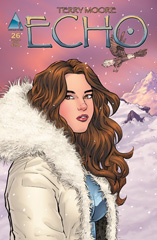
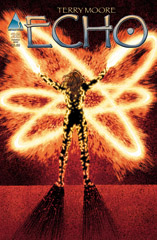
[READ: December 15, 2010] Echo #25 & #26

These next two books in the series are really fantastic.  Issue #25 brings the confrontation with Cain to a head.  It almost comes too quickly–there has been so much lead-up to it that when they finally meet the confrontation is (necessarily) brief and explosive.  They finally meet at the top of a mountain (where yet another really gruesome act is done to someone–although really it pales to what happened to the guy who was practically a skeleton).  The intensity of the confrontation, and the excitement of the denouement made me think that the series was just about to end.

But them comes Issue #26 in which the final panel changes the entire game!  (more…)

Read Full Post »

SOUNDTRACK: SPOON-Transference (2010).

The first thing I think of when I think of this disc is staccato.  I’ve read that the disc sounds like a demo, which I don’t quite agree with, although it does sound very raw and spare (in the way the Peter, Bjorn and John’s Living Thing does).

Although the opener “Before Destruction” has a lot of guitars washing around, the dominant sound is a loud short chord and drum combination.  And from the second song on pretty much, things get very chunky.

“Is Love Forever?” has a riff based on tight military beat with guitar chords that match.  There’s very little in the way of extended notes or washes of sound.  “Mystery Zone,” an insanely catchy little ditty, has a similar staccato/spare sound.  Britt Daniel’s voice is pretty much the only instrument that holds a note for more than a beat.  (That’s not literally true, but it seems like it).  Meanwhile, “Who Makes  Your Money” is all drum beats and single keyboard notes.

It’s surprising that this spare musical accompaniment works so effectively, but it does.  Especially on “Written in Reverse” a predominantly pizzicato piano track that rocks in a maniacally-echoed fashion.  Or even more so on the 5 minute “I Saw the Light” which is basically drums and a propulsive bass.  There’s occasional guitar chords which build until the 2 minute mark, when a  3 minute minor chord piano & drum coda takes over.

“Good Night Laura” is a simple piano ballad (again with pizzicato piano chords), while the final song “Nobody Gets Me But You” is full of cacophonous piano runs, most of which sounding precariously on the verge of being random and out of tune, but which always manage to be weird and cool.

Spoon’s last album had a pretty big hit with “Don’t Make Me a Target” which was similar in style to these songs but which had more orchestration.  These songs feel like an attempt to strip away as much as possible and see what remains.  And I guess it’s a testament to the quality of the songs that it works.

[READ: December 1, 2010] This Isn’t What It Looks Like

Is it the nature of children’s books in the 21st century that they are all parts of a series?  Do authors write singular books with no plan of a sequel?  I don’t know.  And I’m not sure that I mind all that much.

This is the fourth book in the “Secret” series, and Bosch hasn’t lost any steam or quality for this part of the saga.  When we last left our heroes, Cass was in a “coma,” induced from eating a time traveling chocolate bar.  Max-Ernest has more or less given up speaking (which is impossible for him) because he feels so guilty about encouraging Cass to eat the chocolate.  And, Yo-Yoji, their erstwhile third member, is off in Japan with his family.  What is M-E to do?

Luckily for M-E, an old friend has returned to school, and he’s causing quite a stir.  Benjamin Blake (the awkward synesthetic artist from the first book) has returned from his finishing school.  He is polished and refined, he uses words like “chum,” and people seem to be well, interested, in him.  And most interesting of all (as only M-E knows), he seems to be able to read people’s minds!  And that’s just what M-E was hoping to do with Cass while she’s in the coma.

For Cass, you see, is “living” in the past.  In our time, she is in the coma, but her mind has traveled back in time to meet The Jester, the man who holds “The Secret” and the man who is her great- great- great- (etc) grandfather.  She is fully conscious in Renaissance times.  The big difference, though, is that she is invisible!  And, in a wonderful publishing joke (the kind of thing that Bosch does so well) all of the chapters that are about Cass are listed as negative (so the book starts with Chapter “-Ten”).  M-E’s chapters start at one, mind you, so you have positive and negative chapters which all converge at a hilarious interlude called Chapter Zero.

The bit about the Renaissance also works very well because their school is having its annual Renaissance Faire (I wish I went to THAT school!) which is sponsored by a theme restaurant which features jousting and medieval times (but which is not Medieval Times, ha ha–I love that everyone says how bad the burgers are but they love the experience).  The Ren Faire is a wonderful plot set-up because with Cass lost in “real” Renaissance, the parallels to the Ren Faire are very clever and often very funny.  (I also love that M-E keeps trying to explain that there is a big difference between Renaissance and Medieval but no one will listen).

And, indeed, cleverness is the word of the book (and the series).  Bosch is having continued great fun with word play (and footnotes!).  He also has some clever puzzles to solve.  The biggest one is the “Hint to the Secret” that the Jester leaves for Cass (and which even a fortune teller tells her about).  I was convinced I had the puzzle sorted out but I was wrong (and it was so obvious when it was revealed!).  And, there’s also a revelation as to the true identity of Pseudonymous Bosch (not the real life author, but the “author” of the books).  I had put a little of this together myself when reading the dialogue in M-E’s head.  But I won’t spoil the revelation of that.

The only secret I will reveal is to say that this is not the final book in the series.  For awhile it seemed like it was heading towards a conclusion.  But as we dramatically learn, there will be more adventures to come.  And that’s pretty cool.

I love an exciting series, but I especially love an exciting series that doesn’t talk down to its readers.  The footnotes and clever games are very fun and thought-provoking (there’s even two emails that are written in code that you need to decipher (unless you cheat and look in the appendix).  And speaking of the Appendix, there’s also a one-way staring contest and directions on how to make a camera obscura (which features in the book and seems like a fun project).

I honestly have no idea how nay books Bosch plans to write in this series (and I have no idea who Pseudonymous Bosch (the author) is for real.  It’s all part of the mystery that I enjoy quite a lot.

Read Full Post »
SOUNDTRACK: WEEZER-Hurley (2010).

In my head, no band garners as much debate as Weezer.  According to this article, a man offered them $10 million to break up.  Even I go back and forth about whether they are great pop song writers or incredible sell outs.  I mean, look at one of the items on their thanks list for Hurley: “Dodge–makers of the timeless Challenger.”  Is this ironic or not and if not, does it matter?  I’m also torn by Rivers Cuomo’s Harvard degree, which I would think means he would write intellectually rigorous songs–and yet he never does.

But what of it?  Let’s talk about the music.  It has dawned on me that the closest band to compare them to is Cheap Trick.  They write poppy songs with often heavy guitars that are completely sing along-y but are in no way alternative to anything.  And yet everyone loves Cheap Trick, so why not love Weezer, too?

Hurley is no different.  Each song is 3 minutes of pure pop (for crying out loud Desmond Child is on one track–put one in the sell out column).  But they also have some odd fans on this disc: the crew from Jackass sings backing vocals on “Memories” and Michael Cera plays mandolin and sings backing vocals on “Hang On” (although you can’t hear any of them really).  “Hang On,” by the way is their most Cheap Trick-y song to date.

“Unspoken” features a flute and acoustic guitars until about two minutes into a three-minute song.  Then it bursts out of acousticland and into heavy rocking guitars.  The one song I don’t get is “Where My Sex?” which I suppose is the controversial song on the disc.  He’s clearly talking about socks but he keeps saying sex.  I really have no idea why.  It’s not funny, even remotely.  It’s just an odd decision.  And I would say I rather dislike the song, but the chorus is great, as is the totally unexpected third section (which is like  pop song unto itself) that comes in 2 and a half minutes out of nowhere.

“Smart Girls” has to be ironic, but who knows anymore.  To me the most interesting song is “Brave New World.”  It eschews the standard big-chords-for-choruses format they’ve been using with a much heavier guitar and single guitar notes in the verses.  (Although the chorus is, once again super catchy).

My version of Hurley has bonus tracks which are separated by an interesting 10 seconds of string music.  The bonus tracks include a cover of a song from Yo Gabba Gabba ( I really must watch that show some time).  There’s also a great cover of Coldplay’s “Viva La Vida” (in many ways Weezer is like a harder rocking version of Coldplay in terms of success and obvious sellout possibilities).  Although this live version shows that Rivers’ voice is no match for Chris Martin’s.

“I want to Be Someone” is an earnest acoustic solo track while “Represent” (Rocked Out Mix) is one of the heaviest things they’ve done.  I assumed the original was on Raditude, but it’s not.  Evidently it’s the unofficial song of the U.S. World Cup soccer team.  Huh, who knew?

So yes, it seems that they’re pretty much sell outs.  And yet for thirty minutes (all of their discs are so nicely short) it’s easy to stop worrying about “indie or not” and just sing along.

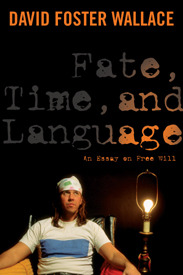
[READ: November 7, 2010] Fate, Time and Language: An Essay on Free Will

First I wanted to thank Columbia University Press for sending me an Uncorrected Proof of this book. I was pretty excited to read it, but to get it a few weeks early was even cooler (and, no, this won’t have any impact on my review).

Second, I wanted to state exactly what this book IS (because I wasn’t entirely sure myself).  The book is a reprinting of David Foster Wallace’s philosophy graduate undergrad thesis.  However, rather than just publishing the thesis (and giving us a short book or a long book with one sentence per page), Columbia University Press has packed the book with a great many essays that help to contextualize the thesis.  The Preface by Steven H. Cahn & Maureen Eckert explains this quite neatly.

So, my (briefer) version of the background: DFW’s thesis is about Richard Taylor’s article “Fatalism” (1962).  CUP has also included Taylor’s initial article (so we can see what DFW is talking about).  And even more than that, when Taylor’s article was initially published, it caused a bit of controversy and a lot of responses.  So, to get a sense of everything that DFW was working with (and against), this book also includes the intellectual dialogue: articles that range from four to ten pages (and also include a dense of Taylor by Steven H. Cahn himself (published in 1964).

Part II of the book includes an introduction by Maureen Eckhart and DFW’s essay.

Part III is a brief look at DFW as a student written by a former professor, Jay Garfield.

Before I get to the meat of the book itself, I wanted to say that I didn’t know anything about this essay.  And I’d thought about this thesis as possibly an interesting piece of philosophy from an author whose work I greatly admired.    Well the introduction to this book states in pretty certain terms that my thinking about this thesis is a massive understatement.  For, in fact, DFW’s thesis undermined Taylor’s argument in ways that no other argument had been able to do before.  His thesis more or less repudiated Taylor’s original essay.  The thesis also won the Amherst University Gail Kennedy Memorial Prize in Philosophy (and a wonderful piece of trivia: DFW’s father James won the same prize in 1959).  So, yes, this isn’t just a graduate undergrad thesis, this is real philosophy.

On to the book: (more…)

Read Full Post »

[LISTENED TO: October 19, 2010] David Foster Wallace Eulogies

There are some really nice eulogies done for when DFW died.  The official (written) memorial service eulogies (from Jonathan Franzen, Zadie Smith, George Saunders and others) are available here (from an outstanding online journal called Five Dials).  They’re all beautiful (I was amused that the second longest one comes from DFW’s editor!).

The audio eulogies are available at The David Foster Wallace Audio Project.  They include two very long full length ceremonies and several news (NPR mostly) reports.  And there’s a lengthy interview with David’s sister, Amy, which is by far the most moving one.

The first of the lengthy pieces is the ceremony from Amherst.  It consists of colleagues, friends and students all telling stories about DFW.  And their collective memories join together to create a great portrait of the man; things that you’d never know about him (except you kind of would) from reading his work.  The thing that really struck me from this memorial was just how many friends he had.  This seems like an insult but it isn’t meant to be; rather, the impression I had was that he was quite a solitary man, holing up with his dogs and his pens.  But the stories and love from his friends during his college years especially are really quite nice to hear, and showcase a side of him that he left out of his work (except, of course, really he didn’t). (more…)

Read Full Post »

SOUNDTRACK: THE DUCKWORTH-LEWIS METHOD-The Duckworth Lewis Method (2009).

This is a CD released by the combined forces of Neil Hannon of The Divine Comedy and Thomas Walsh of Pugwash.  And if that weren’t enough of a sales pitch, the title of the band is a method of calculating cricket scores!  And even more…in concordance with that, this CD is largely about cricket.  Huzzah!  Buncha sellouts.

I don’t know a thing about cricket, but I know about great orchestral pop, and this disc has it in spades.  Some of the more obvious cricket songs are even understandable to non cricketers (the themes of “Jiggery Pokery” are familiar to anyone who has failed in a sport–and musically it sounds like a silent film soundtrack).

“The Age of Revolution” begins with an olde-fashioned soundtrack as well (jazz swing, including tap dancing) but quickly jumps into a dancey discoey verse (the two soundtracks blend surprisingly well in the chorus).  And the revolution?  Well, it has something to do with cricket.  Next, “Gentlemen and Players” is a wonderfully Divine Comedy-esque track complete with harpsichords.

“The Sweet Spot” is another discoey dancey track with some funky bass work (and innuendo whispered vocals).  And “Rain Stops Play” is a fun musical interlude.

“Mason on the Boundary” is the first track that seems distinctly Pugwash-y.  Hannon and Walsh have similar singing styles, and I find it hard to know who is who sometimes.  But this track is clearly Walsh’s and it’s very nice indeed.  Similarly, “Flatten the Hay” has that distinct Pugwash XTC/Beach Boys vibe and it’s quite good.

“The Nighwatchman” is also a very DC type song (it even sounds a bit like “The Frog Princess” but pulls away before being a repeat of that great single by introducing some very 70s sounding strings).  The rest of the disc follows in this same wonderfully orchestrated pop feel.  This a great record that, as far as obscure bands that get no statewide attention go, is top notch.

Oh, an it’s even more fun with headphones!

[READ: October 9, 2010] Skippy Dies

Wow, there’s a lot going on in this book.  It’s exhausting just trying to think of all the topics covered: boarding school life, failed romance (two big ones), life as a teacher, the appeal of pop singer Bethani, the Catholic priest sex scandal, drugs of all kinds, sneaking into a girls’ school, World War I, institutional cover ups, M-theory–which is pretty much the entire universe, and donuts.

But let’s start at the beginning.  Yes.  Skippy dies.  In the first couple of pages.  And what’s fascinating about this is that we don’t care.  I mean, in the scene where he dies, he’s not even the major character.  But then Skippy turns out to be more or less the glue of the book once the story proper begins.

Skippy resides at Seabrook school in Dublin (the best, most prestigious Christian academy in the country–sorry Gonzaga).   His roommate is Ruprecht (perhaps the strangest major character name I’ve read in a long time).  Ruprecht is a large boy who is incredibly smart (he will single-handedly raise the school’s average on the year’s final exams).  He is a computer geek who is obsessed with aliens and SETI.  And he hopes to be able to communicate with the other world by using techniques suggested in M-Theory.  The book does an admirable job explaining M-theory and string theory.  I’m not going to take up space here, but there’s a fine description at Wikipedia (or, if you don’t like Wikipedia, here’s an academic explanation that is written for the lay person).

Anyhow, Skippy and Ruprecht are two of a few dozen boys who reside full time at the school.  (Most of the other kids are day students).  And they have a cadre of half a dozen friends that they hang out with who make jokes at each other’s expense.  It’s a very realistically written entourage.  Mario is Italian and claims to have had sex with many many women (thanks to his lucky condom which he has had for three years).  Dennis is the ballbreaker.  He’s the abusive one (but by most standards, he’s not a bad guy).  And a few other hangers on.

This story of dorm life is a good one.  The boys are funny, their stories believable, even if they are all eccentric in their own way.  And then, one day, Skippy sees a girl playing frisbee at the girls’ school across the way (Ruprecht has a telescope which he uses for the stars, while eveyrone else uses it for the girls’ school).  And Skippy winds up becoming rather obsessed with the unknown “frisbee girl.”

This girls’ school plays a part in the story in another way too.  Carl and Barry are the Seabrook’s thugs.  When Barry hits upon the idea of selling ADD meds to the locals (as diet pills), it’s the girls’ school that he mostly preys on.  For yes, this story is also about drugs. (more…)

Read Full Post »

SOUNDTRACK: A HOUSE-Zop (1991).

This is an EP that came out just after I Am the Greatest.  Released only in the UK, I found it used at Amoeba Records (I must have been on an A House binge at the time).

The EP has 6 tracks.  The opener sounds like a slightly remixed version of “You’re Too Young.”  And “Take It Easy on Me” also sounds remixed (the wah wah seems downplayed somewhat, although the song is still strong).

The other tracks are good songs from this experimental period of A House.

But for me the highlight is “When I Last Saw You,” the 5 minute version of “When I First Saw You” from Greatest.  I’d always liked the album versions’ fascinating concision and almost a capella feel.  This version tacks on a proper song, and it changes the song in wonderful ways.  I will always enjoy that short version, but this EP version is really great.

What’s interesting is that there’s virtually no record of this disc on the web.  Even though the A House homepage is known as ZOP.  The site, sadly, has not been updated for two years.  Although it does answer the question of what Dave Couse has been up to since the late 1990s.

[READ: August 22, 2010] Bloom County: Vol. 2: 1982-1984

This volume of the collection covers a lot of the comics that I know very well.  There are a number of strips that I drew (not traced) and hung in my locker in high school (I wasn’t about to cut up Loose Tales, was ?).  It also covers what I think of as my first era of social and political awareness.

I know I wasn’t totally aware of what was going on, but, via punk music mostly, I became aware of criticisms of Reagan.  And to a lesser degree, so does Bloom County.  I’m actually surprised at how apolitical it seems in retrospect.  My recollection was that it was a massively political strip.   And yes, there are a lot of political references, but for the most part it’s sort of political pop culture jokes.  Reagan gets teased a bit (although again less than you might expect), but it’s not the raging left-wingedness that I fondly recall. (That said, the strip is imbued with leftie political ideas, but they’re sort of mellow compared to now).

Rather, the political jokes are aimed at politicians as a class.  And there are commentaries about political events (couched in terms of local politicians, or, more often, in terms of Bloom County’s nonsensical “scandals” that are based on what really happened (although often the real scandals seem as absurd as the Bloom County ones). (more…)

Read Full Post »

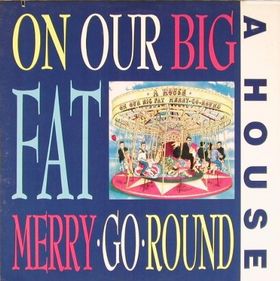
SOUNDTRACK: A HOUSE: On Our Big Fat Merry-Go-Round (1988).

I first heard of A House when “Call Me Blue” came on a Sire records sampler (Just Say Yo).  This was a good sampler of college rock music circa 1987, and “Call Me Blue” stood out for me.

I had kind of forgotten about them until I Am the Greatest came out, which I enjoyed very much.  I have since gone back and bought their back catalog.  This first album sounds so very much like college music circa 1987.   It’s not anywhere near as weird as I Am the Greatest.  In fact, it’s almost quaint in its college (or Modern as they called it back then) rock sound.

I think that if I had gotten it back then, it would have been a favorite of mine.  Listening to it today, it brought back memories of that era, even though this album wasn’t part of that era for me–it just evokes that time so perfectly.

“Call Me Blue” is still a great track.

[READ: August 20, 2010] The Mezzanine

I learned about this book from my friend Rich.  He raved about the minimalism of it. (1)

(1. My copy is dated from 1994.  Clearly back then I thought it was a great idea to sign and date all of the books I bought.  Since then, while working at a library, I find the practice kind of foolish.  However, I do appreciate the fact that I know when I bought it.  In some ways I wish that I had put a post it note with the date of purchase on all of my books).

I read it back in 1994 and enjoyed it. And since I am in the middle of Ulysses, I thought it would be a nice chaser. (2)

(2. In the comments for Ulysses here, the other readers mention that they are reading other books, too.  And I like the idea of the word “chaser” in describing it).

The reason I thought it would make a good chaser is that it is only 135 pages long.  And as I remembered, the action of the book takes place entirely on an escalator ride from the ground floor to the mezzanine of the narrator’s office. (3).

(3. Although that is literally true, the narrator reflects back upon many many events in his life, and almost all of them have taken place some time in the past–going back as far as to when he was a kid). (more…)

Read Full Post »

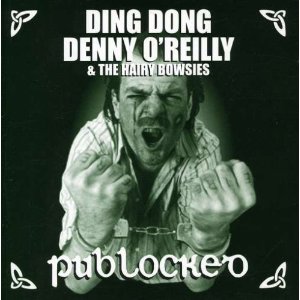
SOUNDTRACK: DING DONG DENNY O’REILLY & THE HAIRY BOWSIES-publocked (1996).

My friend Lar introduced me to this ol’fella (he may have even sent me this CD, as I can’t imagine where I’d have found it on my own).

Ding Dong Denny is the alter ego of Paul Woodfull (who created the Joshua Trio a U2 tribute/pisspull).  And, as I know precious little else about the man, I’ll let the more enlightened pass along the details.

Publocked is a lowbrow amalgam of all kinds of Oirish nonsense.  It’s vulgar and crass and often quite funny.  (Some of the bits stand up to repeated listening–the songs more than the chatty bits, although the chatty bits are especially funny).

Take “The Ballad of Jayus Christ” which sounds like a pretty standard simple ballad until you realize what he’s singing:  “Jaysus O Jaysus As cool as bleeding ice…It’s funny you never rode, coz its you I do my shouting for each time I shoot me load.”

But it’s not all blasphemy.  The “single” “Flow River Flow” is a very sensitive track about the benefits and majesty of the sacred waters (with tin whistles and everything): “When I was just a young man, I sit on the river bank  I loved your gentle water so much I’d have a wank”  With the glorious swelling chorus: “Flow river flow, fuck off to the sea, go where you are wanted, to the deserts of Gobi”

True, now, that’s all kind of crass.  But Ding Dong takes a political stance, too. Take “Spit at the Brits.”  “We Spit at the Brits an we showered’em in a lovely shade of green…we spit at the brits, and then they blew us all to smithereens.”

And what Irishman could ignore the Famine.   “The Potatoes Aren’t Looking the Best” is a view of the famine through the eyes of a farmer.  Shite.

Not everything is a winner, “I Get A Round” is a “cover” of “I Get Around.”   The lyrics are changed to reflect being in a pub (get it?).  And “My Heart Gets So Full (You’d Swear I Had Tits)” is pretty funny, especially since it’s played as an oh so serious ballad, but there’s not much in the world that’s funny for 7 minutes.

So, yes, it’s not quite Joyce, but then Joyce does talk about masturbating by the water, so it’s all equal, right?

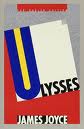
[READ: Week of July 26, 2010] Ulysses: Episodes 7-9

Before I begin, I want to make sure that everyone has checked out Ulysses Seen.  It’s an illustrated rendition of the book.  The details are exquisite and you’ll no doubt pick up things that weren’t as apparent in the proper text.  The only bad thing I can say about it is that it’s not finished yet.  So far Robert Perry has only completed Episode One, and it sure looks like that took a long time (it’s really stunning); but between the details ion the drawing and the extensive reader’s guide that comes with it, one can perch there for quite a while.

I admit that this week’s slog through Ulysses was rather unpleasant for me.  The three episodes included here were massive doses of stream of consciousness.  I actually found them exhausting to read.  Not to mention, in terms of plot advancement, they’re rather paltry. (more…)

Read Full Post »

SOUNDTRACK: THE POGUES-If I Should Fall From Grace with God (1988).

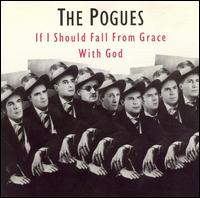
So the cover of this album has James Joyce on it (and a hilarious pastiche of the rest of the band).  I guess we know what we’re in for, then.  This is the Pogues third album and the one that tamed the wildness of their first shambling discs into a (somewhat) presentable collection of songs.  And, jaysus, it’s fantastic.

The Pogues seamlessly blended punk and traditional Irish music (and on this disc they expanded into latin & middle eastern motifs too).  The first track opens with a fast paced Irish whistle playing what is pretty darn close to a jig.  And then Shane MacGowan (whose teeth are not to be believed–or if you are lucky, not to be seen) sings his slurred, fantastic lyrics.  MacGowan always presented such a contradictory figure for this band of well dressed resctable players.  And it’s often confusing wondering how he became the front man of this band.  But he adds that certain something to make the band unforgettable.

“Fairytale of New York” is one of the most gorgeous, sad Christmas anthems ever.  It’s a duet with the much missed Kirsty MacColl and it’s moving and charming, even with the lyrics: “you scumbag, you maggot, you cheap lousy faggot, happy Christmas me arse, I pray God it’s our last.”

Then you get a crazy instrumental, “Metropolis” fast paced, manic energy and a great riff (and of course, let’s not forget the quoted musical passage too).

What’s surprising is when you get a tender ballad like, “Thousands Are Sailing.”  Lyrically it is stunning, and you wonder why is Shane singing it with that slurry voice of his.  And then you realize it works perfectly as a drunken lament.  And then you get to the chorus, and you stop caring and just enjoy the song.

They even throw in a couple of traditional songs, like “South Australia” and “Medley” (which incorporates “Rocky Road to Dublin.”)  But after “Fairytale,” I think my favorite track is “Fiesta” which is a Spanish/Mexican sounding song with loud horns and absurd faux Spanish lyrics.  Ole!

And, just so we know, it’s not all drinking and rollicking, Shane also wrote “Birmingham Six.”  “There were six men in Birmingham / In Guildford there’s four / That were picked up and tortured / And framed by the law / And the filth got promotion / But they’re still doing time / For being Irish in the wrong place /And at the wrong time / In Ireland they’ll put you away in the Maze
In England they’ll keep you for seven long days”

The Pogues would release two more albums before Shane MacGowan took off. And they’re all pretty darn good, but I’ve always been partial to this one.

[READ: Week of July 12, 2010] Ulysses: Episodes 1-3

This is my third time reading Ulysses.  The first time I was a freshman or sophomore in college and I signed up for a James Joyce class because, get this, the Canadian band Triumph had released a CD called Thunder 7 which was supposedly based on the 100-letter words in Joyce’s Finnegans Wake (which I had bought and found impenetrable).  Our teacher was intense and tried to scare everyone off (which worked for some, but not me).  The class was hard (first assignment : read The Odyssey over the weekend for a quiz on Monday).  I enjoyed Dubliners and Portrait of an Artist as a Young Man, but I thought Ulysses was pretty daunting.

I read it again when I re-took the class with the same teacher (not for credit this time, but because I wanted to, imagine that).  And that time I learned to really appreciate what Ulysses had going on for it.  I was also inspired by it to try to write challenging fiction, paying careful attention to every single word, and even possibly using different writing styles in the same book.  (The world appreciates that that never panned out).

But so the careful attention thing: Joyce spent seven years working on Ulysses.  Every single word was charged with meaning.  He even made up his own words.  And it’s very apparent that he was the inspiration for countless modern authors (for better or worse).

I’m excited to pick the book up again.  In part, because it was ranked number 1 on the MLA list of books, but also because for twenty-some years I’ve felt the book was fantastic.  And I wanted to see if I would enjoy it without guided instruction.

I was curious about which edition to read.   Since my class, when there was only really one edition available, many many editions have been published.  There’s a great discussion about this at Infinite Zombies, and I considered getting the third one Judd mentions.  But when I consulted with my old professor, he said the Gabler edition is still the best, so I went with that one.  And that edition is littered with all the notes I took from class and from the supplemental resources.

I decided not to read the supplemental resources this time (although I can;t help but look at my notes), to see what I can get from the story AS A STORY.

I remember a bunch from the class, but one thing that I distinctly remember is that to get everything out of Ulysses, you need to understand Catholicism (the mass in particular), The Odyssey, European history–especially Irish history, and popular Irish culture circa 1920.  It also helps to know Latin.  And these are all things that Joyce would have known and his audience probably would have known.  Every year we move away from its publication, means we know less about what he was writing about.  But that’s all the little details and jokes and blasphemies.  I wanted to see (with some background, which certainly gives me an advantage) if I could enjoy the story without all the help.

So… (more…)

Read Full Post »

SOUNDTRACK: DANGER MOUSE AND SPARKLEHORSE present: Dark Night of the Soul (2010).

Seems like most things that Danger Mouse touches involve lawsuits.  I’m not entirely sure why this disc had such a hard time seeing the light of day.  But it is due for a proper release in July.  Although by now, surely everyone has obtained a copy of the music, so why would anyone give EMI any money for the disc (since they hid it away in the first place).

The name that is not listed above is David Lynch, who is an important contributor to the project.  He creates all the visuals (and the visuals in the book that was the original release format).  He also contributed vocals to two tracks on the CD.  (His vocals are weird and spacey, just like him…and if you remember his voice from Twin Peaks, just imagine Gordon singing (but with lots of effects).

The rest of the disc is jam packed with interesting singers: Wayne Coyne (from The Flaming Lips), Gruff Rhys (from Super Furry Animals), Jason Lytle (from Grandaddy) on my two favorite tracks, Julian Casablancas (from The Strokes), Black Francis, Iggy Pop, James Mercer (from The Shins), Nina Persson (from The Cardigans), Suzanne Vega, and Vic Chesnutt.

I’m not sure if Danger Mouse and Mark Linkous wrote the music already knowing who the singers were going to be, but musically the tracks work very well.  And yet, despite the different sounds by the different singers, the overall tone and mood of the disc is very consistent: processed and scratchy, melodies hidden deep under noises and effects.   Even the more “upbeat” songs (James Mercer, Nina Persson) are dark meanderings.

It took me a few listens before I really saw how good this album was.  On the surface, it’s a samey sounding disc.  But once you dig beneath, there’s some really great melodies, and it’s fascinating how well the songs stay unified yet reflect the individual singers.

EMI is going to have to pull out all the stops to make it a worthy purchase for those of us who have already found the disc.  Since The Lynch book was way overpriced for my purchase, (and they surely won’t include it with this CD), they need to include at least a few dozen Lynch photos (and more).  And with a list price of  $19 (NINETEEN!) and an Amazon price of $15, the disc should clean your house and improve your wireless connection too.

[READ: June 1, 2010] Bloom County Vol. 1

Boy, did I ever love Bloom County.  Back in high school I had more drawings of Opus and crew in my locker than anything else.  (I used to reproduce the cartoons by hand, I was never one of those “cut out of the paper” people.)  And so, there are tons of punch lines that I still remember twenty-five years later.

And yet, despite my fondness for the cartoon (and the fact that I owned (and read many times)) all of the collected books, I was amazed at how much of the early strips I had no memory of, at all.  True, some of the really early ones are here for the first time in collected form (according to an interview there are hundreds of comics in collected form for the first time in these volumes).   But those early 1980 comics…wha? (more…)

Read Full Post »

« Newer Posts - Older Posts »