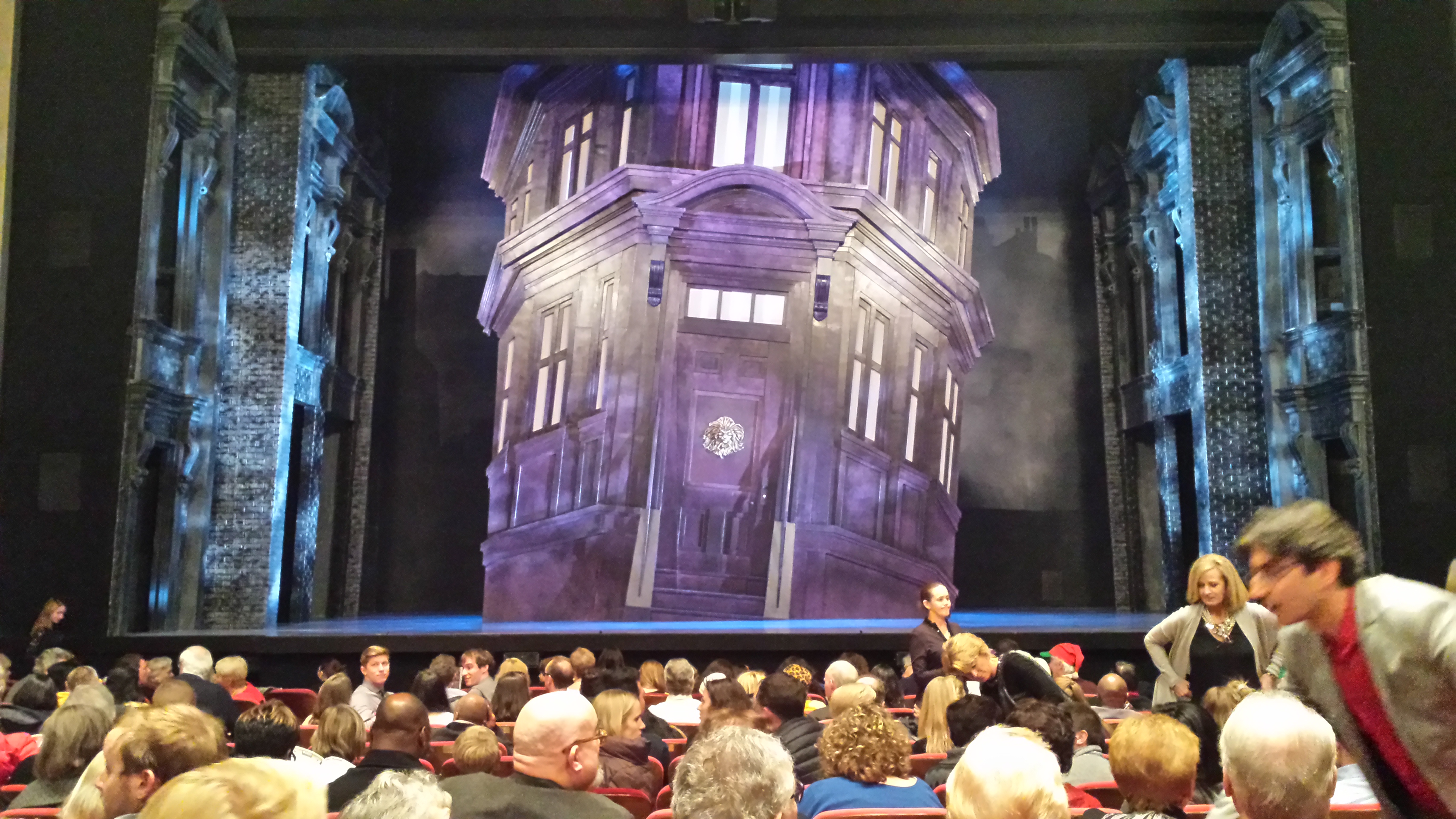
Last night we attended McCarter’s production of A Christmas Carol for the second time (first time was two years ago). We went specifically because it is the last time that they are doing this particular performance of the show (it has been the same for 16 years). Next year they will be doing something entirely new.
We were pretty staggered by the pricing (last time we got super cheap seats but they were pretty far into the corner which ruined some of the magic). But there was a Black Friday special and we had awesome seats (the woman next to me was mad that we paid literally half her price, muhahaha, Scrooge alert!). But wow, what seats!
The show felt more magical and more moving than last time (I was a blubbery mess by the end). It was awesome to see that the entire set was crooked (a great, disconcerting effect). And to really see the sets come forward and the spirit of Christmas future as soon as he came out, those were very cool moments. T. asked if we can sit in the front row next year.
It was also interesting to see who was different in the cast this year. I recognized a few returning members–James Ludwig is awesome as Fred, Scrooge (Graeme Malcolm) was the same (and was awesome–I loved the way he did little things, like kick a rug into place, which were “accidents” but were totally in character). And there were clearly some new faces and new actors. You can see the whole cast at the McCarter site.
And I just read (in New Jersey Stage) that apparently many in the cast are quite well known:
Boasting a gigantic list of Broadway, regional and international credits, the cast of A Christmas Carol includes Leah Anderson, Allison Buck, Billy Finn, Kathy Fitzgerald, Nike Kadri, David Kenner, January LaVoy, James Ludwig, Bradley Mott, Anne O’Sullivan, Sari Alexander, Gabriel Bernal, Andrew Clark, Jean G. Floradin, Heather Gault, Michael John Hughes, Sophie Lee Morris, Gregory Omar Osborne, Patrick Roberts, Daniella Tamasi, and Arielle Taylor.
I just re-read what I had written two years ago and found that I felt exactly the same. So for the rest of the post I am going to keep everything the same (with a few updates).
SOUNDTRACK: NICK BUZZ-Arnold Schoenberg and the Berlin Cabaret (2003).
In 1901, Arnold Schoenberg wrote eight Brettl-Lieder (Cabaret Songs). The songs were short and fun with naughty (cabaret influenced) lyrics. Some 100 years later, inspired by the Art of Time Ensemble who commissioned Nick Buzz to play pieces for their Schoenberg show.
So the guys from Nick Buzz got together and recorded four of the eight pieces. Then Martin Tielli released this disc as number 2 of his Subscription Series. Some of us were a little disappointed when this came out since it was only 15 minutes of music, but the art is wonderful and I have recently rediscovered this disc and have enjoyed it immensely.
Basically the Buzz guys have interpreted the songs in their own style, but they have remained faithful to the original melodies and lyrics (which were in German but are now in English).
“Gigerlette” explores electronic manipulations (presumably by Hugh Marsh) and offers lots of fun samples (what I assume is some earlier recordings of the song in German). It opens with sampled female singing and staccato piano as well as other unusual effects. Then Martin’s vocals come in and the effects clear out and the song becomes simple piano ballad for a brief moment. Then the noises come back in again, playing around with this amusing song. It’s a song of romance and love with the sweet punchline being that cupid is driving their coach and four. At over 5 minutes this is the longest song by far, even if the basic song is just over two minutes.
“Der genugsame Liebhaber” (The Modest Lover) opens with what sounds like a distorted harp (presumably the piano) and scratchy records (from Marsh). This song is about a man going to see his lover, but his over’s pussy loves his bald head so much that she continually climbs atop it. It is charmingly naughty. There’s some wonderful violin from Hugh Marsh on this song
“Galathea” is the most conventional of the three songs. A lovely piano ballad to Galatea.
“Arie aus dem Spiegel von Arcadien” (Aria from the Arcadian Mirror) is super fun. The music is weird and goofy with a very drunken feel. And the chorus is just wonderful “my heart begins to thump and dance just like a hammer’s blow it goes boom boom boom boom boom boom boom boom boom (getting faster and faster). I’ve listened to the original and it is very much the same, although Nick Buzz’s version is much better.
You can find some of these songs on line from a recording at Lula’s Lounge (Dec 9, 2010)
It’s cool to see how they recreate the album so faithfully in a live setting. It’s only a shame that the video isn’t a little closer so you could see just what they are doing.
Nick Buzz-December 9 2010 Lula’s Lounge
[READ: September 1, 2015] My Documents
I have enjoyed some of Zambra’s stories in other locations, so I was pretty excited that McSweeney’s released this collection (translated by Megan McDowell). The book is pretty much all short stories, although the first items feels a bit less fictional and more memoirish.
“My Documents”
This is a brief historical account of Alejandro as a child and as a writer. He talks about when he started working on computers and what happens when the computer dies with the information inside. He explains that this file is in his My Documents folder and he’s going to publish it “even though it’s not finished. Even though it’s impossible to finish it.”
“Camilo”
I read this story in the New Yorker. It concerns the relation of a man and his godfather, whom he has not seen since his father and godfather had a falling out years ago. See my link for a more complete synopsis. I enjoyed it just as much the second time.
“Long Distance”
The narrator worked as a phone operator in 1998. He liked the job–his boss was cool and would let him do anything he wanted so long as he answered the phones quickly. The job was in a travel insurance office and one day he received a call from a man named Juan Emilio. After speaking for a time about various things, the narrator realized it had been 40 minutes since they first started talking. They were expected to call clients back 14 days later as a follow-up and this time Juan Emilio talked with him foe a while and, upon learning that the narrator studied literature, asked if they could meet and discuss books. The narrator was already teaching classes at night, and these two situations overlapped somewhat. I loved the way all of this information is used as backdrop to a romance he has with a student known as Pamela. And the final line is great.
“True or False”
The titular phrase is uttered by a boy, Lucas, who declared, based on an inscrutable internal feeling, that things were True or False. An armchair might be true, while a lamp might be false. Hid father Daniel had a cat, Pedra, even though pets were forbidden in his building. Lucas loved the cat. Then the cat had kittens. There is a metaphor at work about the fatherless kittens and Daniel’s own behavior toward his son. I really enjoyed this story and the strangeness of the true or false brought a fascinating childlike quality to the story
“Memories of a Personal Computer”
The conceit of this story is great. A PC remembers what it was like to observe a relationship as it begins and then ebbs–and how the PC was moved around into different rooms as things changed in the relationship.
“National Institute”
At the school where the narrator went, they were called by number. He was 45. The main subject of his story was 34, although he doesn’t know the boy’s real name. 34 had failed the grade and was made to repeat it, but rather than being sullen about it, he was popular and fun. All of the students were worried about failing–the final test was very hard. But one day 34 approached 45 and told him he had nothing to worry about. The other students didn’t know what to make of it, but he slowly assessed everyone and told them whether they had anything to worry about. By the end of the story, when 45 is brought to the inspector of schools, he is told a lesson he will should never forget.
“I Smoked Very Well”
A look back on smoking and how quitting smoking made him a different (though not necessarily better) person.
“Thank You”
She is Argentine, he is Chilean and they are not together (even though they sleep together). They were in Mexico City when they were kidnapped together. The incident has unexpected moments. It’s a weird story (with some really unexpected moments) but a really good one.
“The Most Chilean Man in the World”
A Chilean couple has decided to separate once she was accepted to school in Belgium. After several months he is convinced that she wants him to visit, so he spends a ton of money and heads out to Belgium. Without telling her. And it goes very badly. But he can’t just leave Belgium, now can he? So he goes to a pub where he meets some new friends who call him the chilliest man in the world. The story hinges on a joke, but the story itself is not a punchline.
“Family Life”
I read this story in Harper’s. I thought it was fantastic–it was one of the stories that made me want to read more of his works. This is story of a man house sitting and the false life that he constructs around him. It was surprisingly moving.
“Artist’s Rendition”
I loved the way this story began. It tells us that Yasna has killed her father. But we slowly learn that Yasna is character in a detective story that an author is trying to write. We learn how the author constructs details about this character and the things that she has experienced which make her who she is. As this story unfolds we see how those first lines proved to be true after all.
This was a great collection fo short works and I really hope to see more from him translated into English.
SOUNDTRACK: マキシマム ザ ホルモン–“え・い・り・あ・ん” (2013) [MAXIMUM THE HORMONE-“A.L.I.E.N” (2013).
This Japanese band has gained some ground in the United States (having two of their songs used in the anime Death Note). They are a heavy, heavy metal band which explores many different genres.
This song begins with a heavy metal guitar riff. When the song proper starts, it is clearly a heavy song sing in Japanese. The second vocalist (who screams like Yamantaka Eye with John Zorn) screams in an unmistakably Japanese way. And at 1:15, the song slows down into a very heavy almost mosh.
So far so good. The first big surprise comes at 1:44 when the song is hijacked by a funk metal bass line and the follow up section is a less scary sounding but still heavy metal.
And then it’s back to the speed and noise once more, complete with a pause and a “Go!” and then a series of “He!y Hey! Hey!” metal chants.
But the real surprise comes at 3 minutes when the whole song slows to a sweet section with whispered vocals by the (female) drummer? And then the entire song switches to a sweet song–delicate guitar and super sweet vocals with the new lyrics “Stop Stop Winny Upload.” The boys come back in, but now they are playing along to this poppy (but guitar heavy) “Stop Stop Winny” section.
This runs on until the end of the song which has the band members conversing in Japanese (about what, I have no idea).
It is one of the most jarring songs I’ve heard, combing at least five genres in its 5 and a half minutes (and several of their other songs do this too (check out “Yoshu Fukushu”).
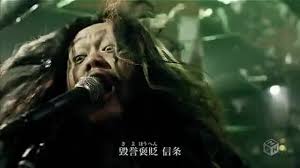
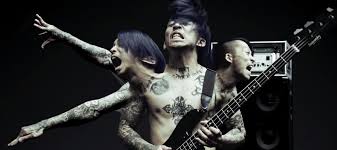
This is to say nothing of the video, which opens with the band playing in a live setting. The guitarist has long hair and a beard and sings the first verses. The short-haired singer sings the really fast growly stuff and the bassist has a nifty side shave.
As the funk metal stuff starts, the band switches to a studio scene in which, why not, they all grow extra heads and limbs.
The Stop Stop Winny section switches from a segment with the drummer in a wedding dress singing gently. And then the final section shows the band in a psychedelic set with little kids and balloons.
It’s fantastic.
[READ: November 13, 2015] Jottings from a Far Away Place
Brendan Connell has this new book coming out (on December 1st) from the wonderfully named Snuggly Press. (I love that it says This is a Snuggly Book) on the title page verso.
Connell has written all kinds of books in his career but this one is something of a new style in his vast oeuvre. The title word “Jottings” is a giveaway because so many of the parts of the book are very short–notations, indeed, jottings, that may or may not relate directly to the rest of the pieces. I found the book a little challenging to read at first because of this. However, when I wrapped my head around what was going on, it really gelled. And when I read it a second time, with this in mind, it worked beautifully.
Connell has created a kind of labyrinth of a book in which some fragments lead to dead ends, but other fragments lead to longer stories. And when you hit on the right path you are rewarded with a longer story that is as well written (Connell’s eye for detail is, as always, exceptional) as it is interesting. But unlike the mythological labyrinth, there is no Minotaur if you take a wrong path–rather there is just a fragment that forces you to think about where it might belong. (more…)
Nels Cline has played guitar with Wilco for over a decade, but he has also played with punk rockers and jazz musicians.
The Nels Cline singers are an instrumental collective that consists of Cline on guitar, upright bassist Devin Hoff and distinctly jazzy drummer Scott Amendola (he plays a lot of percussion including hitting a cymbal with what looks like a chopstick). They also have special guest Yuka Honda from Cibo Matto on keyboards.
Cline gets some great sounds out of his old beat up guitar (I have genuinely never seen anyone play harmonics on the guitar in the manner that he does).
The music is airy and spacey (especially “B86 (Inkblot Nebula)” which features bowed bass and interesting sounds from Honda and a fascinating array of bell and cymbals on the drum set.
For “Thoughts on Caetano” he switches guitars. Unfortunately the video seems to keep cutting out around this point so the rest of the show has to be on audio only. But the sounds that they create are very cool and interesting.
The biggest surprise to me in these pieces is that they are mostly fairly short. They seem like they could be side-long explorations, but “You Noticed” comes in around 4 minutes or so, and “B86” is only around 3 minutes as is “Thoughts on Caetano.”
The final song has a more jazzy feel. Complete with a bass solo and some very interesting drum sounds (I wish I could see how he’s doing them). This last song is the longest it’s about 7 minutes.
I was really surprised by this Tiny Desk–I had no sense of what Nels Cline would play, and it was a real treat to hear.
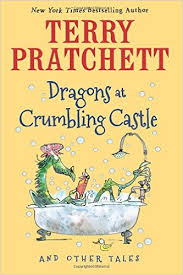
[READ: August 19, 2015] Dragons at Crumbling Castle and Other Tales
Obviously death has never stopped anyone from releasing books. So here is one of the first collections of posthumous stories from Sir Terry Pratchett.
Interestingly, these are stories from when Terry was a young lad. This is a selection of children’s stories that were first run in the Bucks Free Press (he was a junior reporter). They are simple but clever, with lots of ideas that Pratchett would explore in greater details as he got older.
There are 13 stories in the book, and they explore variations on Pratchett’s themes like that the unfamiliar is not the enemy (necessarily) and that people can and often will be surprised by how others react. He also has some a story idea that would blossom into the carpet people stories later on.
“Dragons at Crumbling Castle” (1966) is a story of everyone overreacting when they find a dragon in the castle (it proves to be a little baby dragon).
“Hercules the Tortoise” (1968) is the story of a brave tortoise who crosses his pond.
“The Great Speck” (1969) is an interesting story of huge worlds on tiny specks and how even they can be territorial
“Hunt the Snorry” (1966) is a very funny story about brave hunters going in search of an elusive thing which proves to be something else entirely (and which they inadvertently catch).
“Tales of the Carpet People” (1965) is similar to the Speck story in that it talks about very small people living in a carpet and their adventures as they try to see the world beyond (the dreaded linoleum). I actually found this first story to be kind of dull and confusing, but I can see how it became the basis for greater things.
“Dok the Caveman” (1966) invents all kinds of things but they usually go wrong–nevertheless the inventions themselves are pretty spectacular.
“The Big Race” (1968) differs from all the other stories in that it is about technology (although it is very Pratchettian in the end). It proves to be a race between a gas-powered car and a steam-powered car (and anyone else who wishes to join the race and cheat if necessary).
“Another Tale of the Carpet People” (1967) was more successful perhaps because they actually got off of the carpet and met new people.
“The Great Egg Dancing Championship” (1972) was a funny story about how cheaters never win (and about dancing on eggs).
“Edwo the Boring Knight” (1973) Sometimes boring people to sleep can be your greatest weapon.
“The 59A Bus Goes Back in Time” (1966-67) This story was fun in its time travel (going to the major historical epochs) but more so because of the way the locals reacted to the bus. And that the bus should always try to stay on schedule.
“The Abominable Snowman” (1969) had a lot of fun with the conventions of exploration and how easy it is to derail a planner. It also works with the idea of a very tiny creature that everyone is searching for.
“The Blackbury Monster” (1968) is all about how fame may not be the best thing for a small town after all.
“Father Christmas Goes to Work” (1973) How is Father Christmas supposed to make any money on the other 364 days of the year? Get to work! But what can he possibly do? Not much it seems. (There’s a happy ending of course).
The text is manipulated to make it very kid friendly (large print when people yell, different fonts, dark pages when it is a dark scene, that sort of thing. It also has illustration by Mark Beech, but I found them to be really basic sketches. I would have loved to see more by Pratchett artist Paul Kidby.
I tried to imagine my kids enjoying these stories, but I didn’t really think they would. Perhaps because they aren’t British and it isn’t forty years ago. But I enjoyed them. And each one brought a smile to my face.
SOUNDTRACK: RHEOSTATICS-The Casbah, Hamilton, ON (November 12, 2005).
This is the first show of their’s that I’ve heard open with a kind of jazzy instrumental. MPW is playing a jazzy beat on drums and Martin seems to be noodling on mellow chords (or is that Tim?).
And then they kick into a mellow version of “Bad Time to Be Poor” which I feel doesn’t sound quite right. It may be the recording levels (the quality is crystal clear), but it feels very sharp and not very relaxed.
For “Aliens,” Martin forgot the words a bit. And when he starts “The Tarleks” Dave interrupts after the first line to say that Frank Bonner (Herb Tarlek from WKRP in Cincinnati) emailed him and said that he’s on an internet soap opera now. Then they start talking about Green Day (who Martin describes as “chicken little punk”–the sky is falling but I’m drinking bottled water. But he is mostly upset because instead of holding up lighters people are holding up their fucking cell phones.
Once again the “Song of the Garden” is punky–fast and fun. They also have a ton of fun with “Four Little Songs.” Ford Pier is playing keys again, and his contribution is an old song called “Nanaimo.” He had asked if they should do “Mustang Sally” and Dave said that if they play that it will automatically be the worst gig ever. And they throw in the (I believe intentionally) worst rendition of “Smoke on the Water” I’ve ever heard. Later on, Martin throws in the riff from “Hey Hey My My” into “Feed Yourself” and as that song ends he starts singing the Neil Young song, but he’s got the words all wrong too. It’s pretty funny, especially when he sings “It’s better to burn out than it is to fuck up.”
“Power Ballad for Ozzy Osbourne” has a lengthy intro about Billy Joe Rent–I have to wonder if this and the middle part of “Feed Yourself” about the dead body are impromptu things Dave makes up and then maybe sticks with.
“Satan is the Whistler” i sloppy but good. Until they get to the fast section which totally falls apart. Then they count off 1,2 ,3 4 and speed through it much better.
Martin talks about his CBC movie Black Widow, which I’d love to see. Is it available for viewing anywhere?
Paul McLeod (his band Hibakusha opened, I believe) sings a great version of “Jesus was Once a Teenager Too.” They follow it with a great version of “Stolen Car” (with some amazing backing vocals in the “marijuana” section.
In the previous show, “Try to Praise his Mutilated World” was amazing, but this one falls a little flat I’m afraid. But it is all made up for by the hilarious synth “Record Body Count, Now!” done to the tune of “Everybody Dance Now.”
As the show comes to an end they play “Legal Age Life” and someone shouts “Take it, Ford,” and he seems stunned and then plays an incredibly lame (again, I believe intentionally) solo.
It’s a sloppy but fun show and comes up to their multi-night run at the Horseshoe.
[READ: September 10, 2015] “The Last Cut”
This is a very short story and an emotionally draining one at that.
The premise is fairly simple. Eric, a hairdresser, is happily cutting his new client’s hair. She is pretty and is willing to try a dramatic new cut, which he believes will really accentuate her looks. He is mid-way through the cut when he gets a phone call.
It is Mrs. Swenson. She is Renee’s client, but Renee is out for a couple of days. Mrs. Swenson says that she needs to have her hair cut tonight. And then there’s this dramatic line: “His throat and eyes ached. His chest, too. He wished he had found a way to say no to Mrs. Swenson.” (more…)
SOUNDTRACK: RHEOSTATICS-Starlight Club, Waterloo, ON (November 5, 2005).
After a summer tour, the Rheostatics live site picks up again in November with this, the first of the last few shows the site has until 2007.
This recording was recently added by Soundmann. The quality is excellent, and the show is fantastic.
It opens with a tremendous version of “Saskatchewan.” Then Dave throws in some banter about driving through town and that Ottawa Street exit. He also comments that Kitchener has really let itself go.
We also find out that Martin is getting shocked by his microphone, which will happen periodically.
They play a really fun version of “Me and Stupid” with a rocking ending. Later the crowd is really into the “Hey hey ho ho” ending of “Polar Bears and Trees.”
It also turns out that Ford Pier is helping out on keyboards tonight (although he seems kind of shy about it).
Tim seems to be having a slightly off night, though. His vocals on “Marginalized” make him sound a little under the weather, and he is really creaking on “Here Comes the Image.” And in “P.I.N.” he forgets to play the opening bass note after Martin’s guitar, and they all kind of lose it for a bit. They seem to be laughing and there’s no words until the second verse.
At the end of “Image” someone in the band asks “Michael” to tell us a story about the end of the world (he doesn’t).
At the end of “Jesus was Once a teenager Too” Martin gets a shock and walks off. Someone comments that in the past “every time we gave Martin an electric shock we’d give him a cigarette.”
Despite Tim’s poorer vocals earlier, they sound great for “Claire” and it is one of the best versions of this song ever.
“Stolen Car” is also great (Martin gets shocked again) it’s a long version with a lengthy jammy section and a noodly keyboard solo. There’s even a really aggressive punky “drive away” section.
“Power Ballad for Ozzy Osbourne” features Tim on drums (!) and Ford on keyboards.
Then they bust into a lengthy version of “Feed Yourself” with Trevor (whoever that is) on lead vocals. It sounds weird with someone very unlike Dave singing. But I like when he modifies the line “Like a box a chocolates and a Beatles song. These are the things you can count on” to “Like a box a chocolates and a Rheos song. These are the things you can count on.” There’s a long jam in this song too. And the end of the song sort of morphs into “Record Body Count” with Martin singing the new song while the old song is still in place. The band doesn’t really catch up until the 2nd verse.
Before the encore they talk about their upcoming ten night run at the Horseshoe. But don’t come on Tuesdays since Tuesdays are free the band only gives 65%. The encore features “This Song Ain’t Any Good” which Bidiniband will record later. “Self Serve Gas Station also has an interesting jam at the end.
For the last few songs, they play a really punky version of “Rock Death America”with a verse of Surrender thrown in for good measure. And they end with “Four Little Songs” Paul McLeod comes out for a little song and winds up singing the Rheos’ old song “Crescent Moon.”
What a great show.
[READ: September 7, 2015] “Montana Border”
I don’t often read stories about fighters, but I find that when I do, I rather like them.
This story was really interesting in its timelessness and almost placelessness. It could start anywhere, although it ends bear the Montana/Canada border.
Daniel earns his living by beating people up. He travels from town to town and gets into cage matches. They are a no holds barred, winner by knockout kind of deal. And he is really good at it. He’s not that big, but he is scrappy and he has only lost one fight. Well, he is 12-1 in official fights but he has won many other, less official ones.
Hardcastle has a great vocabulary for the fights. I like when Daniel hit his opponent who had “gone down like someone hit the off button and now he lay there limbstretched on the mat.” (more…)
SOUNDTRACK: RHEOSTATICS-Babylon, Ottawa, ON (July 15, 2005).
Continuing their summer run, the Rheos returned to Ottawa for this show. The recording is a bit muddy and kind of low. But the crowd is really into it, shouting out requests all through the set (which seem especially loud, given the recording). One guy wants to hear “Queer” really badly (and he gets to).
Perhaps it’s the recording, but the usually angry sounding “Marginalized” feels a but muted here. On the plus side, during the short drum break in “I Dig Music” MPW is able to get the “Lakeside Park” fill in perfectly.
I learned that “Night of the Shooting Stars” is an actual Italian holiday (known as The Night of San Lorenzo).
This is the first time I’ve heard them play “”Try To Praise This Mutilated World” which is based on the poem by Adam Zagajewski. Th recording has a poem within the song (“The Expected” by Ken Babstock) read here by Andy Creeggan.
After this, the band loosens up some. They start “Four Little Songs” and then invite two guys from the mailing list who came all the way from NYC up on stage. Rather than making up a little song, the guys sing “Legal Age Life” (and quite well). The song resumes with one little song and throw in a bit of The Doors’ “The End.” And they follow that with “P.I.N.” which has a bit of “My Humps” in it!
There was another guy who was calling for “Satan is the Whistler” all night. And when they finally played it, it was outstanding. Then the crowd cheers for “Shaved Head” and they absolutely kill on that one too–I wish the recording quality was a little better because the show is great.
[READ: September 7, 2015] “Prends Donc Courage”
This story bugged me right from the get go.
It seemed like the author was trying to write a story about a defiantly nontraditional group. There’s a washed up former TV star, there’s a guy with a phantom limb, a guy who is collecting pinball machines, and they are all more or less destitute.
And that can be interesting, but I felt like the story was pushing me away the more I tried to read it.
The main character is a guy named Blue. He is the former TV star. His friend Mitchum is amassing old pinball machines in a garage that is dilapidated (so how did he gets these expensive machines?). The “arcade” is to be called Sick Bay (in honor of Blue’s act–although that’s not really explained).
Blue doesn’t speak, and hasn’t spoken for some time–mostly he’s afraid to find out that his voice doesn’t work anymore. (more…)
SOUNDTRACK: RHEOSTATICS-Stan Rogers Folk Festival Canso NS (July 2, 2005).
Back in 2005, the Rheostatics played two days at the Stan Rogers Folk Festival. The first day’s show was a kind of mash up of the Rheostatics and other bands. Indeed, the recording includes some other artists along with the Rheos.
The sound quality of the recording is okay, but there are some really loud gusts of wind that seem to mar the sound.
They talk about how they are there to represent the excellence that is Toronto.
The second song is by The Chucky Danger Band (who later changed their name to Paper Lions). It is called “Hola” and is pretty fun (there’s a story about them being in a foreign country and writing a song with these simple words in Spanish.
Then the Rheos come back and they are joined by Suzie Vinick and Jill Barber.
Suzie sings a folky, unusual cover of Led Zeppelin’s “Rock n Roll.” Then Jill sings her own “Nothing on Me” a nice folk song. Then they do a super fun version of “Red Dog Ray” by Hank Fisher.
It’s back to Suzie with her cool song “A 7 minor.” Then a folky rendition of “Bad Time to Be Poor” with great backing vocals
Suzie gets one more song, this time, her own “Happy Here.” The last track is a fun rendition of “Claire” with a kazoo solo! It seems like a perfect folk festival setting.
[READ: September 7, 2015] “Working Clean”
This is the first story I’ve read by Ruthnum. It went in a direction I totally did not expect.
I enjoyed the way it opened: “I got my break and found my wife on the same day. The wife part happened by coincidence, but the break–getting in with Jeev–that was a coincidence I made happen.”
So this story is about stand up comics on the comedy set. The narrator, Ed Brooks, and his friend Richie Hagen are struggling as standups. In fact, they both got in trouble at work for calling in sick when his boss heard them on the radio. But Jeev is doing great. And they agree that they hate him.
Jeev was in town because he needed clean material for his upcoming appearance on The tonight Show. So he was working in small clubs to prefect his act. The audience didn’t know who he was, but he still killed. He was on the same bill as Richie and the narrator, but he seemed oblivious to them. (more…)
SOUNDTRACK: RHEOSTATICS-Fredericton, NB (April 8, 2005).
After a night of seeing the Rheostatics, how could I not go and revisit some more shows. This time from 2005.
I get a kick out of the shows that are listed in a town but with no club attached. I wonder how many clubs there are in Fredericton? Anyhow, this recording is really quiet, but it is quite clear, which is nice. The opening band was Grand Theft Bus, and one or two of the guys from GTB join on a song or two.
The show begins kind of mellow, with a slow (but really good) version of “King of the Past.” Dave is uncharacteristically quiet and even says he doesn’t feel like talking much.
Tim reveals that “Bad Time to be Poor” was written about Ontario MP Mike Harris. Someone is out of key and forgot to use a capo as the song starts.
For the 8 minute “Here Comes the Image,” they mix it up “if you think Dave on the drums is exciting, wait till you hear Tielli on the bass. and MPW plays keyboards and “excess.” Then they play “Pornography” which is about the pornogrification of the USA by George W. Bush (obviously) with someone stating “Fuck him” before launching into the song. They were so political that night!
Before “Alomar” some shouts “Adios Roberto Alomar.”
There’s a rather punky version of “Song of the Garden” and “Satan is the Whistler” proves to be sloppy but fun.
“Take Me in Your Hand” is a really delicate version with beautiful harmonies and no ending coda. Dennis from GTB plays a solo during “Legal Age Life” and the finale of “Fan Letter to Michael Jackson” opens with Tielli’s robotic voice processor and devolves into a rather vulgar version of the song.
All in all, it’s a good show, with the guys having a fun time with the openers.
[READ: September 7, 2015] “One Hundred Knives in the Air”
I enjoy Malla’s stories quite a bit. They are typically atypical as is this one.
Set in a grade school, the kids are all delighted to witness their guest performer, Jenny Balak, who is a knife juggler. (I love the idea that a school would bring in anyone whose sole juggling item is knives!). But more than simply juggling them, Jenny is able to keep one hundred knives in the air at a time.
The knives hover way up in the air like a cloud, as she somehow touches only one or two which seem to keep the entire group aloft. The children (even Yusuf, the one kid who can never sit still) are transfixed.
SOUNDTRACK: RHEOSTATICS–The Media Club, Vancouver, BC, (October 23, 2004).
Every year, the Rheostatics would perform what they called Green Sprouts Week in Toronto. In 2004 they did a West Coast version. Five nights in a row at The Media Club (with each show being crazier than the last). There aren’t always recording available for these shows, but on this leg there are recordings from the third, fourth and fifth nights.
This recording is the best of the 3 available shows. Although in the notes, Tyson reveals that he had technical difficulties and was only able to record about an hour of the show. In addition to the songs he missed for technical difficulties, there were also some quieter acoustic songs “Don’t Say Goodnight and “Joey” which he couldn’t get.
And yet, this is an amazing set of music–outstanding by any barometer, with great sound quality (aside from a few drop outs) and an amazing collection of songs. The final night of a run is usually really long, so it’s fun to imagine how much more they would have thrown into this set.
The 7 songs included are “Shaved Head” which is slow and amazing. A raw and raging “Feed Yourself” with a dash of The Jam’s “Eton Rifles” and The Tragically Hip’s “Bobcaygeon” thown in. “Saskatchewan” is broody but also great. “Horses” is intense and goofy at the same time, with someone on the voice modulator doing a computerized “Play that funky music, white boy” recitation.
Torben Wilson from the Buttless Chaps plays drums on “Claire.” “A Midwinter Night’s Dream” is one of those rare songs that the band throws out once in a while, and it sounds great here. They invited the crowd on stage to sit around campfire style.
And “Fan Letter to Michael Jackson” is great here too.
It’s a fantastic collection of songs, leading me to think the entire show must have been amazing.
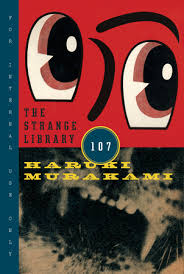
[READ: May 11, 2015] The Strange Library
I saw this book when we were in a bookstore in Denver. I mentioned it to Sarah and she clearly bought it then and gave it to me for my birthday.
It wasn’t exactly risky because it is by Murakami with art direction and design by Chip Kidd (how could you go wrong?) but the book was shrink wrapped in the store, so you couldn’t flip through it.
Imagine my surprise when the slipcase proved to be not a slipcase at all, but a double flip cover that does not get removed but opens up like a secret document. And every (or every other) page is chock full of art from Kidd. My guess is that all of the art is found (rather than created) by Kidd as it appears to be old Japanese pictures and designs. And they reflect (more or less) the action of the story.
The story itself is one of Murakami’s more surreal ones. (more…)
 Last night we attended McCarter’s production of A Christmas Carol for the second time (first time was two years ago). We went specifically because it is the last time that they are doing this particular performance of the show (it has been the same for 16 years). Next year they will be doing something entirely new.
 It was also interesting to see who was different in the cast this year. I recognized a few returning members–James Ludwig is awesome as Fred, Scrooge (Graeme Malcolm) was the same (and was awesome–I loved the way he did little things, like kick a rug into place, which were “accidents” but were totally in character). And there were clearly some new faces and new actors. You can see the whole cast at the McCarter site.













 I Just Read About That...