Feeds:
Posts
Comments

Archive for the ‘Short Story’ Category

june1SOUNDTRACKRHEOSTATICS–The Media Club, Vancouver, BC, (October 21, 2004).

media clubEvery year, the Rheostatics would perform what they called Green Sprouts Week in Toronto.  In 2004 they did a West Coast version. Five nights in a row at The Media Club (with each show being crazier than the last).  There aren’t always recording available for these shows, but on this leg there are recordings from the third, fourth and fifth nights.

This recording is about 90 minutes and I assume is edited (most of their GSMW shows are quite long and there’s no banter).  There’s also crazy static on a certain instrument, which mars the quality somewhat.

The band has added keyboards, although I’m not sure who is playing them.  Morgan from The Buttless Chaps guests on a nice rendition of “Claire.”  They play a great version of “Jesus Was Once a teenager Too” with a folky breakdown in the middle.  “Take Me in Your Hand” is slow but really good.

There’s goofing on “Song of Flight” with them ending the song quickly and booing and yelling “stinky” I wonder what happened).  “Marginalized” is blistering and “Record Body Count” is a little goofy.  Perhaps the highlight of the night is “Horses” which is an amazing rendition and ends with a few lines and acoustic guitars from “When Winter Comes”

The encore starts with “Pornography” a song later recorded by Bidiniband.  Then there’s some great harmonies on “Dope Fiends and Boozehounds.”

They do a rocking version of Talking Heads’ “Life During Wartime” which is musically spot on, even though no one really knows the words.  The last few songs are more covers.  A very fast version of Jane Siberry’s “One More Colour,” and then a perfect version of “Takin’ Care of Business” (the guitar and vocals sound right on) which segues into a sloppy/fun “My Generation.”

The Green Sprouts shows often allow the band to mess around a bit which is great for fans.

[READ: July 21, 2015] “The Duniazát”

I generally like Rushdie’s work.  This story is told in the style of a 1001 Arabian Nights tale and consequently I didn’t enjoy it that much.  Although I was interested to find out some details about those stories.  There was originally a Persian book called “One Thousand Stories” which had been translated into Arabic.  In the Arabic version there were fewer than a thousand stories but the action was spread over a thousand nights, or, because round numbers are considered ugly, a thousand nights and one night more.  Huh.

The stories featured a beautiful storyteller knows as Sheherazade, who told her tales to a murderous husband in order to keep him from executing her.

Anyone, in this story, Rushdie tells a similar type tale.

Set in the year 1195, the great philosopher Ibn Rushd (I enjoyed the play on his own name there) was a physician to the Caliph.  But when he started espousing liberal views, he was discredited (sound familiar?).  He wound up living in a village where Jews were forced to convert to Islam and could not speak of Judaism.  So he felt right at home as an outcast. (more…)

Read Full Post »

nymay156SOUNDTRACK: RHEOSTATICS-Evolve Festival Antigonish, NS (August 28, 2004).

evolveBestThe Rheostatics do a lot of festivals, and they always seem to have a good time.  But it also means a shorter set.  Unlike yesterday’s Nova Scotia show, this one doesn’t focus on new music too much (although they mention that 2067 is coming out Oct 5).

The sound quality isn’t great in this show either–there’s a lot of rumbling which sounds like winds, but who knows.

But they are even more charming in this setting.  Dave compliments someone one on their excellent sign and says that the sign demographic has let everyone down for this show–so her request will be honored.

The show starts with a cool jam from the Whale Music soundtrack (mostly “Song of Flight”).  When they play “Four Little Songs” one of the verses is a verse from Gordon Lightfoot’s “Early Morning Rain.”

Later they play a great version of “Saskatchewan” and perennial festival mates Chris Brown and Kate Fenner are there to help.  During “Stolen Car” they sing a few lines from “Another Brick in the Wall Pt 2.”

There’s great versions of “California Dreamline” and “Claire.”  The show ends with the new song “Power Ballad for Ozzy Osbourne” and there’s a breakdown during the song (no way to know what happened, but they have a laugh about it).

You can see photos from the day here (although none of the Rheostatics).

[READ: July 21, 2015] “The Freezer Chest”

I found Nors’ previous story to be a little odd.  And so I find this one.  There’s something about the way it was written (or translated) that I found it very stiff to read.  It is also told in a flashback which is later revealed to be a very-long-ago flashback.

What is particularly strange about the story is that the “action” of the freezer chest is all of about three paragraphs.  And while the story isn’t long overall, it takes a circuitous route to get to that part.

The narrator is a young girl, Mette.  She is on a boat with her classmates and their English teacher. Mark is also part of the group and he has made it clear that he does not like the narrator (that happened in a previous instance).  The crux is that Mark claimed to be an amazing guitarist.  And he is trying to get the narrator to respond to this information.  She genuinely does not care although she says she believes him. (more…)

Read Full Post »

ny15SOUNDTRACK: RHEOSTATICS-Halifax, NS (August 27, 2004).

haliRheostatics are reuniting for 3 shows at the Art Gallery of Ontario in a few weeks.  And I am going to see them!

So it’s time to listen to a few shows from eleven years ago.  This show doesn’t even mention a club, but that’s ok.  It’s a fun gig in Nova Scotia.  The quality of the recording is not great–it was recorded in the audience and you can hear a lot of audience chatter (and consequently the band is not as clear as could be).

Their final album 2067 is out in just a few months from this show, and they play a few songs from it: “Marginalized” and “The Tarleks.”  Later, Martin describes “Aliens” as “The Tarleks Part 1.” They also play “I Dig Music” a fun jazzy number.  There’s a drum break in the middle and drummer MPW says that he was trying to play the intro from Rush’s “Lakeside Park.”

There’s a wild middle section in “Satan is the Whistler.”

This show has lots of banter, and there’s a discussion about an audience member mocking The Headpins.  And later when a fan says his friend was kicked out, Dave gets mad at the bouncers and seems genuinely concerned for the friend and offers to go get him.

After they play “My First Rock Show” they ask MPW about his first rock show.  The discussion devolves into a discussion of John Cage’s smell (Old man vegan smell).

For “Take Me in Your hand” a fellow named Reid does guest vocals.

During the encore they play a version of happy birthday to someone whose birthday it is which is followed by a scorching version of “Rock Death America.”

As the encore winds down Dave says “dim the lights, chill the ham,” which I assume is a nod to fellow Canadians Shadowy Men on a Shadowy Planet and their 1991 album. Martin (I assume) also starts playing around with a voice modulator as the song ends.

If the audio was better this would be an amazing show.

[READ: July 20, 2015] “So You’re Just What, Gone?”

I’ve enjoyed most of Taylor’s stories, even though his protagonists tend to be unpleasant.  But this story felt entirely too insubstantial for me to get beyond the grossness of it.

Charity is a high school student.  She is flying with her mother to visit her grandmother.  She doesn’t want to go and doesn’t want to be with her mom.  She’s pleased when she and her mom are separated on the plane (five plus hours of freedom!).

She winds up sitting next to a guy who tries to be chatty with her.  She wants none of it, but when she wakes up mid-flight to find that she has been sleeping on the guy’s shoulder, she feels a little bad and actually talks to him.  When Mark asks her if she gets bored and then says she is pretty, you know things are creepy.

When Mark he grabs her inner thigh and squeezes it and then gives her his business card, well, you just know the guy is a shit. (more…)

Read Full Post »

ny13SOUNDTRACK: YES-Drama (1980).

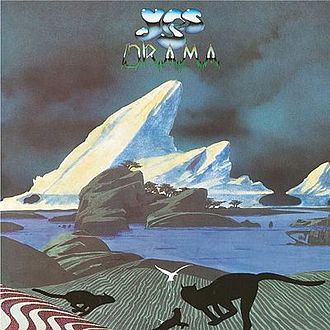
dramaAfter a few albums that seemed to lack the oomph of previous Yes outings, they stormed back with Drama.  And you know it’s proper yes because Roger Dean drew the cover!

It opens with a great dark riff and some big heavy bass—where has that been? And then the vocals come in—band harmonies like Yes has always done, but something is…different.  And around 3 minutes in, you realize what it is, so you check the liner notes (remember those?) and… woah Jon Anderson, the voice of Yes, has defected! And in his place is singer Trevor Horn from…The Buggles?  Trevor and Geoff Downes the creators of The Buggles were fans of Yes and when Anderson and Wakeman (yup, he’s gone too) left, the rest of the gang asked the Buggles to join in.  It seems that they had a few songs already written and the Buggles guys wrote a couple songs and there it is.

Horn’s voice is surprisingly close to Anderson’s (although he can’t reach the high notes.  But he has a lot more bass resonance so when he belts out notes he sounds really powerful.

And it turns out that Drama is very high on my list of Yes albums, even without Anderson  The band seems really interested in making big loud rock again, which I’d rather missed.

“Machine Messiah”  is over 10 minutes long.  There’s some great riffs and time changes and a big soaring guitar solo (Steve Howe is still on board).  There’s a slow middle section about 6 minutes in with acoustic guitar and simple vocals. The final solo repeats the same melody but it seems to swing more.  Near the end they revisit the slow section with new wave keyboard sounds that I imagine Wakeman would never have agreed to play (although he did play some weird sounds on Tormato).  Especially with the group vocals, it’s easy to imagine that this is indeed classic Yes.  A ten minute song with no wasted moments

“White Car” is a 90 second throwaway track.  It feels like they invited the new guys to fill some space. It’s not bad, it’s just a jingle with inscrutable words.  His voice soars similar to Anderson’s but not quite.

“Does it Really Happen?” has a big bass rumbling sound and bright keyboard chords. It goes through several sections before settling into a pretty typical Yes riff.  It really highlights the harmony vocals again. At the end of the song—a complete full stop, a new keyboard riff comes in with a repeat of the rumbling bass. It lasts only for a minute or so and then fades out. But it’s nice that Squire get a chance to wail

“Into the Lens” is a great song that opens side two.  The opening bass and counterpoint keys of is pure Yes, which is why it’s surprising to find out that the main section of the song is pure Buggles.  Indeed, the “I am a Camera” section of the song was written by Trevor and Geoff and they even recorded it with out all the complicated intro on the second Buggles album (it’s called “I am a Camera.”  There’s a cool bass section that may actually be piano? It’s got a cool end section with staccato riff repeated three times and an odd pause signature.  The opening and closing sections (the Yes parts) work really well with the catchy middle part (which really doesn’t sound like Yes at all, but still works and is super catchy).

“Run Through the Light” has fretless bass!  And that bass was played by…Trevor Horn.  What?  Chris Squire is either a total pushover or the most generous founding member of a band ever.  It says Squire played piano on this track, although for the life of me I can’t hear any piano at all.  It’s a decent song but probably the least interesting on the disc.

And them comes the best Yes riff since the early 70s–the wild bass line of “Tempus Fugit.” The song opens with some keyboard phrases that don’t at all suggest there’s going to be something spectacular coming next, but in true Yes fashion, the boppy opening mutates into a super fast bass line with appropriate synth blasts.  While not as great as say Roundabout, it soars over just about everything since then, and is an overlooked Yes gem.

I noticed on 9012live that Squire plays the “Tempus Fugit” riff riff in a bass solo—evidently, Anderson (who returned after this record) refused to sing any sings from Drama.  Which is shame because there’s some good stuff there.

Since almost every Yes album had different personnel, I’m going to keep a running tally here.  This is a biggie, look who has left!

Chris Squire-bass
Trevor Horn (#2, replaced Jon Anderson) vocals
Alan White (#2)-drums
Geoff Downes #4 (replaced Rick Wakeman #2)-keyboards
Steve Howe (#2)-guitar

[READ: April 12, 2015] “Apollo”

This story has two parts, a part set in the present and then a flashback which takes up most of the rest of the story.

As it opens, the narrator is visiting his parents in Enugu.  He says that his parents have changed since they retired.  They used to be critical thinkers (professors both of them).  They often challenged each other in intellectual ways–even seeing who could publish more papers.  But since they have retired, they have become almost comically gullible.  They would often call things “nonsense” but now they believed just about everything they read in the paper.

And on this occasion they are telling the narrator about a robbery that occurred in town.  This is nothing unusual.  But when they say that the leader of the gang was Raphael, it gives the narrator pause.

His parents don’t think he remembers Raphael, but he does.  Raphael was one of the house boys who worked for his parents.  There were a number of them, but this one made an impact. (more…)

Read Full Post »

nymarc22SOUNDTRACK: YES-Tormato (1978).

TormatoTormato might be Yes’ most hated album (I think people grudgingly respect Topographic, but they hate Tormato).  I mean the cover is weird and, well, weird.  The songs are not bad but they sound so far from Yes of old, that it could possibly not be the same band.  And then there’s those lyrics.  I find myself blaming Jon Anderson for this middling period style of Yes music.  It seems like he was the impetus behind topographic and he has a number of songs that he wrote on the last two albums.  If Anderson is the flighty stratosphere, Squire and White are the ground.  And the ground is sorely lacking on the last two albums.

There’s no Roger Dean on this album either (more Hipgnosis with a giant tomato spill (get it, Tormato?  No I don’t really either.)  Wikipedia sheds some light, kind of:

Howe pitched the album’s original title of Yes Tor, referring to the highest point on Dartmoor, an area of moorland in Devon, England. Wakeman claimed to have thrown a tomato at the pictures taken for the album as he was disappointed with its design. The album’s title and cover was changed accordingly. Howe said it was someone at Hipgnosis who threw the tomato on purpose, something that he felt insulted about.  According to White, the band “couldn’t decide on the cover. I think Po … put a picture of a guy with divining sticks on the front.  He took it home one night and decided it wasn’t working. So he threw a tomato at it”. 

I always thought it was drumsticks not divining sticks.  Oh well.  So there that in no way clears up the tomato business.

So what about the music?Even though Squire shows up a bit more here, the overall sound of the album is really tinny—a problem that to me plagued Yes throughout this period—there’s just no low end to speak of, even when Squire does some rumbling lines.

“Future Times/Rejoice” opens with an interesting riff and some cool bass lines from Squire.  The song itself is bouncy and jaunty, moving along briskly with some wild riffs from Howe.  It’s kind of refreshing.  At 3 minutes the song slows down with some counting and replies from Anderson. The next section has a pretty classic Yes build up and then a return to the beginning of the song. There’s a very 70s sounding keyboard solo from Wakeman as the song reaches the end—which is a coda called Rejoice (starting at 5:44), which is mostly harmony voices until the repeat of musical themes from earlier.

Next comes the divisive “Don’t Kill the Whale” This is one of those major heart-on-your-sleeve songs.  Musically it’s pretty interesting with some wild soloing from Howe, but those lyrics: “don’t kill the whale, dig it.” It’s hard not to agree with the sentiment but it’s hard to sing along to at the same time. The synth solo is also astonishingly dated and kind of nauseating at the end.

“Madrigal” is a ballad played on a harpsichord with vocals from Anderson. By the end some classical guitar is played with it. It’s a pretty piece.

“Release/Release” is probably the most interesting track on the disc. It’s got a great riff from Howe and although (some of) the synths feel dated it rocks along like a good mid 70s rocker should. I like the audacity of having a “live” drum solo tacked into the middle of the song. It reminds me in style of a King Crimson track with the staccato voices, although it is not produced anywhere as well.

“Arriving UFO” is, indeed, about seeing UFOs.  The narrator is incredulous about them at the beginning of the song (which comes with very “eerier” keyboard notes) but I believe is a believer by the end. I do like the way the music builds for the bridge, although the chorus is bit much (as is the dreadful synth middle section). The solo section has some really bizarre sounds that I take to be “alien” conversation. Whether its made by guitar synth or voice I cannot say.

“Circus of Heaven” might just be the worst Yes song ever. It is all high notes (even the bass is high notes). Around 2 and a half minutes in the song shifts from its whimsical circus feel to a slightly more serious tone that hearkens back to better Yes moments, but it does not remain there.  Rather, the narrator asks his son what he thought of the circus of heaven and then Anderson’s actual son tells him that he’s not impressed. It’s hard to listen to I have to say.

There’s more high notes in “Onward” which is more orchestral washes and Anderson’s vocals over the top. It’s not really much of a song, frankly, even with the string arrangement.

“On the Silent Wings of Freedom” is nearly 8 minutes long.  It tries to hearken back to longer classic Yes songs but it never quite makes it.  It opens with some loud basslines, some fiddly Howe guitar bits and a lot of synths. But none of it sounds as interesting as previous long song intros. Even the wah wah bass sound isn’t as interesting as the early 70s bass sound. Anderson comes in almost 3 minutes in and around 3:30 the song picks up speed and the elements gel in a really good way. Around 4:45 the song slows down to an interesting instrumental section with bass and percussion.   After a return to vocals the fast part picks up again, although with a synth solo that is less than stellar.  There’s a lot of “la la las” in the song and a mention of “celestial seasons” which I hope came out before the tea brand.  The song isn’t bad, and if Yes didn’t have such a great catalog behind them I might actually say it ‘s quite good, but like the rest of the album it pales with their peak.

And that’s probably why Wakeman left again and, shocking, Jon Anderson split from the band too (which i find surprising since I feel like the past two albums were all about him).

Since almost every Yes album had different personnel, I’m going to keep a running tally here.   With the middling success of Going for the One, this line up stayed in place for a second album!

Chris Squire-bass
Jon Anderson-vocals
Alan White (#2)-drums
Rick Wakeman (#2)-keybaords
Steve Howe (#2)-guitar

[READ: March 22, 2015] “Sleep”

This story was written in direct address, from an “I” narrator to a “you” subject.  It really personalized the story and was interesting to watch as the story that started as one thing was able to travel to another thing entirely.

It begins with the narrator, an older man, talking in his mind to his young lover.  The younger man’s parents are concerned that the narrator is older, but they do like him.  I loved the way it was constructed with him reminiscing about how they met and about how the world allowed them to be together: “Germany, Ireland, the Internet, gay rights, Judaism, Catholicism, they have all brought us here.”  The beginning of the story really stresses their differences, which he finds charming:

“Like a good American you wear a T-shirt and boxers in bed.  I am wearing pajamas like a good Irishman.”

They have been sharing living space for a while, but the younger man is concerned that the older man’s dreams are plagued by nightmares.  The nightmares are so strong that the older man often screams out loud –but does not wake up. (more…)

Read Full Post »

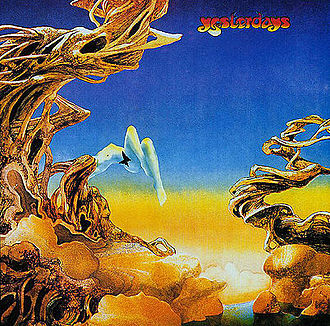
SOUNDTRACKnov2014YES-Yesterdays (1975).

yesterdaysAfter Relayer, Yes decided to explore solo projects.  And their label released this compilation.  Oddly enough, it consists entirely of songs from Yes and Time and a Word (and is a great collection of those two middling albums).  It also includes a B-side called “Dear Father” and, most unexpectedly, a 10 minute version of the Simon and Garfunkel song “America.”  All the songs have the original lineup except “America” which features Howe and Wakeman and was recorded in 1972.

“Looking Around” and “Survival” from Yes and “Time and a Word,” “Sweet Dreams” “Astral Traveler” and “Then” from Time and a Word.

“Dear Father” is a  sounds very much like a B-side from Time and a Word (meaning it has elements of Yes, but not enough to make the song especially interesting).  The bass is thumping, but there’s also strings which add a less dramatic element than intended.  The ending sounds very 1970s (almost like a TV special) especially in the way the strings swell, but it’s a cool sounding end to the disc.

The sound of “America” (which opens the disc) is pure early 70s’s Yes, with loud guitars and some good bass lines.  They play around with the original quite a lot (and most of the time it is unrecognizable).  I really enjoy that the guitar and bass throw in lines from the West Side Storys “America.”  There’s moments where you know the S&G original (like the “I don’t know why” line and they play it totally wrong (but in very Yes fashion), but other parts like “counting the cars on the New Jersey turnpike” sounds different but also really good.  This is the kind of cover I like, when a band completely make a song their own.  I still prefer the original, but this is an interesting interpretation.

The cover of the album is the last one that Roger Dean would do for the band for a while.  It’s pretty bizarre (even for a Dean cover) with a little boy peeing on the back.

[READ: March 27, 2015] “The Great Exception”

This story comes from The Strange Case of Rachel K.  I assume it is a short story, as I can’t even imagine what it might have to do with Rachel K in general.

This piece opens with Part 1 in which there is a brief history of people’s beliefs in the flatness and/or roundness of the Earth.  The Admiral goes to the queen to inform her that the Earth is actually shaped like a pear or violin and he requests gold for his expedition.  But when he is in her presence, and a little drunk and a little bold, he informed her that the earth was really shaped like a woman’s breast.  The orient was the protrusion.  And the nipple–he locked eyes with the queen–was warm and tumultuous.

The Cardinal had given him excessive jewels to wear on his hand and they flash as he makes the shape of breasts in the air in front of the queen.  She gave in to his request and he set sail with no instruments, using only his instincts. (more…)

Read Full Post »

lp14SOUNDTRACK: YES-Relayer (1974).

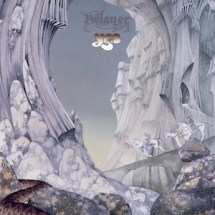
Relayer_REMUS_spine_Layout 1After Tales, Rick Wakeman left and the band decided to get back to business.  So they made an album kind of like Close to EdgeRelayer is a dark album which didn’t quite bring the band back from the brink (even if there were only 3 songs and one was 20 minutes long).  It did sell well, though, even if there wasn’t any real radio airplay.

I happened to really like this album in college (my friend Sean introduced me to it).  And there are moments here that I think are great, but I can also see that it is not quite as user friendly as CttE.

I love the way “The Gates of Delirium” opens with guitar harmonics and some loud bashes of noise (good to see Squire and White asserting themselves again).  The lyrics come in around 2 minutes in and it’s a very sweet and interesting opening.  The guitar lines grow more complex as the song progresses.  Anderson says that it is a war song, with a prelude, a charge, a victory tune, and peace at the end, with hope for the future.  The “listen” section is quite catchy and moves along very well.

Around 5 minutes, the song changes into more of an instrumental sound (the charge, perhaps?)  A great riff begins at 8 minutes with a very heavy section (the battle?) beginning as well.  Squire takes over around 10 minutes and then the chaos befalls the song.  Anderson and White stopped by a scrap yard and bought metal car parts which were used as percussion during the song’s battle section. During the battle section, White formed a tower of the parts and pushed it over to make a crashing sound.

Patrick Moraz (who later played with the Moody Blues) took over for Rick Wakeman on this album and the difference is notable.  Moraz adds good keyboard sounds, but it is so clearly not Wakeman–there’s no flourishes or frills  (one imagines he would have added some pretty impressive things to this battle scene).

At around 13 the battle ends and a new riff comes out–uplifting but not overtly so.  Then things mellow out at around 15 minutes, with some washes of sound.  The biggest surprise comes around 16 minutes when the song turns very pretty with a slow echoey section known as the “Soon” section.  This section, which is about 5 minutes, was released as a single.

Track 2 “Sound Chaser” opens with a weird keyboard sound and then some chaotic drumming and bass (it’s loud and cool).  This is their jazz fusion song with drumming that’s all over the place and some cool riffs.  There are vocals (it’s hard to imagine them fitting vocals on to the riffage).  And then around 3 minutes the song turns into a big time guitar section with a lengthy dramatic solo and then Moraz’ keys underneath.   At 5 and a half minutes the songs mellow out an Anderson begins singing a gentle passage.  Then a little after 6 minutes the songs repeats with the chaos of the opening and that cool riff.  But this time, a noisy guitar picks up afterwards and a new riff begins and slows down until the unusual “cha cha cha/cha cha” section begins.  It’s followed by a wild keyboard solo from Moraz.

“To Be Over” opens with some more gentle notes as it slowly builds. Sitar plays over the notes.  This is a mellow track with lovely harmony vocals.  There’s an interesting slide guitar section in the middle of the song.  It shifts to a very typical Steve Howe guitar solo after that (very staccato and interesting).  By 5 and half minutes there’s big harmony vocals and then around 7 and a half minutes the song breaks into a new, catchier section, with a cool keyboard outro.

It’s not as immediate and grabbing as previous Yes albums, but I still think it’s pretty great.

Since almost every Yes album had different personnel, I’m going to keep a running tally here.   Here we have a new keyboardist, although Wakeman would soon be back.

Chris Squire-bass
John Anderson-vocals
Alan White (#2)-drums
Patrick Moraz (#3 replaced Rick Wakeman)-keyboards
Steve Howe (#2)-guitar

[READ: March 24, 2015] “The Route”

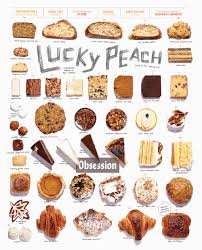
I’m generally puzzled about the fiction in Lucky Peach.  It’s usually food related, which makes sense. But this one wasn’t especially.  And then at the end of the story to see that it was originally published in Escapes in 1990 just makes the whole thing seem odd.  But hey, they can publish what they want, right?

The story is about a married couple–she is a youngster and he is middle-aged.  Their marriage is poor and so they go on a road trip from New York.

Each entry in the story is about a spot and what they did that day–traveling through Connecticut and Spotsylvania, Virginia.  Until they get to North Carolina where he is bitten by a bat.

And this is evidently, fatal.

They continue on South, with this soon to be fatality proving to be an aphrodisiac.  They go through Georgia and into Florida. And they finally get to Mile 0 in Key West.

The whole story was strange and unsettling and I really didn’t get a lot out of it. It seems odd that they would bother to reprint it here.

~~~~~~~~

The rest of the issue was, as usual, excellent.

There were several articles about wheat and other grains and interviews with different chefs.

But my favorite article was the one about Colonial Chocolate (and how Mars got involved).  And my second was about the Monopoly game at McDonalds which I’ve never played and had no idea was over 25 years old.

The theme of the issue is obsession, and there are obsessions about endives (pronounced ondeev) and Pizza (including the guy with the record for most pizza boxes) and so much more.

The story about a Jewish man and his love of pork was interesting, especially the part about pork roll:

She takes a bite and her eyes roll back.  Then she hands it to me.
As I dig into my first Taylor Pork Roll I realize that everything I appreciated in the ham… is more concentrated in this superior sandwich.  It’s saltier porkier and smokier and the flavor lingers on the tongue….  It’s like a ham sandwich squared.

There’s also a fascinating look at Ranch dressing and its belovedness in West Virginia.

I may not always love the stories, but Lucky Peach continues to be a great magazine.

Read Full Post »

april6SOUNDTRACK: REGINA CARTER-Tiny Desk Concert #54 (April 11, 2010).

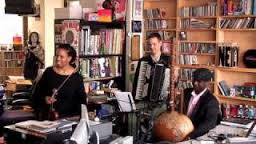
reginaRegina Carter is a (jazz mostly) violinist (although I am unfamiliar with her).  Her then new album, Reverse Thread, was a collection of African melodies played via Carter’s jazz sensibilities.  She had been playing with a larger group on tour, but she decided to strip down the band to just herself on violin, Will Holshouser on accordion and Yacouba Sissoko on kora.

They only play two songs, although since the set is 12 minutes, they are long songs (about 6 minutes each).  And they are beautiful and meandering with many solos.

I have to admit that for the first s9ng, “N’Teri” (written by Habib Koite) I feel like the kora comes across as the main instrument.  I could listen to Sissoko play that all day.  Although by the middle of the song Carter and Holshouser trade off solos, violin to accordion, which is pretty cool.

“Kanou” (written by Boubacar Traoré) is a bit more upbeat and almost dancey.  In this song all three musicians get equal billing and its really cool the way each instrument seems to come to the fore a little.  I also enjoyed that even though this is Regina Catrter’s show, she puts her violin down for a bit while Holshouser takes a long accordion solo.  But mostly they all work together perfectly–a wonderful combination that I’ve never heard before.

[READ: April 14, 2015] “Musa”

This is a simple story of loss and how it can affect everyone around them.

Musa is the narrator’s older brother.  He is a strong figure in the family and the narrator respects him like no one else.   Their father had disappeared long ago and Musa was more or less the man of the family.

And then Musa was murdered.  The narrator was upset of course, but he was also offended by this because he imagined his brother was invincible and even worse, the way he died was so insignificant.

But it hit his mother even harder.  She acted as if she were widowed and she treated the narrator as an insignificant afterthought.  Her whole life was soon dedicated to mourning Musa and to finding his killer. (more…)

Read Full Post »

march30SOUNDTRACKJAKOB DYLAN-Tiny Desk Concert #53 (April 2, 2010).

jakobI was not a fan of the Wallflowers–I had an unfair dislike of Jakob Dylan.  But I can appreciate his songwriting skills and that, although he looks and sounds a ton like his dad (especially with sunglasses on) he holds his own very well.

But for me the most interesting part of this solo band is his backup singers–Kelly Hogan (whom we just saw touring with The Decemberists) and Neko Case (!–there’s no photos available, so you’ll have to watch the video to see her awesome hair).  Joining Dylan on guitar is Paul Rigby.

There’s something old school about “Nothing But The Whole Wide World” (probably the refrain of practically spoken “nuthin”) that I really like.  I enjoyed the way the backing vocalists don’t do as much as you might think–their restraint is really infectious.

“Everybody’s Hurtin'” is a nice minor key song (obviously a downer) and the backing singers contribute a lot more to this one.

The final song, “Holy Rollers for Love” features Hogan and Case doing different things which really fill out the song.

I guess I’m not sure how successful he would have been had his name not been Dylan, but this is an enjoyable concert and makes me reevaluate Dylan’s career somewhat.

[READ: April 13, 2015] “This is an Alert”

Here’s yet another story from Thomas Pierce that I really liked.

The story is set in some future time (although it doesn’t seem that distant) in which there are wars going on in the upper atmosphere.  And it has a trope that I rather enjoy in short stories (although I would find annoying in a novel).  Pierce gives us no details about the war or the future or anything.  We are thrown into the story and we just have to deal with it.

It is written in first person and the narrator assumes we know what is going on. So, as the narrator (a mom) and her family are driving to her mother in law’s house.  They are all crouched down on the side of the road with gas masks on.  They are hot and cranky and they will definitely be late for lunch.  And all of this because of the speaker yelling “This is an Alert.  This is an Alert.”

She wonders whose voice it is coming out of those speakers and how he was chosen for the job.  But when the alerts stop, they pile back in the car and continue on their journey. Her husband, Neal, is sick of the drills, of the gas mask, of the constant interruptions.  They seem to have gotten worse lately–especially today.  And perhaps the most annoying thing of all is that you can’t see anything of this war–from the earth you have no insight into what is happening or what has caused the latest round of Alerts. (more…)

Read Full Post »

2015_03_16-400SOUNDTRACK: RHEOSTATICS-Snooks Pirate Radio: Raise A Little Band (2003).

snooksThis is one of the more unusual items on the Rheostatics Live site.  It is an evening of pirate radio by a guy named Snooks.

This is the explanation directly from Snooks as to what this is:

Hello,
In 2003 I had this hair-brained idea to run a radio station out of my bedroom. Two years previous, I attended Acadia University where I became the program manager of a thing called Radio Acadia nestled in the beautiful Nova Scotia Annapolis Valley, and was well aware of how to operate an online station. So, I set things up and ended up producing a show in my kitchen all about my favorite band, the Rheostatics. I had done numerous shows on them before, and I think I did a pretty good job with this one. I advertised the show on the Rheostatics yahoo list, but ended up with just one listener in Ontario I think.

Sadly, due to my rather busy work schedule, plans to take over the world with a pirate radio station that would change every music listener, and crush every commercial radio station into oblivion, had to be scrapped. Enjoy.

So this is 2 hours of Rheostatics music with some introductions by Snooks.  Snooks provides general information about the band, some chronology and band member lists.  But I think the best part is when he talks about meeting some of the guys and some personal anecdotes (especially about Tim Vesely).

I like the way he groups the songs thematically: History (songs from their early days and about the record industry), Acoustic Times (their more mellow numbers), Tim and I (songs by Tim), Bruce Willis and the Rheostatics (a great title if ever there was), Art (their more outlandish songs) and Reflective (their more reflective songs).  I am surprised that “Horses” didn’t make it, though.

There’s nothing new here–it’s all songs from the albums (including Double Live)–but it’s fun to hear them played in this order.

[READ: March 25, 2015] “All You Have to Do”

It’s 1972 and Sid Baumwell, aged sixteen,  is looking for more from his small town.  He was handsome and had a lot of potential (his teachers said so).  He genuinely believed he could be president.

One day at the grocery store he saw a card table offering a contest.  The man at the table asked him if he felt like a winner and Sid said yes.  The contest was for a lifetime supply of aluminum foil.  And the man at the table, Bill Baxter, said that Sid looked like winner. Bill smiled at him.  He gave him some sound if clichéd advice about school and made a slightly suggestive sexual joke.   And then Sid left.

On the way home, Bill pulled up next to him in his car and offered him a ride home.  Sid said sure.  They started talking about cars.  Bill laughed about his own car and after a few comments, Bill said that if Sid played his cards right the car could be his.  Sid is confused and Bill doesn’t really clarify.

As Bill drops him off, he suggests that Sid will want to get out of this town.  When Sid says it’s a nice town, Bill snidely remarks that nice is the kiss of death.  Sid if offended, but it makes him think about his town. (more…)

Read Full Post »

« Newer Posts - Older Posts »