Feeds:
Posts
Comments

Archive for the ‘Sex’ Category

SOUNDTRACK: MIRANDA JULY-10 Million Hours a Mile (1997).
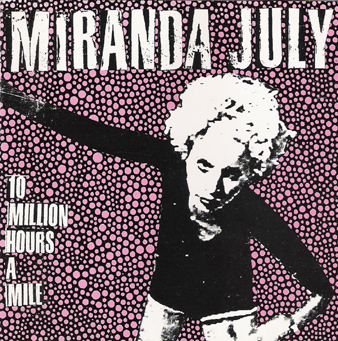
I only listened to this again after mentioning it below (I wrote about the book before the CD).  I vaguely recalled this CD, but I recall buying it mostly because it came from the unquestionable Kill Rock Starts and must have gotten a good write up in some alternative rag that I read.

Basically, this is a series of performance pieces, most of which are set to music (the music is spare and basic if it’s there at all).  She has multiple characters, most of whom are having a rough time. 

The one thing that is overwhelmingly noticeable to me is that just about all of her characters seems to have some kind of stutter or vocal tic, which I have to say may bring verisimilitude but is also rather irritating to listen to.

Indeed, I think this is where my opinion of July stems from (see below).  These are artsy pieces that were kind of the rage back in the late 90s– riot grrl takes of one-woman shows.  They were interesting and maybe good for one listen, but not much else. 

In hindsight, and seeing the kind of work that July has done since, it is easy to see that this is a collection of character studies like the ones that would inform her later work.

The rather strange thing is that the titles of the songs don’t match up to the performances (at least on Spotify or allmusic), I wonder what’s up with that. 

There are some interesting scenes laid out here, although I find July’s delivery to be off-putting–it’s in that sPOKEn WOrd styLE where THINGS are inFLECted in a TERRibly deLIBerate MANneR.  I KNOW that that KIND of emPHASis is meant to be…

….draMATic, but I’m rather glad that people have stopped doing it.

The eleven minute “How’s My Driving” is a decent example of the kind of things she does (although most of the pieces are more like 3-4 minutes).  In this piece, a man (July’s voice) goes to a peep show and talks to “Penny.”  Their plot line is a bizarre story in which the details of each reveal disturbing similarities until the ending is a Twilight Zone twist.  This is interspersed with a girl named Penny who talks about how she first started lying, although she says driving.  It’s an interesting although somewhat forced metaphor, but it’s enjoyable.  The stories intertwine, growing more and more intense.   Although it could probably be a bit shorter.

In “Hotel Voulez-Vous” a young girl (or boy) goes back in time to the titular hotel to convince her parents not to have her.  The execution is interesting but flawed.

“The F-A-T-E” is a cool story about letting fate be your guide, but the crazy voice-noises she makes are very off-putting and kind of take away from what could be a cool twisted tale.

I guess my opinion of this album work hasn’t changed all that much.  It’s got moments of interest but seems to be a little too coffee shop/navel gazing and being weird rather than good.  But hey, she was young then, right? 

[READ: December 6, 2011] It Chooses You

I have this weird kind of relationship with Miranda July’s works.  I am hesitant to read/view something, but I seem to enjoy it in the end.  I’m not sure why I am so hesitant, there just seems something off-putting about, if not her, then maybe the “fame” that surrounds her.  Like if she hadn’t earned her accolades.

I first found her back in 1997 when her 10 Million Hours a Mile CD was released on Kill Rock Stars.   So she was kind of indie cool.  And I guess she still is indie cool, but I guess it was the quality of the CD–it seems goofy at best, that makes me question the quality of her art.

But that may have finally changed with this book.

I began reading this book with that same sense of trepidation about her art–that I wouldn’t really like it.  Why?  Because, as with the CD, it’s seems to be all about her.  And I feel like a lot of her work is about her.  Nothing wrong with that, but sometimes you think, aw who cares. 

What she’s talking about is her upcoming film, The Future (which has since been released).  She is stuck in massive writer’s block .  She hates her script and doesn’t want to look at it anymore.  So, as many people do, she starts flipping through the PennySaver(more…)

Read Full Post »

SOUNDTRACK: ULVER-Perdition City: An Interior Soundtrack (2000).

Uver’s previous EP hinted at what would come next–electronic ambient tunes.  But it didn’t quite prepare anyone for this–a soundtrack to a film that doesn’t exist.  And yet with a title like Perdition City, you can pretty well anticipate the music that’s coming: think noir.

It is more electronica, and yet it is not just electronica.  The opening song “Lost in Moments” has a saxophone (!) solo.  And the song sounds like a perfect David Lynch/noir soundtrack to a dark and stormy night. 

What’s novel about the approach are the electronic noises and eccentric drum beats that punctuate the track.  The second track, “Porn Piece or The Scars of Cold Kisses” is broken into two parts: the first is a low, rumbling section with skittery noises and the second part has soulful singing (Garm, the only consistent member of Ulver (who goes by a different name on just about every record) has a surprising range of voices at his disposal).

“Hallways of Always,” “Tomorrow Never Knows” and “The Future Sound of Music” are sort of ambient tracks.  “Hallways” is quiet while “Future” grows in volume and chaos as the song proceeds.  “Tomorrow” is the most menacing of the three, projecting a state of noise and tension.  The interesting thing about these tracks is that although they seem like pretty conventional electronic instrumentals, they are actually fairly complicated in detail.  Some of the electronic pieces go on a bit too long, but as they are meant to be atmospheric rather than narrative, I guess that’s okay.

“We Are the Dead” bring in vocals again.  This time, it’s a spoken word narration over distorted radio voices.  And “Dead City Centers” also brings back some vocals.  Although only after about 4 minutes of noises and tension.  This time the vocals are more ominous (as the music grows more intense).

“Catalept” is the most interesting track on the disc–a remix of music from Psycho.  While the final song “Nowhere/Catastrophe” is an actual song–verses and vocals!  It’s a fairly soft song but it has moments of darkness that are quite cool. 

As a soundtrack this works wonders.  And if Ulver wanted to get into the soundtrack business, apparently their model of “making up your own soundtrack” worked.  Since this release they have recorded the soundtracks for two external films. 

As an overall release it’s a bit all over the place–jazzy sax, electronica, spoken word.  The mood is pretty consistent though, and although I don’t think I would do what the liner notes recommend: “This is music for the stations before and after sleep.  Headphones and darkness recommended,” I still enjoyed it.

[READ:  November 5, 2011] “Alma”

This is a very short story that falls pretty squarely into standard Junot Díaz territory (he says, having read like four pieces by him). 

I’m fascinated by these stories because Díaz is all about women being super hot and yet they are never objectified.  Well, in some ways they are of course–he lingers over their bodies as he describes them, but they are never just a body.  They are often smart or interesting, they are strong and powerful, and even when they are victimized (some by cheating boyfriends, others by far worse), they either fight back or get themselves to safety.  It’s nice to read about powerful women,even if the point of view is from her boyfriend.

This is the story of a young man falling hard for a hot woman (with a beautiful ass).  What fascinates me about Junot Díaz’s stories is that the women that his narrators fall for are Dominican, but they are also alternative to their culture.  So in this case, Alma is a “Sonic Youth, comic-book-reading alternatina” which makes me like her already. (more…)

Read Full Post »

SOUNDTRACK: SUFJAN STEVENS-The Age of Adz (2010).

Sufjan Stevens has released a bunch of albums of beautiful orchestral rock.  It is multi-layered and complex with classical elements and all kinds of cool instruments.

And this album starts out with a beautiful acoustic guitar melody and Sufjan’s delicate vocals.  Although it is a far more stripped down song than usual, “Futile Devices” seems like it is heading in the standard direction.  But anyone who heard Sufjan’s Christmas album number VIII knows that he has been having some fun with electronics.  And they show up with a vengeance on track two, “Too Much.”

All of the multilayered noise that was once orchestral and (some might say) precious has been replaced by a cacophony of gorgeous electronic noises.  The beginning of the song reminds me of the sounds in Skinny Puppy’s “Stairs and Flowers” (how many Sufjan Stevens reviews mention Skinny Puppy?).  The song is nothing like Skinny Puppy once the vocals kick in–it’s catchy and delicate–but those electronics underpin the whole thing, bringing his pastoralia into the twenty-first century.  When I first reviewed this song I didn’t like it but once you get absorbed by Sufjan’s world, it’s an enticing place to be,

“Age of Adz” takes this electronic nonsense even further with an 8 minute brew of strange sounds and choral voices.  But he always manages to throw in some catchy parts, no matter how strange the song gets.

For me one of the highlights of the disc is “I Walked” it features one of my favorite Sufjan things–falsetto vocals in a beautiful but unexpected melody.  And this song has them in spades.  “Now That I’m Older” has a very disconcerting sound–his voice is slowly warbled and mournful.  It’s a beautiful melody that is alienating at the same time.

“Get Real Get Right” returns to his earlier style somewhat (there’s more layers of music, although the electronica is still in place).   “Vesuvius” is a beautiful song and “All for Myself” is another of those great falsetto tracks that I like so much.

“I Want to Be Well” eventually turns into a manic electronic workout in which he repeats the chorus “I’m not fucking around.”

But nothing compares  to “Impossible Soul” a twenty-five minute (!) multi-part suite of electronic chaos.  It’s a fantastic song complete with autotune (used to very cool effect), repeated swelling choruses (it’s like a Polyphonic Spree tribute), electronic freakouts, and acoustic comedowns.  All in a positive, happy message.  I can’t stop listening to it.  “It’s not so impossible!”

Sufjan continues to impress me.

[READ: November 10, 2011] McSweeney’s #9

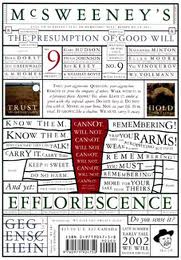
After the excesses of McSweeney’s #8, I was excited to get to the brevity (and urgency) of McSweeney’s #9.  This one is a paperback and looks like the first couple of issues.  The cover is mostly text with a hodgepodge of phrases and pleas.  You get things like: Thankful, Emboldened, The (Hot-Blooded/Life-Saving) Presumption of (Perpetual/Irrational (or More Likely, Irreducibly Rational) Good Will, Efflorescence, Our motto this time: We Give You Sweaty Hugs,” Alternative motto: ” We Are Out Looking,” GEGENSCHEIN (no more), and the promise: “We will Do Four This Year.”

This is the kind of issue that makes me love McSweeney’s.  There are some wonderful short stories, there are some nice essays and there are some dark moments all centered vaguely and tangentially around a theme.  There are some great authors here, too.

The back cover image is called Garden Variety by Scott Greene and it’s a fantastic painting.  You can see it here (navigate through the 2000-2004 paintings, but I have to say I really like the style of all of his work.

There are no letters and no nonsense in this issue.  So let’s get to it. (more…)

Read Full Post »

SOUNDTRACK: COLIN STETSON-Live at All Tomorrow’s Parties, October 4, 2011 (2011).

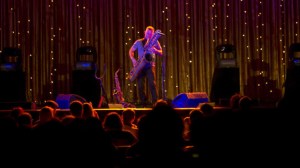
In addition to playing SXSW, Colin Stetson also played All Tomorrow’s Parties, and NPR was there.  Unlike with SXSW, this set appears to be full length (about 50 minutes–which is a pretty amazing amount of time for him to blow that horn).  Like SXSW (and the album) Stetston starts with “Awake on Foreign Shores” and “Judges.”  What I love about this recording is that after Stetson finishes “Judges” a guy in the audience shouts (in a voice of total amazement) “That shit was off the hook!”  And he is right.  It’s not even worth me going into how amazing Steston is once again (check previous posts for  that), but man, just look at the size of that horn he’s playing (seriously, click on the link to see it bigger).

Stetson plays a few more songs from New History Warfare, Vol. 2: Judges like “The Righteous Wrath of an Honorable Man” (which is outstanding) and “A Dream of Water” (which works without Laurie Anderson, although he does say he’s sorry she’s not there).  He also introduces two news songs “Hunted 1” and “Hunted 2” which show new levels and new styles that Stetson employs.

This is a remarkable set, and Steston is clearly in his element (and the crowd is rapt).  The only problem I have is the recording level.  It must be very difficult to maintain recording levels for Stetson’s brand of noise–his louds are really loud–but you can’t hear him talk at all.  And most of the time, the introductions to his songs are worth hearing.  I’m sure if they tried to get the speaking level a little louder the music would have sacrificed though, so I think they made the right choice–I only wish there was a transcript available.

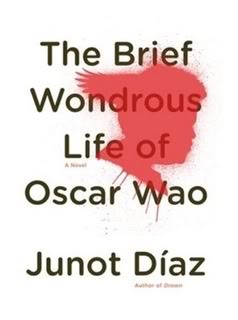
[READ: October 31, 2011] The Brief Wondrous Life of Oscar Wao

Apparently it’s pronounced, “Wow”, by the way.

Because of my new job, I don’t have a  full hour of lunch-time reading like I used to.  And so this book took considerably longer than I intended.  However, once I set aside some time to read it, I flew through the book.

I’m going to get this part out of the way because I was thinking about it throughout the book and I want to mention it without having it bog down the post.  This story reminded me a lot of Roberto Bolaño.  On the surface, sure this is because they are both writers from “Central America” (Diaz is originally from the Dominican Republic but moved to the US, while Bolaño is originally from Chile but moved to Mexico and then Spain).   But I’m not really talking about their origins so much as the style of storytelling.

Without going into a lot of Bolaño here, I’ll just say that Bolaño tends to write very detailed character studies–stories that follow one person throughout his whole life on something of a fruitless quest.  And the details of that person’s life include information about family members and distant relatives.  Further, Bolaño has written about the brutalities of both Chile and Mexico and how a person can survive in such a place.  Similarly, Díaz follows the life of Oscar and his extended family and he talks about the brutalities of the Dominican Republic.

This is in no way to suggest that there is any connection between the two writers. I mean, The Savage Detectives came out in the States in 2007 (same years as Oscar Wao) and while he certainly could have read it in Spanish, I have no evidence that he did (and as I recently found out, the first draft of the Oscar story was written in 2000).  Again, the parallels are only from my reading and have nothing to do with Díaz himself.

Okay, now that that’s out of my system…

This is the story of Oscar de Leon.  But more than that, this is the story of a fukú–a curse that befalls the de Leon family and follows them through several generations.  Oscar is the youngest member of the family and the person whom the narrator knows best.  So we see this fukú as it impacts Oscar.  And although the book is ostensibly about Oscar, it is about much more.

Oscar was born in Paterson, NJ (the town next to where I grew up!) and went to Don Bosco Tech High School (where many of my friends went).  Oscar is Dominican (his mother is from the DR, but he and his sister were born in NJ), but unlike every other Dominican male, Oscar is totally uncool, into geeky sci-fi and D&D and is clearly destined to be a virgin because he is fat with terrible hair and no social skills.

And, (no spoiler), as the title states, his life will be short. (more…)

Read Full Post »

SOUNDTRACK: MC PAUL BARMAN-It’s Very Stimulating (EP) (2001).

So is this guy a joke? Well, he’s very funny.  Very funny, in fact.  But to my ear, not in a novelty sort of way.  He’s got the kind of rhymes that make you laugh but still work upon multiple hearings.  And, yes, Paul Barman is a squeaky, Jewish boy from Ridgewood, New Jersey (again!) and he really can’t rap on the beat and he really doesn’t have much in the way of rhythm, but got awesome skills in the lyrics department and he has production from Prince Paul (that’s the kind of credentials that anyone would like).

The theme of this EP is Paul’s utter failure to get with women (even in his fantasies).  He’s crass and vulgar and yet he’s also quite smart and rather witty (“I think about all the pube I got while reading the Rubaiyat“) .  The music is more or less inconsequential.  As Prince Paul noted, the craziness comes from the lyrics, so you don’t want to overkill the song.  But there’s some great samples and some solid beat work as well.  Nevertheless, we’re here for the words.  So, sample a few of these rhymes:

“The Joy of Your World”

It was time to copulate but we didn’t want to populate
So my bold groin reached for my gold coin proooophylactic
I unwrapped it, you can’t know how I felt
It wasn’t a gold coin condom, it was chocolate Chanukah gelt
The white part crumbled on her tummy and the rest began to melt
Foiled again…..

“School Anthem” or “Senioritis” (this song was renamed for the reissue of the disc it seems)

Homework is tell major lies or plagiarise encyclopedias, so boring
Fresh-faced teachers want to tickle ’em
but a test-based curriculum excludes exploring

I’ll let a mystery gas out of my blistery ass
Just to disrupt the misery of history class

“Salvation Barmy”

She said, “Go get a haircut”
So I showed her my bare butt
Pulled down my Carhartts put my moon in her star-charts

“I’m Frickin’ Awesome” ( I love this especially for the Lila Acheson bit)

It’s nice to be hypnotized by a man you don’t despise yet
He had a type of flow and I can’t quite label it
All I know it made me want to take off my cableknit
Sweater, Oh he better be hetero
I hope they don’t catch us in the Lila Acheson
Wallace Wing when Paulus brings the mattress in–rudely
He backlashed my booty
like I was Susan Faludi over the Grace Rainey Rogers Room rostrum

“MTV Get Off The Air, Pt 2”  (the first two lines are fantastic, but the whole thing is genius).

Smirkin’ jocks with hackysacks
in Birkenstocks and khaki slacks
I’m the hypest lyricist
while they’re like, “What type of beer is this?”

Just wait until the full length for the utter genius that is “Cock Mobster” (how can be s o smart and so stupid at the same time?)

[READ: October 10, 2011] E Pluribus Venom

Like most people, I learned the name Shepard Fairey because of his iconic prints for Barack Obama.   In addition to supporting Obama, I really liked the design of the prints–simple, bold, an easy iconic style (which has since been lifted, morphed and used everywhere).  I know that many of Fairey’s prints actually come from other people’s original photos.  He has a print of Muhammed Ali in this book, and he clearly didn’t take the original photo (I don’t know where it came from).  But since all art is theft, I’m okay with Fairey taking someone else’s work and making something new from it.  I’ve always felt that attribution should be enough if you modify the original enough to call it different (which I feel this print does).  [The fact that he didn’t acknowledge the source does bug me, of course].  But that’s neither here nor there because this book predates all of that.

This book documents events that occurred in 2007.  The E Pluribus Venom show was based largely around two images that Fairey designed to reflect the two sides of capitalism.  The image to the right really doesn’t do any justice to the work itself, but you can kind of see that he created two-sided faux dollar bills.  The front showed all the good things that capitalism can do.  The back showed all of the evils that capitalism causes.  The images resemble dollars, but the text is straightforward in its message.  As with a lot of what Fairey does, it’s blunt and obvious but pretty cool.

As far as I’m concerned, though, this is the least interesting image in the book.  Although I love that they made dollar bill sized prints of these faux dollars and left them scattered around in cities to promote the show.  They way they were folded made them look at a glance like actual currency.  Very cool. (more…)

Read Full Post »

SOUNDTRACK: TOM WAITS-Blue Valentine (1978).

Waits begins to morph into his later stage persona with this album,  although you wouldn’t know it from the opener, “Somewhere,” yes from West Side Story.   It’s a pretty straightforward Louis Armstrong-style cover, and I wonder what people thought of it.  “Red Shoes by the Drugstore” on the other hand foreshadows some of his crazier songs from later on–it’s kind of a like his beatniky work, but it’s a bit scarier and has less of a jazz feel.  Of course, he hasn’t completed eschewed melody and songwriting with the wonderful “Christmas Card from a Hooker in Minneapolis”–a slow piano ballad.

There’s also the amazing “Romeo is Bleeding” (the inspiration for the title of the movie).  There’s some more wild bluesy songs like “$29.00.”  In fact, Waits seems a bit looser overall (if that’s possible)–his voice is less clipped and beatniky, he’s more wild and perhaps even off beat

“Wrong Side of the Road” merges into later territory although he’s got enough scat style vocals to keep it sounding cool instead of crazy.  “Whistling Past the Graveyard” is one of his most uptempo bluesy songs;  it’s fun and a little crazy.

And yet for all of these forays into the unusual, he still stays firmly footed in what you expect from 1970s Waits: “A Sweet Little Bullet from a Pretty Blue Gun” and “Blue Valentines” are jazzy, smoky, lounge songs, keeping us on solid Waits ground.  He hasn’t stepped far enough away from his original style to alienate listeners yet, but he’s definitely pushing the boundaries of what might be comfortable.

[READ: September 25, 2011] “Starve a Rat”

This story is a sad and lonesome tale (not unlike Torres’ other story that was recently published in the New Yorker–it’s like these two magazines are linked by some kind of fictional umbilicus).

In this one, a 19-year-old boy hooks up with an older man.  The man asks the boy to wear a diaper on their first encounter.  The boy doesn’t but rather, he tries to satisfy him in other ways.  This pickup becomes something more when the man, who initially asked the boy to leave, relents and talks with him through the night.  The boy finds himself being more honest with the man than with anyone else ever.

The leads to some flashbacks about the boy’s history.  Back when he had a girlfriend, what his girlfriend’s parents were like (her mother knew that he was gay) and how much he loved the girl, even though he always knew she was just a beard.

The strange thing about this story is that I couldn’t decide when it was set.  It has a kind of dark tone that makes me think it is a 1970s story, although there is talk of clinics, so maybe it’s the 80s?  He mentions something about albums being not so out of date that they’d be making a statement–so that could be early 90s? (more…)

Read Full Post »

SOUNDTRACK: TOM WAITS–The Heart of Saturday Night (1974).

What would be more shocking–hearing this and then going to Bone Machine, or listening to Bone Machine and then hearing this. Holy cow. Tom’s voice is so NOT Tom Waits on this record. It kept me thinking of The Eagles or something. The tone, the pacing, I kept expecting him to bust out “Desperado.”  He also has some crazy beat-inspired poetry (what the kids today call spoken-word pieces)  Indeed, these spoken pieces would stay with him in one form or another for his whole career.  But seriously, how much a man can change in thirty years!

Like Closing Time, this album has several different styles.  Primarily, it has a sloppy, bar sound, the sound that Closing Time‘s cover conveyed.  And that sound is all over “New Coat of Paint.”   But there’s also piano ballads.  And those ballads, combined with Waits’ non-gravelly voice, give “San Diego Serenade” and “Shiver Me Timbers” that Eagles’ ballady sound.  And then “Semi Suite” brings back that muted trumpet. 

“Diamonds on My Windshield” is a beat poem set to a walking bass.  It’s clichéd, except that no one actually does it as well as Waits.  And although I don’t really like the blues in general, I enjoyed “Fumblin’ with Blues” quite a bit.  There’s something about Waits’ sloppy (but not) style  that makes the song interesting.  Even though this is considered a classic, this album is just not really my style and it’s one I listen to quite infrequently.

[READ: September 21, 2011] “An Anonymous Island”

This story is translated from Korean by Heinz Insu Fenkl.  

I felt like the heart of this story was completely unoriginal in content; and yet I can’t tell if it is a common story, if it is a kind of folklorish story, if it’s sort of a story from ancient writings or if it’s just something that happens.

The beginning of the story shows a woman listening to her husband.  He is watching the television,bemoaning the fact that anyone can be anonymous these days (this struck me as a funny sentiment given how much everyone in America bemoans the lack of privacy or the fact that everyone is on the internet).  You can get off at one bus stop past your own and no one knows you.  Back when he was a kid everyone knew everyone else, a village was a family.  And as the woman listens, she flashes back.

The flashback is to when she was a teacher in a small village.  A village where everyone is related.  Everyone treats each other with respect and deference.  Except for one man, Ggaecheol.  Ggaecheol is a bum–he has no job, he has no home.  The village tolerates him because he is an idiot and he is impotent.  But whenever he wants a meal, he simply walks into someone’s house and sits down and says, feed me.  Which they do.  Typically he sleeps outside, but when it’s cold, he walks into someone’s house and sits at the foot of their bed.  He says he wants to keep the woman warm, so the men, amused by his impotence, allow this.

There’s an old Monty Python skit in which the town idiot, despite being mocked by all, does great with women.  The punch line, showing the idiot with a couple of hot girls in bed with him: “I may be an idiot, but I’m no fool.”  And so it is with this story.  The bum is sleeping with everyone in town.  (more…)

Read Full Post »

SOUNDTRACK: SPARKS-“Good Morning” (From the Basement) (2008).

I’ve enjoyed Sparks for a long time.  But I never got around to getting the album that this song comes from (Exotic Creatures from the Deep–which has two wonderful song titles: “Lighten Up, Morrissey” and “I Can’t Believe That You Would Fall for All The Crap In This Song.” 

“Good Morning” was the first single from the album.  It features a very bouncy keyboard opening which reminds me of Strangeways-era Smiths.  And then Russel Mael’s crazy falsetto comes pounding in on top of the whole thing. 

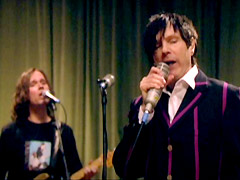
Visually, Sparks are fascinating because Ron Mael looks exactly the same as he has since day one: slicked back hair, thick glasses and a crazy little moustache.  This band is doubly fascinating because the two guitarists and bassist all have shoulder length hair and are wearing T-shirts with the new album cover on them.  In fact, the bassist and one guitarist look like they could be twins (the other guitarist is wearing a hat, so he messes with the identical-ness).  It’s an amusing scene to see.

This is a strange song, it’s catchy in its repetitiveness, but it’s got a cool bridge that breaks up the song into different parts (and the backing guys hit the high falsetto notes perfectly–I think I would have assumed they were women!).  This seems like a strange choice for a single and I can see wh it wasn’t a big hit.  (Most Sparks songs are kind of strange, so who knows which of their songs will catch on).  Of course, I don’t know the rest of the album so I don’t know if there was a more likely choice.  Nevertheless, I may have to investiagate this disc a bit more.

[READ: August 31, 2011] “My Chivalric Fiasco”

This is the second Saunders piece in a couple of weeks in two different publications (this seems to happen to him a lot–do I smell a new book coming out?).  This is one another of Saunders’ more corporate-mocking pieces.  He plays around with name brands and has a lot of trademarked and capitalized words.

But it starts off very unlike that whole realm. It seems to be set at a Ren Faire or some such thing.  On TorchLightNight the narrator sees Martha running through the woods saying, that guy is my boss.  Don Murray comes out of the woods after her, and it clear that something has gone on between them.  When Ted, the narrator, asks them what’s going on, they admit to a “voluntary” fling.  Then Don tells Ted that he has been promoted out of Janitorial; he is now a Pacing Guard.

The next day, Ted is given some KnightLyfe, a pill that helps him with medieval improv.  Until the pill kicks in, Ted is horrible in his role, but once it does, he (and the story) switch into a  kind of crazy Ren Faire “Olde” English: “Quoth Don Murray with a glassome wink, Ted you know what you and me should do sometime?” (more…)

Read Full Post »

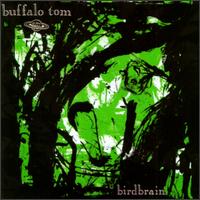
SOUNDTRACK: BUFFALO TOM-Birdbrain (1990).

If Buffalo Tom’s first album was a kind of punky Hüsker Dü album (which I contend it was), their second album switches gears towards the Afghan Whigs.  In other words, they still have a raw punky feel, but they’ve added more textures and melodies to the proceedings.

And while Janovitz’ voice is still loud and bold, rather than the screamy sound of say Bob Mould, he’s got a more nuanced sound like Greg Dulli (for some of the disc, anyway).  I notice this especially on the second track “Skeleton Key” which sounds like it could be an outtake from an Afghan Whigs session (it’s not as a good as a typical Whigs song, however).  You can hear more of those Dulli-notes on “The Guy Who is Me.”

The songwriting is somewhat more comlex overall.  The title track “Birdbrain” is catchy not only in the verse, but the chorus is a wonderful surpise–really redirecting the momentum of the song.  Despite some variants in texture and pacing, the disc still retains that raw punk sound of the first.

The album feels kind of long to me, though (and not because there are two acoustic songs tacked on at the end).  At almost 5 minutes, “Enemy” is way too long.  And by the end of the album, some of the sameiness that was eveident on the debut has crept into this disc as well.  The last few songs in particualr seem to have a lot of that screaming voice over a fairly simple riff thing going on.

The cover of the Psyhedeclic Furs’ “Heaven” in a live aocustic setting is a nice change, but really should have been laced around track 7 or 8 to minimize redundancy.  The last track is a live acoustic version of the tenth song off their first album.  How odd to resurrect a very deep album cut in this way.  But, again, at almost 5 minutes (two minutes longer than the original), it just doesn’t hold up.

There are signs of change here, but they won’t become fully evident until their next album, Let Me Come Over.

[READ: July 29, 2011] “Reverting to a Wild State”

This story plays around with a timeline, but not in a crazy way–in other words, the story is out of sequence, but it’s not a gimmick.

In Part 3, we see the narrator “cleaning” a rich man’s apartment, in his underwear.  We have no real context for him or what he’s doing, but it’s an amusing little section, and ends with him seeming content.

In Part 2, we see the narrator fighting with Justin, the man who we learn was his boyfiorned.  They broke up, but are in a diner having what seems like a final hash-out. (more…)

Read Full Post »

SOUNDTRACKSUPERCHUNK-Superchunk (1990).

Some time ago, I reviewed all of the Superchunk EPs.  After progresing to their most current music, returning to their first album is a bit of a shock.  Superchunk’s first full length album is incredibly raw, with lots of screaming (two vocalists at once, even) and a very grungy attitude.  It has a DIY aestethic, in keeping with the undeground scene at the time.

The first four songs fly past in a pretty quick blur of adrenaline (the longest is just over 3 minutes).  The fifth song, the aptly named “Slow” slows things down and strecthes things out with a five minute track of slow distorted chords and a long solo.

Of course, the pinnacle comes with the next song “Slack Motherfucker” one of the best grunge anthems of all time. 

The last four tracks speed things up again with the bratty attitude that Superchunk is so good at (see especially “Down the Hall”).  But it’s not all just blistering speed.  The band has some dynamics down and there are a couple of tempo changes as well.

The album is a lot of fun to listen to, especially if you’re lookig for grunge before it became Grunge.  Although there’s very little indication that they would become the indie superstars that they eventually became you can clearly hear proto-Superchunk chunks–Mac’s voice is as it ever was and the noise is present but not overpowering.  There are even hints of melody (although nothing as catchy as later albums).  And yet for all that it sounds like a criticism, the album is really quite solid.

[READ: June 15, 2011] The Hollow Planet

Yes, THAT Scott Thompson, from The Kids in the Hall.  I found out about this comic book from my good friend Jessee Thorne at The Grid.

The backstory is that Scott Thompson had been working on this story for years and years.  He imagined it as a movie (starring him, of course).  When that didn’t pan out, he decided to sell it is a comic book.  And while he was recovering from cancer, he worked on it extensively with Kyle Morton–character likenesses and whatnot.  And now we have a cartoon rendering of Scott Thompson!

This story focuses on Scott’s character Danny Husk…

The book opens with Danny and his wife and kids at a carnival.  After a few moments, Danny’s son gets lost on the merry-go-round.  In the next scene we see just how much his wife is estranged from him (she may even be cheating on him), and how little his daughter thinks of him.  Soon after, Danny goes to work, inserts a disc into his laptop and more or less brings down his company.

So far nothing out of the oridnary for this type of  story–henpecked husband on a quest for revenge that he doesn’t know he wants yet.

Then Danny visits with his old friend Steve.  They talk, they bond over Danny’s concern about his wife.  And Danny feels better.  Until he gets home.  After a scene which I won’t spoil, the story suddenly takes off with a high speed car chase (no kidding) and with Danny entering the titular hollowness of the planet. (more…)

Read Full Post »

« Newer Posts - Older Posts »