Feeds:
Posts
Comments

Archive for the ‘Romance’ Category

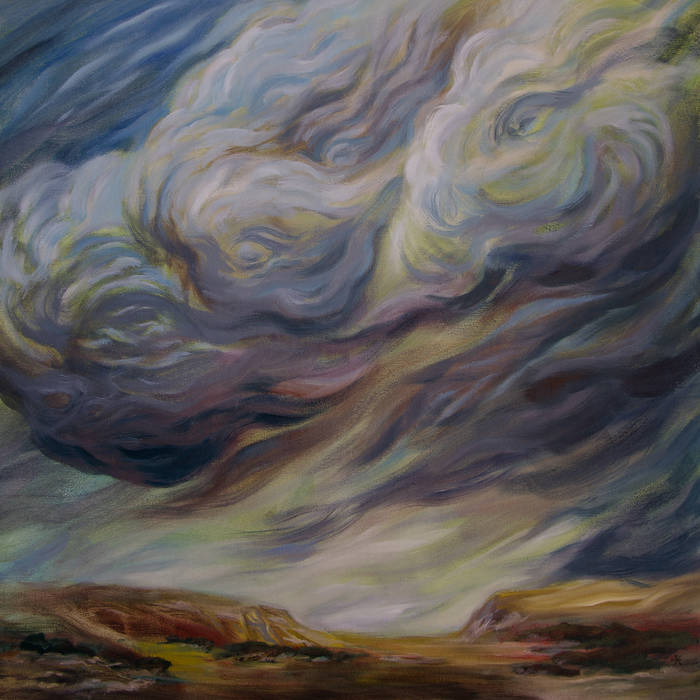
SOUNDTRACK: CHAPEL OF DISEASESong of the Gods” (2018).

At the end of every year publications and sites post year end lists.  I like to look at them to see if I missed any albums of significance.  But my favorite year end list comes from Lars Gottrich at NPR.  For the past ten years, Viking’s Choice has posted a list of obscure and often overlooked bands.  Gottrich also has one of the broadest tastes of anyone I know (myself included–he likes a lot of genres I don’t).  

Since I’m behind on my posts at the beginning of this year, I’m taking this opportunity to highlight the bands that he mentions on this year’s list.  I’m only listening to the one song unless I’m inspired to listen to more.

Even though Lars is all over the place with the style of music he loves, he tends to return again and again to metal, especially lately doom metal.  It is fitting that Chapel of Disease ends the set.  Lars has introduced me to a lot of really heavy music often with growly vocalists.  But Chapel of Disease, despite their name does not sound like that exactly.  The vocals are deep and kind of growly but they are audible (for the most part) (and sound like they come from miles away).

This song is seven minutes long and opens with an almost middle-eastern sounding quiet guitar intro.  After 20 or so seconds, the main riff enters and sounds even more Middle Eastern, but when the bombastic bass and drums come in and the song turns from pretty guitar to heavy metal, that riff becomes a total classic rock song.  After 2 and a half minutes, the vocals come in, and honestly they are a little too low and growly for the music.  They almost feel like an afterthought for the music they are making.  At least the chorus (where that riff comes back) is easy enough to understand.

The guitar solo is actually quite pretty and understated–the whole song kind of pulls back a bit until we hit about 5 minutes when then real metal shows up and the raging solo and double bass drum take the song to a heavier point than they’ve hit thus far.   By 6 minutes, in true classic rock fashion it returns to the riff and the chorus and they play us to the end.

Lars calls this “Death-metal Dire Straits” and then immediately says “No, wait, come back!”  I don’t really hear the Knopfler guitar but I’ll allow it.  I totally agree with him that on their

third album Chapel of Dissease embraces ’70s hard-rock swagger, proggy sorcery and, most surprisingly… fluid melodicism… all atop death-metal growls and chugged riffs. There’s no reason why this should work, and it’s a testament to Chapel of Disease’s heavily worn record collection, as the group now raises fists and beer to the storm.

There’s only 6 songs on the album and none are shorter that 6 minutes.  It’s a cool change form typical death metal.

[READ: January 6, 2019] “Train Dreams”

This is an excerpt from a novel, which means that the ending is not as open-ended as it seems.

Xiao Yuan was a teacher but now she mostly took business trips as an administrator.  While she is setting up her train’s bunk for the night, a man settles in across from her.  He is Dr. Liu and he sells herbal and non-herbal medicines.  As they lay down in bunks that faced each other, Xiao Yuan put out a pocket watch, a small digital clock and a radio next to her pillow.

Dr Liu was made restless by her timepieces–he sensed an evil aura from the woman across from him.  He got up to switch bunks but Xiao Yuan immediately asked him what he was doing.  She said it was 2 in the morning “Do you want to die?  You’ll be taken for a criminal and arrested.  What a hick…”

She laughed as Dr Liu looked at her and he saw her tuning her radio.  It regularly reported the time but each instance stated it was eleven PM.  Dr Liu knew he could not sleep so he lay wake until Xiao Liu asked him about his job.  She hated Chinese medicine, believing it was mystical and always associated with sex.  But she found herself agreeing with a lot of what Dr Liu said.

She then conceded that she was controlling the radio with her thoughts. (more…)

Read Full Post »

SOUNDTRACK: HEATHER LEIGH-“Soft Season” (2018).

At the end of every year publications and sites post year end lists.  I like to look at them to see if I missed any albums of significance.  But my favorite year end list comes from Lars Gottrich at NPR.  For the past ten years, Viking’s Choice has posted a list of obscure and often overlooked bands.  Gottrich also has one of the broadest tastes of anyone I know (myself included–he likes a lot of genres I don’t).  

Since I’m behind on my posts at the beginning of this year, I’m taking this opportunity to highlight the bands that he mentions on this year’s list.  I’m only listening to the one song unless I’m inspired to listen to more.

Opening with a kind os squealing feedback and heavy bass and drums, it is pretty hard to believe that Heather Leigh is playing the pedal steel guitar but Lars assures us that’s what’s happening

Heather Leigh is among a group of artists who are reshaping the sound of the pedal steel guitar. [Her new] solo album stretches her noise/improv background into songwriting territory. With an elastic sense of time and a beguiling voice, Heather Leigh hears a new world drenched in aqueous echo.

After a brief opening Leigh starts singing–a kind of high operatic voice that works well with the feedbacking style of guitar she’s playing–like she’s almost singing along to the guitar melody, but not exactly.  The middle is quieter, more mellow, a “prettier more conventional sound.”  The song cycles through the original noisy sound, and back to the quieter music before ending on that feedback opening.  That powerful music crescendoes and then the song closes out with an a capella couple of lines.

You can her it and a couple other songs on her bandcamp site.

[READ: January 3, 2019] “Come In, Come In”

This story concerns a woman and her contractor, Louie.  He came highly recommended but he is taking forever.  Every time she assumes he will finish a project in her bathroom, he seems to have messed something up and needs to replace it.

The tiles were askew.  Even the tub was askew. He apologized and fixed it of course, but come on.

And if that weren’t bad enough, he had just sent her a text love letter.  “Lady Joanna, the more I see you the more I want to see you.”

She was annoyed at the absurdity “single woman + contractor = absurd.” (more…)

Read Full Post »

SOUNDTRACK: KASVOT VÄXT-“Death Don’t Hurt Very Long” (1981/2018).

Back in 1994, Phish started covering a classic album for its Halloween costume. In 2015 they covered the Disney album: Chilling, Thrilling Sounds Of The Haunted House, which pretty much meant all bets were off.  So in 2018, they decided to cover an obscure Scandinavian prog rock band called Kasvot Växt and their sole album, í rokk.  This proved to be a big joke–they were a nonexistent band.  They had so much fun creating this band, that they even enlisted others to expand the joke.  This included impressively thorough reviews from WFMU and from AllMusic.

The joke is even in the name: when translated together Kasvot Växt and í rokk means “Faceplant into rock.”.

Here’s some more details they came up with:

The Scandinavian prog rock band purportedly consists of Jules Haugen of Norway, Cleif Jårvinen of Finland, and Horst and Georg Guomundurson of Iceland.  The album’s label, Elektrisk Tung, supposedly went out of business shortly after the LP’s release and little information about the record appears on the internet. Bassist Mike Gordon made a tape copy of í rokk in the mid-’80s and Phish would play it “over and over in the tour van in the early ’90s.” In the Playbill, guitarist Trey Anastasio insisted, “Every time the Halloween discussion comes up, we talk about Kasvot Växt. We honestly were worried we wouldn’t have the chops to pull it off or do justice to the sound, but when it came down to it, we just couldn’t resist any longer.”

The decision to go with an obscure album few have heard or even heard of appealed to the members of Phish. “We’ve paid tribute to so many legendary bands over the years, it felt right this time to do something that’s iconic to us but that most people won’t have heard of,” Gordon said as per the Phishbill. “And with these translations we’re really performing songs that have never been sung in English before.” Keyboardist Page McConnell added, “I love the mystery surrounding this whole thing. If those guys ever hear we did this I hope they’re excited because we absolutely intend it as a loving tribute.” As for what Phish fans can expect? “A weird, funky Norweigan dance album! Get out there and put your down on it!” exclaimed drummer Jon Fishman.

While the listings for the 10 tracks on the original í rokk were in a Scandinavian language, the titles appear in English in the Playbill. Phish called upon a Nordic linguist to translate the lyrics to English for tonight’s performance.

These songs do not really sound like a Norwegian prog rock band.  They do sound an awful lot like Phish (although with a more synthy vibe overall. The band has this part of their live show streaming on Spotify under the Kasvot Växt name.  And I’m ending the year by talking about each song.

This song continues in that darker, sleazier mode with the slinky bass and dirty keys.  The vocals are by Fish and he’s singing in a growly/Frank Zappa style.

Frozen in place (death don’t hurt very long)
Cast into space (death don’t hurt very long)
Transported too fast (death don’t hurt very long)
You know it don’t last (death don’t hurt very long)
Up from the ground (death don’t hurt very long)
Shaken by sound (death don’t hurt very long)
Descended from apes (death don’t hurt very long)
You’re just changin’ shapes (death don’t hurt very long)

At over 8 minutes, it’s one of the longest songs in the set and it totally rocks.  There’a lengthy, raw sounding solo and the song turns into a heavy jam.  It’s really good.

[READ: December 20, 2018] “Canon”

This story was written in 1926 and has been translated by Ryan C.K. Choi

This is a short piece.  It opens with a young man deciding to become a socialist and his father threatening to disinherit him.  But the young man persisted.  His studies suffered and his attendance at school became less frequent.  Eventually he dropped out and got a job.  Although he continued attending meetings .

After all, a world-wide socialist revolution was under way. (more…)

Read Full Post »

SOUNDTRACK: KALBELLS-Tiny Desk Concert #783 (September 5, 2018).

The opening of the first song “Craving Art Droplets” was kind of promising, with the backing singers (Angelica Bess on keys, Sarah Pettinotti on bass) all “yeahing” at the same time and their rather strange chord progressions (and synth bass).  But once the song started, I realized it wasn’t going to get any better.  Just layer upon layer of cheesey synths.  The only thing that saved it was the live drums (Zoey Brasher), even though they don’t add a lot.

Just before the break, the song builds in an interesting way with everyone chanting louder and louder. And just when I thought there was hope, it devolved into the worst thing ever–lead singer Kalmia Travera’s long cheesey sax solo.  Oh dear.

She introduces the next piece: “The next song we’re gonna play is a medley.”  That’s a strange intro for songs no one knows.  Wordless chanting starts “123456/Bodyriders” (along with a cowbell).  The lyrics… are puzzling at best “Six was the rest, six was everything” (?)  When it segues into “Bodyriders,” the Travera singing high notes over the chanted background is promising, but those synth sounds again…. (even when she bends the notes, it’s still cheesey). .

“Droolerz” is a new song and has an amusing lyric: “We could play drums and eat lobster at the opera.”  And the way the delivery comes across is enjoyable.  The chorus also wants to be fun

Dance in the back yard, lets party
Let out all our demons, in the heat
Hang out on the lawn, in the dark
Naked in the shower, till dawn

But the way it’s sung is such a downer I can’t stand it.  Maybe its the synths–but I feel like the song is struggling and failing to be bigger than it is.  It all feels really sad to me.

[READ: April 15, 2016] “Distant Relations”

Sometimes it’s easy to tell that a piece in the New Yorker is an excerpt.  And sometimes you just hope it is.  And in this case, my hope was founded.  “Distant Relations” is a chapter from Pamuk’s book The Museum of Innocence, (like this excerpt, it was translated from the Turkish by Maureen Freely).

The main reason I assumed it was an excerpt was because of one or two lines in the early section of this story.  The ending, while ambiguous, could have been a (relatively unsatisfying) ending, but those hints that there was more really made me want there to be more.

The story begins with the narrator talking about his fiancée Sibel.  It was 1975 and she had just noticed a purse in a shop window (by Jenny Colon).  He made a note to go back and get the purse.  Although they are in Turkey, both protagonists have been abroad,  He studied in America, while Sibel studied in Paris.

The next day he decided to go to the shop and buy the purse.  It was owned by a distant relative.  She wasn’t there when he went in, but instead there was a beautiful young woman there.  Before the transaction was finished, he recognized who it was.  It was his “cousin” Füsun.  I put cousin in quotes because it turns out that she is very very distantly related. (more…)

Read Full Post »

[LISTENED TO: August 2018] Tuck Everlasting

Normally when we go on long car rides we listen to many audio books.  This summer, we drove to Chicago (12 hours each way) and listened to only two!  Two!  And this one was only three discs long.

I actually didn’t know anything about this story when we started it (somehow this classic children’s book written during my childhood totally escaped me).

What’s fascinating about this story is how little there is to it.  This is not a criticism.  It’s a remarkably compact plot.  Although there is an awful lot of description.  And while Peter Thomas did a great job with the action of the story, the descriptions tended to drag on a bit (you could blame Babbitt or Thomas I suppose).

The story focuses on the Tuck family.  Tuck, whose first name is a rarely used but is Angus, is the father.  Mae is his wife.  They have two children, Jesse who is 17 or so and Miles is 22 or so.

There is also Winnie Foster, a ten-year old girl.  Her family is the oldest family in Treegap, New Hampshire. (more…)

Read Full Post »

SOUNDTRACK: ANGEL OLSEN-“Give It Up” (Field Recordings, January 6, 2017).

Angel Olsen has a rough, gritty un-angelic voice.  But it’s a powerful voice  And the church [Watch Angel Olsen Perform In A Bronx Church] makes it sound even bigger and more powerful than it normally does.

It was raining in New York on Nov. 9, 2016, and New Yorkers, tired as the rest of the country from a late night after a long election season, walked about in a fog of their own. The sky was still overcast when we met Angel Olsen at the Fordham University Church, an 1845 New York City landmark whose carillon is said to have inspired Edgar Allan Poe’s poem “The Bells.” There, wearing a green raincoat and accompanying herself on electric guitar, she sang “Give It Up,” from her excellent 2016 release My Woman.

Even though she sounds in great voice (and guitar) the naked setting really highlight the ache in her voice (which seems to break at certain point).  I’m sure she felt as shitty as the rest of did on that day, and it really comes across.  God, I have to stop watching things from November 2016,

[READ: January 25, 2018] “The American Boyfriend”

This story came out in 2001 and was written by a North Korean writer and was translated by Yu Young-nan.

It is set in Moscow in the early 1990s.

McCunly was a young American living Moscow.  He got to know a pretty young woman named Katya.

He flirted with her and told her thing like the checkers of my coat symbolize our straightforward lives being intertwined.  He also told her that he was unmarried.

She was thrilled at his declaration of love and told her brother all about the American. (more…)

Read Full Post »

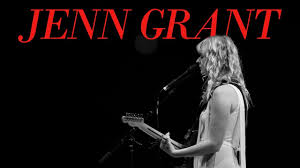
SOUNDTRACK: JENN GRANT-Live at Massey Hall (June 23, 2017).

I don’t know Jenn Grant, although her music sounds somewhat familiar.  She’s from PEI originally but her family moved to Nova Scotia when she was ten.  She recently moved back to Nova Scotia with her husband, where they live by the ocean and the woods.

For this show, she is joined by Daniel Ledwell, Michael Belyea and Tavo Dies de Bonilla.  On a couple of songs, she has Julie Fader and Kim Harris for backing vocals (this is Fader’s second appearance in the series).

Years ago shed opened for BNL at Massey Hall, but she wasn’t present. This time she’s very aware of things like the large but intimate feeling of the place.  During soundcheck she felt she never sounded better

“Paradise” is a slow keyboard song with electronic drums.  It’s moody in a Twin Peaks kind of way.  Although it picks up for the chorus.  The drum sounds in the middle of the song sound like when my phone speaker is over powered, it’s unsettling.

“I am a River” is interrupted by her speaking about her new record.  It’s interesting that her music is quite electronic since she is so inspired by nature.  Although this song does have more organic elements like piano and such.

She introduces “The Fighter” by saying “This is a song from an album that we made once.”  She plays electric guitar and that creates more drama and texture in the song.  This has a great overall sound.

“I’ve Got Your Fire” starts with piano.  This song sounds familiar–I wonder if I know it or if it just sounds like a Jane Siberry song.  It’s very pretty.

“No One’s Gonna Love You (Quite Like I Do)” is mellow song, also quite pretty.  “Galaxies” is a bit higher energy and she says it’s “fun to perform for an audience.”  It’s got a cool retro keyboard sound.  Dreamer ends he show quietly with delightful backing vocals.  I like the way the song slowly builds.

[READ: January 25, 2018] “Fourteen Feet of Water in My House”

This story sets everything up right from the get go:

My hometown flooded.  Prediction, as usual, failed us.

And so, when the narrator wakes up with a river in his house, he is quite pleased to see that his boat, kept in the backyard, was banging on his second storey window.  He is barely awake but he jumps into the boat headfirst.

“This is real… Dad’s house is ruined…. Boat seems fine though…. People probably stranded … ”

The rest of the story is his adventure saving people. (more…)

Read Full Post »

SOUNDTRACKPEACHES-Live at Massey Hall (August 4, 2016).

Peaches is afraid of no one.  She bears it all, lyrically, visually, sexually (sample lyric: “Can’t talk right now this chick’s dick is in my mouth”).

She stands center stage, all by herself atop a small pyramid.  She programs some beats at the back of the pyramid and then begins singing the lyrics to “Rub.”  She demonstrates quite exaggeratedly where the rubbing out to take place

Tell on my pussy
Whistle blow my clit
Watch it open up
Cause it can’t keep a secret

What’s great about Peaches is that she was 49 at the time of this performance and she held nothing back–doing a very impressive split at the top of “Operate.”

She began the show with an oversized cape and what looks like a catcher’s chest protector with the outline of abs on it.  When she takes those off she reveals a body suit with hands all over it–grabbing her.

Next up is “Vaginoplasty.”  She introduces the song that it “is not about a big dick or big tits it’s about my big fucking vagina.”  Its at this point that her two dancers (Jess Daly and Agent Cleave) come out wearing gigantic vagina body suits.

In addition to being about her vagina though, she also addresses transgender issues

If you’re born as a man
But know you’re a woman
I understand
Gotta get it, get it girl

About this song she later said:

I think “Vaginoplasty” is about an important subject, but I also think it’s hilarious. The song is about a big vag, but then you have to think, Why does that gross me out?

Her voice is terrific on this song as well, she hits some really powerful notes.

“Mean Something” features a duet with “Feist.”  Feist sings the eerily compelling chorus.  It’s a great song without being explicit.

During an interview she talks about going to Berlin where she was appreciated before returning home to make her album.

After an onstage costume change, Peaches wears a fabulous outfit that’s a giant vagina and she walks out into the audience, walking across the backs of the chairs until she stops and says, “These are my parents!” (their reaction is..amusing).

“How You Like My Cut” is more of a rap–incredibly sparse with lyrics that are not terribly eloquent

How you like my cut
How you like my cut what
How you like my cut

But it seems more about the mood than the words.  Words are suitably important for “Fuck the Pain Away” (now that is something you did think you’d be singing at Massey Hall).  Both songs feature her dancers in minimal bondage gear.

The chorus that gets the crowd chanting is

S I S I U D, stay in school cause it’s the best

With repetition, the lines eventually sound like “SIS, stay in school cause it’s the best IUD.” Peaches thus ties the education of women directly to birth control and reproductive autonomy.

For the final two songs, she has one more outfit change (which leaves her topless, but with pasties on).  “Dumb Fuck” has an incredibly catchy chorus of “dumb fuck, you dumb fuck, you dumb fuck” which is certainly cathartic.

The final song is “Close Up” and is a duet with Joel Gibb from The Hidden Cameras.  They have a lot of fun with the song.

[READ: January 9, 2017] “The Bog Girl” 

Some stories are so weird that you have to keep reading.  And when they get even weirder and even more compelling, you sort of marvel at the way it unfolds.

This story was one of those.

Cillian is a fifteen year old boy working in the peatlands in an island off of Ireland on the archipelago known as the Four Horsemen.  He is working illegally, but his boss hired him because his house abutted the peatlands.

The story gives a brief history of peat–how it is created and used for fuel and explains that the lack of oxygen allows things to decompose there–so there are all kinds of dead animals in the peat.  But no one notices because it is now industrially harvested.

Then one day, as he is digging up the peat, Cillian sees a hand.  It proves to be the hand of a girl.  When she is exhumed, her body comes out intact.  She is cute with a sweet smile.  The police determine that she is not a recent murder, that she is probably 2,000 years old.  Well, Cillian is lucky that he lives on a remote island. (more…)

Read Full Post »

SOUNDTRACK: BEDOUINE-Tiny Desk Concert #737 (April 30, 2018).

Bedouine has a lovely clear voice.  She’s a genuine folk throwback treasure, without being retro.  Her songs are remarkably simple and yet they are rich and almost enchanting.  There is something about the way she sings that makes you want to listen, to lean in and hear what she has to say.

Her guitar playing is also very pretty.  Again, a reasonably simple finger-picking style.  but it is simultaneously precise and warm.

I saw her live recently and she held an entire club rapt despite being an opening act for two much louder bands.  So who is Bedouine?

Azniv Korkejian is Bedouine, a singer and acoustic guitarist who echoes sounds from the 1960’s North American folk songwriters, but with vocal inflections that feel closer to Leonard Cohen than to Joni Mitchell or Joan Baez.  This is as spare as music can be – songs stripped to their essence and just gorgeous.

Azniv Korkejian was born in Aleppo Syria. Her parents were Armenian and she spent her childhood in Saudi Arabia. But a green card lottery win found her family moving to Boston and Houston. Eventually she made her way to Los Angeles with important time spent in Austin, Texas and Savannah, Ga. The name she chose, Bedouine, reflects the traveler, the wanderer in her.

She plays three songs, just her and her guitar.  The songs don’t diverge that much from each other.  She even jokes that the second song is a different song than the first one, she promises.

“One of These Days” is a pretty song that seems so optimistic because you can feel the smile in her voice as she sings.  But as with much of what she plays, there is a kind of melancholy to it.

“Solitary Daughter” opens with the same chord (and picking) but soon shifts textures. I love her delivery on this song in which she lets her voice drop a register and adds a kind of Laura Marling spoken word style to part of it.

The middle third is just stunning

I don’t need the walls
to bury my grave
I don’t need your company
to feel saved
I don’t need the sunlight
My curtains don’t draw
I don’t need objects
to keep or to pawn
I don’t want your pity
Concern or your scorn
I’m calm by my lonesome
I feel right at home
And when the wind blows
I get to dancing
My fun is the rhythm of air
When it’s prancing

“Nice and Quiet” is an intimate love song, but one tinged with sadness.  It has such a charming and sweet melody, which really sums up her music pretty well.

[READ: March 5, 2018] The Prince and the Dressmaker

Jen Wang is back with an outstanding book.  I absolutely love her drawing style.  The look of her dressmaker, Frances, is just adorable.  I love her clothes, I especially love her face, which is cartoony but not caricature-y.  The prince’s nose is huge but not overtly comical and adds a distinctive element to the story.

But what makes this book stand out even more than the art is the story.

The Prince is holding a ball.  When the scene pans back we see horse-drawn carriages.  In other words, the time is sort of nebulously olde.  The women are dressed fancy, with petticoats.  There is much stress around town because all the young women wish to go to the ball.

A woman storms into a couture shop with a mud-covered dress.  Her daughter decided to play in the dress and it is ruined.  Can then makes something for her in time?  Frances is available and the owner gives her the job. (more…)

Read Full Post »

[LISTENED TO: September 2017] The Hitchhiker’s Guide to the Galaxy complete radio series

The history of the Hitchhiker’s Guide to the Galaxy is almost as convoluted as the story itself.

Douglas Adams (with help from John Lloyd) wrote the radio story in 1977.  It aired in 1978.  A second season aired in 1980.

Adams wrote the novel based on the radio series in 1979.  And then the second book The Restaurant at the End of the Universe in 1980.

Then they made the TV show.

Apparently Adams considered writing a third radio series to be based on Life, the Universe and Everything in 1993, but the project did not begin until after his death in 2001.  The third, fourth and fifth radio series were based on Life, So Long, and Thanks for All the Fish and Mostly Harmless which were transmitted in 2004 and 2005.

It’s interesting and a little disconcerting how different the radio play is from the story of the book. There are a lot of similarities of course, but some very large differences.

The first series obviously leaves a lot out from the book, since the book wasn’t written yet. (more…)

Read Full Post »

« Newer Posts - Older Posts »