Feeds:
Posts
Comments

Archive for the ‘Research’ Category

tpk3SOUNDTRACK: OBETROL-“The Sound Machine” and “Chopped an Dropped”(2011).

obetrrolObetrol is a band that I can find out very little about. They seem to have 5 songs out and each one is quite different. My favorite is “The Sound Machine” which has a lush sound with twinkly guitars and a wispy female vocalist singing over the top of it.  It has a very trippy slow motion quality to it.  The singer sings a bit like a delicate Kim Gordon (in that shes not always exactly on key).

It’s hard to get more out of this song since it’s only 2:25, but I think it would make a cool intro to any record.

“Chopped and Dropped” on the other hand opens with buzzy guitars (and a “Kick Out the Jams” sample).  The vocals are sung (screamed) by a man. It is a fast-moving tinny punk song with trippy female echoed vocals in the background.

Hard to pin them down, but you can check them out here.

[READ: July 28, 2014] Pale Summer Week 3 (§22)

This week’s read is only one section because it is almost 100 pages of one person’s testimony.  Presumably, this is also part of the testimony on videotape which was broken down into smaller sections.  But there is no “context” for this section;  no ID number.  Although it does address very similar issues and questions.  I was on the fence about how much to include here.  So much of it is “irrelevant,” that I hate to get bogged down in details.  So I think it will be a basic outline of ideas until the more “important” pieces of information surface.

§22

For the most part, this is all inside one man’s head as he talks about his life in college, after college, and into the Service.  In terms of advancing the “plot,” there’s not much (until the end).  Mostly this is simply a wonderful character study, full of neuroses and problems that many people face at some point (to one degree or another).  We don’t know who this author is (very minor spoiler: we will learn who it is in §24 [highlight to read]).

The interviewee states that “A good bit of it I don’t remember… from what I understand, I’m supposed to explain how I arrived at this career.”

Initially he was something of a nihilist, whose response to everything was “whatever.”  A common name for this kind of nihilist at the time was wastoid.  He drifted in and out of several colleges over the years, taking abstract psychology classes.  He says that his drifting was typical of family dramas in the 1970s–son is feckless, mother sticks up for son, father squeezes sons shoes, etc. They lived in Chicago, his father was a cost systems supervisor for the City of Chicago. (more…)

Read Full Post »

tpk2SOUNDTRACK: SYLVANSHINE (2014).

sylvanOne of the fun things about doing these summer posts is finding appropriate music to each week’s write up. I like to find something related to what’s down below.  Last week it was an artist named Pale King.  This week it’s a band called Sylvanshine.

Sylvanshine is a cover band from Texas.  According to their web site, they play covers of Collective Soul, Van Halen, The Black Crowes and Stevie Ray Vaughn. I didn’t listen to any of their live tracks, but the excerpt of their version of The Toadies’ “Possum  Kingdom” is pretty spot on.

Learn all about them (or book them) at their website.

[READ: July 21, 2014] Pale Summer Week 2 (§10-§21)

Week two continues some of the characters’ lives and introduces us to them at the Service.  It also has a couple of very lengthy passages in which people spout their opinions about aspects of the country and the Service which are thoughtful and, frankly, very interesting and would work as good meme quotes, if you liked that sort of thing.

§10

This is a two-paragraph chapter about bureaucracy “the only known parasite larger than the organism on which is subsists.”

§11

A list of syndromes/symptoms associated with Examination Postings in excess of 36 months (ending with “unexplained bleeding”).

§12

Leonard Stecyk is back in this short chapter.  He is an adult now. He is walking door to door to introduce himself to his presumably new neighbors, and to offer to the neighbors the Post Office’s 1979 National Zip Code Directory–“his smile so wide it almost looked like it hurt.”

§13

An unnamed character is inflicted with nervous profuse sweating.  (This character will be identified later).  This chapter also has footnotes (as did the Author’s Foreword), although these footnotes are in the third person (as is the chapter).  Does this mean it is written by Dave Wallace too?  It is another thoroughly detailed chapter that I find very enjoyable to read even if it doesn’t advance the “story” much. (more…)

Read Full Post »

tpk1SOUNDTRACK: PALE KING-“An Airing” (2013).

paleNope, I never heard of the musician Pale King until I searched for a song to put here.

This song begins as a piano instrumental (with some keyboards layered over).  It swells and lifts through some simple chord changes.  A martial beat comes in from time to time to give it some urgency.

This might actually work as a the opening credits to the never-to-be made movie of The Pale King, or perhaps a soundtrack to §1 (which is a short prose poem type of thing).

At about 1:45, some guitars burst through (adding some drama), and the drums grow louder.  It builds slowly until it starts to taper off and ends much like it began

I don’t know much or anything about the artist except that he’s from Toronto and he has a bandcamp site where you can hear this track.

[READ: July 14, 2014] Pale Summer Week 1 (§1-§9)

In other Summer Reading Group posts, I have tried to summarize chapters, make connections between characters that I may have missed in earlier readings of the book and, just tried to be more microscopic about my reading.  I don’t usually philosophize too much about the stories, but I do wax poetic from time to time.  Having said all that, The Pale King presents its own unique challenges because the book is unfinished.  So it’s not always clear if any connections can be made from chapters that are elliptical. DFW in particular likes to write scenes without naming characters, giving the reader something to discover later on, perhaps.  So you may have a scene that has no named people in it, but their speech patterns or details are referenced later, allowing you to piece things together.

There is definitely some of that piecing going on here, but as I said, when a book is unfinished, and this one was largely pieced together by editor Michael Pietsch, it’s not clear if you are missing something or if it simply isn’t there.  So there will be some speculation, and some omissions for sure, but we press on.

A further complication is the collection of Notes and Asides at the end of the book.  Some reveal information about characters that is not necessarily evident in the book, some talk about things that might have happened or even might have been removed if DFW had played around with the text more.  In general I am not going to read these now, so as to avoid spoilers.  But I may insert them later (with spoiler warnings) to make it easier to make sense of the book later.

The primary setting for the book is the IRS Regional Examination Center in Peoria, IL set in 1985.  Editor Michael Pietsch (in his thoughtful and helpful Editor’s note which is mandatory reading if you are going to read the novel) says that DFW described the book as “torandic,” with elements coming in and going out over and over.

The other key question is just how unfinished is this?  We have no idea.  It feels like it could go on for a ton longer, and yet it no doubt would have been edited down to a more manageable size afterwards.  There are sections that seem like they could have more and others that seems like they would have been trimmed a lot.  And then of course, there could be other things that never even saw the light of day.  None of that should keep anyone from reading the book though. (more…)

Read Full Post »

bothfleshSOUNDTRACK: SIGUR RÓS-Von brigði [Recycle Bin] (1998).

recycleAfter releasing their first album, Sigur Rós was approached by Icelandic musicians to remix the album. And thus came Recycle Bin.  I realized too late that I really just don’t like remix albums all that much–they’re mostly just faster drums plopped on top of existing songs.  And such is the case here.  Despite the interesting musical pedigrees of the remixers, there’s nothing anywhere near as interesting as on Von itself.  There are ten tracks, but only 5 songs.

”Syndir Guðs” gets two remixes:

Biogen keeps the bass but adds some more drumlike sounds.

Múm removes the bass, adds some wild drums and trippy textures and reduces the 7 minutes to 5.  It is quite pretty but very far from the original.

“Leit að lífi” gets three remixes

Plasmic takes a spacey 3 minute wordless noodle and turns it into a heavy fast dance song with speedy drums, big bass notes and with spacey sounds.

Thor brings in some fast skittery drums and keeps the spacey sounds (which sound sped up).  And of course bigger bass noises.

Sigur Rós recycle their own song into a dance song by adding funky bass and drums.

“Myrkur” gets two remixes.  the original is a fast-paced groovy track.

Ilo begins it as a spacey non-musical sounding piece.  After two minutes they add a beat of very mechanical-sounding drums.  It’s probably the most interesting remix here.

Dirty-Bix adds big, slow drums.  It keeps the same melody and vocals as the original but totally changes the rhythm and texture of the song, (removing the guitar completely).

The remaining three songs get one remix each.

The original “18 Sekúndur Fyrir Sólarupprás” is 18 seconds of silence.  Curver turns it into “180 Sekúndur Fyrir Sólarupprás” and makes a muffled drum beat and some other samples from the album, I think.  It constantly sounds like it is glitching apart until the end where it practically disintegrates–an interesting remix of silence.

“Hún Jörð” 7 min Hassbræður increases the drums and adds a more buzzsaw guitar sound and makes the vocals stand out a bit more.

“Von” has delicate strings and Jónsi voice.  The remix by Gusgus adds low end bass and drums making it a thumping rather than soaring track.

I prefer the original, but I much prefer their next album to the first one.

[READ: end of October to early November 2013]  original articles that comprise Both Flesh and Not

As I mentioned last week, I decided to compare the articles in Both Flesh and Not with the original publications to see what the differences were.  I had done this before with A Supposedly Fun Thing… and that was interesting and enlightening (about the editing process).

This time around the book has a lot more information than the original articles did.  Although as I come to understand it, the original DFW submitted article is likely what is being printed in the book with all of the editing done by the magazine (presumably with DFW’s approval).  So basically, if you had read the original articles and figured you didn’t need the book, this is what you’re missing.

Quite a lot of the changes are word choice changes (this seems to belie the idea that DFW approved the changes as they are often one word changes).  Most of the changes are dropped footnotes (at least in one article) or whole sections chopped out (in others).

For the most part the changes were that the book version added things that were left out or more likely removed from the article.  If the addition in the book is more than a sentence, I only include the first few words as I assume most readers have the book and can find it for themselves.  The way to read the construct below is that most of the time the first quote is from the original article.  The second quote is how it appears in Both Flesh and Not.  At the end of each bullet, I have put in parentheses the page in BFAN where you’ll find it.  I don’t include the page number of the article.  And when I specifically mention a footnote (FN 1, for example), I am referring to the book as many times the articles drop footnotes and they are not always in sync.

Note: I tried most of the time to put quotes around the text, but man is that labor intensive, so if I forgot, it’s not meant to be anything significant. (more…)

Read Full Post »

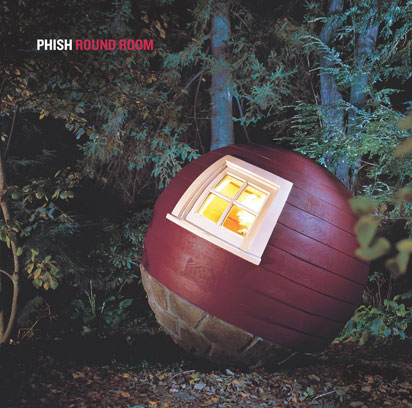
wallsSOUNDTRACK: PHISH-Round Room (2002).

round After Farmhouse, Phish went on a hiatus.  No one knew it would be quite so brief, but there was really a feeling that they were done.

And then they quietly released Round Room in 2002.  And it bursts forth with an 11 minute song.

“Pebbles and Marbles” has an interesting riff—complex and pretty.  And when I listened to it again recently I didn’t really quite recognize it.  But that’s because it’s nearly 12 minutes long and the really catchy part comes later in the song.  At around 5 minutes, the catchy chorus of “pebbles and marbles and things on my mind” announces itself.  And it is a good one.

“Anything but Me” is a pretty, mature song that is slow and piano heavy.  “Round Room” is a boppy little ditty (clearly a song written by Mike).  It is sweet and a little weird.  “Mexican Cousin” sounds a lot like a cover (maybe an old song by The Band) except for the solo which is very Trey.  It’s a funny, silly ode to Tequila.  “Friday” is a slow six minute song with two sections.  The verses are spaced out a bit, delicate riffs that are mostly piano once again.  The middle section is sung by Mike (which makes it more mellow somehow).

“Seven Below” is an 8 minute song.  It has another great riff (and the intro music is cool and bouncey).  When the vocals come in, it’s got gentle harmonies as they croon the sweet song).  Most of the 8 minutes are taking up with a guitar solo.  “Mock Song” is another of Mike’s songs.  This one seems to be a random selection of items sung to a nice melody.  Then when the chorus comes it’s quite nice, how this is a “just a mock song.”  The first verse is sung by Mike, then Trey does a kind of fugue vocal with different words in verse two.

“46 Days” opens with funky cowbells and turns into what seems like a classic rocking folk song—few words but a great classic rock melody (complete with 70s era keyboards).  “All of These Dreams” is a mellow piano piece, another mature song.  “Walls of the Cave” has an interesting piano melody that opens the song. The song is nearly ten minutes long and the middle part has a nice flowing feel to it.  There’s also a few sections that are separated be drum breaks—something that doesn’t often happen in Phish songs.  When the third part opens (to almost exclusively percussion, their vocals all work in a very nice harmony.  It’s a long song but with so many parts it always stays interesting.  “Thunderhead” is another piano-based song with some guitar riffs thrown on top. But it is largely a slow, mellow piece.

“Waves” is an 11 minute song with long instrumental passages.  It also begins with a kind of Santana feel to it, but it is a largely meandering song, with a simple melody that they stretch out for much of the song.  So this album proves to be an interesting mix of long jams and mellow ballady type songs.  It seems like Phish had a big mix of things to let loose.

[READ: November 1, 2013] If Walls Could Talk

This book reminds me of the work of Mary Roach—exploring a topic in great detail and including lots of amusing insights.  The two big differences here are that Worsley is British and that she goes back very far in British history to give us this fascinating information about the development of certain rooms of the house.

Worsley begins with the bedroom.  She looks at the furniture—the history of the bed from lumps with straw to fantastically ornate full poster beds that were made for kings who might never actually use them.

Then she moves on to more personal matters—sex (including deviant sex and venereal disease); breast feeding (for centuries mothers felt they were not equipped to take care of and nurse their own children, hence wet-nurses) and knickers (royalty had an entourage designed specifically to assist with underthings).  Indeed, privacy was an unknown thing in olden times.  Even royalty was expected to receive people in all of the rooms in the house.  Initially the bed chamber was for their most intimate friends, not just for sleeping.

The section on old medicine was also fascinating, they believed that it was vaporous miasma that did you more harm than say, excrement-filled water.

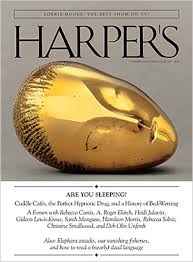
The section on Sleep discusses what was also in a recent article by Gideon Lewis-Kraus—that there were two sleep times at night.  With no electricity there was no artificial light to keep people up late so they would go to sleep early, wake up in the middle of the night (the best time for conception of children) and then sleep again. (more…)

Read Full Post »

aug2013SOUNDTRACK: THE FRONT BOTTOMS-Tiny Desk Concert #297 (August 19, 2013).

frontbotI really enjoyed The Front Bottoms’ “Au Revoir” and was pretty excited to see they had a Tiny Desk Concert.  After watching this, I’m very curious to see what they do in a full band setting because their sound works very well in this stripped down fashion–with acoustic guitars, penny whistle and muted trumpet (!).

Lead singer, Brian Sella, reminds me a lot of Mike Doughty in his speaky/singing way (especially on “Swear To God The Devil Made Me Do It”–although less speaky than Doughty or Cake–there’s just something about his delivery that puts me in mind of them.

He’s also always got a smirk on his face, which makes me like them more.

I’m torn between wondering if they’re a novelty band that I wouldn’t listen to more than a few times or a cool alternative band whose idiosyncrasies only get better with each listen.  I love the way “Twin Size Mattress” has little elements (like the tambourine moment–and the “no fucking way moment) which elevate it above some of the seemingly sillier songs.  Not to mention the lyrics are really good in the song.  Indeed, even though the lyrics are funny, they are often very clever, too.

I really enjoyed all four songs in this set and I have listened to it many times now.  “Au Revoir (Adios)” sounds great.  All four songs comes from their new album Talon of the Hawk.  And the more I listen the more I’m convincing myself to jut get the damned album.

[READ: September 6, 2013] “Gaboxadol”

This essay was actually hard for me to read.  That’s because the first half was all scientific chemistry talk and I really got lost–I don’t really know what GABA receptors are or do and I didn’t even really understand what he was talking about what Stepan Krasheninnikov did in 1755.  And I worried that I wasn’t going to enjoy this at all.

But soon Morris brought it back to an area that dummies like me can enjoy   He talks about the history of Gaboxadol a drug created by Dutch chemist Povl Krogsgaard-Larsen in 1977.  The first time Povl took it (self-experiment was very common until recently) he said it made him feel like he had just had three beers–a very comfortable feeling.

But Gaboxadol never found its niche.  Povl knew it had relaxing qualities but he couldn’t specifically diagnose who would best benefit from it.  It was tried on the mentally ill.  The desired effects did not really arrive–but the side effects made people feel sleepy.  Then it was tried as an analgesic for cancer patients.  It relieved some pain but it made everyone sleepy (you see where this is gong, right?).  It was then tested on patients with anxiety disorder, but the side effects were more powerful that the anti-anxiety effects.

So then the drug was just shelved (were people just less experimental back then?)  It wasn’t until 1996 that Marike Lancel a somnologist in Munich read the research and decided to try it as a sleeping aid.  She realized that Gaboxadol assisted sleep and also had none of the side effects that Ambien had (apparently terrible insomnia once you stop taking it–so I’ll not be taking that, thank you very much).  Merck bought the rights to Gaboxadol for $270 million. (more…)

Read Full Post »

penumbraSOUNDTRACK: FIONA APPLE-The Idler Wheel is Wiser than the Driver of the Screw and Whipping Cords will Serve You More than Ropes Will Ever Do (2012).

fionaFiona Apple released the album with the longest title a few years ago.  The title of this new album (also taken from a verse of Apple’s) doesn’t quite match in terms of length, but the music absolutely delivers in terms of quality.

When the Pawn… was full of big numbers–it was loud and brash and gorgeous.  The Idler Wheel is much more subdued and initially I didn’t think it was as exciting.  But this subdued music draws you in and gets you to really absorb everything that’s going on.  Musically, this album takes notes on the orchestration from her previous album Extraordinary Machine, but it scales  everything back  to what amounts to just Fiona’s voice (often multitracked) and minimal instrumentation.

Like “Every Single Night” which opens with beautiful bells/glockenspiel as Fiona sings.  “Daredevil” is almost all percussion and loud piano.  Indeed, the main sounds of the song is a quick shuffling followed by short piano chords.  It is so stark but her voice just sails through the open space beautifully.

The meandering piano of “Jonathan” is great–at turns minor and sad but then come chords and beauty.  More drums fill “Left Alone” as the opening twenty or so seconds are all drums followed by a menacing piano riff and the amusing lyric, “How can I ask anyone to love me when all I do is beg to be left alone” (and with each subsequent repeating of this chorus she sounds more and more exasperated).

“Periphery” is also mainly percussion.  But in this case, the percussion sounds like feet scraping on gravel–rhythmically of course.  This leads to a great vocal turn by Fiona, one that climaxes in a big roaring almost shouting section.  Speaking of roaring, just listen to the rawness that Fiona reaches on “Regret.”  It is spine tingling.

“Anything We Want” opens with more odd percussion, which I’m led to believe came from Fiona tapping on things on her desk–and it sounds like it–not instruments, but found objects.  Indeed, read the list of instruments that she and her compatriot used on the album: For “Feedy”: Artwork, Celeste, Composer, Dancer, Field Recording, Keyboard Bass, Loops, Percussion, Piano, Primary Artist, Producer, Stomping, Timpani, Vocals and for “Seedy”: Autoharp, Baritone, Bouzouki, Cora, Dancer, Drums, Field Recording, Guitar, Marimba, Percussion, Producer, Stomping.

The final song is just Fiona and tympani as she sings a line about hot knives and melting butter.  Then the piano and second voice (her sister) sings a fugue as the lines repeat over each other.  It’s a crazy, daring song to end an album with and it sounds like nothing else on the radio today.

I have never been disappointed by an album from Fiona.  Each album is different, taking new chances having wilder experimentation   And this one is up there with the best.  It’s easily one of the best records of 2012.

[READ: January 16, 2012] Mr Penumbra’s 24-Hour Bookstore

I saw an ad for this book in The Believer (I believe) and I thought it looked great.  Sarah said she had already put it on hold.  And when it came in from the library, I grabbed it first.

This book is really great.  It’s a story full of intrigue and secret societies  it embraces old books and modern technology; it’s a romance and a puzzle.  And it’s all done in a very comic style.

What is surprising is how different the book is from what I initially expected.  True, I didn’t know anything really about the book before reading it, but the book opens with an overeducated and underemployed guy, Clay, getting a job in the titular bookstore.  But it’s no normal bookstore.  First, it’s open 24 hours a day (that’s 8 hour shifts for three clerks because they really don’t have many customers).  Second, it’s very narrow and very tall–Penumbra has a massive ladder that rolls along all of the shelves and there’s a chapter dedicated to using it properly.  Third, although there are books for sale in the front (an esoteric lot based mostly on Penumbra’s whims), the back section of books (the tall shelves called the Waybacklist) are not for sale–indeed, they are not even real books per se.

There is a small group of local readers (called the Unbroken Spine) who come to the store, give Clay a code, return a book and check out a new one.  Part of Clay’s job is to write down every detail he can about them each time they come in.  But he is not supposed to open any of these wayback books.  Those are really the only rules of the store.

Clay has two roommates, one of whom is Mat, a guy who works for Industrial Light and Magic as a miniaturist (he is building a miniature city in their living room called Matropolis).  He also has an old friend, Neel, with whom he played a Dungeons and Dragons like game called Robots and Warlocks.  Neel has since become a very wealthy programmer (his job is very funny).  Clay and Neel both loved the The Dragon-Song Chronicles, a trilogy of nerdiness by the author Clark Moffat (incidentally, later in the book a character is named Tabitha–this is now the SECOND book in which both of my children’s names are included and both of them are good guys.  Hooray!  So obviously I loved this book).  I love that later in the book, Clay is making an mp3 version of the books because they were only available on cassette!  (I was equally outraged with him).

When Clay’s friends visit the store, they are enchanted by it and can’t believe that he hasn’t looked at any of the books.  So, he does.  He breaks the rule and flips through a book.  But he can’t make much out of it as it has been encoded.

Soon after, a pretty young girl named Kat Potente enters the store (because of a Google ad that he placed trying to get people into the store–she fit every quirky demographic he could dream up).  Kat works for Google, recognizes that Clay is a kindred soul and, in the whirlwind way of people who know what they want, she sets up a date with him.  They hit it off immediately, especially when she sees that he’s working on a program to graph the checkouts of the books that the Unbroken Spine take out.  (Yup, there’s programming in the book–in Ruby).  The graph suddenly starts taking shape and Clay believes that a pattern is slowly emerging.  And when it does, it is like no pattern you have ever seen! (more…)

Read Full Post »

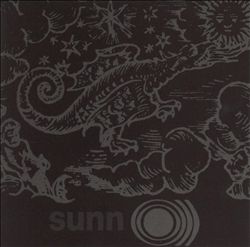
SOUNDTRACK: SUNN O)))-Flight of the Behemoth (2002).

I hadn’t really heard Sunn O))) until this record (which may not be typical as they collaborated with Merzbow on this one).  I knew that Sunn O))) played loud droney “music.”  And so it is here.  On “Mocking Solemnity” (9 minutes) and “Death Becomes You” (13 minutes) (which meld into each other seamlessly), the songs are mostly slow drones on electric guitar.  The chords are heavy and heavily distorted and they ring out for a few bars–not until the chords die naturally, there is a kind of pacing involved, but for a few bars until the chords are played again (often the same chord).  This is for those who thought Metal Machine Music was too complicated.

On paper this sounds unimpressive (or downright awful, depending) but in reality it is a very physical experience (if played loud enough).

The staticy noise of “Death” melds into track 3 “O))) Bow 1” which adds what sounds like radically modified piano playing a kind of melody.  It’s about 6 minutes and it really changes the tone of the record to suddenly add an atonal racket to the almost calming drone of the bass.  But by the middle of the song, the piano becomes what sounds like a chainsaw.  Merzbow mixed that track and  “O))) Bow 2” which is 13 minutes of the same slow pulsating noise.  It’s not exactly soothing.

The final track is “F.W.T.B.T.” a “remake” of “Metallica’s “For Whom the Bell Tolls.”  I can’t hear a thing that sounds like the original, but that’s what makes a cover interesting.  Although admittedly around the four and a half minute mark there’s some faster chords (for this band anyhow) that could be Metallica-like.  There are also drums (and vocals, although I have no idea what they are saying) on this ten-minute workout.

Not for the faint of heart (or fans of melody).

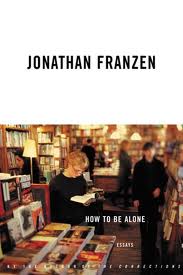
[READ: November 17, 2012] How to Be Alone

I read most of the articles in this book already.  But I read them over two years ago, so I thought it would be safe to wade into the world of Franzen again.  What I find most interesting about the title of this book is just how many of these articles are about being alone, wanting to be alone or feeling like you are alone.  Obviously that is by design but it seems surprising just how apt the title proved to be, especially given the variety of subjects  his father’s brain, being a novelist, the US Postal Service, New York City.

I’m not going to go into major detail about each article this time, although I am providing a link to the earlier review–my feelings didn’t really change about the pieces (except that from time to time I got a bit exhausted at his…whininess?  No, not that exactly…maybe his persecution complex.  But I will give a line summary about each one just to keep everyone up to speed.  The four pieces that I hadn’t read before I will give a few more words about.

One overall feeling is that when Franzen isn’t writing about the state of the novel (which he is very passionate about) his articles are well researched well documented which is kind of surprising given the state of panic he seems to be in the novel articles.  It’s also kind of funny how out of touch these articles seem (some are almost 20 years old and are kind of laughably outdated), but it’s also funny to see how poorly his predictions panned out.  The death of the novel is rather overrated (just see the success of his own Freedom.

So the book contains: (more…)

Read Full Post »

SOUNDTRACK:  SLAYER-Live from Sonisphere 2011 (Palladia TV 2012).

Did I get into heavy metal because I loved typography or was it the other way around?  All metal bands love creating logos, and images that resonate with their music.  Nearly every metal band that I liked had a logo, easy to identify from a distance.  Perfect for marketing.The Metallica logo is pretty iconic, but the Slayer logo moves it up a step–crazy lettering with swords that almost make a pentagram.

When I was a young metalhead, Slayer was like forbidden fruit–so evil it was scary.  I love how this video dispels this image of the band.  Kerry King talking about “the kids,” and look how much Tom Araya is smiling through the whole set.  Never has anyone been happier singing the word “eviscerated.”

This show was during the Big 4 tour–Megadeth, Anthrax, Slayer and Metallica.  So Slayer performs a few of their more popular songs.  I actually don’t know how long their set was, but this thirty show must have contained about half of it.

And the band sounds really good–still playing really fast (Dave Lombardo on drums is a madman).  It also makes me laugh to think of Kerry King back in the early days having a leather bracelet with 4 inch ten-penny nails sticking out of it.  Now he’s just got a huge chain hanging from his belt (and a shaved, tattooed head and a very very long goatee).  Gary Holt from Exodus is replacing Jeff Hannemann for this tour because Jeff has Necrotizing fasciitis (which sounds like a Slayer song anyhow)

The Palladia show isn’t online, but there’s another show from this Big 4 Tour recorded in Chile that’s online.  And the interview with Tom Araya at around 11:30 is amazing,  Tom is such a nice, soft-spoken guy–and he was given the key to the city!  Incredible to hear him scream like that.  (And I see that Kerry has the nail bracelet on for the first song in this show too).

I’m also very pleased to see how many fans are wearing earplugs.  Not metal, but sensible.

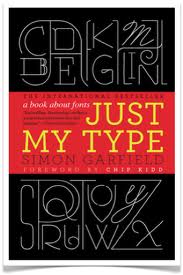
[READ: September 10, 2012] Just My Type

A few months ago, Karen wrote posts about this book (links are below).  All I need to do was to read her first paragraph to know that I wanted to read this book.  I love typography.  I took a typography class at the School of Visual Arts and I have always been fascinated by logos and text.

This book is an awesome book for anyone who loves fonts but who doesn’t want anything too heavy.  There is some history of the various type creators, but for the most part this looks at type faces in the past and in popular culture.   Chapter 1, for instance, is called “We don’t serve your type” and is ll about the overused and much derided Comic Sans.

Karen wisely spread her review over five posts because there was so much in the book.  Looking at her review now, I had already forgotten these two things that she mentions: “the quandary Westminster Abbey was in when it was discovered the designer of the signage at the Stations of the Cross was an incestuous pedophile (among other things).  Or the story of the font that was drowned to keep it out of the wrong hands.”

Each chapter (about 8-10 pages) follows the adventure and misadventure of a font,  a series of fonts or the creator of said fonts.  In between chapters we got Fontbreaks, two or three pages about a specific font. (more…)

Read Full Post »

SOUNDTRACK: THE BEAUTIFUL SOUTH-“Dumb” (1988).

About five years ago I mentioned all of The Beautiful South records in one post.  But I didn’t really talk about them all that much.

This comes from one of my favorite Beautiful South records–I like all the songs equally, but I often have this song in my head.  And the reason I picked it right now is because Paul Heaton sings about a bunch of things each one ending with “either you are simply beautiful or I am simply dumb.”

And these are: “It doesn’t take a mathematician to add a simple sum”; “It doesn’t take a labrador to show a blind man sun”; and this one: “It doesn’t take Robert The Bruce to see the web you’ve spun.”

I had no idea who Robert the Bruce was and I never bothered to look it up.  And yet, as you will see below in the post, Robert the Bruce is mentioned in JR!  I was flabbergasted.  And this song immediately popped into my head.

And that’s not a bad thing.  It’s a pretty piano ballad with a seemingly negative chorus (dumb, dumb, dumb) despite its positive message.  There’s also a beautiful ending: “The sun, the sky, the moon, the stars/Jupiter, Neptune and Mars/All these things I clearly see/It don’t take a telescope for you to love me.”  The songs ends with Jacqui Abbot’s lovely echo of this stanza.

The Beautiful South were a great band, they broke up a few years ago.  Paul Heaton has a number of solo albums out but they’re not available in the states, so…

[READ: Week of August 6, 2012] JR Week 8

This week’s read finds us primarily in the apartment.  We see bast return home and fool around with Rhoda before he goes off on his trip to the funeral.  We see Gibbs come in and try (in vain) to get work done.  We actually get to see Gibbs’ magnum opus (or parts of it), and we see him fall off the high that he felt with Emily.

There’s a lot of funny stuff in this week’s read.  It seems like the darker the story gets, the more childish jokes Gaddis throws in there.  Seeing Gibbs unable to work on his manuscript because of all of the (real and fake) distractions is simultaneously hilarious and spot on.  And also, the plotlines are really revving up now.  JR Corp is starting to see some pushback on their deals, and a number of outsiders are starting to get angry.  There’s bound to be a collapse of some sort soon.  I’m also starting to think that with all of the ellipses in the book that it will end with a dot dot dot.

As we resume, Davidoff and Bast are still talking.  Davidoff tells Bast “Don’t worry about” something [Thanks to Simon for pointing out this expression–I recognized that Davidoff always says “brush fires,” but not the don’t worry about it].  He is concerned that Bast’s hearing aid isn’t turned up (ha), but that the Boss [JR] wants Bast’s signature on any expenditures over $2,000 (It was originally $200, but Davidoff said Bast would get writer’s cramp).  He explains the title change in the magazine from Her to She–passive to active readership–will cost $14,000.  There’s also $27,000 for a new logo.  And the logos are awesomely cheesy–hard to believe they paid $27,000 for them.  They revolve around the dollar sign, with the least offensive one making a J and R out of the top and bottom of the S–the others have a snake, or breasts or thumbing your nose or even someone behind bars.  They pick the least offensive one that says Just Rite in a dollar sign (“something patriotic about the dollar sign”).  They’re going to put them on half a million matchbooks. (more…)

Read Full Post »

« Newer Posts - Older Posts »