Feeds:
Posts
Comments

Archive for the ‘Politicians’ Category

SOUNDTRACK: JIAN-The First 6 Songs (2001).
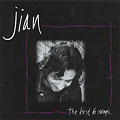
Being American and apolitical in my youth, I had no idea who Pierre Trudeau was until about 2001.  And my first real introduction was through this album by Jian Ghomeshi.  Jian was one of the four guys in Moxy Früvous (and man has his career skyrocketed since then…watch his great interview show Q online–in particular, check out the crazily uncomfortable interview with Billy Bob Thornton or the wonderful hour long interview with Rush).

Moxy Früvous had just broken up and Jian, who was one of my faves in the band, put out the optimistically title The first 6 songs (no other songs have arrived yet).

Jian is a mostly folk rock album which features Jian’s gentle voice.  And gentleness is one of Jian’s trademarks, it would seem.  But more than gentleness, his songs are about accountability and justice.  And yet lyrically, he’s not naive or obvious.  “Quebec City” is about the Summit of the Americas in Quebec City in 2001 (“the whole world is watching”).

I’ve always felt connected to the last track, “Lousy Boy”:

“And a man Is a man If he’s got a gun in his hand
Well I never wanted to destroy I always made a lousy boy….  And I know guys who are just like me
They like hockey and poetry
I think in retrospect that we have won
I’m a full-grown man and I don’t own a gun.”

Früvous has similarly thoughtful lyrics but in addition to the lyrics, the music is always interesting.   So the unexpected chord changes in the bridge to “Astronaut” turn the song from a simple folk song into a moving rocker.  And “Baby Don’t Lie” is a 5 minute track that builds on a folk base and is a catchy sing along.

of course, this all leads to the song “Father (For Pierre Trudeau)” the song that first taught me a little bit about the Prime Minister.  The song covers a few moments of his media-saturated leadership.  But mostly it’s a reflection about Trudeau on the day of his death.  The personal touch of course is that Ghomeshi’s father wanted to meet him (as did Jian) but now they w0uld never get to.  It’s a very touching song, and I have a hard time imagining someone writing a similar song about a President.

It was this song that got me to investigate the life and leadership of Trudeau.  (I even wrote an email to Jian, to which he quickly responded…I only wish I still had that email account active).

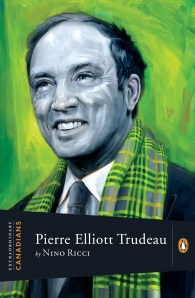
[READ: January 12, 2011] Pierre Elliot Trudeau

This is one of the more exciting biographies that I’ve read.  Which is pretty great.  Although one of the reasons it is so exciting is because he presumes that the reader knows a lot about Trudeau already.  And to be fair, I assume most Canadians would know the global picture (and most of the details) about him already.  So, basically, you get a summary picture of Trudeau, but instead of a quick outline that glosses over details, we get a lot of details, but no gloss.

What I’m getting at is that there are a number of places where Ricci talks about events and movements as if we know them.  So this makes for incredible fluency even if the novice is left puzzling exactly what all the fuss was about.  In fairness, contextually it’s easy to figure out, it’s just a bit surprising.

Another fascinating thing: Ricci skips over Trudeau’s childhood pretty much completely.  The book opens with Ricci’s memory of seeing Trudeau in 1967 when he (Ricci) was a young boy and seeing the way his teachers an adults seemed mesmerized by him.

Nostalgia aside, Ricci quickly explains what a polarizing figure Trudeau has been.  Warmly loved by many and yet (according to Macleans) ranked 5th of all Canadian Prime Ministers (despite being re-elected several times).  Actually, the way that Ricci words it it sounds like he came much lower than that (he says “third tier” which seems much mower than 5th).  And, judging by comments on YouTube videos, utterly hated by others.

The next chapter continues in 1968 at the beginning of Trudeaumania. Treudeaumania sounds a lot like Obamamania–a young, relatively inexperienced politician makes some noise and is thrust into prominence.  (Of course, in 1968, Trudeau only ran for office for a month and a half before being elected–ah the bliss of a short campaign season).

A video of Trudeaumania shows people swooning over him.

The biography does cover some of Trudeau’s earlier years (taken largely from Young Trudeau by Max and Monique Nemni).  He was a somewhat rebellious youth and his teen behavior was full of the usual (and not so usual) rebellions.  But the thing with Trudeau is that it is never clear whether he seriously held certain beliefs or if he was just trying to get a reaction out of people.

He established a society called les X whose purpose was to create an independent Quebec (organized under fascist principles).  les X faded from Trudeau’s life and existence with very little fanfare, and evidently radical groups like that sprang up all the time in Quebec at that time.  Really, it seems to point to his growing bored at his school and with the provincialism of Quebec.

When he left Quebec for Harvard and later for Europe, his mind was expanded and his beliefs opened up accordingly.  He had written many anti-Semitic things in his Montreal youth but once he actually met some Jews, he quickly changed his tune. Indeed, Harvard seems to have really shaped his later outlook in life.  And his exposure to vastly different attitudes during his studying Paris and then later in London exposed him to so much more in the world.

When he returned home to Quebec he found everything small and narrow (which is exactly how it (and he) was when he left it).  And he quickly finds himself embroiled in politics with the Asbestos Strike of 1949.  He took a position (and offered free legal assistance to anyone striking) which raised his profile and quickly made him persona non grata in his province.

This led him to leave for Ottawa, where he was less known and (since his credentials were great) where he could easily get a low position in politics and establish his career.  The main thing he learned, though, was that Ottawa was not the enemy (as is generally held to be true in Quebec).

Trudeau eventually returned to Quebec for Cité libre.  This is one of the things that Ricci glosses over…I’m still not exactly sure what Cité libre is (okay, an influential political journal), but I’m well aware of Trudeau’s involvement in it.  And how it helped him to state his principles and beliefs.

There’s a lengthy passage where Ricci explains how Trudeau’s federalism came to blossom so powerfully for him.  And this argument is one of the reasons why I am in the camp of Trudeau, because even though his piece is meant to be just about Quebec, I find it holds true for the U.S. as well (substitute out Quebec for any special interest).

The sort of independent Quebec he had dreamed of as a young man, he saw now, would only have given greater rein to the ruling elites to exploit nationalism for their own end, as Duplessis has done. In a Quebec obsessed with the survival of French-Canadian culture it was too easy for leaders to manipulate the electorate by promoting vague ideological goals rather than more practical ones, such as those providing infrastructure and employment (103).

Trudeaumania quickly swept him into office, but he was most reviled by his home province which felt betrayed by his turning his back on separatism.  He was the target of an attack by the FLQ, which captured and killed Trudeau’s friend and cabinet minister Pierre Laport. This was known as the October Crisis.  Trudeau’s reaction was swift and hard, he called for martial law (and the Mounties certainly abused their rights). But when questioned about whether he should or could step so hard on a province his answer was “Just watch me”

Now, it turns out that that quote comes at the end of a lengthy interview and makes for a glib soundbite when in fact Trudeau was anything but glib.

The next big moment of excitement for Trudeaumania was when he married Margaret Sinclair.  For a brief time, they were the it couple.  He was 51, she was just 22, and she was beautiful.  Trudeau seemed to be a confirmed bachelor or at least a consummate playboy, so to have him settled down was quite a story.  But how hard must it have been to be a young woman suddenly thrust into the political spotlight.

Naturally, cracks would surface in their marriage.  In fact, in 1977, Maggie decided to party with The Rolling Stones rather than attend her sixth wedding anniversary party (read the wonderful article in People about it–I love the tsk tsk tone!).

But the penultimate chapter is, mostly, about Trudeau’s disappointments.  He had taken office in a hail of excitement but really had not a lot to show for it.  He was even set for retirement, until he was drawn back in.  And in this final term, he was finally able to achieve his legacy.  And this legacy seems to be summarized by two words: federalism and patriation.  (With the downside being summed up in the word “notwithstanding”).  Now, this is obviously something that Canadians know all about, and it seems foolish to summarize what this meant for readers who lived it.  But for me, who knows precious little about the mechanics of Canadian politics, I was a little lost in the details.

I got the Federalism thing, but the constitution is a bit confusing.  And the whole notwithstanding clause really kind of lost me.  Nevertheless, the chapter that covered this was rather exciting because Ricci writes as if there is one man whose mission is to see him fail.  And this nemesis is Rene Lévesque.  It’s a classic mano a mano battle between two Quebeckers and it’s really rather exciting (especially if you didn’t know the results).

The final chapter talks of Trudeau’s legacy.  And in this chapter Ricci seems to side with Trudeau.  He cites specific examples of being the best man at a same-sex wedding ceremony, something that would not be possible without Trudeau (even though Trudeau never envisioned it).  Indeed, there’s a comment that:

during the 1968 leaders’ debate, Réal Caouette, leader of the Ralliement créditistes, joked that Trudeau’s Criminal Code amendments might lead to a situation where “a man, a mature man, could in the future marry another mature man” Caouette had his joke while Trudeau, awaiting his response time, smiled civilly and held his tongue.

Because I’m not part of the culture, I don’t know to read Ricci’s take on the man.  He is not afraid to show off all of Trudeau’s faults.  In fact, in many instances he rather highlights them.  For instance, the debt under Trudeau expanded exponentially.  When Trudeau took office in 1968 Canada had a debt of $18 billion; when he left office in 1984, that debt stood at $200 billion, an increase of 83% in real terms.  And yet at the end of a nasty passage he will present some evidence which ameliorates Trudeau either in whole or (more typically) in part.

I guess in that sense it is an excellent primer on Trudeau’s political life.  But it’s also personal enough that you can see how one man impacted people.  Not citizens, but people.  And when he describes the people lined up for Trudeau’s funeral it ties right back to Jian’s song.  It really shows the impact that one person can have on the lives of so many.

And, here’s a shameless plug to the folks at Penguin Canada–I will absolutely post about all of the books in this series if you want to send me the rest of them.  I don’t know how much attention these titles will get outside of Canada, but I am quite interested in a number of the subjects, and will happily read all of the books if you want to send them to me.  Just contact me here!

For ease of searching I include: Fruvous, creditistes, Real Caouette, Rene Levesque, Cite libre

Read Full Post »
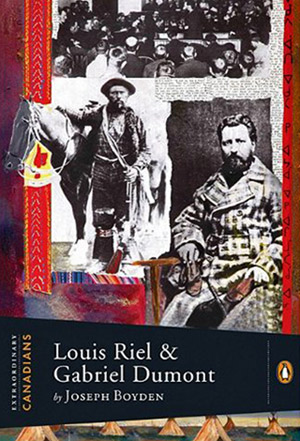
SOUNDTRACK: SHARON VAN ETTEN-Tiny Desk Concert #91 (November 14, 2010).

I was introduced to Sharon Van Etten via NPR’s All Songs Considered, so it’s no surprise that they would have her on a Tiny Desk Concert as well.  I loved her song, “Save Yourself” more than I could imagine.  There was something about the way the intensity built and built that really blew me away.  The rest of her album is really enjoyable, but it has less intensity. It’s almost like an acoustic album.

So it’s funny that I find her Tiny Desk show mildly disappointing because it is also an acoustic set. In fact, it is just her and her guitar (and her singing partner who sings wonderful harmonies).

Okay, I shouldn’t really say disappointed because the set is quote good.  Her guitar laying is fine and her voice, he unique and slightly unsettling voice is in fine form here.  There’s just something about the stripped down nature that takes away that extra sparkle that I really love about the disc.  I imagine that if I hadn’t heard the whole CD first, I would have been blown away by this live recording.

The four songs (“Peace Signs,” “Save Yourself,” “One Day,” “For You”) are all from Epic, and they’re all really good.  It’s a nice accompaniment to the album, but I think the album is a bit better.

[READ: December 13, 2010] I Live Real Close to Where You Used to Live

Back in early 2009, McSweeney’s published Thanks and Have Fun Running the Country: Kids’ Letters to President Obama as a friendly kick off to the President’s new term. We’re now at the end of the second year of that term and the “Have Fun” part seems to be rather unlikely.  But just in time for the rise of Boehner, McSweeney’s has published this companion piece, letters to the rest of the Obama family.  And it is just as sweet, clever and at times odd as the first.

The kids from 826 National in several cities were asked to write letters to the first family.  It’s interesting to see how the different regions ask different questions, but perhaps more interesting is how some things seem to resonate no matter where the kids are from.  Two kids ask about Pokémon Black and White (this must be the hot new game).  Several kids ask how many rooms there are in the White House.  Naturally, several ask about her garden (what she has in it or what kind of fruits and veggies she likes).

But the most fun is the advice the kids give.  My favorite is the girl who says that her aunt thinks Mrs Obama should have one more child (but only if she wants to).

Sadder are the children who are clearly having a rough time.  One child talks about her parents’ separation, and another’s entire letter is: “Can you help my family? We’re about to lose our house. Make the world a better place. What is your favorite food?”  It must be tough to be a prominent person who clearly wants to help yet who is for the most part, impotent to do anything.

And for me that has to be the hardest part about writing to the first lady.  She has no clear “role.”  She’s a public figure and she advocates for good, but she can’t really “do” anything.  And that has to be hard to grasp.  Although judging by what the kids say, maybe they have no problem with it. (more…)

Read Full Post »

SOUNDTRACK: BAD BRAINS-I Against I (1983).

I don’t remember buying this album, but I remember getting it because of the connection to SST records (not because Bad Brains were an amazing hardcore band–I didn’t know that yet).

All of these years later, this album is still pretty astonishing.  The heavy punk blends so well with the reggae-inspired jams.  Perhaps the biggest band where Bad Brains influence is evident is Fishbone (especially their later metal songs).  But you can hear t hem in Faith No More and many other mid 90’s bands as well.

The disc opens with a great off-beat instrumental (“Intro”) which leads into the amazing yell-along “I Against I.”  “House of Suffering” follows with some more speedy hardcore.  Then it all slows down with “Re-Ignition,” the first indication that this is an album unafraid to take risks.  Although the thumpy riff and heavy beats are still there, the vocals are more of a reggae style (especially towards the end).  “Secret 77” follows with a kind of funk experiment (but those drums are still loud and stark–Earl is a maniac!).

Darryl’s bass work is tremendous throughout the disc, and Dr. Know’s guitar is amazing–speeding fast soloing, heavy punk riffs and delicate intricate reggae sections intermingle with ease.  And, of course, we can’t forget about H.R.’s vocals.  He has several different delivery styles from the speedy punk to the reggae deliveries and the all over the place (including high-pitched shrieks on “Return to Heaven”).

The second half of the disc experiments with more diversity, and it is somewhat less punk sounding (although not by much).

Historically, it’s hard (for me) to place exactly how influential they were.  Listening to  the disc today (which doesn’t sound dated in any way) it sounds utterly contemporary in stylistic choices.  Did they come up with the mosh break?  They certainly are the first punk band the embrace Jah (that’s a trend that never really took off though, eh?), but their funk metal sound predates the popular Faith No More style by over a decade.

[READ: November 21, 2010] “The Kids Are Far-Right”

I know I subscribed to Harper’s when this article was published (I distinctly remember the jelly bean portraits of Reagan), but I’m pretty sure I didn’t read it then because the whole idea of it sounded depressing (the subtitle: “Hippie hunting, bunny bashing, and the new conservatism”) was just too much for me in 2006 (and was almost too much for me in 2010).

And so our correspondent (not long after his trip through the Bush/Cheney volunteer minefield) heads out to the twenty-eighth National Conservative Student Conference.  He meets exactly what you would expect: right-wing campus types (several from ultra-religious schools) who are there to learn to hate liberals even more than they already do (and boy do they).

Wells’ article is full of details about all of the speeches and programs, as well as biographical information about some of the attendees.  Most of them just want to get rid of liberals on campus, but some want to go into politics themselves someday (they are viewed with suspicion here).  Many also hate George W. Bush because he raised taxes.  In hindsight what we have here is the origins of the tea party.

The only comforting news to come from the article is that only 400 people attended (but they were willing to spend a few hundred dollars and give up a week of their summer vacation, so it’s still a pretty high number). (more…)

Read Full Post »

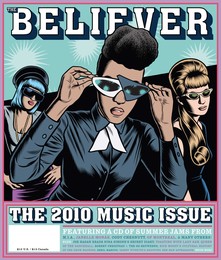
SOUNDTRACK: The Believer July/August 2010 Music Issue Compilation CD: “We Bumped Our Heads Against the Clouds” (2010).

Of all the Believer music compilations, this is by far my least favorite.  It would be oversimplifying things to say that the music is not for me, but in many respects it is not.  Chuck Lightning, the curator of the project states that this compilation is more or less a look into the state of the union for black artists.  And that invariably means a lot of R&B and songs that might be heard on Glee (I like the show, but I never know any of the music).

Deep Cotton’s “Self!” reminds me of novelty dance hit from the late 80s.  Of Montreal, who I thought sounded totally different from this, offer “Hydra Fancies” which is as catchy a disco anthem as any disco anthem can be.  Roman GianArthur’s “Depraved Valet” is an amazingly falsettoed Prince knock off.  Cody Chestnutt’s “”Come Back Like Spring” is a simple almost acapella ode to spring.  Saul Williams’ oddly titled “B.S. in a Tampon” is a spoken word with acoustic guitar that reminds me of Gil Scot-Heron.  Janelle Monáe’s “Cold War” is the first really catchy song (the la las remind me of Carole King), although  I could do without the overstated “Calinda” part and the extended fade.

The first song I really liked was BLK JCKs “Iietys” which sounded enough like TV on the Radio to be really interesting.  Spree Wilson’s “Chaos” also sounds like TV on the Radio (the more R&B side of the band, although the guitar solo is a dead ringer for “Hotel California.”  Scar’s “Rewind” is the song that should be on Glee.  I want to hate it but it is so damned catchy, I can’t.  Again, those Oh Oh Ohs are too perfect (and the auto0tune of course is unassailable).

Rob Roy’s “Velvet Rope Blues” is my favorite song on the disc by a large distance. It’s a weird rap that reminds me of The Streets, with an awesome sung chorus ala OutKast.  Hollyweed’s “Have You Ever Made Love to a Weirdo” is a trippy, juvenile space rap that is really silly.  Sarah hates it but I kind of like it, as it’s in the spirit of Frank Zappa, (although I hate the sax solo).  Fear & Fancy’ s “Off the Grid” sounds also not unlike OutKast.  And George 2.0′ s “Turn Off the TV” is a anti-TV rap rant (with the somewhat ironic conclusion that you yourself might end up ON the TV).

M.I.A. is probably the biggest name on the disc. “Born Free” is a weird little track of highly distorted vocals over a punk guitar buzzsaw sound.  But her vocals are mixed so loud in the mix that they sound unrelated.  It sounds not unlike a Go! Team track.  This track makes me wonder how she became such a sensation.

Hot Heavy & Bad’s “One” returns to that disco sound in the vocals with some contemporary bass sounds.  It wears out its welcome pretty quickly.  Tendaberry’s “Cold Boy” sounds like a less horn-y Fishbone.  Mother Novella offers one of the few all guitar songs, “Closer 9 1/2” and it’s an okay mid tempo rocker.

The final song is pretty awesome in theory: Nina Simone covering Alice Cooper.  That’s right, Nina Simone covering Alice Cooper.  Sadly I don’t know the Alice Cooper song, so it’s a bit lost on me.

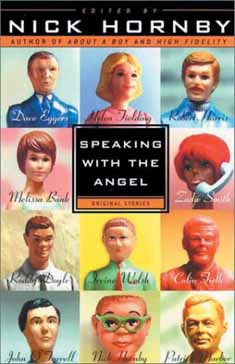
[READ: September 16, 2010] Speaking with the Angel

I bought this volume when it came out (and apparently donated $1 to TreeHouse at the same time).  It’s a collection edited by Nick Hornby (and the cover is designed similarly to the way High Fidelity and even About a Boy were at the time (“the Hornby look,” I suppose).

I didn’t buy it for Hornby alone, although he does have a story in it, but because it looked like a really promising collection of stories from authors I liked.  And for some reason I didn’t read it until now.  It includes 12 stories, and as the introduction notes, $1 was donated to TreeHouse.org.uk (in the US $1 goes to TreeHouse and another $1 goes to New York Child Learning Institute).  I don’t know if the money still goes there, but you can donate with a form at the back of the book.  (more…)

Read Full Post »

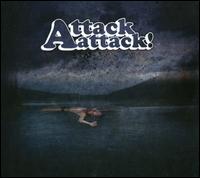
SOUNDTRACK: ATTACK ATTACK!-“Stick Stickly” (2010).

I discovered this video (again, considerably later than the controversy for it) because my friend Rich said he didn’t know there was a genre called “crabcore.”  A search for crabcore suggests that it is a goof “genre” named specifically for this band and the goofy way they dance around.

This song starts with very heavy riffing and some growls and screaming and then jumps quickly into an auto-tuned very catchy chorus (they sound like a more polished and poppy version of Alexisonfire).

Then comes the verses which are screamed very loudly and heavily followed by a bridge (?) that is even more cookie monster-vocals like (with a strange cartoon effect thrown at the end of each line of the chorus).  It’s almost like commercial death metal, and I kind of liked it.  They’re pushing boundaries

Then there’s more chugga chugga heavy riffing and the song is reaching the end and then WHAT? the songs shifts gears into a keyboard fueled discoey dance song.  First it’s hi energy and then it slows into a mellow auto-tuned bit that proceeds to the end.

What the hell?  I’m all for a band pushing the boundaries of genres, but holy cow.  And just to add one more gimmick, they’re a Christian band as well (although you’d never know from the lyrics, whatever the hell he’s singing about).  This is no “Jesus is My Friend,” let me tell you.

So yea, I don’t really know what to make of it. The video makes me laugh with their all black outfits and synchronized everything–and that may be why they have replaced it with a new video which is much more boring.  I assume they’re just anther trendy band that will disappear soon enough (there’s a lot of snarky fun at their expense at this definition of “crabcore“).

I don’t have a clue what the title is supposed to mean, nor half of their other titles on the album: “Fumbles O’Brian” “Renob, Nevada.”  I listened to some samples of the other songs and they seem far more dancey/discoey than death metal, so I’m not really sure what’s up with the rest of the record.

But whatever.  In the meantime, enjoy the silly video

[READ: July–September 10, 2010] K Blows Top

I heard about this book through a great interview on NPR in June of 2009.  It sounded like a really funny book and I was seriously considering reading it.  Of course, then I forgot about it.

About 8 months later, the library received a huge donation of books, and this was right on top, just begging me to read it.  So, I saved it for myself and decided it was about time to crack it open.  Several months after that I finally opened it and was totally hooked.

I didn’t know much about Khrushchev before reading this.  I knew vaguely about “the shoe” incident, but that was it.  In fact, the whole beginning of the cold war era was a bit of a mystery to me.  Since I lived through Reagan, I never felt compelled to find out what had caused the 80s.

But I’m super glad that I read this.  The book follows Khrushchev’s visits to the United States when he was premiere of  the Soviet Union. Carlson combed through tons of newspaper reports about his visit here (ostensibly to visit with Eisenhower, but more just to enjoy himself in the American heartland), and pulls together a fascinating story from a number of sources.

But more than just an interesting look at history, this book is very funny. (more…)

Read Full Post »

SOUNDTRACK: A HOUSE-Zop (1991).

This is an EP that came out just after I Am the Greatest.  Released only in the UK, I found it used at Amoeba Records (I must have been on an A House binge at the time).

The EP has 6 tracks.  The opener sounds like a slightly remixed version of “You’re Too Young.”  And “Take It Easy on Me” also sounds remixed (the wah wah seems downplayed somewhat, although the song is still strong).

The other tracks are good songs from this experimental period of A House.

But for me the highlight is “When I Last Saw You,” the 5 minute version of “When I First Saw You” from Greatest.  I’d always liked the album versions’ fascinating concision and almost a capella feel.  This version tacks on a proper song, and it changes the song in wonderful ways.  I will always enjoy that short version, but this EP version is really great.

What’s interesting is that there’s virtually no record of this disc on the web.  Even though the A House homepage is known as ZOP.  The site, sadly, has not been updated for two years.  Although it does answer the question of what Dave Couse has been up to since the late 1990s.

[READ: August 22, 2010] Bloom County: Vol. 2: 1982-1984

This volume of the collection covers a lot of the comics that I know very well.  There are a number of strips that I drew (not traced) and hung in my locker in high school (I wasn’t about to cut up Loose Tales, was ?).  It also covers what I think of as my first era of social and political awareness.

I know I wasn’t totally aware of what was going on, but, via punk music mostly, I became aware of criticisms of Reagan.  And to a lesser degree, so does Bloom County.  I’m actually surprised at how apolitical it seems in retrospect.  My recollection was that it was a massively political strip.   And yes, there are a lot of political references, but for the most part it’s sort of political pop culture jokes.  Reagan gets teased a bit (although again less than you might expect), but it’s not the raging left-wingedness that I fondly recall. (That said, the strip is imbued with leftie political ideas, but they’re sort of mellow compared to now).

Rather, the political jokes are aimed at politicians as a class.  And there are commentaries about political events (couched in terms of local politicians, or, more often, in terms of Bloom County’s nonsensical “scandals” that are based on what really happened (although often the real scandals seem as absurd as the Bloom County ones). (more…)

Read Full Post »

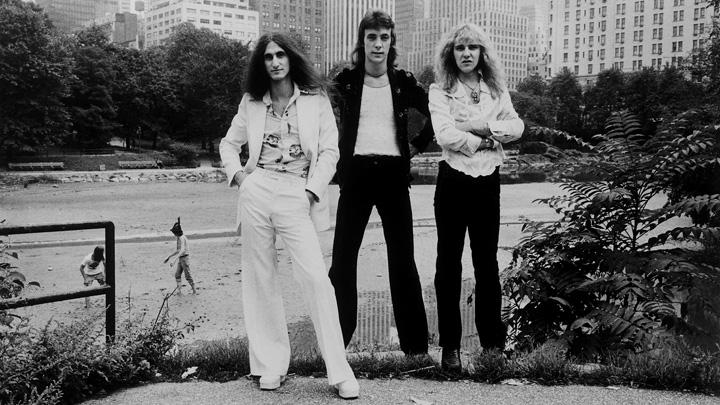
SOUNDTRACK: RUSH-“The Trees” (1978).

I suppose many people know this kind-of popular song from Rush.  But lyrically it seemed relevant to Insurgent Summer.

There is unrest in the forest,
There is trouble with the trees,
For the maples want more sunlight
And the oaks ignore their please.

The trouble with the maples,
(And they’re quite convinced they’re right)
They say the oaks are just too lofty
And they grab up all the light.
But the oaks can’t help their feelings
If they like the way they’re made.
And they wonder why the maples
Can’t be happy in their shade.

There is trouble in the forest,
And the creatures all have fled,
As the maples scream “Oppression!”
And the oaks just shake their heads

So the maples formed a union
And demanded equal rights.
“The oaks are just too greedy;
We will make them give us light.”
Now there’s no more oak oppression,
For they passed a noble law,
And the trees are all kept equal
By hatchet, axe, and saw.

I’ve liked this song for some twenty-five years and my interpretation of it changes every once in a while.  I’m not sure if the book influences my thoughts on the song, but it seemed relevant.

Oh, and it totally rocks, too.

[READ: Week of July 30, 2010] Letters of Insurgents [Eighth Letters]

Yarostan replies to Sophia’s letter by saying that her victory is complete, that he has been looking through opaque lenses all these years.

But the main focus of this letter is the dance at the factory that Yara and Mirna have coordinated.  They decorated the whole room (moving machinery aside) to have the experience of the life that Sabina lived.  It even included signs that said “everything is allowed” and “nothing is banned.”

The dance is basically a retelling of Mirna’s story, complete with Mother with Broom, Devil, and all the other characters that we’ve heard about in their bizarre “love games”  Although the dancing part with the spinning and circling and all the music sounds like it might have been fun, I feel like the audience must have been very confused and a little bummed that there wasn’t more dancing for all.

After the dance Jasna reveals that she asked Titus to marry her.  Twice.  And Jasna reveals that Titus has said some awful things about Luisa and Vera (and, yes, Mirna) over the years.  Yara still hates him. (more…)

Read Full Post »

SOUNDTRACK: CRASS-Christ: The Bootleg (1989).

I had heard about Crass as being a political force to be reckoned with–they formed an anarchist commune that worked with other artists and on behalf of political causes.  So why not start with a CD that says on the cover: “Suggested Retail Price $4.98.”

So I bought this CD before hearing anything else by them.  It’s a live recording from 5.2.1984, and it’s a noisy muddled mess.  You can hear occasional words in the noise (although most of the clearest things are soundbites from the likes of Thatcher and other politicians).  These surround the songs which are mostly just noisy distorted guitars (more because of the sound quality of the recording I believe).

I’ve obviously never seen Crass, but this bootleg suggests that they were a visceral force (there’s so much screaming!).  There are a few moments of clarity where you can hear their anti-establishment lyrics, but for the most part this is a terrible place to discover Crass.

I suppose if you know the band, it’s a worthy addition, but I have to assume the proper albums sound better and make more of an impact.

[READ: Week of July 9, 2010] Letters of Insurgents [Sophia’s Fifth Letter]

This week’s reading comes from Sophia.  Her letter was nearly 80 pages long, so we get her POV exclusively.

Sophia’s tone has changed yet again. This time, it’s summed up when she dismisses Yarostan’s comparison of her life in the garage (and more about that soon) with his experiences during Magarna:

The only similarity between your experiences during the Magarna uprising and my experiences in the garage is that they both began at the same time.  But I’ll let you be the judge of the similarities and the differences; you’ve scolded me enough for my comparisons and contrasts (338).

Sophia opens with two surprises: she was just in jail and Tina has left their house.  [The way it’s worded: she is “no longer with us” (331) was rather a tease.] (more…)

Read Full Post »

SOUNDTRACKDEAD KENNEDYS-Fresh Fruit for Rotting Vegetables (1980).

Punks often marry politics to their music.  And none moreso than the Dead Kennedys.  I found out about them around the Frankenchrist album, but it’s this one that introduced Jello Biafra to the world.

What I loved about the Dead Kennedys is that they set out to offend everyone–unless you actually listened to their lyrics. The first track, “Kill the Poor” seems like it a horrifying encouragement to do just that, but if you read the lyrics: “Efficiency and progress is ours once more/Now that we have the Neutron bomb/It’s nice and quick and clean and gets things done/Away with excess enemy/But no less value to property/No sense in war but perfect sense at home.”   As was recently commented, Dick Cheney may have seen the sarcasm there.

“Let’s Lynch the Landlord” is a song that Sophia and Yarostan could get behind: “I tell them ‘turn on the water’/I tell ’em ‘turn on the heat’/Tells me ‘All you ever do is complain’/Then they search the place when I’m not here.”

The biggest track of the disc was “Holiday in Cambodia,” a song so catchy that Dockers actually asked to use it in a commercial (!).  Cause nothing sells jeans like: “Play ethnicky jazz/To parade your snazz/On your five grand stereo/Braggin’ that you know/How the niggers feel cold/And the slums got so much soul.”

The thing that I especially liked about the DKs was that although they played hardcore (some brutally fast and crazily short songs), they didn’t limit themselevs to just that.  They had actual guitar riffs, they tinkered with styles and genres (surf and rockabilly among others), and they even slowed things down from time to time (all the better to hear the lyrics).

Even if the band disintegrated into lawsuits, it’s fair to say that they inspired plenty of kids to take an interest in what was going on around them.

Pol Pot.

[READ: Week of June 25, 2010] Letters of Insurgents [Yarostan’s Fifth Letter]

Because Sophia’s letter is very long, this week it’s only Yarostan’s letter for Insurgent Summer.  It opens with Yara annoyed about the tone of Sophia’s letters and her surprise that Yarostan is so quick to want to open the latest one.   But indeed, Yarostan feels compelled to apologize for “the way I treated your earlier letters.  I did treat you as an outsider, as a person with whom I couldn’t communicate about my present situation.  I was wrong” (283).  [It’s very nice of him to admit that he was wrong].  But that doesn’t mean that he is going to lighten up in his discussions with Sophia: “it seems to me that …critical appreciation is not an expression of hostility but is at the very basis of communication and friendship” (285).  Mirna also chimes in (with rather high praise):

Sophia is a born troublemaker, just like Jan and Yara.  She shares Jan’s recklessness as well as his courage.  I’m glad for her sake that she was taken away from here even if her emigration caused her some pain.  There’s no room here for people like that.  If she’d stayed she would have disappeared years ago in a prison or concentration camp (283). (more…)

Read Full Post »

SOUNDTRACK: BILLY BRAGG-Talking to the Taxman About Poetry (1986).

I’ve liked Billy for ages now.  I’ve seen him live a few times, and I’ve always loved that his accent is so prominent when he sings.  Over the years he has become somewhat less overtly political, but he is still a man of issues and causes.

This is Billy Bragg’s second full length.  He was still primarily a man with a voice and a guitar at this stage.  His melodies are strong, and since there’s no other instrumentation, all that’s left to talk about is the lyrics.

“Greetings to the New Brunette” is an adorable love song, followed closely by the anti-marriage “The Marriage”: “If I share my bed with you Must I also share my life Love is just a moment of giving And marriage is when we admit our parents were right.” (which doesn’t quite jibe with Sophia, but it’s close.

But really what you come to Billy Bragg for is the politics.  LIke in “Ideology”:  The voices of the people Are falling on deaf ears Our politicians all become careerists They must declare their interests  But not their company cars  Is there more to a seat in parliament  Then sitting on your arse.”

He also covers a public domain song which I wondered how well it would fit here.  “There is Power in a Union” seems like it’s saying the right thing, but some of the characters here would disagree about the end: There is power in a factory, power in the land Power in the hands of a worker But it all amounts to nothing if together we don’t stand There is power in a Union.”

This album also features the great track, “Help Save the Youth of America.”

Over the years Billy would expand his sound (he even worked with Wilco on two discs), but he always sings for the people.

[READ: Week of July 2, 2010] Letters of Insurgents [Fourth Letters]

As I’ve been going along in the story, I began to wonder if the two letter writers were going to be rehashing the same arguments in each letter.  I had confidence in Perlman that the story would be interesting (it sure had been so far), but I couldn’t imagine how he would keep it original, especially since Yarostan was in jail for so long–he has no information except secondhand.

This week’s reading gave two examples of how he’d do it:  Jasna comes to visit Yarostan and she updates everyone about what had happened to all of their fellow workers, and Sophia reveals a horrible situation in which she hits rock bottom–a real physical bottom, not a philosophical one. (more…)

Read Full Post »

« Newer Posts - Older Posts »