Feeds:
Posts
Comments

Archive for the ‘Politicians’ Category

resist2SOUNDTRACK: SIERRA LEONE’S REFUGEE ALL STARS-Tiny Desk Concert #118 (April 6, 2011).

sierraSierra Leone’s Refugee All Stars are famous for their story.  Its members met in refugee camps during Sierra Leone’s civil war and formed a band to spread joy during an otherwise difficult time.  But the band’s music is what has stood the test of time.  Ten years, two albums and an award-winning documentary later, these eight men are still riding that upbeat reggae groove.

The band consists of three drummers (all with hand-held drums) and one percussionist.  There’s 2 guitars (one electric and one acoustic) a bass and everybody sings.  Their music has a reggae feel, although it’s not exactly reggae, I don’t think.

“Jah Come Down” opens the show. The acoustic guitar keeps the melody while the electric guitar plays a riff throughout.  Occasionally the bass comes in with a cool line or two adding a nice low end.

“Living Stone” has a different singer (the percussionist).  His vocals are a bit more mellow, as this song is.  It’s amazing to see the age range of the players.

“Tamagbondorsu (The Rich Mock The Poor)” is the final song.  It opens with a guitar lick that reminded me of Paul Simon’s Graceland until i re-thought and realized that Graceland sounded like this.

The songs are fun and lively, perfect for dancing (as the singer does during the long instrumental outro).  Most reggae sounds the same to me, and these three songs do tend to blend together quite a lot.  But the music is fun and the players’ skill is undeniable.

Here;s to ten more years.

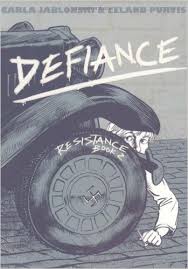
[READ: December 4, 2015] Defiance

This book is set three years into the Nazi occupation of France.  Things are sort of the same but worse for the residents of Vichy.  Neighbors inform on neighbors, and some residents collaborate with the Germans (and are more successful because of it).  And then in 1943, a new French-based Nazi police force called the Milice begin keeping watch over their own people

This aggressiveness causes more resistance, of course. And Paul has been drawing detailed and insulting pictures and posting them all over town (which is making the Milice quite upset).

Of course the kids are taking more aggressive stances now, too.  Some say that the posters are causing more harm because it makes the police mad.  But other kids’ parents have joined the police–some of whom are nice to the kids.  Even Paul’s sister, Marie, believes what her teachers say about Marshall Philippe Pétain (there’s a lesson about Pétain at the end of the book) and his governance.  And no one is going to say anything about the Resistance.   (more…)

Read Full Post »

feschukSOUNDTRACK: THE ART OF TIME ENSEMBLE with MARTIN TIELLI–Korngold: Source & Inspiration (Enwave Theatre, Harbourfront Centre, Toronto, ON, January 30, 2009).

aotimeAfter seeing The Art of Time Ensemble yesterday, it was quite serendipitous that I would have a show from them (featuring Martin Tielli) to post about on the following day.

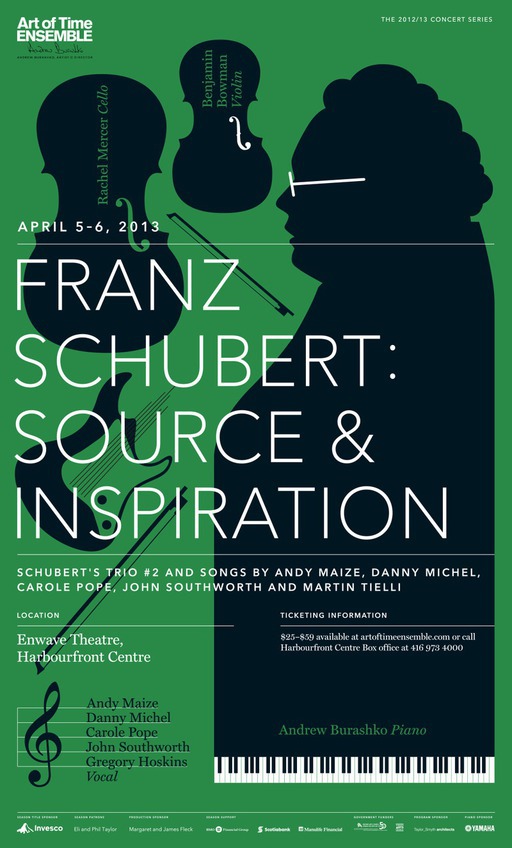
This concert is the third in the Art of Time’s “Source & Inspiration” series. Two years earlier the first concert focused on composer Franz Schubert.  The previous year’s concert focused on Robert Schumann. This time the spotlight was on the 20th century Jewish composer Erich Korngold–a composer of European pedigree who became well known for his wonderful Hollywood film scores.

This concert featured Korngold’s Suite for Two Violins, Cello and Piano as the ‘source’ as well as new songs inspired by this work from Martin Tielli, Danny Michel and John Southworth.

This recording is only 8 minutes long because there’s only two Martin Tielli songs. “Lied Two” (the German word for song is lied (pronounced leed) so Martin called his “Lied Two.” And “Moglich” which translates into “possible.”  Both pieces are played with by the orchestra.  Martins sings.

The more dramatic of the two would be “Moglich” with his loud whispered “Relaxxxxx at the end.”  For more information about the show, you can click on this link.

Full Program & Repertoire:
Suite Op. 23 for 2 Violins, Cello and Piano Left-hand
Erich Korngold
i.Praeludium und Fuge
ii.Walzer
iii.Groteske
iv.Lied
v.Rondo-Finale

INTERMISSION
Athabasca
Adventures of Erich Korngold
—John Southworth
The Sailor Song
Island

—Danny Michel
Lied 2
Moglich
—Martin Tielli

Performers
Andrew Burashko, piano
Danny Michel, singer
Erika Raum, violin
Stephen Sitarski, violin
John Southworth, singer
Martin Tielli, singer
Winona Zelenka, cello

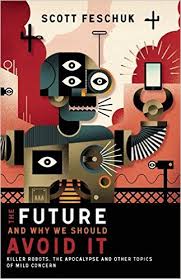
[READ: November 22, 2015] The Future and Why We Should Avoid It

The title of this book made me laugh so I set it aside to read it.  Little did I know that it would be so very funny that I put aside other things so I could finish it.

I hadn’t heard of Feschuk before.  He has written two previous books (How Not to Completely Suck as a New Parent sounds pretty good) and writes mostly for MacLean’s magazine.

As you might guess from the title, this book looks at the future, and Feschuk’s predictions are uncanny.  For instance, I brought the book home and decided to look at it in the bathroom.  And the introduction states quite clearly:

By now, life should be awesome and leisurely and you should be wearing a spacesuit and high-fiving your wisecracking robot sidekick.  Except instead your dishwasher is broken, your god-damn iTunes won’t sync up and right now you’re reading this book on a toilet in your bathroom instead of where you should be reading it–on a toilet in your hover car.

Too right, too right. (more…)

Read Full Post »

  laikaSOUNDTRACK: RANA SANTACRUZ–Tiny Desk Concert #88 (November 2, 2010).

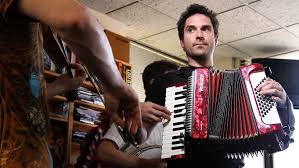
ranaThis is a fascinating Tiny Desk that was posted exactly five years ago as a way to celebrate the Day of the Dead.  Rana Santacruz plays ranchero music.  I did not know what to expect from ranchero music but to me there is a very bluegrass feel.  There is a banjo and a fiddle!  And then there’s trumpet and Santacruz’ accordion playing and Spanish lyrics.

The first song “Tacho El Gacho” begins with horns and has a kind of mariachi feel (Santacruz is dressed like a mariachi), but the song soon switches to that bluegrass feel and is very fun.

He introduces the next song by saying “The next song is called ‘Death.'”   And they play a ten second piece.  They laugh and joke that the real next song is “Dejala Entrar” about a sailor who leaves with death willingly  because of his happy life.  The chorus: “open the door let her in, death herself is here to pick me up.”  This one is like a sea shanty.

The third song is “El Funeral De Tacho” which has more trumpet and feels more mariachi in the opening.

He jokes about all their death songs but says that their songs that deal with death are happy ones.  And indeed, “El Ranchero Punk” feels like a real hootenanny.   The bass player even plays drums on the bass.

I enjoyed this set a lot, and even not really knowing what he was singing about, I totally got into the songs.

[READ: July 7, 2015] Laika

If you know who Laika is, you know that this is not going to be a happy story.  If you don’t know who Laika is, shame on you.  Laika was the first living creature shot into orbit.  She did not survive but she has become legend.

Abdzis has done a ton of research into Laika and the communist/American space race of the 1950s and 60s.  And he has created a wonderfully researched and nicely detailed account of the life of Laika and the people who handled her (and the women who loved her).

The story opens on a man walking through the snow. He has just been released from the gulag and is walking to the nearest town (in freezing weather).  It is Sergei Pavlovich, the future creator of Sputnik (he was falsely accused of treason).  And as the first chapter ends we see his success–Sputnik was the first satellite launched into orbit.  And we see that Nikita Khrushchev wants another satellite in one month. (more…)

Read Full Post »

julySOUNDTRACK: CHADWICK STOKES-Tiny Desk Concert #432 (April 13, 2015).

chadI had recently been hearing about Chadwick Stokes on WXPN.  But I didn’t really know anything about him.  I just looked him up and found that he has been making music for almost twenty years, with the bands Dispatch and State Radio (under the name Chad Urmston) and now as a solo artist.  He apparently is a big time activist as well, and his accolades ring high.

The three songs he plays her are wonderful.  He has a great voice that reminds me in some ways of Cat Stevens (even though Stokes is from Boston and certainly rocks harder than the Cat).  Although he even mentions Stevens in the third song.

I love the way the first song, “Pine Needle Tea” starts out slowly (with Stokes on the guitar) and a delicate xylophone playing along.  Then half way through, both accompanists start playing floor toms–one with stuff on it to deaden the sound and one (Will’s) with no deadening to really pound away.

I love the faster parts in the second song “Horse Comanche” and also how in the slower parts both guys sing lovely high harmonies.  It makes me laugh that the fellow who plays the melodica solo stands almost ramrod still while waiting for his time.  (He is actually Stoke’s brother, Will).  I have grown to really enjoy the melodica lately.  I love how the end of the song has the repeated refrain with great harmonies and the melodica all playing together.

Chad jokes after the song that “Comanche” has a dropped D E string and he always forgets to retune it live (and his brother says he forgets to remind him to re tune it) so half way through the next song “it goes Wah.”

The final song is called “I Want You Like a Seatbelt” which gets a laugh.  It is a funny title but it proves to be a great simile.  I love the vocal melody of this song.  And when it really gets going it is infectious.  It’s just way too short.

I need to dig into his back catalog.  And here’s a link to this great Tiny Desk.

[READ: April 10, 2015] “Democracy in Batumi”

Sometimes an excerpt from a novel (Waiting for the Electricity) piques my interest. In this case, however, it really didn’t.

In this excerpt, Slims Achmed Makasvili is from Batumi on the Black Sea.  He is writing to Hillary Clinton (we’re not told why to her specifically).  He says that Batumi is not very well-known.  The local dictator is tearing down old buildings, but Slims wants Clinton to know that Batumi is a natural port for petroleum deliveries.  He says that there are great business opportunities available for America here. Then he asks if she knows the movie Jesus Christ Superstar.

The next letter (they are undated so it is unclear how far apart they were written) talks about how Clinton’s version of democracy and his are quite different.  The Batumi Center for Democracy has expanded and even has an air conditioning unit. (more…)

Read Full Post »

10SOUNDTRACK: FATHER JOHN MISTY-Fear Fun (2012).

fjmI can’t get over how much I’ve been enjoying this album for the last two years.  Father John Misty is J Tillman from Fleet Foxes.

This disc is a gentle folk album with vaguely country leanings.  The arrangements are spare and yet the verses and choruses are so great to sing along to. “Funtimes in Babylon” has this infectious chorus: “I would like to abuse my lungs, smoke everything in sight with every girl I’ve ever loved.  Ride around the wreckage on a horse knee deep in mud.  Look out, Hollywood, here I come.”  “Nancy from Now On” has a great propulsive chorus with oohs and tinkling bells and pianos and Misty’s engaging falsetto.

I was introduced to this album by “Hollywood Forever Cemetery Sings” which opens with the super catchy line, “Jeeeeesus Christ, girl.”  I love the big crashing drum sound he has here.  “I’m Writing a Novel” is a fun romp, with the great line “I’m writing a novel because it’s never been done before.”  “O I Long to Feel Your Arms Around Me” introduces a great organ sound.  It’s a full song at only 2 and a half minutes.

“Misty’s Nightmares 1 & 2” opens with a slide guitar and turns into a stomping song with more Ooohs and a great chorus.  “Only Son of the Ladiesman” has a great chorus with the fun couple: “I’m a steady hand, I’m a Dodgers fan.”  “This is Sally Hatchet” has cool guitar blasts and a great bridge.

“Well You Can Do It Without Me” is a countrified 2 minute stomper.  “Tee Pees 1-12” is a big stompin’ honkey tonk song with fiddles and slide guitar.  The disc ends with “Everyman Needs a Companion” a slow ballad with a great piano melody and a fun to sing along with verse and chorus.

I love the lyrics on this album, especially the song “Now I’m Learning to Love the War” a slow ballad with a great story:

Try not to think so much about
The truly staggering amount of oil that it takes to make a record
All the shipping, the vinyl, the cellophane lining, the high gloss
The tape and the gear

Try not to become too consumed
With what’s a criminal volume of oil that it takes to paint a portrait
The acrylic, the varnish, aluminum tubes filled with latex
The solvents and dye

Lets just call this what it is
The gentler side of mankind’s death wish
When it’s my time to go
Gonna leave behind things that won’t decompose

In addition to all of the great music on here, the CD packaging is fantastic with that great cover, done in a cardboard gatefold sleeve including two huge books full of words and drawings and lyrics and everything.  I’m really looking forward to his next release.

[READ: September 14, 2014] Grantland #10

Despite my being in the middle of reading several other things, I was looking for a short article to read the other night and grabbed my Grantland 10.  And, of course, once I started, I couldn’t stop. I put everything else on hold and blasted through this issue.

And so all of my loves and hates are the same with this issue.  I never know how anything they talk about nearly a year ago turned out, which stinks.  And yet I get so wrapped up in the writing that I don’t care.  I’m not sure what it is about the writing for Grantland that i enjoy so much.  It is casual but knowledgeable.  Often funny but not obnoxiously silly. And I suppose that now I feel like I’m in on all of the secret stuff they talk about so I’m part of the club.  I fear that if I were to ever go to the website I would get sucked into a black hole and never emerge.

I often wonder how they choose what goes into the book.  This issue has some new writers and the surprising absence of some regulars.  I wonder what went on there.  And as always, the book could use some editing and maybe actually listing the urls of the links that were once in the online version.  But I think I’m talking to deaf ears on that one.

This issue covers October-December 2013 (that’s ten-twelve months ago!  Some of this stuff feels ancient!)

(more…)

Read Full Post »

ornerSOUNDTRACK: PHISH-Hoist (1994).

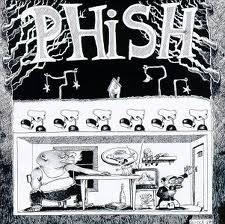
hoistI always think of Hoist as a kind of goofy album because of the way they are dressed on it (and the crazy cover).  But it is absolutely not.  Indeed, opener “Julius” sounds like a ZZ Top song.  In fact, every time they’ve played it live I assumed it was a cover.  It is less restrained in the live setting, because this version has more acoustic guitar.  There’s even backing vocalists and horns.  “Down with Disease” has that great watery bass, but the song (which sounds good) here is a little stiffer than the live version.  It also has something of an R&B feel (with backing vocals) even if the guitar is certainly not R&B at all.  It bleeds right into “If I Could” a pretty harmony-voiced mellow song.  The big surprise comes from the Alison Krauss vocals–she gets a solitary line or two and then harmonies.  The song is very pretty but the strings are overkill.

“Riker’s Mailbox” is indeed a reference to the Star Trek character, although the 30 second burst of noise is pretty hard to explain. Nevertheless, the trombone is played Mr Riker himself, Jonathan Frakes.  It jumps into the rocking “Axilla, Pt. 2” which is usually a little faster live (I like the sloppier crazier live version better). There’s some vulgar dialogue in the middle of the song.

“Lifeboy” is a mellow acoustic song that builds from just guitar.  Lyrically it’s interesting: “God never listens to what I say…and you don’t get a refund if you overpray.”  It folds into “Sample in a Jar,” which is just as good here as any live set.  “Wolfman’s Brother” ahs horns thrown on top and some interesting sound effects.  Although overall l don’t like this version nearly as much—I don’t care for the horns or the backing vocals plus in the live version they emphasize the bruh of brother more which is cooler.  (Although I do enjoy the weird “Shirley Temple” line at the end).  “Scent of  Mule” opens so strangely with crazy guitars and a thundering drum.  The singing is very silly (with silly voices) and has a very twangy style (complete with banjo and yeehah).

“Dog Faced Boy” is a sweet (but weird) acoustic guitar number.  “Demand” is a ten minute song which I don’t really know at all.  It has a strange, staccato style riff.  At 2 minutes in, a car starts and after a commercial on the radio the driver pops in “Split Open and Melt” (a nod to “Detroit Rock City,” perhaps?).  This goes on until 9:30 at which time there’s a car crash and choir of angels (sick!).

I don’t car for the horns and R&B flavoring of this album, but the song selection is really quite good.

[READ: September 24, 2013] Last Car Over the Sagamore Bridge

I read about this book in Tom Bissell’s reviews recently.  He really made it sound like an interesting book.  So when I saw that we had just received a copy, I grabbed it and brought it home for the weekend.

There are 52 short stories in the short book (which is less than 200 pages).  Some of the stories are very short (1 page) with a few coming in at 5 or 6.  The 1 page stories are like flash fiction but they seem to be more of snapshots than actual full stories and they seem like they might be diary entries or something. The fact that a number of them are italicized with dates at the end make them seem like a selection from the same person rather than individual stories.

The stories are set all over the world, although they tend to focus on Chicago and Boston.  They are pretty universally dark with themes of death and loss permeating the collection.  And yet despite their overall negative feeling, the stories aren’t really depressing, exactly.  Bissell described the narrators as like someone telling a story about someone telling a story.  And that is true and that distance seems to take some of the edge off the stories.

But what’s impressive is the consistently strong and powerful writing.  The way that Orner is able to convey so much with such few words.  Some stories are just a scene, others are a whole lifetime.  But either way they are all really gripping.

I wasn’t going to write about each story, but it would have nagged at me if I didn’t, so here’s a few words about 52 stories. (more…)

Read Full Post »

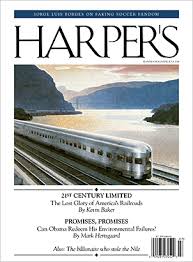
harper septSOUNDTRACK: PHISH-Junta (1989).

juntaI’ve been listening to a lot of live Phish as of late and thought it would be interesting to see if there was truth to the adage that Phish is great live but not so great in the studio.  So here is their first official album.  It was released as a double album, and when it was reissued on CD some bonus material was added.  Incidentally, I just found out that the album if pronounced “juhnta” and not “hoonta” because of the engineer they worked with.

The album starts with “Fee” which is a fun song (the lyrics are wonderfully weird) and they don’t play it all that much so it’s a treat to listen to.  I enjoy the way the verses sound compressed and distant but the choruses are nice and full.  There’s also some funny and interesting sound effects (some of which accentuate the action) throughout the song. This sound effects and noises processing has been with Phish from the beginning and they kept it up through many of their earlier, less mature albums. “You Enjoy Myself” is a live favorite so it’s fun to hear it in this version.  As with a lot of their earlier records, this song sounds a little stiff, especially if you’ve heard the wild live versions. It’s not bad at all, indeed, it has a perfectionist quality to it—the time changes are perfect, the solos are flawless.  Indeed, it’s quite an achievement (and in this more polished version it sounds more like Yes than their live versions ever did).  Interestingly when we finally get to the lyrical section (about 5 minutes in) it’s quite a bit slower than they play live.

“Esther” sounds much more theatrical here.  The music is gorgeous and there are lots of effects and backing vocals which bring a bit more menace to the song than the live version possesses. This also had a very prog rock sensibility to it.  “Golgi Apparatus” has a lot more in the way of backing vocals than the live version.  And “Foam” has some changes: the bass is especially loud and funky and yet the pace is so much slower than I’m used to.  The odd thing is the kind of stiff way that the lead vocals enunciate everything.  And the deep voice (Mike?) is quite amusing at the end of the song.  “Dinner and a Movie” is a fun and silly song and this version is especially enjoyable because of the backing voices and chatter and laughter which illustrate the dinner (and presumably the movie).

“Divided Sky” has a beautiful melody and it’s nice to hear it played so pretty and simply here.  But again the remarkable thing is how much slower the song is here.  “David Bowie” also sounds great (there’s all kinds of weird sounds effects in the background of the (very long) soloing section—I have no idea why or what they might be).  The solo sounds like it was maybe done in one take as there’s a couple spots where it’s not “right,” (whether flubs or intentional is hard to say) but it still sounds terrific.  In fact a number of tracks have some little flubs which makes it seem like they either didn’t mind or tried for a more live feel.

“Fluffhead” sounds solid and like the live versions.  What I never realized until I actually paid attention is that the bulk of the music (the extended jam session) is called “Fluff’s Travels.”  “Flulfhead is only 3 and a half minutes, while “Fluff’s Travels” is over 11 minutes (it opens with the beginning of the guitar solo–the catchy riff that starts the lengthy jam).  “Contact” is a delightfully silly song about tires and cars that I’ve always enjoyed and find myself singing often because the melody is so simple.

What’s funny is that the end of “Contact” kind of bleeds into “Union Federal” which is listed as a live song (and clocks in at over 25 minutes long).  This “Union Federal” is an improvisational jam (or an Oh Kee Pah Ceremony—where the guys would get together with instruments (and other things) and jam for a time.  This song is weird with many layers—and is rather typical of one of Phish’s weirder jazz –flavored improv sections (meaning that there is a lot of dissonance and noise).  It’s quite jarring especially after all of the melodies and prettiness of the album proper.  And I can see a lot of people not being happy about its inclusion.  “Sanity” on the other hand is a fun song.  In the intro, they keep claiming the song is by Jimmy Buffett. They are clearly very silly in this setting, especially at the end of the song.  The final track is a live version of “Icculus” the song which is pretty much all buildup.  In the intro they quote U2 “This is red rocks, this is the edge.”  But the “joke” of this version is that Trey keeps postponing the name of the person who wrote the name of the Helping Friendly Book–stalling in any way he can.  As the song gets louder and louder and more absurd, the guys are even more frenetic.  It takes over 3 and a half minutes to get to the proper lyrics of the song.   And then the song itself is about 15 seconds.  Absurd nonsense.  But very amusing.

So this is quite a solid debut album, and the amount of songs that they still play live shows how fond everyone is of it.

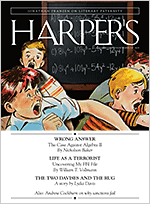
[READ: October 2, 2013]  “Wrong Answer”

I didn’t hate Algebra.  I rather like solving puzzles so I enjoyed solving for x.  Algebra II I recall being more daunting and less fun with lots of formulae to memorize.  And, unlike everything promised, I have never used any of it in my adult life (geometry and angles, sure, but not logarithms).  According to this article the new United States CORE curriculum (which I know my son is dealing with already in 3rd grade) says that high school graduates must have Algebra II.

The reasons for this intensification in the studying of math are many (starting around the time of Ronald Reagan) but the current push comes from Arne Duncane, the U.S. secretary of education.  He believes that “algebra is a key, maybe the key to success in college.  Students who have completed Algebra II in high school are twice as likely to earn degree as those who didn’t.”  Whether or not that is true, those of us who earned a degree in nonmathematical  subjects certainly were not aided by this class.  But Nicholson Baker explains that the reason this might be true is that for most colleges, Algebra II is a prerequisite.  Ergo: if you don’t take Algebra II you can’t get into college because colleges require Algebra II.  That, for those who may not have taken logic–a far more useful course than Algebra II in daily life–is called a tautological fallacy.  [Indeed, I maintain that all high school students should have to take a course in logic because they would then be able to see through all of the builshit that politicians spill and claim to be logic.  Like the current (as I type this) government shutdown in which Republicans are claiming they didn’t want to shut down the government when they in fact signed papers saying they were going to shut down the government).]

The real problem with Duncan’s postulate that everyone should take Algebra II (“airplane mechanics do complex measurements and work with proportions and ratios…X-ray technicians calculate time exposures to capture the cleanest possible image.  Most factory workers need to understand Algebra II or even some trigonometry to operate complex manufacturing electronic equipment”) is that even if that were true (I don’t have any idea of it is or not), most people do not do those kinds of jobs.  And even if they did know higher math, they would still be salesmen, graphic artists, librarians, preschool teachers, custodians and many many other jobs that in no way require math. (more…)

Read Full Post »
ifonlySOUNDTRACK: THE BLOW-“Make It Up” (2013).

blow2This song from The Blow is what Bob Boilen played the other day on NPR.  He had just seen them live and liked the show so much that he listened to the whole album three times in a row on the way home.  He said the live show was amazing—Khaela Maricich is on stage singing and talking to the audience all by herself.  He thought that the music was all backing tapes, but then he realized that her partner was back at the soundboard—creating the music and doing the lights at the same time.

Yesterday I said that The Blow’s “Parentheses” was the perfect pop confection.  “Make It Up” is far more complicated anc more challenging.  It has many elements of pop perfection but it is nowhere near as immediate as “Parentheses.”

The song, despite its simplicity, has many complicated elements—the opening drum sequence is elaborate with all kinds of rhythms and sounds.  But when the verse starts, the vocals are delicate and simple and the keyboards are single notes.  Until the chorus when the complexity jumps in again—in addition to the drums, we get several versions of Maricich‘s voice doing background vocals, singing leads, making sound effects and then they disappearing again.  The third part introduces a new, simple, very pretty melody with beautiful voices playing counterpoint to each other.

The song feels so busy but it is really just a few simple elements piled on top of each other.  It’s simultaneously pretty and mind-boggling.  More pop songs should do that.

[READ: September 25, 2013] If Only

You shouldn’t judge a book by its cover, but sometimes a cover grabs you.  I have no idea what it was about this cover that made me look at this book twice, but I did.  And when I investigated the author, I discovered that Edgar is a prolific playwright and that this play is a contemporary political story set in current and future England.

What struck me immediately was this disclaimer at the bottom of the character page:  “The second half of the play concerns the future of the coalition government.  This text went to press before the end of rehearsals and so may differ considerably from the play as performed.”  How interesting is that?  First that they would do that and second that it might actually be a different play that I have read.

The opening of the play takes place in the spring of 2010, right after the eruption of the Icelandic volcano which grounded European air traffic to a halt.  In the airport are three politicos: Peter, who works for the Conservatives, Jo, who works for the Liberal Democrats and Sam, who works for Labour.  They are all fairly high up in the party (but not name recognized). They are stuck because of the volcano and are seeking any way to get back home as the general election is but a few weeks away.  I really enjoyed the continual jokes about charges for their phones and devices.

Most of the first act concerns their attempts to get back home and their discussions about the upcoming election.  Thy can’t get back home despite their various clever ideas, until they learn that they can by a car for a few hundred pounds and can all drive together back home.

The political discussion is far more complicated—and it certainly helps if you know more about British politics than I did [I had no idea what UKID was or who Clegg was, for instance]. (more…)

Read Full Post »

makegoodartSOUNDTRACK: AMANDA PALMER: The Art of Asking (TED Talk, February 2013).

palmerAmanda Palmer is Neil Gaiman’s wife.  She was the singer in The Dresden Dolls and has a solo career.  I actually don’t know that much about her music.

But I linked to this TED speech after reading Gaiman’s book.

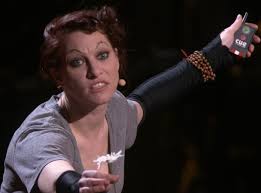
In this talk, Palmer talks about asking for things and how it’s hard to ask, to beg., but how it makes for a real connection, especially between musicians and fans.

And she talks about crowdfunding–she’s going to give away all of her music but she’s asking for help from fans along the way.

It’s a pretty inspirational talk–how asking for things helps you connect with people.  It also made me feel a lot better about Palmer, who I’d heard negative things about.

Check it out here.

[READ: June 5, 2013] Make Good Art

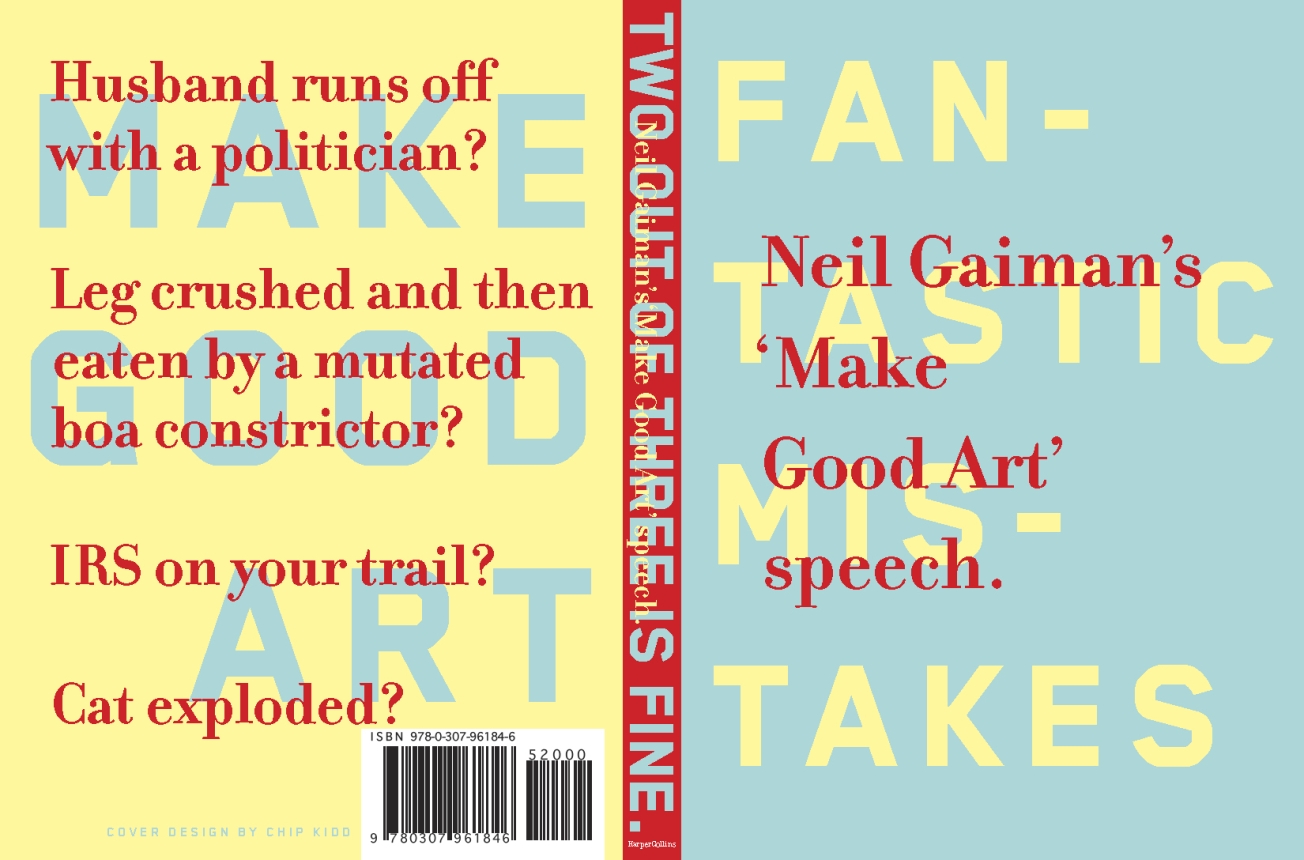
As with David Foster Wallace’s This is Water, this book is a short speech padded out to 80 some pages. The difference is that while This is Water is a rather boring-looking book, this title was designed by Chip Kidd, fabulous designer extraordinaire.  So every page looks interesting.  It’s not so much illustration as design—with shapes and text twirling and twisting upside down and what have you.

As with most inspirational works, this book is indeed inspirational.  But it is especially so if you are an artist or an aspiring artist.  Because this speech was given to the graduating class of Philadelphia’s University of the Arts in May 2012.  You can watch the whole speech here as well.  http://vimeo.com/42372767

Gaiman explains how he never went to college and never even really had a career, he just had a list of  things that he wanted to do: write an adult novel, a children’s novel, a comic, a movie record an audiobook, write an episode of Doctor Who.  And how he set about achieving these things is pretty great.

So some advice from Gaiman:

1. It’s better not to know the rules so that you’re not afraid to go beyond them.  If you don’t know something is impossible, it’s easier to do. (more…)

Read Full Post »

vonlastintSOUNDTRACKSURFER BLOOD-“Demon Dance” (Live at SXSW, March 27, 2013).

surfer blood

I’ve liked Surfer Blood since I first heard them.  They write catchy, mostly short, poppy songs.  And usually after a few listens, the hooks really grab you.  The strange thing about the band is that the hooks aren’t always readily apparent, which makes their songs sound kind of samey sometimes.

Of course, samey isn’t a bad thing, necessarily.  Surfer Blood is quite distinctive and I tend to enjoy everything they do.  This new song sounds like their other stuff, which is fine.  But the most distinctive thing about the band of probably their singer who sounds like a less-affected Morrissey.

Having also listened to the song from the album I can say that the singer is far harder to understand live, so maybe live is not the best way to hear a new song from them, but for an old favorite, Surfer Blood has a great energy live.

Watch the show here and hear the studio version here.

[READ: March 27, 2013] The Last Interview and Other Conversations

Melville House has published a number of these “Last Interview” books, and as a completist I feel compelled to read them.  I have read criticisms of the series primarily because what the books are are collections of interviews including the last interview that the writer gave.  They don’t have anything new or proprietary.  The last interview just happens to be the last one he gave.   So it seems a little disingenuous, but is not technically wrong.

There’s so far five books in the series, and I figured I’d read at least three (Vonnegut, David Foster Wallace and Roberto Bolaño–the other two turned out to be Jorge Luis Borges–who I would be interested in reading about and Jacques Derrida (!) who I have always loved–I guess this series was tailor made for me).

At any rate, these interviews are from various times and locations in Vonnegut’s career.  There are six in total.  I don’t know if the titles they give here were the titles in the original publications but here’s what’s inside:

  • “Kurt Vonnegut: The Art of Fiction” from The Paris Review, Spring 1977 (by David Hayman, David Michaelis, George Plimpton, Richard Rhodes)
  • “There Must be More to Love Than Death” from The Nation, August 1980 (by Robert K. Musil)
  • “The Joe & Kurt Show” from Playboy, May 1982 (by Joseph Heller and Carole Mallory)
  • “The Melancholia of Everything Completed” from Stop Smiling, August 2006 (by J.C. Gabel)
  • “God Bless You, Mr. Vonnegut” from U.S. Airways Magazine (!!!), June 2007 (by J. Rentilly)
  • “The Last Interview” from In These Times May 9, 2007 (by Heather Augustyn) (more…)

Read Full Post »

« Newer Posts - Older Posts »