Feeds:
Posts
Comments

Archive for the ‘Barack Obama’ Category

c28SOUNDTRACK: HISS TRACKS-Shortwave Nights [CST104] (2014).

hissThe Hiss Tracks album begins with a rumbling roiling and yes a kind of hissing sound.  There was a moment of concern that this would be literally 40 minutes of static . But no, there are some interesting electronic blips and phrases amidst he roiling rumble.

Some context about this band from the Constellation site:

Hiss Tracts is an ongoing collaboration between “sound sculptors” David Bryant and Kevin Doria. Both players are known for their work within various strains of drone-inflected and experimental music: Bryant as a member of Godspeed You! Black Emperor and Set Fire To Flames, Doria as a member of Growing and for his solo work as Total Life.

Hiss Tracts opens new collaborative, procedural and narrative pathways for these fine musicians to continue exploring soundscape-based composition and production. Both are guitar players, and the electric guitar figures as both recognizable and unrecognizable source instrument on Shortwave Nights, but the deployment of a wide range of additional analog sources and signals ensures that there is no confusing this for a guitar-based drone, noise or post-rock record.

So there you have it.  Once the rumble of that first song, ‘…shortwave nights,” dissipates there are some ringing guitar sounds quietly repeating amid a low static and other sounds.   The song ends with some dissonant guitar notes.  It’s eight minutes in total and has the feeling of an ambient soundtrack, but not a relaxing one or of background music.

“half-speed addict starts with broken wollensak” does indeed begin slowly, at about half-speed, with more rumbling sounds.  The song speeds up at the end, with muffled sounds keeping a very fast pace and a keyboard note rings out as the song finishes.  “slowed rugs” has a kind of one note drone while some vibrating drones continue over it—it’s a gentle electronic sound manipulation.   The oscillating notes fold in on themselves and mutate into some thing else.  As the song nears its end, a repeated series of unusual notes seems to rise from the din.

“drake motel / “9 gold cadillacs”” is a one minute interstitial that opens and closes with someone playing a harmonica.  The player offers it to someone else and then the rest is a series of statements from an unnamed person:

I would never put my mouth on something that you had put your mouth on.
The more you love people the worse they treat you I am so tired of it.
My daddy spent million of dollars trying to by a friend and he died without one.
You can give a sumbitch a million dollars cash tax-free and tomorrow they wouldn’t give you a cracker if you were starving to death.  That is a bible prophecy.

“windpipe gtrs.” sounds like a bunch of didgeridoos trying to overtake each other.  “halo getters” is an ominous piece, with more of that rumbling static and some portentous chords over the top.  The five-minute song doesn’t change much although about a minute in some guitars ring out sounding very outer spacey.  The song repeats and eventually warbles to and end which somehow feels warmer than the rest, like little explosions of quiet sound which almost sound like car horns.

“for the transient projectionist” opens with ringing bells/gongs.  After a few minutes of this peaceful sound, some music bubbles up—waves of warm keyboards and washes of mild static.  It seems to have a natural progression before ending.

“ahhh-weee dictaphone” is a 41 second interstitial of what sounds like vocal goofing around.  “test recording at trembling city” has mechanical ringing tones coming on in waves.  The song builds in intensity as it sounds almost like a high-speed-something about to crash, or a siren going off.  It is rather unsettling.  “beijing bullhorn / dopplered light” is mostly staticy radio and voices muttering under some gentle washes of chords.   It is a relatively pretty ending to a somewhat unsettling disc.

The instruments included on the disc include: guitar, tape machine, piano, mellotron, portasound, bowls, field recordings, oscillators, sampler, synthesizer

This is a pretty esoteric disc that many people won’t enjoy, but if you like experimental ambient textures, it’s worth a listen.

[READ: March 10, 2016]  “Undecided”

After last night’s debate, in which evidently there are some 36% of the population undecided about whom to vote for, here’s a political piece from the 2008 election.  What I especially loved about this one was just how relevant it all seemed 8 years later.  The “undecided” voters aren’t getting as much airtime yet, but one wonders how poll numbers can shift when the candidates are so radially different.  I recall in the 2008 election how people seemed genuinely undecided about the two candidates and Sedaris (and myself and many others) just ask: HUH?.

Sedaris notes how the undecideds get interviewed about being undecided and they all look “very happy to be on TV.” And oh dear, they just can’t make up their minds.

“I look at these people and can’t quite believe that they exist.  Are they professional actors? I wonder or are they simply laymen who want a lot of attention?”

And then he says to imagine their perspective as if you were on an airplane.  The attendant brings the food cart over and in what may have been the most apt analogy:

Can I interest you in the chicken? she asks.  Or would you prefer the platter of shit with bits of broken glass in it?

To follow through he says that being undecided is to “pause for a moment and then ask how the chicken is cooked.” (more…)

Read Full Post »

feschukSOUNDTRACK: THE ART OF TIME ENSEMBLE with MARTIN TIELLI–Korngold: Source & Inspiration (Enwave Theatre, Harbourfront Centre, Toronto, ON, January 30, 2009).

aotimeAfter seeing The Art of Time Ensemble yesterday, it was quite serendipitous that I would have a show from them (featuring Martin Tielli) to post about on the following day.

This concert is the third in the Art of Time’s “Source & Inspiration” series. Two years earlier the first concert focused on composer Franz Schubert.  The previous year’s concert focused on Robert Schumann. This time the spotlight was on the 20th century Jewish composer Erich Korngold–a composer of European pedigree who became well known for his wonderful Hollywood film scores.

This concert featured Korngold’s Suite for Two Violins, Cello and Piano as the ‘source’ as well as new songs inspired by this work from Martin Tielli, Danny Michel and John Southworth.

This recording is only 8 minutes long because there’s only two Martin Tielli songs. “Lied Two” (the German word for song is lied (pronounced leed) so Martin called his “Lied Two.” And “Moglich” which translates into “possible.”  Both pieces are played with by the orchestra.  Martins sings.

The more dramatic of the two would be “Moglich” with his loud whispered “Relaxxxxx at the end.”  For more information about the show, you can click on this link.

Full Program & Repertoire:
Suite Op. 23 for 2 Violins, Cello and Piano Left-hand
Erich Korngold
i.Praeludium und Fuge
ii.Walzer
iii.Groteske
iv.Lied
v.Rondo-Finale

INTERMISSION
Athabasca
Adventures of Erich Korngold
—John Southworth
The Sailor Song
Island

—Danny Michel
Lied 2
Moglich
—Martin Tielli

Performers
Andrew Burashko, piano
Danny Michel, singer
Erika Raum, violin
Stephen Sitarski, violin
John Southworth, singer
Martin Tielli, singer
Winona Zelenka, cello

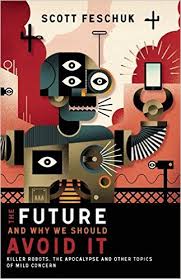
[READ: November 22, 2015] The Future and Why We Should Avoid It

The title of this book made me laugh so I set it aside to read it.  Little did I know that it would be so very funny that I put aside other things so I could finish it.

I hadn’t heard of Feschuk before.  He has written two previous books (How Not to Completely Suck as a New Parent sounds pretty good) and writes mostly for MacLean’s magazine.

As you might guess from the title, this book looks at the future, and Feschuk’s predictions are uncanny.  For instance, I brought the book home and decided to look at it in the bathroom.  And the introduction states quite clearly:

By now, life should be awesome and leisurely and you should be wearing a spacesuit and high-fiving your wisecracking robot sidekick.  Except instead your dishwasher is broken, your god-damn iTunes won’t sync up and right now you’re reading this book on a toilet in your bathroom instead of where you should be reading it–on a toilet in your hover car.

Too right, too right. (more…)

Read Full Post »

10SOUNDTRACK: FATHER JOHN MISTY-Fear Fun (2012).

fjmI can’t get over how much I’ve been enjoying this album for the last two years.  Father John Misty is J Tillman from Fleet Foxes.

This disc is a gentle folk album with vaguely country leanings.  The arrangements are spare and yet the verses and choruses are so great to sing along to. “Funtimes in Babylon” has this infectious chorus: “I would like to abuse my lungs, smoke everything in sight with every girl I’ve ever loved.  Ride around the wreckage on a horse knee deep in mud.  Look out, Hollywood, here I come.”  “Nancy from Now On” has a great propulsive chorus with oohs and tinkling bells and pianos and Misty’s engaging falsetto.

I was introduced to this album by “Hollywood Forever Cemetery Sings” which opens with the super catchy line, “Jeeeeesus Christ, girl.”  I love the big crashing drum sound he has here.  “I’m Writing a Novel” is a fun romp, with the great line “I’m writing a novel because it’s never been done before.”  “O I Long to Feel Your Arms Around Me” introduces a great organ sound.  It’s a full song at only 2 and a half minutes.

“Misty’s Nightmares 1 & 2” opens with a slide guitar and turns into a stomping song with more Ooohs and a great chorus.  “Only Son of the Ladiesman” has a great chorus with the fun couple: “I’m a steady hand, I’m a Dodgers fan.”  “This is Sally Hatchet” has cool guitar blasts and a great bridge.

“Well You Can Do It Without Me” is a countrified 2 minute stomper.  “Tee Pees 1-12” is a big stompin’ honkey tonk song with fiddles and slide guitar.  The disc ends with “Everyman Needs a Companion” a slow ballad with a great piano melody and a fun to sing along with verse and chorus.

I love the lyrics on this album, especially the song “Now I’m Learning to Love the War” a slow ballad with a great story:

Try not to think so much about
The truly staggering amount of oil that it takes to make a record
All the shipping, the vinyl, the cellophane lining, the high gloss
The tape and the gear

Try not to become too consumed
With what’s a criminal volume of oil that it takes to paint a portrait
The acrylic, the varnish, aluminum tubes filled with latex
The solvents and dye

Lets just call this what it is
The gentler side of mankind’s death wish
When it’s my time to go
Gonna leave behind things that won’t decompose

In addition to all of the great music on here, the CD packaging is fantastic with that great cover, done in a cardboard gatefold sleeve including two huge books full of words and drawings and lyrics and everything.  I’m really looking forward to his next release.

[READ: September 14, 2014] Grantland #10

Despite my being in the middle of reading several other things, I was looking for a short article to read the other night and grabbed my Grantland 10.  And, of course, once I started, I couldn’t stop. I put everything else on hold and blasted through this issue.

And so all of my loves and hates are the same with this issue.  I never know how anything they talk about nearly a year ago turned out, which stinks.  And yet I get so wrapped up in the writing that I don’t care.  I’m not sure what it is about the writing for Grantland that i enjoy so much.  It is casual but knowledgeable.  Often funny but not obnoxiously silly. And I suppose that now I feel like I’m in on all of the secret stuff they talk about so I’m part of the club.  I fear that if I were to ever go to the website I would get sucked into a black hole and never emerge.

I often wonder how they choose what goes into the book.  This issue has some new writers and the surprising absence of some regulars.  I wonder what went on there.  And as always, the book could use some editing and maybe actually listing the urls of the links that were once in the online version.  But I think I’m talking to deaf ears on that one.

This issue covers October-December 2013 (that’s ten-twelve months ago!  Some of this stuff feels ancient!)

(more…)

Read Full Post »

harper septSOUNDTRACK: PHISH-Junta (1989).

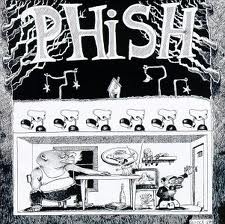
juntaI’ve been listening to a lot of live Phish as of late and thought it would be interesting to see if there was truth to the adage that Phish is great live but not so great in the studio.  So here is their first official album.  It was released as a double album, and when it was reissued on CD some bonus material was added.  Incidentally, I just found out that the album if pronounced “juhnta” and not “hoonta” because of the engineer they worked with.

The album starts with “Fee” which is a fun song (the lyrics are wonderfully weird) and they don’t play it all that much so it’s a treat to listen to.  I enjoy the way the verses sound compressed and distant but the choruses are nice and full.  There’s also some funny and interesting sound effects (some of which accentuate the action) throughout the song. This sound effects and noises processing has been with Phish from the beginning and they kept it up through many of their earlier, less mature albums. “You Enjoy Myself” is a live favorite so it’s fun to hear it in this version.  As with a lot of their earlier records, this song sounds a little stiff, especially if you’ve heard the wild live versions. It’s not bad at all, indeed, it has a perfectionist quality to it—the time changes are perfect, the solos are flawless.  Indeed, it’s quite an achievement (and in this more polished version it sounds more like Yes than their live versions ever did).  Interestingly when we finally get to the lyrical section (about 5 minutes in) it’s quite a bit slower than they play live.

“Esther” sounds much more theatrical here.  The music is gorgeous and there are lots of effects and backing vocals which bring a bit more menace to the song than the live version possesses. This also had a very prog rock sensibility to it.  “Golgi Apparatus” has a lot more in the way of backing vocals than the live version.  And “Foam” has some changes: the bass is especially loud and funky and yet the pace is so much slower than I’m used to.  The odd thing is the kind of stiff way that the lead vocals enunciate everything.  And the deep voice (Mike?) is quite amusing at the end of the song.  “Dinner and a Movie” is a fun and silly song and this version is especially enjoyable because of the backing voices and chatter and laughter which illustrate the dinner (and presumably the movie).

“Divided Sky” has a beautiful melody and it’s nice to hear it played so pretty and simply here.  But again the remarkable thing is how much slower the song is here.  “David Bowie” also sounds great (there’s all kinds of weird sounds effects in the background of the (very long) soloing section—I have no idea why or what they might be).  The solo sounds like it was maybe done in one take as there’s a couple spots where it’s not “right,” (whether flubs or intentional is hard to say) but it still sounds terrific.  In fact a number of tracks have some little flubs which makes it seem like they either didn’t mind or tried for a more live feel.

“Fluffhead” sounds solid and like the live versions.  What I never realized until I actually paid attention is that the bulk of the music (the extended jam session) is called “Fluff’s Travels.”  “Flulfhead is only 3 and a half minutes, while “Fluff’s Travels” is over 11 minutes (it opens with the beginning of the guitar solo–the catchy riff that starts the lengthy jam).  “Contact” is a delightfully silly song about tires and cars that I’ve always enjoyed and find myself singing often because the melody is so simple.

What’s funny is that the end of “Contact” kind of bleeds into “Union Federal” which is listed as a live song (and clocks in at over 25 minutes long).  This “Union Federal” is an improvisational jam (or an Oh Kee Pah Ceremony—where the guys would get together with instruments (and other things) and jam for a time.  This song is weird with many layers—and is rather typical of one of Phish’s weirder jazz –flavored improv sections (meaning that there is a lot of dissonance and noise).  It’s quite jarring especially after all of the melodies and prettiness of the album proper.  And I can see a lot of people not being happy about its inclusion.  “Sanity” on the other hand is a fun song.  In the intro, they keep claiming the song is by Jimmy Buffett. They are clearly very silly in this setting, especially at the end of the song.  The final track is a live version of “Icculus” the song which is pretty much all buildup.  In the intro they quote U2 “This is red rocks, this is the edge.”  But the “joke” of this version is that Trey keeps postponing the name of the person who wrote the name of the Helping Friendly Book–stalling in any way he can.  As the song gets louder and louder and more absurd, the guys are even more frenetic.  It takes over 3 and a half minutes to get to the proper lyrics of the song.   And then the song itself is about 15 seconds.  Absurd nonsense.  But very amusing.

So this is quite a solid debut album, and the amount of songs that they still play live shows how fond everyone is of it.

[READ: October 2, 2013]  “Wrong Answer”

I didn’t hate Algebra.  I rather like solving puzzles so I enjoyed solving for x.  Algebra II I recall being more daunting and less fun with lots of formulae to memorize.  And, unlike everything promised, I have never used any of it in my adult life (geometry and angles, sure, but not logarithms).  According to this article the new United States CORE curriculum (which I know my son is dealing with already in 3rd grade) says that high school graduates must have Algebra II.

The reasons for this intensification in the studying of math are many (starting around the time of Ronald Reagan) but the current push comes from Arne Duncane, the U.S. secretary of education.  He believes that “algebra is a key, maybe the key to success in college.  Students who have completed Algebra II in high school are twice as likely to earn degree as those who didn’t.”  Whether or not that is true, those of us who earned a degree in nonmathematical  subjects certainly were not aided by this class.  But Nicholson Baker explains that the reason this might be true is that for most colleges, Algebra II is a prerequisite.  Ergo: if you don’t take Algebra II you can’t get into college because colleges require Algebra II.  That, for those who may not have taken logic–a far more useful course than Algebra II in daily life–is called a tautological fallacy.  [Indeed, I maintain that all high school students should have to take a course in logic because they would then be able to see through all of the builshit that politicians spill and claim to be logic.  Like the current (as I type this) government shutdown in which Republicans are claiming they didn’t want to shut down the government when they in fact signed papers saying they were going to shut down the government).]

The real problem with Duncan’s postulate that everyone should take Algebra II (“airplane mechanics do complex measurements and work with proportions and ratios…X-ray technicians calculate time exposures to capture the cleanest possible image.  Most factory workers need to understand Algebra II or even some trigonometry to operate complex manufacturing electronic equipment”) is that even if that were true (I don’t have any idea of it is or not), most people do not do those kinds of jobs.  And even if they did know higher math, they would still be salesmen, graphic artists, librarians, preschool teachers, custodians and many many other jobs that in no way require math. (more…)

Read Full Post »

[WATCHED: 2012-2013] Bunheads

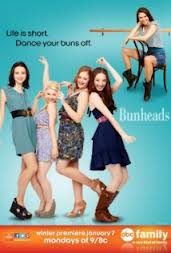
bunheadsIt’s no secret that Gilmore Girls was one of my favorite shows.  It was well-written and funny, often sweet but sometimes not and with a liberal dose of quirk.  The show was Amy Sherman-Palladino’s baby and over the seven years it developed an awesome cast and was easily one of the most consistently enjoyable shows on TV.

But all good things must come to an end–and as in the case of Gilmore, often times it must come to an end before its natural arc has finished.  This led to a rather forced and frankly unsatisfying conclusion to the show.

But ASP is back on TV on, of all places, ABC Family (which has some astonishingly mature shows for a “family” network).  Her new show (which began last year) is called Bunheads.  It’s a terrible name for a TV show.  Even if it is an actual slang term used for ballet dancers (which the show features), it’s still a terrible, unappealing name.  There’s also the opening credits–also terrible.  The Gilmore credits were fun–a new version of Carole King’s “If You Lead” playing behind scenes from the show.  The Bunheads opening is a black and white scene of ballet dancers (again, it’s what the show is about, but blah), with a color ribbon swirling around them until it lands on Sutton Foster, the lead actress, who explodes in a frame of color looking a little stunned.

Neither of these two things (title and credit sequence) should impact your decision to watch the show, which is delightful–heartfelt, funny and with a healthy dose of quirk.  And like Gilmore, the show is very women-centric, rather a rarity on TV.  I feel it’s very subtly done as well–in this case, the show is about ballet dancers who are predominantly girls, so it makes sense.  And since ASP writes mother-daughter situations very well, it’s also a natural fit.

So yes, the show feels a lot like Gilmore Girls.  The amazing Kelly Bishop is back as the matriarch (she’s much the same character although she is a bit more fun in Bunheads).  Sutton Foster plays her daughter in law.  Foster looks so much lie Lauren Graham that she may as well be her. What’s cool here and what makes it not just Gilmore redux is that the dynamic is not mother-daughter-daughter, it’s widowed mother-in-law–daughter-in-law–four teenagers so while the roles are almost the same, ASP is not simply rewriting what has happened before.  As for the young characters, we have four teenagers–the bunheads.  From the get go they formed a believable foursome–sometimes annoying, and over the top, but never unreal. (more…)

Read Full Post »

hope1Congratulations, again, President Barack Obama!

Read Full Post »

SOUNDTRACK: MATES OF STATE-“I am a Scientist” (2012).

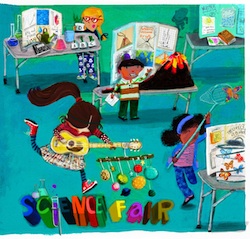
This is a cover of Guided by Voices’ “I am a Scientist.”  It appears on an all female 18-song charity compilation called Science Fair which is themed around and benefiting science and engineering education for girls.

The original is a wonderful, catchy low-tunes and lo fi sounding guitar track (that builds over the course of 2 minutes).  The Mates of State version is brighter and louder.  It also builds but they add kids singing along with them (it is a benefit album for kids after all).

It’s a wonderful introduction to this worthy CD.  You can hear (and watch) it here.

[READ: December 4, 2011] Babymouse for President

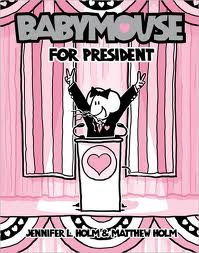
So this is the first new Babymouse book that I’ve read that was actually new when it came out!   And I’m reading it just in time for the election season.  Amazingly, this book with its cartoon politics is far less cartoony than the real politics this election season–who’da thunk it.

Babymouse has a dream of being president–not because of what she could accomplish but because of the POWER!  (Later, she is disturbed to realize that Felicia Furrypaws has the same feeling).

This story has fewer pink fantasy sequences than normal.  Well, maybe that’s not true, there are plenty, but they are pretty short and self contained–sequences about George Washington playing dodgeball (ha) and Babymouse on Mount Rushmore. And there’s a pretty funny Declaration of Independence joke. (more…)

Read Full Post »

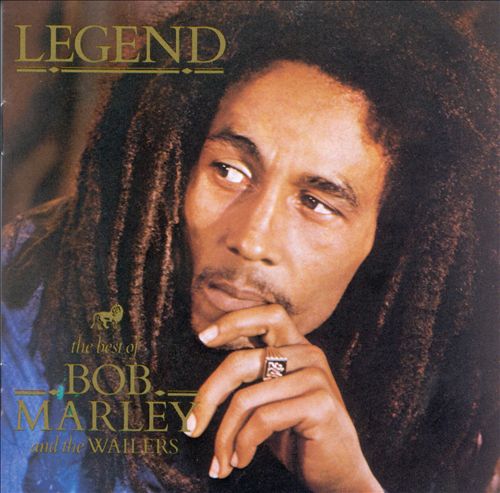
SOUNDTRACK: BOB MARLEY AND THE WAILERS-Legend (1984).

I’m white, so that means I own a copy of this CD (according to the book below).  And I do, because it’s mandatory in college that you play “Jammin'” at every party.

Now, I like ska (yup, still).  I know that ska came from reggae, but to me reggae is just boring ska.  I couldn’t agree more with Barney on How I Met Your Mother:

Ted: Oh, get this, she plays bass in a reggae band. They’re having a show this Friday. How cool is that?

Barney: Oh, does she know that one song? Mm-hm chaka, mm-hm chaka. What’s that song called? Oh, right, it’s called every reggae song.

Although in fairness, listening to this again, it is a rather nice album (I guess I know every song).  I have a personal aversion to some of the really overplayed songs, like “One Love” (because if you go to any Caribbean location they all act like it’s the official slogan of hot weather.  We even have a Christmas ornament from St. John that says “One Love”  WTF?  And I don’t think anyone needs a 7 minute version of “No Woman No Cry.”

But some of the lesser played its (“Could You Be Loved” and just about anything with The Wailers backing him are pretty great).  Although I’ve got to admit I can’t take more than a few songs.  I had to skip through some of the last songs (thank goodness I don’t have the 2 disc version).

[READ: July 26, 2012] Whiter Shades of Pale

Christian Lander created the blog Stuff White People Like.  It was very funny (it hasn’t been updated since Feb 2011, so let’s assume it has run its course).

Lander had released a first book of SWPL back in 2008.  I didn’t read it (blog to book deals were overwhelming in 2008), but I had seen enough of the site to assume it was funny.  One of the funnier jokes when the blog first came out was wondering if the creator was white or not.  (Well, the author photo gives that away, but I won’t).

We grabbed this book at a Borders going out of business sale (sorry Borders, you are missed).  This book continues where the first book left off (I gather).  I don’t know if every entry from the blog made it into the book (the thanks at the end of the book lead me to think not), but I have to assume most of them made it (and maybe there is new stuff in the book too?) (more…)

Read Full Post »

SOUNDTRACK: tUnE-yArDs-Tiny Desk Concert #179 (December 1, 2011).

tUnE-yArDs perform three songs in this Tiny Desk concert.  Merrill Garbus doesn’t chat a lot between songs, but she’s clearly having a good time (witness them all jumping at the end of “You, Yes You” and how much she smiles at the end of the set.  This is a wonderful opportunity to see and hear her live sampling technique in a small setting (with close up cameras!).

Her voice sounds great–she pulls off all of those voices that she conjures on the record.  And her ability to sample herself and make it work is wonderful to witness (I never imagined that some of those “sirens” and “keyboards” are actually her voice).

The live band is also really hot.  The bassist really hold everything together and the horns sound great–duplicating the sound of the record with just enough flare to keep it original.

And to think she’s making all of  that guitar noise with a ukulele!  It’s pretty groovy.

Watch it here.

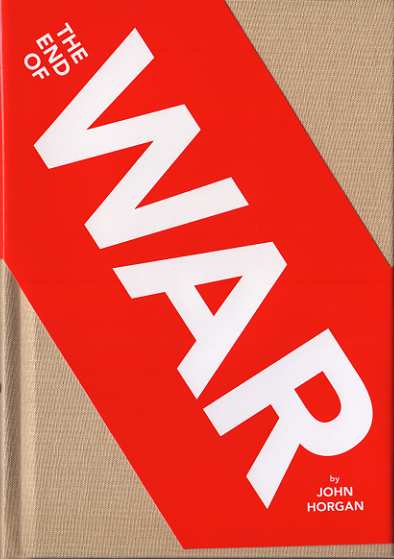
[READ: January 21, 2012] The End of War

This is a non-fiction book in which Horgan believes that in the not too distant future (his lifetime I believe), we will see the end of war.  Not the end of violence, nor anger nor aggression–he’s not crazy–but military campaigns against another country could be ended if we reversed our fatalism about war’s inevitability.

Horgan is a writer for Scientific American and in this book he uses the scientific method to show that ending war is utterly possible.  Now, although Horgan is himself kind of a pacifist (he’s not entirely one, this interview explains), his family is not–his father and grandfather are both veterans and his son is looking to enlist in the army.  Nevertheless, Horgan feels that war is not a viable way to solve problems and that the cost of human life is never worth it.

His research shows him that war should be thought of as a solvable, scientific problem—like curing cancer.  The difference is that cancer is outside of our control, while war is not.  But like cancer, war can infect any society–there is no “reason” for it, but it is like a virus–it infects all cultures, even peaceful ones.  If one culture is aggressive the peaceful neighbors need to prepare for war or move away.

Horgan anticipates skepticism, indeed, many of the sources he quotes are skeptics, and he deals with all of their arguments accordingly.  He looks at those who say that war is genetically part of humanity (as many people believe) or that the best way to prepare for peace is to prepare for war (as just about everyone seems to believe).  He looks at those who say that scarcity causes war (not necessarily true), to those who say that as long as there are guns there will be war (he disagrees).  He has a reasonable, believable argument for all of these doubts.  He even shows that the whole “alpha male, XXY chromosome” argument has been disproven and while men are more prone to violence, they are not more prone to wage war.

He also shows scientific evidence that war has not been around as long as people (or even apes) have existed.  Indeed, the first evidence for “war” (as opposed to violence) is 10,000 years ago (not much in humanity’s timeline).

He culls data from previous wars to show that the causes of wars can never be narrowed down to one thing.  And yet, rather than seeing this as a negative–that so many things cause war, he sees it as a positive–that causes of war are not monolithic and impervious to breakdown.

I was skeptical of this book when I started reading it.  I was willing to accept the various scientific answers that he showed (that war is not innate, for example) but my skepticism came because of what I guess you call the military industrial complex–that our military budget is huge and is not going to go down any time soon.  Just see how much protest is garnered by the miniscule amount that President Obama wants to reduce it.  [Everybody knows this truth but it’s worth seeing in print–our military budget is more than almost every other country combined.  China, who spends the next largest amount on their military has a budget that is 1/6 the size of ours.  That is shocking and depressing and a horrific waste of money].

But his point is that like with so many other things that we have outlawed or abolished over the years: slavery, apartheid, monarchy (as opposed to democracy), acceptance of torture; if we have enough consensus we can also abolish war.  He gives examples that it’s actually not as hard as we might think.  Germany and Japan become pacifist virtually overnight (it was forced on them, but they have taken to it with no problem) and even better, Sweden and Switzerland are pacifist voluntarily.

He also points out that war is already on the wane–although the United States was in two wars very recently, the warlike nature of the world is much less than it was even as recently as the first half of the 20th century.  The number of casualties from war has dropped dramatically compared to World War I.  We simply need to find ways to solve crises that do not involve killing people.

All of the chapters were interesting in this book (the book is more or less set up to deal with an issue per chapter).  Some of the chapters were a little long but at 186 pages (plus a bunch of citation pages) this book is short overall.  I appreciate all of his scientific rigor and his ability to show the arguments and then knock them down.

For me, the most interesting and satisfying chapter was the one that found that preparing for war, despite claims that it is necessary, actually does not keep a people safe. That the allocation of resources towards war removes resources from things that actually make people’s lives  better: art, culture, medicine, health.  Preparing for war doesn’t keep us safe, it actually harms us.

Similarly, he shows that competition for resources is not necessarily a cause for war.  To the contrary they have found that in some cultures scarcity brings out altruism.

In short, he says that the only thing that prevents us from abolishing wars is our fatalism that war is inevitable.  The more fatalistic we are about war the more we accept hawkish ideas which perpetuates more war. Once we stop believing that and we try to work towards the end, he believes that we war can end very quickly.

Horgan doesn’t really calm my fears about the military industrial complex–but who knows with enough popular opinion, maybe voters can change things.  It’s a wonderful thought.  And here’s hoping that this post can spread the good word.

And here’s an interview with Horgan that addresses a lot of these questions.

Read Full Post »

SOUNDTRACK: WILD FLAG-Live at the Black Cat, October 20, 2011 (2011).

It’s interesting to compare this show by Wild Flag with their SXSW show.  This set is longer, but they retain the same raw energy and intensity.  It also sounds as though the tour has been rough on Carrie’s voice, which sounds a bit strained and hoarse (even when she talks!).

They play most of their debut album, but they also throw in a couple of new songs and even a few covers.  Perhaps the most fascinating part is the 15 minute (!) version of “Racehorse.”  There’s a lengthy noodling section as well as a cool part where Carrie goes a little crazy asking about money.

Janet Weiss is absolutely amazing here too.  And the keyboards, definitely complement everything well, but they are always the most notable flubs, and there’s the same one as in the SXSW show (not as bad, but noticeable).

Without a doubt the most interesting thing is the hearing that Mary Timony gives guitar lessons in Washington DC.  She lives there and evidently earns extra cash by doing guitar lessons.  Wow.  How cool would that be?

Check out the show here.

[READ: January 15, 2012] The Influencing Machine

Brooke Gladstone is one of two reporters who works on NPR’s On the MediaOn the Media is an awesome show which dissects things that happen in the world and examines the way the media portrays the events.  They work pretty hard to see who is reporting bias, who is exposing bias and how things are getting out to the average media consumer.  It’s worth anyone’s time to read (it doesn’t take very long).  And it’s also fun and enjoyable.  As anyone who has heard the ending of On the Media: “and edited [dramatic pause] by Brooke” knows, there’s always a smirking grin attached to the program.

When I heard that this book came out I was pretty excited to read it.  And then I promptly forgot all about it.  Lucky for me, my wife can take a hint, and she got it for me for Christmas.

The first surprise of the book is that it is written as a graphic novel–illustrations by Josh Neufeld (who has drawn for Harvey Pekar’s American Splendor).  The funny thing about the illustrations is that I have no idea what Brooke Gladstone looks like (which I rather prefer about my NPR announcers), but I really like the cartoony style of her avatar (which reminds me of Elaine from Seinfeld and which inspired me to draw a kind of similar version on my drawing site.

On to the book.

This book works as a primer for understanding media ownership, media consolidation and media power.  The opening few chapters are going to be nothing new for anyone who has read Chomsky or Vidal on the media.  But since most people haven’t, it’s a wonderful way into some of these thorny issues of who tells us what and why. (more…)

Read Full Post »

« Newer Posts - Older Posts »