Feeds:
Posts
Comments

Archive for the ‘All Songs Considered’ Category

SOUNDTRACK: DINOSAUR JR.-Live at the 9:30 Club, Washington D.C. October 8, 2009 (2009).

This was one of the first shows I downloaded from NPR.  I’ve been a fan of Dinosaur Jr. since my friend Al turned me on to Green Mind back in college.

This is an amazing show created by the original Dino Jr. members.  This tour is in support of their second album since reuniting, Farm. This set-list is an outstanding mix of old songs, new songs, Barlow-sung songs and even some songs from when Barlow and Murph weren’t in the band.  (Green Mind is still my favorite album by them).

When the band reunited there was much joy, and I’ve said in reviews of the newer albums, I’m not entirely sure why.  I mean, Dino Jr has always been about Mascis, and it’s not like Barlow is such an unusual bassist (although Murph’s drumming is always solid).  I’ve nothing against Barlow (I love Sebadoh and Folk Implosion) or Murph, it just seems odd to get excited about having them back in the band aside from nostalgic reasons.

Having said that, the band sounds amazing (and yes, Barlow does get to sing on “Imagination Blind”).  What never really came across to me until hearing all of these great songs live was that Mascis has always been a great pop song writer.  These songs are catchy as hell. But Mascis buries them under loud squalling guitars and a voice that is almost whiny, almost off-key, a total slacker voice.  (But you’ll notice it is never actually off-key.  He must work very hard at that.)

By the nd of the show Mascis chastises the audience for not moving (we obviously can’t see what they’re doing), saying he forgets that people don’t move in Washington, D.C.  But during the encore break, NPR host, Bob Boilen, points out that Mascis himself doesn’t move either–he just stands in front of that wall of Marshall stacks (Boilen wonders how he can hear anything anymore).  And looking at the pictures it’s comical the way he looks, surrounded by amps.  The picture above doesn’t fully do it justice, but check out the extra photos at the NPR page.  And while you’re there, listen to this show. It is amazing.  For a total slacker, Mascis can rock a guitar solo like nobody’s business.

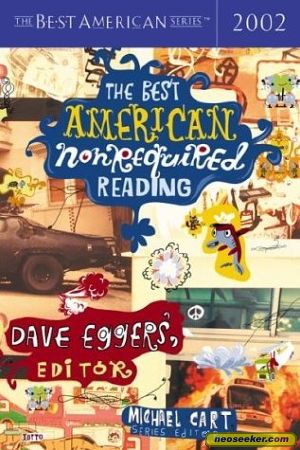
[READ: July 20, 2011] The Best American Non Required Reading

I’d been meaning to read this series for years (yup, Eggers fan), But I have a hard time starting “collections” because I feel like I’d rather be reading a novel.  Nevertheless, I have most of these Nonrequired books, so it seemed like I should dive into one and see what it was like (I don’t think the year really matters all that much–some of the articles are topical but most are not exactly).  Then Sarah said this would be a great book to read on vacation because it’s all short essays, and she was right.  It was perfect for late nights when I wanted something to read but didn’t feel like getting involved in the novel I was reading.

DAVE EGGERS-Introduction
Eggers’ introduction is actually a partial short story about kids who go swimming in pools around town. It reminded me of the opening of Life After God by Douglas Coupland, but of course, lots of kids did that so I’m not saying it was “lifted” from DC.  The story “ends” (it doesn’t really end so much as stop) with an interesting scene between two unlikely kids who get caught.

After this story Eggers includes these three notes about the collection: It’s not scientific, It’s alphabetical, and We had a lot of help with this.  Of the three, it’s the middle one that’s most useful because Eggers says that you shouldn’t necessarily read them in order just because they are printed this way: “In the first half of this collection, you get a good deal of hard journalism, primarily about war and refugees, from Afghanistan to the Sudan, followed immediately by a number of less serious pieces, about malls and Marilyn Manson.  We didn’t group anything by theme , and won’t be offended if you skip around.”  This was good to know (not that we needed the permission of course), but yes, the beginning of the book is pretty heavy. (more…)

Read Full Post »

SOUNDTRACK: REAL ESTATE-“Beach Comber” (2009).

I found this song through a fascinating series of clicks.  Yesterday’s song from Real Estate was a pick for Fall.  And next to it was a link entitled Ridgewood, N.J., Why Here? Why Now? I grew up right next to Ridgewood and I spent a lot of time there as a kid.  So it’s pretty exciting to hear that there’s a mini-music scene happening there.  With Senses Fail, Vivian Girls, and Real Estate coming from Ridgewood and Titus Andronicus coming from Glen Rock, Bergen County is totally hip (even my hometown of Hawthorne seems to be considerably cooler than it was when I left ten years ago–there’s a coffee shop!).

Back back to the song.  I don’t enjoy this track quite as much as yesterday’s song from their new album.  It’s missing a little of the fuzz that I really enjoyed from “It’s Real” (I find the picked guitar a wee bit too clean for my tastes).  Indeed, for me, “It’s Real” is a small change but a giant leap sonically.  Neverthleess, the verses and chorus are really quite pretty.  And yes, the song does feel very summery and beachy.

Because they’re from my neck of the woods, I’m giving them the very curious distinction of having their song paired up with a letter from Issac Newton.  Imagine the search results that will bring people here.  Imagine, crazier still, that an image search for this Letter from Newton could produce their album cover.  Woah.

[READ: September 15, 2011 (three hundred and thirty-nine years after publication!)] Letter to the Publisher

What better way to start off a Sunday than with a letter from Issac Newton?  Yes, this is really an article from Issac Newton.  And it’s available pretty freely just by searching for the title words, although JSTOR has a nice searchable version of it available.  (This is the final JSTOR article for a while, after this it’s back to the 21st century).

What I especially loved about this letter was that the “long s” is used throughout the letter (like the word Congrefs in the bill of rights–see right).  It makes it a challenge to read, but that is by no means the only challenge.  According to the introduction, this letter contains “some more suggestions about his New Telescope, and a Table of Apertures and Charges for the several Lengths of that Instrument.”

And if you think that the wording of that is ungainly, try reading the letter itself.  (more…)

Read Full Post »

SOUNDTRACK: REAL ESTATE-“It’s Real” (2011).

Right from the start, the combination of the fuzzy guitar picking and the whacking drums was a major draw for me.  Finding out that these guys are from Ridgewood, NJ (a town away from my hometown) was a little icing.

This is a charming little pop ditty.  It propels along at a nice clip, it’s got a catchy chorus and it makes me feel warm and sunny.  And for all of that it’s not even three minutes long. That’s a nifty little trick.

Interestingly, in NPR’s discussion of the song, the guys play the song “Easy,” but for some reason the full length song is for “It’s Real.”  And I actually like “It’s Real” more, so good for the mix up.

[READ: September 15, 2011] “The Patented Peanut Butter and Jelly Sandwich”

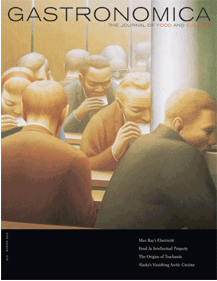
I actually read this Gastronomica article before the other one, but this seemed like a good Saturday subject.  This article is the kind of thing I don’t normally write about.  I read a bunch of non-fiction and for the most part I don’t bother ever posting about it because, really what’s the point of summarizing a nonfiction piece.  Most of them I don’t have an opinion about, I just say hmm, interesting.  But since I’m doing some special articles that were pointed out to me from JSTOR, I’m going to include this one for historical amusement (even if unlike the hobo memoir, this article is less than ten years old).

Anyhow, this brief article looks at the patented Smucker’s Uncrustable Sandwich.  At the time, these were novel, but now they are ubiquitous.  Smucker’s had taken two discs of white bread, filled them with an inner casing of peanut butter and then stuffed the PB with a splooge of jelly.  It’s the shell of PB, which keeps the jelly from touching the bread and the crimping method to squish the breads together that really seal the patent.  And, I admit, that despite the mockery they received for patenting a PB&J, I think they did hit on some novelties and have earned their unique status.

But the article proceeds to tell how other companies tried a similar idea and were summarily sued.  So Shih unpacks the patent to see what Smucker’s has protected and how a lawsuit might be avoided (in short, Smuckers covered their bases really well (as you’d expect from a corporation), so it’s unlikely that a mom and pop PB&J machine will withstand the scrutiny).  (more…)

Read Full Post »

SOUNDTRACK: FANFARLO-“Replicate” (2011).

This is the final Fall Music song I’m going to mention.  “Replicate” was Robin Hilton’s song of choice for the fall, and I can see what he liked about it–there’s a lot of unusual sounds going on (in many ways it reminds me of Sparks or maybe sort of early Depeche Mode, although no one in the discussion mentioned them).  It opens with a series of staccato string notes over a repeated lyrics (“it’s gonna, it’s gonna, it’s gonna…happen soon”).  The strings build and build, but they stop before any major climax; they are replaced by a fast, kind of spazzing keyboard melody with more repeated vocals, (“it’s gonna, it’s gonna, it’s gonna…happen soon”).  The staccato notes come back and both sounds build to another near-climax.

Until the chorus comes in with its supremely catchy but very cold “oohs”.   Even the end builds but does not quite achieve the climax one would expect, although it is still satisfying.

It’s a very clinical song, cold and detached (the instrumental break has wood blocks that sound like a woodpecker banging a tree on a winter’s day).  But the vocals are so warm, that they disarm the song of its coldness even if the chorus is “Will it replicate inside our bodies now?”   At first I really didn’t like the song, but after a couple of listens, I really heard what Robin Hilton enjoyed.  And I would like to hear more from them.

The video is pretty neat too:

[READ: September 19, 2011] “Animal Art”

This article was probably the most “academic” and “scientific” of them all five of the JSTOR articles I read.  And by that, I mean, that it was researched and tested and full of abbreviations and as a result it reads very dry.  Which is a shame (well, actually it’s not a shame, the scientific requirements are essential for there to be an academic article published)–what it needs is a cool popular version to lighten it up a bit (and it needs better pictures as well).

The article looks at the bowers of the bowerbird.  The bowerbird is a family of 20 species of bird found in New Guinea and Australia.  Bowerbirds are noted and named for the bowers that the males construct to win a mate (see photo at right).  What’s interesting is that the different species of bowerbird construct similar nests but do things quite differently (some “glue” the sticks of their nest together with either spittle or insect secretions while others weave their sticks together).  But they are all very particular about the nests they build:

When I shifted the position of a decoration, the bower owner either restored it to the original position or else discarded it in the forest.  Decorations changed from day to day as birds replaced wilting flowers and rotting fruit with fresh ones.

The articles sets out to discover whether the traits that the male bowerbird develop in their nests are inherited or are learned.  Diamond believes that they are learned because birds that are not very far apart use different techniques, but immature birds are often seen observing the adult birds to presumably learn from them.  The nests are built by the males, but, similarly, the immature females go with the adult females to inspect the nests, thereby learning what traits to most look for in a nest.

But what seems to have inspired this paper was the bowerbirds’ proclivity for choosing colors to decorate their nests: most use flowers and mosses from the surrounding area, arranging them in beautiful colors.  What Diamond did was to take colored poker chips (a series of uniform shape, size and texture) with varying colors to see if the bowerbird would choose based on color (his scientific conclusion is that it’s really impossible to tell because who knows what other variables are at play, but his more satisfying conclusion.  is that the birds decorate by color.

So, Diamond put the poker chips in front of their bower (on the moss “mat” that looks like a welcome mat).  And with one group of birds:

Within 10-30 minutes [three birds] picked up all chips regardless of color and discarded the in the forest.

While for a different group of birds, they quickly discarded any white chips (and one bird discarded the yellow chips as well).  There was a marked preference for colors in this order: Blue>purple>orange>red>lavender>yellow>white.  While these birds not only embraced the chips and used them for their decorations, other birds stole chips from their rival makes’ nests:

When I placed three chips of each color at bower W6, bird W5 stole within 3hr all blue, orange and purple chips, two red chips and no yellow, lavender or white.

(Poor W6 bird–he really has nothing).  But the study shows that the birds hate the white chips!  He even created a chart that showed that most of the birds kept 100% 0f the blue chips, and most of the purple chips while dismissing almost entirely the yellow chips; none of them kept any white ones.  (One bird in the study seemed to be quite a pig–this is the one who stole from W6–he kept far more than the other birds, including 100 % of orange an 66% of yellow–i wonder if the females thought he was a gaudy show off?)

Incidentally, this study was done in 1986, so it does not account for the more recent discovery that bowerbirds will basically use any old crap to build their nests, provided it is colorful.  Many people find this sad, but the birds don’t seem to mind.   In the article, the author says that one of the birds came up to his colleague, stood on his shoe, and tried to steal the blue docks that he was wearing.  Here’s a picture of a bowerbird with a whole bunch of blue clothespins.

Read Full Post »

SOUNDTRACKLOS CAMPESINOS!-“By Your Hand” (2011).

I’ve enjoyed Los Campesinos!’s records in the past and I’m pretty excited about the prospect of a new release.  This song doesn’t deviate too far from their previous releases although to my ear it sounds a bit more musical (more instruments, more vocals) and less abrasive.  The basic elements are still there:great lyrics delivered in a more or less spoken way, followed on its heels by big shouty sections (and the whole band seems to be shouting along on this one).

This song also feels a little warmer, although the lyrics “by your hand is the only end I’ve foreseen” is either really dark or really naughty depending on how well it correlates to the verses.  Regardless, the chorus is catchy and fun to sing and the lyrics are wonderfully twisted.  Los Campesinos! have done it again.

And here’s the video.

[READ: September 16, 2011] “Jean-Baptiste Labat and the Buccaneer Barbecue in Seventeenth-Century Martinique”

I was interested in this article because it talked about the boucan and the buccaneer, and both of these things were mentioned in Book 9 of The 39 Clues.  It was a weird sort of coincidence that the boucan which I had never heard of before should appear in two things that I read about week apart (and then this weekend the Pa Renaissance Faire was pyrate themed!).   I was also interested because of the way this article was presented in the email to us: “if you have ever wondered on what foods a seventeenth-century missionary from the island of Martinique dined, check out this article from Gastronomica. (Hint: They include manatee, lizard, and parakeet)” made it a must-read.

While the article does, indeed make mention of these foodstuffs, it is by no means the extent of the article.  Rather, Toczyski looks at what Labat, a French priest and a missionary, wrote in his extensive chronicle about his stay in the Caribbean.  In particular, she focuses on the amazing breadth and depth of his gastronomical accounts (which includes details about all the meals they ate en route (the ship was amazingly well stocked–they even had a garden on board, which was under guard day and night (!); and then on the island he also talks in loving detail (with recipes) of all of the native dishes that he would eventually consume (including turtles, frogs and the palm worm (see picture at right (the picture and an awesome description of eating the palm worm is here at Boots in the Oven, at the bottom of the page).

(more…)

Read Full Post »

SOUNDTRACK: GRINGO STAR-“Shadow’ (2011).

This song was forecast as a great Fall song on NPR.  The band’s name is perhaps too cutesy, but the music is interesting.  The verses are jangly and in no way prepare you for the Beatlesesque (ie., soaring harmonies) chorus that follows. 

There’s not a lot to the song, and on my first listen I wasn’t all that impressed in the beginning.  But by the end of the song I was won over. 

The song feels very familiar, but I can’t say that it sounds like anything in particular.  The ooo-ooohs in the chorus are really pretty, the intro guitar is more intricate than I realized.  And after just a few listens I was totally hooked.  It just seems like more of a summer record to me.

I’m curious to see what else is on this record. 

[READ: September 15, 2011] “A Hobo Memoir, 1936”

My company provided some links to interesting articles that are available on JSTOR, an electronic archiving resource.  If you have access to a university database, chances are you have access to these articles.  I was particularly struck by the fascinating subjects of a few of these pieces and for the next few posts I’m going to mention them.

I had to start with this article because for some reason my kids are obsessed with hobos.  I don’t really know how it came about–reading older kids’ stories, I suspect.  On our first train ride, we saw a freight car with a door open and there was much talk about hoboes sleeping in the cars and, hoo boy, it just escalated from there.  And, despite the fact that hobos haven’t really existed in eighty some years, once you keep an ear open for the word, you hear it quite a lot (Craig Ferguson was calling his audience hobos for a while–it’s a good comedy word).

This article contains an introduction by Elizabeth Rambeau, assistant editor of the magazine, who gives us a brief history of John Fawcett and of hobos in general.  Including this very informative distinction: a hobo is a transient person who looks for work while he travels, a tramp is a drifter who does not look for work and a bum is a stationary person who does not look for work.  So, be mindful of the epithets you use!  Fawcett, Rambeau tells us, was unlike most hoboes at the time.  Indeed, he wasn’t really a hobo at all.  He was the son of a wealthy doctor.  But he grew tired of his life at boarding school and decided to take a trip on the rails from West Virginia to Texas.  But he lived the hobo lifestyle, hopping trains, getting busted by the police, and not carrying any (or much, anyhow) money.  He even hung out with a hobo named Shorty.

The reason that this article is noteworthy (in terms of hobo literature) is that unlike other hobo memoirs from the time, Fawcett was an educated man and a decent writer in his own right (most hobo memoirs were recollections from the hobos themselves, written by ghostwriters).  This Memoir comes from meticulous diary entries that he kept during his entire trip.  And, of course, the article includes hobo signs, everyone’s favorite piece of folk art.  What’s interesting is that there are no extant records of original hobo signs.  They were made with chalk and all were ephemeral.  All of the signs we have are from people’s recollections and the signs included here were done by an art dept.

Fawcett’s original work comes from an unpublished 1991 book called Awakening of Conscience.  What we have is a twelve page excerpt.  In the author’s introduction, he explains his life situation, his family situation and his pressing need to have some freedom in his life.  In hindsight, he can’t imagine what kind of grief he put his parents through (he left a note saying he was going to a friend’s house but then took a month-long hobo journey) and he regrets that.   But he’s also pretty proud of what he did. (more…)

Read Full Post »

SOUNDTRACK: COSMO JARVIS-“My Day” (2011).

I learned about Cosmo Jarvis through NPR.  The DJs called it a love it AND hate it song.  But I find that I mostly love it.  The video is a blast to watch, but even without the video, the song is quite catchy and fun.  It’s a half punk song and half folkie/trad song.

So who the hell is Cosmo Jarvis?  Well, he was born in NJ, but is really from England.  He’s a filmmaker and musician and he’s had a hit with the song “Gay Pirates” that Stephen Fry raved about on his Twitter feed!  “Gay Pirates” is a fun shanty, but “My Day” is a full-on punk blast.

The song laments the state of things today and talks about how things were back in “my day” (which is of course funny since he’s 21).  The verses are a kind of folkie/storytelling style (but with electric guitars) and the end of each verse has a guitar riff that sounds traditional to me.  But when the chorus jumps in, it’s heavy, rocking, screaming punk.

Okay so the song is nearly 8 minutes long, which is probably overkill.  There’s a fairly lengthy instrumental bridge about 5 minutes in which features guitar and tin whistle solos.  And then the final 2 minutes are just fast metal screams of “My Day” with some wild soloing.  Yes, it’s too much (I’ll bet the single mix is awesome), but it’s still an enjoyable song.  Even without the video.

But you should watch the video, if only because it’s what the guys from Jackass would do if they were in a band and lived in the English countryside.

[READ: July 15, 2011] The Corrections

My company recently asked us if we had read any books over the summer.  I was able to pony up this review for our company newsletter.  I’ll be fleshing it out, but it’s pretty apt.

I’d put off reading this for a number of years, and I wish I had read it sooner.  It’s a very detailed look at one family: Elderly parents, thirty-something kids, and a few grandkids.  The depth of character development is amazing (and includes even depth of characters that the main characters interact with).  It’s a long book but it is very rewarding—comic scenes, moving scenes and one or two shocking moments.  It’s also the first time I’ve read a book where I thought, “even though I like this character, I think it would be better for everyone if he died.”  It’s an unnerving thing to think, but Franzen really makes you think about how family members impact one another.

It took me forever to start reading this book, obviously.  I wasn’t really interested in Franzen when all of the Oprah commotion came out, so I blew off this book entirely.  I’ve recently grown more interested in him.  But rather than reading his novels, I had decided to read all of Franzen’s New Yorker pieces.  (And even though I wanted to read Freedom when it came out, I felt that I should read this one first).  I wasn’t hesitant about reading it, I think I just wanted time to devote to it.  Much like I needed time to devote to writing up this post.  It’s been well over two months since I finished the book.

The Corrections is a wonderful, engaging story about three generations of the Lambert family (and many of the people they interact with).  The matriarch and patriarch of the family, Enid and Alfred, live in the midwestern town of St. Jude.  They have three children: Gary, a banker in Philadelphia who is (more or less unhappily) married with three children; Chip, a former school teacher and current playwright who sponges off of his younger sister while he tries to live the high life in New York City; Denise, a very successful chef who also lives in Philadelphia.  She has no children.  Gary’s children play a small but significant part in the story, keeping the three generations aspect working very well.

I found the first chapter a little slow and somewhat off-putting.  I read an excerpt from the novel in the New Yorker, which was a piece about Chip.  So I was surprised that the book opened with an older couple.  The chapter deals with Alfred and Enid.  Alfred’s dementia is hitting their household quite hard but Enid just feels that Alfred isn’t trying very hard.  Because Enid has very little in her life, she wants nothing more than to have her whole family together “one last time” for Christmas.  Enid and Alfred are long-married and this chapter picks up in the middle of a typical day.  So it takes a few pages to get up to speed.  Of course, once I did, I felt that the whole family was completely real and believable. (more…)

Read Full Post »

SOUNDTRACK: MEGAFAUN-“Find Your Mark” (2008).

After listening to the new Megafaun track, I checked the NPR archives.  They have this one song from their debut available for a listen as well.

It’s hard to believe that this is the same band.  Or perhaps I should say that a band can change a lot in three years.  This song begins as a three-part near-a capella barbershop/bar trio.  It reminds me in many ways of a Fleet Foxes track, except they seems more rowdy.  The song merges into a delicate guitar picking section with all of the voices “ba ba ba” ing.  Then, that guitar melody expands to an electric guitar and full band sound.

The introduction to the track (from the NPR DJ says that the album may not be everyone’s cup of tea.  But I like this track so much (even though it is so very different from their 2011 release), that I need to listen to more from this band.  Spotify, here I come. [Actually the album has some pretty crazy noises on it!].

[READ: August 20, 2011] “The Losing End”

This is a strange story about a man named Lamb.  The reason it is strange is because the middle of the story–the exciting part, the part I most enjoyed–is not really the point of the story, at least if the ending is to be believed.

As the story opens, Lamb has just been to his father’s wake.  He is feeling adrift so he goes to a parking lot to sit and think.  In addition to his father, Lamb is also thinking about his wife and his girlfriend.  I’m a little unclear exactly what is happening with his wife (Cathy) but he definitely trying to get time away from her to spend it with Linnie. While he is sitting there lost in thought, a young girl in an ill-fitting tube top approaches him. (more…)

Read Full Post »

SOUNDTRACK: MEGAFAUN-“Get Right” (2011).

I’ve never heard of Megafaun before, but this song is just wonderful.  It’s an 8 minute blast of psychedelia that covers and sometimes obscures a beautiful poppy song.  I hear overtones of Dinosaur Jr (but more for J. Mascis’ seemingly lazy style than for his crazy guitar riffing) and a bit of the Lemonheads in the folky pop feel.  Throw in a dose of My Bloody Valentine for the waves of sound and you get a perfectly lovely track.

The opening is a fairly simple, straightforward melody.  And his voice is so familiar-sounding.  There’s some cool squeaky/feedbacky guitars layered over the top of a hazy distorted sound.  By about four minutes, the song turns into an instrumental, with a guitar solo that comes in an out of the hazy chords.

This is a great song, and although the NPR write-up says this is the longest track, I imagine the rest must be equally as exciting.  Preview it on NPR.

[READ: September 1, 2011] “Asleep in the Lord”

This is a story about Mitchell, a formerly unhelpful person who never changed a diaper or helped a sick friend.  He has decided to change that, so he goes to Calcutta with the intention of joining Mother Teresa’s mission (and just how many stories involve Mother Teresa these days?—she even makes an appearance in the piece!).  He’s reluctant to do anything majorly gross, but he’s happy to hand out medicines (for what good they do).

After a few days, Mitchell is still somewhat surprised by his decision to go to Calcutta at all.  Then he meets Mike and Herb.  Herb is following the Bhagwan, but Mike is less grounded in who he is following here in India .  He came here because the economy tanked back home and he wanted somewhere to hide out for a few years.   As we learn more about Mitchell, we see that his intentions are understandably confused.  For really, like Mike, he also came to India to wait out the recession.   However, unlike Mike, he honestly did come to seek some kind of spiritual guidance.  Mike seems to be here for the easy sex–he has a picture of a young woman from Thailand who wanted “to marry him.”   (more…)

Read Full Post »

SOUNDTRACK: METRIC-Live at the 9:30 Club, June 18, 2009 (2009).

I love the new Metric album and this tour supported that disc, so, it’s a win-win for me!  Metric sound great live, and the notes on the NPR page where I downloaded this give a fascinating history of the band.  Evidently they burnt out in 2005 while touring for Live It Out.  So they made solo records and kind of went their separate ways.  Then:

in March 2008, Haines was on stage, in the middle of a live solo performance, when she had an epiphany: She was tired of being sad. While playing one of the standout cuts from her gloomy but beautiful album Knives Don’t Have Your Back, Haines stopped, turned to the audience and said, “I don’t want to play these songs anymore.” Instead, she spent the rest of the show performing her favorite Metric tunes.

The band reunited and made Fantasies, the poptastic album that I love so much.

This show plays pretty much all of the album (except “Collect Call” and “Blindness”) and they rock the house!  The only odd part for me is the opening track, “Satellite Mind.”  The band chose to have the first half of the song performed with just the keyboards, so it has no bottom end at all.  It sounds kind of tinny and weird.  Then when the guitars and bass kick in (for the rest of the show, thankfully), the band sounds whole again.

The other weird thing is Emily Haines’ banter.  I like chatty lead singers (–The Swell Season’s banter is great, Wayne Coyne’s banter is emotional but enjoyable), but there’s something about Haines’ musing that are just kind of…lame.  She’s very earnest, but her thoughts are kind of, well, vapid.  So, I just skip past all the chatter and enjoy the music.

It’s a really great, rocking set and the crowd is very into it.

[READ: August 25, 2011] Atlas of Remote Islands

If you need an unusual but doubtlessly cool book, my brother-in-law Ben is your man.  For my birthday and Christmases he often gets me books that I have never heard of but that are weird and interesting.

This book is no exception.  As the subtitle states, this is a book about fifty remote islands that virtually no one lives on.  True, some are inhabited, but many are not.  And a goodly amount of them are little more than icebergs (I wonder how they will survive global warming).  There’s even one that the accompanying story implies was created from bird droppings. (more…)

Read Full Post »

« Newer Posts - Older Posts »