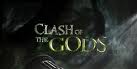
[WATCHED: August-October 2009] Clash of the Gods
[UPDATE: October 26, 2009]
I have now finished the entire series. I was pleasantly surprised by how much I learned from it. (Not that I considered myself an expert, but you never know what you’ll get from TV series). The biggest surprise was how much this series filled in the gaps of things I half knew, or things that I didn’t know were missing from my knowledge. Can’t ask for more than that!
I’m still a little confused by the inclusion of Tolkien, but that’s okay, it was a good episode nonetheless.
General negatives: I never did get used to the egregiously repetitive imagery (if I never see Zeus pulling off his hood again, I’ll be thrilled). I also got rather tired of that crazy howling wind/scream noise that they used as some kind of dramatic effect. But hey, that’s okay.
The actors and the CGI and all that was fine. They had to include some kind of footage or else it would just be people talking to us, right? I wonder where they got the actors? The women were all quite beautiful. The men were less handsome than I would have expected (but then the male gods were all old, right?). How did they cast these episodes, I wonder? Okay Zeus: can you sit in that throne? Good. Can you remove your hood? Good. Athena: Can you stare smoldering at the camera? Good. I wonder how people tried out for the part of “soul writhing in hell” or whatever it was.
I’m not sure if the “that was the myth, but how does it relate to reality” part was supposed to be the real draw of the show. Some of it was interesting, some of it was weird, and some of it was just stretching plausibility. There’s been a lot if discussions below in the comments about the emphasis on Christianity throughout the series. From a historical point of view I thought it was interesting. Although there were time when I wasn’t entirely convinced.
It was the professors who really impressed me. They were consistently informative, and clearly enjoyed what they were talking about. There were one or two who I would NEVER have wanted in class (their voices were rather sharp) but there were also a few that I would have signed up for multiple times, no question. So thanks to them for doing the show (I know, it was a real drag for them to get out of the classroom and do TV, right).
I’m still trying to find more information about the people involved, but it is cleverly hidden (as is everything else about the show). What is it with The History Channel’s website? This is the only professor who I’ve found with a blog: Wormtalk and Slugspeak. And he tells some interesting details about doing the show. As for the rest, well, you’ll have to watch the episode and write down their names, apparently.
I’ll give a special shout out to the professor at Rutgers, since she’s just down the street, but i don’t remember her name.
[UPDATE: October 26, 2009]
See bottom for comments on final two episodes that i watched: Thor and Medusa (which I missed the first time around).
[UPDATE: October 15, 2009]
See bottom for comments about Beowulf and Tolkien. (I haven’t watched Thor yet).
[UPDATE: September 28, 2009]
See bottom for comments about the Odyssey episodes.
[UPDATE: September 21, 2009]
I’ve been getting a number of hits here with people looking for the Clash of the Gods narrator. So, his name is Stan Bernard. He was also the narrator for Zero Hour and MonsterQuest as well as a few other things. I’ve not seen anything else he’s done.
[UPDATE: September 2, 2009]
See bottom for reviews of 2 more episodes]
[WATCHED: August-October 2009]
I don’t normally review TV shows. There’s just too much to keep up with. But I’m making an exception in this case.
I had heard about this show on a public radio program. The host was talking to some of the guys who were involved in making it, and it sounded fantastic. (I regret that I don’t know which host or even which radio station, I was driving a rental car and just happened upon the program, I think his name was John, which, frankly doesn’t help at all).
I love Greek mythology, and so did the host of the radio show. When he said that the series was designed not only for people who are new to the mythology but that it would also give deeper information for those who were familiar with the stories, I has to check it out.
Two episodes have aired so far, Zeus and Hercules. And the radio announcer was right. The episodes are good. They give the general story of the myth and then throw in some uncommon details. But, perhaps most interestingly, they also include ways in which recent archaeological digs have uncovered information that shows the reality behind the stories. And, even more interestingly, they discuss how some of the myths not only correspond very well to actual historical events, but also correspond to events from the Bible and other cultures’ mythologies. So, Noah’s flood, is recounted in Greek mythology as a Zeus destroying the world. And both are based on what is believed to be a real event in which a volcano erupted and flooded most of the Middle East. The parallels are uncanny.
The stories (narrated by a frankly uninspired narrator) are interspersed with my favorite part: faculty from various universities (and Scientific American magazine) give their historical insight into the myths. And they’re all pretty excited about what they’re talking about (and each has his or her own quirky mannerism which is fun to look for–and they were all apparently told to wear black, otherwise it is an amazing sartorial coincidence).
The absolute worst part of the series (and I fear it will continue through all of the shows since it was in Zeus and Hercules) is the absolutely horrid “reenactment” footage. It’s bad enough that the footage is kind of lame (even if the blue contacts do “pop” on screen as they said they would in the radio interview). But they reuse the same footage over and over again in the same episode–heck in the same segments of the same episode. It is maddening. Are they really telling us that they couldn’t have had Zeus do something other than sit down heavily on his rocky throne? (I think they showed that particular scene 6, maybe 7 times). I realize that if the actor isn’t actually going to speak, there’s not a lot he can do, but come on, show us something else! (more…)
Read Full Post »
 SOUNDTRACK: RHEOSTATICS-Static Box (complete) (2008).
 I’ve decided not to review all of the volumes of this fabulous free box set. Rather, since I have now finished it, I’ll sum up and say that it is a fantastic collection from start to finish.
 SOUNDTRACK: TINDERSTICKS-Tindersticks [the red one] (1993).

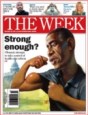 I’m not sure how I first learned about
 Mental Floss
 Next comes the ubiquitous letters. This also contains the occasional feature of Readers and Their Famous Friends, which shows pictures of readers celebrities (pretty much the only celebrities they ever talk about). This is followed by the letter from the editor. Neely Harris (I have yet to determine if Neely is a boy or a girl and I’m not going to look it up either, somehow it’s more fun trying to imagine) is very funny and always sets a good tone for the magazine.

 SOUNDTRACK: THE DECEMBERISTS-The Hazards of Love (2009).
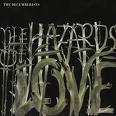 I first played this disc a few times without really listening to it, just to get a feel for it. And I was surprised by how heavy it sounded. The harshest moments of the disc really stood out to me, and I was quite surprised, as I think of the Decemberists as more folky than this.
 I first heard about this magazine from my friend Ailish’s then-boyfriend, Dave (this was sometime in 1993, I would guess). Dave fancied himself an artiste: he typed his novel on a portable Underwood, loved Henry Miller and read
 SOUNDTRACK: Radio New York, WNYE, 91.5FM.

 I Just Read About That...