Feeds:
Posts
Comments

Archive for the ‘U2’ Category

greatestSOUNDTRACK: PINK FLOYD-“The Hard Way” and “Wine Glasses” (1974).
glassThis book informed me about these two unreleased Pink Floyd songs (there’s a Wikipedia site that lists some fifty more !).  While the were unreleased in 1974 (from the abandoned Household Objects album), they were eventually released in 2011 on expanded versions of albums.

“The Hard Way” features some “percussion” that sounds like someone taking steps.  There’s a bass riff which I gather is from rubber bands (but very well tuned).  There’s clocks ticking and chiming and tape being unspooled.  It’s a neat idea and while it is absurd to think you could make a whole album with this kind of stuff (in 1974), it’s a surprisingly good sounding track.

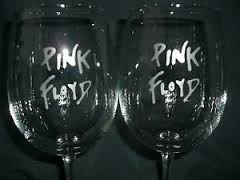
“Wine Glasses” was apparently made with wine glasses.  It is all of 2 minutes long.  It was designed to be a full song but was eventually used in the introduction to “Shine on You Crazy Diamond.”  I never really considered that there were wine glasses making the sounds (and clearly there are synths added on top), but yeah, so that ‘s kinda neat.

[READ: November 25, 2014] The Greatest Albums You’ll Never Hear

I found this book at work and knew I had to read it.  I was actually surprised at how long it took me to read (there’s a lot of entries).

The title and subtitle pretty much say everything you need to know about this book (and if you need to read it or not).  This book collects a series of writers who give a brief history of some of the more famous (and some not so famous) albums that were never released.  It explains (as best they can) why the albums weren’t released and even gives a percentage chance of likelihood of the album ever seeing the light of day (interestingly, most seem to be a 3/10–they may have been able to use a 5 point scale).

I knew some of the records they talked about (The Beach Boys’ Smile, Neil Young’s Chrome Dreams), but was ignorant of quite a lot of them. And while big fans of the artists may know all of the details about their favorite lost album already (these are sketches, not exhaustive research), there will certainly be some new information.  For instance, I’m a huge Pink Floyd fan but had no idea about the two shelved works mentioned here.

I liked the way the book was done chronologically and grouped by decade.  It was also interesting to see how the “reasons” for the non-release morphed over the decades from “the record label didn’t like it” to “it was leaked online.”

The one major gripe I have with the book is that it is chock full of “imagined” album covers.  This in itself is okay, but it is not made explicitly clear that they are all imagined (credits are given at the bottom of each image, but it took me a few entries to realize these were just people’s ideas of what the covers could look like).  And most of them are gawdawful.  Just really lame and dull (as if they had 20 minutes to come up with an idea).  They mar an otherwise cool collection,especially since some of the unreleased records actually do have proposed covers (even if they were never released).  I see that there is in fact a paragraph about the covers in the front pages of the book, but it is almost hidden away.

In addition to the albums I’ve listed below, I learned some fascinating things.  That Bruce Springsteen has hundreds of songs that he wrote but never released for various reasons.  That Pink Floyd did try to make an album out of household objects (with no instruments).  That the Sex Pistols’ Never Mind the Bollocks was almost simultaneously released illicitly as Spunk.  And that Danger Mouse’s The Grey Album was recently remastered.

The end of the book includes two small sections: other favorites that were never released.  Not sure why they earned only a small column instead of a full entry, but that’s okay.  The second was albums that we eventually did see, like My Bloody Valentine’s MBV and Guns N’ Roses’ Chinese Democracy.

So if you ever wondered what happened to that long lost album, this may be the book for you.

A sampling of the unreleased records include:

  • The Beach Boys-Smile
  • Buffalo Springfield-Stampede
  • The Kinks-Four Respected Gentlemen
  • The Beatles-Get Back
  • Jeff Beck-The Motown Album
  • Jimi Hendrix-Black Gold
  • The Who-Lifehouse
  • Wicked Lester
  • Rolling Stones-American Tour ’72
  • CSN&Y-Human Highway
  • Pink Floyd-Household Objects (1974), Spare Brick 1982
  • Dusty Springfield-Longing
  • David Bowie-The Gouster (1975), Toy (2001)
  • Sex Pistols-Spunk
  • Neil Young -Homegrown (1975), Chrome Dreams (1976)
  • Frank Zappa-Läther
  • Beastie Boys-Country Mike’s Greatest Hits
  • Weezer-Songs from the Black Hole
  • Jeff Buckley-My Sweeetheart the Drunk
  • Van Halen-IV
  • Foo Fighters-The Million Dollar Demos
  • Green Day-Cigarettes and Valentines (the author doesn’t believe it was actually stolen)
  • Tapeworm (Trent Reznor and Maynard James Keenan among others)
  • Deftones-Eros
  • U2-Songs of Ascent
  • Beck-The Song Reader



Read Full Post »

peach SOUNDTRACK: FOALS-Holy Fire (2012).

I foalsloved Foals’ debut album Antidotes, it was a modern rock/prog rock/dancable mashup with angular guitars and all kinds of weird time signatures.  Then Foals returned with a new album which I haven’t heard anything of, except to have heard that it was very different.  Then I heard “Inhaler” from this album and I loved it.  It was easily in my top ten songs of 2012.

But it was so different from the Foals of Antidotes that I wasn’t sure what to make of it.  And in fact, that Foals, with all of their angularity, has been replaced by this much dancier version of the band.

“Prelude” is like an extended intro to “Inhaler.” It’s 4 minutes of intro music with chatter and noises.  Then comes “Inhaler,” a slow building song that rises and falls, rises again then falls again and then bursts into a big rocking chorus.  It’s fantastic, it feels louder than is possible for such a song.  “My Number” introduces some of that unusual staccato song style but in a far more dancey framework. The synths are louder and bolder.  I really like this song.   “Bad Habit” is a far slower song, but it’s a nice tempo changer.  And the chorus is still catchy.

“Everytime” brings in more shoegaze elements (so let’s see, there’s angular punk, shoegaze and dance music here).  This song even has a discoey chorus.  “Late Night” and “Out of the Woods” feel even more dancey than the earlier tracks–with a kind of earlier 80s British alt rock flavor–spiky guitars and exotic percussion.  I hear some of the guitar sounds of early U2 as well, especially on the intro of “Milk & Black Spiders” (the rest of the song sounds nothing like U2.

“Providence” brings back some of that louder guitar, coupled nicely with a combination of shoegaze and screamy vocals.  The heavy guitar plays a very nice counterpoint to the picking of the second guitar.  It’s the last great song on the record.  “Stepson” is a slow song, the slowest on the disc, and I fear that it rather runs out of steam.  “Moon” continues the slow drifting sense of the end of the album.  It’s pretty song, but it feels so far removed from “Inhaler” that it seems to be from a different record.

So I’m not entirely sure what to make of this record.  It has a few great songs, and then a number of songs that seem to want to go in a different direction, but what direction that might be remains unclear.

[READ: September 6, 2014] “The Happy Valley”

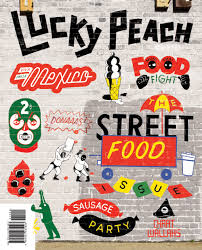
Lucky Peach 10 is “The Street Food Issue,” and it is a fun issue with all kinds of interesting food you can buy on the street (and recipes to try them at home).

Like food in tubes.  Take “Sausage Quest” (what the locals do with their various sausages all around the world), or “I Went to Thailand and All I Got was a Sausage Stuffed in My Mouth” (I can’t wait to make sausage blossoms).  Beyond sausages there’s a list of the most compelling street foods around the world from New York to Naples to Tunisia. We look at street food vendors in Malaysia and South East Asia.  And then we meet the Lucha Doughnut Man of East LA (Mexican donna vendor by day and masked wrestler by night).

Then there’s some articles that are not about food.  Like the surprising article about the microbiology of used cigarette butts (no butts were eaten).  Or the very interesting history of charcoal (which dates back to Henry Ford).  I had no idea charcoal came from trees.   There’s an essay about rapper Jibbs and his song “Chain Hang Low” which was apparently ubiquitous in 2006 although I don’t know it).  The essay discusses how it used “Turkey in the Straw” as a motif.  Most likely, he took it from the ice cream trucks that he heard as a kid, but there is a whole history of racism packed in to that song, let me tell you.

I enjoyed the idea (throughout the issue) that if you’re in a new place, sometimes you can’t always trust reviews for what’s good, you just have to trust your gut (and your nose).

Then there’s several articles about corn.  Making tortillas or masa–the whole process of nixtamilization.  (more…)

Read Full Post »

harper septSOUNDTRACK: PHISH-Junta (1989).

juntaI’ve been listening to a lot of live Phish as of late and thought it would be interesting to see if there was truth to the adage that Phish is great live but not so great in the studio.  So here is their first official album.  It was released as a double album, and when it was reissued on CD some bonus material was added.  Incidentally, I just found out that the album if pronounced “juhnta” and not “hoonta” because of the engineer they worked with.

The album starts with “Fee” which is a fun song (the lyrics are wonderfully weird) and they don’t play it all that much so it’s a treat to listen to.  I enjoy the way the verses sound compressed and distant but the choruses are nice and full.  There’s also some funny and interesting sound effects (some of which accentuate the action) throughout the song. This sound effects and noises processing has been with Phish from the beginning and they kept it up through many of their earlier, less mature albums. “You Enjoy Myself” is a live favorite so it’s fun to hear it in this version.  As with a lot of their earlier records, this song sounds a little stiff, especially if you’ve heard the wild live versions. It’s not bad at all, indeed, it has a perfectionist quality to it—the time changes are perfect, the solos are flawless.  Indeed, it’s quite an achievement (and in this more polished version it sounds more like Yes than their live versions ever did).  Interestingly when we finally get to the lyrical section (about 5 minutes in) it’s quite a bit slower than they play live.

“Esther” sounds much more theatrical here.  The music is gorgeous and there are lots of effects and backing vocals which bring a bit more menace to the song than the live version possesses. This also had a very prog rock sensibility to it.  “Golgi Apparatus” has a lot more in the way of backing vocals than the live version.  And “Foam” has some changes: the bass is especially loud and funky and yet the pace is so much slower than I’m used to.  The odd thing is the kind of stiff way that the lead vocals enunciate everything.  And the deep voice (Mike?) is quite amusing at the end of the song.  “Dinner and a Movie” is a fun and silly song and this version is especially enjoyable because of the backing voices and chatter and laughter which illustrate the dinner (and presumably the movie).

“Divided Sky” has a beautiful melody and it’s nice to hear it played so pretty and simply here.  But again the remarkable thing is how much slower the song is here.  “David Bowie” also sounds great (there’s all kinds of weird sounds effects in the background of the (very long) soloing section—I have no idea why or what they might be).  The solo sounds like it was maybe done in one take as there’s a couple spots where it’s not “right,” (whether flubs or intentional is hard to say) but it still sounds terrific.  In fact a number of tracks have some little flubs which makes it seem like they either didn’t mind or tried for a more live feel.

“Fluffhead” sounds solid and like the live versions.  What I never realized until I actually paid attention is that the bulk of the music (the extended jam session) is called “Fluff’s Travels.”  “Flulfhead is only 3 and a half minutes, while “Fluff’s Travels” is over 11 minutes (it opens with the beginning of the guitar solo–the catchy riff that starts the lengthy jam).  “Contact” is a delightfully silly song about tires and cars that I’ve always enjoyed and find myself singing often because the melody is so simple.

What’s funny is that the end of “Contact” kind of bleeds into “Union Federal” which is listed as a live song (and clocks in at over 25 minutes long).  This “Union Federal” is an improvisational jam (or an Oh Kee Pah Ceremony—where the guys would get together with instruments (and other things) and jam for a time.  This song is weird with many layers—and is rather typical of one of Phish’s weirder jazz –flavored improv sections (meaning that there is a lot of dissonance and noise).  It’s quite jarring especially after all of the melodies and prettiness of the album proper.  And I can see a lot of people not being happy about its inclusion.  “Sanity” on the other hand is a fun song.  In the intro, they keep claiming the song is by Jimmy Buffett. They are clearly very silly in this setting, especially at the end of the song.  The final track is a live version of “Icculus” the song which is pretty much all buildup.  In the intro they quote U2 “This is red rocks, this is the edge.”  But the “joke” of this version is that Trey keeps postponing the name of the person who wrote the name of the Helping Friendly Book–stalling in any way he can.  As the song gets louder and louder and more absurd, the guys are even more frenetic.  It takes over 3 and a half minutes to get to the proper lyrics of the song.   And then the song itself is about 15 seconds.  Absurd nonsense.  But very amusing.

So this is quite a solid debut album, and the amount of songs that they still play live shows how fond everyone is of it.

[READ: October 2, 2013]  “Wrong Answer”

I didn’t hate Algebra.  I rather like solving puzzles so I enjoyed solving for x.  Algebra II I recall being more daunting and less fun with lots of formulae to memorize.  And, unlike everything promised, I have never used any of it in my adult life (geometry and angles, sure, but not logarithms).  According to this article the new United States CORE curriculum (which I know my son is dealing with already in 3rd grade) says that high school graduates must have Algebra II.

The reasons for this intensification in the studying of math are many (starting around the time of Ronald Reagan) but the current push comes from Arne Duncane, the U.S. secretary of education.  He believes that “algebra is a key, maybe the key to success in college.  Students who have completed Algebra II in high school are twice as likely to earn degree as those who didn’t.”  Whether or not that is true, those of us who earned a degree in nonmathematical  subjects certainly were not aided by this class.  But Nicholson Baker explains that the reason this might be true is that for most colleges, Algebra II is a prerequisite.  Ergo: if you don’t take Algebra II you can’t get into college because colleges require Algebra II.  That, for those who may not have taken logic–a far more useful course than Algebra II in daily life–is called a tautological fallacy.  [Indeed, I maintain that all high school students should have to take a course in logic because they would then be able to see through all of the builshit that politicians spill and claim to be logic.  Like the current (as I type this) government shutdown in which Republicans are claiming they didn’t want to shut down the government when they in fact signed papers saying they were going to shut down the government).]

The real problem with Duncan’s postulate that everyone should take Algebra II (“airplane mechanics do complex measurements and work with proportions and ratios…X-ray technicians calculate time exposures to capture the cleanest possible image.  Most factory workers need to understand Algebra II or even some trigonometry to operate complex manufacturing electronic equipment”) is that even if that were true (I don’t have any idea of it is or not), most people do not do those kinds of jobs.  And even if they did know higher math, they would still be salesmen, graphic artists, librarians, preschool teachers, custodians and many many other jobs that in no way require math. (more…)

Read Full Post »

mystrugglSOUNDTRACK: TRICKY-“Christiansands” (1996).

christiansandsThis book is set in Kristiansands, and so naturally this song was ringing through my head the whole while I was reading it.  I’ve known this song for ages, but had no idea that Chirstiansands was an actual place in Norway.

This song is dark and tense.  Over a slinky beat, a spare guitar riff introduces Tricky’s voice as he rasps (his voice is slightly modified to give him a weird echo).  And while he’s reciting his verses, the gorgeous voice of Martina Topley-Bird, repeats what he’s saying in a whispered voice until she sings out the chorus “I met a Christian in Christiansands.”

The verses repeat with Tricky emphasizing, “master your language and in the meantime I create my own.  It means we’ll manage.”

I honestly don’t know what the song is about, and it feels like it never properly ends–that riff, at once menacing and gripping never seems to conclude.  It’s a masterful track and hard to forget once you’ve heard it.

[READ: May 11, 2013] My Struggle Book One

I read an excerpt of Book Two from this series in Harper’s.  And despite the fact that nothing really happened in it, I was drawn in by the writing style.  This first novel is very similar in that not a lot happens but the voice is very captivating.  The translation is by Don Bartlett and it is fantastic–I can only assume the original Norwegian is just as compelling.  So, despite the fact that this autobiographical series contain six books (six!) and totals over 4,000 pages (how could this be if Book one is a mere 400?  Books 4-6 are over 1,000 pages each), I decided to give it a try.  (Incidentally, Book Two has just been translated into English this month).

This series has caused some controversy because it is given the same title as Hitler’s Mein Kampf (Min Kamp in Norwegian), and also because he says some pretty means stuff about people who are still alive (like his ex-wife).  Although there isn’t much of that in Book One.

death in the familyIndeed, Book One basically talks about two things–a New Year’s Eve party when Karl Ove was youngish and, as the bracketed title indicates, the death of his father.  (The title A Death in the Family is the same book as My Struggle Book One–from a different publisher.  It has a totally different cover but is the same translation.  I don’t quite get that).  But indeed, these two events take 430 pages to write about.

How is this possible?  Because Karl Ove writes about every single detail.  (I assume this why the books are considered novels, because there is no way he could remember so much detail about every event).  I’m going to quote a lengthy section from a New Yorker review (by James Wood) because he really captures the feeling of reading the book:

There is a flatness and a prolixity to the prose; the long sentences have about them an almost careless avant-gardism, with their conversational additions and splayed run-ons. The writer seems not to be selecting or shaping anything, or even pausing to draw breath….  There is something ceaselessly compelling about Knausgaard’s book: even when I was bored, I was interested. This striking readability has something to do with the unconventionality of “My Struggle.” It looks, at first sight, familiar enough: one of those highly personal modern or postmodern works, narrated by a writer, usually having the form if not the veracity of memoir and thus plotted somewhat accidentally, concerned with the writing of a book that turns out to be the text we are reading.  But there is also a simplicity, an openness, and an innocence in his relation to life, and thus in his relation to the reader. Where many contemporary writers would reflexively turn to irony, Knausgaard is intense and utterly honest, unafraid to voice universal anxieties, unafraid to appear naïve or awkward. Although his sentences are long and loose, they are not cutely or aimlessly digressive: truth is repeatedly being struck at, not chatted up.

That idea of being bored but interested is really right on–and it may sound like a bad thing, but it’s not.  You can read along thinking that there’s no way he is going to give so much unimportant detail.  But you get this description of drinking a cup of tea: (more…)

Read Full Post »

cpatain 10 SOUNDTRACK: “WEIRD AL” YANKOVIC-Bad Hair Day (1996).

bad hair dayBad Hair Day is an uninspired album title, especially given how great of an album it is.  As I posted last week, “Amish Paradise” is great, (I forget to mention the funny Gilligan’s Island verse in the middle.  “Everything You Know is Wrong” is just a magnificent They Might be Giants parody.  Now, TMBG and Weird Al are pretty kindred spirits (they both use accordions and sing silly songs).  In that respect, this song isn’t that different from a typical Al song, but there are so many great musical nods to TMBG that the song is just awesome.  And it’s very funny too.

“Cavity Search” is a parody of U2’s “Hold Me Touch Me Kiss Me Kill Me” and it works very well, both as a great soundalike (Al’s vocal tricks get better with each album) and the way he plays with the original (the drill solo is great) are really clever.  “Calling in Sick” is a kind of Nirvana parody, although I don’t hear it as well as other band parodies.  It’s certainly a grunge song and, as such it works.  But it was “The Alternative Polka” that proved to be my favorite of his medleys so far.  “Loser,” “Sex Type Thing” “All I Wanna Do” “Closer” (hearing him do Nine Inch Nails is hilarious–especially this song!), “Bang Bang Blame” (so much R.E.M. lately), “You Oughta Know,” “Bullet with Butterfly Wings” (Weezer’s song was supposed to be included here but they asked it to be removed and he did at the last minute–see the video below).  “I’ll Stick Around,” “Black Hole Sun” and “Basket Case”–a great mix of songs that I loved at the time and still do, this song is like reliving the mid 90s.

“Since You’ve Been Gone” is a fun a capella band version of a funny break up song.  He gets better and better at this kind of lyric (“a red hot cactus up my nose” is particularly wonderful).  “Gump” is a very funny parody of “Lump” by Presidents of the United States of America.  Evidently they liked his parody so much they used some of his lyrics in the final verse when they played it live.

“Sick of You” has a fun bass line (reminiscent of Elvis Costello) and a great chorus.  And “Syndicated, Inc.” is a very funny parody of that overplayed Soul Asylum song “Misery.”  It’s a very funny song about syndicated TV shows.  “I Remember Larry” is a pretty funny original about a prankster, although it’s the weakest song on the album.  “Phony Calls” is a parody of TLC’s “Waterfalls” and it’s pretty funny (especially hearing Al do TLC vocals).  The parody works pretty well, and it’s certainly helped by the sample of Bart and Moe on the Simpsons.  “The Night Santa Went Crazy” is a pretty funny twisted take on Santa.

This album is definitely one of his best.  Just about every song is a winner.  And it’s his best-selling album too.

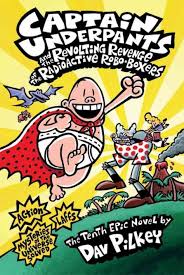
[READ: February 22, 2013] Captain Underpants and the Revolting Revenge of the Radioactive Robo-Boxers

Clark was pretty excited when this book came out.  He had just finished up book #7 or 8 when the book was published.  And so it didn’t take too long for him to get caught up with the series.  I was also pretty lucky to have just finished book nine so this “last” book (although not really) was very well timed.

When we left off in Book Nine, Tippy Tinkletrousers had inadvertently destroyed the earth and the giant zombie George and Harold were stomping through the town.  And, shockingly, they had just crushed Tippy in his robo-pants.   But as this book opens, Pilkey gives us the truth about zombies.  They are really slow.  So slow that Tippy was able to get out of the way of the giant foot (and do lots of other things) and put a giant ketchup packet under the foot so it got squished instead of him.

The rest of the book is simply chock full of time travel, overlapping people and all kinds of paradoxes.  I have to wonder if Clark got it, but he just read it again and he did seem to have decent understanding of what happened. (more…)

Read Full Post »

mister orangeSOUNDTRACK: MUSE-The 2nd Law (2012).

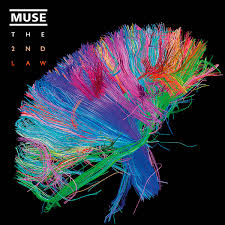
2ndlawMuse are over the top.  No question about it.  And that’s why I like them so much.

So when the new album opens with crunchy guitars that give way to keyboards that sounds not unlike a Bond movie, it’s not really surprising.  The first verse is fairly mellow, building until Matt Bellamy hits some crazy high notes and the heavy bass guitar kicks in.  But unlike some previous albums, this one is not all heavy heavy guitar rock.  There’s some electronic elements as well.  Especially on the single “Madness” (which was debated about on the alt rock station I listen to, wondering if it was too dance-oriented).  The song uses a dub format for repeating the Muhmuhmuhmuhmuh madness, but the verses are so catchy it’s hard to resist.  It also has a major Queen feel (a common complaint about them, although it’s not like Queen are still making music).  For Muse, this song is kind of understated until the big verse at the end when Bellamy can really soar.  “Panic Station  has a big thumping bass and drum along with some screams that sound out of an 80s metal band but there are horns that give it a dancey feel–always a contradictory outfit, Muse.

“Prelude” sounds indeed like a prelude to what proves to be “Survival” it is big and anthemic (as Muse tends to be).  It is uplifting and, as one may recall, it was the official song of the 2012 London Olympic Games (which is fitting it’s all about winning).

“Follow Me” slows things down a bit in the beginning, but it of course comes back with lots of bombast (this is Muse after all) but there’s also elements of electronica (is that  dubstep sound?) and backing vocals that remind me a lot of U2.  “Animals” has a kind of slinky bass line that wends its way through the song’s guitar solos.  By the end of the song it has grown much heavier with shouting crowds and a furious double bass drums.

“Explorers” is a ballad that grows and retracts.  “Big Freeze” has another big chorus. It’s followed by “Save Me,” a gentle ballad with harmonies.  Then “Liquid Freeze” picks up the pace a bit.  This is all leading to “The 2nd Law: Unsustainable” which is my favorite weirdo song in ages.  It is so crazy over the top and audacious that I love it.  It opens with crazy strings and a fast talking jittery computer voice.  And when she reaches the word “unsustainable,” the song goes absolutely bonkers, with crazy sound effects–I would assume most people hate this track, but I think it is very cool.  The final track “The 2nd Law: Isolated System” is a kind of denouement for the whole album–a piano ballad of 5 minutes that has a bit of a dance feel to it.

I can’t get over how much I enjoy this record.  It’s definitely not as heavy as past muse records, but it has some great experimentation and Bellamy absolutely knows a great melody.

[READ: March 8, 2013] Mister Orange

I was walking past the New shelves in the library and this book caught my eye (who says placement isn’t important?).  Something about the title and the cover design was really appealing.  I looked at the blurb–it’s about an American kid during WWII.  I wasn’t really sure I wanted to read that, but then there was a line about an artist and comic books.  I immediately thought about The Adventures of Kavalier and Clay which is also about comics in the 1940s (although this book is NOTHING like that one at all), and I decided to grab it.  Besides it was only 150 pages.

Well, I never would have guessed that the book is a historical fiction novel about Piet Mondrian, one of my favorite artists of all time.

So the story is about a boy, Linus, and his family living in New York City in 1943.  His oldest brother, Albie has volunteered for the war.  His mother is disappointed in him as she believes that all war is wrong and that nothing good every comes from war.  She is so disappointed, in fact, that she does not hang the blue star that all families with soldiers are given to hang in their windows.  Linus wonders if she is not proud of her son for fighting for what he believes in, but his mother says “Flags are for celebrating, and there is nothing to celebrate about war.”  She doesn’t even let him go to the parade for the departing soldiers.

When Albie leaves, the rest of the family is stuck waiting for word from him.  But life goes on at home and with Albie gone, that means that everyone moves up in responsibility (and shoes get handed down).  Simon (now the oldest at home and a sullen teenager) takes on Albie’s work at the newspaper, Linus picks up Simon’s grocery delivery route (their family owns a grocer’s shop) as well as Simon’s shoes, which are way too big, and Max takes over looking after the youngest children: Sis and Willy.  For the most part we follow Linus as he learns the new route and learns a bit more about the city. (more…)

Read Full Post »

SOUNDTRACK: SILVERSUN PICKUPS-Live at KEXP October 27, 2006 (2006).

I liked Silversun Pickups’ album Swoon quite a bit.  True, the singer sounds uncannily like Billy Corgan, but the shoegazer swirls of music were so sonically interesting that I couldn’t resist.

The lead singer/frontman is very funny and very engaging–he has great patter, and it’s clear that they all feel comfortable at KEXP (who were major promoters of the band).  This set comes from their first album, which I don’t know at all.  And I found it a little samey.

The production–washes and layers of music kind of flattened it out a bit.  It’s true that the melodies are good and his voice is compelling in the way that Billy Corgan’s is, but this set just never sticks with me.  I don’t know if that’s to do with the songs from the first album or if maybe live they’re not that interesting, but I didn’t love this set as much as I wanted to.

You can hear it here and a bunch more sets from them here.

[READ: October, 10, 2012] “Fire at the Ativan Factory”

Now that I’ve finished with Vonnegut for a while, I was planning on turning my attention to some new books, and then I stumbled upon this short story by Douglas Coupland–another author whose oeuvre I plan to read (I’ve actually read most of his books already, but they were over a decade ago so I’m going to go through them again).

Douglas Coupland is not one for short stories.  As far as I can tell this is one of the few stories he has published.  (this is going by Wikipedia, because his own homepage, which one would assume would celebrate all things Coupland, leaves out quite a lot of things).  This short story was published in a U.K. released fin de siècle  compilation called Disco 2000.  I’ve never heard of the collection.  And I certainly wasn’t going to hunt too hard to track it down, even if there are a bunch of interesting writers in it (end of the century malaise is so twelve years ago).  But fortunately and somewhat inexplicably to me, Barcelona Review has a full text copy (in English and Spanish(!)) on their site. (more…)

Read Full Post »

SOUNDTRACK: STEVE MARTIN & THE STEEP CANYON RANGERS-“Athiests Don’t Have No Songs” (2010).

We watched this Steve Martin performance on Austin City Limits last night.  Who knew that Steve Martin (yes, that Steve Martin) won a Grammy in the bluegrass category!  I’m not a huge fan of bluegrass–basically I like it enough for a few songs, but a half an hour is a bit much.

Nevertheless, Steve Martin is an amazing banjo player.  Anyone who has his comedy albums from the 70s knows that.  He used to play banjo between jokes (“Oh…death and grief and sorry and murder).  Now he tells jokes between banjo songs (the joke about the Grammy is very funny).

This song does not feature his amazing banjo playing but it is very funny indeed.

I just love the crazy notes that Martin hits near the end, which sounds so out of tune and yet fit very well together.

[READ: July 27, 2011] Five Dials 18b

The bulk of this short special issue is the five poems by Michael Robbins, a poet with whom I am unfamiliar.  The only other items included here are Craig Taylor’s Letter and Laurence Scott’s Currentish Events about Galliano and Gaddafi.  Since Five Dials issues are of varying sizes to begin with, it was unclear why this issue was a “b” and not the next issue, but Taylor sets us all straight.

CRAIG TAYLOR-A Letter from the Editor: On Spring and Robbins
They got into the publishing gig to be able to comment on things as they occur.  So this special issue is designed to usher in Spring and to introduce the world to the new poet whose title “Aliens v Predator” so impressed them that they asked him for five more. (more…)

Read Full Post »

pride-zombiesSOUNDTRACK: The Core: WVPH, 90.3 FM.

coreThe Core is also from Rutgers University.  How do they have two radio stations?  Interestingly, the station is shared with Piscataway High School.  For several hours a day Piscataway High School takes over the airwaves.  Although I admit that I have not listened to any of the PHS stuff because the first block is at 6 in the morning, and the other block is from 1- 3PM.

The college folks, however, play a pretty excellent selection of alternative music.  They’re not quite as indie and out there as WRSU, but they’re not commercial either.  To me, they’re more of the kind of college station I’m used to from my days as music director at the University of Scranton.

In the few days that I listened, I heard a lot of familiar alternative artists, with a nice focus on new bands.  What I especially liked about the station was that they didn’t play too much in the way of commercial alternative (your U2s and R.E.Ms who were once alternative but are now mainstream).  Rather, they played bands like Art Brut, The Decemberists, Portishead and Neutral Milk Hotel: bands that many people have at least heard of, but that you won’t find anywhere else on the dial.

This is the station that I would turn to most if my CD player busted permanently.

The only thing I didn’t like about it, but which also reminded me of my days as a DJ, was that college DJs tend to talk A LOT.  We all think that we are imparting precious wisdom to the masses.  And often, that is true.  Although in this one case, the DJ said that the name of the band was Art Brut Vs Satan, which is in fact just the album name.  (See, I’m still a pretentious music snob!).   However, when I’m having dinner and reading a book, I don’t need a seven minute update about that last concert that you went to.

[READ: May 19, 2009] Pride and Prejudice and Zombies

When I first heard about this book (as a punchline on Wait Wait…Don’t Tell Me at my brother-in-law Tim’s house), I couldn’t believe it was real.  I was so intrigued by the concept, and then so impressed by the reviews, that I couldn’t wait to read it.

And this book does not disappoint.

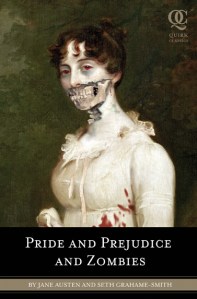
For those out of the loop: Pride and Prejudice and Zombies is, as the title suggests, Jane Austen’s Pride and Prejudice with good old zombie action thrown in.  Elizabeth and Darcy… What?

Yes.  Zombies.

Seth Grahame-Smith has taken Pride and Prejudice, changed a few details and then added an entire…well, subplot is not right…more like an underlying condition to the story.  It turns it from a story of love and marriage into a story of love and marriage amidst zombie brain-lust. (more…)

Read Full Post »

mothernightSOUNDTRACK: COLDPLAY-Viva la Vida(2008).
viva-la-vidaI have a very vivid memory of listening to Coldplay for the first time.  I was driving a very annoying person to her revolting house in upstate New York.  I was delighted to be getting her out of my life, and I was listening to Coldplay’s first album, Parachutes.  I knew “Yellow” from either the radio or from some Britpop fascination of mine.  AT the time, Coldplay were considered the next Travis, whose “Why Does It Always Rain on Me” had just soared up the charts. “Yellow” was described as Travis-like and something of a rip-off (a claim thrown at Coldplay to this day).

As an indie guy, Coldplay should be anathema to me. And yet since “Yellow” I’ve always liked them, despite their ridiculous name.  And I’ve always thought of them as a sort of underdog (that whole Travis thing), even though all the entertainment magazines say they are the biggest band in the world (even bigger than U2!)

And so, here is their latest disc.  Amusingly, we had played it in the house and then suddenly the disc was gone.  Couldn’t find it for a month.  (It eventually turned up in the REM Accelerate case (those cardboard sleeves with two openings tend to hide discs).

And now I’ve given it a listen, and man is it good.  Yes, I know, they’re huge stadium anthem rock, but even though I like lo-fi indie, I also like stadium rock when it’s done right.  It’s also funny about their backlash because they haven’t really changed their style over the course of their career.  It’s not like they’ve suddenly become commercial.  They’ve just been commercial-in-waiting.  And frankly, I’d rather them be on the radio than some other Top 40 bands.

So Viva la Vida is chock full of hits, and chock full of great songs. It opens with a short instrumental “Life in Technicolor,” a string-filled 2 minute intro that sets the tone quite well.  And each of the following 3 minute pop songs are great: swells of orchestra, great punchy choruses and then…done; leaving you wanting more to sing along to.

The amount of strings on this record is really notable.  And surely the breakout single “Viva La Vida” is the most string-heavy rock single since The Verve’s “Bittersweet Symphony.”

The only compliant I have about the record is the three songs that last over 6 minutes.  Despite the bombast of their songs, most of Coldplay’s work fits comfortably under 4 minutes.  These three 6 minute songs are really 3 minute songs with a 3 minute coda tacked on at the end.  And, the problem is that those codas are usually just repeated instrumental moments that slow down the proceedings.  (And since I dig bands like Mogwai who make fantastic instrumental music, I know from instrumentals).  This doesn’t ruin the disc by any means, although it does tend to wreck the flow a little.  Nevertheless, the next song kicks in and you’re back to singing along.

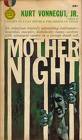
[READ: March 19, 2009]: Mother Night

It was with some trepidation that I started this Vonnegut novel. The reasons being A) I had never even heard of this title. B) Cat’s Cradle, regarded as one of his masterpieces comes next in order, and C) it’s about Nazis…how much fun could that be?

Well, as it turns out, my fears were unfounded.

Mother Night has a few layers to it. So we’ll start with the basics. The book is written by Howard W. Campbell. The book has been edited by Kurt Vonnegut, and Vonnegut’s introduction makes clear that he tried to follow Campbell’s wishes as best he could. (All of this, of course, is pure fiction, but it’s a good one). (more…)

Read Full Post »

« Newer Posts - Older Posts »