 SOUNDTRACK: THE FLAMING LIPS-Zaireeka (1997).
 Okay, get ready. Zaireeka comes as a 4 CD set. With a twist. Each CD is meant to be played simultaneously. So, you get yourself 4 boomboxes hit play at the same time and enjoy!
Each CD has some aspects of each song. So, on one disc you may get some vocals, maybe another has some guitars and sound effects. It all varies per disc. In fact, on one disc, track 6 is given a warning, perhaps my favorite warning ever on a CD: “This recording also contains frequencies not normally heard on commercial recordings and on rare occasion has caused the listener to become disoriented.”
And if you do a search for Zaireeka you will read the gamut of opinions about the disc and its ridiculousness or its social coolness. So I won’t go into that. I will say that one fine day many years ago I tried the experiment. I got 4 radios and synched up all the songs and it worked and it was a lot of fun. I also listened to the set in many different ways: Discs 1-4 individually. Discs 1& 2, discs 1&3, discs 1& 4, discs 2& 3, discs 2&4, discs 3&4 and then discs 1,2 & 3, discs 1, 2 & 4, discs 1, 3 & 4, and discs 2, 3 & 4. Phew. (I had a lot more free time on my hands back then). And since then, I haven’t really listened to the discs at all. Because, well, how often do you get a chance to listen to 4 discs at once?
So, online I found a stereo mixdown version of the disc. I know purists argue that that is simply not the way to listen to the disc, and they have a point…. Many of the effects are certainly lost, and since part of the point of the experiment is that the tracks are going to wobble and go out of synch, the mixdown does ruin the effect. However, if you actually want to hear the songs as songs, not as experiments, the stereo mixdown mix is the way to go (at least until they release the disc in a 5.0 DVD version (which evidently they might…maybe? in 2000, or maybe 2007, or who knows.))
But what about the songs? It’s hard to say that the songs are typical Flaming Lips songs, because that’s not really very meaningful. (Lips songs being off the wall at the best of times). However, the songs are designed to allow the different discs to go out of synch somewhat, creating echoes or even stranger sounds. As such, they are rather meandering pieces, somewhat lengthy, without a lot of heavy beats (that said, there are sections with very loud chaotic drums, they just don’t have other parts to synch up to). But this experiment allows the songwriting to shine through in th emost minute details. And it pays off on their next album in big time.
A track by track rundown goes:
“Okay I’ll Admit That I Really Don’t Understand” opens with a big drum splash and a fantastic bassline. Intermittent piano chords let you know that this song isn’t going to be typical. Fun effects and a swelling chorus add to the ambience. It’s a short song, but it sets the tone for the rest of the disc.
“Riding to Work in the Year 2025 (Your Invisible Now)” starts off in a chaotic jumble, but once it settles down it has yet has another fantastic bassline to start. The middle choral part is really beautiful, although that scream section is pretty jarring/creepy.
As the title, “Thirty-Five Thousand Feet of Despair” suggests, it’s a sad song about a depressed pilot. The effects include a plane taking off. The song is propelled by a heartbeat-like drum, and the echoing voices suit the experiment very well. There’s a “sane” vocal track and an “insane” vocal track.
“A Machine in India” is 10 minutes long. It’s got a long meandering middle section, but the slow keyboard melody remains constant. It’s also the first real occurrence of Wayne’s apparent obsession with vaginas (see Christmas on Mars). It begins sweetly as a nice acoustic song but it explores many sonic areas (according to theliner notes, Wayne and his wife were discussing her menstrual cycle, and that was the jumping off point of this song).
“The Train Runs over the Camel but Is Derailed by the Gnat” begins with a fascinating cacophony of drums and ends in a very sweet “na na na” chorus. In between you get yet another splendid trippy pop song.
“How Will We Know? (Futuristic Crashendos)” contains a shockingly high pitched sound (as warned) and yet the main body of the song is another of Wayne’s folky and very catchy melodies.
“March of the Rotten Vegetables” is probably my favorite track on the disc, despite the fact that it’s an instrumental. It starts with some really interesting squeaky sounds and a cool guitar riff. It morphs into yet another bombastic drum “solo” over a nice piano melody. The liner notes indicates there are bats involved, but I’m not quite sure I hear it.
“The Big Ol’ Bug Is the New Baby Now” is a spoken word piece in which Wayne relates a story about how his dogs treat a stuffed toy like a baby, until they get a “Big Ol’ Bug” which becomes, as you may guess, the new baby. Each disc has different ambient effects. As the song ends, a swelling chorus sings the title until the loudly barking dogs bring an end to the song and the experiment as a whole.
As I mentioned, the stereo mixdown version is one way to enjoy the music. But I must say that even listening one disc at at time can be fun (although really, that comes down to much more of an experimental music experience than anything else). The social aspect of the performance certainly appeals, but I’m pretty antisocial and can’t imagine that I’d ever do it.
If you like the Lips at all but have been afraid of this CD because of how ridiculous it is, it’s probably worth the outlay of funds to buy the set or download a track or two. It’s a fun disc that rewards patience, and, really, the songs are all very good. You could also look for the stereo mixdown, but really, you’d only be getting half the story.
[READ: February 3, 3009] Drawers & Booths
Full disclosure: Ara 13 asked if I’d like to read his book and write about it. I looked up the book on Amazon, and it sounded cool, so I agreed.
Drawers & Booths is a work of metafiction. A simple definition of metafiction, in case you don’t know, is: “a type of fiction that self-consciously addresses the devices of fiction; metafiction does not let the reader forget that he or she is reading a fictional work” (for the full Wikipedia explanation click here.)
SPOILER ALERT: Generally I try not to give anything away when I review a book. Some things are unavoidable of course, but any major plot twists or surprises I try to leave for the reader to discover by him or herself. However, because this book is metafictional, and there are twists, surprises, and massive plot alterations throughout the book, the only way I can review it at all is to give some of these things away. I don’t think I ruin anything for anyone, but tread lightly if you want nothing revealed. (more…)

 SOUNDTRACK: THE FLAMING LIPS-Clouds Taste Metallic (1995).
 Clouds Taste Metallic is a clear precursor to later Lips albums. The opener “The Abandoned Hospital Ship” even sounds like it could come from Soft Bulletin (in fact it sounds more than a bit like “The Sparks That Bled”). Wayne’s high voice is finally finding its range nicely. The chord progression is also great. The only thing that makes it sounding off the wall is the fuzzed out guitar solo (and the tubular bells, of course). “Psychiatric Explorations of the Fetus with Needles” returns to the fuzzy rock of old. On “Placebo Headwound” the acoustic guitar is back but it is buttressed by the wonderfully full bass sound that the Lips have started using (and will continue to use on the next few discs). “This Here Giraffe” is one of my favorite early songs: a loping bassline over a cute and catchy chorus (“This here giraffe…laughs”).
 SOUNDTRACK: THE FLAMING LIPS-Transmissions from the Satellite Heart (1993).
 It’s easy to see how people could cry about the Lips moving to a major label. I mean, comparing this to Hear It Is, they’re like different bands. Except that they’re not. They’re still the same band, they’re just better, more refined, more mature (maybe) and they know how to use their previous experiments in a way that assists and strengthens the music.
 SOUNDTRACK: THE FLAMING LIPS-Hit to Death in the Future Head (1992).
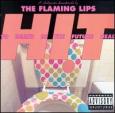 After a few years on an indie label, The Flaming Lips moved to the majors with this disc. The experimentation is downplayed somewhat although that’s not to say there’s none. One could see that some die hard fans would be disappointed in the move as the Lips limit the acid somewhat, but just judging by the cover (polka dotted toilet seat) and the title (what on earth does that mean?) it’s clear they haven’t sold out.
 SOUNDTRACK: THE FLAMING LIPS-In aPriest Driven Ambulance (1990).
 This is where the Lips really hit their stride. While they are still experimenting with sonic noises, the dedication to songcraft takes precedence. It’s as if they wrote cool songs first and then fiddled with them, rather than using the fiddling as the main focus. The album is divided into two sides: Smile Side and Brain Side. Amusingly all songs are listed as being 3:26 long, and yet none of them actually are.
 SOUNDTRACK: THE FLAMING LIPS-Telepathic Surgery (1989).
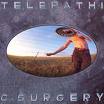 Although the overall sound of the Lips on this disc isn’t that much different, the band sounds more accomplished. Rather than just banging out songs in a garage, this one sounds like a bunch of guys banging out songs in a studio and then experimenting the hell out of them. In fact, the experimentation often takes over the quality of the song itself. Wikipedia states that this album was originally going to be released as a thirty minute sound collage, although that was modified to what we now have, and that makes some sense. This experimentation will certainly pay off in later years as the Lips hone their studio skills.
 SOUNDTRACK: THE FLAMING LIPS-Oh My Gawd!!!..The Flaming Lips (1987).
 The cover of this disc makes a statement. And it should tell you everything you need to know about the music inside. It’s got skulls and psychedelic colors and Oh My Gawd!!! And yet, it doesn’t, exactly. It’s not quite as out there as the cover might make you think.

 I’ve claimed that I love the Lips, but then I was very harsh about their cover of “White Christmas,” and I noted that I wouldn’t listen to the soundtrack of Christmas on Mars very much. So, I felt I owed them some love. But my recollection of their early stuff was that it was pretty weird and hard to listen to.
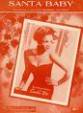 Boy I can’t stand this song. I know it’s supposed to be cute and racy and risque or whatever, but I simply can’t stand how crassly materialistic it is. And I’m not one who thinks Christmas is all about, like, Jesus’ birth or being good or anything. I know it’s all about the presents; however, this song is just….so…wrong. And if the Eartha Kitt version (the one you hear most of the time)
  weren’t bad enough, the Madonna version (on A Very Special Christmas) is just abysmal. She sounds like a sexually deranged Betty Boop (which I suppose is not unusual for her circa this release, but still). Stop trying to seduce Santa! Make it go away!
 SOUNDTRACK—FLAMING LIPS-Christmas on Mars (film & soundtrack) (2008).
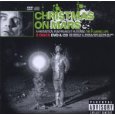 I’ve been a fan of the Flaming Lips for a pretty long time. I first heard them with “She Don’t Use Jelly” (a novelty hit from 1993…who would have thought they’d have become so amazing) but I really got into them from the time of The Soft Bulletin (and Zaireeka). Since around this time, Wayne Coyne and the Lips have been working on Christmas on Mars. It is a “home movie” of sorts that the Lips and some special friends made in their home town (and their backyard). They recently released the film on CD/DVD.
 Christmas on Mars sounds like a cheesy/funny movie about, well, what Martians do for Christmas. And seeing Wayne as a Martian seemed to confirm my suspicion. But rather, what you get is a much less joyful celebration.
 I Just Read About That...