Feeds:
Posts
Comments

Archive for the ‘Pink Floyd’ Category

nov3SOUNDTRACK: COLONEL LES CLAYPOOL’S FEARLESS FLYING FROG BRIGADE-Live Frogs Set 2 (2001).

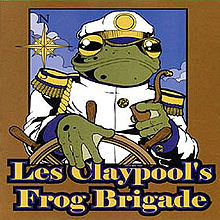
220px-Live_Frogs_Set_2After few months after releasing Set 1, Claypool released Set 2.  At the end of Set 1, he concluded by saying that the next set would feature: “more Pink Floyd than any human being should ever withstand.”

And indeed, Set 2 is the entire Pink Floyd Animals album.

Do the Flying Frog Brigade still includes former Primus guys Todd Huth (guitar) and Jay Lane (drums) in addition to guitarist Eenor, Jeff Chimenti on keyboards and Skerik on saxophone.  And of course, Les on bass and vocals.

Les says he always wanted to get a band together that could do justice t o Pink Floyd and he certainly found one.  The album sounds great here.  All five songs sound spot on.  I believe someone other than Les sings lead on “Sheep,” but I see no evidence of that.

There are some lengthy jams, and of course, sax where there isn’t any, but this isn’t meant to be a note for note recreation.  Rather it a respectful rendition with some excellent musicians who are willing to have a little fun with the songs too.  It’s a great release.

[READ: January 20, 2014] “Lamb Stew”

This week’s issue of the New Yorker was its semi-annual food issue.  As such there were four food-related essays by writers who I’ve written about before.  The section was called “Rations.”

The second was by Will Mackin.

Mackin was a soldier north of Basra.  And he talks about ow the desert cooked everything.  Iraqis call it “the date cooker,” the British soldiers call it “the face cooker,” but in his experience it cooked everything. (more…)

Read Full Post »

nov3SOUNDTRACK: COLONEL LES CLAYPOOL’S FEARLESS FLYING FROG BRIGADE-Live Frogs Set 1 (2001).

220px-Live_Frogs_Set_1With Primus on hiatus, Les Claypool set out to do some solo work with a band that was quite different from Primus’ three man set up.  But staying ever true to his roots, he included former Primus guys Todd Huth (guitar) and Jay Lane (drums) in addition to guitarist Eenor, Jeff Chimenti on keyboards and Skerik on saxophone.

The band in this incarnation released two live albums that were recorded in 2000.

This first one is the first set which is a couple of covers and some Les solo work all extended into lengthy jams.

The opening track is a cover of King Crimson’s-“Thela Hin Ginjeet.”  Musically they are great–the get all the complicated sounds perfectly.  Les can’t quite hit all the vocal notes that Belew does, but that’s okay.  There are a few lengthy jamming solos, which are quite different from the original.

Next comes the Sausage song “Riddles Are Abound Tonight.”  It’s the shortest song on the disc even with the sax solo.  Then come’s Les’ solo song “Hendershot.”  I like the album version better because of the dynamic way it is sung, but it’s cool live too.  “Shattering Song” has more energy live than on record.  I enjoyed the segue into “Riders on the Storm.”

“Running the Gauntlet” has a weird opening with that crazy watery bass and a song about a chicken laying a hard-boiled egg.  Then it gets into the song proper. After each section, a musician gets to take a solo.  Skerit goes over his allotted time  and Les gives him a hard time about it.  “Girls for Single Men” sounds much more sinister here and Les sings it very quickly–it’s a weird version.

The set ends with a really good version of “Shine on You Crazy Diamond.”  They really nail the music of it and Les sings it quite well, too.  This is a really solid collection of songs, especially if you like prog rock.

[READ: January 20, 2014] “Medical Meals”

This week’s issue of the New Yorker was its semi-annual food issue.  As such there were four food-related essays by writers who I’ve written about before.  The section was called “Rations.”

The first was by Rivka Galchen.  I’ve enjoyed Galchen’s writing quite a bit in the past.  And while I may have known she was a nurse, I never thought about her going to residency school or anything like that.

So this essay is about the kinds of crappy food that medical school students would eat during their rotations.  This is of course kind of funny to think that they are eating badly while they are supposedly taking care of other people.  It seemed especially obnoxious that they were eating this badly while working at a bariatric surgery center. (more…)

Read Full Post »

824SOUNDTRACK: PRIMUS-Miscellaneous Debris (1992).

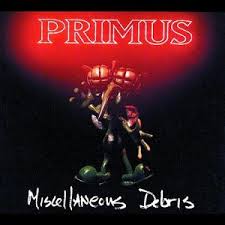
debrsiAfter the success of Sailing the Seas of Cheese, Primus created this five song EP of covers.  Les had just gotten a new Carl Thompson “rainbow bass” and he used the EP as a way to try it out.

This EP is, interestingly, their most listener friendly release thus far.  In part because they are playing more conventional songs (even if in an unconventional way).  Although they are not the most obvious covers:

Peter Gabriel-“Intruder.”  This is an earlier Peter Gabriel song (when he was still kind of weird).  The Primus version is suitably spooky and weird, but it is a great version.  It sounds a lot like the original, which is creepier than you might expect from Gabriel–but he was a weirdo before he became an adult contempo sweetheart.

XTC-“Making Plans for Nigel”  One of XTC’s more popular songs, this version is faster than the original, but right on and quite fun.

The Residents-“Sinister Exaggerator”  The Residents are quite weird (and may be the one band that is closest in spirit to Primus). This version is indeed pretty close to the original (although you can hear the lyrics better on the original!).

The Meters-“Tippi Toes”  The Meters area n old school funk band.  This is a song with no lyrics.  The Primus version sounds more full than the original (which incorporates Tiptoe Thru the Tulips”)  but it is quite faithful otherwise.

Pink Floyd-“Have a Cigar”  This is clearly the most popular original on the disc.  But Primus do a great job with it (Les is under the impression that Roger Waters didn’t like their version–but what do you expect?). They have a lot of fun with this song–keeping it close to the original (except for Ler’s guitar, mostly) and the twisted lyrics that say “who the hell’s this guy they call Bob Cock?”

So while this is a great introduction to Primus, it is not entirely representative of their sound. And yet, it sort of is as well.  Hence the title.

[READ: January 6, 2015] “One Saturday Morning”

Tessa Hadley continues to impress me with her beautiful stories in which really nothing happens.  It opens with a girl practicing her piano and ends with her and her brother looking at a bug.  And in between something almost happens, but not quite.

Set in the 1960s, Carrie is a ten-year old girl practicing her piano.  Her brother is outside playing cricket and her parents are out shopping for their party that evening.  Carrie hates practicing the piano–the music just doesn’t speak o her.  She also fears that her piano tutor is mad at her because of a childish letter she wrote and may have left at her tutor’s house.

While she is thinking about this, the doorbell rings.  She doesn’t recognize the man right away but she quickly realizes that it his her parents’ old friend Dom.  Dom is a big man, somewhat intimidating but affable. Carrie is intimidated by him though, especially since her parents aren’t around.  He hasn’t been around since he moved a way a few years ago.  But he says he is in town and wanted to visit friends.  She assures him that her parents will be home shortly and invites him in.  But rather than entertain him, she runs upstairs to hide. (more…)

Read Full Post »

greatestSOUNDTRACK: PINK FLOYD-“The Hard Way” and “Wine Glasses” (1974).

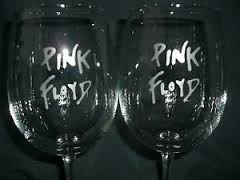
glassThis book informed me about these two unreleased Pink Floyd songs (there’s a Wikipedia site that lists some fifty more !).  While the were unreleased in 1974 (from the abandoned Household Objects album), they were eventually released in 2011 on expanded versions of albums.

“The Hard Way” features some “percussion” that sounds like someone taking steps.  There’s a bass riff which I gather is from rubber bands (but very well tuned).  There’s clocks ticking and chiming and tape being unspooled.  It’s a neat idea and while it is absurd to think you could make a whole album with this kind of stuff (in 1974), it’s a surprisingly good sounding track.

“Wine Glasses” was apparently made with wine glasses.  It is all of 2 minutes long.  It was designed to be a full song but was eventually used in the introduction to “Shine on You Crazy Diamond.”  I never really considered that there were wine glasses making the sounds (and clearly there are synths added on top), but yeah, so that ‘s kinda neat.

[READ: November 25, 2014] The Greatest Albums You’ll Never Hear

I found this book at work and knew I had to read it.  I was actually surprised at how long it took me to read (there’s a lot of entries).

The title and subtitle pretty much say everything you need to know about this book (and if you need to read it or not).  This book collects a series of writers who give a brief history of some of the more famous (and some not so famous) albums that were never released.  It explains (as best they can) why the albums weren’t released and even gives a percentage chance of likelihood of the album ever seeing the light of day (interestingly, most seem to be a 3/10–they may have been able to use a 5 point scale).

I knew some of the records they talked about (The Beach Boys’ Smile, Neil Young’s Chrome Dreams), but was ignorant of quite a lot of them. And while big fans of the artists may know all of the details about their favorite lost album already (these are sketches, not exhaustive research), there will certainly be some new information.  For instance, I’m a huge Pink Floyd fan but had no idea about the two shelved works mentioned here.

I liked the way the book was done chronologically and grouped by decade.  It was also interesting to see how the “reasons” for the non-release morphed over the decades from “the record label didn’t like it” to “it was leaked online.”

The one major gripe I have with the book is that it is chock full of “imagined” album covers.  This in itself is okay, but it is not made explicitly clear that they are all imagined (credits are given at the bottom of each image, but it took me a few entries to realize these were just people’s ideas of what the covers could look like).  And most of them are gawdawful.  Just really lame and dull (as if they had 20 minutes to come up with an idea).  They mar an otherwise cool collection,especially since some of the unreleased records actually do have proposed covers (even if they were never released).  I see that there is in fact a paragraph about the covers in the front pages of the book, but it is almost hidden away.

In addition to the albums I’ve listed below, I learned some fascinating things.  That Bruce Springsteen has hundreds of songs that he wrote but never released for various reasons.  That Pink Floyd did try to make an album out of household objects (with no instruments).  That the Sex Pistols’ Never Mind the Bollocks was almost simultaneously released illicitly as Spunk.  And that Danger Mouse’s The Grey Album was recently remastered.

The end of the book includes two small sections: other favorites that were never released.  Not sure why they earned only a small column instead of a full entry, but that’s okay.  The second was albums that we eventually did see, like My Bloody Valentine’s MBV and Guns N’ Roses’ Chinese Democracy.

So if you ever wondered what happened to that long lost album, this may be the book for you.

A sampling of the unreleased records include:

  • The Beach Boys-Smile
  • Buffalo Springfield-Stampede
  • The Kinks-Four Respected Gentlemen
  • The Beatles-Get Back
  • Jeff Beck-The Motown Album
  • Jimi Hendrix-Black Gold
  • The Who-Lifehouse
  • Wicked Lester
  • Rolling Stones-American Tour ’72
  • CSN&Y-Human Highway
  • Pink Floyd-Household Objects (1974), Spare Brick 1982
  • Dusty Springfield-Longing
  • David Bowie-The Gouster (1975), Toy (2001)
  • Sex Pistols-Spunk
  • Neil Young -Homegrown (1975), Chrome Dreams (1976)
  • Frank Zappa-Läther
  • Beastie Boys-Country Mike’s Greatest Hits
  • Weezer-Songs from the Black Hole
  • Jeff Buckley-My Sweeetheart the Drunk
  • Van Halen-IV
  • Foo Fighters-The Million Dollar Demos
  • Green Day-Cigarettes and Valentines (the author doesn’t believe it was actually stolen)
  • Tapeworm (Trent Reznor and Maynard James Keenan among others)
  • Deftones-Eros
  • U2-Songs of Ascent
  • Beck-The Song Reader


Read Full Post »

krausSOUNDTRACK: THE FLAMING LIPS-The Terror (2013).
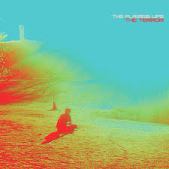
terror After the distortion heavy and heaviness of At War with the Mystics and Embryonic (to say nothing of their other experimental releases), I wasn’t sure what to expect from an album called The Terror.  Yet with a title like that the album is far more invested in psychological terror than in pummeling you with scary noises and music.  The album is more unsettling and spooky with existential dread.

Wayne Coyne has always been a pretty optimistic guy–weird, sure, dealing with feelings of dread, sure, but never so dark and insular.  But I learned that before recording this album and most likely as an impetus to record it,  Coyne separated from his partner of 25 years, Michelle, and Lips multi-instrumentalist Steven Drozd temporarily relapsed into addiction.

In an interview, Drozd says the album is like a crisis of life confidence.  He also says that the uniformity in sonic style was intentional: “Instead of writing songs and then figuring out sounds, we’d write the other way around: create sounds then make songs out of those sounds.”

So the vocals are quite low in the mix, and there is not a lot of “music” in the album.  Rather there are layers of sounds–swishing synths, spiraling noises, percussion effects that seems to almost cover up the vocals, giving it a very claustrophobic effect.  “Look… The Sun Rising” opens the disc.  It is primarily percussion with some noisy sounds and really sharp piercing guitars (that play noisy counterpoint to the soothing chorus of Oh Oh Ohs).  And yet after all of that noise and chaos, the very lovely “Be Free, A Way” surfaces as a quiet introspective song.  There are gentle keyboard notes (not unlike on Yoshimi) that propel this song along.  “Try to Explain” is a pretty song with some unusual sound effects swirling around it (The Lips can’t so straight up pretty, right?).  And yet lyrically, this song, along with the rest, is very dark indeed.

“You Lust” is a 13 minute (!) invocation about various forms of lust.  It opens with the couplet: “You’ve got a lot of nerve/A lot of nerve to fuck with me.”  The middle of the song is a kind of Pink Floydian keyboard workout.  It’s a  lengthy jam that’s kind of samey, but I’ll bet if you can really sit (with headphones) and close your eyes and focus it’s pretty intense.  After about ten minutes of that repetitive claustrophobia, some lightening occurs with sprinkled keyboard notes.

“The Terror” is primarily in Coyne’s falsetto, and it seems gentle until the mechanized noises come bursting forth.  “You Are Alone” is the shortest thing here, under 4 minutes of squeaking noises.  And again, a lovely melody despite the title.  I feel like this song summarizes the album pretty well.  In it, Coyne sings “I’m not alone” while a deeper voice replies, “you are alone.”  Whose voice will ultimately win?

  “Butterfly, How Long It Takes to Die” returns to that abrasive guitar of the earlier tracks, but the main body of this 7 minute song is just bass, keening keyboards and Coyne’s whispered voice.  There’s a recurring synth line that is magical and/or creepy depending on your frame of mind.  It, along with many of the other songs, have a kind of coda that links the songs.  This one is mostly just choral voices, but it twists the ends of the songs in a different direction. “Turning Violent” is a quiet track, in which Coyne sounds nearly defeated until the second half of the song grows louder and more animated with layers of vocals.  The disc ends with “Always There…In Our Hearts” which seems to offer some hope…maybe.  There’s signs of uplift in the melody, and when the drums kick in at the end, it seems to propel the song into a more intense frame of mind.

And lyrically, despite all of the darkness that is always there in our hearts, there is a light peeking out: “always therein our hearts a joy of life that overwhelms.”

Although most reviewers find this album unremittingly bleak, I find the music to be beautiful in an aching sort of way–a beautiful way to deal with pain (better than getting the same tattoo as Miley Cyrus, anyway).

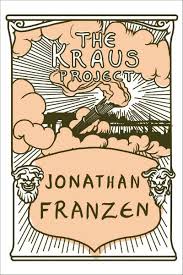
[READ: October 31, 2014] The Kraus Project

The title page of this book read: The Kraus Project: Essays by Karl Kraus translated and annotated by Jonathan Franzen with assistance and additional notes from Paul Reitter and Daniel Kehlmann.

So just what is this thing anyhow?  Well Karl Kraus was a German writer (1874-1936) whose main contributions to letters were some essays and a newsletter Die Fackel (The Torch).  The authors compare the newspaper (favorably) to a blog (while also complaining about what blogs have done to letters).  He started Die Fackel in 1899 and he continued to direct, publish, and write it until his death.  He used the paper to launch attacks on hypocrisy, psychoanalysis, corruption of the Habsburg empire, nationalism of the pan-German movement, laissez-faire economic policies, and numerous other subjects.  For the first ten or so years, Kraus was the editor, accepting contributions from around the German speaking word.  But in 1911, he became the sole contributor to the newsletter.

He also wrote many essays (he did not care much for fiction), including the two main ones that compression this book: “Heine and the Consequences” (1910) and “Nestroy and Posterity” (1912).  The book also includes two follow up essays: “Afterword to Heine and the Consequences” and “Between Two Strains of Life: Final Word to Heine and the Consequences” (1917) and a poem: “Let No One Ask…” (1934).

The essays themselves are quite brief.  Despite the first coming in at 135 pages, note that the left pages are all in German (so reduce 135 by half), nearly all of the English pages are filled with footnotes (reduce by half again) and some of the footnotes run for several pages.  So the essay could be said to be about 25-30 pages.

The same is true for all of the pages in the book.  The left sides are in German (except the footnotes) and most pages are split in half because of the footnotes.  Which means that Franzen and friends write far more than Kraus did.  Ultimately, this book is actually three things: It is a collection of Kraus’ essays with Franzen’s fine translation; it is an explication of Kraus’ attitude and about life in Germany during Kraus’ life and finally it is an insight into Franzen as a young man living in Germany and why Kraus was so appealing to him.

The first part: Kraus’ essays. (more…)

Read Full Post »

39unstopSOUNDTRACK: SLOAN-“Get Out” (2014).

Sloan_CommonwealthSloan has a new album coming out next week.  It is currently streaming on Picthfork.  The album is like a small version of the Kiss solo albums (except that there is only one album) or like Pink Floyd’s Ummagumma (because it’s a double album and one side is kinda crazy). Each member of the band has written the songs for a side.  The imagery for the disc is a deck of playing card, and each member gets a suit:  Diamond (Jay Ferguson); Heart (Chris Murphy);  Shamrock (Patrick Pentland); Spade (Andrew Scott).  Even though I am a big fan of Sloan, I have honestly never been able to tell their vocalists apart. True, they do sound distinctive, but I can’t keep them straight at all.  So this album should help with that (and maybe see if there is one composer I like better–I don’t think so).

I chose this song primarily because it seemed to tie in well with this book and also because it a rocking song that last for less than 2 minutes.

The guitar comes rocking right at the start.  The verses are short and the bridge , a simple “Get out, you can get out” propels the song along nicely.  There’s a loud squalling guitar solos.  And a cool chorus with backing vocals.  And after two verses, two bridges and two choruses, the song ends.  A great soundtrack for an escape.

I’m looking forward to the release (although I won’t be getting the deluxe edition, sorry guys).

[READ: September 4, 2014] Flashpoint

In all of my time reading the 39 Clues, this is the first time I actually caught up to the series–I read this book almost in the week that it came out.  So if I was actually playing online with the clues, I may have been able to win whatever it is the online competition is.  Actually it’s quite rare that I read anything soon after it has come out, so that was fun in itself as well.

Okay, so this series has concluded with major 39 dude Gordon Korman taking over the reins.  And that made me happy, because he knows that the family working as a team is what is so important to the series.  And he got them working together again–even if it was because Amy was days away from death by the side effects of the serum.

As the story starts out (yes, I am still bitter about what happened at the end of Book Three–and I must report that that was not redeemed in any way, so yes, I am mad at the series for the senselessness of what happened to a favorite character of mine), Dan is being held prisoner by Galt Pierce.  (I love how nutty the Patriotist party is portrayed, and how easily susceptible people are to the platitudes Rutherford Pierce offers).  He and his sister Cara are trying to extract information from Dan.  Dan is given a truth serum and reveals some information, but then he takes a sleeping potion to knock himself out.

When he awakens, Galt threatens him, but Cara tells Galt to back off.  And then, unless Dan is mistaken, and he may be, she seems to help him escape from the plane that they are currently waiting in.  At the same time, Jonah Wizard’s plane is nearby (through some clever tracking by Pony), and they are able to rescue Dan.  Then they are off to Phenom Penh to find the final ingredient–the venom form a Tonle Sap snake.  Which means a trip through the amazingness that is Angkor Wat (more…)

Read Full Post »

breakSOUNDTRACK: ISRAEL NASH-“Rain Plans” (2014).

rainI heard this song on a download of 10 Songs NPR Can’t Stop Playing.  The opening chords sounded so Neil Young and Crazy Horse that I was immediately hooked.  Then when Nash starts singing, it sounded even more like a kind of CSN&Y pastiche.  After the first verse, the powerful descending chords are a great introduction to the falsettoed chorus.  (No idea what he’s saying).

Nash is lumped in with the alternative country field, but I don’t hear any of that on this song.  It comes across as pure classic (maybe folk) rock.  The solo which starts at around 2:45 has elements of Pink Floyd in it.  It is a brief introduction to the much lengthier solo that takes the song out.  But what I especially like about it is that the in between section doesn’t have more vocals, just a bunch of whoo hoos before the bombastic solo (the backing music is bombastic as well) just keeps going.

It’s not a pretentious showing off solo, it’s just a lengthy jam that keeps jamming.  Until around six minutes when the band starts rocking faster and the solo grows more intense (the song is 7:19).

I’m really interested in what the rest of this album sounds like.

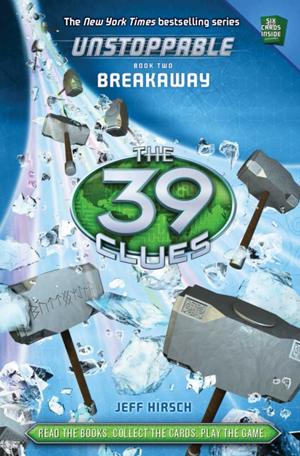
[READ: July 27, 2014] Breakaway

I was so hooked on Book One that I had to jump right into book two (which is considerably shorter than book one).

This book was a little frustrating (intentionally so I believe) because Amy is trying her best to distance herself from her family and friends.  She is so afraid of anyone else getting hurt (and anxious because Dan wants to leave the family) that she keeps trying to send them away, believing that they will be safer away from her.   And yet, as they have learned in each and every mission–they work best as a team.  So while Amy starts pushing the others away they not only get more frustrated, they keep making mistakes.  And by the end, Amy’s solitude nearly gets her killed and has her alienated from her closest ally, Dan.

Of course she is under a lot of pressure, especially since the media scrutiny of them has gotten so much more intense–Pierce has amped up his attacks against Amy and Dan and has brought her family members into the spotlight (basically saying they are all her thugs).  The Pierce foundation has even gotten to Evan’s family and Evan’s parents publicly denounce their dead son’s former girlfriend as a snake, someone who draws people in and doesn’t care what happens to them.  Basically, everyone hates the Cahills.

Including Jake and Atticus’ father.  For when they call on him for a favor, he is furious that his sons are still hanging around with the Cahills.  Until he sees that the book they are carrying has information about something near and dear to their father’s heart: the lost city of Atlantis. (more…)

Read Full Post »

[ATTENDED, July 30, 2014] Rodrigo y Gabriela

rodygabI first saw Rodrigo y Gabriela on a Tiny Desk Concert and I was blown away.  I knew I had to see these two live.  Rodrigo has a heavy metal background (I didn’t realize that Gabriela was in the heavy metal band Tierra Acida with him).  But even with that background, who knew that two people with acoustic guitars could be so loud!  And our seats were terrific, row S, dead center. Very nice indeed.

Holy smokes, the two of them came out and just blew us away.  They opened with “The Soundmaker” (and really that’s about all I can do in terms of order of songs).  And it sounded louder and more amazing than it does on record.  Although, minor gripe, Gabriela’s guitar has a microphone in it and the bass (which I gather she made by banging on the body of the guitar) was mixed way too loud for the first three songs.  They fixed that for the next batch and then they sounded phenomenal.

After the first three songs (which included a bit of “stairway to Heaven” done in their own style), Gabriela talked to us a bit (while the guitars were tuned, I assume), and then they went back to the music.

Their stage set with pretty minimal–some bright lights on little stands (which were very cool actually).  But it didn’t matter, the two of them are electric on stage–whether it’s Rodrigo’s heavy metal stances or Gabriela’s pogoing, they are in constant motion.  About midway through the show they started using the projection screen behind them (at least I didn’t see any before that).  In addition to some interesting imagery, they also projected close ups of their guitars (I think from small cameras in front of them and from small cameras on the heads of their guitars).  I enjoyed that the images were low res and that they were staticy from time to time–it took any kind of preciousness away and made it look less like they were showing of their virtuosity and more like an interesting image to watch.

After the second set of songs, Rodrigo did a solo section.  He played some very nice flamenco guitar and some rocking solo sections.  Even though he is an amazing guitarist I actually enjoyed this part of the show least because I like the way they play off each other more than I like them individually.

Later in the set Gabriela had a solo section.  Her solo was a bit more interesting to watch because I find her guitar playing style to be mesmerizing and completely incomprehensible.  I loved watching her right hand rapidly moving back and forth, using her fingers on the strings, batting the drum with her thumb or knuckles, and playing heavy rhythm like no one I’ve ever seen.  her hand must be one huge callous.

Some other songs they played were “Torito,” “Sunday Neurosis” (it was alarming when the spoken voices came out of the speakers) and “Misty Moses” (which I learned is dedicated to Harriet Tubman–I also learned that all of the songs on their new album are dedicated to an inspirational figure, guess I should read the liner notes, huh?).

They may have also played “Santo Domingo” (it’s hard to tell, I admit).  But they definitely played Metallica’s “Orion.”  When I first heard that they played Metallica songs, I was really surprised, and I couldn’t wait to hear their take on this instrumental.  And they played a great version of it.  But what I found was that this song was the weakest one in their entire set.  I’ve always liked Metallica’s lengthy instrumentals, but they don’t hold a candle to Rod y Gab’s original songs.

Speaking of covers, about 3/4 of the way through the show, Rodrigo did a “karaoke” section, which was lighthearted and a lot of fun.  He played Stone Temple Pilot’s “Plush” although he didn’t sing a word–the audience provided all the singing, which was really funny. About half way through, the audience lost the plot and he laughed and moved on to the next song, Red Hot Chili Pepper’s Breaking the Girl, which didn’t get quite as many singers (he had a microphone for this one, but gave up when not many people sang along).  He then admitted that they usually don’t play for such a sophisticated crowd (ie. we were sitting down–except for this one poor guy who tried to get everyone up to dance many times).  So he went for a song that this older generation might know (much laughter) and did Pink Floyd’s “Breathe” which was very well received until he sang “I forgot the fuckin lyrics” and we all laughed.  The final song in the karaoke section was Radiohead’s “Creep” which everyone enjoyed very much.

“Fram” and “The Russian Messenger” were also both amazing–by this time the audience was practically bouncing on our seats.

The ended the set with two encores: “Hanuman” and “Tamacun.”  By the encore everyone was on his feet and we were clapping and swaying like fools.  It was that kind of show.  Who would have thought that two guitars could produce so much.  Rod y Gab really have to be seen to be believed.


Read Full Post »

tpk3SOUNDTRACK: OBETROL-“The Sound Machine” and “Chopped an Dropped”(2011).

obetrrolObetrol is a band that I can find out very little about. They seem to have 5 songs out and each one is quite different. My favorite is “The Sound Machine” which has a lush sound with twinkly guitars and a wispy female vocalist singing over the top of it.  It has a very trippy slow motion quality to it.  The singer sings a bit like a delicate Kim Gordon (in that shes not always exactly on key).

It’s hard to get more out of this song since it’s only 2:25, but I think it would make a cool intro to any record.

“Chopped and Dropped” on the other hand opens with buzzy guitars (and a “Kick Out the Jams” sample).  The vocals are sung (screamed) by a man. It is a fast-moving tinny punk song with trippy female echoed vocals in the background.

Hard to pin them down, but you can check them out here.

[READ: July 28, 2014] Pale Summer Week 3 (§22)

This week’s read is only one section because it is almost 100 pages of one person’s testimony.  Presumably, this is also part of the testimony on videotape which was broken down into smaller sections.  But there is no “context” for this section;  no ID number.  Although it does address very similar issues and questions.  I was on the fence about how much to include here.  So much of it is “irrelevant,” that I hate to get bogged down in details.  So I think it will be a basic outline of ideas until the more “important” pieces of information surface.

§22

For the most part, this is all inside one man’s head as he talks about his life in college, after college, and into the Service.  In terms of advancing the “plot,” there’s not much (until the end).  Mostly this is simply a wonderful character study, full of neuroses and problems that many people face at some point (to one degree or another).  We don’t know who this author is (very minor spoiler: we will learn who it is in §24 [highlight to read]).

The interviewee states that “A good bit of it I don’t remember… from what I understand, I’m supposed to explain how I arrived at this career.”

Initially he was something of a nihilist, whose response to everything was “whatever.”  A common name for this kind of nihilist at the time was wastoid.  He drifted in and out of several colleges over the years, taking abstract psychology classes.  He says that his drifting was typical of family dramas in the 1970s–son is feckless, mother sticks up for son, father squeezes sons shoes, etc. They lived in Chicago, his father was a cost systems supervisor for the City of Chicago. (more…)

Read Full Post »

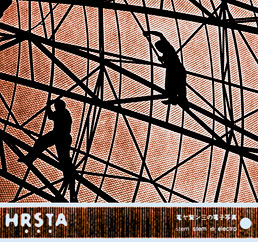
march2014SOUNDTRACK: HRSTA–Stem Stem in Electro [CST036] (2005).

cst036webI really like this album a lot.  It has all of the trappings of post rock (long songs which are rather epic in nature with lots of building and no standard verse chord structure), but it also feels doggedly commercial–super catchy in the way the elements combine and the choruses swell.

“…and we climb” is a simple four chord song that builds over the course of 6 minutes.  It seems like it will be just instrumental, but after almost 3 minutes a gang begins chanting about how “we climb to the light.”  The songs builds in intensity and then fades out to just voices.  “Blood on the Sun” is a guitar-based song with female vocals–echoing and pretty while the guitar plays on.  The song doesn’t vary much, but the combination of the voices and the chord changes is a really good one.  “Une infinite de trous en forme d’homme” is a swirling instrumental with a circular guitar pattern and washes of chords in the background.   “Folkways Orange” starts with strong vibrato guitars and compelling wavery vocals.  There’s some interesting chord changes but mostly the song is just a solid song that stays strong for 5 minutes.

“Swallow’s Tail” is one of my favorite songs on the disc.  It begins with a screechy noise that acts as a rhythm.  Then the great guitar melody follows along.  It’s not complex, but it is intertwining and intriguing.  At around 2 minutes a guitar chord motif begins.  It has a sort or tension in it, like it’s expecting something to come along.  And then the whispering vocals begin. The guitars roar to life for a few bars and then settle down as the vocals count out what is the Swallows Tail.  Then the music rages back in.  This is followed by “Heaven Is Yours,” a series of random noises and spacey sounds, as if resting from the catharsis of track 5.  “Gently Gently” is a short angsty song full of washes of chords.   The final track, “Quelque chose a propos des raquetteurs” opens with more great sounding guitars.  You can feel that it is going to be epic.  The violins come in after a minute to really build the song.  When the vocals come in around 5 minutes, it reminds me of the chords structure and build up at the end of Pink Floyd’s “Atom Heart Mother,” which is quite alright with me.

It’s a fabulous example of post-rock.

[READ: May 11, 2014] “The Academies of Siam”

Joaquim Maria Macahado de Assis was alive from 1839-1908, so this is not a current story by any means.  It comes from a new collection called Stories which was translated from the Portuguese by Rhett McNeil.  I don’t know the first thing about the author.

This story is a strange one.  It sets up the hypothetical question asking if you know about the academies of Siam.  It follows this question with “I am well aware that there have never been any academies in Siam, but suppose that there were…”  Huh.  He asks us to imagine that there were four of them and then gives this tale in four parts.

In the first, there is a question posed as to whether souls have a gender–is a man more feminine because he has a feminine soul?  This is asked because the king is considered quite a feminine man.  He doesn’t like war or any kind of fighting, he has honeyed eyes and a silvery voice.  Indeed, Kalaphangko is “practically a lady.”

The academics form two camps on this issue.  Those who say that souls are gendered and those who do not.  And soon enough violence breaks out over the issue.  (more…)

Read Full Post »

« Newer Posts - Older Posts »