Feeds:
Posts
Comments

Archive for the ‘Lou Reed’ Category

SOUNDTRACK: RHEOSTATICS-Fall Nationals, Night 8 of 10, The Horseshoe Tavern, Toronto (November 18, 2004).
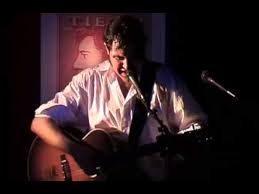
The Rheostatics, live at the Legendary Horseshoe Tavern in Toronto, November 18, 2004. This was the 8th night of their 10 night Fall Nationals run at the Horseshoe.  Featuring a crazy 17 minute medley followed by Neil Young’s Powderfinger.

Kevin Hearn played keyboards for much of the show and they played a number of songs from the Group of 7 disc and Harmelodia.  The show ran for 2 and a half hours.  There’s only one recording of this show, and it sounds great.

The show opens some what mellow-ish with “Digital Beach.”  It’s a pretty version of this unexpected song and it’s followed by an awesome “Boxcar Song” with Kevin Hearn on keys.

“P.I.N.” sounds lovely.  Midway through, you can hear bongos playing and Martin sings “I’m in the snow / playing bongos.”  He’s quite growly through the song.  After the song, you hear people shouting: “Come on let Martin sing!” Dave: “I think he is for hire, sir.”  Mike: “But only as a mohel.”

Kevin Hearn is on the organ for “It’s Easy To Be With You” and he sings on “Yellow Days Under A Lemon Sun.”  Actually everyone seems to take a verse on this song (but I think they’re making them up as they go along).  At the end, Tim says, “We started off with no keyboard players and now we have two.”

Mike asks if he can get more of Kevin’s sampler?  Dave: “Careful what you wish for–he’s got some Buddy Hackett in there.”

It’s followed by three more from Harmelodia: a sweet “Loving Arms,” a fun “Home Again” and a romping “I Am Drumstein.”  Tim says he is disappointed because he missed a perfect bongo opportunity in that last song.

After an introduction of Chris Stringer on “the organ and effects and other stuff,” they move toward 2067 with “Marginalized.”  There’s a sweeping, trippy keyboard solo in the middle.  And then some guys start shouting “Whale Music” and other things.  Dave says “Loud guy crowd.  Every Fall Nationals there’s a loud guy crowd.”

Introducing “The Tarleks” Dave says, “Dr. Johnny fever was here last night in the flesh, it was rather exciting.”  (Did they really not mention Howard Hessman the night before?).

Over the entire run there’s been constant requests for monitor sound level changes, especially by Mike.  Mike says he could use less of Martin’s vocal (groans from the audience) and says he can’t hear Martin’s guitar.  Martin asks if his guitar sounds okay out front.  There is much applause.  Mike: “you’re just fishing for a compliment.”

Before “Pornography,” someone asks where the bongos are.  They are put to good use in the song.  After saying how proud they are of the new album the  opening of  “Shack In The Cornfields” sounds a little off.  But it is quickly righted and off they go.  The song ends with what sounds like a skipping record and very quiet percussion playing as the s song slowly segues into “Try To Praise This Mutilated World.”  Martin says, “I like that song.  Dave wrote it.  We’re the Rheosatics.  Are you having a good night?”  Someone shouts something and Martin snarks: “You wanna hear our older, funnier stuff?”

They go old, but stay mellow.  Tim is “gonna serenade you with a song.”  “All the Same Eyes” is one “we don’t do anymore.  And now one we just started doing, ‘Here Comes the Image.'”  Tim introduces it by saying “This is a lesson for all you drummers out there.  Never be late for a rehearsal or you will be banish-ed to the keyboard.  Because everyone else wants to play those drums, including me and Dave.  This next song takes place in 2067, so best of luck to you all.”  It’s followed by another mellow song “Who Is Than Man, And Why Is He Laughing?” with Jen Foster on accordion.  After the song, Dave says, “I don’t know if I was dying back there or if someone is cooking but I smelled pancakes.  Kevin, you got a griddle back there?”  Mike also says, “Shameless plug.  Jennifer has her CD for sale at the merch booth.”  Tim: “It’s called Shameless Plug.”

Dave notes that they are “just entering the ‘shang’ part of the evening, folks.”  Whatever that means, the first song is a rollicking “Stolen Car.”  It feels a bit shambolic, but never out of control.  There’s some cool keyboard sound effects during the middle jam.  There’s a pretty “Little Bird, Little Bird”and then a powerful “California Dreamline.”  It segues somewhat oddly into a grooving “Horses” (the only time they’ll play the song during the nine nights).   Kevin gets a wild keyboard solo in the middle of the song.

Dave says there are here the next two nights and the Loud Guy says “we’re coming tomorrow.”  Dave: “Thanks for the warning.”  Dave seems a bit tired of the bozos.  But he does seem to like the fans up front: “You guys have great looking twin shirts there.  I can’t read what’s on the second bus though.  Nowhere and Boredom.”   Mike says he’d choose Nowhere over Boredom, but Dave’s not so sure.  “Boredom gives you something to work with.”

Tim says, “Bear with us while we do this song for our friend Ron Koop.  He is having a hard time right now and hopefully he draws something from this.”  It’s a lovely version of “Making Progress” which is followed by an upbeat and rather silly “Monkeybird.”

And then comes the above mentioned 17 minute medley.  I’m glad Darrin wrote all the songs down, because it’s hard to keep track:

The Horseshoe Medley (The Pooby Song / The Hockey Song / Devil Town / The Ballad Of Wendel Clark Part II / Bees / Folsom Prison Blues / Ring Of Fire / Old Vancouver Town / War Pigs / Human Highway / Rockaway Beach / Walk On The Wild Side / So Long Farewell / Who Stole The Kishka / Let’s Go Skiing In The Morning).

It begins with Dave playing the acoustic guitar and singing “The Pooby Song.”  “Take one, Kevin” and Kevin gets a simplistic guitar solo.  Dave shouts “take it to C” and they start Stompin’ Tom’s “Hockey Song.”  After the “second period” Dave notes: “last game of the lock out season that didn’t exist.  Doesn’t matter, we got enough hockey stored up in our heads that we’re skating all the time anyway.”  The songs ends, but that isn’t the key from the first tune, we gotta go back to the first tune.  Tim: “Take it to B flat.  I love B flat.  Now, back to D.  You got any chords you like?”  Kevin starts singing Daniel Johnston’s “Devil Town.”  Up to E sharp (or F, whatever you want to call it).  Back down to D take it to C.  They start “Wendel.”  Kevin’s got one.  “‘There are bees, there are bees, everywhere’  you know this one, right?”  Tim: “Does this take place in the devilish town?”  Take it to C, for Dave to sing Johnny Cash’s “Folsom Prison Blues” then Kevin switches it to “Ring of Fire.”  Tim picks up with Stompin’ Tom’s “Bridge Came Tumbling Down.”  Kevin resumes with a hilariously upbeat and folksy “War Pigs” with Martin doing some suitably metal guitars sounds.  They even try to do the heavy staccato part before resuming the bluesy part.  “Go to G.”  Dave sings Neil Young’s “Human Highway” but messes it all up, “Okay, never mind go back to E again.”  Tim: “Take it up to A” for “Rockaway Beach.”  Then it’s Kevin with an amusingly upbeat take on “Walk on the Wild Side.”  Mike jumps in with a goofy stab at “So Long, Farewell” and then Dave takes over with “Who Stole the Kishka.”  Tim is yelling “someone call the motherfucking cops.”  The medley should end there but someone keeps it going “a two-step nightmare.”  Dave sings Frankie Yankovic’s “Let’s Go Skiing” while about three other songs go simultaneous.  Someone chants “four more years” and then Dave starts “Powderfinger” in the medley.  He kind of screws it up and as it fades, Martin asks, “What’s the next verse?”  “Something about hunting” and then Martin takes it over for real. He knows some of the words, and they kind of salvage it.”

At the end Dave even says “Thanks, I think.”

But after 8 days in a row, you’re allowed a bit of a fun meltdown.

As they walk off, Martin asks, “Hey Dave what’s a kishka? A sausage type thing?”  A fans shouts, “a small donut.”  Dave: “It’s not a small donut.  But that’s funnier.”  It’s a great and funny end to a wild show.

[READ: July 11, 2017] Real Friends

I’ve enjoyed Shannon Hale a lot recently, so I was pretty happy to read a new book by her.  Sarah had told me that it was a really excellent portrayal of girl friendship in grammar school.  It is also biographical and makes me think that it’s pretty amazing that Hale made it through to high school at all.

The book is divided into sections with friends’ names, and each of these sections is basically how she met these friends.

Shannon was the middle child between a pair of older girls and a pair of younger siblings.  She was kind of alone and was very clingy to her mom.  But on her first day of kindergarten, despite being nervous and sad, she made friends with Adrienne.

They were soon inseparable.  Shannon made up games for them in which they fought off bad guys (boys who just seemed to want them in whatever capacity a five year-old girls thinks boys might want them).  I love that their game was utterly feminist and yet they were portraying Dallas Cowboy Cheerleaders because that’s who was popular and everyone wanted to be one.  And yet these cheerleaders had pet saber toothed tigers and sharks and they beat up ghastly boys. (more…)


Read Full Post »

tny 5.26.08 cvr.indd SOUNDTRACK: KEVIN MORBY-Tiny Desk Concert #554 (August 1, 2016).

morby

I didn’t know Kevin Morby before listening to this concert.  He was in two bands that I’ve also never heard of: Woods and The Babies.

Morby plays a kind of smooth folk (but somehow not really folky because the low end feels a bit more rocking).  I found at least the song “Dorothy” to be kind of like Lou Reed–same style of delivery and groove, but on an acoustic guitar (and sounding far less like a disaffected New Yorker).

He plays three songs and his band consists of a drummer a bassist and a lead guitarist.  He sings and plays acoustic guitar.

“Cut Me Down” is a mostly acoustic-feeling song (you can barely hear the electric guitar).  He even takes the few leads that are there.  The song has  some good dramatic pauses, and then about half way through, it shifts to a new melody–the bassist and the electric guitar playing similarly high notes.

“Dorothy” is a much more interesting song to me.  Even if I do feel lit sounds bit like Lour Reed.  It’s on this song that guitarist Meg Duffy shines more.  Her guitar has a cool echo effect on it.  And while she’s not playing loud or hard, she’s got a cool sound, especially when she plays lead.  On this song her lead guitar “substitutes” for other instruments.  He sings that he could “get that piano” or “that trumpet” to play something like… and she gives a little solo (I particularly like the “trumpet” one).  She also gets a chill proper  solo.

But it’s the final song, “I Have Been to the Mountain” which is the most dramatic and interesting.  In addition to the minor keys chords he plays, the bass comes in with a cool riff.  And the chorus is intense.  With good reason.  The song is about the 2014 chokehold death of Eric Garner at the hands of a New York City police officer:

 That man lived in this town / Till that pig took him down / And have you heard the sound / Of a man stop breathing, pleading?

But it’s not overstated or melodramatic.  And Meg gets a cool solo in the middle as well.

[READ: February 23, 2016] “Over, Around, and Through, Your Highness”

I have gotten to the point where I pretty much don’t even read the New Yorker’s Shouts & Murmurs column anymore.  Most of the pieces are an extended joke that could best be summed up by a few paragraphs rather than a whole page.  But there are some authors who I will always give time to and Woody Allen is one of them.

His short funny pieces are not musings on a joke, they are actual stories that develop and usually reflect back on themselves by the end.

This piece opens with a movie producer bemoaning the state of things.  In typical Woody Allen fashion, he plays with pop culture, talking about the latest film “Mourning Becomes Electra on Ice.” He notes that if he’s not careful his next job will be an easy one in which he answers the questions “Did you work last week?  Did you look for work?” (more…)

Read Full Post »

mercurySOUNDTRACK: MOBY & KELLI SCARR-Tiny Desk Concert #58 (May 4, 2010).

moby This is the first of a few Tiny Desk Concerts that break with the format we’ve come to know.

For unclear reasons, there is a video for only one song from this show.  Although there is a full audio feed in which you can hear all of the songs that Moby and Kelli play.  This video is also filmed at night, which is quite different from their usual mid-morning showcase.  It is very dark outside and in the studio, which is also unusual.

The song that they play is “Gone to Sleep,” a song they created for Project Song.  The premise behind Project Song is to write, record and complete a song in 48 hours.  As inspiration, they used the word Sunday and a picture of a man in the woods with clouds for a head (Moby describes him as a pedophile from another dimension).

It’s quite a good song with a really catchy, very Moby chorus.  And the dark video is interesting to watch.

There’s audio where you can learn a bit more about Project Song and how they created their song.  But there’s also audio from the rest of their set, which features covers and Moby originals all done on acoustic guitar.

They play a fun, surprisingly light version of “Ring of Fire” (with audience participation on “trumpet solo”).  Then the do Moby’s “Pale Horses” which is quite nice in this stripped down version.  Their next cover is “Take a Walk on the Wild Side.”  They do an interesting take–it’s almost upbeat and folky, which is unusual.  He switches from “and the colored girls say” to “and everybody here says.”  He also tells a funny story about campaigning for John Kerry and playing that song and seeing Kerry’s wife act horrified and maybe a little turned on by the lyrics.

The final song is CSN&Y’s “Helpless.”  It’s a pretty, very different version from the original.  It’s a good set, especially for those who think of Moby as a more dancey artist.

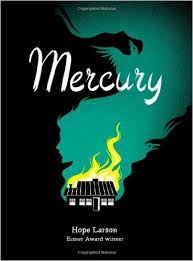
[READ: June 21, 2015] Mercury

I really enjoyed this book by Hope Larson, one of my consistently favorite graphic novelists.

And this book may be one of her best.  The book drifts back and forth between two timelines in Nova Scotia.  The older timeline is 1859.  We meet the Fraser family living in a house on French hill.  They have just had a visitor, Asa Curry and he seems taken with their daughter Josey.

The modern timeline is set 150 years in the future.  The Fraser family until recently still lived on the property at French Hill.  A few years ago it burnt down and the survivors had to move.

The 1859 story has a black border while the contemporary story has a white one, it a subtle but very cool way of distinguishing the timelines. (more…)

Read Full Post »

 dancingSOUNDTRACK: deLILLOS-“Forelsket” (1987).

delilloKarl Ove mentions many bands in this book, but the deLillos are the only Norwegian band that he plays.  They sing in Norwegian and play sprightly, jangly guitar pop–they would fit in very well with some of the lighter alt bands from the late 80s and early 90s.

I have no idea what they’re singing about (well, the title translates to “love” so I guess I know what they are singing about.

The singer has a high, delicate voice and there’s some interesting harmonies.  I really like the way the song transitions from verse to chorus with the picked guitar notes–very catchy.

It comes from their second album, Før var det morsomt med sne  (Before it was fun in the snow), which along with their first was quite popular and was reissued with a bonus disc in the 90s.  Having said that I see that Amazon has one copy of the disc and no album cover listed.  Worse yet, I can’t find many other songs online (Spotify lists the album, but I can’t get it to play).

Sorry, deLillos (even searching for you gives us more Don DeLillo than you guys).

[READ: June 24, 2014] My Struggle Book Four

struggle4I started including the British edition page numbers because at my work we received both editions of the book, and I received the British one first so I grabbed it and started reading.  I noticed the page numbers were quite different (the British book is taller and the print is quite bigger, although this doesn’t explain why the previous books have fewer pages).

I had been interested in the differences between editions from the get go.  I had enjoyed the American editions, but I enjoyed reading this British edition more (bigger print?).  But when I noticed on one of the pages that the word “realise” was spelled as I typed it, it made me wonder if the American edition changed that to the American spelling.  [Actually, I see that Don Bartlett lives in Virginia, so perhaps he translates it into American first].  While I wasn’t about to go into a deep inspection of the topic, when I saw the American edition on a shelf at work, I had to do a little comparison.

And what I found out was that even though Don Bartlett is the (amazing) translator for both editions, someone (perhaps Bartlett himself?) is translating the American into British (or vice versa).  I looked at a couple of pages and noticed these changes from British to American:

  • BRITISH EDITION = AMERICAN EDITION
  • Pack it in, now = Give it up, now
  • roll-up = rollie [about hand rolled cigarettes]
  • looked daggers at = gave her a dirty look
  • a complete prat = completely useless
  • is that possible? = really?
  • to cook and wash up = cooking and doing the dishes
  • I had got = I’d gotten
  • had penned = had written
  • and yes, realised = realized.

Other than select phrases, every word is exactly the same.  So somebody goes through the books and changes them to British english idioms and spellings.  That’s fascinating.

I also see that this is the first book I had not read an excerpt from first.  Not that it would have made any difference as to whether I read the fourth one.  I couldn’t wait to get my hands on it.

So book four is set in Håfjord, a town in Northern Norway near Finnsnes (a five hour flight away–okay I had no idea Norway was so big!).  Karl Ove is 18 and has decided to become a grade school teacher there for one year.  The tax breaks are great if you teach, and he plans to teach and write his masterpieces and then get out.  He has no interest in teaching, but the town is small (most grades are 3-7 students), so he figures it can’t be too hard.

As in most of Karl Ove’s books, the stories jump around and flash back and do not stay all in this one time, but it is largely set in this locale.

My first thought was that I have never read a story with as much semen (both nocturnal emission and premature ejaculation) in my life.  It is a strange take away from the book, but there it is.  Karl Ove is 18 and really wants to have sex for the first time.  About 3/4 of the way through the book he reveals that he never masturbated (it just never occurred to him, apparently, and at 18 he’s too old to start–what!?).  As such, he seems to have wet dreams every night.  And every time he gets near a woman, he has an orgasm too soon.  He is horny all the time–it’s a bit disconcerting.

And since I mentioned that, I don’t know if Karl Ove’s life is typical of Norway, but I am shocked by the number of women who take their clothes off around him (he may have never had sex, but he was about to on at least a half-dozen occasions).  And he says that all through school (from around age 13 and up) it was common place for the boys to lift up the girls’ shirts and kiss and or fondle their breasts.  It is mind-boggling to me.  And the 16 year olds all seem to be having sex all the time–this may be skewed from Karl Ove’s perspective, but that’s what I now believe happens in Norway.

But while sex is the main theme of the book–sex, sex sex, there is more to it.

Karl Ove’s parents have split up and his father has started drinking in earnest.  The dad has remarried and has just had a baby.  Incidentally, I was also shocked to read that Karl Ove’s father, who is an abusive stodgy old man who is cranky and mean and abusive and all the stuff that we read about in the other volumes was only 43 at the time that Karl Ove was 18.  So the old man who I pictured as a gray-haired curmudgeon in this book is actually younger than me.  Great.

In Håfjord, Karl Ove is teaching kids who range from age 13 to 16.  It’s disconcerting to read about him thinking lustful thoughts about his students, until he reminds us that for most of the students, he is only 2 years older than them.  I am pleased to say that he behaves himself (except in his mind) with all of the students.  There’s even a really interesting flash forward to eleven years later when he runs into two of them again.

He proves to be a pretty decent teacher it seems.  The kids mostly like him (the girls all think he is hot) and he is young and tries to make it fun (he himself hated school and everything about it).  He even seems to help out an awkward boy (although that is never resolved).  We see him teaching, trying to interact with the kids and generally being a pretty good guy.

Until the booze comes out.

For in addition to semen, this book is chock full of alcohol.  Before graduating from gymnas (high school), Karl Ove basically stopped caring about anything.  He spent most of his time drunk.  It is astonishing the amount of drinking he does–it’s practically like an Amish Rumspringa how crazy he goes.  But even in this retrospective look, he talks about how much he likes it, how it loosens him up and makes him less nervous.

But really he just spends most of his time drunk, hungover or sick. He even got into the hash scene for a while.  He was living with his mom at the time and she was appalled at the way he acted–especially when he threw a party which trashed their house.   She even kicked him out for a time.

He seemed to be over the drink in Håfjord, but it turns out that there’s precious little else to do except drink up there, especially when it grows dark for most of the day.  So there is much drinking–he only misses class once or twice because of it but he comes very close a lot.

The irony that he is appalled at his father’s drinking, while drinking so much himself, is apparently lost on him.

The other main preoccupation with Karl Ove is music.   He talks a lot about his great taste in music (he reminds me of me–a little insufferable).  Back when he was in gymnas, he spent a lot of time discussing his favorite bands and favorite songs.  He got a job (at 16) writing reviews for a local paper (holy crap, jealous!) and then later gets a job writing a column for another paper.  For the previous book I listed a lot of the bands he mentioned, and I wish I had written them down for this one.  U2 features prominently (this is 1987, so I’m guessing Joshua Tree), but also Talking Heads, a Scottish post-punk/new wave band The Associates and their album Sulk which he describes as “an utterly insane LP.”  he and his brother really like The Church and Simple Minds (before they got so commercial).  He also has a whole thread in which he makes connections with albums:

Briano Eno, for example, started in Roxy Music, released solo records, produced U2 and worked with Jon Hassell, David Byrne, David Bowie, and Robert Fripp; Robert Fripp played on Bowie’s Scary Monsters; Bowie produced Lou Reed, who came from Velvet Underground, and Iggy Pop, who came from the Stooges, while David Byrne was in Talking Heads, who on their best record, Remain in Light, used the guitarist Adrian Belew, who in turn played on several of Bowie’s records and was his favorite live guitarist for years. (64).

He also specifically raves about “The Great Curve” from the Talking Heads album, and of course, he raves about the first Led Zeppelin album as well.

Music is a huge part of his life (and he dresses accordingly too).  It’s unclear whether the kids think this is awesome or not, but he may be a bit too much for some of the locals.  The locals are mostly fishermen (which makes sense), and Karl Ove is a bit intimidated that he is so wimpy compared to them–one of the women even teases him about his tiny arms.

But his main focus is writing.  He writes a few shorts stories (to my knowledge he has never published any of them).  We see some excerpts and they seem fine–he fancies himself Hemingway.  But he also mentions a bunch of Norwegian authors (I love when he does that).  Sadly again, not too many of them have been translated into English.  [I really hope that some mega fan creates a database of all of the bands and authors he mentions].  He also talks briefly about his first novel which alludes to his time teaching here.  I happened to read a small summary of said novel (Out of the World) and feared that it spoiled what was going to happen.  But, in fact there does appear to be a difference between his fiction and non-fiction.

The book moves very quickly–from party to party, from failed sexual attempt to the next, even from his staying up all night long trying to write.  And most of the time he comes off as kind of a dick–he is also very self-critical, which somehow tempers that dickishness.

As with the other books I cannot figure out exactly why I am so addicted to his writing.  I brought the book home on Thursday night and finished it (all 548 pages of it) Monday night.  This really completes the picture of himself as he moved from childhood to adulthood and really lays the foundation for whatever is to come next.   Early in the book he talks about the books that he loved at that age, books that talk about the move from childhood to adulthood.  And thus, this book becomes something of a bildungsroman as well.  Although whether or not Karl Ove actually grew up at the end of this book will have to wait until volume 5 (which I have to assume is still another year away as there is no information about it online at all!).

For ease of searching, I include: Hafjord, For var det morsomt med sne.


Read Full Post »

2014-07SOUNDTRACK: SLOAN-Commonwealth [Spade Side–Andrew Scott] (2014).

commonFor Sloan’s 11th album, the four members of the band each wrote the songs of a side.  I originally thought that they recorded all of the music alone, but that seems to be wrong–and would hardly be a Sloan album).  In conjunction with the album, each guy was given a suit of cards (and an actual deck was made as well).  While this doesn’t necessarily mean the album is very different from their others (it still sounds very Sloan), it seems to have given the guys a bit more room to experiment.

The final side of Commonwealth is by drummer Andrew Scott.  Scott has written three singles for Sloan over the years: “500 Up”, “People of the Sky”, and “I’ve Gotta Try.”  But for this album, he has created a 17 minute and 49 second epic called “Forty-Eight Portraits.” This makes it seem like it could be 48 small songs which it isn’t.  But it also isn’t one long song exactly.  There are, by my count 15 sections–although there could be more or fewer depending on how you break it up.

So my demarcations:

  1. The song opens with a dog barking.  There’s complex percussion and a smattering of piano seemingly searching for a melody.
  2. At 3 minutes the first real song proper starts.  We’ll call it “You say you’re going with me.” There’s acoustic guitars and a bouncy melody.  It’s a great song with a neat guitar riff that overlays around 4 minutes in.  But
  3. At 4:23 the song changes dramatically.  It grinds to a slow pensive section, call it the “Don’t ask for a second chance.”  But it doesn’t last long,
  4. At 5:16, the next part jumps in, it’s a bit faster and feels like it could be an extension of the previous section.  Call it the “Do the things I do” section.  It speeds up
  5. At 5:41, to a similar style as the “first song.”  It has a sing along starting “How Does It Feel?”  It’s got one verse before a time signature change and instrumental break.
  6. At 6:40 the next section comes in.  Aggressive guitars and spoken word lyrics “There’s something happening here.”  It also has one of the few uses of the word “fucking” in a Sloan song.
  7. At 7:25 it shifts to a falsetto style and higher pitched guitars.  It’s vaguely Beach Boys-like for a verse “Do you think she loves you?” until
  8. At 7:48 it’s back to a reprise of the “How does it feel” section.
  9. At 8:15 it shifts to a new slow piano section.  This feels like the most fully realized song section of the epic.  “I can’t believe you never told me the truth.”   It leads into a big chorus sounding section (two lines) around 8:40 (“What it is us unsustainable”).  There’s even a repeat of this “verse” and  “chorus” as well.
  10. At 10:26 a new guitar section is introduced.  It works as a transition “You said you’re coming with me.” It morphs
  11. At 10:52 into a very cool slowed down section “I asked for a proper glass.”  And then
  12. At 11:22 the song again returns to the “How did it feel” section.
  13. At 12 minutes the song transitions with a “ba ba ba” and horns which move into the “Sometimes I feel like I’m slipping away” section.  The song feels like it might end at 13 minutes as the last notes seem to ring out.  But
  14. At 13:21, the song rebuilds again with the “inside a cloud” section.  This feels like the final section of the song is built around a similar construct. It’s a guitar riff that introduces a children’s chorus at around the 14 minute mark.  There’s a slow guitar solo and pizzicato strings that keep this section from being to easy, but that guitar riff and children’s section reunite the end which concludes with the spoken “W.W.L.R.D.?” (which I assume the L.R. refers to Lou Reed).
  15. At 16 minutes, the chaos of the beginning returns with a dog bark, but the concluding riff is strong and seems to really draw out the end.

I really haven’t listened to the lyrics that carefully to know exactly what’s going on, but I really enjoy the “choruses.”  While a 17 minute song is not everyone’s cup of tea, there are so many parts and so many interesting and catchy sections, that it feels like a whole collection of short songs rather than one long song.  It’s a cool experiment and one that I find myself singling out as I try to parse it a bit more.

[READ: October 11, 2014] “Part of the Main” and “Watching the Cop Show in Bed”

The Walrus’ summer reading issue presents three stories and two poems in which: “The Walrus presents fresh takes on old crimes.”  Each story is about a crime of some kind, but seemed from an unexpected way.  I rather enjoyed the way the writers played around with the crime genre to make them something very different.  These were two poems.

I’ve don’t normally review the poetry in The Walrus, but since I had four sides and only three stories it seemed worthwhile to throw the two poems in as well 9especially since the finally song was so unusual).

The first one “Part of the Main” is written with wonderfully evocative language as it talks about something so base.

The first stanza talks about the inevitability of the tide, of life.  With beautiful language like: “the contours of the and effaced by the saintly patience of the tide.”  But the second stanza shifts gears.  In it, the narrator says that you can show him dire things on the television: “bloated bellies…bomb blasts” and he will weep and clench his fists “but otherwise do nothing.”  It is sadly an uncomfortably relatable attitude. (more…)

Read Full Post »

10SOUNDTRACK: FATHER JOHN MISTY-Fear Fun (2012).

fjmI can’t get over how much I’ve been enjoying this album for the last two years.  Father John Misty is J Tillman from Fleet Foxes.

This disc is a gentle folk album with vaguely country leanings.  The arrangements are spare and yet the verses and choruses are so great to sing along to. “Funtimes in Babylon” has this infectious chorus: “I would like to abuse my lungs, smoke everything in sight with every girl I’ve ever loved.  Ride around the wreckage on a horse knee deep in mud.  Look out, Hollywood, here I come.”  “Nancy from Now On” has a great propulsive chorus with oohs and tinkling bells and pianos and Misty’s engaging falsetto.

I was introduced to this album by “Hollywood Forever Cemetery Sings” which opens with the super catchy line, “Jeeeeesus Christ, girl.”  I love the big crashing drum sound he has here.  “I’m Writing a Novel” is a fun romp, with the great line “I’m writing a novel because it’s never been done before.”  “O I Long to Feel Your Arms Around Me” introduces a great organ sound.  It’s a full song at only 2 and a half minutes.

“Misty’s Nightmares 1 & 2” opens with a slide guitar and turns into a stomping song with more Ooohs and a great chorus.  “Only Son of the Ladiesman” has a great chorus with the fun couple: “I’m a steady hand, I’m a Dodgers fan.”  “This is Sally Hatchet” has cool guitar blasts and a great bridge.

“Well You Can Do It Without Me” is a countrified 2 minute stomper.  “Tee Pees 1-12” is a big stompin’ honkey tonk song with fiddles and slide guitar.  The disc ends with “Everyman Needs a Companion” a slow ballad with a great piano melody and a fun to sing along with verse and chorus.

I love the lyrics on this album, especially the song “Now I’m Learning to Love the War” a slow ballad with a great story:

Try not to think so much about
The truly staggering amount of oil that it takes to make a record
All the shipping, the vinyl, the cellophane lining, the high gloss
The tape and the gear

Try not to become too consumed
With what’s a criminal volume of oil that it takes to paint a portrait
The acrylic, the varnish, aluminum tubes filled with latex
The solvents and dye

Lets just call this what it is
The gentler side of mankind’s death wish
When it’s my time to go
Gonna leave behind things that won’t decompose

In addition to all of the great music on here, the CD packaging is fantastic with that great cover, done in a cardboard gatefold sleeve including two huge books full of words and drawings and lyrics and everything.  I’m really looking forward to his next release.

[READ: September 14, 2014] Grantland #10

Despite my being in the middle of reading several other things, I was looking for a short article to read the other night and grabbed my Grantland 10.  And, of course, once I started, I couldn’t stop. I put everything else on hold and blasted through this issue.

And so all of my loves and hates are the same with this issue.  I never know how anything they talk about nearly a year ago turned out, which stinks.  And yet I get so wrapped up in the writing that I don’t care.  I’m not sure what it is about the writing for Grantland that i enjoy so much.  It is casual but knowledgeable.  Often funny but not obnoxiously silly. And I suppose that now I feel like I’m in on all of the secret stuff they talk about so I’m part of the club.  I fear that if I were to ever go to the website I would get sucked into a black hole and never emerge.

I often wonder how they choose what goes into the book.  This issue has some new writers and the surprising absence of some regulars.  I wonder what went on there.  And as always, the book could use some editing and maybe actually listing the urls of the links that were once in the online version.  But I think I’m talking to deaf ears on that one.

This issue covers October-December 2013 (that’s ten-twelve months ago!  Some of this stuff feels ancient!)

(more…)

Read Full Post »

lou_reed-620x412 SOUNDTRACK: LOU REED-Metal Machine Music (1975).

mmmfrom Wikipedia:

Metal Machine Music is generally considered to be either a joke, a grudging fulfillment of a contractual obligation, or an early example of noise music. The album features no songs or even recognizably structured compositions, eschewing melody and rhythm for an hour of over-modulated feedback and guitar effects, intricately mixed at varying speeds by Reed himself. In the album’s liner notes he claimed to have invented heavy metal and asserted that Metal Machine Music was the ultimate conclusion of that genre.

I don’t know how many people have actually listened to this album all the way through.  There are four 16-minute tracks.  Each one is, on the surface, exactly the same: feedback and more feedback.  In truth, the album is a bit more complicated than that.

There is a guitar in the left speaker and a guitar in the right speaker and each one is feedbacking in very different ways.  Indeed, if you listen to only one speaker at a time, you get a very different experience (I haven’t done that with the whole album, although that’s only because I really only found out about that recently, I did for a few minutes and it was pretty fascinating).

And fascinating is what this release is.  It was unlistenable in 1975, there is no question.  Just as something like Slayer would have been unlistenable in 1975.  But twenty years later, when Sonic Youth was riding high, Metal Machine Music seemed a lot less outrageous (indeed, their 1998 release Silver Sessions was essentially the same structure of feedback).

And now MMM seems very forward thinking.  Whether or not it was a joke or some kind of payback to the label or whatever (liner notes suggest he just really enjoyed enveloping himself in feedback), it’s a remarkable record.  If you can actually sit through it, there are some really interesting moments in it.  There are times when the squall and noise turns eerily beautiful, when the ringing notes take on chime-like status.

And unlike the aforementioned SY album in which they just turned up their amps and left, it sounds like Reed was actually hanging around and manipulating the sound.  You can hear times when new notes/strumming comes in and changes the mood.  And of course, Reed had to edit it for the album.

One of the more interesting moments comes right at the end of the disc.  On the vinyl release, he made a locked groove so the final rotation would keep repeating over and over until you had to get up and manually lift the needle (as if the album wasn’t difficult enough).  On the CD, they repeat that section for about a minute.  And that little repeated section is noteworthy for the rough distorted guitar and chiming feedback that all sounds very cool.

All of this is not to say that this album is enjoyable.  It’s really not.  It’s brutal and harsh and best handled in small doses (even Reed admits that in the notes).  But it is noteworthy and fascinating.  And it may have inspired as many feedback based bands as the Velvet Underground inspired droning bands.

[READ: November 2, 2013] “I loved Lou Reed more than you”

I was sad at the passing of Lou Reed, although I’ve never been a huge fan.  But of all of the eulogies, I knew that Neal Pollack would write the best one.

Neal Pollock is a wonderfully pompous “character” (who is the main character in most of the writing of his that I have read).  This article—while much briefer than most of Pollack’s short pieces—is an honest eulogy of Reed, but is also a hilariously over the top profession of fandom.

When Pollock heard the news of Reed’s death, he was polishing the acetate of his producer’s cut of Metal Machine Music.  He wept, mostly for himself but also “on behalf of all cultured people everywhere.” (more…)

Read Full Post »

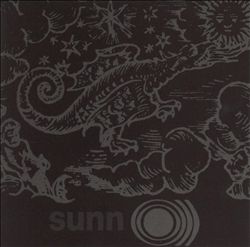
SOUNDTRACK: SUNN O)))-Flight of the Behemoth (2002).

I hadn’t really heard Sunn O))) until this record (which may not be typical as they collaborated with Merzbow on this one).  I knew that Sunn O))) played loud droney “music.”  And so it is here.  On “Mocking Solemnity” (9 minutes) and “Death Becomes You” (13 minutes) (which meld into each other seamlessly), the songs are mostly slow drones on electric guitar.  The chords are heavy and heavily distorted and they ring out for a few bars–not until the chords die naturally, there is a kind of pacing involved, but for a few bars until the chords are played again (often the same chord).  This is for those who thought Metal Machine Music was too complicated.

On paper this sounds unimpressive (or downright awful, depending) but in reality it is a very physical experience (if played loud enough).

The staticy noise of “Death” melds into track 3 “O))) Bow 1” which adds what sounds like radically modified piano playing a kind of melody.  It’s about 6 minutes and it really changes the tone of the record to suddenly add an atonal racket to the almost calming drone of the bass.  But by the middle of the song, the piano becomes what sounds like a chainsaw.  Merzbow mixed that track and  “O))) Bow 2” which is 13 minutes of the same slow pulsating noise.  It’s not exactly soothing.

The final track is “F.W.T.B.T.” a “remake” of “Metallica’s “For Whom the Bell Tolls.”  I can’t hear a thing that sounds like the original, but that’s what makes a cover interesting.  Although admittedly around the four and a half minute mark there’s some faster chords (for this band anyhow) that could be Metallica-like.  There are also drums (and vocals, although I have no idea what they are saying) on this ten-minute workout.

Not for the faint of heart (or fans of melody).

[READ: November 17, 2012] How to Be Alone

I read most of the articles in this book already.  But I read them over two years ago, so I thought it would be safe to wade into the world of Franzen again.  What I find most interesting about the title of this book is just how many of these articles are about being alone, wanting to be alone or feeling like you are alone.  Obviously that is by design but it seems surprising just how apt the title proved to be, especially given the variety of subjects  his father’s brain, being a novelist, the US Postal Service, New York City.

I’m not going to go into major detail about each article this time, although I am providing a link to the earlier review–my feelings didn’t really change about the pieces (except that from time to time I got a bit exhausted at his…whininess?  No, not that exactly…maybe his persecution complex.  But I will give a line summary about each one just to keep everyone up to speed.  The four pieces that I hadn’t read before I will give a few more words about.

One overall feeling is that when Franzen isn’t writing about the state of the novel (which he is very passionate about) his articles are well researched well documented which is kind of surprising given the state of panic he seems to be in the novel articles.  It’s also kind of funny how out of touch these articles seem (some are almost 20 years old and are kind of laughably outdated), but it’s also funny to see how poorly his predictions panned out.  The death of the novel is rather overrated (just see the success of his own Freedom.

So the book contains: (more…)

Read Full Post »

[ATTENDED: February, 20, 2012] Dan Zanes at State Theatre

President’s Day was Family Day in New Brunswick.  And despite the bitter cold, we had a nice time walking around, seeing the Philadelphia Zoo exhibit and, most of all, seeing Dan Zanes.

We have loved Dan Zanes since we were first introduced to him (like everyone else–as soon as we had kids).  I knew that Zanes was in the Del Fuegos, although (even though I lived in Boston for many years) I’d never heard them.  I have since listened to them but found them to be lacking, especially compared to Dan Zanes’ solo stuff.

So Dan Zanes has been releasing children’s albums for a number of years, now.  He has access to some pretty high-profile guests (his album Night Time features Aimee Mann, John Doe, Lou Reed and Dar Williams).  But even without the high-profile guests, the records are fun, warm and very inviting. (more…)

Read Full Post »

SOUNDTRACK: THE FEELIES-Crazy Rhythms (bonus downloads) (2010).

The other day when I was playing Crazy Rhythms I noticed a little card that I had never noticed before.  It said that if I went to the label’s website, I could download bonus tracks.  That was pretty cool, so I did.

The are five tracks.  “Fa Cé-La” says it is a single version although it sounds even more spare and underproduced than the album version (and it’s a tad slower). “The Boy with the Perpetual Nervousness” and Moscow Nights” are demos.  “Boy” really sounds like a demo (the wood blocks are almost piercing!).  It’s interesting that the guitar solo, which sounds random on record was planned that way.  On “Moscow” the singer’s channeling Lou Reed pretty intently.

The next two tracks are live from a reunion tour in 2009.  I’m not exactly sure who was in the band, but that’s okay, the songs sound good.   “Crazy Rhythms” has a (simple) drum solo in the middle (more of a beat-keeping than a solo per se), and an extended jam towards the end song.  And the final song is a cover of Jonathan Richman’s “I Wanna Sleep in Your Arms,” at a frenetic two-minute pace.

Not bad for free downloads, eh?

[READ: December 31, 2011] “A Shade Less Perfect”

After reading all of those Max Barry blog posts, getting to read a real story is a real treat.

This is a very simple story of one-upmanship (a common trope of sitcoms–in fact just the other night Up All Night ran the “two brothers who must compete against each other at everything and never admit that they have failed at something” script).  And this story falls into the same general area, but Barry puts a surprising twist on the end.

Jonathan and Elizabeth are going to house of Jonathan’s boss, Dave.  Elizabeth likes Dave’s wife Julie.  They both had babies around the same time and met in birthing classes, so they are excited to catch up (it’s been about ten months since they’ve all seen each other).

Dave tends to lord everything over Jonathan at work.  Jonathan says he’s okay with this at work–Dave is his boss after all, but he doesn’t want to deal with it out side of work, too.  Naturally, Dave has a huge house and a convertible and every other material joy.  Even a nanny. (more…)

Read Full Post »

« Newer Posts - Older Posts »