As I mentioned, I was supposed to see Built to Spill back in 2001 (11 days after 9/11). I didn’t feel like going into the city or listening to live music so I didn’t go. I recently learned that they did play that night. And I’ve seen their set list. And I think I’m probably happy I didn’t go. I preferred going to this show with only the preconceived notion that my friend Jay has seen them about a dozen times (and met Doug Martsch) after a show) since I introduced him to them just a couple of years ago. So I was pretty psyched.
But I was not as psyched as the two guys who run up next to me (I could touch the stage) just giddy with excitement that “the legend” was going to be just five feet away from them. It sounded like they might have had a present for him (but who knows what that meant). They talked about the set list they were sure he would play. And they nearly melted when he came out on stage. I don’t think I’ve ever seen quite that much adoration at a show. It seemed almost teeny bopperish to me, which I find especially amusing since Martsch is an old balding guy with a big beard who barely looks like he ever smiles.
But then there he was, indeed just a few feet from me. And that was pretty awesome. (more…)
[ATTENDED: October 2, 2015] Clarke and the Himselfs
Friday night was going to be my first time seeing Built to Spill and my first time going to Union Transfer, the fabled Philly venue. I couldn’t believe the show started at 8:30 and there would be 2 opening acts. I estimated getting home at 2AM which proved to be accurate.
I’d never heard of either opening act so I didn’t mind if I got there a little late. But as it turned out, there was no traffic and I wound getting there about 20 minutes early. Which was cool since there was hardly anyone there. In fact, there was a row of people leaning against the stage and that was it (and a lot more in the bar and balcony) . So I staked my claim near the stage and waited for Clarke. (more…)
Karl Ove mentions many bands in this book, but the deLillos are the only Norwegian band that he plays. They sing in Norwegian and play sprightly, jangly guitar pop–they would fit in very well with some of the lighter alt bands from the late 80s and early 90s.
I have no idea what they’re singing about (well, the title translates to “love” so I guess I know what they are singing about.
The singer has a high, delicate voice and there’s some interesting harmonies. I really like the way the song transitions from verse to chorus with the picked guitar notes–very catchy.
It comes from their second album, Før var det morsomt med sne (Beforeit was funin the snow), which along with their first was quite popular and was reissued with a bonus disc in the 90s. Having said that I see that Amazon has one copy of the disc and no album cover listed. Worse yet, I can’t find many other songs online (Spotify lists the album, but I can’t get it to play).
Sorry, deLillos (even searching for you gives us more Don DeLillo than you guys).
[READ: June 24, 2014] My Struggle Book Four
I started including the British edition page numbers because at my work we received both editions of the book, and I received the British one first so I grabbed it and started reading. I noticed the page numbers were quite different (the British book is taller and the print is quite bigger, although this doesn’t explain why the previous books have fewer pages).
I had been interested in the differences between editions from the get go. I had enjoyed the American editions, but I enjoyed reading this British edition more (bigger print?). But when I noticed on one of the pages that the word “realise” was spelled as I typed it, it made me wonder if the American edition changed that to the American spelling. [Actually, I see that Don Bartlett lives in Virginia, so perhaps he translates it into American first]. While I wasn’t about to go into a deep inspection of the topic, when I saw the American edition on a shelf at work, I had to do a little comparison.
And what I found out was that even though Don Bartlett is the (amazing) translator for both editions, someone (perhaps Bartlett himself?) is translating the American into British (or vice versa). I looked at a couple of pages and noticed these changes from British to American:
BRITISH EDITION = AMERICAN EDITION
Pack it in, now = Give it up, now
roll-up = rollie [about hand rolled cigarettes]
looked daggers at = gave her a dirty look
a complete prat = completely useless
is that possible? = really?
to cook and wash up = cooking and doing the dishes
I had got = I’d gotten
had penned = had written
and yes, realised = realized.
Other than select phrases, every word is exactly the same. So somebody goes through the books and changes them to British english idioms and spellings. That’s fascinating.
I also see that this is the first book I had not read an excerpt from first. Not that it would have made any difference as to whether I read the fourth one. I couldn’t wait to get my hands on it.
So book four is set in Håfjord, a town in Northern Norway near Finnsnes (a five hour flight away–okay I had no idea Norway was so big!). Karl Ove is 18 and has decided to become a grade school teacher there for one year. The tax breaks are great if you teach, and he plans to teach and write his masterpieces and then get out. He has no interest in teaching, but the town is small (most grades are 3-7 students), so he figures it can’t be too hard.
As in most of Karl Ove’s books, the stories jump around and flash back and do not stay all in this one time, but it is largely set in this locale.
My first thought was that I have never read a story with as much semen (both nocturnal emission and premature ejaculation) in my life. It is a strange take away from the book, but there it is. Karl Ove is 18 and really wants to have sex for the first time. About 3/4 of the way through the book he reveals that he never masturbated (it just never occurred to him, apparently, and at 18 he’s too old to start–what!?). As such, he seems to have wet dreams every night. And every time he gets near a woman, he has an orgasm too soon. He is horny all the time–it’s a bit disconcerting.
And since I mentioned that, I don’t know if Karl Ove’s life is typical of Norway, but I am shocked by the number of women who take their clothes off around him (he may have never had sex, but he was about to on at least a half-dozen occasions). And he says that all through school (from around age 13 and up) it was common place for the boys to lift up the girls’ shirts and kiss and or fondle their breasts. It is mind-boggling to me. And the 16 year olds all seem to be having sex all the time–this may be skewed from Karl Ove’s perspective, but that’s what I now believe happens in Norway.
But while sex is the main theme of the book–sex, sex sex, there is more to it.
Karl Ove’s parents have split up and his father has started drinking in earnest. The dad has remarried and has just had a baby. Incidentally, I was also shocked to read that Karl Ove’s father, who is an abusive stodgy old man who is cranky and mean and abusive and all the stuff that we read about in the other volumes was only 43 at the time that Karl Ove was 18. So the old man who I pictured as a gray-haired curmudgeon in this book is actually younger than me. Great.
In Håfjord, Karl Ove is teaching kids who range from age 13 to 16. It’s disconcerting to read about him thinking lustful thoughts about his students, until he reminds us that for most of the students, he is only 2 years older than them. I am pleased to say that he behaves himself (except in his mind) with all of the students. There’s even a really interesting flash forward to eleven years later when he runs into two of them again.
He proves to be a pretty decent teacher it seems. The kids mostly like him (the girls all think he is hot) and he is young and tries to make it fun (he himself hated school and everything about it). He even seems to help out an awkward boy (although that is never resolved). We see him teaching, trying to interact with the kids and generally being a pretty good guy.
Until the booze comes out.
For in addition to semen, this book is chock full of alcohol. Before graduating from gymnas (high school), Karl Ove basically stopped caring about anything. He spent most of his time drunk. It is astonishing the amount of drinking he does–it’s practically like an Amish Rumspringa how crazy he goes. But even in this retrospective look, he talks about how much he likes it, how it loosens him up and makes him less nervous.
But really he just spends most of his time drunk, hungover or sick. He even got into the hash scene for a while. He was living with his mom at the time and she was appalled at the way he acted–especially when he threw a party which trashed their house. She even kicked him out for a time.
He seemed to be over the drink in Håfjord, but it turns out that there’s precious little else to do except drink up there, especially when it grows dark for most of the day. So there is much drinking–he only misses class once or twice because of it but he comes very close a lot.
The irony that he is appalled at his father’s drinking, while drinking so much himself, is apparently lost on him.
The other main preoccupation with Karl Ove is music. He talks a lot about his great taste in music (he reminds me of me–a little insufferable). Back when he was in gymnas, he spent a lot of time discussing his favorite bands and favorite songs. He got a job (at 16) writing reviews for a local paper (holy crap, jealous!) and then later gets a job writing a column for another paper. For the previous book I listed a lot of the bands he mentioned, and I wish I had written them down for this one. U2 features prominently (this is 1987, so I’m guessing Joshua Tree), but also Talking Heads, a Scottish post-punk/new wave band The Associates and their album Sulk which he describes as “an utterly insane LP.” he and his brother really like The Church and Simple Minds (before they got so commercial). He also has a whole thread in which he makes connections with albums:
Briano Eno, for example, started in Roxy Music, released solo records, produced U2 and worked with Jon Hassell, David Byrne, David Bowie, and Robert Fripp; Robert Fripp played on Bowie’s Scary Monsters; Bowie produced Lou Reed, who came from Velvet Underground, and Iggy Pop, who came from the Stooges, while David Byrne was in Talking Heads, who on their best record, Remain in Light, used the guitarist Adrian Belew, who in turn played on several of Bowie’s records and was his favorite live guitarist for years. (64).
He also specifically raves about “The Great Curve” from the Talking Heads album, and of course, he raves about the first Led Zeppelin album as well.
Music is a huge part of his life (and he dresses accordingly too). It’s unclear whether the kids think this is awesome or not, but he may be a bit too much for some of the locals. The locals are mostly fishermen (which makes sense), and Karl Ove is a bit intimidated that he is so wimpy compared to them–one of the women even teases him about his tiny arms.
But his main focus is writing. He writes a few shorts stories (to my knowledge he has never published any of them). We see some excerpts and they seem fine–he fancies himself Hemingway. But he also mentions a bunch of Norwegian authors (I love when he does that). Sadly again, not too many of them have been translated into English. [I really hope that some mega fan creates a database of all of the bands and authors he mentions]. He also talks briefly about his first novel which alludes to his time teaching here. I happened to read a small summary of said novel (Out of the World) and feared that it spoiled what was going to happen. But, in fact there does appear to be a difference between his fiction and non-fiction.
The book moves very quickly–from party to party, from failed sexual attempt to the next, even from his staying up all night long trying to write. And most of the time he comes off as kind of a dick–he is also very self-critical, which somehow tempers that dickishness.
As with the other books I cannot figure out exactly why I am so addicted to his writing. I brought the book home on Thursday night and finished it (all 548 pages of it) Monday night. This really completes the picture of himself as he moved from childhood to adulthood and really lays the foundation for whatever is to come next. Early in the book he talks about the books that he loved at that age, books that talk about the move from childhood to adulthood. And thus, this book becomes something of a bildungsroman as well. Although whether or not Karl Ove actually grew up at the end of this book will have to wait until volume 5 (which I have to assume is still another year away as there is no information about it online at all!).
For ease of searching, I include: Hafjord, For var det morsomt med sne.
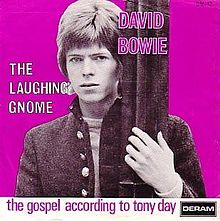
SOUNDTRACK: DAVID BOWIE-“The Laughing Gnome” (1967).
I have always liked David Bowie. Never loved him, but always liked his radio hits (and a bit more). Suffice it to say that I have never heard of “The Laughing Gnome” before reading about it in this book.
What a strange little song. I can’t tell if it came out before or after his debut solo record (he has the same haircut), but I gather it was released as a novelty record.
It’s a delightful little song. Very sixties mod with a healthy nod of dance-hall. The very different thing of course is that in the song, the main singer (Bowie) meets and sings with a sped-up-voiced Cockney “gnome.”
So the song is clearly a novelty song (what else would you call it?). Except that the production is really great and the music is really good too. Despite the gnome, the song isn’t really a “funny” song (well, there are jokes and puns, I guess). It’s certainly weird and certainly silly, but it holds up pretty well to repeated listens (even if the chorus is “ha ha ha hee hee hee I’m a laughing gnome and you can’t catch me”).
Bowie doesn’t really acknowledge the song anymore, although he did joke that he was considering performing it in a new ‘Velvet Underground-influenced’ style. Before that happens, hear the original
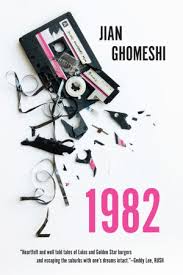
[READ: November 22, 2014] 1982
So yes, I know that Ghomeshi is in the midst of a scandal in which he is pretty undeniably a sexually abusive scumbag. I’ll say nothing more about that since things are still under investigation {formal charges were brought today]. But it doesn’t look good for Jian.
This is rather upsetting. For the women involved, obviously, but also for those of us who liked Jian and thought he was one of the good guys. Which I did. I loved Moxy Fruvous. I loved his solo album. I had a brief email exchange with him before he joined the CBC, and his show, Q was one of the best interview shows out there. He always seemed so nice and on the right side of so many issues. Ugh.
But anyhow, this is about the book, not him (although the book is about him as well). I only heard about the book when I was looking for news about his scandal (I had no idea he had written a book). The book is called 1982 because it is all about his life in the year 1982, a formative year in his childhood. (more…)
SOUNDTRACK: PINK FLOYD-“The Hard Way” and “Wine Glasses” (1974).
This book informed me about these two unreleased Pink Floyd songs (there’s a Wikipedia site that lists some fifty more !). While the were unreleased in 1974 (from the abandoned Household Objects album), they were eventually released in 2011 on expanded versions of albums.
“The Hard Way” features some “percussion” that sounds like someone taking steps. There’s a bass riff which I gather is from rubber bands (but very well tuned). There’s clocks ticking and chiming and tape being unspooled. It’s a neat idea and while it is absurd to think you could make a whole album with this kind of stuff (in 1974), it’s a surprisingly good sounding track.
“Wine Glasses” was apparently made with wine glasses. It is all of 2 minutes long. It was designed to be a full song but was eventually used in the introduction to “Shine on You Crazy Diamond.” I never really considered that there were wine glasses making the sounds (and clearly there are synths added on top), but yeah, so that ‘s kinda neat.
[READ: November 25, 2014] The Greatest Albums You’ll Never Hear
I found this book at work and knew I had to read it. I was actually surprised at how long it took me to read (there’s a lot of entries).
The title and subtitle pretty much say everything you need to know about this book (and if you need to read it or not). This book collects a series of writers who give a brief history of some of the more famous (and some not so famous) albums that were never released. It explains (as best they can) why the albums weren’t released and even gives a percentage chance of likelihood of the album ever seeing the light of day (interestingly, most seem to be a 3/10–they may have been able to use a 5 point scale).
I knew some of the records they talked about (The Beach Boys’ Smile, Neil Young’s Chrome Dreams), but was ignorant of quite a lot of them. And while big fans of the artists may know all of the details about their favorite lost album already (these are sketches, not exhaustive research), there will certainly be some new information. For instance, I’m a huge Pink Floyd fan but had no idea about the two shelved works mentioned here.
I liked the way the book was done chronologically and grouped by decade. It was also interesting to see how the “reasons” for the non-release morphed over the decades from “the record label didn’t like it” to “it was leaked online.”
The one major gripe I have with the book is that it is chock full of “imagined” album covers. This in itself is okay, but it is not made explicitly clear that they are all imagined (credits are given at the bottom of each image, but it took me a few entries to realize these were just people’s ideas of what the covers could look like). And most of them are gawdawful. Just really lame and dull (as if they had 20 minutes to come up with an idea). They mar an otherwise cool collection,especially since some of the unreleased records actually do have proposed covers (even if they were never released). I see that there is in fact a paragraph about the covers in the front pages of the book, but it is almost hidden away.
In addition to the albums I’ve listed below, I learned some fascinating things. That Bruce Springsteen has hundreds of songs that he wrote but never released for various reasons. That Pink Floyd did try to make an album out of household objects (with no instruments). That the Sex Pistols’ Never Mind the Bollocks was almost simultaneously released illicitly as Spunk. And that Danger Mouse’s The Grey Album was recently remastered.
The end of the book includes two small sections: other favorites that were never released. Not sure why they earned only a small column instead of a full entry, but that’s okay. The second was albums that we eventually did see, like My Bloody Valentine’s MBV and Guns N’ Roses’ Chinese Democracy.
So if you ever wondered what happened to that long lost album, this may be the book for you.
After Angel Rat, original bassist Blacky left the band. That’s never a good sign. After the tour for this album, original singer Snake left the band. That’s an even worse sign. I still can’t quite figure out exactly why Snake left (personal problems) but he went on to form the band Union Made. For a very detailed history of the band, check out this very cool timeline at Voivod dot net.
The Outer Limits got a pretty big release. I have an original copy that came with 3D glasses and all of the illustrations in 3D. But I was a little disappointed in Angel Rat and I don’t think I gave The Outer Limits much of a chance. It was no Nothingface. But the band was always morphing. Since Angel Rat went very commercial, this album brought things back into the prog realm (with a 17(!) minute song) but also had a lot of commercial songs.
The album opens with “Fix My Heart” which starts out much heavier than anything on Angel Rat. It’s also got some metal guitar pyrotechnics (squeaks and harmonics). Snake’s voice isn’t quite as pretty as on Angel Rat either—he growls a bit, but maintains his nicer voice overall. Nevertheless, “Fix My Heart” is a pretty commercial enterprise (as the title might even suggest). There’s some good “spacey” guitars sounds which bode will for the sci-fi angle of the album (and there’s some cool effects that reward headphone use). “Moonbeam Rider” starts with a very classic rock sounding riff and then morphs into a kind of pretty, mellow verse. But the interstitial guitar is all speed. It’s a nice mix of fast and slow. This song features some interesting bass work—nothing fancy but for the slow parts it is actually keeping the beat instead of the drums. The bassist was a studio musician for this album. There’s also what sounds like a bong during the pre-guitar solo section (the solo is fairly traditional).
“Le Pont Noir” is a mellow, slow guitar song with a very cool delay effect and Snake’s whispered vocals. The bridge gets heavy with a wonderfully weird Piggy guitar riff. It’s one of my favorite songs on the album.
Then the band’s second Pink Floyd cover appears. This time it’s the even more obscure “The Nile Song.” They have rather heavied this one up with crunching guitars and Snake’s distance screaming filling in the void (although in fairness the original vocals are also screamed). It’s not as dynamic or exciting as “Astronomy Domine,” but it’s still a cool cover. “The Lost Machine” starts off heavy with Away’s double cymbal work (a noisy splash and a fast ride cymbal). Then Piggy’s guitars have a slight delay on them which makes the opening chords sound especially odd. The bridge is a place for Piggy to show off some more weird spacey chords and some very cool guitar riffs. There’s even a spoken word narrator in the middle of the song that explains the “mission” “Time Warp” opens with a very bright and up beat sounding verse. But it quickly disintegrates into (intentional) musical chaos as the narrator gets lost in space.
This all leads up to the 17 minute “Jack Luminous.” If anyone doubted their prog rock leanings, this should dispel that immediate. 17 minutes, multiple parts, a sci-fi epic, it is prog (but heavy prog) at its finest. There are some incredibly catchy parts as well as some less catchy parts, and sections seem to change every two minutes or so. The slow down at 10 minutes is very cool—different guitar effects and the suspenseful bass line. There’s repeated sections as well, which means if you like some guitar line (the spacey part near the end) it comes back! It’s not quite as dynamic as say 2112, but it’s a very successful sci-fi epic.
“Wrong Way Street” returns to the normal and more conventional. The bass that opens the song sounds great and the chords are fairly conventional–the chorus is even really catchy. “We Are Not Alone” is a break-neck metal song, The drums are super fast, the guitars are relentless and the chorus even has an echoed “Hey!” that gets you to sing along. The song also features a cool slow, almost jazzy bass and drum section that lets Piggy throw some soloing in before returning to the fast paced verses.
There’s lots of theories about what happened to Voivod after this album. The success they had achieved earlier was now gone and the band seemed like they couldn’t decide to be metal or prog or is they should go for more pop music. The problem of course is that they were too weird to get mainstream acceptance anyway.
So Snake left and then there were only two original members. The next step would be a drastic one.
[READ: July 9, 2013] Grantland #7
This issue seemed to come hot on the heels of #6. But I enjoyed it just as much. A few notes: no Jeremy Lin in this issue. Lots of LeBron James, three articles about soccer! And a few pop culture moments that I had forgotten about.
REMBERT BROWNE AND DUSTIN PARKER-“The Jeopardy! Teen Tournament JUST. GOT. REAL.
Leonard Cooper didn’t know the final Jeopardy answer but he still won and he made a hilarious joke at the end (in cartoon format);
BILL SIMMONS-“Daring to Ask the PED Question”
Simmons talks a lot about PED’s in this forum. Of course, to me PED is my initials. For him (and sports fans) it is performance enhancing drugs. He asks why sports doesn’t do more about it. There are so many people who do it that every time we see someone who might be doing it or who suddenly has a good season, we assume they are doing them too. It would be a service to the players and the fans to have rigorous testing or none at all.
CHRIS RYAN AND ROBERT MAYS-“The NFL Coaches Family Portrait By the Numbers”
A silly analysis of a photo of NFL coaches.
WESLEY MORRIS-“Jodie Foster’s Big Night”
What exactly did Jodie Foster say at the Golden Globes? (This was in January and everybody talked about it and now it’s September and I’ve completely forgotten about it—funny ephemera of pop culture).
JONATHAN ABRAMS-“Out of Africa”
A serious look at trying to bring basketball to Africa. How the culture and language problems make it very difficult to establish any real cohesion in the diverse country. But there are a few examples of boys coming from Africa and benefiting from host families and then heading back to help those who love basketball back home. The main focus is on a 15-year-old Alexis Wangmene who came to the States (and left his family!) to try to gain an education and basketball skills. It’s a heartfelt story.
MOLLY LAMBERT-“Modern Love”
About the show Catfish which just goes to show we can sink even lower as a culture.
CHUCK KLOSTERMAN-“Mental Health Protocol”
About Royce White again. Last time there was a lengthy look at him. Now we get to hear that he thinks that everyone has some kind of mental health issue.
ANDY GREENWALD-“Eat Bray Love”
How cooking shows have gone from educational to crazy and annoying. He dislikes Top Chef and the new Anthony Bourdain show The Taste (which he says is awful) but he likes a decent show called Chopped.
ZACH LOWE-“The Fragile Science of Basketball Chemistry”
Sure the Heat were great this year, but it’s the way they evolved as a team, creating chemistry, that is so impressive.
RAFE BARTHOLOMEW-“The Pariah”
Timothy Bradley beat Manny Pacquiao in a disputed judges call. Instead of rising to fame, he has been avoided like the plague.
BILL SIMMONS-“The All-Manti Te’o Mailbag
Remember that crazy story about the football guy with the dead girlfriend who turned out to be fake? I never really understood the story and while they spend a lot of time talking and theorizing about it I still don’t get it. Did they ever find out the truth about it?
CHRIS BROWN-“Speak My Language”
When you play for the Patriots, you learn their way of doing things—it is simple and efficient, a streamlined version of what other coaches try to do.
KIRK GOLDSBERRY-“The Evolution of LeBron James”
Using diagrams, we see how much of a different player James is in just the last few years with The Heat. This article has made me want to watch James in a game while he is at his peak. So, Heat vs Bulls at the end of October, you’re on my schedule.
SEAN McINDOE-“The Non-Hater’s Guide to the NHL”
Even people who hate everyone in the NHL (which is everyone) can agree that there are some players who are universally admired: Martin Brodeur, Pavel Satsyuk. Teemu Selanne, Jarome Iginla, Jonathan Toews, Martin St. Louis, Gabriel Landeskog, Patrick Elias (Devils get two!), Ryan Smyth, Steve Sullivan, Saku Koivu, Henrik Lundqvist.
ALEX PAPPADEMAS-“God Needs a Hobby”
A look at Dan Harmon and his podcast Harmontown. Harmon seems like he might be a crazy alcoholic, but he’s also pretty darn funny.
MARK TITUS-“Duke’s Ignominious Son”
Everybody hates Christian Laettner, but that’s only because he’s pretty and he made The Shot
MARK LISANTI-“Three Days in Austin”
Dealing with the craziness of the South by Southwest film festival. Sounds awful.
HUA HSU-“The Alien Has Landed”
Soccer legend Ronaldo returns to Old Trafford
BILL SIMMONS-“The Greatest Action Franchise That Ever Was”
Live blogging the Fast and Furious 6 trailer. I admit I may have to see these films after reading this.
ZACH LOWE-“Lights, Camera, Revolution”
There’s some kind of new technology that will change the NBA forever. I pretty much don’t care.
TESS LYNCH-“Nostalgia Bites”
Watching old Real World episodes shows how much things have changed in reality TV, but also how much certain behaviors are not new.
BRIAN PHILLIPS-“Maradona, Then and Now”
Maradona was an amazing kid—at 15 he was remarkable at his ball control. Now at 52 he’s a crazy loon. What exactly happened in between?
ANDY GREENWALD-“From Big to Small, From Movie to TV”
Why not make Men in Black into a TV show—with some other film recommendations.
AMOS BARSHAD-“How Soccer Explains Israel”
I didn’t expect to enjoy this but I found it very interesting. An Israeli soccer team has signed two Muslim players and it has caused incredible animosity and even arson. How this look at a team is like a microcosm of the whole Israeli situation.
LOUISA THOMS-“Back to School”
Missy Franklin won a ton of medals in the Olympics. And then she went back to high school. What’s it like to be on her team at Regis Jesuit?
WESLEY MORRIS-“Run, Frank, Run”
Frank Ocean apparently wasn’t as huge as I thought he was.
MALCOLM GLADWELL AND CHUCK KLOSTERMAN–“The Lies He Told”
More about Manti Te’o. This discussion was a bit more helpful about what happened and how crazy it is.
CHRIS RYAN AND REMBERT BROWNE-“A List of Possible Reasons for Rob Gronkowski’s Arm Infection”
Hypothetical humor.
JORDAN CONN-“The Invisible Man”
Marc Gasol is extremely respected by scouts and agents, but the fans all think of him as Pau Gasol’s chubby little brother.
REMBERT BROWNE-“French Quarter Lessons”
While in New Orleans for the Super Bowl, Browne decided to go to a bunch of used bookstores. This is very funny and enjoyable.
JAY CASPIAN KANG-“Fiercely Disputed”
Mike Tyson’s one man show is weird and strangely affecting.
KATIE BAKER-“Do Svidanya to All That”
Several NHL players went to Russia’s KHL during the lockout. And some don’t want to come back.
CHRIS RYAN-“The All-Star Circus”
NBA All-Star weekend is a crazy circus (and sounds worse than the above SXSW festival).
CHUCK KLOSETRMAN AND ALEX PAPPADEMAS-“The Nobituary”
There was a serious rumor that David Bowie was on death’s door. Klosterman and Pappademas imagine writing his obituary.
DAVID SHOEMAKER-“Glenn Beck vs. WWE”
The WWE has always had racists as part of the act. What happens when some goons start acting like the Tea Party?
DAVID JACOBY-“The Pure Heart Meets The Bachelor”
Jacoby’s grandmother watches The Bachelor and he feels badly for her.
STEVEN HYDEN-“Is This It?”
The Strokes’ fifth album had just come out [really?]. It could be their last, but Hyden thinks their last two have been quite good.
BILL SIMMONS-“The Heat in Hindsight”
The Miami Heat came close to breaking the longest winning streak in the NBA. Simmons looks at the fallout and who “wins” and “loses” in the effort.
CHARLES P. PIERCE-“Bleu, Blanc et Rouge”
I had no idea that Charlie Pierce was a Canadiens fan!
KATIE BAKER-“The Ethics of a Family Plan”
Is it ethical to pretend that you are married to your roommate to get a family discount a ta gym? Hell yes.
EMILY YOSHIDA-“A Dark Force”
J.J. Abrams is going to direct the next Star Wars films. Why, when sci-fi is so multifaceted and so different is everything coming down to J.J. Abrams?
SEAN FENNESSEY-“The Case Against Justin Timberlake”
Timberlakes’s previous album was amazing. Then he took years off to make (bad) film and (good) TV. His star would only continue to rise if he stopped making music and only hinted that he would make another album. But the release of his new album (which isn’t that good) can only hurt him.
BRYAN CURTIS-“Waiting for Bettman”
While many New Yorker’s didn’t care about the NHL strike, Canadian writers camped out waiting for Bettman to announce the strike was over.
WESLEY MORRIS-“30 Rock Landed on Us” 30 Rock was many things, but it dealt with racial issues (at least between blacks and whites) better than any show.
RANY JAZAYERLI-“Fall of the Evil Empire”
The New York Yankees look like they won’t make the playoff this year (this was written in March and as of my writing this they have a slim chance at getting the wild card slot). It will be the firs time in a while, perhaps, just perhaps, it’s the start of a new drought for the Evil Empire.
BILL BARNWELL-“The Master Raven”
Ozzie Davis knows how to pick players for the Baltimore Ravens.
REMBERT BROWNE AND DUSTIN PARKER-The Best Chappelle’s Show Sketches of All Time”
Done as a series of cartoons (by Parker); Browne picks his eight favorites:
Charlie Murphy’s True Hollywood Stories: Prince
Wayne Brady’s Show
Charlie Murphy’s True Hollywood Stories: Rick James
Black Bush (especially now that Obama is president)
Clayton Bigsby: Black White Supremacist
Making the Band (P. Diddy)
The Racial Draft (Tiger Woods Now 100% Black)
The Niggar Family (uncomfortable and hilarious no matter how many times you watch it).
Once again, there’s another great issue of Grantland. Once again, I wish they would follow up on some of their speculative stories. But it’s fun to have a time capsule of events that occurred just a few months ago and yet which I have totally forgotten about.
And here’s the cover of The Outer Limits in non 3D style (which I haven’t see before)
This book is set in Kristiansands, and so naturally this song was ringing through my head the whole while I was reading it. I’ve known this song for ages, but had no idea that Chirstiansands was an actual place in Norway.
This song is dark and tense. Over a slinky beat, a spare guitar riff introduces Tricky’s voice as he rasps (his voice is slightly modified to give him a weird echo). And while he’s reciting his verses, the gorgeous voice of Martina Topley-Bird, repeats what he’s saying in a whispered voice until she sings out the chorus “I met a Christian in Christiansands.”
The verses repeat with Tricky emphasizing, “master your language and in the meantime I create my own. It means we’ll manage.”
I honestly don’t know what the song is about, and it feels like it never properly ends–that riff, at once menacing and gripping never seems to conclude. It’s a masterful track and hard to forget once you’ve heard it.
[READ: May 11, 2013] My Struggle Book One
I read an excerpt of Book Two from this series in Harper’s. And despite the fact that nothing really happened in it, I was drawn in by the writing style. This first novel is very similar in that not a lot happens but the voice is very captivating. The translation is by Don Bartlett and it is fantastic–I can only assume the original Norwegian is just as compelling. So, despite the fact that this autobiographical series contain six books (six!) and totals over 4,000 pages (how could this be if Book one is a mere 400? Books 4-6 are over 1,000 pages each), I decided to give it a try. (Incidentally, Book Two has just been translated into English this month).
This series has caused some controversy because it is given the same title as Hitler’s Mein Kampf (Min Kamp in Norwegian), and also because he says some pretty means stuff about people who are still alive (like his ex-wife). Although there isn’t much of that in Book One.
Indeed, Book One basically talks about two things–a New Year’s Eve party when Karl Ove was youngish and, as the bracketed title indicates, the death of his father. (The title A Death in the Family is the same book as My Struggle Book One–from a different publisher. It has a totally different cover but is the same translation. I don’t quite get that). But indeed, these two events take 430 pages to write about.
How is this possible? Because Karl Ove writes about every single detail. (I assume this why the books are considered novels, because there is no way he could remember so much detail about every event). I’m going to quote a lengthy section from a New Yorker review (by James Wood) because he really captures the feeling of reading the book:
There is a flatness and a prolixity to the prose; the long sentences have about them an almost careless avant-gardism, with their conversational additions and splayed run-ons. The writer seems not to be selecting or shaping anything, or even pausing to draw breath…. There is something ceaselessly compelling about Knausgaard’s book: even when I was bored, I was interested. This striking readability has something to do with the unconventionality of “My Struggle.” It looks, at first sight, familiar enough: one of those highly personal modern or postmodern works, narrated by a writer, usually having the form if not the veracity of memoir and thus plotted somewhat accidentally, concerned with the writing of a book that turns out to be the text we are reading. But there is also a simplicity, an openness, and an innocence in his relation to life, and thus in his relation to the reader. Where many contemporary writers would reflexively turn to irony, Knausgaard is intense and utterly honest, unafraid to voice universal anxieties, unafraid to appear naïve or awkward. Although his sentences are long and loose, they are not cutely or aimlessly digressive: truth is repeatedly being struck at, not chatted up.
That idea of being bored but interested is really right on–and it may sound like a bad thing, but it’s not. You can read along thinking that there’s no way he is going to give so much unimportant detail. But you get this description of drinking a cup of tea: (more…)
Before this album came out, Paul Stanley did a little club tour. My friends Matt and Nick and I got to see him in Wilkes Barre, PA. It was a pretty great show, and intimate in a way that Kiss shows can never be. So we were pretty psyched for this new album. And yes, this album holds special memories or me because we used to listen to it a lot after the show.
The biggest problem with this album is bloat. I don’t have any kind of evidence to back this up, but this was the first Kiss album that took advantage of the compact disc’s length. And so it’s easily twenty minutes longer than most Kiss albums (and the later albums had some filler on the already). Plus it’s almost longer than Kiss’ first two albums combined. That’s just too much.
Even Kiss’ weaker albums usually start with a good song. Not so much Hot in the Shade. “Rise to It” is pretty generic even by mid 80s Kiss standards. They try to make it fun with the Ri–e i-e-i part, but it doesn’t quite make it. “Betrayed” is a bit more of a rocker and is quite a good song. Lyrically it’s not so great (it’s funny to think of Gene Simmons trying o be down with the common man), but it rocks pretty hard. My friend Matt and I liked “Hide Your Heart” quite a bit when it came out. The chorus: Ah ah ah ah, hey hey hey do do do do do do do do do” is pretty bad though. “Prisoner of Love” musically sounds like Kiss of old, until the verses come in. “Read My Body” is really catchy until you realize it sounds just like “Pour Some Sugar on Me.” That’s embarrassing. Although the metaphor is well done, at least. “Slap in the Face” might as well be “Let’s Put the X in Sex” from Thrashes Smashes and Hits.
Then comes the cheesiest ballad in Kiss’ history—actually written by Michael Bolton, yes Michael Bolton. And man do I love it. Paul is in full voice, he sounds great, the harmonies are spot on. It is the cheesiest metal ballad ever, but I never get tired of it. It even has an acoustic guitar solo—pre-made for Unplugged! “Silver Spoon” is a good rocker, with a fun chorus. Although the gospel singers at the end are a bit overkill—it seems silly to have invited them in for 90 seconds of singing. “Cadillac Dreams” is just a bit too close to a Beatles song for my liking. “King of Hearts” is a decent song, and “The Street Giveth and the Street Taketh Away” (were Kiss really hard up for money? what’s up with these lyrics?). We had an in-joke on my dorm floor, so I can never take this song seriously (that may also be because they steal the “Hey man” right out of David Bowie’s mouth). Love Me to Hate You” is pretty generic although catchy. “Somewhere Between Heaven and Hell” is also a decent song.
“Little Caesar” is the first (and only, really) song that Eric Carr sang lead vocals on. As a singer he’s a really good drummer. The song is pretty generic too and is unfortunately given the same name as a bad pizza company. “Boomerang” has a good fast pace (once again, not unlike a Van Halen song).
[READ: August 11, 2012] “The Cryptozoologist”
This is yet another short story broken down into lots of little sections. What’s neat about the way that this one is done is that because the narrator is a cryptozoologist, each section is headed by a cryptid (animals whose existence has not been proven). But in addition to discussing these animals, the sections also describe a history of the narrator’s life. His life in this field started when his grandfather told him about a snake which latched onto the end of its own tail and rolled away from its pursuers (section title: Hoop Snakes). His grandfather never lied, so it had to be true.
It proceeds through The Mušhuššu (a serpent dragon spoken of in ancient Babylon), through the Jenny Hanivers (jeunes d’Anvers), into The Wolf of Ansbach (believed to be an old Bürgermeister who was transformed into a werewolf), and on to The Batutut, a monkey man in Laos. Most of these sections describe the origins of the cryptids (and his lack of success at spotting them), but The Batutut section is also about himself and how he was in the war when this particular cryptid entered his life.
Then we move on to The Altamaha-Ha in Southeastern Georgia, while Giglioli’s Whale, which had two dorsal fins dates to 1867. The Mongolian Death Worm, said to live in the sands of the Gobi desert is a cryptid that he actually experienced in the American desert. he didn’t see it, but he could feel its presence. The Madagascar Tree is a killing tree–it looks like a pineapple and eats sacrifices. This story was told by two adventurers who saw the tree eat a woman. The best part of is that there is no proof that the two men who are credited with telling the story actually existed themselves. (more…)
This is not the right cover for the issue. I couldn't find it online!
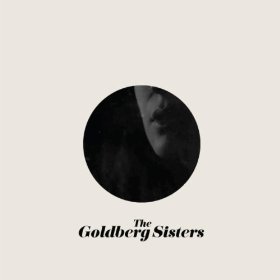
SOUNDTRACK: THE GOLDBERG SISTERS-The Goldberg Sisters (2011).
I don’t often make lists of “Best” records or anything like that. But I’m making an exception for this. This was easily the best album that I had low expectations for. That sounds like half a compliment but it’s not. I really didn’t expect much from this album when Adam Goldberg promoted it on Craig Ferguson’s show. But when I checked out the video for “Shush” I was really impressed. So I bought the CD.
And I have to say that it is really, really good.
I need to get this out of the way because it will influence the whole write up otherwise. Adam Goldberg is an actor, a very good, very funny actor. And this is just one of his music projects. It was not an entirely solo affair, but Goldberg plays guitar, piano, harmonium, keyboards, key sitar and melodica. And of course, he sings as well. I was more or less expecting an at-home-sounding demo, maybe, or some standard rock-n-roll like many other side projects. But the album is lush and full, complete with cool psychedelic effects on certain tracks and there’s even clever wordplay.
Goldberg has a soothing, slightly feminine singing voice (I would not have expected that from his speaking voice). And his backing vocalists really complement him well.
The disc opens with “The Room” a simple acoustic guitar and a very nice complementary piano (which reminds me of some of Radiohead’s acoustic moments). The long instrumental ending is quite intense. “Mother Please (The World Is Not Our Home)” has questionable lyrics, but a really great sound. There’s cool spoken words deep in the mix, which bring a creepy effects to the song. It runs very long, but there’s lots of parts and a cool coda.
“Shush” is still outstanding after all of these listens. It has a kind of Bowie/Beatles/90’s revival of same feel. This kind of song only works if the production is right, and Goldberg’s is perfect. “Don’t Grow” opens with cool fiddle strings and Goldberg’s slightly sinister whispered vocals. It’s 7 minutes long (see, psychedelic) and features a really pretty denouement with tinkling pianos and everything.
“You’re Beautiful When You Die” is a weird little interlude–muffled piano and dark, dark lyrics. I could probably do without it, but it’s only 2 minutes so I’ll deal. It’s made up for by “Erik Erikson” a great rocking acoustic number that reminds me of The Smashing Pumpkins (in vocal style).
“Third Person” returns to that Beatles-y style with a folk song with full instrumentation. And “The Difference Between” has some cool backing vocals which elevate this simple piano based song into something more. “Skin of the Patriot” is a slow piano ballad. It’s not my favorite song on the disc, but it leads into the wonderfully upbeat ender “The Heart Grows Fonder” (which features a surprising and surprisingly effective melodica solo). It runs about five minutes (of an 11 minute track). The ending 90 seconds are a goofy riff on The Beatles’ “Revolution.”
So overall this album is really enjoyable. There’s one or two misfires and it could use a wee bit of editing, but man, am I glad I bought this. And I can’t wait to see what Goldberg does next.
Watch the Ferguson bit here (wait for the hilarious awkward pause at 10:30)
This is the final individual story that Karen Carlson recommended to me (the rest are all in anthologies that I’ll have to check out). She writes: “Because it’s a grim, tough read, it might take a second read to get past the oppressive weight and find the delicate art. And it doesn’t hurt to look into the background of the writer a bit; he isn’t writing about these people by accident. A little Willie Nelson might work [for the soundtrack].”
Karen’s comments sound a little defensive! But I admit I was pretty turned off in the beginning of the story. I’ll also admit a personal bias of mine is that I don’t really like to read stories about the rural poor or folks in the Ozarks. I know, it’s not very nice, but it’s true.
So, this story is set there. And it opens with just about every stereotype I hate about the region: single wide trailer that borders a hog farm, neon orange muumuus, coon hunting and a repossessed house. Things are even worse than my stereotypes though, because the plumbing is unconnected and their toilet sits over a bucket. Which they cover with lime after every use and which they have to empty daily. Good god.
Oh and the hog farm? They had so much hog shit that they decided to burn it. Well, the fire has been raging for a month. And the only thing worse than the smell of hog shit is the smell of burning hog shit. And the only thing worse than burning hog shit is having the ashes from the hog shit fall onto your property and into your trailer every day for a month.
Oh yeah, and Cordell, the man of the trailer, accidentally shot their hound, Trixie last time he was hunting. She’s okay but had to have a leg removed. Jee. Sus.
I used to not like Christmas songs very much. Mostly because they;re unavoidable at the holidays but also because if you subject yourself to radio and mall versions, you get a really really bad selection of tunes. The lowest common denominator of low denominators.
Sarah is a huge fan of Christmas music (even intentionally putting on Magic ninety-eight point threeeeeeeeee) during the holiday season (which may indeed be 50/50 when it comes to music and commercials and which tends to play quite a bit off my least-favorite song list, but they at least mix it up). And, buying some of our own Christmas music (including alternate versions and new songs) has really helped get the monotony out of our mix.
This is a list that I created in 2008 and I see that it hasn’t really changed much at all. There are some albums that we have recently acquired which I haven’t digested enough to see if they rank here or not. But perhaps by the end of the holiday I’ll have a new post about new favorites.
Sarah’s comments are in red. And, interestingly, she has created her own favorites list on her site. Let’s see if anything has changed for her.
So, here’s my favorite Christmas songs circa 2008. (more…)
 As I mentioned, I was supposed to see Built to Spill back in 2001 (11 days after 9/11). I didn’t feel like going into the city or listening to live music so I didn’t go. I recently learned that they did play that night. And I’ve seen their set list. And I think I’m probably happy I didn’t go. I preferred going to this show with only the preconceived notion that my friend Jay has seen them about a dozen times (and met Doug Martsch) after a show) since I introduced him to them just a couple of years ago. So I was pretty psyched.











 I Just Read About That...