Feeds:
Posts
Comments

Archive for the ‘Morality’ Category

eggersSOUNDTRACK: NICK BUZZ-Circo (1996).

nickbuzzMartin Tielli has been prolific both as a solo artist and with his “side project” Nick Buzz (named after his love of smokes).

Nick Buzz’ first album came out in 1996 (during a time when the Rheos had just wrapped up their album The Blue Hysteria) and was ignored.  It was reissued in 2002 to a bit more fanfare.  I reviewed it once before and while I thought I was more dismissive of it then, it turns out that I wasn’t.  That I enjoyed it and felt mostly the same as I do now.

“Spilling The Wonderful” starting out with a mellow piano intro, the song jars into a noisy/drunken waltz melody and a violin solo before returning to the cabaret/waltz style that opened the song. It is deliriously catchy. The song ends with some tape manipulation before seguing into “That’s What You Get For Having Fun.” This song opens with some slapped and scratchy guitar sounds with a refrain of “there’s a monkey in my underwear.”  There’s a super catchy guitar riff that is sung along to—this song really shines live.

“Just Because” mellows things down a lot, with a jazzy sounding guitar and Martin’s delicate vocals.  The music for his one was written by pianist Jon Goldsmith which might explain the mellowness. It’s a sweet ballad.  Although the segue after this song is some clips from the radio (possibly sung by Tielli?) which are distant and crackling.   There’s a saxophone playing as well.   This merges into an announcer introducing the band for their (live) cover of Joni Mitchell’s “River.” It’s a beautiful, delicate version with Hugh Marsh’s electric violin solo swirling around.

Some dissonant sax segues into Sane So Sane which is actually a pretty gentle piano song. They play with the recording sound as the drums get muffled and dense and there’s more backing vocals thrown over the top.  But it remains largely conventional.  “Hymn to the Situation” is a creaky somewhat creepy song that Martin described as being about a self-centered jerk. who says things like “I’d suicide for you.” There’s a canned crowd cheering at a particularly funny line and even a cow mooing as the song ends

“Fornica Tango” is a wild weird song.  It is tango (Tielli speaks Italian), but the rhythm is kept by a squeaky sound (which is likely Marsh’s violin).  The song is interrupted throughout by a crying baby or, even stranger, a screeching chimpanzee (fornica translates as ant). The song ends with some crazy sounds from Marsh’s electronic violin.  The highlight of the record is “Love Streams’ a beautiful ballad based largely around a piano melody and Marsh’ keening violin. It’s followed by “Aliens break a heat” which is more tape manipulation and all kinds of weird effects (backward vocals I believe) for 2 minutes. Until it’s replaced by sounds of traffic (European) and horns honking.

The final song is the amusing “The Italian Singer/Just Because I’m Nick The Buzz” It starts slowly with some plucked strings and Tielli’s voice. There’s some spoken sections and lots of staccato music until the gentle ending which resumes the melody from “Just Because.”

It’s a peculiar album but one that gets better with each listen (and hearing him play some of these songs live has really introduced new aspects of them to me.

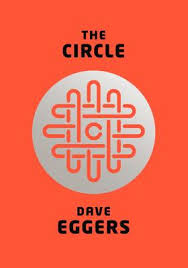
[READ: October 10, 2015] The Circle

I put this book off for a while but with no real reason for doing so.  And I’m sorry I waited so long because the book is really good–it’s thought-provoking and questions a lot of established ideas but is also really kind of fun and utopian.

What’s most impressive to me about the way the book is written is that the story itself is really quite simple.  It is a gradual building up of intensity.  At the end of which the main character has to make a decision which proves to be very important both for her and everyone else.

The story is about Mae.  Mae had been working at a dull and dispiriting job in civil service at her home town.  The job was dull, the people were dull, there was zero energy in the place and even her boss was depressing.  It sucked.  She had been there for 18 months and when her boss joked about her getting a promotion, she’d about had it.

She contacted her friend Annie.  Annie was her college roommate and boon companion for a few years.  And Annie worked at The Circle, the coolest most awesome place in the country to work at–think google, but better).  Was there any way that Annie could help out Mae?  Indeed there was.  Annie got Mae a job at The Circle, just like that.  Annie was one of the Top 40, the influential crowd at The Circle and Mae was in (her first day is hilarious, because Annie plays a wonderful prank on her). (more…)

Read Full Post »

spioiledSOUNDTRACK: THE BEATLES-Let It Be (1970).

letOf all the fascinating details about Beatles releases, I don’t think any are more fascinating than the details about Let It Be.  I’m not even close to understanding everything that went on here.  But in a nutshell, it seems that they went into the studio to record an album called Get Back. They were even going to film the whole things.  It got scrapped.  Some members quit the band then rejoined.  And then they recorded Abbey Road.

And then the band did a concert on a rooftop (almost exactly 46 years ago!).  And soon after they broke up. Then some producers decided to release Let It Be as a soundtrack to the documentary made about their recording.  They used some of the material from Get Back and some from the rooftop concert and then Phil Spector got involved and put all kinds of strings on everything and then the album was released in the UK on my first birthday.

There’s lots of snippets of dialogue which seem designed to make it feel like a soundtrack (which it doesn’t).  There’s really short snippets of songs, there’s raw live songs, there’s overproduced string laden songs.  It’s kind of a mess.  But in there are some good songs too.

“Two of Us” is a pretty folkie number that I like quite a lot although I first became familiar with it from a Guster cover (which is pretty fine.  I never quite understood the title of “Dig a Pony,” but it’s a big weird sloppy song. It’s kind of fun to sing along to—especially the falsetto “Beeeecause.”  This song was recorded from their rooftop concert and it feels rawer than some of the other songs.

“Across the Universe” is a lovely song.  Evidently Lennon didn’t contribute much to Let It Be, so they threw this on to give him more content.  I actually know this more from the Fiona Apple version (which I think is actually better than this processed version). I don’t really care for the strings and echoes feel on this version. “Dig It” is a short piece of nonsense. It was exerted from a lengthy jam but for some reason only this little snippet was included on the record–it sounds odd here.

“Let it Be” is quite a lovely song. I don’t really care for the Phil Spectorisms that were done to it—the strings and choruses seem a bit cheesy.  At the same time, the guitar solo (which is quite good) sounds too raw and harsh for the song.  “Maggie Mae” is a traditional song, another bit of fun nonsense.  I like “I Me Mine,” it’s rather dark and the chorus just rocks out.  “I’ve Got a Feeling”, was also recorded on the roof, so it feels raw.  There’s some great guitars sounds on it. Evidently it was initially two songs, and Lennon’s part (the repeated “everybody” section) was added to it.

“One After 909” sounds so much like an early Beatles song–very traditional rock and roll (which means I don’t really like it).  Although the version is raw sounding (it was also recorded from the rooftop) so that’s kind of cool. Huh, Wikipedia says “the song was written no later than spring 1960 and perhaps as early as 1957, and is one of the first Lennon–McCartney compositions.”   “The Long and Winding Road” is where all the controversy comes from.  McCartney hated what Phil Spector did to his song.  He HATED it.  And I have to agree.  It sounds nothing like the Beatles–it sounds very treacly and almost muzaky.  It feels endless.  At the same time, I’m not even sure if the song is that good–it’s so hard to tell after all these years. I think it kind of rips off the transition in “Hey Jude” which was used to much better effect.

“For You Blue” is a simple blues. I like it better than most of the Beatles’ blues, perhaps because of John’s slide guitar (and the funny comments through the song–which makes it seem like the band actually liked each other).  “Get Back” ends the disc as a fun rollicking romp.  I really like this song, although I’m surprised at how short it seems–I thought there was a lengthy outro.  The end of the song (and the disc) has John asking if they passed the audition–lots of fun going on in this contentious recording session.

So it’s not the best career ending disc, although I guess as a soundtrack it’s pretty good.  I’ve never seen the film, and I’m kind of curious to after having walked through all of these Beatles albums.

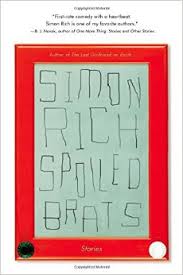
[READ: January 19, 2015] Spoiled Brats

I probably read too much Simon Rich too close together, but it’s so hard to resist him.  I’ve said before that I enjoy his shorter pieces the most, but there were some longer ones in this one which were really good as well.

This is the first book where I thought that Rich went a little too dark (although not as dark as Sarah thought he did).  That’s sort of the point of the book, though, to look at people (especially people named Simon Rich) who are horrible human beings.

“Animals” [New Yorker, April 10, 2013] opens from the point of view of a class hamster.  He is tormented by the children in the class and he knows that when Simon Rich is supposed to feed and give them water that their lives might just be over.  The Simon character is hilarious, and it’s nice to see that revenge is sweet.

“Gifted” wonders what if a child isn’t so much gifted as Satanic–how many euphemisms will be used for this one child?

“Semester Abroad” is the diary of a girl who has gone abroad–to another planet.  And how her insensitivity is handled during an intergalactic crisis.  I enjoyed this one a lot. (more…)

Read Full Post »

freedomSOUNDTRACK: CRASH TEST DUMMIES-Jingle all the way… (2002).

ctdEven though the Crash Test Dummies are often seen as a joke band or a one hit wonder (which I guess they are), I’ve liked them for a while (their earlier stuff a lot more than their later stuff, admittedly).  But it seemed like they’d have a fun take on Christmas music.

And it starts out in a comical sort of way with Brad Robert’s deeper-than-ever voice reciting about his life in Los Angeles, where it is warm and sunny at Christmas time.  I like that he rhymes 24th with up north.  The spoken section is quite loud in the mix (it sounds like he is right in your ear).  Unfortunately, that is the case when he starts singing too–he is uncomfortably loud in the mix and it sounds like he is holding back because of it–he doesn’t sound great and his voice sounds more comical than interesting.  Which is a shame because the music (with cheesey keyboards) is great.

Roberts sings lead on about half of the songs.  Ellen Reid sings lead on the other half except for a couple where they split lead duties.

The rest of Robert’s songs include: “Jingle Bells” (which is certainly comical–it sounds like a chain gang song with the “Hey!s” sounding almost like a prison chant).  It’s weird and cool though (even if his voice is once again too loud in the mix).  “God Rest Ye Merry Gentlemen” has his voice mixed much better–he seems to be really singing.  And this version–a loungey/jazzy rendition is much great fun.  “God King Wenceslas” sounds proper (with Reid’s close backing vocals).  It has a pretty penny whistle keeping the song going.

Ellen Reid has a great voice and I love hearing her sing.  But in the first two songs she sings lead on in this disc she sounds like she is singing too slowly.  “O Little Town of Bethlehem” especially sounds like the music is going to pass her up at any minute.  I also don’t like the country vibe of the song.  “In the Bleak Midwinter” is also (intentionally) slow, which I don’t like.  Perhaps I just don’t like this song (although I do think the melody is lovely).  “The Little Drummer Boy” is beautiful and Robert’s bass backing vocals are perfect.  “Silent Night” is done in a countryish style, but I like this version.  Although normally this song can make me cry, this version absolutely does not–too honky tonkish.

The final song, “The Huron Carol” is quite formal and proper–just Reid and a piano opening the song.  It sounds very holy, very pretty.  When Robert’s bass backing vocals come in, it adds more depth to the song.  And it’s a lovely way to end.

[READ: October 30, 2014] Freedom

I read this a couple months ago and then got so caught up in reading other things that I never got around to posting about it.  And that’s a bummer because I really liked the book a lot and I fear that I won’t remember everything I wanted to say about it.

I had read a couple of excerpts from the book in the New Yorker (quite some time ago).  They were helpful in grounding the story for me, but they didn’t prepare me for the breadth of the story.  It follows one family, the Berglunds, through several decades, focusing on each of them in great detail as they navigate through the Reagan, Bush, Clinton, Bush and a smidge of the Obama years.

The Berglunds are a liberal family.  They were among the first white families to move onto their urban street in St. Paul, Minnesota (after white flight to the burbs).  Patty is a charming (some say smug) homemaker and Walter is a lawyer (public defendant, naturally).  They have two kids, Jessica and Joey.  Patty dotes on Joey to an embarrassing degree (Joey is embarrassed by it, Jessica is infuriated by it and even Patty is kind of embarrassed when she really thinks about it).  At the same time she is rather neglectful of Jessica.  Naturally, Jessica becomes quite the success (loves reading, committed to the environment), while Joey rebels and finds all kinds of ways to disappoint them and make money.  (This isn’t a bad thing, but the family has plenty of money and Joey doesn’t need to (especially not the way he goes about it).  Not to mention Walter and Patty are not into the money for money’s sake thing.

The book opens that there was some “news” about Walter. He and Patty had moved to Washington DC two years earlier.  He clearly did something bad (we won’t find out until much later).  But that serves as an introduction to the Berglunds.  And then we go back to see them, years earlier, settling into St Paul. (more…)

Read Full Post »

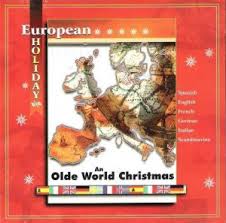
rich nameSOUNDTRACK: AN OLDE WORLD CHRISTMAS (European Holiday) (1990?).

olde worldWhile yesterday’s Norwegian Christmas album was awesome, this one falls very very short.  The premise of the album is so promising: Christmas songs from around the world.  There are Spanish, French, English, German, Scandinavian and Italian songs here!

Well, the problem is that this entire record was recorded (apparently) by one guy on a keyboard with five preset sounds.  It is so disappointing.  I mean sure it’s pretty (sort of).  But there is no sense at all that these are different countries’ songs.

For instance, “Angels We Have Heard on High.”  Who knew that that was originally a French song?  Not me.  And in no way does this keyboard instrumental version of “Les Anges Dans Nos Campagnes” convey that it is anything other than “Angels We Have Heard on High.”  How about the fact that we get “O Tannebaum” instead of “O Christmas Tree”?  Well, without words, what’s the difference?

So, there are pianoish sounds and harpsichordish sounds and a flute-ish sound.  And this would probably be a nice thing to put on as you were falling asleep on Christmas Eve and wanted visions of synthesized sukker plomme dancing in your tête.  Thank goodness I got it for 99 cents.

[READ: December 16, 2014] What in God’s Name

When I grabbed Simon’s Rich’s last story collection, I also grabbed this novel, assuming that, you know, it would be hilarious.  And it is.

This story is set in Heaven, Inc.  The CEO, God, is more interested in watching NASCAR than actuality attending to any miracles or crises on earth.  In fact, we learn that Earth was created primarily to produce Xenon, and that humans were just a pet project of some angels.

Angels, yes.  The entire story is written from the point of view of some angels working in heaven.

We meet Craig who has been in Miracles for a few years.  And there’s a new addition to the team Eliza who spent many years working in Prayer Intake but really wanted to move up to Miracles because it just sounded so much more interesting.

One of the best parts about the story is the way Rich envisions angels performing small miracles every day–adjusting the world without transgressing any of God’s major laws (gravity, physics, that sort of thing).  When an angel goes too far (like when Wilt Chamberlain scored 100 pints in a game because God liked him and the angel wanted to impress Him), that angel gets punished.  So I loved watching the convoluted ways angels did things to make people act or react.  Small things to help avoid getting a paper cut or assist in catching a fish. (more…)

Read Full Post »

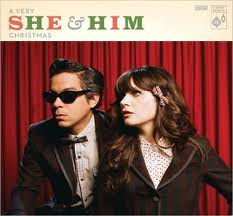
lastgSOUNDTRACK: SHE & HIM-A Very She & Him Christmas (2011).

shehimI love the packaging of this disc (the envelope with the Christmas letter/liner notes is charming).

I really enjoyed Zooey Deschanel’s singing in Elf, I thought it was really pretty and surprisingly unaffected.  So it’s not too surprising that she stared making records herself.  And M Ward seems like a perfect accompaniment to her slow, rather old school style of singing.

I have a hard time getting into the She & Him records though.  They’re just, yes, too slow for me.  The tempo is perfect for her voice, which is naturally very pure and clean.  And she even has a good crooning style, I just need the songs to be a little peppier.  Or like on “Run Run Reindeer,” I find her version is kind of abrupt, perhaps she doesn’t really hold her notes for very long which I find disconcerting.

I like the first two songs, “The Christmas Waltz,” and “Christmas Day” because they are songs I didn’t know already, so I had no expectations.  “Christmas Wish” is really nice with Ward taking lead vocals.   As for Zooey’s leads, I like “Sleigh Ride” quite a lot.  And their version of “Silver Bells” on ukulele is just beautiful.

This collection of songs is quite nice, if not a little too mellow.  It sets a mood and follows through all the way, which is good.  I really do wish I liked it more.

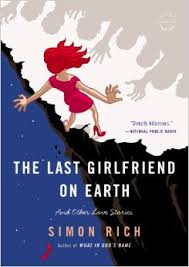
[READ: December 5, 2014] The Last Girlfriend on Earth

I love Simon Rich, but sometimes I lose touch with just how many books he releases.  So when he was on Seth Meyers the other night I learned that he had a new book out, which was great.  But then I also learned that I missed his last two books!  Jeez.  One is a novel and this one is a collection of short stories.

I have said before that I love Rich’s really short pieces–he is so good with a set up and punchline.  Most of these stories are longer, and they are pretty much all very funny indeed.

The book is set up in three parts: Boy Meets Girl, Boy Gets Girl and Boy Loses Girl.  And indeed, the stories in each section do match up to that general setup (it’s quite clever) although they are not connected to each other.  Several of these stories appeared in the New Yorker and it was fun to read them again and to see them in this new context.

Incidentally, they are making a TV show based on this book, airing in the new year on FXX, called Man Seeking Woman–I hope it’s good. (more…)

Read Full Post »

silkSOUNDTRACK: STARS-Heart (2003).

stars I found out about Stars with their second album but I like their debut quite a lot too.  There’s a few songs that i don’t love, but overall the album is really solid.

The opening synths belie the beautiful guitar (and nice bass work) of “What the Snowman Learned About Love.”  Singer Torq’s voice is low and muted while other singer Amy Milan has gorgeous  harmony vocals.  “Elevator Love Later” features’ Milan on lead (for some verses)–the album really comes to life with this song.  It’s got a great chorus and a cool bass line that elevates the song above typical pop fare.

“Heart” has a melancholy piano riff (something Stars excel at) and some wonderfully poignant lyrics: “Sometimes the TV is like a lover, singing softly as you fall asleep.”  And yet it, once again, has a really catchy chorus (with lots of “All rights”).  “Woods” is mildly orchestral and has a plaintive vocal line and a sampled spoken word section (which I can’t identify).

“Death to Death” is one of my favorite Stars songs.  A slinky discoey song with Torq’s cool verses and Milan’s sultry “I am destroyer I am lover” chorus.  I love the sound of the next song (synthy flutes and the very clear guitar) that play throughout “The Vanishing” even though I don’t love the song.

“Romantic Comedy” surprises with its baritone guitar sound (instead of the sprightly synths), but the chorus is once again super catchy.  There’s some great lyrics in this song as well: “You’re not bad, but you were just badly raised,” and the chorus “don’t walk away then turn and say I love you anyway.”  “Time Can Never Kill the True Heart” is a beautiful song with a lovely sentiment.  “Look Up” is a pretty Amy Milan sung song.  I love the way the chorus’ words don’t pause for breath even though the song itself is not very fast.  “Life Effect” is pretty song sung by Torq (I really like when the guitars come to the fore even though I think of Stars primarily as a synth band).

stars other“Don’t Be Afraid to Sing” is the final song on the album,.  It’s a simple ballad, and once again the bass line is great–nothing fancy but it’s a great melody behind the guitars and vocals.  It’s got a great ending of an album sentiment: “We all come to an end / And we all end together.”

There’s a “bonus” track on my version of the album (cleverly hidden about 20 seconds after the previous song).  It has a with a great hidden bonus track title–“The Comeback.”  It actually sounds perfect with the album–an instance where a bonus doesn’t really feel tacked on.  It’s a nice addition if you can’t get enough of the band.

Incidentally, the American version has the reddish cover above, while the original cover is this black and white one down here.

[READ: November 17, 2014] Silk

I enjoyed Mr Gwyn so much that I wanted to read more by Baricco.  And when I saw that many of his books are so short, it  was easy to grab them and devour them.

I didn’t know anything about Silk–somehow I missed it when it came out.  It was even made into a movie, so it must have been a big important book (and it was a huge best seller).  So imagine my surprise to see that the book is 91 pages and that each chapter is basically one page (sometimes half a page).   And Baricco creates this beautiful, taut story that is really compelling, in what is really only about 70 pages of text.

I’ve admired Baricco’s ability to write gorgeous novellas, and this must be where it all started (his earlier books are somewhat longer than this).  The fact that none of his stories are about similar things is also pretty amazing.

This story is about a Frenchman who makes his fortune buying silkworm eggs and the lengths and distances he is willing to travel for them.  But it is also about something much more poignant. (more…)

Read Full Post »

gwynSOUNDTRACK: STARS-No One is Lost Tour EP (2014).

stars epStars are back with a new album and this downloadable 5 song EP.  There’s something about Stars’ aggressive pop sensibilities that I just love.  It’s the dual vocals, the big choruses and I’m sure to a certain degree it’s the darkness in the lyrics that compliment the poppy music so much.

The EP has five songs, “No One is Lost” and “From The Night” are from their new album.  “Hold On When You Get Love And Let Go When You Give It” is from their previous album The North.  There’s also two exclusive tracks: “Blue Is The Colour” and “From The Night” (A Tribe Called Red Remix).

“From the Night” has simple, keyboard note-driven verses which are obliterated by the dancey and even discoey chorus.  Surprisingly at the 4 minute point, it adds a third fast part which segues back into the catchy chorus.  “No One is Lost” opens with Amy Milan speaking French before the keyboards wash in.  It has a slightly faster pace than their usual fare.  But despite the bouncy music in the chorus, we get the twisted lyric: “put your hands up coz everybody dies” (that’s Stars in a nutshell).

“Hold On When You Get Love And Let Go When You Give It” is less dancey (perhaps less discoey sounding is more accurate).  It’s got a real Stars feel to it (when Milan comes in at the chorus it is really angelic), and showcases Stars’ previous album very well.

The two new songs include the Tribe Called Red remix of “From the Night.”  I’m not that big a fan of remixes, but this one is pretty good.  I like the way they stripped the big chorus of the music and left it spare–which makes their catchy vocals seem kind of sinister.  I actually expected a bit more of Tribe’s signature sound put into the song, but that’s not really what remixes are all about, so I guess it’s no real surprise they didn’t.

“Blue is the Colour” is a dark sounding song as well, until the chorus comes in with some poppy keyboards and slinky guitars.  It’s very electronic sounding which I love in contrast to Torquil’s mellow vocals.  But at 6 minutes long, this song has many sections up its sleeve, and the twist at 4 minutes really turns the song into something else, with an almost epic feel.

It’s a great sample of Stars more recent work.  This link takes you to WXPN from which you can download the EP from NoiseTrade.

[READ: November 5, 2014] Mr. Gwyn

I loved this book.  It has been one of my absolute favorite books in years.

The premise is fairly simple.  A successful writer (Mr. Gwyn) has had three books published to much acclaim and financial success.  But one day he wakes up and decides that he is done writing. He crafts a list of 50 things he will never do again, and one of them is write a book which he publishes in the newspaper.  His agent thinks it is a great marketing scheme, but Gwyn is quite serious.

Gwyn then disappears from society for a while.  Only his agent is able to fin him (Gwyn and the agent are very close).

After a series of small incidents, Gwyn’s agent tracks him down at the laundromat.  He has sent his new employee, a young woman named Rebecca, to give him a phone through which they can talk.  Rebecca is respectful and Gwyn is fascinated by her.  Over the next few months, he and his agent only communicate via Rebecca.

One day, in order to avoid a rain storm, Gwyn ducks into an art gallery.  He has never really understood art.  But he becomes fascinated with the portraits there.  And he decides that his new “job” is that he is going to create portraits with words.  He calls his new occupation, “copyist.”  Obviously his agent freaks out about his–no one even knows what “copyist” means.  But Gwyn is determined.

He spends the next few months getting ready–he rents a studio, buys furniture and specially ordered light bulbs.  And then he is ready to work.  But who will he his first portrait be? He finally settles on Rebecca–someone he knows a little and feels comfortable enough to ask to pose for him.  And this is where the story became fantastic. (more…)

Read Full Post »

krausSOUNDTRACK: THE FLAMING LIPS-The Terror (2013).

terror After the distortion heavy and heaviness of At War with the Mystics and Embryonic (to say nothing of their other experimental releases), I wasn’t sure what to expect from an album called The Terror.  Yet with a title like that the album is far more invested in psychological terror than in pummeling you with scary noises and music.  The album is more unsettling and spooky with existential dread.

Wayne Coyne has always been a pretty optimistic guy–weird, sure, dealing with feelings of dread, sure, but never so dark and insular.  But I learned that before recording this album and most likely as an impetus to record it,  Coyne separated from his partner of 25 years, Michelle, and Lips multi-instrumentalist Steven Drozd temporarily relapsed into addiction.

In an interview, Drozd says the album is like a crisis of life confidence.  He also says that the uniformity in sonic style was intentional: “Instead of writing songs and then figuring out sounds, we’d write the other way around: create sounds then make songs out of those sounds.”

So the vocals are quite low in the mix, and there is not a lot of “music” in the album.  Rather there are layers of sounds–swishing synths, spiraling noises, percussion effects that seems to almost cover up the vocals, giving it a very claustrophobic effect.  “Look… The Sun Rising” opens the disc.  It is primarily percussion with some noisy sounds and really sharp piercing guitars (that play noisy counterpoint to the soothing chorus of Oh Oh Ohs).  And yet after all of that noise and chaos, the very lovely “Be Free, A Way” surfaces as a quiet introspective song.  There are gentle keyboard notes (not unlike on Yoshimi) that propel this song along.  “Try to Explain” is a pretty song with some unusual sound effects swirling around it (The Lips can’t so straight up pretty, right?).  And yet lyrically, this song, along with the rest, is very dark indeed.

“You Lust” is a 13 minute (!) invocation about various forms of lust.  It opens with the couplet: “You’ve got a lot of nerve/A lot of nerve to fuck with me.”  The middle of the song is a kind of Pink Floydian keyboard workout.  It’s a  lengthy jam that’s kind of samey, but I’ll bet if you can really sit (with headphones) and close your eyes and focus it’s pretty intense.  After about ten minutes of that repetitive claustrophobia, some lightening occurs with sprinkled keyboard notes.

“The Terror” is primarily in Coyne’s falsetto, and it seems gentle until the mechanized noises come bursting forth.  “You Are Alone” is the shortest thing here, under 4 minutes of squeaking noises.  And again, a lovely melody despite the title.  I feel like this song summarizes the album pretty well.  In it, Coyne sings “I’m not alone” while a deeper voice replies, “you are alone.”  Whose voice will ultimately win?

  “Butterfly, How Long It Takes to Die” returns to that abrasive guitar of the earlier tracks, but the main body of this 7 minute song is just bass, keening keyboards and Coyne’s whispered voice.  There’s a recurring synth line that is magical and/or creepy depending on your frame of mind.  It, along with many of the other songs, have a kind of coda that links the songs.  This one is mostly just choral voices, but it twists the ends of the songs in a different direction. “Turning Violent” is a quiet track, in which Coyne sounds nearly defeated until the second half of the song grows louder and more animated with layers of vocals.  The disc ends with “Always There…In Our Hearts” which seems to offer some hope…maybe.  There’s signs of uplift in the melody, and when the drums kick in at the end, it seems to propel the song into a more intense frame of mind.

And lyrically, despite all of the darkness that is always there in our hearts, there is a light peeking out: “always therein our hearts a joy of life that overwhelms.”

Although most reviewers find this album unremittingly bleak, I find the music to be beautiful in an aching sort of way–a beautiful way to deal with pain (better than getting the same tattoo as Miley Cyrus, anyway).

[READ: October 31, 2014] The Kraus Project

The title page of this book read: The Kraus Project: Essays by Karl Kraus translated and annotated by Jonathan Franzen with assistance and additional notes from Paul Reitter and Daniel Kehlmann.

So just what is this thing anyhow?  Well Karl Kraus was a German writer (1874-1936) whose main contributions to letters were some essays and a newsletter Die Fackel (The Torch).  The authors compare the newspaper (favorably) to a blog (while also complaining about what blogs have done to letters).  He started Die Fackel in 1899 and he continued to direct, publish, and write it until his death.  He used the paper to launch attacks on hypocrisy, psychoanalysis, corruption of the Habsburg empire, nationalism of the pan-German movement, laissez-faire economic policies, and numerous other subjects.  For the first ten or so years, Kraus was the editor, accepting contributions from around the German speaking word.  But in 1911, he became the sole contributor to the newsletter.

He also wrote many essays (he did not care much for fiction), including the two main ones that compression this book: “Heine and the Consequences” (1910) and “Nestroy and Posterity” (1912).  The book also includes two follow up essays: “Afterword to Heine and the Consequences” and “Between Two Strains of Life: Final Word to Heine and the Consequences” (1917) and a poem: “Let No One Ask…” (1934).

The essays themselves are quite brief.  Despite the first coming in at 135 pages, note that the left pages are all in German (so reduce 135 by half), nearly all of the English pages are filled with footnotes (reduce by half again) and some of the footnotes run for several pages.  So the essay could be said to be about 25-30 pages.

The same is true for all of the pages in the book.  The left sides are in German (except the footnotes) and most pages are split in half because of the footnotes.  Which means that Franzen and friends write far more than Kraus did.  Ultimately, this book is actually three things: It is a collection of Kraus’ essays with Franzen’s fine translation; it is an explication of Kraus’ attitude and about life in Germany during Kraus’ life and finally it is an insight into Franzen as a young man living in Germany and why Kraus was so appealing to him.

The first part: Kraus’ essays. (more…)

Read Full Post »

elmer SOUNDTRACK: R.E.M.-Collapse into Now (2011).

R.E.M._-_Collapse_into_Now“Discoverer” opens this disc with ringing guitars–not exact R.E.M. replicants, but familiar.  And then Stipe comes in and the refresher course in R.E.M. begins.  Collapse Into Now proved to be R.E.M.’s final album, and while some of their latter albums weren’t great, Collapse seems to revisit everything that was great about R.E.M. and tries to spread it all over this album.

The blueprints for classic R.E.M. songs form the structure of a lot of these songs, with chiming guitars, and Stipe’s recognizable vocals.  “All the Best” sounds like classic R.E.M. (although Stipe’s delivery is more current sounding).  It also fits in well with the faster songs from Accelerate and is only 2:46.  But it’s “Überlin” that really sounds like a classic R.E.M. song.  That notable guitar style with Stipe’s very specific delivery style.  And then come Peter Buck’s harmonies.  It sounds like a good outtake from, say, Automatic for the People.

Stipe tends to do a lot of his sing-speaking on this album (and i think the one thing I don’t like that much about the album is that early R.E.M. seemed to obscure Stipe’s vocals and lyrics a little bit, giving them an air of mystery.  Whereas the newer records are all pretty well laid bare).  So “Oh My Heart” has Stipe almost speaking his poetry.  It’s got mandolin and Buck’s mildly annoying backing vocals (I’ve never thought that about his backing vocals before).

An Eddie Vedder cameo is utterly wasted on “It Happened Today,” you can barely hear him as all he does is backing crooning near the end of the song (and frankly the “hip hip hooray” chorus is lame).  “Every Day is Yours to Win” is a pretty slow song.  It doesn’t amount to much but the melody is really beautiful.  “Mine Smell Like Honey” is a crazy bad title, but it’s a great rocking song, really hearkening back to classic R.E.M.–ringing guitars and Stipe’s vaguely disguised voice.  “Walk it Back” is another slow ballady type song and is really pretty.  While “Alliagtor_Aviator_Autopilot_Antimatter” is a rocker with Peaches singing and speaking backing vocals.  “That Someone is You” follows up with another speedy track.

I tend to dislike the really slow R.E.M. songs, so “Me, Marlon Brando, Marlon Brando and I” doesn’t do much for me.  The disc ender, “Blue” reminds me of Out of Time‘s “Country Feedback” (I keep waiting for him to say “I need this”).  And the Patti Smith backing vocals recall “E-Bow the Letter.”  “Blue” is meandering and unfocused but Buck’s atmospheric guitars are quite effective, even if the song itself is nothing special.  I don’t quite get the coda of tacking the opening chords of the album on to the end, but whatever.

So basically this album feels like some mostly great outtakes from earlier R.E.M. albums. And there’s really nothing wrong with that (well there would be if R.E.M. was still trying to release a lot of new music).  But since the band was ready to call it quits anyway, it’s a nice recap of their career.  True, I’d rather listen to their earlier records, but you could definitely throw most of these songs into a mix with the earlier ones and they would sound perfect.

[READ: October 25, 2014] Elmer

Elmer has a  chicken on the cover.  It also features this quote at the top of the book: “It’s the Great Filipino Novel, with chickens.”  What to expect from this book?  Well, chickens, obviously, but I never would have guessed what this book contained.  Indeed, this book is pretty mind-blowing (in a good way).

It has a simple premise, which seems comical but is actually taken very seriously: what if chickens became “aware” and learned to speak?  It sounds funny, right, but Alanguilan really explores this issue seriously–if a species of animal that we normally eat suddenly talked to us en masse, how quickly would we deal with this, and what would humanity’s reaction be?  It tackles issues of slavery and racism and pushes them further.  And while the “change” takes place in 1979, it addresses contemporary society with an inquisitive glare.

While there is some humor in it, this is a serious book.

Jake Gallo is a modern chicken (the book is set in 2003–two decades after chickens became “human”).  He has just been rejected for a job, and he pulls the race card (this would be the hilarious reveal that our main character is a chicken).  While he’s feeling sorry for himself, he gets word that his father, Elmer, is dying and he returns home to be with his mother and family.  On the way home he runs into Farmer Ben, the farmer who helped to raise Elmer’s family.  And he is genuinely glad to see Jake.  Jake seems somewhat put off by Farmer Ben and declines his offer of a ride. (more…)

Read Full Post »

lostscrapSOUNDTRACK: THE XX-Coexist (2012).

coexGiven my proclivities towards noisy fast rock, there is no reason that I should like The XX, and yet I like Coexist quite a lot. It is such a spare album, but Romy’s voice is fantastic—so sensuous and breathy–that she can totally handle a song that is nearly a capella. So a song like “Angels” whose music consists pretty much entirely of a beautiful echoey guitar (and virtually nothing else except for some occasional soft percussion) is engrossingly intimate and not at all boring. In fact when that simple percussion eventually comes in, it’s like a revelation of sound accompanying her.

What also keeps the album interesting is that she is not the only singer (so there’s something for everyone). “Chained” has Oliver’s breathy, sexy voice as he more or less whisper/sings the lyrics. It has slightly more complex arrangements (meaning the drum is constant and there are quiet waves of synths). “Fiction” slowly builds with an ominous muted guitar motif and echoed chords. But when the chorus kicks in, that muted guitar grows loud and it’s almost overpowering (relatively, of course).   “Try” brings in a spooky kind of keyboards that is slightly unsettling under their mellow hushed duet of vocals.

The diversity of simple sounds that Jamie xx adds to each song are revelatory.  Even though each song is quiet and intimate, the sounds that he uses are so very different within that limited palate.  So “Reunion” sounds like a steel drums, before adding pulsing bass beats. “Sunset” has a slinky guitar and “Missing” introduces as drumbeat that is like a heart beat.  “Tides” has one of the loudest drum beats on the record, alternating with a delicate guitar line.

The simple bass line adds a really funky quality to “Swept Away.”  And when the claps and keyboard hits come in it feels almost like a dance song.

This is a great album for quiet nights and headphones.  Even if the songs seem to be mostly about lost love, it has a calming effect that is really enjoyable.  I’ll have to check out their debut as well.

[READ: September 30, 2014] The Lost Scrapbook

Some fans of David Foster Wallace speak well of Evan Dara (at least that’s how I’ve heard of  him).  I was unfamiliar with him and the fascinating story he has built around himself.  Evan Dara appears to be a pseudonym.  As one writer put it: “Hell, we don’t even now who Evan Dara is. Apparently, he is a male American in his 30s living in Paris.”  This, his debut novel, has attracted attention not only for being really weird, but for being really good.

What was fun about reading this was that I knew there were strange things afoot in the book, but I didn’t know what exactly (I really like to go into a book completely blind if I can).  So when the book started out with a conversation in which no character names were given (or even how many there were), I was prepared.  And while I didn’t really know what the subject they were talking about was, I figured that would be fine as well.  Then when four pages in the all caps word YIELD seemed to signal a change of narrator/perspective/something, I thought, okay this is what I’m in for.

Then I noticed that every paragraph which wasn’t conversation (with an em dash) was preceded by three ellipses (and ended with same).  A few pages later there’s an all caps TOW-AWAY ZONE which introduces another shift.

And somewhere around page 14 a sort of plot begins to form (although it’s unclear whether or not any of the earlier sections have anything to do with this one).  A man is shot…or not?  But then after the KEEP DOOR CLOSED section break, a new story develops.  A man with a Walkman (I was trying to decide if this was deliberately retro or intentionally set in the 80s, but that was unclear to me) is driving along to meet a man named Dave (at last a name!).  Dave is a filmographer who has been collecting fireflies for a video project.  And just as we near a kind of resolution of this section, it morphs, unannounced, mind you, into something else entirely–a discussion of music, specifically Beethoven and his decision to rework limited material into multiple variations.  It is fascinating and engaging and very well-considered, but it too ends before anything can be “resolved.” (more…)

Read Full Post »

« Newer Posts - Older Posts »