Feeds:
Posts
Comments

Archive for the ‘Meta’ Category

SOUNDTRACK: HEM-Tiny Desk Concert #306 (September 28, 2013).

Hem is one of All Songs Considered‘s earliest discoveries. Back in 2002, we received a beautiful and unique album called Rabbit Songs. It was a homey, fireside kind of record, with a sound that could be called country or Americana, and the arrangements by Dan Messé made it feel quaint and warm. To top it off, there was singer Sally Ellyson, an untrained natural talent with an effortless yet breathtaking voice. Hem has gone on to make five more albums since Rabbit Songs; their latest, Departure and Farewell, finds the group still writing songs that feel as if they’ve always been there.

Bob is quite right about the feel of this band, the drums are actually foot stomping and piano tapping, and that makes the band sound like they are siting around cozy room with friends.   And then there’s her voice.  There’s nothing specific about it that stands out, and yet it really does.  Her voice feels incredibly warm and welcoming, making you want to stop and listen.  And perhaps it’s something about the recording which makes everything feel soft (but not muddy) and warm.

And even in the songs themselves, it feels like friends hanging out.  During “Walking Past The Graveyard, Not Breathing” they say “go George” as the intro to the bass solo and then “go Heather” for the violin solo.   “Tourniquet” has some great lyrics, between the alliteration at the beginning and the great metaphor of the song, I was so taken with the lyrics that I didn’t even realize how pretty the melody was:

Brooklyn, I’m broken — I’m breaking apart
Oh Brooklyn, your bridges are bound up in light —
Every artery’s clogged as you pull the belt tight —
And this tourniquet turns even tighter until
Traffic comes to a standstill

When the song suddenly takes off near the end (but only briefly) it really elevates the song which was already delightful.  Introducing the final song, “Seven Angels” she says they are excited to be there, playing in this format.  She says the song can be seen as a lullaby–she likes to sing it for her sister.  She says she doesn’t write the songs but she can pretend this one is hers.

It’s hard to imagine this band playing a venue much larger than this one–they seems right at home in a small space.

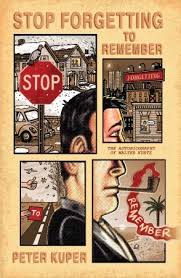
[READ: July 31, 2016] Stop Forgetting to Remember

This is a fascinating story about the comics artist Walter Kurtz.  I know very little about Peter Kuper, but I gather that this is sort of his life but written as an autobiography of somebody else.  (For instance, Kurtz was born on the same day as Kuper).

The back cover blurb also states how daring it was for Kurtz to write all of this –showing the embarrassing details, etc.: “My spouse would have killed me!”

This book is a collection of “stories” (not sure if they were ever published separately) that are joined by the narrative thread of Kurtz telling us about his life.  And the “occasion” for this reflection is the pending birth of his first child.  He is freaking out a bit–when he was young he never wanted kids, and then maybe he was cool with it, but recently he’s become terrified again.  He’s particularly afraid because he’s engaged with the world and he sees that as each month goes by, things get worse: AIDS, global warming, overpopulation, famine, wars (and that’s just 1996). (more…)

Read Full Post »

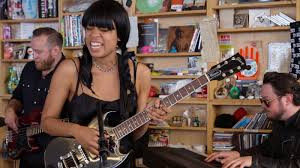
thrilignSOUNDTRACK: ADIA VICTORIA-Tiny Desk Concert #545 (June 30, 2016).

adiaAdia Victoria has a rough, raw voice that goes well with her simple, exposed guitar sound.  The blurb says her music “carries the singular perspective of a Southern black woman with a Seventh Day Adventist upbringing, who never felt like she’d fit in.”

She sings three song, mostly in a great, raspy voice.  For “Stuck in the South” she actually seems to be gritting her teeth as she sings: “I don’t know nothing ’bout Southern belles / but I can tell you something ’bout Southern hell.”  When the first verse ends, and her band kicks in, it adds such interesting textures.  A distorted bass and a lead guitar playing quietly distorted sounds.  This song is really captivating.

“And Then You Die” with its swirling sounds and keyboards has a very distinctly Nick Cave feel–gothic in the Southern sense of the word.  Indeed, the first verse is spoken in a delivery that would make Nick proud. This is no to say she cribbed from Cave but it would work very well as a companion song  I really like the way it builds, but the ending is so abrupt–I could have used some more verses.

After the second song the band heads away and Bob says “They’re all leaving you.”  She looks at them and growls, “Get off the stage!” to much laughter.

She sings the final song “Heathen” with just her on acoustic guitar.  It is a simple two chord song.  It’s less interesting than the others, but again, it’s the lyrics that stand out: “I guess that makes me a heathen, something lower than dirt / I hear them calling me heathen, ooh like they think it hurts.”

I’m curious to hear just what Adia would do with these songs when she’s not in this Tiny format.  I imagine she can be really powerful.

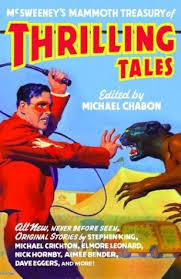
[READ: November 23, 2016] McSweeney’s Mammoth Treasury of Thrilling Tales

For some reason or another I have put off reading this McSweeney’s volume for many years.  This is technically McSweeney’s #10, although it was also released in this printing from a  major publisher. Sadly for me, my McSweeney’s subscription had expired sometime around here so I’ve never actually seen the “official” Volume 10 which I understand has the exact same content but a slightly different cover.

One of the reasons I’ve put off reading this was the small print and pulpy paper–I don’t like pulpy paper.  And it was pretty long, too.

But I think the big reason is that I don’t really like genre fiction.  But I think that’s the point of this issue.  To give people who read non-genre fiction some exposure to genre stuff.

Interestingly I think I’ve learned that I do enjoy some genre fiction after all.  And yet, a lot of the stories here really weren’t very genre-y.  Or very thrilling.  They seemed to have trappings of genre ideas–mystery, horror–but all the while remaining internal stories rather than action-packed.

Which is not to say I didn’t enjoy anything here. I enjoyed a bunch of the stories quite a bit, especially if I didn’t think of them as genre stories.  Although there were a couple of less than exiting stories here, too. (more…)

Read Full Post »

sardine6SOUNDTRACK0 Tonne Seize [CST bonus] (2016).

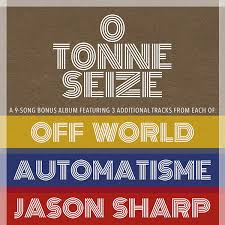
tonne0 Tonne Seize is a bonus compilation of three tracks each from Off World, Automatiste and Jason Sharp.  The collection is 41 minutes of music (not too shabby) and came with a pre-order of the three records (and is available on Soundcloud as well).

The first three songs are by Off World and the first two of those are remixes.  The original “Wonder Farm” is dominated by popping drum sounds.  There are some other sounds that go through the track but the base is mostly a kind of slow Asian melody.  The “Wonder Farm (Summer Crop)” mix removes those snaps and percussion entirely.  It focuses just on the music, which I have to say is far more enjoyable without the bangs.  “Primitive Streak” is a slow droning piece, while this compilation’s “Primitive Streak (Silver Mix)” doesn’t sound all that different.  It also removes the drums, and highlights the squeaky synth sounds and the overall drone tone.  It seems to emphasize and de-emphasize different instruments but otherwise sounds pretty similar. The final track  “Lost Meadow” is a pretty, delicate piano based piece with some twinkling of spacey synth notes.  It’s easily the prettiest piece.

The three Automatiste tracks do not quite follow the same naming convention as the actual disc, although the first track is called “Simultanéité 5.” It has slow beats and is basically two-note washes building on top of each other.  “Fragments continus” is a noisy piece with layered thudding drums (like heartbeats especially around the 1 minute mark) and drone noises that wash in and out.   About half way through what sounds like a melody appears amid the din, but it feels like it formed organically around the synths and drums which is pretty cool.   “Le Silence 3” opens with some jackhammer sounding drums and then almost easy listening synths.  The juxtaposition is interesting and by the end the song feels nicely dancey.

The final three songs are from Jason Sharp.  These three are quite different from his album because they really feature the saxophone to a larger degree.  “Plummeting Veins” opens with a heartbeat and some rumbling sax (that sounds like the opening of the Speed Racer TV show).   This track is under 2 minutes, the shortest he’s done by far, and the way the heartbeat speeds up as the sax plays some low rumbling notes is pretty cool. “Hear a Fading Cry” is a much longer number.  The heartbeat is quieter but the sax is much louder.  It sounds a lot like Colin Stetson in the low rumbling and noisy barking that the bass sax can produce.  It ends with some rather high-pitched squeaky sounds that I assume come from the sax, but which I can’t imagine coming from such a bass instrument.  It’s 7 minutes long although it takes almost 2 minutes to really get going.  And it swerves between loud and rumbling and then sort of menacing by the end,  “Ride On Into the Sweetening Dark” is perhaps the most conventional of Sharp’s songs.  It is a series of sax solo lines over a gentle tinkling backing drone.  Some of the solos lead to noisy wailing, but for the most part the line are pretty and jazzy.

It’s interesting how different these bonus tracks tend to be from the actual releases.  I enjoyed listening to these variants to see what else these artists are capable of.

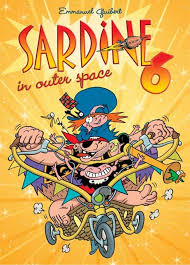
[READ: April 9, 2016] Sardine in Outer Space 6

Sardine is a children’s book published by First Second.  It was originally published in France (and in French) and was translated by Sasha Watson.  There are six Sardine books out.

The inner flap says “No Grownups Allowed (Unless they’re pirates or space adventurers).”  This is the final Sardine book.  And while I didn’t enjoy the first book much, by now I’m sorry to see the series end.

This book also has the fewest stories in it (only 9). (more…)

Read Full Post »

sardine5SOUNDTRACK: JASON SHARP-A Boat Upon Its Blood [CST119] (2016).

Layout 1Constellation records had been rather quiet this year in terms of new releases.  And then back in August they announced three new discs with this intriguing blurb:

Constellation’s three new fall releases by Off World, Automatisme and Jason Sharp are dropping on September 30th…  These new releases are wildly different yet satisfyingly leftfield albums that share an electric thread of sorts.  Electronic music strategies, technologies, histories and sensibilities come into play, in very diverse ways, with each of these debut records – making them stand out a little differently in the context of the Constellation catalogue perhaps, but also informing one another and making a lot of sense to our ears as an album trio (somewhat in the spirit of our Musique Fragile series).

This is the third of those three.

Jason Sharp has written this disc as “music written for amplified heart & breath,” and Sharp is credited with “playing” amplified heart, feedback, synthesizers and bass saxophone.  Other instruments listed are Pedal Steel Guitar, Violin and various percussive instruments.

From the Constellation site: “Using custom-built equipment to translate breath and heart rate into variegated sonic triggers, along with other modes of signal processing and in tandem with traditional instrumentation…[the album] deploys the human metronome of amplified pulse as a recurring undercurrent, with compositions that incorporate electro-acoustic and musique concrète strategies, drone, noise, electronics, methodical dissonance, tone poem, layered rhythmic and melodic figures, and improvisation.”

The disc opens with a trio of songs: “A Boat Upon Its Blood Pt.s 1, 2 & 3”  Part 1 begins with some quiet drones and pulses and what sounds (if you think about it) like water running through pipes or blood through veins.  It also like plectrum hitting strings or a musical rain stick.  The songs build in intensity until a pulse that sounds a lot like a heart beat (which it should) ends the track. This heart beat segues into Part 2 which is dominated by violins.  The violins seem to alternate between drones and dissonance with the pulses seeming to beat a bit faster in parts.  As this track ends, a martial beat takes over the drums, and that segues into Part 3 which has more drone sounds.   About midway through, new percussive sounds come in, changing the tone of the piece entirely.

Track 4 is “In the construction of the chest, there is a heart” is the most interesting of the bunch.  It has what I assume are several different heart beat sounds modified to create different percussion under various droning sounds. It really exemplifies the “heartbeat” aspect of the piece, which I thought would be more prominent in the disc overall.  The second half of the song is full of swishes and scratchy sounds which I certainly hope are the sounds of his blood pulsing through his veins.

“A blast at best” is a noise piece which sounds almost like the heart beats have been put through an autotune.  Midway through the song comes the bass sax playing some farting and pulsing sounds that add an interesting  melody to the sloshy noises.

Tracks 6 and 7 are another multi-part song “Still I sit
with you inside me Parts 1 and 2.”  Part 1 opens with a much more pleasant, albeit somber violin.  Slowly the heartbeats grow louder and more prominent.  The pulses increase and decrease although not necessarily with the intensity of the music.  The violins swirl and ebb, growing louder and more intense and then fading and seguing into the last track which opens with pretty guitars and accompanying violin.  About halfway through the song, the heartbeat resumes.  It come pulsing into the song louder and louder, dominating the whole thing.  And then with a few seconds left it builds a wall of feedback and noise that gives way to a cathartic echo.

This would be another string candidate for NPR’s Echoes.  Have you heard this, John Diliberto?

The disc notes that the piece was inspired by the Robert Creeley poem, “The Heart,” which I have included at the end of the post.

[READ: April 9, 2016] Sardine in Outer Space 5

Sardine is a children’s book published by First Second.  It was originally published in France (and in French) and was translated by Sasha Watson.  There are six Sardine books out.

The inner flap says “No Grownups Allowed (Unless they’re pirates or space adventurers).”  For the first time, Sardine was created without the help of Joann Sfar.  And I found this one to be my favorite one yet!

It seems like Sardine has really hits its stride with Book 5.  The author is having a ton of fun playing around with pop culture and with the idea that the characters know that there are books about them. It’s still a little weird that Supermuscleman is really the only bad guy and that he is always coincidentally where they show up, but that’s clearly not the point of the comic, right? (more…)

Read Full Post »

sardine4 SOUNDTRACK: AUTOMATISME-Momentform Accumulations [CST118] (2016).

Layout 1Constellation records had been rather quiet this year in terms of new releases.  And then back in August they announced three new discs with this intriguing blurb:

Constellation’s three new fall releases by Off World, Automatisme and Jason Sharp are dropping on September 30th…  These new releases are wildly different yet satisfyingly leftfield albums that share an electric thread of sorts.  Electronic music strategies, technologies, histories and sensibilities come into play, in very diverse ways, with each of these debut records – making them stand out a little differently in the context of the Constellation catalogue perhaps, but also informing one another and making a lot of sense to our ears as an album trio (somewhat in the spirit of our Musique Fragile series).

This is the second of those three.

From the Constellation site: “Automatisme is the electronic music project of Quebec-based producer William Jourdain, who has been self-releasing a brilliant series of albums and tracks under this moniker since 2013, exploring various intersections of drone, dub techno, electronica, ambient, electro-acoustic, and noise.”

This album is, indeed, very drone, dub techno, electronica, ambient, electro-acoustic, and noise.  There are six tracks: Transport 1, 2, and 3 and Simultanéité 3, 1, and 4.  The Transport tracks are all about 5 minutes and the Simultanéité tracks are all about 9 and they are interfiled on the record.

“Transport 1” seems to be all about the thumping drums. The synth lines are fairly simple and serve to propel the song along as almost an ambient dance track.  “Simultanéité 3” opens with some mechanical drone sounds and a beeping almost like a heart monitor.  The beeps change and then a new drum beat is added while fiddling synths tickle along the top of the song.  Things slow down and speed up and the track reminds me a lot of something you’d heard on NPRs awesome Echoes program.

“Transport 2” is more about drums. There are several different percussion themes going on–fat repeated drums, the main steady beat and then some low synth that runs through pretty much the whole thing.  “Simultanéité 1” is a drone song with a drum sound that is like a heart beat.  About a minute in the note changes and 30 second later the song takes on a different texture and pulse.  It remains largely ambient for most of the song.

“Transport 3” has more percussive sounds that make this track much faster than the others. The final track “Simultanéité 4” has what sounds like voices (although I assume they are not) echoing underneath the slow pulsing rhythms.

While the track listing alternates between drum heavy tracks and more mellow tracks, the whole disc has a very chill vibe.

[READ: December 5, 2014] Sardine in Outer Space 4

Sardine is a children’s book published by First Second.  It was originally published in France (and in French) and was translated by Sasha Watson.  There are six Sardine books out.

This time the inner flap says “No Grownups Allowed (Unless they’re pirates or space adventurers),” and this book had some of my favorite cartoons yet.

“Under the Bed” has the kids getting lost under Little Louie’s bed and finding all the monsters that hide there.  But Sardine’s adventures are so scary that the monsters don’t stand a chance trying to frighten him–they’re even a little afraid of Sardine, too.  Of course the kids have someone who they can go frighten. (more…)

Read Full Post »

sardine3SOUNDTRACK: OFF WORLD-1 [CST117] (2016).

Layout 1Constellation records had been rather quiet this year in terms of new releases.  And then back in August they announced three new discs with this intriguing blurb:

Constellation’s three new fall releases by Off World, Automatisme and Jason Sharp are dropping on September 30th…  These new releases are wildly different yet satisfyingly leftfield albums that share an electric thread of sorts.  Electronic music strategies, technologies, histories and sensibilities come into play, in very diverse ways, with each of these debut records – making them stand out a little differently in the context of the Constellation catalogue perhaps, but also informing one another and making a lot of sense to our ears as an album trio (somewhat in the spirit of our Musique Fragile series).

This is the first of those three.

Off World is a collaborative project featuring Sandro Perri. As the Constellation site reminds us:

Over the past couple of years, Perri has been letting us in on a fascinating treasure chest of strange and enchanting collaborative sound recordings – rich in deconstructed melody, interplay between acoustic and electronic instrumentation, and pointillist and aleatory composition techniques. … Off World 1 is alien electronics played humanly, with real-world accents throughout. 1 was conceived almost entirely during a 2-day session in London: a meeting orchestrated by producer Drew Brown between himself, Perri, Susumu Mukai and M J Silver after learning that Perri was a huge fan of both Mukai and Silver’s work. A bounty of raw material featuring mostly vintage synthesizers – EMS Synthi, Syntorchestra, Prophet 5 – was later abetted by violin, banjo, harpsichord, guitar and piano. The result is genuinely exploratory and peculiar sui generis instrumental electronic music that sounds like it could have issued from any time in the past 40-50 years. Off World resists easy categorization: not ambient “easy listening”, not strictly “improvised”, not “retro” – but eccentrically absorbing and soothingly mischievous as it charts its own sonic trails.

There are 7 songs on the disc and they are all variants on a kind of electronic/alien sound.  “Primitive Streak” has trippy synth lines and a slightly quavery “solo” over a simple drum beat.  “Old Brain” has a kind of staccato guitar part that plays through quickly.  It is later matched by “New Brain” which explores the same rhythms in a different way.

“No Host” is 80 seconds long  full of simple almost otherworldly synths (it reminds me of Close Encounters). “Extraction” has some loud ominous chords that surge and the recede.  “Choral Hatch” sounds both underwater and other worldly.

The final song, “Wonder Farm” sounds unlike the other songs because it is full of these snapping drum sounds–seemingly at odd intervals and not playing any rhythm (it sounds like fireworks going off).  The music also has hints of Japanese music but it seems overshadowed by the crashes.

Of the three I like this one best because of its varied sounds.

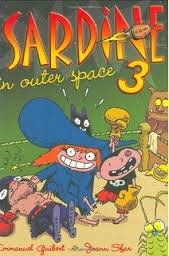
[READ: March 31, 2016] Sardine in Outer Space 3

Sardine is a children’s book published by First Second.  It was originally published in France (and in French) and was translated by Sasha Watson.  There are six Sardine books out.

This time the inner flap says “No Grownups Allowed (Unless they’re pirates or space adventurers),” and I found that I enjoyed book 3 quite a bit more than the first two books. Perhaps it is because I have read a few more First Second books by Sfar and have grown used to his style and humor.  Or perhaps the stories have just gotten better. (more…)

Read Full Post »

dfwreadSOUNDTRACK: CHRISTIAN SCOTT aTUNDE ADJUAH-Tiny Desk Concert #477 (October 9, 2015).

aacsChristian Scott aTunde Adjuah and his septet play what he calls stretch music: “the particular type of jazz fusion he’s up to: something more seamless than a simple collision of genre signifiers.”

They note that even his appearance stretches traditional jazz: “You may note that he showed up in a Joy Division sleeveless T-shirt and gold chain.” It’s sleek and clearly modern, awash in guitar riffs, but also bold and emotionally naked.

Christian Scott aTunde Adjuah (not sure how to abbreviate that) is a trumpeter and he can hit some loud powerful and long –held notes.   It’s funny that when he bends over the trumpet grows quieter—those ic really are direction-based.

For the first song “TWIN” he does some impressive soloing over a simple and cool beat—piano and delicate guitar riffs (there’s also an upright bass and drummer).   After his lengthy solo there’s a flute solo that also works perfectly (if less dramatically) with the background music.  (Christian plays tambourine during her solo).  He says that this song is about being a twin.  His brother, Kyle Scott is a film director and for whom Christians scores the music.  Christian also explains that he comes from an African-American and Native-American background and that this song has rhythms as a sort of history of his family that touches on Mali, Senegal Gambia and The Ivory Coast and makes its way to the Caribbean, Cuba and into New Orleans.

He’s pleased to play the Tiny Desk Concert for an audience that appreciates “Music that has nutritional value.”

For the second song, “West of the West” he brings on a young alto-saxophonist who plays with his drummer in a different band. The song opens with a rocking electric guitar solo and then the jazzy band kicks in behind it.  The instrumental features a couple of solos by the saxophonist, the pianist and the bassist.

“K.K.P.D.” is a dramatic song for which he gives a lengthy back story.  Many years ago in his home of New Orleans, he was stopped by New Orleans police late at night for no reason other than to harass and intimidate him.  he was coming back from a gig.  He resisted and was in a serious situation and was seriously threatened—the story is long and very affecting, especially given how articulate (I know, terrible word, but true) and calm he is about retelling this horrifying story.  His pride almost made him do something ill-advised, but instead he channeled that pent-up frustration into a piece of music whose long-form title is “Ku Klux Police Department.”

He adds that we see things on TV about inner cities or the ninth ward and we believe them to be true.  Like that the neighborhood is happy that the police are clearing out the youth there.  We begin to think that the narrative is true, although the people who live there can tell you otherwise.  Despite the title and the origin, the is song is designed to reach a consensus to move forward –not to build derision or hate.  He says that we have to start working on that now, because if it doesn’t start now then our children will continue to inherit this situation.

It opens with a noisy guitar wash and fast drums.  It’s quite noisy and chaotic although it resolves very nicely into an almost sweet piano-based song with slow horns.  The middle of the song ramps up with some intense soloing from Christian.  I love how that segues into a very different section with an electronic drum and delicate piano.  Chritsian’s next solo is much more optimistic.  The final section is just wonderfully catchy.

When he introduces the band, he points out just how young some of his newest members are: Drummer Corey Fonville (another new member) used a djembe as a bass drum, and also brought a MIDI pad so he could emulate the sound of a drum machine; Lawrence Fields, piano; Kris Funn, bass; Dominic Minix , guitar (21 years old); Braxton Cook, saxophone (24 years-old) and Elena Pinderhughes, flute: 20 years old!

I don’t listen to a ton of jazz, but I really liked this Tiny Desk Concert a lot.

[READ: July-October 2016] The David Foster Wallace Reader

I’ve had this book since Sarah bought it for me for Christmas in 2014.  I haven’t been in a huge hurry to read it because I have read almost everything in it already.  And some of that I have even read recently.  But this summer I decided to read some of my bigger books, so this was a good time as any.

One of the fascinating things about reading this book is the excerpting in the fiction section.  I have never really read excerpts from DFWs longer books before.  And once you decontextualize the parts, you can really appreciate them for themselves rather than as a means to the end of the story.  This is especially true of the excerpts from Broom of the System and Infinite Jest.  But also just reading some of these sections as a short story makes for an interesting experience.

It was also very interesting to read the non-fiction all together like that.  These pieces come from difference anthologies, but they have thematic similarities  So, placing them together like that allows for really comparing the stories.

And of course, the selling point for most DFW fans is the teaching materials in the center of the book–an opportunity to look into the man’s mind at work shaping younger minds.

I have written about virtually everything in this book already (title links refer back to previous posts), so mostly these are thoughts about the pieces themselves and not a part of a whole. (more…)

Read Full Post »

black-daimons SOUNDTRACK: LAST EX-Last Ex [CST107] (2014).

last-exOne of the things I love about Constellation Records is that you often never know what you’re getting.  They used to very specifically release a certain kind of music, but they’re now just releasing interesting and exciting music.  But also, a band name can’t really tell you what to expect from this label.

So who knows what a band like Last Ex will sound like.  And how cool that their first few songs on this are so good.

The disc’s sides are split into Side X and Side XX.

“Hotel Blues” opens with some scattered drums and chords.  It has  vaguely early-Pink Floyd feel to it.  But around a minute in, the synths pick up a repetitive melody and the bass and drums kick in to give it a very Can or Kraftwerk vibe.  The song is fairly straightforward, but there are sprinklings of notes—sometimes slightly off and vibrated that add some very cool textures to this pulsing track. It’s really groovy and fun.  But it’s “Girl Seizure” that I find so strangely compelling.  Again, over simple repetitive drum and bass, the guitar (or keyboards) play warbling notes that are unsettling and yet enticing.  The song quiets to almost nothing and then resumes in much the same way—and you welcome that weird warble and its of Moog feeling.  At just under 3 minutes its just the right length.

“Flûte magique” slows things down with some simple arpeggios.  There’s not a lot to the song, but it is wonderfully soothing as the bass notes tick away and then the guitar notes rise higher and higher.  The song picks up speed as it goes along and leads to a middle section that’s almost stiffly funky, if that’s possible.  The ending gets a little louder as it thuds to a conclusion.

“It’s Not Chris” opens with some static and strange noises and some soaring keyboards.  About a minute and a half in a strange staccato organ melody comes in with a violin sound doing a kind of solo over the top.  It’s all a little strange but it drops out in the middle to a kind of sinister pulsing, and when the melody resumes, it seems strangely comfortable again.  The end of the song has some high-pitched violin notes that sound almost like a theremin.

“Resurrection Drive” is mostly drums and echoed surf guitar chords. After a minute or so some strings are added to the mix.  It’s only 2 minutes long but it introduces some interesting tension.

Side XX has a quieter feel overall.  “Nell’s Theme” opens with acoustic guitars playing a simple, pretty four-note melody.  The song slowly grows more complex as a violin is added to the song. With about 30 seconds remaining, everything drops away save for a mournful violin.

Thudding bass and picked notes echo through “Trop tard.”  It has a slow, spacey feel (like mid-period Pink Floyd).  A guitar is added and it speeds up some but still sounds of the era and then settles back down to a languid pace.  “Cape Fear” is less than 2 minutes of swirling outer space sounding synths—a creepy, lonely feeling.

“Cité d’or” has more slow pulsing rhythms and more echoing surf guitars and the whole thing feels rather tension filled.  Some squealing  feedback intersperses the surf guitar.   “Hotel Blues Returns” for 1:43.  It’s primarily the drumming pattern of “Hotel Blues” with some swirling synth noises (it’s good for headphones).  “Hotel Kiss” ends the disc with sirens and then a slow thudding drum and more noir guitars.  This could be used in a Twin Peaks scene.

So this album is an interesting mix of rocking songs with unsettling noises and mellower songs with cool synth effects.  It’s a great find.

[READ: September 24, 2016] The Black Diamond Detective Agency

I read this book a while ago, but I never posted about it.  And that gave me the opportunity to re-read it and, frankly, to enjoy it more.

This is the third book by Eddie Campbell that I have read.  I have found his stories to be complicated and hard to follow on first read.  They really demand a second and even a third read.  Part of it is that he writes complicated and somewhat intentionally convoluted narratives.  And part is because of his drawing style.

I love the cover of this book, how it is set up to look like an Old West placard: ORPHANS! MAYHEM! TERROR!  “In This the most recent offering from The First Second Quality line of Books.  An epic take of a newly industrialized America as revealed in words and pictures by the inimitable Mr Eddie Campbell.  Based upon  the manuscript of a Kinematographic play by Mr C. Gaby Mitchell.”

And its this last part that I missed when I first read it–that it was based on a screenplay.  And this book does resemble a screenplay.  However, I noted that in my other posts about Campbell that I’ve said of this book: I liked and didn’t like this book.  Well, which is it?

The story is incredibly complicated–with double and triple crosses.  And the visuals call for mistaken identity and hidden identity as well as new characters who all look vaguely the same–like pale photographs of turn of the century urban gangsters. But the story is really interesting. So I liked it, although I think I’d like to see it more as a film. (more…)

Read Full Post »

fateart SOUNDTRACK: THEE SILVER MT. ZION MEMORIAL ORCHESTRA-Kollaps Tradixionales [CST063] (2010).

kollaspThis album was released as a CD and as double 10″ vinyl.  Each “side” is about 15 minutes long.  And, interestingly, each side has a kind of theme, I guess.  It also includes the shortest song the band has recorded.

“There Is a Light” is one of my favorite songs they’ve done.  The guitar and strings play off each other perfectly and the song ebbs and flows very nicely.  Efrim sounds pretty drunk in his vocals, which gives the whole thing a shambolic quality that contrasts nicely with the elegance of the music.  Of all of their songs, I think this one really captures the intensity that these band can generate with the swelling strings and pounding drums.  At 6 minutes, the whole thing slows to a halt but is then resumed with a new, even more interesting section.  Over reverbed guitars, a series of horns and backing vocals singing “la las” flesh out the lead vocals.  I really enjoy the way the strings swirl around the vocals only pausing to let the words “One Step Two step” come out in staccato vocals.  But the main strings riff that follows these verses is so pretty, I could listen too just that.  This all ends around 9 minutes, when the final part begins with slow guitar and horns.  The vocals come in singing the title “there is a light.”  It starts quiet but soon enough the full choir of voices joins in as the music swells.  After a few round of verses, the song ends with the female choir singing, “Tell me there is a light.”

The second “side” is the “metal bird” side.  It stars with “I Built Myself a Metal Bird” which opens with rocking guitar chords and fast drums–the most overtly rock song they’ve done so far.  The vocals are screamed and staccato.  Things never really let up for the whole six minutes–there’s a concurrent violin solo while the lyrics are sung.  The second half of the song changes things a bit–with more dramatic strings playing.  In the last thirty seconds the tone changes a bit and things do mellow out for the conclusion.  That leads into the second bird song

“I Fed My Metal Bird the Wings of Other Metal Birds” is quite different from the first.  It opens with slow electric guitars and quiet strings.  There’s noisy guitars and other strange atmospheric sounds for the first three and a half minutes when it finally settles into an uptempo string song with more great violin riffs.  At fiver minutes (of 6) the bowed bass takes over the main line and the accompanying strings help to move things along.  There’s only about 30 seconds left when the vocals come in and they are nearly drowned out by the music.

The third side is the “Kollpas” side with three songs.

For “Kollapz Tradixional (Thee Olde Dirty Flag)” the piano comes back with quiet chords and gentle strings accompanying quiet vocals. .  The song stays quiet as different instruments come to the fore.  At around 5 minutes (of 6 in total) a guitar solo winds its way to the end of the song.

After this there is a 1 and half-minute song “Collapse Traditional (For Darling).”  It’s a gentle ballad played on strings with layered vocals.

“Kollaps Tradicional (Bury 3 Dynamos)” opens with pizzicato strings and a fuzzy meandering guitar.  About 2 minutes in, the loud chords strike and the drums kick in with a fairly complex rhythm.  About half way in, one guitars start playing in each speaker and the vocals begin.  Two voices begin singing against each other keeping an interesting rhythm with their staccato phrasing and the thumping drums,.  The last two minutes feature a guitar solo and vocals following a similar pattern as the guitar.

The final side has one 14 minute song “‘Piphany Rambler.”  The song begins with distant guitars and plucked strings.  The vocals are quiet, nearly whispered.  A refrain of “don’t sleep” surfaces from the quiet.  At around 5 minutes the guitars and strings grow louder and the song properly starts.  But even this section is fairly slow, as if preparing to build up to something else.   It’s the strings and their insistent three note melody that really unites the song.  About midway through things slow down even further (with some cool retro organs sounds amidst the strings).  And the song turns into a very catchy string filled section with the vocals working very nicely with the melody.  This section grows louder and more raucous as it heads to the conclusion.

SMtZ has made many diverse styles of albums over the years, and this combination of rocking songs and delicate strings is probably my favorite.  For this one, the lineup has shrunk to a five piece of

Thierry Amar: Upright bass, electric bass, plucked piano, vocals
Efrim Menuck: Electric guitar, acoustic guitar, mellotron, vocals
Jessica Moss: Violin, plucked piano, vocals
Sophie Trudeau: Violin, plucked piano, vocals
and David Payant has taken over for Eric Craven on drums, organ, piano and vocals

[READ: March 15, 2016] The Fate of the Artist

I didn’t love Eddie Campbell’s Black Diamond Detective Agency, and that was manly been because of the art.  That didn’t really bode well for this story.

But Campbell does an incredible thing with this book.  He mixes text and many different kinds of pictures–including comic strips and photographs, to create a fascinating story of his own disappearance.

The story begins “One day the artist wakes up with the disquieting feeling that it has all gone wrong….  It is difficult to obtain sympathy for this condition.”

And then the Artist disappears and all that is left is a picture.  “Most people would leave a note.” “Yes, well he left a picture.” (more…)

Read Full Post »

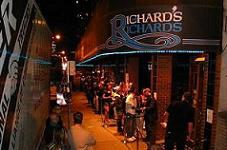
cubeSOUNDTRACK: MARTIN TIELLI-Richard’s On Richards Vancouver BC (March 30, 2002).

rich The download for this show is notable for being (in my opinion) out of sequence.  After the second song it seems pretty clear that the concert is now over. Looking at some of the other shows at the time, I wasn’t sure if I could reconstruct the actual order. It was a bit harder than I anticipated, but I think the show actually went like this

World in a Wall
CCYPA
Double X
Love Streams
My Sweet Relief
That’s What You Get for Having Fun
Voices from the Wilderness
OK by Me
That’s How They Do It in Warsaw
I’ll Never Tear You Apart
Winnipeg
Beauty On

I’m guessing “World in a Wall” is first because before playing it he does a brief intro of “CCYPA,” and it seems unlikely that he would do it again after he just played the song. For this set he is solo for the first three songs . He’s kind of all over the place in “Wall” throwing in some extra lyrics and repeating verses—I’m surprised he didn’t get mad at himself.f

Then the band comes out and he introduces them as Operation infinite Justice (incidentally, “Operation Infinite Justice,” was the name of the military intervention that the U.S began after 9/11.  Muslim groups protested the name on the basis that their faith teaches that Allah is the only one that could provide “infinite justice”.  Thus, “Operation Infinite Justice” was changed to “Operation Enduring Freedom” on Sept. 25, 2001).  So clearly, Tielli was making a point.  The band consists of Greg Smith on bass, Barry Mirochnick on drums and Ford Pier on guitar and keys.

For “Ok By Me” he gets that great chorusing guitar (that sounds like Queen) just like on the record.  For “Love Streams” it’s just him and the piano (presumably Ford Pier) who at the line about being “stoned’ play a riff from Eric Clapton’s “Cocaine” (did anyone know that was a cover of a J.J. Cale song?)

“Shaved Head” stays in the delicate style of the previous show and for “My Sweet Relief,” he starts the song solo and the band kicks in about 1/2 way through.

After playing “That’s What You Get for Having Fun” someone in the band says that they have merch in the back of the room and that they will be flogged by their manager if they don’t mention it.

In “Voices in the Wilderness,” he sings the actual Rush lyric “if you choose not to decide” (rather than “if you choose not to be free”) and has fun with the word “squeaky” in squeaky voice.  There’ as mellow jam at the end of the song.

The penultimate song is “Winnipeg.” It’s the first live version of this song on the site. I like that since it was a new song the guys who recorded the shows didn’t know what it was called.  And it’s such a peculiar song with different things that could be choruses that the author of this recording calls it “Anyday” and in the next show they call in “I’ve Had Some.”  But it sounds great live.

The show ends with “Beauty On,” the opening track from his upcoming album (although he leaves out the humorous “Cincinnati” bit–which makes sense).

It’s another great show, running just about an hour.

[READ: October 19, 2015] Cube Squared

I found this book at work and judged it by the cover.  I decided it would be fun. And it was.

This is the sequel to McPherson’s first novel (which I have not read) Cube People.  I thought that perhaps there would be zombies in this novel (given the cover) and there are, but not in the way one might suspect.

The basic set up is this: Colin MacDonald works for the Canadian government.  He is in a tech job which is not very techie.  He works in a  cubicle, deals with his co-workers and plans to write the great Canadian novel (if such a thing exists).  He has already written two books.  The first one was successful, the second one less so.  And he would very much like to get a third book written.

But he is now married with three little kids, he has to paint his house and his father just died.

This last bit is pretty important to the story.  Even though his father was never a very good father to him (he was an intense drunk and then an intense convert to Christianity), he has mixed feelings about his father’s death.  Worse yet, his father seems to be talking to him a lot more now than he ever did when he was alive.  And he is fairly certain that his father thinks he’s a waste of time and effort with little to show for himself (or at least that’s his take on his father). (more…)

Read Full Post »

« Newer Posts - Older Posts »