Feeds:
Posts
Comments

Archive for the ‘Marriage Trouble’ Category

SOUNDTRACK: SHAKEY GRAVES-Tiny Desk Concert #495 (December 14, 2015).
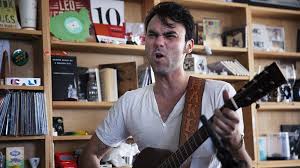
I thought I had posted about every Tiny Desk Concert, but on double checking I found that I had missed this one.  I had heard of Shakey Graves and I assumed he was a country/folkie singer.  Which he is, although really his style is to mix country, blues and rock ‘n’ roll.  I also had no idea his real name is Alejandro Rose-Garcia.

This set sees Graves on acoustic guitar (with a strap with his name on it) accompanied by another acoustic guitar (which seems rather small) and a mandolin.

“To Cure What Ails” is a pretty, slow folk song. It’s simple enough with nice high mandolin notes and a good guitar line between verses.  Shakey has a nice voice and the song feels compelling like a story, although I don’t think it is.  He’s also charming and funny in little ways–he makes a lot of funny faces and chuckles.  But his music is really solid and the harmony at he end of the song is really great.

For “The Perfect Parts” the mandolin switches to bass and they have a little discussion n how to play it.  Shakey tells the drummer how to play the beat and then says they’re going to make it us as they go along.  This song is darker and has a cool sinister vibe.  He sings in kind of deep mumble for this song which works well for this song.  The song gets a little intense for a few lines.  And by the end it builds pretty loud with some good whoa ho ho backing vocals.  So much so that for the last chord, “he attempted a stage dive at the Tiny Desk.”

For the last song, “Only Son,” he:

breaks out his guitar and suitcase kick drum/hi-hat, [and] a palpable rush of swooning adrenaline hits the room. I felt that at the Americana Festival in Nashville, at the Newport Folk Festival and here at the Tiny Desk.

He says it is soon to be the last of the suitcase kick drums (this is his third).  He dreamed about having an object that he could cart around with him and still make a lot of noise.  The drum is actually behind him and he stomps the pedals with his heels (I can;t believe the camera never zoomed in on it).

He says the song is about “the moment in your life when you realize you’re not alone… there’s an aha! moment where you’re like ‘not just me?’  The drummer plays bass, the mandolin player has the mandolin back and Shakey has the kick drum suitcase.  There’s some terrific harmonies (and chuckling ) throughout the song, and I love the way it stops and starts.

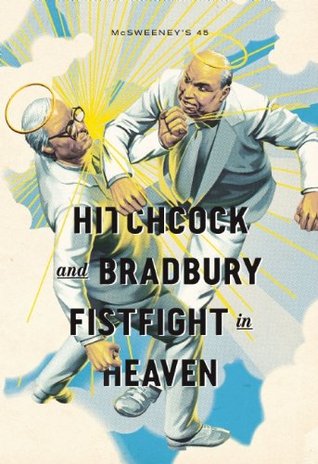
[READ: Late 2016 and early 2017] McSweeney’s #45

The premise of this collection was just too juicy to pass up.  Although it did take me a while to read it.  Eggers’ introduction talks about the contents of this issue.

DAVE EGGERS-Introduction
Eggers says he came across a collection of stories edited by Hitchcock. He really liked it and then learned that Hitchcock had edited 60 volumes over the course of 35 years.  He was excited to read literary genre fiction.  But he was more impressed that theses stories did what literary fiction often forgets: having something happen.  He then bought a cheap book edited by Bradbury (Timeless Stories for Today and Tomorrow) and he liked it too.  He was surprised that there were so many canonical writers (Steinbeck, Kafka, Cheever) in a Bradbury collection.

So, why not make a new collection in which we can compare the two genres.

Despite this looking like a pulpy paperback, there were still Letters.

LETTERS

CORY DOCTOROW
Doctorow says that Science fiction is not, indeed, predictive.  That any genre which deals with so many potential future events is bound to get some things right.

JAMIE QUATRO
Quatro says she was asked to write a letter for this genre issue, but Quatro doesn’t do genre, so she was about to pass.  Then her son, from the backseat, asks what bulwark means.  Then inimical.  Then miasma.  He is reading a book called Deathwatch about soldiers whose brains are removed so they no longer fear. Suddenly, when she compares this idea to her essay on Barthelme, she sees that maybe McSweeney’s was on to something after all.

BENAJMIN PERCY
In fifth grade Percy (who has a story below) gave his teacher a jar full of ectoplasm.  He has always been different.  He proposes the Exploding Helicopter clause: if a story does not contain an exploding helicopter (or giant sharks, or robots with lasers for eyes or demons, sexy vampires. et al), they won’t publish it.

ANTHONY MARRA
Marra discusses Michael Crichton and how something doesn’t have to be Good to be good.  He says Crichton was a starting point for him as an adult reader.  And what can be wrong with that? (more…)

Read Full Post »

815

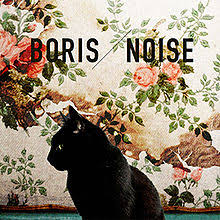
SOUNDTRACK: BORIS-Noise (2013).

You really never know what you’re going to get with Boris.  Most of the time, there are multiple editions of releases with different covers and different mixes.

In this case, despite the different covers of this record (see below), the track listing is exactly the same (except that the Japanese version came with a bonus disc).  Total length: 57:52

I like that this album cover parodies (sort of) Nirvana’s Bleach album cover.

“Melody” (黒猫メロディ) 6:40 The disc opens with some ringing alt-rock wit a distorted rocking chorus.   Despite the cover, it’s not like Nirvana, it’s more soaring  there’s catchy backing oohs and a cool hi-hat flourish.

“Vanilla” 4:15 is heavy in the same vein as “Melody” and “Ghost of Romance” (あの人たち) 5:49  has slow guitars and soaring leads with a heavy solo.  “Heavy Rain” (雨) 6:12 starts quite slowly with vocals by Wata and then there’s a big crash and the heavy section follows.  It alternates between quiet and loud at intervals.

“Taiyo no Baka” (太陽のバカ) 3:36 is almost a pop metal sound with dancey vocals and woah hos.  There’s even a simple guitar riff that follows along.  At three and a half minutes it’s a pure pop gem.

“Angel” 18:42 Angel, on the other hand pushes 19 minutes and it’s an epic workout.  It begins with a pretty, quiet guitar riff interlaced with a second guitar and interesting percussion.  There’s slow vocals as well.  But after 6 minutes, a loud distorted guitar interrupts the pretty melody, but it’s only playing an intermittent chord.  Even the powerful drums blasts don’t change the overall tempo of the song until a minute later when it takes on a loud droning quality with harmony vocals and a distorted bass moments.  There’s a soaring guitar solo as well.  By around 10 minutes the song turns into an uptempo rocker with falsetto vocals!  The song seems to climax at 13 minutes with a big gong.  But there’s more.  The song turns into a kind of soaring instrumental with echoing guitars and thumping drums.  With two minutes left the song returns to that opening guitar riff with a tidy solo over the top.  It’s like the song is nicely bookended with itself.  It’s quite the centerpiece.

“Quicksilver” 9:51 Who know what another band might follow a 20 minute song with, but Boris chose a nearly 10 minute song.  It seems at first that “Quicksilver” is going to be a short blast with the super fast pummeling hardcore sound.  There’s screamed vocals and wild drumming but it’snot that simple.  At 3 and a half minutes, the song slows down some although it stays heavy.  By around the 5th minute there;s lou dbacking voclals to accompant the lead vocal.  Once again, a false climax comes at 7 minutes but there’s more feedback to come along with a quiet, pretty guitar outro.  Until the final two minutes when there are loud droning chords that play through to the end.

“Siesta” (シエスタ) 2:50 Siesta is the shortest song on the disc, an instrumental that is kind of pretty and kind of woozy at the same time.  It’s definitely a slow down from the erst of the album and a nice conclusion.

This was the first Boris album I bought and it’s still a favorite.

The Japanese edition (cover to the right) came with this bonus disc, which I’ve not heard.

CD 2 (Another Noise) Total length: 23:26
1. “Bit” 9:35
2. “Kimi no Yukue” (君の行方) 4:51
3. “Yuushikai Revue” (有視界 Revue) 3:32
4. “Discharge” (ディスチャージ) 5:32

[READ: July 23, 2015] “Love is Blind and Deaf”

This was the 2015 New Yorker fiction issue.  It featured several stories and several one-page essays from writers I like.

In addition to those essays on Time-Travel it also included this short piece from Safran Foer.  I hadn’t seen much from Safran Foer recently, so I was interested to read this (very) short story.  It’s all of one page.

Much as Zadie Smith’s story about celebrities was unexpected, so was this one (on the following page in the magazine no less) about Adam & Eve.

We learn that Adam was blind and so never had to see Eve’s hideous birthmark.  And that Eve was deaf and never had to listen to Adam’s whiny narcissism.  And then they ate the apples and knew everything.  (more…)

Read Full Post »

SOUNDTRACK: GEORGE CLINTON & THE P-FUNK ALL STARS-Tiny Desk Concert #697 (January 24, 2018).

George Clinton is famous for being from outer space and for bringing the funk.  That was a pretty long time ago.  He’s now 77, but he still has the energy and the passion, although it is weird to see him looking so…normal.

He’s just got on a cool coat–no colored dreadlocks, no dresses or sequins.  But he still holds a room’s attention.

P-Funk’s lineage runs 50-plus years. From The Parliaments to Funkadelic to Parliament Funkadelic to the P-Funk All Stars, George Clinton has conducted the mothership as a reliable father figure. When he commands you to “put a glide in your stride and a dip in your hip, and come on up to the Mothership,” he’s presenting to you the first law of Funktonian physics. We at NPR pledged our groovellegiance when he and his P-Funk All Stars touched down to bless the Tiny Desk.

I love that Clinton has kept the spirit and familial nature of P-Funk alive all these years:

Clinton has brought his own bloodline into the most recent lineup of P-Funk: His grandchildren are the newest backup singers, while another grandchild serves as tour manager. Though this was a much smaller outfit than their traditional stage shows — no horn section, no dancers, no Sir Nose D’Voidoffunk — the extended family was also in full effect. Garrett Shider on rhythm guitar, filling in for his late father, Garry Shider, aka Starchild. Even original trumpeter Bennie Cowan, who still tours with the group but didn’t make it to the Tiny Desk, typically plays alongside his son Benzel on drums. Blackbyrd McKnight and Lige Curry cement the foundation as elder statesmen who’ve been rocking with Clinton since 1978.

They play three songs.  I don’t know how much Clinton sang back in the day–was he the lead singer or just a bringer of the funk?  But in “Standing On The Verge Of Getting It On” most of the vocals are chanted and sung by the backing vocalists (Tonysha Nelson, Patavian Lewis, and Tairee Parks).  Clinton is more like the hype man–getting everyone worked up, clapping and making noise.  Rhythm guitarist Garrett Shider takes a lead vocal, keeping the funk going.  The song is big and the riff is great and the funk is entirely in the house.  Dwayne Blackbyrd McKnight plays an awesome funky guitar throughout the Concert.

“One Nation Under A Groove” is a more mellow (relatively), smoother song.  I love the guitar sound, and there’s some suitably funky and retro-sounding keyboards from Danny Bedrosian.

“Give up the Funk (Tear the Roof off the Sucker)” is the real classic.  Clinton is really into this one–dancing and clapping and the bass by Lige Curry and drums by Benzel Cowan are terrific.

He may not have the interstellar look, but Clinton still has the funk.

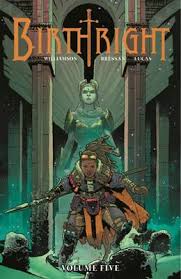
[READ: October 25, 2017] Birthright: Volume Five

This is the first Birthright volume that I didn’t love.  There was a lot of demon head ripping off and tentacles and splatters.  Fire and blood and gore, but not a lot of coherent action.

It started out quite good with Rya’s back story. We see her as a baby on a battlefield being rescued by, of all creaturs…an orc.  He told her of the prophecy to defeat Lore.  And then she met young Mikey and “knew that the prophecy was a load of razorbeast dung.”

Then we see Mikey quickly develop into the man he is–and then disappear.  It was rumored he was killed but then Kallista gave away that he was still alive.  That made Rya really mad. (more…)

Read Full Post »

SOUNDTRACK: KINGS OF SPADE-Crave (2013).

I have seen Kings of Spade twice (both times opening for King’s X).  I have never heard of them outside of these shows.  And yet, they seem to have a pretty good following (especially in their native Hawaii).

Their website describes them as “blues rock from Hawaii” and that’s pretty apt.  They certainly groove in the rocking blues.  They are fronted by a fantastic, powerful singer named Kasi Nunes.  She formed the band along with guitarist Jesse Savio.  There’s also drummer Matt Kato, bassist Max Benoit, turntablist DJ A2Z and percussionist Obie 1.

“Crave” opens the disc with some great bluesy grooves and solos all under the power of Nunes’ wail.  “Boys in the Band” is a song they still play and it works great in concert.  The recorded version features a turntablist, which they do not have live.  The song has a cool break where you get to hear Nunes’ voice unaffected as she sings the title.

“Funk” adds some horns, although not a lot of funk, which is fine.  It works more as soul with scratchy wah wah guitars.

“Weight on My Shoulders” is a strange song.  It has the riff and melody of “Crimson and Clover,” a song I don’t really like.  But the lyrics of the chorus focus on the weight of the world being on her shoulders (to the tune of “waitin’ to show her”).  The verses are the big surprise because the song turns into a rap.  Nunes’ flow is pretty good, but it’s more about her lyrics than her delivery.  She raps about growing up and the awkwardness of being a woman at 25.  Nunes is all about women and feminism.

“Keep On” starts with her saying “to the most beautiful, this is from X-Factor (X-Factor was their name before they became Kings of Spade).  This is a groovy song with Nunes’ rapping and the turntablist working away.  There’s more horns as well.  It rocks pretty well, and there are two sections that change the style of the song in an effective way.  I like the end where the song switches tone into a more menacing-sounding thump.

“Move On” rocks along, very catchy and fun with some cool organ underneath the riffage.  Until the middle when it really slows down to a kind of Janis Joplin vein.  The first time i saw them, they played a fantastic version of Piece of My Heart (Nunes hits the marks really well).

I’m not sure if it was well-known that Nunes is a lesbian.  She doesn’t mention it until song 7.  But she’s certainly not hiding the fact because the whole of “Don’t Hate Me” is about her coming out experience.  It’s a powerful tour de force (which is rapped as well) that covers many bases about coming out–parents, classmates, friends, community.  She sings about “growing up a baby dyke” and spending years as “a closet homo” before finally reaching a place where “a hater’s lame opinion can’t cause me any strife.”   I love the metaphor about building

The final song shows off yet another style of the band.  “Secret Lover” is a slow acoustic song with a kind of Spanish feel.  It’s a love song to a secret lover (no one will ever measure up to you) which I can’t decide if it’s awesome or sad (is the secret a good one?).

This is a solid album.  It’s a bit all over the place, trying out different sounds.  They will step things up for their next album (and Kasi will adopt her now-trademark red Mohawk).

[READ: July 26, 2016] “Alice”

This is the life story of a little girl.  It is told by a distant, almost disinterested narrator, and this narrator fits the girls’ life as well.

Living in Australia, Alice had red-gold sausage curls.  She had lovely hair and thick creamy skin and gray-blue eyes.  Her disposition could be summed up as “it is good to be good.”

Her mother was Scottish-born and was irrational, quickly tempered and noisy: “she had no feelings.”

Alice’s mother didn’t regard her at all.  After her mother had two boys, they consumed all of her attention.  Alice became nursemaid and nanny to her brothers. Any problem became Alice’s fault.   And even though people looked at her and admired her, once they realized that this would gain no favor with her mother, they admired her brothers instead. (more…)

Read Full Post »

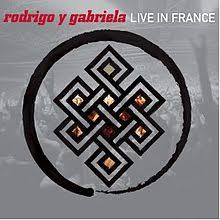
SOUNDTRACK: RODRIGO Y GABRIELA-Live in France (2009).

Nothing can prepare you for a Rod y Gab concert, but listening to a live album can give you some idea of the aural pyrotechnics you’re in for.

To say it is “just ” two guitarists playing acoustic guitar, gives you a very specific picture.  If you say that they are amazing at soloing on their instruments, it gives you another picture.  Neither of which is correct.

Rodrigo plays an incredible fast lead guitar while Gabriela plays the most dynamic percussive rhythm I’ve ever seem (or heard) on her hollow bodied guitar.   When listening live, if Gabriela is not playing the rhythmic style, it’s impossible to know who is playing what,

These songs are not just virtuoso show-off pieces. They have terrific melodies that run through them.  The songs are instantly recognizable as Rod y Gab songs, but you also recognize the individual melodies too (although I’ll be damned if I can keep the names of the songs straight in any way).

If I had a complaint, which isn’t really a complaint, it’s that you can never tell when the songs actually end. They often pause mid-song and then resume after ten to 30 seconds.  Some songs could be 3 minutes but end up nearly 6.  It doesn’t really matter because the songs are great and could all be one long song because it’s terrific, it’s just a little hard to keep track sometimes.

For this CD, they play 7 of 11 tracks from 11:11 and 1 from their self-titled album.

“Hanuman” opens the disc.  After a few minutes, the song builds and Rod plays faster and louder chords and then it all drops away.  When the riff comes back in, that’s pretty awesome.  “Triveni” beings with some really heavy riffing from both of them.  “Chac Mool” is the one major exception to everything else on the disc  It’s one minute long and is  very mellow and quite pretty.  Nothing fancy, just a a nice melody.

“Hora Zero” has a few moments where Rod plays some really fast arpegiaos and the consistency of his playing is remarkable. (There’s also some wah wah on this song which always comes as a surprise).  This is one of those songs that feels like it ends after four minutes, but it still has two minutes to go.  It ends with a nod to Metallica with the ending chords.

“Gabriela Solo” and “Rodrigo Solo” are, as they say, opportunities for us to marvel at their individual skills.  Gab does a lot of percussive stuff, but also shows her chops on the strings.  Rod’s solo throws in a lot of recognizable heavy metal riffs in between his beautiful Spanish guitar playing: three from Metallica and one from Slayer.

“Santo Domingo” is one of my favorite songs.  I love the riff that is in a different time signature at the end of each “verse.”  There’s some wonderful percussion from Gab. I really dig the bass sound and heavy riffing that he (or maybe she) gets out of the guitar in the middle of  “Buster Voodoo.”

“11:11” features a very pretty, mellow echoing lead section, its kind of trippy rather than frenetic, and there’s some cool tricks that Rod pulls off that sound fantastic.  “Savitri” has some more great riffs and some cool percussive playing from Gab–it turns into a pretty fast and furious song.

“Tamacun” is from their self titled album and it elicits the biggest response, with Rod teasing out the riff and the audience singing along (to an instrumental).  The end is great with some terrific percussion from Gab as Rod wails away.

This does not compare to actually seeing them, but it’s a terrific performance nonetheless.

[READ: January 22, 2018] “Wheelers”

This rather long story seemed to be one thing and then turned into something else entirely.  As if maybe this is an excerpt from a novel rather than a short story (which I see now that it is).

The story begins with a boy talking about his family–his mother’s maiden name is Wheeler.

He grew up in a house with four sisters.  They were loud and demanding.  He tried to ride a wave between them, allowing hair braiding and the like, but they often turned on him: “You know when you mooned me and Faith? We saw your balls and they looked shrimpy.”

The girls’ were nicknames Itsy, Bitsy, Titsy and Ditsy (the dad changed Titsy to Mitsy, wisely). (more…)

Read Full Post »

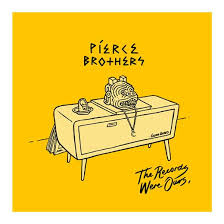
SOUNDTRACK: THE PIERCE BROTHERS-The Records Were Ours, (2017).

The Pierce Brothers was without a doubt the best opening-act-whom-I-hadn’t-heard-of-before.  The two of them (twins!) were an incredibly energetic, exciting and crowd-pleasing act.  They had us clapping, singing along and generally making all kinds of merry.

Jack (drums and more, including guitars) and Patrick (guitars and more) Pierce (and their family, obviously) are from Melbourne.  They have a pretty big following there and yet apparently no Wikipedia page about them!  Go figure.

They have released a number of EPs and this was the first of two in 2017.  They are a bit more subdued on record (especially the couple of mellower songs here).

“Take Me Out” has a terrific, great catchy guitar riff followed by a shout-along chorus of “stand up!” and “take me out.”  This song rocks a lot harder than their other songs (there’s more production as well).  This is a great clap-along and get-up and sing song.

Their other songs are a bit more folkie (live, it’s primarily acoustic guitar and drum kit). But even their folkie songs tend to move fast and have big sing-along choruses.

“The Records Were Ours” has a simple 1,2,3 waltz melody.  It’s incredibly catchy and has a pointed  verse

When you left my house / You took the records and they were ours / You hadn’t broken them up just yet / You got me hooked on these cigarettes

and the best, most understated kiss-off chorus ever:

That’s why / I don’t care much for you / I don’t care much for you anymore

“Rhodes” is a more traditional folk rock song–a simple beat and bouncy guitars.  The big difference is the lengthy guitar solo that ends the song.  It was on this song that I first noticed that Jack (on the left when they play live) sounds more than a bit like Ed from Live.  “Rhodes” is a minor key, darker ballad with a whistling solo that is crazily distorted and more than a little creepy.

“Take a Shot” returns to that big anthemic singalong.  They sing in gruff voices, loudly, and it’s quite catchy.  Later in the EP there’s a live recording from the Syndey Opera House Forecourt in which they introduce the song by saying they wrote it about an [American] fuckwit with a really stupid haircut and we’re all stuck with him for the next four years.

“Keep In Mind” is a slower ballad with interesting percussive sounds.  Jack sings with some falsetto notes that also remind me of Ed from Live.

The final two tracks are live.  The first is that version of “Take a Shot” and the second is a then new song called “Brother” recorded live at Paradiso, Amsterdam.  They tell the audience that “Black Dog” was written for the brother and that “Genevieve” was written for their sister while this song is written for their older brother Justin (“you see my brother his name is Justin Anthony / he was eleven when we were three).  It’s got a big easy chorus that’s basically just a simple melody of whoa whoa oh oh, whoa whoa oh.  Impossible not to sing along to.

They ask, you guys wanna join in?  And do they ever.  The audience is so loud and encouraging that when the song ends, the crowd starts the sing along all over again.  And they guys actually have to start playing the end of the song over again–that’s gotta feel pretty awesome.

And that’s the kind of power they have live.

[READ: December 10, 2017] “The Queen of Zilch”

It is Christmas Eve and the narrator is flaked out in the basement at her dad’s.   She could hear her dad’s new girlfriend Danièle making tons of food for the party.  Danièle had invited “her mother, her million sisters, and god knows who else.”  Her father had only invited a client of his who had just gotten divorced.

Her father didn’t talk to her much.  She had “moved” into the basement.  Her father had taken out the old couch out and replaced it with the one form the den (because the new girlfriend wanted a  new couch).  But he did nothing else to make the place hers–no fridge, no other renovations.  Just a basement.

He came down to give her a warning not to dress crazy or put on make up like a drag queen. (more…)

Read Full Post »

SOUNDTRACK: ART OF TIME ENSEMBLE-Sgt. Pepper’s Lonely Hearts Club Band (2012)

The Art of Time Ensemble does many things although my exposure to them is through their string performances of rock songs

Led by Artistic Director Andrew Burashko, Art of Time Ensemble transforms the way you experience music. Fusing high art and popular culture in concerts that juxtapose the best of each genre, Art of Time entertains as it enlightens, revealing the universal qualities that lie at the heart of all great music.

Sarah and I saw a live show of this tour.  And this recording is pretty much the same (I’m sure there’s some variations).  It is more than just a symphonic version of the record.  The Art of Time Ensemble created new arrangements of the songs.  Purists might hate this, but it is lovingly created and made with a few extra orchestral moments thrown in.

This disc was recorded live in concert May 31, June 1 & 2, 2012 at the Enwave Theatre in Toronto

The disc opens, of course with “Sgt. Pepper’s Lonely Hearts Club Band.”  Steven Page sings the song with rocking guitars and horns.  There’s cool a capella moment with them all singing the “it’s wonderful to be here” moment.  Before allowing the next song to start the band does the slow orchestra rise of notes at the end of the album.  Clearly showing that while hey are staying somewhat faithful to the record, there will be surprises.

“With A Little Help From My Friends” has gentle swirling orchestral notes as John Mann (from Spirit of the West) sings.  This song seems to be all about the orchestra as they take many liberties with the melodies and soloing moments.

“Lucy In The Sky With Diamonds” Craig Northey sings this classic which is quite understated, especially in the chorus, when he sings falsetto and there;s minimal accompaniment.  However, those three thumps before the chorus are as loud as anything.

Andy Maize’s gruff, weathered voice sounds great for “Getting Better.”  But it’s Page’s harmonies in the chorus that make this song transcendent.  “Fixing A Hole: is the first song that really changes the original.  It has a kind of Kurt Weill cabaret/circus vibe with John Mann hitting some challenging notes.  But the music is so sinister, it’s quite interesting.

“She’s Leaving Home” is achingly, beautifully sung by Steven Page.  The backing vocals are perfect, too.
“Being For The Benefit Of Mr. Kite!” has a few strange moments in which the bulk of the music cuts out for pizzicato strings or when the middle section features an extended waltz for Mrs K to dance.  Craig Northey sounds like he’s singing through a megaphone but that seems unlikely.  By the end, Northey also seems to be talking Mr. Kite down from his foolish behavior (“Oh, he;s falling”).

“Within You Without You” is the other song that Andy Maize takes lead on.  On the original, the song is done in Indian classical style.  This version has strings filling in with repeated melodies.  Indian hand drums are used at the end and while I’m not certain, I think there was no sitar used, but the melodies on violin and voila do a great job of representing that sound.

“When I’m Sixty-Four” is very string-heavy and takes a bit before it gets the bouncey feel of the original.  John Mann does a nice job with the song and the backing singers do a great job too.  I’m only bummed that there’s no musical punctuation on Vera Chuck and Dave.

A long piano intro opens “Lovely Rita” before Steven Page takes lead vocals–a song well suited to him.  The big surprise comes in the middle when there’s a lenghthy big band dance section including a muted trumpet and a real nor jazz feel.  After the nifty trumpet solo there’s a clap along for the ending chorus.

The members all greet each other “Good Morning” before “Good Morning Good Morning” starts up, sung by Craig Northey.  It’s one of the more rocking songs.  At least until the swirling heavy guitars that open “Sgt. Pepper’s Lonely Hearts Club Band (Reprise).”  There is a chorus of vocals singing with vamping from Steven Page.

The disc ends with “A Day in the Life” with Andy Maize on the first section (squeaking out that House of Lords line) and Craig Northey taking the faster part.  Since the orchestra already did the end of the album much earlier the end of the concert is quiet, much more subtle.

The album is over but there are two bonus Beatles songs.  “Penny Lane” sung by Steven Page might be noticeable for the trumpet getting the solo perfect.

The whole show ends with “All You Need is Love” with everyone getting a verse.  There are a number of Beatles’ lines thrown in during the outro, like Page singing “I should have known better with a girl like you” and “All I’ve got is a photograph” (from Ringo).

This is a fun take on a classic album.  And while I’ll always prefer the original, it’s nice for a change of pace.

[READ: April 11, 2016] “Soldier’s Joy”

I don’t quite understand the title of this story, but that doesn’t detract from my enjoyment of it.

The story is about a woman, Nana, and her much older husband.  It opens with her relating to him a dream she had.  In the dream, he sent her a love letter in which he stated how lucky he was “that you still want to live with me.”  He laughs and says he is quite humble isn’t he.

In his dream he imagined that their friend Helen, a “preposterously impossible person,” was pregnant.  Helen had hosted them the previous evening and her husband had been drunk and flirted with Helen’s nineteen year old daughter .

Later Nana called Helen to apologize for her husband and to commiserate about what they should wear to the next function at Libby’s house.   Helen says not to worry sabot it, that all girls flirt.  And of course, Nana remembers how she and Helen flirted with their college professor when they were in school and how, of course, he is the man who Nana ultimately married. (more…)

Read Full Post »

SOUNDTRACK: AHI-Tiny Desk Concert #693 (January 16, 2018).

AHI is apparently, inexplicably pronounced “eye.”  He is an Ontario-based singer.  There’s nothing strikingly original about his sound, but his songs are pretty and thoughtful and his voice has a pleasing rough edge.

Bob says,

AHI’s gruff but sweet voice and openly honest words were my gateway to this young Ontario-based singer. AHI says he sings Sam Cooke’s “A Change Is Gonna Come,” at the end of every set with a sense of hope. It was powerfully moving, without a note that felt clichéd or overly nostalgic. At that moment, I knew he needed to play a Tiny Desk Concert.

With a tasteful band comprised of Frank Carter Rische on electric guitar, Robbie Crowell on bass guitar and Shawn Killaly (a man of a million faces) on drums, AHI put his heart into three songs in just about 11 minutes, all from his debut album We Made It Through The Wreckage, which came out a year ago this week.

“Alive Again” builds slowly, but by the time the chorus comes around and he adds some whoops, the song really moves. I’m quite intrigued at the constant soloing from guitarist Frank Carter Rische.  It’s virtually nonstop and really seems to propel the song along.  It’s a catchy and fun song the way each round seems to make the song bigger and bigger.

About “Closer (From a Distance)” he says, we all have relationships.  Some are good; some are bad and some are just awful.  You may care about someone with your whole heart only to realize that you care about that person more than they care about themselves.  No matter how strong you are your strengths may not be as strong as their weaknesses.  Sometimes the only way to save the relationship is to walk away–“maybe we’ll be closer from a distance.”   This is a really heartbreaking song.  The lyrics are clearly very personal and quite powerful.  And the soloing throughout the song is really quiet and beautiful.

“Ol’ Sweet Day” is bouncy and catchy with a propulsive acoustic guitar and lovely licks on the lead acoustic guitar.  The drums are fun on this song as Killaly plays the wall and uses his elbow to change the sound of the drum at the end of the song.

The burning question that is never addressed is way he is wearing a helmet –motorcycle? horse riding?  It stays on the whole time.  At one point he even seems to “tip” his hat.  How peculiar.

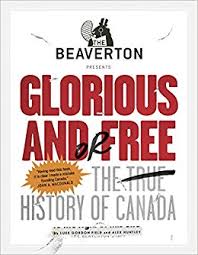
[READ: December 8, 2017] Glorious and or Free

The Beaverton is a satirical news source based in Canada.  It began as a website in 2010 and then added a TV Show in 2016 (now in its second season).  To celebrate 2017, the creators made this book.

They have divided the history of Canada into 13 sections.  As with many satirical history books, you can learn a lot about a country or a time from the kinds of jokes made.  Obviously the joke of each article is fake, but they are all based in something.  Historical figures are accurate and their stereotypes and broadsides certainly give a picture of the person.

Some of the humor is dependent upon knowing at least a little about the topic, but some of the other articles are just broadly funny whether you know anything about it or not.

When we made this book our goal was to transport readers back to grade school to remember what they were taught n Canadian history class.  And so what if your teacher was hungover most of the time?

~30,000 Years of History in About Four Page (3,200,000,000 BCE – 1496)

“What the hell is that?”  –God after forgetting he made beavers. (more…)

Read Full Post »

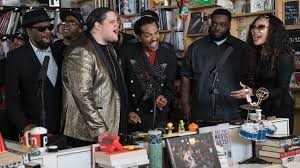
SOUNDTRACK: ARTISTS FROM THE “TAKE ME TO THE RIVER” TOUR-Tiny Desk Concert #692 (January 15, 2018).

This is a touring band playing classic soul.  But I found the modern updates to be unpleasant and almost undermined the tone of the show.  The blurb says:

“Take Me To The River” is a 1974 song from the legendary Al Green and guitarist “Teenie” Hodges. And though it wasn’t a big hit at the time, this song’s mix of religion and desire has become part of pop music’s canon.

Here at the Tiny Desk, some of the original players of this deep southern soul have come together to honor and update this tradition. It’s a celebration of Memphis soul old and new, with 13 musicians wedged behind the desk.

Some of those players of the old include singers Bobby Rush and William Bell; on the Hammond organ, Rev. Charles Hodges and LeRoy Hodges on bass. But it’s what’s new that makes this more than a look back – the addition of southern rappers Frayser Boy and Al Kapone – that truly puts this project on new musical ground.

But it is this update–Frayser Boy and Al Kapone who really ruined this show for me.

I’m not suggesting that the original lyrics to “Push and Pull” are profound.  They are not, but Frayser Bay’s rap is just up front and graphic whereas the original song is more understated (as much as something called “Push and Pull” can be).  Bobby Rush is a great singer and he looks spectacular in his sequined jacket.  Rush has a nice harmonica solo too.  That rap just seemed to come in and mess the whole thing up.

“I Forget To Be Your Lover” suffers from the same problem.  William Bell has a great sound–a cool rough voice.  And the original has this conceit: “I forgot to be your lover and I’m sorry.”  Al Kapone  comes in with a fairly explicit and hardly apologetic rap.  And what’s even stranger is that Rev. Charles Hodges who plays an outstanding organ throughout the show (I loved seeing the organ’s spinning fan that makes the great organ sound), plays really sour notes while Kapone is rapping.  Each verse has this weird nauseating sound. In every other section it sounds amazing, but during the rap it’s almost like he’s commenting on the rudeness of the rap.  The contrast is even more stark when Bell takes back the song mid way through and holds a high falsetto note for about 10 seconds–which really shows his power and range.

The backing vocals by Ashton Riker and Evvie McKinney are a nice touch.   Then on “Take Me to the River” Riker shares lead duties with Bobby Rush and they sound great together.  Riker hits some powerful high notes while Rush keeps it all together.  This is the song that really sells the show.  But look at how uncomfortable Frayser Boy looks during this song.

The rest of the band sounds just fine, playing quiet and understated:  LeRoy Hodges (bass), Edward Cleveland (drums), Andrew Saino (guitar), Jamel Mitchell (sax), Scott Thompson (trumpet), Martin Shore (percussion).

[READ: November 10, 2017] The Talented Ribkins

I saw Ladee Hubbard on Seth Meyers.  She was really interesting (and went to Princeton) and her book sounded fascinating.

On the surface the book is fairly simple, even fairly uneventful. Johnny Ribkin has to come up with $100,000 in a week because he has run afoul of a powerful man.

A few things separate this from similar books.  The first is that over the course of his life, Johnny buried various amounts of money and possessions in random places around the state of Florida.  He should be able to find the money fairly easily.  The reason why he buried all of this is part of the story.

Another thing is that he and his siblings all have special powers.  Not exactly superpowers, but certainly special powers.  And while these powers don’t exactly come into play in the quest, they are ever-present and unavoidable.

So what the heck is going on here? (more…)

Read Full Post »

SOUNDTRACK: VOIRVOIR-The Free-P (2016).

I got this Free Ep at a VoirVoir (not Voir Voir) show in Bethlehem.  This EP contains four songs.

Two of them are new and two are re-recordings of songs from their debut album.

“Quit It All” is a bit poppier than their debut album.  The 90s synth is a nice touch to this song which, make no mistake, still rocks.   The middle noise section (skronking guitar solo and great drums) is a highlight as are the catchy verses.  The band even submitted a video for the Tiny Desk Contest (I had no idea).

“Sides” is perhaps one of the best catchy alt rock songs I’ve heard in years and I am bummed that they didn’t get recognized for it.  It’s got a great 90s alt-rock sound and wonderful harmonies in the backing vocals.  There’s a video for this song as well.  You can also stream the song on bandcamp.

The other two songs, “Stupid for Now” and “There are No Good Goodbyes” were recorded at WDIY (Lehigh Valley’s Community NPR Station) in a stripped down format.  You can stream the songs here.  It’s interesting to hear them without the fuzz and drums.  The songs are solid and work very well although I do like the originals better.  The show also includes an interview with the three members who play the stripped down show.  The DJ asks their influences and while main singer guitarist Matt Molchany demurs,  April Smith says Built to Spill) and Josh Maskornick says Primus and Superchunk.

And if you can’t get enough (since they haven’t released that much) here’s a live show from Shards.

[READ: January 10, 2016 & January 10, 2018] Goldfish Memory

For some reason, I read this book back in 2016 and then didn’t post about it–I felt like I needed to read it again, and so I waited almost exactly two years and re-read it and enjoyed it even more this second time.  Almost like actual goldfish memory.

The back of this book made the stories sound really compelling:  “what does it mean to have a connection with someone? This is the question these brilliant short stories try to answer.”  The note said that this was the first translation of Monique Schwitter’s form-breaking work.  The translation was by Eluned Gramich.

I’m not sure how form-breaking these stories are, but they are certainly interesting.  They remind me in some ways of Julie Hecht–a narrator who is connected to people but very distantly.  But while Hecht’s narrators are critical and dismissive of everyone, Schwitter’s narrators just seem to be incapable of connecting properly.  You can feel the longing in the distance between them.  I also like how these missed connections cover all kinds of relationships–familial, sexual, friendship, professional, even passing acquaintances.

Few of the characters seem to be able to tell anyone else how they really feel–even when they are dying.  There is sadness at loss, but a kind of c’est la vie about it as well.  And all along, Schwitter’s writing is consistently excellent and the stories are really enjoyable. (more…)

Read Full Post »

« Newer Posts - Older Posts »