Feeds:
Posts
Comments

Archive for the ‘Magazines’ Category

SOUNDTRACK: BENEVENTO/RUSSO DUO-Best Reason To Buy The Sun (2005).
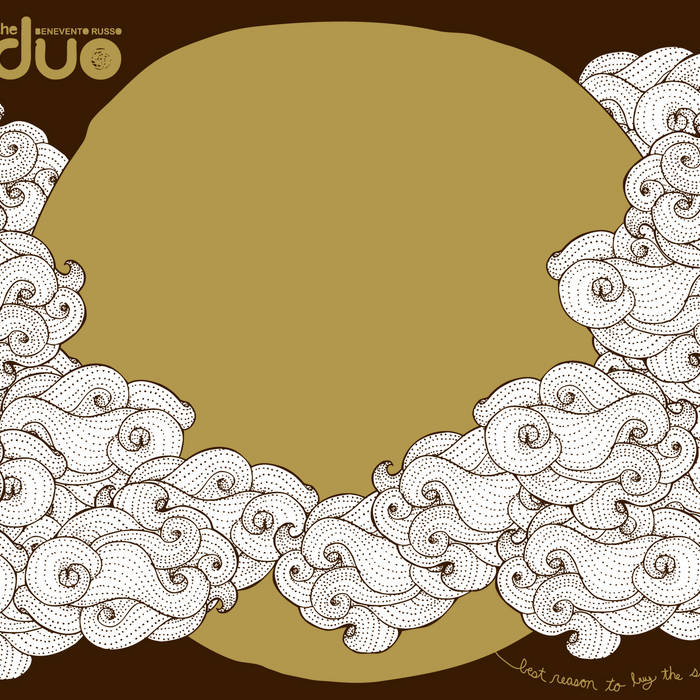
I’ve become a huge fan of Marco Benevento over the last few years.  When I saw that he was releasing these earlier records with Joe Russo (of Joe Russo’s Almost Dead) I was intrigued.

This set up is indeed a duo.  It’s just Russo on drums and Benevento on all manner of keyboard sounds.  (There are a couple of guests later in the record).  The sound is really full–Marco’s low end is fat and heavy and never wavers no matter what melodies he plays.

This album is all instrumental and there’s quite a lot of diversity in the sounds.  Most of the songs are relatively short (around the 4 minute mark), but a few do stretch out.

The disc opens with “Becky” which has a great funky bass and drums.  There’s some typically weird sounds from Russo’s drums to start (showing that he’s not only going to be keeping time) and a nice distortion filter on the keys.  “Welcome Red” starts with accordion!  It morphs into a slow grooving song with a pretty melody that’s accompanied by bells.  “Sunny’s Song” is brighter and bouncier with a pretty main riff on the keys and the bells.  Half way through the song gets bigger and it rocks harder with lots of cymbals.  Smokey Hormel adds some guitar to this song.

“Vortex” is slower and trippier with a kind of ice-skating rink vibe.  Eventually the song kind of takes off into an outer space sound.  “9×9” pushes past the six minute mark with a slow melody that’s accented by sprinklings of trippy sounds.  There’s some really dynamite drumming in this song.  By the end, it takes off, really rocking as it segues into “Scratchitti.”

On “Scratchitti,” Skerik plays some horns and Mike Dillion adds percussion (it’s impossible to know what he is playing that Russo isn’t).  This is the first weird song on the record.  It’s off kilter with noisy funk (Skerik is all over the place).  Although it does have a really catchy melody and a great bass sound from Marco.  There’s a middle section where things stretch out nicely turning kind of spacey–a trait for this album.

All three guests appear on “Three Question Marks.”  It’s a piano-based song and is jazzy in a kind of free jazz, everybody soloing kind of way.  Midway through the song Marco plays the strings of his piano, making a kind of harp sound before Russo (and Dillon?) get a drum solo.  With about a minute left, the song turns into a manic freakout with Skerik’s wailing sax and Hormel’s wailing guitar both fighting for dominance.

MIke Dillon appears on “Bronko’s Blues” which is slow and jazzy with a 1970s style keyboard solo.

The disc ends with “My Pet Goat” which is a slow jamming song that runs about 15 minutes.  Skerik, Dillon and Hormel all appear.  The first 8 minutes are slow chords over a fast syncopated drum pattern.  About half way through, there’s a pause and the second half of the song picks up with a new slow section based around some big bass notes.

I enjoyed this album a lot and thought it was really fun.  It’s a solid record of catchy, but not poppy insturmentals with a jazzy feel despite not being a jazz album.

There’s a bonus track–a 9 minute version of “The Three Question Marks.”  This is a big jamming monstrosity of a song. I don’t really recognize the original in it, but then I don’t think the original is all that recognizable.  This song has lots and lots of drums in it.

[READ: September 1, 2020] “The God of Dark Laughter”

This story is quite dark and it is written in a style that makes it feel much older than it actually is.

It listen as a report from a district attorney who is investigating a grisly crime.  The introduction to the report says

I make the following report in no confidence that it, or I will be believed, and beg the reader to consider this, at least in part, my letter of resignation.

Two boys found a dead body.  They were not innocent children–they had been killing squirrels and were covered in blood–but even they were disturbed by what they found.  The body was dressed like a clown and was surgically mutilated.

Only two weeks earlier the Entwhistle-Ealing Bros. circus had left town, so the D.A. called the circus owner to see if they knew of a missing performer.  The owner would check, but he wanted the D.A. to know that clowns have unsuspected depth–who knew what hey might get up to..

Sometime later they found the clown’s effects.  He had been living in a cave near by.  The cave smelled terrible.  Among his effects, they found clown makeup and clothes as well as some intellectual books including one in German by Friedrich von Junzt.

The D.A. went to the library to research this von Junzt fellow.  There was nothing in the card catalog for Von Junzt–not surprising for a small town–and no reference materials mentioned him. But there was a word in von Junzt’s book that stood out.  When he saw it again in another book, he had to put them together.

With the help of a dictionary the D.A. started clumsily translating the book which was written around 1895.  He learned that in Northern Armenia there were two competing cults.  The first supported Ye-Heh, the god of Dark Laughter.  They viewed the world as a cosmic hoax–the world was terrible but you had to laugh about it.  The descendants of this cult grew paler and some believe that the idea of white face for clowns comes from this cult.  The other cult worshiped Ai the God of Unbearable and Ubiquitous Sorrow.  They also believed the world was terrible bit that you should cry about it.  They set about killing all of the Ye-Heh believers.

As a man of the law, he had always followed the principles of Occam’s Razor, but this made him question everything.

Read Full Post »

SOUNDTRACK: ANAT COHEN AND MARCELLO GONÇALVES-Tiny Desk (Home) Concert #74 (September 2, 2020).

Anat Cohen plays the clarinet and Marcello Gonçalves plays the seven-string guitar.  Their

music comes from the heart of Brazil. The first two songs are choros, from the choro genre of music that originated in 19th century Rio de Janeiro. Think of choro music like New Orleans jazz, but in South America, both born of European and African influences. Cohen, on the other hand, is a clarinetist from Israel and the composer of these tunes. She developed a passion for Brazilian music while studying at Berklee College of Music and not long afterward found herself in a “roda” (choro jam session) in Rio de Janeiro with some of the most virtuosic players in Brazil’s choro scene. It was on that trip 20 years ago when Cohen met Gonçalves for the first time. All these years later, choro music has woven many of the threads in Cohen’s musical fabric.

Notice Gonçalves’s seven-string guitar, a common instrument in choro music; the additional string extends the lower register as if to combine an acoustic and bass guitar. Cohen explained in an email that playing with Gonçalves “makes me feel like I am playing with a full band.”

This duo was recently revered for their 2018 Grammy-nominated record, Outra Coisa, which celebrates the music of the iconic Brazilian woodwind player and composer Moacir Santos. Gonçalves is acclaimed for refining Santos’s orchestral arrangements down to just two musicians.

“Waiting for Amalia” opens with a bouncy guitar line and a sweet almost flirtatious clarinet.   This song feels quite jazzy.

“Valsa do Sul (Waltz of the South)” begins with a lovely, almost slinky clarinet melody. I love watching him play some of the fast riffs along with her, but it’s the bouncing, percussive moments that really make the song come alive.

This duo was recently revered for their 2018 Grammy-nominated record, Outra Coisa, which celebrates the music of the iconic Brazilian woodwind player and composer Moacir Santos.

Santos was the teacher of the guitarist and composer Baden Powell de Aquino.  I only recently heard of Baden Powell but here he is mentioned again–this time as an influencer before the existence of Instagram.  “In the Spirit of Baden” has some great low notes and a bouncy clarinet.  The middle has a strangely dissonant section where Gonçalves plays a few chords that are a little harsh.  Then Cohen joins in adding some wailing clarinet solos.  It’s a surprisingly dissonant moment in an otherwise very pretty song.

[READ: September 1, 2020] “U.F.O. in Kushiro”

I read this story almost ten years ago.  It was republished in a March 2011 issue of The New Yorker to memorialize the then recent earthquake in Japan.  This story was inspired by the incidents of the 1995 earthquake in Kobe, Japan.

The story (translated by Jay Rubin) opens a few days after the Kobe Earthquake.  And even five days after the Kobe earthquake, Komura’s wife is still engrossed in the TV footage from Kobe.  She never leaves the set.  He doesn’t see her eat or even go to the bathroom.  When he returns from work on the sixth day, she is gone.  She has left a note to the effect that she’s not coming back and that she wants a divorce.  Komura’s wind is knocked out of him. (more…)

Read Full Post »

SOUNDTRACK: GOAT RODEO-Tiny Desk (Home) Concert #73 (September 1, 2020).

Classical music is for serious people.  Yo-Yo Ma, probably the best known cellist in the world, must surely be a very serious fellow.  False!

Yo-Yo Ma is a hoot.  How do we know?  The first song of this set is called “Your Coffee Is a Disaster.”  And the name of the group is Goat Rodeo, after all.

Yo-Yo man formed this assemblage known as Goat Rodeo nearly ten years ago.  It consists of Yo-Yo Ma, Stuart Duncan, Edgar Meyer and Chris Thile and many other folks.

You’ve probably heard Stuart Duncan playing fiddle on albums with Dolly Parton, Robert Plant and Alison Krauss, and he was named the Academy of Country Music Fiddle Player of the Year numerous times. Edgar Meyer has played bass with Joshua Bell, Béla Fleck and Christian McBride, and the Nashville Symphony commissioned his first orchestral work in 2017. And you’d most likely recognize Chris Thile’s vocals and mandolin in the music of Nickel Creek and Punch Brothers.

I really enjoyed their wild (yes wild) Tiny Desk Concert back in 2011.

Fast forward a decade and this collaboration channels that same spectacular frenzy, separately captured in the gorgeous homes of the artists and mixed to perfection.

Thile introduces the song by saying the band is often in the midst of a a coffee war: Yo-Yo, Stuart and Edgar prefer beans that were roasted in a volcano for maybe millions of years, while Aoife and I prefer beans that taste as though the were fashioned by angels.  We like good coffee.”

Up next is one of many inappropriate (not scandalous or anything) titles.  When we are not arguing about coffee we are punning.  This: “Waltz Whitman.”  It is a slow piece that feels a lot like the kind of music Punch Brothers play–where it is a fiddle, not a violin.  Although the middle section which has some gorgeous slow cello from Yo-Yo Ma makes this song transcendent.

They’re accompanied by songwriter Aoife O’Donovan, who lends her pitch-perfect vocals to close out the set. Chris Thile … explains that “The Trappings” is about work/life balance, a timely sentiment.  How the things you are doing impact the ones with whom you do them.  How your partners aide and hinder your efforts (and the humorous variations he describes).

“The Trappings” is a faster song and it’s got vocals!  Thile sings lead and there is wonderful backing vocals from O’Donovan and Duncan.  There’s fantastic cello trills from Yo-Yo Ma throughout.

It’s good til the last drop.

[READ: September 1, 2020] “That Last Odd Day in L.A.”

This story was really interesting.

We meet a man who goes by his last name, Keller.  His girlfriend calls him that, his ex-wife called him that, even his teenaged daughter calls him that.

His wife left him after she had a bit of a nervous breakdown–the squirrels had dug up her bulbs and that was the last straw.

The woman Keller has been seeing, Sigrid, is a travel agent.  She has a son and an ex-husband who has gone deep into animal rescue.  Keller and Sigrid recently had a first date and it was a disaster.  Although they are planning another date after Thanksgiving. (more…)

Read Full Post »

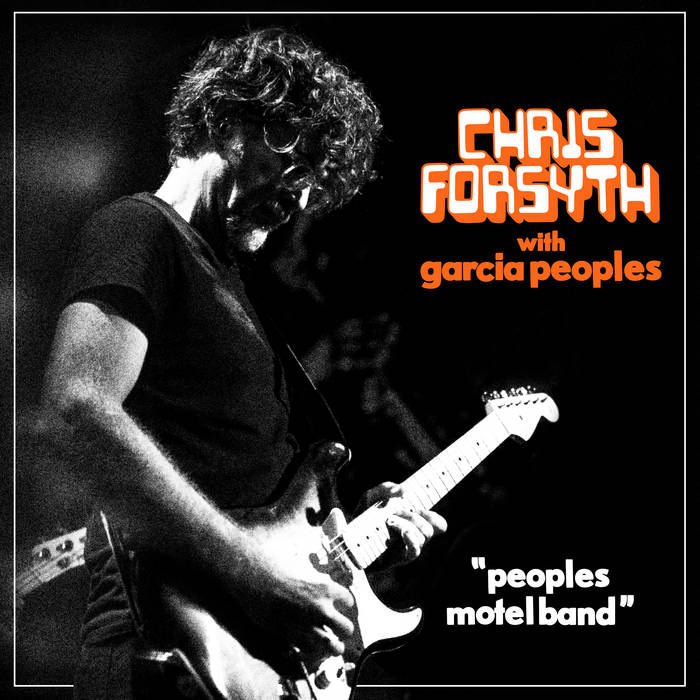
SOUNDTRACK: CHRIS FORSYTH WITH GARCIA PEOPLES-Peoples Motel Band (2020).

This is a fantastic document of a band an an artist who are totally in sync with each other, making forty minutes of amazing jamming music.  I saw this combination of artists in New York City on New Year’s Eve and the set was spectacular.

I absolutely could have (should have) gone to this show.  It was recorded on September 14, 2019 at Johnny Brenda’s in Philly, a place I have been to many times.  I can’t recall why I didn’t go to this one.  But this document (while obviously shorter than the real set) is a great recording of the night.

Recorded September 14, 2019 before a packed and enthusiastic hometown crowd at Johnny Brenda’s in Philadelphia, Peoples Motel Band catches Chris Forsyth with Garcia Peoples (plus ubiquitous drummer Ryan Jewell) re-imagining songs from Forsyth’s last couple studio albums with improvisatory flair.

As is often the case with Forsyth shows, the gloves come off quickly and the players attack the material – much of it so well-manicured and cleanly produced in the studio – like a bunch of racoons let loose in a Philadelphia pretzel factory.

Recorded and mixed with clarity by Forsyth’s longtime studio collaborator, engineer/producer Jeff Zeigler, the record puts the listener right in the sweaty club, highlighted by an incredible side-long take of the chooglin’ title track from 2017’s Dreaming in The Non-Dream LP (note multiple climaxes eliciting wild shouts and ecstatic screams from the assembled).

The disc opens with “The Past Ain’t Passed” a kind of noodling warm-up with three guitarists all taking various solo pieces and it segues into the catchy riff of “Tomorrow Might as Well Be Today.”  It’s a bright instrumental with a series of jamming solos all around a terrific riff.

Up next is “Mystic Mountain,” the only track with vocals.  It has a classic rock vibe and Forsyth’s detached voice.  The highlights of this nine-minute song are the riff and the soling.

The best part of the disc is the 20 minute epic “Dreaming in the Non-Dream.”  The studio version of this song is terrific with Forsyth playing some stellar riffs as both lead and rhythm lines.  But here with three lead guitarists Forsyth, Tom Malach and Danny Arakaki) the experimentation is phenomenal.  But it’s Forsyth’s wailing solo at 18 minutes, when he is squeezing every noise he can out of his guitar, that is the peak of the song and the set.

Also playing: Peter Kerlin: bass guitar; Pat Gubler: organ/synthesizer and two drummers: Cesar Arakaki and Ryan Jewell.

This is a great release and I’m pretty happy to have gotten the vinyl of it..

[READ: September 1, 2020] “Serenade”

I started reading this and thought it was a short story (the title where it says “Personal History” was blocked).  It seemed to be oddly written.  Then when I got to the paragraph where he talks about writing Love in the Time of Cholera, I realized it was non-fiction.

He says that Love is based around his parents’ own love story.  He had heard it so many times from both his mother and his father and he seemed to remember it in different ways, so that by the time he wrote the book he no longer knew what was the actual truth.

And what a fascinating and tangled story of love they shared. (more…)

Read Full Post »


SOUNDTRACK
: BILLIE EILISH-Tiny Desk (Home) Concert #71 (August 26, 2020).

There’s so much to say about this Billie Eilish concert.

The biggest artist in the world has just done a Tiny Desk Concert!

Somehow it looks like she’s in the Tiny Desk studio!

Why does she only play two songs?

My daughter and I were supposed to see her back in March and she cancelled her tour about three nights before our show was supposed to happen.  What a bummer!  Especially because who knew if people would even want to see her again in a year (I’m pretty sure they will).  And would her stage show and song style change over that year?

The answer to that seems to be a dramatic yes.  Especially if these two songs are anything to go by.

For these two songs Billie embraces her torch song inner child.  She has a really lovely voice–delicate and emotional.

These songs are personal and lovely–there’s no “Duhs,” there’s no snark.  Compared to what I expected, they were kind of dull, actually.  Very pretty, but kind of dull.

These are the two new singles.  For “my future” Billie plays keyboards and her “real brother” Finneas plays guitar and sings some backing vocals.

On “everything i wanted” they switch places, with Finneas playing the pretty piano melody and providing a lot of nice backing vocals.

These two songs seem like they would go very nicely in the middle of a set of bangers for a few moments of cool down.  I hope when her show is rescheduled that she still brings all the excitement I;d heard her shows typically have.

As for the background…at first I thought it was just a cute idea.  But after six months, it was really comforting to have musicians look like they were playing the actual Tiny Desk.

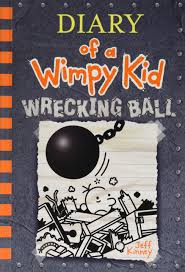
[READ: August 28, 2020] Diary of a Wimpy Kid: Wrecking Ball

This is the book that started my resurgence into reading Wimpy Kid books. I bought this one for my daughter.  This story had me laughing out loud once again.

This book has a lot to do with the Heffley’s house.  I don’t know if middle school kids can appreciate jokes about household maintenance, but as an adult I sure can.

The book opens with Greg’s mom wanting to do some cleaning up.  That means going through the closet in Greg’s room.  He tells us that he basically just throws things into it, so it’s like an archaeological dig.

He starts sifting through things and finds old toys and things to feel sentimental about which is pretty funny.  But with all this junk, he decided that rather than throw it out, he should make some money off of it and have a garage sale.  Cue: Family Frolic magazine and their “great” ideas for a garage sale.  [I love when he makes fun of this magazine].

Greg has labelled his tables in creative ways: “Great gifts for your grandkids”(stuff from his grandparents that he doesn’t want).  “Pre-written birthday cards” (with his name white-outed). Mystery socks (which is just a pile of junk for 50 cents) and Rare Items (like an invisibility lotion and a freckle remover (an eraser or soap I guess)). (more…)

Read Full Post »

SOUNDTRACK: THE FLAMING LIPS-“Will You Return/When You Come Down” (2020).

As part of The Flaming Lips’ slow release of new songs from American Head, here comes this gentle song “Will You Return/Will You Come Down.”

Wayne sings his falsetto vocals over a gentle piano and bells melody.  He sings the title a few times before the verse begins.

The verses are very Flaming Lips–a friendly vocal melody about death.

About half way through, after the second chorus, the song takes off with soaring backing vocals and more instruments added.

A vocal line (Wayne’s voice sped up?) sings the “will you return” part a few times before a folky acoustic guitar comes in to take over the chorus.  The last minute or so goes full on Lips with strings, different vocal lines (screaming from beyond) and a wild guitar solo.

Although there’s not much to this song, there’s quite a lot going on.

[READ: August 21, 2020] “Woven, Sir”

After reading some bizarre and exciting stories, this one felt rather dull.

A man is in a hotel in Madrid waiting for a friend.  He looks around the hotel, makes observations about the other people there and then notices a man name Tyler.

There’s a number of interesting lines in the story which I liked.  Like when the narrator requests food from the waiter and Tyler, who is not facing him, says

I notice that, regrettably, you haven’t improved your pronunciation.  You are as lost in Spanish as you once were in English, he says…. You don’t listen to how other people talk.  You never say to yourself, He speaks well, so I’ll listen to him and learn how to speak.

Then we learn that the narrator knew Tyler (it’s his last name, first name unknown) many many years ago, when the narrator was six or seven.  Tyler was a tutor at a facility called the Green Hut.  (more…)

Read Full Post »

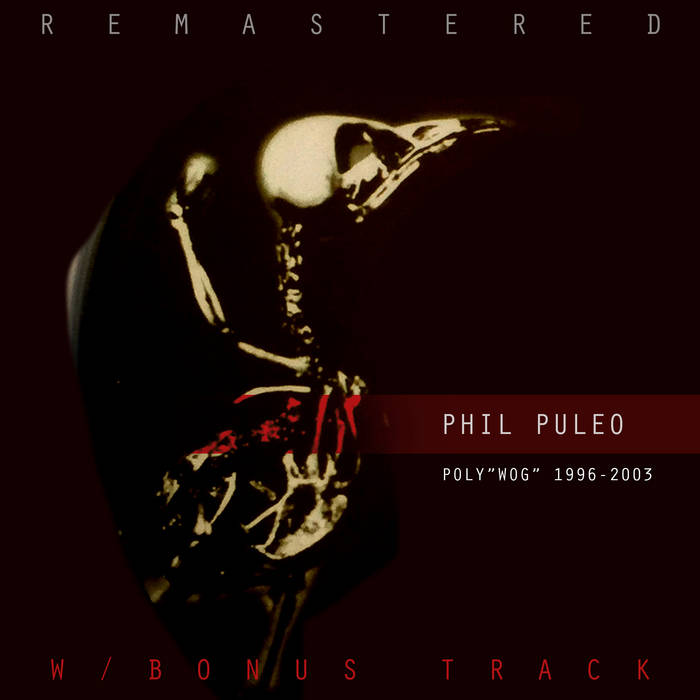
SOUNDTRACK: PHIL PULEO-Phil Puleo’s poly”WOG” 1996​-​2003 (2003/2020).

Phil Puleo has been the drummer for Swans for a number of years.  He has also been in Cop Shoot Cop and a number of other bands.  He also lived in New Jersey and was a good friend of a good friend of mine.  So I’ve hung out with him a few times and was pretty excited for him to get the gig with Swans.  I was really looking forward to seeing them this past winter, but theirs was one of the first shows to get postponed until next year.

So Phil has reissued (and remastered) some of his solo projects.

This one is described as

Highly effected samples of me playing various instruments. Guitar, Piano, Bass, Percussion, Electronic percussion, hammered dulcimer, harmonica, found audio recordings, weird answering machine messages etc.  Many of these tracks were recorded around the Swans are Dead tour in 1997 in my home in NJ.

So you get fourteen tracks of warped instrumental songs.  They sound like a soundtrack to a world that is slightly out of phase with ours.

“Italianato” is basically the music for “La Vie en Rose” performed on a a pipe organ that’s underwater.  But its ten minutes are filled with all kinds of samples that break through the surface.  By about four minutes the main melody has been stripped away to pulses of keyboards and samples of a woman saying “Are you too young to remember that?  You are.”  Along with a slowed voice saying “I’m a depressing motherfucker.” And that same earlier voice repeating “You are.”

“Can Somebody” opens with a somber piano that’s accompanied by swirling waves of high notes.  An answering machine plays through as if from another world. I’m really enamored of the simple melody that starts after the message, like a mechanical bird singing a robotic song.

“I” is a minute and a half of a slow echoing piano melody while “Ahoy” soars with a violin-like instrument fluttering around.  Until a more sinister noise comes from under the depths, surfacing again and again.

“Mother’s Plot” is based around percussive sounds.  There’s also distant voices processed to sound almost like chanting.  “Vio” messes around with some loosely tuned guitars and a harmonica, a kind of under the sea Western.  Although half way through the song grows a bit brighter with clean guitars strumming a pretty melody.  “Message” has a deep pulsing sound and delicate sprinkling of chimes and piano as a man leaves a message about burning the whole place to the ground and needing an alibi.  Yikes!

“Slow By” has some plucked almost Spanish guitar enveloped by more of that pulsing sound.  Once the percussion comes in the melody establishes itself to create a really interesting soundtrack.  “Overgrown” has a melody based around what sounds like a dulcimer.  There’s some interesting guitar sounds that come and go and a noise that sounds like a cow (but isn’t).  The rubbery sound quality in this song is really terrific.

“Hill 503” is an exploration of what constitutes percussion.  A steady drumbeat is accompanied by other sounds (including a violin bow banging strings) that grow and recede. By the end, an echoing guitar line re-introduces a kind of Western feel to the piece.

“Tumble” has some wooden percussion underpinning the sounds of children playing in the distance  It sets for a potentially bucolic scene.  Especially when combined with “Wog Maia,” a pretty guitar song with gently echoed piano and processed children’s voices.

“Indian Guy” has some gentle dulcimer in what sounds like an urban landscape. The “solo” sounds like it was manipulated by some proto-Auto-tune.  “All New Baby” has some more lovely hammered dulcimer playing over the top of some sinister backing chords.  The second half cycles through rising seven note patterns that provide some excellent tension.

“Everything” is the reissue’s bonus track.  It does sound like he’s crammed everything that’s gone before into 90 seconds.  Waves and waves of noises that resolve in a tidy little guitar piece.

This is not easy listening, but it is very evocative and visual.  I’d watch whatever movie this was a soundtrack to.

[READ: August 20, 2020] “Digestions”

I was surprised to learn that I had not read anything by Jim Crace before–his name sounded so familiar.

This piece is several very short stories about food.

“Mussels on the House” is the best one.  In it, the chef of The Yellow Basket likes to take revenge on unsatisfied customers by giving them less than good mussels.  The locals enjoy hearing the stories of the politician or the couple planing a divorce or the state executive whose evening did not end how they planned.

“George’s Magic Cookies” may have been given to a man on death row.  It certainly would have made the moments after his last meal happy ones.  George thinks that he might still be flying. (more…)

Read Full Post »

SOUNDTRACK: BORIS-Archive Volume Zero “Early Demos” (2014/2020). 

In early August, Boris digitally released six archival releases.  Volume Zero is called “Early Demos” and it includes songs from when Boris was a four piece.

9 songs selected and compiled from 3 independently produced demo tapes, from the early period of Boris’s formation.  Track 1,2 from 1st Demo 1993 ; Track 3,4 from 2nd Demo 1993 ; Track 5-9 from 3rd Demo 1994.

(Originally released on March 5, 2014. Included in Archive 2, limited to 1,000 copies)

Boris had more of a hardcore sound at the time and these early demos are pretty wild.  Vocally, Atsuo was in prime screaming mode.  Because I don’t speak Japanese, I don’t know if he is just screaming of screaming words.  Either way, the result is intense.

Original drummer Nagata (who left soon after) plays on almost all of these songs.

“Loudd” opens the set with crashing guitars–a dramatic lengthy heavy metal opening.  Then comes the fast rumbling bass and grunted vocals.  Regardless of the other words, the chorus is a chanted “LOUDD!”  Atsuo plays drums on this one.

“AYA” has loud distorted bass with a simple guitar melody.  It’s a fairly traditional-sounding 90s grunge song.  Atsuo sings in kind of a creaky style rather than he usual screams.  “Spell Down” is nearly 5 minutes–quite long for these demos.  It’s got a  fast grungey riff with a hardcore underbelly.  This song has a middle section of jump drums ans slow droning chords.  This song also features an early Wata guitar solo.

“Nods” feels like a twisted call and response of groans and then vocals all set to a slow heavy riff.  They play a little with recording effects as midway through the song the band stops.  Then a disjointed guitar riff picks up in the left speaker before the whole band jumps in playing that same melody.

“Scar Box” opens with a riff that sounds like very early doom metal under the hardcore guitars and drums take over.  Atsuo is playing on this one and there are lots of cymbals (no gong yet, though).

“Mosquito” and “Matozoa” are both under two minutes long.  “Mosquito” plays with slow heavy chunky chords and “Matozoa” is more of a moshing song that’s mostly drums and vocals with an occasional crashing guitar chord.

“Deep Sucker” has a robust rumble with growled vocals and grungy guitars.  Then around two and a half minutes a feedback wail starts.  It continues for the next two and a half minutes.  The feedback changes tone and seems to almost fade out. It’s as if Wata (presumably) is trying to keep that feedback alive and interesting–making the note swirls around.  The feedback is accompanied by a low rumble and drums, but those fade out and the last 90 seconds are just feedbacking.  The feedback” segues into “Water Porch.”  A rumble enters this song and then the song turns into pure drone as occasional chords are played just to ring out allow nature to take over.  With a minute and a half left the fast drumming kicks in and the song turns into a blistering song with a decidedly hardcore riff and growled vocals.

The final 10th track, “Soul Search You Sleep”, was recorded in 1996 during Boris’s first tour of the US west coast [at Capitol Theater, Olympia, WA. Mar 1st & 2nd 1996], and has been brought out of a long slumber to complete Volume Zero.

“Soul Search You Sleep” is two chords, feedback and a lot of screaming.  This alternates with some fast sections of two chords, pummeling drums, and screaming.  Around four minutes Wata adds a  solo.  The last minute is thumping bass and drums and punctuated by Atsuo’s screams.  A Boris show has gotten more sophisticated in the last thirty years, but all of the elements were in place way back then.

Takeshi: Bass & Vocal ; Wata: Guitar & Echo ;  Atsuo: Drums & Vocal ; Nagata: Drums(Track 2,3,4,6,7,8,9)

[READ: August 25, 2020] “The Guardians”

This is a fascinating little short story.  It almost feels like a sketch for a character rather than a complete story.

As the story opens, Lee is a little boy.  He lives with “Grampop, Granny, Father and Lee’s mother who was too important to have a name.”

Each person gets a lengthy introduction–the calm, intensity of his grandparents, the kindness of his father (who should have had a better job) and the ups and downs of his mother. (more…)

Read Full Post »

SOUNDTRACK: BORIS-Archive Volume Five “Pink Days” (2014/2020). 

a0153819288_16In early August, Boris digitally released six archival releases.  Volume Five is called “Pink Days” and it is the best sounding of the bunch.
This show was recorded live in New York on May 31 during Boris’s 2006 US tour.  PINK had just been released and the band played 7 selections from the album.  But they also played two classics from Akuma No Uta and, one from Dronevil and a track from The Thing Which Solomon Overlooked (or Mabuta No Ura depending on which version of the song they play).

This show

 transmits wild enthusiasm; the songs in this full set recording could even be called their greatest hits.
(Originally released on March 5, 2014. Included in Archive 2, limited to 1,000 copies)

The set opens with four songs from Pink.  The first is “Blackout” which serves as a noisy introduction for what’s to come–feedback, squeals, waves of noise and Atsuo’s gong.  As the songs settles in around 7 minutes, Wata takes some soaring solos while Atsuo pounds away on the drums and Takeshi plays some super heavy bass lines.   Atsuo adds some vocals and a big YEAH! before the band starts “PINK,” with its fast, heavy riff and more soaring guitars.  Atsuo sings the melody as the song speeds along.  “Woman on the Screen” continues the fast heaviness with two and a half minutes of pummeling guitars and drums.  “Nothing Special” is two more minutes of blistering noise with lots and lots of YEAHs!

A quick jump to the Akuma No Uta album for the riff-tastic “Ibitsu” before returning to Pink for the two minute “Electric.”

Boris has two songs called “A Bao A Qu.”  Apparently they are entirely different.  I gather that this one is from the Mabuta No Ura album and not The Thing Which Solomon Overlooked (that version is over 8 minutes long and this one is about 4).  It’s heavy and dense with a lot of slow vocals and screaming solos.

Things finally slow down for the 15 minute “the evilone which sobs” from the Dronevil album.  This is a solid drone song–waves of low end feedback pulsing throughout the concert hall.  After four minutes of ringing, Wata plays a slow four note melody.  About half way through the song, a new melody enters–both Takeshi and Wata play different parts while Atsuo smashes the cymbals.   By nine minutes the two parts have more or less melded and the four note melody returns with the powerful backing of Takeshi.  The last five minutes show Wata whaling away on her guitar creating soaring textures and sounds.

The feedbacking end segues into the title track from Akuma no Uta.  This five minute instrumental features a lot of gong and a lot of cymbals as the slow riff unfolds. Until about half way through when the song takes off with a wicked riff and lot of whiooping from Atsuo.

For the last two songs the band returns to Pink.  Up first is the the ten minute “Just Abandoned My-Self” which is a simple, fast singalong (if only you could figure out the words).  The last five or so minutes lead the song into a droning outro–feeback and noise–that abruptly shuts off to wild applause and Atsuo telling everyone that there’s one more song.

The last song is the opening track from Pink called “Farewell.” It starts slowly with a pretty guitar riff.  It’s a really catchy song with a great melody.  Atsuo’s soaring vocals at the end are a nice capstone to a great show.

[READ: August 15, 2020] “Nobody Gets Out Alive”

I didn’t really like the way this story unfolded.  It started out intriguingly enough: “Getting past the mastodon took planning.”

The mastodon skull was in the middle of the room where a coffee table might normally be.  The setting is a house in Alaska, being used for a wedding party.

The newly married couple are Carter and Katrina.  They are in Alaska visiting Katrina’s father.  His neighbor Neil decided to host this wedding party for them.  Its apparent that he and Katrina used to date (or maybe wanted to) a long time ago.

They went to Alaska because Carter had never been there.  Nor had he met her father (in fact they’d only met each other a year ago). But Katrina’s father is very dull–he eats the same meal every night, he watches the same shows every night and he doesn’t even want to go to the wedding party. (more…)

Read Full Post »

SOUNDTRACK: LILA IKÉ-Tiny Desk (Home) Concert #67 (August 19, 2020).

Lila Iké is a Jamacian singer.  Although her music has reggae foundations, her vocals transcend the basics of reggae.

The set starts with “Solitude.”

 On “Solitude,” she blends avant-garde R&B with contemporary reggae in a hauntingly elegant song complemented by violinist Sean “Ziah” Roberts.

The opening guitar from Stephen Welsh is four notes that sound like “Stairway to Heaven” and for a split second I had no idea what to expect.  It’s the reggae bass line from Dane Peart that grounds the song.  The biggest surprise to me was the addition of a violinist Sean “Ziah” Roberts–not something I associate with reggae.  Backing singers Tori-Ann Ivy and Ovasha Bartley add some gentle backing harmonies and some fun choreography.

“I Spy” starts with that standard reggae staccato guitar riff and some fun drum fills from Kristoff Morris and Stephen Forbes.

Most of the band is socially distanced, although not everyone is (it’s a fairly cramped space and there are people off camera as well).

“Forget Me” is a slower song with prominent keyboards from Wade Johnson and gorgeous backing vocals.  There’s a lovely violin solo at the end.

For the final song, “Thy Will” all of the singers stand up.

The song (which borrows from the iconic reggae rhythm section Sly & Robbie) ends the set with an uptempo banger.

There’s some groovy sliding bass and a series of solos from all of the musicians at the end.

[READ: August 20, 2020] “Cicadia”

The narrative style of this story loops around a timeline.  We project forward and flashback as the actual motion of the story is just three boys heading to a party.

It’s a Saturday night in 1986 in suburban Cincinnati.  Max, Rodney and Ben are heading into senior year. They have been best friends forever.  Rodney drives, Max sits in the backseat while Ben, shotgun, tries to roll a joint.

Earlier they sneaked into Rodney’s brother Oscar’s room to steal his weed.  Rodney is convinced that Oscar will kill him when he finds out, but in one of the fascinating timeline shifts the story provides,

Oscar is going to be their savior, as he always is.  Oscar the berserker bursting onto the scene with exquisite timing, creating mayhem and staring down Blaine’s cohort of pretty boys who are ready to thrash Rodney and Ben and especially Max.

They are heading to a party where Max will be winked at by a girl in a red beret. It was a definite wink.  In fact, the winks seemed to keep coming all night

Then the story flashes forward to the party where Max punches Blaine and Blaine falls into the pool.  To me, it’s unclear if this is a real party or if Max is remembering a movie.  [Pretty in Pink]  Someone falling in a pool?  [Every movie ever] Everyone cheered when Blaine fell into the pool except the girl with the red beret–for she had left already.

Back in the car, they tease Ben for not being able to roll a joint .  It is pudgy in the middle but it “has a joint-like presence.”  (A phrase that Max really liked).

While all of this is going on Max (the philosophical one) is thinking about their past together and how he is evolving from his friends.  He nearly got a perfect score on the SAT without even trying.  He now kicks himself for the few questions he got wrong–he will try again to get a perfect score.  He’s also planned to stop reading Stephen King and start reading the authors whom Lou Reed recommends.

As the get close to the party, they realize they are lost.  They ask directions from a man walking his dog.  But as the man talks to them, his dog, Cupcake, poops on a neighbor’s lawn and that neighbor yells, “Really Harold, again?”

Harold starts to tell them where to go but when the neighbor charges at Harold with an aluminum bat, Harold and Cupcake hop in the cars and they drive off.  Harold seems pretty fun until he starts asking about the smell in the car.  The boys aren’t sure if he’s going to narc on them or if he wants some.

Then the story has a little perspective shift and addresses… the reader?

maybe, like Max, you know where this is heading … and maybe you’re tapping the person next to you and telling him or her, I know what’s going to happen, because you;re the kind of person who can predict these things… and if you had wanted to, well, you could have been a writer yourself.

But the boys make it to the party, as the story said they would.  And they debate how they should go about selling Oscar’s pot.

There’s a really fun last line.

And yet, I genuinely can’t decide if this is a story or an excerpt from a novel.  There is so much detail that it feels novel-like. I feel like these three characters have a lot more life to show us.

There’s so much potential for time shifting and narrative address, that a lot more could go on here.  At the same time, too much might overwhelm a novel. And it does feel complete, if confusing as a story.

I enjoyed it either way.

Read Full Post »

« Newer Posts - Older Posts »