For some sad reason, this video cuts off about half way through the second song, so you need to watch it on YouTube instead. Basia Bulat is a Canadian singer of Polish descent. She’s adorable and plays weird instruments. What’s not to like?
The first song “The Shore” is done entirely on a pianoette–she may be the only singer to play one. The pianoette is a zither-like instrument with a strummed section and a hammered section. Her voice is low and breathy. And when, during the second verse, her backing band’s harmonies come in, it’s quite breathtaking.
The second song is done on guitar. It’s a Polish folks song–she says it was a big hit in the 60s in communist Poland. She sings it in Polish and says it was a great way to learn her Polish words and pronunciations. “W Zielonym Zoo” means “In The Green Zoo.” It’s cute how happy and smiley she is as she explains this song. It begins with just her on guitar and it’s quite a delight when Holly Coish on ukulele, Allison Stewart on viola and Ben Whiteley on bass join in.
Her brother Bobby Bulat joins her on percussion for “Heart Of My Own.” This song is louder and more dramatic and a lot of fun. The final song “In The Night” is one she normally plays on the autoharp (see, unusual instruments) but she didn’t have it so she plays a rollicking guitar version with the full band (there’s some great violin solos in it). Just before it starts she says that if it sucks, don’t use it. It doesn’t suck at all.
I really like Bulat’s music a lot and this is a great way to witness it up close. And here’s a picture of a pianoette.
[READ: January 8, 2015] “Ash Monday”
I wasn’t sure how much I would like this story (same old intro from me) because I didn’t like the main character (or one of the two main characters). Dill is a delinquent. He’s 13 and with a car (well, he has the car, he just cant drive it). And hes loves the smell of gasoline.
When his mother tells him to goes outside to light the grill (as he does most nights–his mom doesn’t cook in the house apparently), he puts gasoline in it to light it up. On this night he discovers a rat in the grill, so he takes the opportunity to dose the rat with the gasoline and set it on fire. (If you’re squeamish, there is also the death of hundreds of chinchillas although that is from natural causes).
We don’t learn much about Dill’s mother except that her husband is gone and she is looking to date someone new.
The scene cuts to the next door neighbor, Sanjuro Ishiguro (Dill calls him “Itchy-goro” and once called him a motherfucking gook). Ishiguro is a respectable businessman. He works long hours often getting to work before everyone else. And although he gets along with his workmates, he is definitely not one of them. They like to ask him about sports when they know he knows nothing about it. (more…)
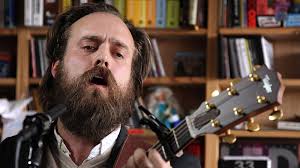
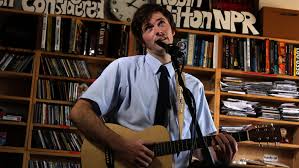
SOUNDTRACK: IRON & WINE-Tiny Desk Concert #105 (January 21, 2011).
I have enjoyed Iron & Wine, but not extensively. I knew that it was more or less a Sam Beam project (until recently, as the band has since grown in size). And I knew that he sang beautiful folk songs. I did not know that he was such an amiable and sweet fellow.
For this Tiny Desk, Beam plays four songs. Three are from his then new album, Kiss Each Other Clean, and they are great. Beam’s voice sounds fantastic and his playing is excellent too.
After the first song, “Half Moon,” Bob Boilen asks him when he has time to write songs and Beam replies that he has less and less time. He has to get up early to take the kids to school, so he works like a day job for song writing.
For the second song, “Big Burned Hand” he begins with the capo on fret five and then switches it to fret four apologizing that it’s early. It’s another beautiful song. At the end he apologizes for the word “fucking” in the final line (“the lion and the lamb are fucking in the back row”) but says that no other word would have had the same impact. He doesn’t use words like that lightly in his songs.
He says that “Tree By The River” is a song he had been writing for ten years. He was afraid it was always turning out saccharine, but thinks he finally got it.
Before playing the final song, Robin Hilton requests an old song (I can’t hear it) which Beam says he will butcher. Robin says he will die happy if Beam plays it, but Beam says he’ll die unhappy if he plays it badly. So instead, the final song is an older one, “Naked As We Came,” which has become a set-ender for the band. Stephen Thompson says it’s great to hear this in this stripped down acoustic format instead of the full band version that has been common now.
And speaking of the full band, when Kiss Each Other Clean came out, the full band of Iron & Wine performed it live on WNYC (you can hear all four of these songs with the full band). And NPR has archived that performance, which you can download here.
[READ: January 7, 2015] “Wakefield”
I have always intended to read more from Doctorow, but he always seems to fall off my radar. So I don’t know how this compares to his other works. I really enjoyed it even if I felt like I had to suspend my disbelief a number of times in what was otherwise a somewhat realistic story.
Realistic or not, I really loved the conceit behind it. The narrator and his wife of many years have had a fight about something stupid. He went off to work as usual, but on the way home strange things happened. First there is a problem with is train and he winds up arriving home much later than usual. And then he finds there’s a power failure (it was interesting to read this right after Updike’s power failure story last week).
He gets out of his car and sees that there are raccoons behind the garage so he chases them away. When he goes upstairs in the garage he sees that there are baby raccoons there too. He chases them away and, since the power is still out and he is mentally taxed, he sits in a tattered rocking chair.
He only wakes up the next morning. And he knows that his wife will never believe the truth. (more…)
SOUNDTRACK: THE GHOST OF A SABER TOOTH TIGER-Tiny Desk Concert #92 (November 17, 2010).
The Ghost of a Saber Tooth Tiger is a band created by Sean Lennon and Charlotte Kemp Muhl. I really liked their most recent album so I was pretty interested to hear this much earlier Tiny Desk Concert.
I love this acoustic pairing. Lennon plays the acoustic guitar (and sings and sounds a bit like his father’s more delicate side. Meanwhile, Charlotte plays a ton of instruments and sings as well.
The show starts with them talking about tambourines and how they are unavoidably loud (so Sean’s is on the floor).
“Jardin du Luxembourg” has some great chord changes and Charlotte’s lovely accordion (with a kind of French flair). As with all of these songs, there’s interesting lyrics like, “people say your brain is like cream cheese it takes the shape of anything you please.” At the end of the song, Charlotte comments that she tried to play the accordion quietly but if she does it sounds like it has emphysema. Sean says that she just learned to play it ten days earlier.
For “Schroedinger’s Cat” she switches from accordion to melodica and xylophone. Charlotte sings harmony along with Sean. There are more interesting lyrics here too (trippy ones, of course). It references Socrates, Aristotle, Dorian Gray and many more cultural touchstones.
On “Dark Matter, White Noise,” Charlotte plays bass (and sings lead on alternating verses). The chorus is gorgeous again, with a sort of minor key tone.
“The World Was Made For Men” is the first song they ever wrote together. Again, they sing together and sound fantastic.
At the end of the show, he threatens to do a 2 hour tambourine solo.
GOASTT is really something. I am bummed that they opened for a band I wanted to see this summer but was unable to attend. I hope the two bands tour again together this year.
[READ: January 6, 2015] “Nice Insane”
This was the second short piece in this issue of Harper’s. I don’t know Seth Price. This is an excerpt from his novel Fuck Seth Price.
Generally, I dislike reading excerpts, although sometimes they make you want to read the full novel. That did not happen in this case, though.
This excerpt focuses on the “moment of inspiration that had rejuvenated his [presumably Seth’s] painting career, making him rich but ultimately leading him to reject contemporary art.” (more…)
SOUNDTRACK: THE HELIGOATS-Tiny Desk Concert #98 (December 15, 2010).
I thought that I would have written about all of 2010’s Tiny Desk shows last year, but it turns out that I missed two. This was one and tomorrow’s will be the second.
According to the blurb, Stephen Thompson says that this was the 100th Tiny Desk Concert. I have counted all the shows (twice) and using my counting method, I found this to be the 98th show. So either this was aired out of order or they never aired two shows. I have noticed that I’ve been off on all of their milestones, so something is up (and I’m pretty sure it’s not my counting).
Chris Otepka is the Heligoats. He has another band called Troubled Hubble, but Heligoats are his acoustic unplugged band.
In addition to singing unusual songs (he’s a songwriter for whom lyrics are very important (if not always comprehensible)), he tells some elaborate stories between songs. His stories seem spontaneous, although I expect that they are not (especially the cremation story)
“Goodness Gracious” is a slower song (although he somehow makes a really full sound with just his (small) acoustic guitar). There’s some great lyrics and twists of phrase in this song. And his voice is quite nice, too.
“I’m Pretty Sure I Can See Molecules” is a song he says he started writing when he was 8 years old. He says he liked pushing his fingers back into his eye sockets to see what kind of fractals appeared. He gives a lengthy explanation about this phenomena which he says is the cause of floaters. All of this is an introduction to this uptempo song. I really like the somewhat “off” chord he plays between chorus and verse.
Before “A Guide to the Outdoors,” he talks about cremation and the metal parts in his body. And about having his will explain about his robotic existence. The song seems to be a letter written to the person who has found his dead body? It’s surprisingly upbeat though.
The final song, “Fish Sticks,” is my favorite. It is about a man named Carl Beakman who gets a grant to protect a wetland for migratory birds (I suspect all of this is nonsense, but whatever). I like the way the song has super fast strumming and the bouncy chord progression in the verses.
The Heligoats require close listening, and the songs are worth it.
[READ: January 6, 2015] “A Little Bottle of Tears”
As part of last year’s push to read a lot of books, I blew off most of my magazines. So this year I’m going to get back to all the issues I missed and I’m going to try to keep up with my subscriptions going forward.
I’m starting with the Harper’s that I hadn’t read in 2015 and then I’m going to move on to the errant New Yorkers.
I’m starting with this story.
I haven’t really liked any of Diane Williams’ stories. I find them maddeningly elliptical. She has some excellent sentences and turns of phrase but as for an entire story, I’m always left wondering what I just read.
This is a short piece about how people could have better friendships if they weren’t so old. (more…)
As part of my New Year’s resolution, I’m going to try to keep up with the Tiny Desk shows as they happen.
This is the first Tiny Desk Concert of 2016, and I’m afraid it was pretty disappointing.
Rapsody is a rapper, but I feel like she doesn’t have a lot of flow. Or if she does, it’s kind of slow and meandering. There was nothing really captivating about her style. And her rhymes weren’t all that exciting either.
“Godzilla” is a very pro-God song (the twist on God and Zilla is interesting), but the song isn’t that inspired. She spends most of the song asking people to clap (the room is full of students from Howard University). Her rhymes are just not that interesting in this song.
Her second song (with a horrific cheesy sax solo throughout) has a great premise–a song about the boys who have grown up too fast because they lack strong black fathers. The problem with it is that a song like this, which could be powerful as a message, has a chorus of “I been the motherfuckin ….” Which ain’t going garner much airplay.
“Hard to Choose” is about being a black female in hip hop. She wanted to be a good role model for young girls. Once again, her flow isn’t that exciting and her rhymes don’t really do much for me. Of course, she disses hipsters who don’t understand, and I guess that’s me.
Rapsody has some great messages. I wish her a lot of success and I hope that her positive messages are heard by millions. I just wont be listening.
[READ: January 5, 2015] “Outage”
As part of my new year’s resolution, I’m going to read all of the old New Yorker stories from 2008-2015 to fill in any gaps (I’ve missed about 50 stories in seven years). In a few months I should have all of the stories from 2008-2016 (or close to the current story as possible) read and posted. How exciting!
This was something of a perfect short story and a great way to start the back issues.
I don’t read a lot of Updike, for no particular reason. So I don’t really know if this is the kind of thing he typically writes. But the way it was constructed and the details he put in made this story seem so effortless and very true.
Set in the suburbs of Boston, Brad Morris is working from home when a storm comes through the area. The weatherpersons had made a huge deal out of it since they are “always eager for ratings-boosting disasters.” But the actual weather seemed to be on and off heavy rain.
And then just as the storm seemed to be over, the power went our. The description, “the house seemed to sigh, as all its lights and little engines, its computerized timers and indicators, simultaneously shut down.” That is exactly right. (more…)
SOUNDTRACK: NICK BUZZ-A Quiet Evening at Home (2013).
It seemed like Martin Tielli was done making music after his (so far) final solo album in 2009. He has been focusing on (gorgeous) visual arts since then. But then in 2013, Tielli along with Jonathan Goldsmith, Hugh Marsh and Rob Piltch recorded another Nick Buzz album (cover painting by Tielli)–possibly their last as well, but who knows.
This album is almost entirely mellow, with beautiful slow pieces and delicate singing and instrumentation–with some exceptions. The biggest exception is the first song and single (with video) “The Hens Lay Everyday.” It is unlike anything else on the album. It is a weird, electronic fast song with pulsing beats and funny lyrics (and a crazy video). It’s kind of a shame that it’s on this album because I want more music like that. But the rest of the album is also wonderful in a very different way. This song just doesn’t fit.
Beginning with the second song, the album is a beautiful album of wonderful ballads.
“This is Not My World” is a delicate guitar song with simple keyboard washes. Martin’s voice even sounds different on the song–I almost didn’t recognize him until the last few verses. “Milchig” opens with a buzzy violin (that sounds almost like a fly). Tielli did this song with The Art of Time Ensemble (it was called “Moglich”). It has a gentle guitar and Tielli’s keening voice and spoken word–“he had given me ‘the relax.'” There’s several sections in this song, and I especially like the slowly lurching middle section.
“Sea Monkeys” opens with some delicate chimes and underwatery sounds. And once again, Tielli’s voice sounds different. I love this peculiar song about ordering and “growing” sea monkeys. He says he only wanted plankton or krill but during that evening, the sea monkeys started building their city, and after 4 and a half minutes, the song turns somewhat more sinister with a section about the Crustacean Monkey Queen. The delicate music grows harsher and more mechanical sounding. It’s pretty intense. And it coincidentally relates to the book below.
“If You Go Away” has a vaguely Spanish guitar feel to it. It’s a very delicate, slow ballad (I should have realized it was an old song written by Jacques Brel) with strummed guitar and gentle percussion. It has a lounge feel as well (the romantic lyrics aid in that style). It was recorded live with audience clapping at the end.
The mood picks up a little with the next song, “The Happy Matador.” It’s played on acoustic guitar with flamenco-esque runs. It’s a delightful song even if lyrically it’s a little dark. “Eliza” is a darkly comic song with a kind of circusy feel. It opens with accordion, adds a violin and basically makes fun of a woman named Eliza, with the great last line: “The only incredible thing about Eliza is the terrible terrible music she inspires.”
“A Quiet Evening at Home” opens with some strange noises like Circo did, but this is an older, more mellow album and they quickly give way to some pretty, delicate guitar chords. About two and a half minutes of gentle chords are disrupted by a noisy saxophone and some manipulated spoken words. This process repeats itself for about six minutes of mellow, slightly weird, but really enjoyable music.
“Uncle Bumbo’s Christmas” continues in that delicate vein, but this time with actual words. It has gentle echoed guitar and some occasional strings. It’s not exactly a Christmas song although the lyric “I love everything about Christmas, except Christmas” is decidedly ambiguous. There’s beautiful overlays of vocals and guitar for the middle two minutes of the song before it resumes with a slightly more uptempo and much more catchy end section. This song gets better with each listen.
“The House with the Laughing Windows” opens with a tinkling piano melody. It hovers between ominous and dreamy. I like the way the song gently, almost imperceptibly, builds over the course of its 4 and a half minutes. And I love the way the guitars start playing louder as if the song is going to build to something bigger but it never quite does. John Tielli plays theremin on this track.
“Aluminum Flies” is a slightly louder song which is much more meandering and ends with what I believe is the sound of windshield wipers. The final song is the lovely “Birds of Lanark County.” It opens with chickadees chirping and a beautiful delicate acoustic guitar melody from Martin. Michele Williams sings lovely backing vocals.
It’s amazing how different this album is from Circo–same band members but an entirely different style, and a simply gorgeous collection of songs.
[READ: November 25, 2015] Blue on Blue
I had never heard of Quentin S. Crisp before (he’s not to be confused with Quentin Crisp, the British raconteur who died in 1999). Except that I knew he contributed lyrics to the most recent Kodagain album. But I received an advance copy of this book with Brendan Connell’s latest book (its publication date is December 15 (from Snuggly Books)).
This story was fantastic (in both senses of the word).
The story is told in 5 parts. And what I loved about it was that the central part of the story is a fairly conventional story about love and loss, and yet the other four parts frame the story with an other-worldliness that is almost familiar, but not quite.
The story begins with the statement “I am a citizen of the ASAF, the Alternative State of the American Fifties.” There’s a footnote attached which explains that the ASAF “ia an artificial history zone ‘reclaimed’ from sunken parallel time.” This is a potentially worrisome beginning to a book to be sure, and yet the book does not go through any rabbit- or worm- hole, this is simply the set up for the story. (more…)
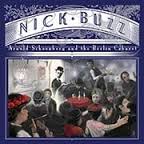
SOUNDTRACK: NICK BUZZ-Arnold Schoenberg and the Berlin Cabaret (2003).
In 1901, Arnold Schoenberg wrote eight Brettl-Lieder (Cabaret Songs). The songs were short and fun with naughty (cabaret influenced) lyrics. Some 100 years later, inspired by the Art of Time Ensemble who commissioned Nick Buzz to play pieces for their Schoenberg show.
So the guys from Nick Buzz got together and recorded four of the eight pieces. Then Martin Tielli released this disc as number 2 of his Subscription Series. Some of us were a little disappointed when this came out since it was only 15 minutes of music, but the art is wonderful and I have recently rediscovered this disc and have enjoyed it immensely.
Basically the Buzz guys have interpreted the songs in their own style, but they have remained faithful to the original melodies and lyrics (which were in German but are now in English).
“Gigerlette” explores electronic manipulations (presumably by Hugh Marsh) and offers lots of fun samples (what I assume is some earlier recordings of the song in German). It opens with sampled female singing and staccato piano as well as other unusual effects. Then Martin’s vocals come in and the effects clear out and the song becomes simple piano ballad for a brief moment. Then the noises come back in again, playing around with this amusing song. It’s a song of romance and love with the sweet punchline being that cupid is driving their coach and four. At over 5 minutes this is the longest song by far, even if the basic song is just over two minutes.
“Der genugsame Liebhaber” (The Modest Lover) opens with what sounds like a distorted harp (presumably the piano) and scratchy records (from Marsh). This song is about a man going to see his lover, but his over’s pussy loves his bald head so much that she continually climbs atop it. It is charmingly naughty. There’s some wonderful violin from Hugh Marsh on this song
“Galathea” is the most conventional of the three songs. A lovely piano ballad to Galatea.
“Arie aus dem Spiegel von Arcadien” (Aria from the Arcadian Mirror) is super fun. The music is weird and goofy with a very drunken feel. And the chorus is just wonderful “my heart begins to thump and dance just like a hammer’s blow it goes boom boom boom boom boom boom boom boom boom (getting faster and faster). I’ve listened to the original and it is very much the same, although Nick Buzz’s version is much better.
You can find some of these songs on line from a recording at Lula’s Lounge (Dec 9, 2010)
It’s cool to see how they recreate the album so faithfully in a live setting. It’s only a shame that the video isn’t a little closer so you could see just what they are doing.
Nick Buzz-December 9 2010 Lula’s Lounge
[READ: September 1, 2015] My Documents
I have enjoyed some of Zambra’s stories in other locations, so I was pretty excited that McSweeney’s released this collection (translated by Megan McDowell). The book is pretty much all short stories, although the first items feels a bit less fictional and more memoirish.
“My Documents”
This is a brief historical account of Alejandro as a child and as a writer. He talks about when he started working on computers and what happens when the computer dies with the information inside. He explains that this file is in his My Documents folder and he’s going to publish it “even though it’s not finished. Even though it’s impossible to finish it.”
“Camilo”
I read this story in the New Yorker. It concerns the relation of a man and his godfather, whom he has not seen since his father and godfather had a falling out years ago. See my link for a more complete synopsis. I enjoyed it just as much the second time.
“Long Distance”
The narrator worked as a phone operator in 1998. He liked the job–his boss was cool and would let him do anything he wanted so long as he answered the phones quickly. The job was in a travel insurance office and one day he received a call from a man named Juan Emilio. After speaking for a time about various things, the narrator realized it had been 40 minutes since they first started talking. They were expected to call clients back 14 days later as a follow-up and this time Juan Emilio talked with him foe a while and, upon learning that the narrator studied literature, asked if they could meet and discuss books. The narrator was already teaching classes at night, and these two situations overlapped somewhat. I loved the way all of this information is used as backdrop to a romance he has with a student known as Pamela. And the final line is great.
“True or False”
The titular phrase is uttered by a boy, Lucas, who declared, based on an inscrutable internal feeling, that things were True or False. An armchair might be true, while a lamp might be false. Hid father Daniel had a cat, Pedra, even though pets were forbidden in his building. Lucas loved the cat. Then the cat had kittens. There is a metaphor at work about the fatherless kittens and Daniel’s own behavior toward his son. I really enjoyed this story and the strangeness of the true or false brought a fascinating childlike quality to the story
“Memories of a Personal Computer”
The conceit of this story is great. A PC remembers what it was like to observe a relationship as it begins and then ebbs–and how the PC was moved around into different rooms as things changed in the relationship.
“National Institute”
At the school where the narrator went, they were called by number. He was 45. The main subject of his story was 34, although he doesn’t know the boy’s real name. 34 had failed the grade and was made to repeat it, but rather than being sullen about it, he was popular and fun. All of the students were worried about failing–the final test was very hard. But one day 34 approached 45 and told him he had nothing to worry about. The other students didn’t know what to make of it, but he slowly assessed everyone and told them whether they had anything to worry about. By the end of the story, when 45 is brought to the inspector of schools, he is told a lesson he will should never forget.
“I Smoked Very Well”
A look back on smoking and how quitting smoking made him a different (though not necessarily better) person.
“Thank You”
She is Argentine, he is Chilean and they are not together (even though they sleep together). They were in Mexico City when they were kidnapped together. The incident has unexpected moments. It’s a weird story (with some really unexpected moments) but a really good one.
“The Most Chilean Man in the World”
A Chilean couple has decided to separate once she was accepted to school in Belgium. After several months he is convinced that she wants him to visit, so he spends a ton of money and heads out to Belgium. Without telling her. And it goes very badly. But he can’t just leave Belgium, now can he? So he goes to a pub where he meets some new friends who call him the chilliest man in the world. The story hinges on a joke, but the story itself is not a punchline.
“Family Life”
I read this story in Harper’s. I thought it was fantastic–it was one of the stories that made me want to read more of his works. This is story of a man house sitting and the false life that he constructs around him. It was surprisingly moving.
“Artist’s Rendition”
I loved the way this story began. It tells us that Yasna has killed her father. But we slowly learn that Yasna is character in a detective story that an author is trying to write. We learn how the author constructs details about this character and the things that she has experienced which make her who she is. As this story unfolds we see how those first lines proved to be true after all.
This was a great collection fo short works and I really hope to see more from him translated into English.
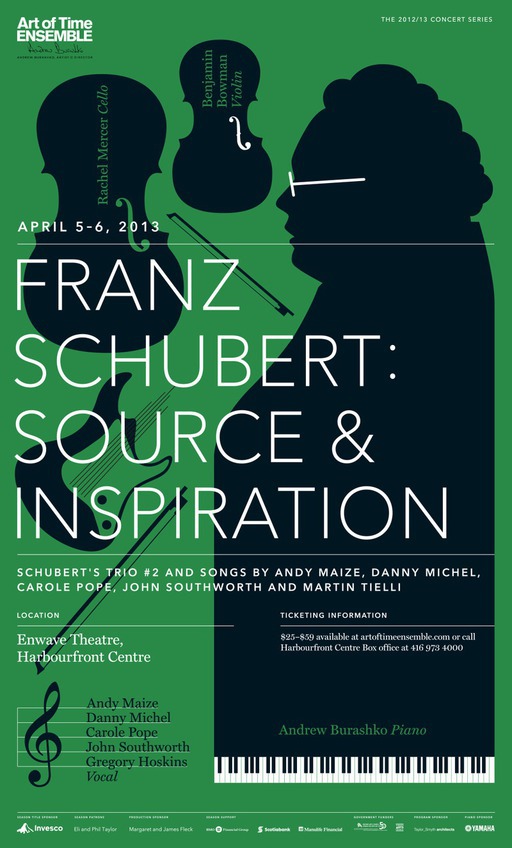
SOUNDTRACK: THE ART OF TIME ENSEMBLE with MARTIN TIELLI–Korngold: Source & Inspiration (Enwave Theatre, Harbourfront Centre, Toronto, ON, January 30, 2009).
After seeing The Art of Time Ensemble yesterday, it was quite serendipitous that I would have a show from them (featuring Martin Tielli) to post about on the following day.
This concert is the third in the Art of Time’s “Source & Inspiration” series. Two years earlier the first concert focused on composer Franz Schubert. The previous year’s concert focused on Robert Schumann. This time the spotlight was on the 20th century Jewish composer Erich Korngold–a composer of European pedigree who became well known for his wonderful Hollywood film scores.
This concert featured Korngold’s Suite for Two Violins, Cello and Piano as the ‘source’ as well as new songs inspired by this work from Martin Tielli, Danny Michel and John Southworth.
This recording is only 8 minutes long because there’s only two Martin Tielli songs. “Lied Two” (the German word for song is lied (pronounced leed) so Martin called his “Lied Two.” And “Moglich” which translates into “possible.” Both pieces are played with by the orchestra. Martins sings.
The more dramatic of the two would be “Moglich” with his loud whispered “Relaxxxxx at the end.” For more information about the show, you can click on this link.
Full Program & Repertoire: Suite Op. 23 for 2 Violins, Cello and Piano Left-hand
Erich Korngold
i.Praeludium und Fuge
ii.Walzer
iii.Groteske
iv.Lied
v.Rondo-Finale
INTERMISSION
Athabasca
Adventures of Erich Korngold
—John Southworth
The Sailor Song
Island
—Danny Michel
Lied 2 Moglich
—Martin Tielli
Performers
Andrew Burashko, piano
Danny Michel, singer
Erika Raum, violin
Stephen Sitarski, violin
John Southworth, singer
Martin Tielli, singer
Winona Zelenka, cello
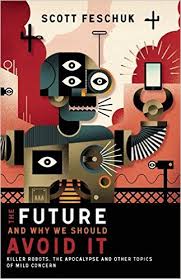
[READ: November 22, 2015] The Future and Why We Should Avoid It
The title of this book made me laugh so I set it aside to read it. Little did I know that it would be so very funny that I put aside other things so I could finish it.
I hadn’t heard of Feschuk before. He has written two previous books (How Not to Completely Suck as a New Parent sounds pretty good) and writes mostly for MacLean’s magazine.
As you might guess from the title, this book looks at the future, and Feschuk’s predictions are uncanny. For instance, I brought the book home and decided to look at it in the bathroom. And the introduction states quite clearly:
By now, life should be awesome and leisurely and you should be wearing a spacesuit and high-fiving your wisecracking robot sidekick. Except instead your dishwasher is broken, your god-damn iTunes won’t sync up and right now you’re reading this book on a toilet in your bathroom instead of where you should be reading it–on a toilet in your hover car.
Olof Arnalds is from Iceland and she sings in Icelandic. She sings a kind of experimental folk, although in this Tiny Desk it is just her and a partner, Davíð Þór Jónsson, playing acoustic guitars.
And playing acoustic guitars keeps these songs pretty grounded. Arnalds is a classically trained violinist, but she sticks to guitar on two of the tracks.
“Innundir Skinni” is a beautiful melody and our first exposure to Arnald’s voice, which is certainly unconventional. Her voice is quite high and really rather lovely, just more Icelandic than Western. Although even though she sings in Icelandic, anyone can sing along to the “la la la” part.
On “Surrender” she plays a churango made from an armadillo shell. It brings a beautiful delicateness to this song. I love the staccato chorus
“Crazy Car” sung in English as a duet, in which their accents and non-English delivery (especially Davíð’s) is most notable. The end, when she sings a different vocal melody is lovely.
Her voice might be off-putting to some, but I always like to hear someone with a bit of character.
[READ: November 10, 2015] Diary of a Wimpy Kid: The Long Haul
This has been my favorite Wimpy Kid book so far. I tend to like the ones that focus on a single long event and the whole family more than lots of little episodes at school. So this book, which follows the Heffley family on a summer road trip was perfect for me.
I also love the way Kinney taps into real things but modifies them just enough to make them somehow even funnier. Like the way he creates the magazine Family Frolic (but uses the font of Family Fun magazine) and describes it perfectly–showing idealized family moments which no family can ever hope to recreate. There’s also the hilarious way that trying to surprise kids with a trip can backfire (Manny is so excited to visit their aunt, that they have to delay their real trip to Disney World).
I also enjoyed the use of Flat Stanley (from the book by Jeff Brown) and the hilarious way he changed Captain Underpants to Underpants Bandits (by Mik Davies, rather than Dv Pilkey) which allowed him to make his own underwear jokes. (more…)
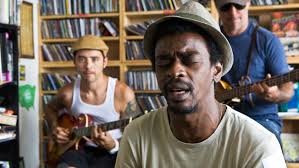
SOUNDTRACK: SEU JORGE-Tiny Desk Concert #79 (September 13, 2010).
Seu Jorge was the melancholy singer in Wes Anderson’s movie The Life Aquatic With Steve Zissou. He sang the David Bowie songs and was amazingly soulful and brought a completely unexpected quality to the Bowie songs.
He plays these five songs with his band Almaz. For reasons unclear to me only one of the songs is on the video, but the other four are available in audio format.
He sings three songs in Portuguese, and his voice is husky and passionate, so even if you don’t know what he’s singing about, you can feel the emotion.
The first song in English “Everybody Loves the Sunshine” has a cool trippy 70s vibe, with some cool keyboards. Although I don’t love his version of “Rock with You” which I imagine was super fun to sing, but it’s so different from the Michael Jackson version that it’s hard to reconcile the tow.
Cirandar” (Audio Only)
“Saudosa Bahia” (Audio Only)
“Everybody Loves The Sunshine” (Audio Only)
“Pai Joao”
“Rock With You” (Audio Only)
[READ: October 19, 2015] The Last Interview and Other Conversations
I have never really read any Borges (a piece here and there sure, but I have his Collected Fictions waiting for me and just haven’t gotten to it. However, when I saw this book at work I decided to give it a read. I have very much enjoyed the other books in The Last Interview series (there are ten and I have read four) so I thought I’d like this too, and I did.
Borges is a fascinating individual. He was legally blind from a youngish age and was completely blind by the time of the last interview. He was humble (but not exactly humble—he genuinely didn’t think he was that great of an author). He was a pacifist (remaining neutral even in WWII) and basically spent his whole life immersed in books.
This book contains three interviews
“Original Mythology” by Richard Burgin (from Conversations with Jorge Luis Borges, 1968)
“Borges and I” by Daniel Bourne, Stephen Cape, Charles Silver (Artful Dodger 1980)
“The Last Interview” by Gloria Lopez Lecube (La Isla FM Radio, Argentina, 1985) [translated by Kit Maude] (more…)
 OUNDTRACK: BASIA BULAT-Tiny Desk Concert #106 (January 24, 2011).
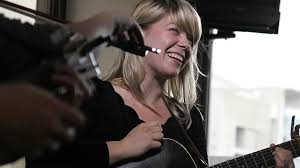 For some sad reason, this video cuts off about half way through the second song, so you need to watch it on YouTube instead. Basia Bulat is a Canadian singer of Polish descent. She’s adorable and plays weird instruments. What’s not to like?
 Her brother Bobby Bulat joins her on percussion for “Heart Of My Own.” This song is louder and more dramatic and a lot of fun. The final song “In The Night” is one she normally plays on the autoharp (see, unusual instruments) but she didn’t have it so she plays a rollicking guitar version with the full band (there’s some great violin solos in it). Just before it starts she says that if it sucks, don’t use it. It doesn’t suck at all.