Feeds:
Posts
Comments

Archive for the ‘New Yorker’ Category

SOUNDTRACK: DO MAKE SAY THINK-Other Truths [CST062] (2009).

I’ve always enjoyed Do Make Say Think’s CDs.  They play instrumentals that are always intriguing and which never get dull.

But this CD far exceeds anything they have done so far (and  they’ve done some great work).   There are only four tracks, and they range from 8 to 12 minutes long.  Each track is named for a word in the band’s name: Do, Make, Say, Think.  And each one is a fully realized mini epic.

“Do” sounds like a gorgeous Mogwai track.  While “Make” has wonderfully diverse elements: a cool percussion midsection and a horn-fueled end section that works perfectly with the maniacal drumming.  “Say” is another Mogwai-like exploration, although it is nicely complemented by horns.  It also ends with a slow jazzy section that works in context but is somewhat unexpected. Finally, “Think” closes the disc with a delightful denouement.  It’s the slowest (and shortest) track, and it shows that even slowing down their instrumentals doesn’t make them dull.

It’s a fantastic record from start to finish.  This is hands down my favorite Constellation release in quite some time.

[READ: December 2009 – January 13, 2010] McSweeney’s #33.

The ever-evolving McSweeney’s has set out to do the unlikely: they printed Issue #33 as a Sunday Newspaper.  It is called The San Francisco Panorama and, indeed, it is just like a huge Sunday newspaper. It has real news in (it is meant to be current as of December 7, 2009).  As well as a Sports section, a magazine section and even comics!

[DIGRESSION] I stopped reading newspapers quite some time ago.  I worked for one in college and have long been aware that the news is just something to fill the space between ads.  I do like newspapers in theory, and certainly hope they don’t all go away but print issues are a dying breed.  When I think about the waste that accompanies a newspaper, I’m horrified.  Sarah and I even did a Sunday New York Times subscription for a while, but there were half a dozen sections that we would simply discard unopened.  And, realistically that’s understandable.  Given how long it took me  to read all of the Panorama, if you actually tried to read the whole Sunday paper, you’d be finished the following Sunday (or even two Sundays later).

Their lofty goal here was to show what print journalism can still do. And with that I concur heartily.  Even if I don’t read the newspaper, the newspapers as entities are worth saving.  Because it is pretty much only print journalism that finds real, honest to God, worthy news stories.  TV news is a joke.  There is virtually nothing of value on network TV.  Fox News is beyond a joke.  CNBC is sad (although Rachel Maddow is awesome!) and even CNN, the originator of all of this 24 hour news nonsense still can’t fill their airtime with non-sensationalized news.

Obviously, there are some decent internet sites, but for the most part they don’t have the budget to support real news investigation.  You either get sensationalized crap like Drudge or rebroadcasts of real news.

So, print is the last bastion of news.  And you can see that in journalistic pieces in The New Yorker, Harper’s, The Walrus, Prospect and, yes, in newspapers.

But enough.  What about THIS newspaper?  Oh and unlike other McSweeney’s reviews I’ve done, there is NO WAY that I am writing a thorough comment on everything in here.  There’s just way too much.  Plus, there are many sections that are just news blurbs.  Larger articles and familiar authors will be addressed, however.  [UPDATE: January 18]: If, however, like Alia Malek below, you bring it to my attention that I’ve left you out (or gotten something wrong!) drop me a line, and I’ll correct things.

There is in fact a Panorama Information Pamphlet which answers a lot of basic questions, like why, how and how often (just this once, they promise!). There’s also a Numbers section which details the size, scope and cost of making this (it shows that with an initial start up, anyone could make a newspaper if they talked enough about what the readers were interested in). (more…)

Read Full Post »

SOUNDTRACK: BLACK SABBATH-Sabotage (1975).

Sabotage seems to be somewhat forgotten (maybe because of the creepy cover art 0f Ozzy in a kimono and fascinating platform shoes, Bill Ward in red tights with a codpiece (and visible underwear on the back cover), and Geezer and Tony’s mustaches).
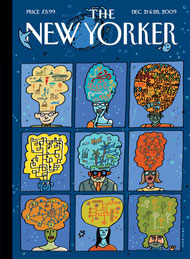
But this album rocks pretty hard and heavy.
“Hole in the Sky” is a sort of spastic rocker with Ozzy screaming vocals over the top of the rocking track.
“Don’t Start (Too Late)” is the by now obligatory acoustic guitar piece.  But this one is different, for it has some really wild and unpredictable aspects to it.

“Symptom of the Universe” is another classic Sabbath track, a blistering heavy fast riff with the wonderful Ozzy-screamed: “Yeaaaaaahs!”  It then surprises you by going into an extended acoustic guitar workout for a minute and a half at the end.

“Megalomania” is a slow ponderous piece. Unlike the psychedelic tracks from the previous records, this one moves along with a solid back beat. It also has a great bridge (“Why doesn’t everybody leave me alone?”). They definitely had fun with the effects (echoing vocals, etc.) on this one.  And, like their prog rock forebears, this song segues into another rhythm altogether when we get the wonderfully fast rock segment.  And the humorous point where the music pauses and Ozzy shouts “Suck me!”

“Thrill of it All” is a pretty good rocker, which after a  pretty simple opening morphs into a slow, surprisingly keyboard-fueled insanely catchy coda.  “Supertzar” is a wonderfully creepy instrumental.  It runs 3 minutes and is all minor-keys and creepy Exorcist-like choirs.  When the song breaks and the bizzaro Iommi riff is joined by the choir, you can’t help but wonder why no horror film has used this as its intro music.

“Am I Going Insane (Radio)” is a very catchy keyboardy track.  It clearly has crossover potential (although the lyrics are wonderfully bizarre).  But it ends with totally creepy laughing and then wailing.    “The Writ” ends the album. It’s another solid rocker and it ends with an acoustic coda with Ozzy’s plaintive vocals riding over the top.

Sabotage has some truly excellent moments.  It’s just hard to fathom the amount of prog-rock tendencies they’ve been throwing onto their last few discs (we’ll say Rick Wakeman had something to do with it).

Black Sabbath made two more albums before Ozzy left.  I haven’t listened to either one of them in probably fifteen years.  And my recollection of them is that they’re both pretty lousy.  Maybe one of these days I’ll see if they prove me wrong.

[READ: December 16, 2009] McSweeney’s #7

This was the first McSweeney’s edition that I didn’t buy new.  My subscription ran out after Issue #6 and I never saw #7  in the stores.  So, I recently had to resort to a used copy.

This issue came packaged with a cardboard cover, wrapped with a large elastic band.

Inside you get several small volumes each with its own story (this style hearkens back to McSweeney’s #4, but the presentation is quite different).  7 of the 9 booklets feature an artistic cover that relates to the story but is done by another artist (not sure if they were done FOR the story or not).  I have scanned all of the covers.  You can click on each one to see a larger picture.

The booklets range from 16 to 100 pages, but most are around 30 pages.  They are almost all fiction, except for the excerpt from William T. Vollman’s 3,500 page Rising Up and Rising Down and the essays that accompany the Allan Seager short story. (more…)

Read Full Post »

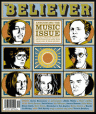
SOUNDTRACK: The Believer July/August 2009 Music Issue Compilation CD: “Fantastic and Spectacular” (2009).
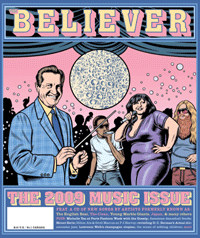
After the globe-spanning CD in last year’s issue, the 2009 Believer CD returns to the dominant musical style of the first few.  This disc is a collection of unreleased, acoustic songs from the editors’ favorite singer-songwriters.

And, wow, check out the bands that are represented here: Sam Phillips, The Clean, The Waterboys, Lloyd Cole, Young Marble Giants, The English Beat, Lisa Germano, Unrest, Suddenly, Tammy!, The Lilac Time and Mary Margaret O’Hara.  It’s an amazing collection of artists who agreed to release these songs only to this Believer compilation.

The liner notes ask a few questions of each artist so you get a nice peek into their working styles.  And for a few of them you find out what they’ve been up to for the last few years.  Although, sadly Mary Margaret O’Hara (sister of actress Catherine O’Hara!) only mentions that you can get a copy of her only released album Miss America directly from her.  And since I thin it’s a great album, I’ll pass along her email for ordering purposes only: m2oh8 @ hotmail.com.

So, what do we get in this collection?  Sam Phillips provides a fantastic drum-heavy, 90 second song.  Robert Scott’s song is a delightful, simple acoustic track.  I’ve always liked The Waterboys, but Mike Scott tends to go on and on, and this track is no exception.  It’s very very catchy but it’s over 10  minutes long!  The consistently excellent Lloyd Cole doesn’t disappoint.  Phil Wilson’s poppy number is very good.

I’m surprised that I don’t have any Young Marble Giants in my collection, and Stuart Moxham’s song here makes me want to see what I’m missing.  I swore that Dave Wakeling of The English Beat was Bob Mould on this song, but as soon as I saw who he was I recognized that English Beat voice in a more intimate setting.

Mark Robinson of Unrest also records as Cotton Candy, and this absurdly poppy ditty (the only duet on the disc) provides the title of the disc and one of the truly happiest moments. Except, of course, for Beth Sorrentino from Suddenly, Tammy! whose song “Such a Beautiful Day” is absolutely wonderful.  And if it is any indication of the greatness of Suddenly , Tammy!  then their absence from the msuicial scene is a real shame.

Stephen Duffy who records as Tin Tin and The Lilac Time writes songs that are instantly memorable and catchy as anything.  This one is no exception. And the Mary Margaret O’Hara song is not quite as out there as you might expect from her, but it’s really quite good.  I wonder what she has been up to for decades now.

There’s a secret bonus track from a brand new New Zealand band called Haunted Love.  When this issue went to print they were about to release their first EP, and this track doesn’t even appear on that (it’s THAT secret!).  It’s a great song and I hope good things come to them.  It is also not acoustic, but everyone can break their own rules once in a while right?

This is another string compilation from The Believer.  The track listing is here.

[READ: December 16, 2009] “Diary of an Interesting Year”

So this story is, indeed, a diary.  It is written in several entrees.  And, as we learn from the first entry, the diary itself was a gift to the writer from G. for her 30th birthday.  And, although we don’t learn it from the first entry, we quickly discover that global warming predictions were accurate and, basically the earth as we know it is no more.

But what I liked about the writing was that it revealed this global catastrophe somewhat subtly.

(more…)

Read Full Post »

SOUNDTRACK: The Believer June 2004 Music Issue CD (2004).

Every year since 2004, The Believer magazine has published a Music Issue which comes with a CD.

I recently received the 2009 CD, but I thought it might be fun to go back through the previous ones and see what kind of music they put on them since the beginning.  I was delighted to see how many bands I like now that I was either introduced to or SHOULD have been introduced to by these discs.

The inaugural issue was a fantastic collection of then-underground alt-rock (the issue also featured interviews with a few of the artists–you can see the Colin Meloy interview here).

The collection contains all previously released songs (I think).  But for me it was a great introduction to a number of bands that I didn’t know: The Walkmen, The Mountain Goats, Ted Leo + Pharmacists.  It also contained a new release by a band I did know, The Constantines.   And, this was my introduction to a band that turned out to be one of my new favorites: Death Cab for Cutie.

There’s a lot of great songs on here, and it would make a great hanging-out-at-a-party-with-friends soundtrack.  There’s not a lot of diversity on the disc which is a bit of  a bummer (although it’s good for a mellow party).  However, the 19 second blast of “You Got the Right” by the Tiny Hawks does break things up a bit.

But with a great collection of songs it would be wrong to complain.  For a complete listing (and another review) check out this page.

[READ: December 9, 2009] “The Use of Poetry”

Ian McEwan writes fantastically engaging stories about relatively simple things, oftentimes relationships.  And he has these relationships so well sussed out that a simple six-page story like this can pack in a ton of humanity.

In a post some time ago I wrote about how World War II affected Britain much more than it affected the U.S.  And, how artists of a certain age have found great drama from the war.  This story is no exception.  Except that the war veteran is not the main character.  But I loved this summary of the main character’s dad, the typical “stoic British man.”

Like many men of his generation, he did not speak of his experiences and he relished the ordinariness of postwar life, its tranquil routines, its tidiness and rising material well-being, and above all, its lack of danger–everything that would later appear stifling to those born in the first years of the peace.

That’s an amazing encapsulation of a generation of men.  And it rings very true to me.  But what’s more amazing is that that description is not even about the main character Michael, it’s about his dad, Henry. (more…)

Read Full Post »

SOUNDTRACK: BLACK SABBATH-Sabbath Bloody Sabbath (1974).
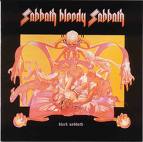
Henry Rollins, on Think Tank talks about the “el niño” storms from several years back.  And he says that el niño means “little boy,” but the damage the storms did means they should have called it something scary and powerful like “The First Four Black Sabbath Albums.”  I have to say that leaving out this fifth album is a great disservice to the power of Sabbath Bloody Sabbath.

“Sabbath Bloody Sabbath” opens the disc kicking and screaming with a wonderfully raw guitar riff.  Strangely, for such a powerful opening, it then segues into a very gentle almost loungey section (which hilariously, is the section where he screams “You bastard!”).  But when we hit three minutes, the song really catches fire.  The heavy pounding riff, the screaming vocals, the end of this song is astounding.  And it explains why this song is covered so much (Anthrax, The Cardiagns).

“A National Acrobat” follows with another great riff.  As the song progresses, the bridge section, rather than going more ballady turns a bit more psychedelic with some cool effects on the guitars, yet it maintains the heaviness of that great riff.  It ends with a rip-roaring guitar solo and speeding end.

“Fluff” has always been one of my favorite acoustic numbers.  It’s a very delicate acoustic guitar picking piece that builds in complexity as pianos are added over it.

“Sabbra Cadabra” is another great, fast rocker with a clever name.  This one is a love song, which seems weird, but it works.  Of course, here’s where the real weirdness kicks in: Rick Wakeman (yes, that Rick Wakeman) plays synths and pianos in the middle section.  What is totally fascinating about this, though, is that this keyboard-heavy section is not a ballad, it’s heavy guitar with a piano solo or psychedelic-wash feel.  It doesn’t detract from the heaviness of the song, but it introduces a weird almost Jethro Tull element to the proceedings.  It’s pretty cool.

The second side sees the band experimenting even more.

“Killing Yourself to Live” is  decent B-side rocker, that’s mostly a chance for Tony Iommi to play some wicked solos.  It also has several different parts to it (Sabbath is totally a prog rock band, eh?) and ends with a heavy boogie rock section.

After the fierce ending of “Killing,” we get another cameo from Rick Wakeman, who plays the bizarro-wah-wah’d keyboard intro of “Who Are You?”  This is probably the closest to a ballad that this album produces.  It’s slow, is propelled entirely by keyboards, features virtually no guitar or bass and has a delightfully pompous middle section with martial drumming and piano.  But the keybaords are thankfully weird enough to prevent this from turning into another crossover attempt.  And the lyrics are kind of dark and twisted .

“Looking for Today” brings the guitars back with what is probably a classic Sabbath sounding track.  It’s not amazing, but it’s a solid rocker that drifts into a crazy middle section chock full of acoustic guitars and, wait for it, flutes!  It ends with an upbeat coda that sounds not unlike some of the songs Ozzy would make on his later solo records.

“Spiral Architect” is a string laden track that gets a little  bogged down by the strings towards the end.  It has a cool weird riff that opens the song but by the end it’s almost entirely strings (and the heaviness is pretty much gone).  I’ve always liked this album so this doesn’t detract from my enjoyment of the song, but I have to assume that metal fans were a bit disappointed by this.

So Black Sabbath, despite being the godfathers of heavy metal were actually quite experimental in their day.  Even if the cover depicts a writhing figure on a bed that is labeled 666!

[READ: December 7, 2009] “All That”

I was delighted to get the email from The New Yorker today which notified me that this new issue had fiction from DFW!  What a nice surprise.  The problem is that it’s going to be maddening deciding whether this is an excerpt from The Pale King or some other unfinished piece or what.  [UPDATE: This did not make it into The Pale King].

I’ve learned from previous DFW pieces in The New Yorker not to assume that this is a short story.  Which is good.  Because as a short story it doesn’t have a very solid resolution.  However, I think it is one of his best pieces of (short) fiction in quite a while.

I don’t want to spend time speculating about where this piece belongs or even comparing it to the other excerpts from The Pale King.  But I can certainly see this character fitting in to a much longer narrative (and I rather hope that he is in The Pale King).

But enough of that. (more…)

Read Full Post »

SOUNDTRACK: BLACK SABBATH-Master of Reality (1971).

This album seems to have directly inspired more bands than any other Sabbath record.  There’s the band Masters of Reality (who I’ve never heard) and there’s the 1,000 Homo DJ’s EP and blistering cover for “Supernaut.”

This is one of my favorite Sabbath discs, even though, or maybe because there aren’t as many hits on it.  The story goes that since Tony Iommi had his fingertips cut off (!) he had to downtune his guitar so the strings would be looser and therefore less painful to play.  As such, this disc introduces a sort of “classic” Sabbath sludgy sound.  But even though this album doesn’t get a the airplay of Paranoid any metal fan knows a few of these songs.  “Sweet Leaf,” for instance, is quite well known.  It also makes me laugh because it is so clearly pro-drug (after all those anti-drug songs on the first two discs).  And of course, it opens with that great echoing cough (which I now assume is from someone toking up).
“After Forever” is one of those great Sabbath songs where Geezer Butler’s bass fills stand out throughout the bridges.  It also features one of Tony Iommi’s strangely “happy” sounding opening chords  The song itself is pretty dark but the chords are so upbeat!  The song has a lyric that I found shocking as a kid: “would you like to see the Pope on the end of a rope, do you think he’s a fool?”  And of course, the guitar solo flies wildly around your head from one speaker to the other.

“Embryo” is a strange middle eastern sounding 30 second instrumental that segues into the awesome “Children of the Grave.”  It’s one of those Sabbath songs that sounds menacing all the way through.  There’s a weird clicking sound in the verses that I assume is Geezer Butler’s de-tuned, incredibly loose bass strings slapping the fretboard.  And, of course, it ends with a wonderfully warped ghostly guitar feedback sounds and the whispered “Ch ch ch ch children.”

The second half of the disc is quite different from the first.  “Orchid” is a delightful 90 second acoustic guitar workout.  And it segues into “Lord of This World” a real rock and roll sounding song (featuring some great Ozzy screaming).  “Solitude” is like “Planet Caravan” from Paranoid, in that it’s a slow, trippy psychedelic sense (is it possible that Sabbath didn’t know that they were a metal band?).

Finally comes “Into the Void.”  This was one of the first songs I’d ever learned on guitar.  My guitar teacher liked the down-tuned low E string aspect of it, and I still enjoy playing it today.

As my friend Andrew pointed out the other day, John Darnielle from the Mountain Goats has written a 33 1/3 book about Master of Reality.  While I haven’t read it yet, Darnielle is pretty cool, so I assume it’s a great read if you like this disc.

[READ: November 30, 2009] “Loggerheads”

Not every David Sedaris piece is funny.  We know he’s not a comedian, per se, although he is certainly a humorous writer.  We also know that some Sedaris pieces are kind of disgusting.  He tends to delight in the grotesque.  However, in this piece he combines the disgusting with the non-humorous to create a very unsatisfying piece. (more…)

Read Full Post »

SOUNDTRACK: BLACK SABBATH-Black Sabbath (1970).

I’ve talked about Black Sabbath quite a bit, so why not take a look at their records directly?
One of the fun surprises about their first disc is the stereo mix (although it was 1970, so maybe one shouldn’t be surprised).  Guitar in one ear, bass in the other and sometimes only a guitar solo in one ear with nothing else going on!  The other surprise is that even though Tony Iommi’s guitar is on fire and he has huge lengthy guitar solos (the one in “Warning” is like 8 minutes long), the other members, especially the drums, really come to the fore.

What can one says about the title track?  The opening thunderstorm (with creepy bell tolling) sets the mood perfectly and then the killer riff kicks in and Ozzy Osbourne’s weird, loud, somewhat whiny and frighteningly frightened voice asks “What is this that stands before me?”  It’s a slow song, especially for one that spawned a genre of fast heavy metal, but it sense of ominousness is tangible.

“The Wizard” undermines everything you think you know about heavy metal since it begins with a harmonica.  However, it is a pretty creepy harmonica, and the melody is certainly spooky.  What’s so fascinating about the song is the drums.  While the whole band plays the somewhat odd riff, the drums have a huge place of prominence in the song, with little snare drum solos after each line (and a prominent cowbell at one point).  There are some wild guitar solos, but you wouldn’t be crazy thinking that this was the  drummer’s band.

The next song is listed as four songs: “Wasp/Behind the Wall of Sleep/Bassically/N.I.B.”  “Wasp” is a short, fairly upbeat instrumental, but “Behind the Wall of Sleep” is where the words kick in.  It’s a pretty explicitly anti-drug song (“turns your body to a corpse”).  And I’m fairly certain there are two vocal tracks, one in each ear.  “Bassically” is the wild bass solo (again, taking away the dominance from the lead guitar). Which leads to “N.I.B”., one of the great, classic Sabbath songs.  An awesome bass riff that propels the song to its climax of “My name is Lucifer please take my hand.”  Although it also features a strangely plaintive refrain of “Your love for me has just got to be real.”

“Wicked World” comes in a little preachy and kind of out of place.  But mostly because it’s got a strangely jazzy feel. It’s not out of the ordinary in concept, it’s just a little less subtle than some of the other tracks.

“A Bit of Finger/Sleeping Village/Warning” is the ending trio of tracks (14 minutes in all) that are really hard to distinguish.  “A Bit of Finger” is a very short acoustic guitar solo (I assume, I mean, the “Sleeping Village” lyrics kick in pretty quickly). But I love that there’s a Jew’s harp in the background.  Then there’s a crazily long guitar solo.  Or, should I say there are two guitar solos: a different one in each ear.  I think that the solo is part of “Warning” (it’s the same melody after all) but who can tell.  “Warning” is another fantastic Sabbath song.  The bass line is great and Ozzy sings one of his oddly plaintive songs of loss: (“the feelings were a little bit too strong”).  But the middle section is an astonishingly long guitar solo, or should I say solos. This solo even stops at one point and he comes out with a whole new melody/solo after that.  And then another solo.  Most of the soloing is in the right ear, which leaves the left ear struggling in vain to hear what’s going on (it’s fun to listen with just the left ear phone in).  With about a minute to go, the song proper returns.  It’s pretty bizarre.  And maybe that’s when Tony Iommi’s ego was placated.

Despite this being one of the first really heavy albums, it still retains a bluesy/jam feel to it.  The songs are long, there’s wild freewheeling guitar solos, and the sound itself isn’t a constant bludgeoning (like later heavy metal), it comes in bursts, which somehow makes it more ominous!

It’s really tremendous.

[READ: November 27, 2009] “Midnight in Dostoevsky”

Although I don’t know where this story is set exactly, I can totally picture the scene.  And I am superimposing it directly onto a location from where I went to college.  I realize that’s totally wrong, but I couldn’t resist.  This story had very weird overtones to me and actually inspired me to want to write a story that has apparently been percolating in my head for years.  We’ll see about that.

Anyhow, as for the story itself, I confirmed my suspicion that DeLillo doesn’t write short stories too often.  According to his Wikipedia site, he wrote one short story in 2002, another in 2007 and then this one.

DeLillo is a postmodern master, which leads one to think that his stories will be convoluted and difficult.  But this story is pretty straightforward.  Two college kids, walking around on a cold winter day spot an old man walking toward them.  They create a backstory for the man and, in the end, attempt to confirm or deny what they have concocted.  Fairly straightforward.

But as with any great story, the real action happens in the characters’ heads, or in this case, in the narrator’s mind and his spoken dialogue with his compatriot. (more…)

Read Full Post »

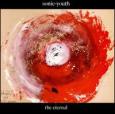
ny119SOUNDTRACK: SONIC-YOUTH-the eternal (2009).

eternalIt was the release of this disc that inspired me to see what they’ve been up to since the 80s.  And, sometimes it’s really fun to root through a band’s back catalog to see what kind of progression they’ve made over the years.

There are three things that set this disc apart from  many other SY discs.

The first is the dual/harmonized vocals. I don’t recall ever hearing Thurston and Kim split vocals duties in a song before, least of which in a half-line by half-line way.  There’s also some points where they sing (sort of) harmonies.  It’s a really interesting addition to their sounds.

The second is the staccato playing.  In the past I’ve always felt like SY ‘s sounds flowed over everything (even if it was noise, it was a continuous wash of noise).  On The Eternal, there’s three or four songs where the band plays a chug chug chug chug rhythm (with everyone playing along).  It’s most notable in “Anti-Orgasm,” where the chug chug part is accompanied by Thurston and Kim chanting uh uh uh on every beat.

The third is the bass.  The band has added Pavement bassist Mark Ibold to their lineup.  And as far as I can tell he does things on bass that Kim never did.  He seems to complement Steve Shelly as a rhythm section.  I always felt that Kim played something of a lead bass: she didn’t seem to go in for a notable steady bass rhythm (note on “Kool Thing” where her bass plays the main riff).  And since Thurston and Lee were often playing noise, it was essential for Kim’s bass to be more than just a rhythm instrument.  On this disc you have bass sections playing the song’s rhythm. Its a simple thing, something that all bands do, but it sounds so different for them.

They even mix up the song lengths quite a bit.  The opener is a two minute bit (with great lyrics from Kim: “What’s it like to be a girl in a band?  I just don’t understand.  That’s so quaint to hear.  I feel so faint my dear.”)   While “Anti-Orgasm” is over six minutes (three of the chug chug section and then three of an extended jam).  Lee’s awesome song, “What We Know” runs about 4 minutes.  And the final song, the very cool “Massage the History” runs over 9 minutes.

These elements give the band a revitalized sound.  And they sound like they’re really having a lot of fun. And boy are they rocking.  The band sounds heavy, they sound intense, and they sound great.  There’s not a bad track on the disc.

[READ: November 6, 2009] “Premium Harmony”

This story takes a look at a dysfunctional husband and wife on the way to Wal-Mart.  She wants to stop at the Quik-Pik on the way, to buy something that he thinks will be cheaper at Wal-Mart anyway.  This detour turns out to be significant, and nothing will be the same for them again.

I have to be this vague because saying anything more will give away too much of this rather simple story. (more…)

Read Full Post »

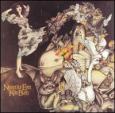
nyoct26SOUNDTRACK: KATE BUSH-Never for Ever (1980).

neverWith this disc, Kate Bush totally blew me away.  The leap from Lionheart to Never for Ever is monumental.  And Never for Ever was the first record by a solo British female to go to number 1.  Even 29 years later, this album still sounds fresh, current, a little bonkers, and totally amazing.

Kate is still pretty out there (there’s some wild screams and howls on a lot of songs), but she has really mastered the art/prog rock sound.  The disc starts out with “Babooshka” a wild romping rocker that, once again, sounds simple, even silly (chorus: “all yours babooshka babooshka babooshka ya ya”), but which has a rather sophisticated premise (of a married couple looking to cheat on each other but actually dating themselves).  The next song “Delius (Song of Summer)” shows some of the fun new sonic elements she’s added to her repertoire.  She adds a deep bass vocal singing along with her (it’s as absurdly deep as her voice is high). The “ta ta ta” section, the operatic chorus, and the jaunty piano play off each other perfectly.  I have no idea what the song is about, but I adore it.

“All We Ever Look For” has a wonderful part where footsteps walk across your headphones and open different doors.  Behind each door is a different sound (a chorus singing (but I can’t place what), birds singing, the rapturous applause, until the song kicks back in.  It’s very cool.

Side Two opens with “The Wedding List” a wonderfully weird, intense song that has interesting whispery bits (headphone friendly again) but then ends with awesome banshee howls. It’s inspired by François Truffaut’s film The Bride Wore Black.

But for me the song that distinguishes this disc is “Violin.”  It’s an ode to, yes, the violin, (chorus: Get the bow going! Let it scream to me: Violin! Violin! Violin!) and it is theatrically over the top.  It references Paganini (which completely makes sense).
but it also features a blistering electric guitar solo.  It’s entirely possibly that listening to the song a lot leads to madness, but I’m okay with that.

It’s followed by the dreamy delicate, “The Infant Kiss” which, lyrically is about a woman who falls in love with a little boy because the spirit of an adult man is inside him.  (Yea, that’s pretty wild, but it’s inspired by the film The Innocents). The disc ends with “Breathing” a look at life after a nuclear blast. It’s creepy and weirdly compelling and absolutely catchy (“chips of plutonium are twinkling in every lung”).

Musically, the disc contains a wonderful variety of sounds and textures.  Kate has her bassist play some awesome watery fretless bass, and there’s some great use of the Fairlight CMI (the first digital sampler).  There’s orchestration, synths, analog instruments, whistles and pianos and all manner of things.  Why, her brother Paddy alone plays: Harmonica, Mandolin, Balalaika, Sitar, Koto, Banshee, Saw and Mando.

And there’s not a bad song on the disc.  There is so much experimentation that it runs the risk of losing track of itself, but Kate is an artist and she knows exactly what she wants.  And she keeps the disc from getting out of control.

On her next couple of discs, she picks the best experiments and embellishments and really fine tunes her sound.  But for me, it’s the courageousness of this disc that makes it one of my favorites.  You have to suspend some disbelief, to really enjoy the disc but if you get it, it’s pretty amazing.

[READ: November 5, 2009] “Procedure in Plain Air”

I feel like this story is political but I can’t tell just how political it is trying to be.  The simple premise is that, while hanging out in front of his local coffee shop, Stevick watches a jumpsuited group of men dig a large hole in the street.  They block of much of the road, but cause somewhat minimal commotion with their efficiency.

Once they have finished, the jumpsuited men force a similarly jumpsuited man (who is bound and gagged) into the hole.  The rest of the story concerns the narrator’s interest and ultimate involvement in the situation. (more…)

Read Full Post »

nyoct12SOUNDTRACKKATE BUSH-The Kick Inside (1978).

Kick+InsideFor the longest time, Kate Bush was my soundtrack for reading.  There was something about her voice and her musical style that I felt was conducive to reading (must be the Wuthering Heights connection).

This, her first record, was recorded when Kate was 19, and now that I’m older (and have heard her later discs) I can really hear how young she sounds.  And with that youth comes a certain degree of naivete.  If you bring any amount of cynicism to this disc, it completely crumbles.  I mean she’s a teenager in the late 70s, so there’s an awful lot of earnestness here.  There’s Buddhist chants, there’s a lot of well written feminist thought, there’s an interpretation of Wuthering Heights.  There’s even whale songs in between tracks!

But there’s also a lot of songs about lost love.  And the thing that is so strange about that is, if I understand her biography correctly, she was not terribly worldly.   So the songs about lost men or Berlin pubs or even pregnancy are unusual to say the least.  And they show a furtive imagination.

So, you get songs of love and longing.  Songs about “Strange Phenomena.”  But you also get some wonderfully weird lyrics, like my favorite couplet: “Beelzebub is aching in my belly-o / My feet are heavy and I’m rooted in my wellios”

And I just love the audacity of her writing a song about Wuthering Heights (and, yup, it got me to read the book).  Not to mention the audacity of the notes she hits in the song.

Because clearly the thing most notable on the disc is her voice.  She wails and screeches and hits notes that were previously unheard in popular music.  The chorus of “Over the Moon” is striking in its ambition.  And let’s not forget the outrageous opening notes of “Wuthering Heights” (she’s so out there that she had to re-recorded it for the greatest hits record to try to get more airplay).  But no matter how otherworldly and at times bizarre her singing is, there is no doubt that her voice is a phenomenon unto itself.  Just listen to the gorgeous control she uses on “The Man with the Child in His Eyes”).

As she got older, she reined in some of the excesses of her voice (while unleashing excesses in other areas!).  She would begin multitracking her voice for awesome effect, as well as using some surprisingly deep gutteral vocals on other songs.

kickinsideKate would go on to write a few brilliant records in to 80s.  And this is certainly a fun starting point.

Of course, I’m disappointed that the US cover is the one featured above, which is clearly dumbed downed for US audiences who didn’t get (or like) her.  Because check out the cool original cover.  I mean, I’m not even sure what it’s all about, but it’s certainly more interesting!

[READ: November 6, 2009] “The Godchildren”

I loved the premise of this story from the get go.  And I thought it was a genius way to bring together three strangers who know each other.  The three characters: Amanda, Susan & Chris are the godchildren of Vivien.  Vivien was a friend of each of their parents, but she herself never had any children.  So, it was agreed early on that the three kids would occasionally spend a day with Vivien.  But the parents soon lost interest in talking to Vivien and the kids’ visits became something of a substitution for the parents actually talking to her. (more…)

Read Full Post »

« Newer Posts - Older Posts »