Feeds:
Posts
Comments

Archive for the ‘History’ Category

harpersaugSOUNDTRACK: TINDERSTICKS-Donkeys 92-97 (1998).
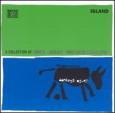
donkeysDonkeys is a collection of singles, rarities and unreleased recordings.  It came out just before Simple Pleasure, and has tracks from the era of the first four discs.

With the reissue of those first four discs (and all the bonus tracks therein) and the Greatest Hits collection, it’s not really necessary to get this for these rare tracks.  (I admit that I haven’t actually checked to see if all of the tracks here are now available elsewhere…there seems to be a number of different mixes and versions of songs, so I’ll let someone else do the legwork).

However, if you’re disinclined to get the reissued discs for whatever reason, this is a great collection of songs that are worth having for any Tindersticks fan.  And, interestingly, it works quite well as an introduction for the newbie: it features several of the most accessible songs from the first few discs.  But, for fans, the highlights include their great cover of “I’ve Been Loving You Too Long.”  Also “Plus de Liaisons” a French version of  “No More Affairs.”  It also has the fabulous duet with Isabella Rossilini (“A Marriage Made in Heaven”) and another version of “For Those”  (I’m not entirely sure how many versions of that song exist, but there’s got to be about 3 or 4.

This disc is probably easy to track down cheaply since all the tracks are available elsewhere now (although my copy came from my friend Lar and has the Euro symbol on the Used sticker to prove it). Or, maybe it’s now totally rare and out of print and is hugely expensive.  Either way, it’s still a great collection of tracks.

[READ: November 5, 2009] “Too Much Happiness”

It’s a little lame to lump these two pieces together, but the Charles Foran article isn’t something I would review on its own.  Nevertheless, it is a very interesting look at Alice Munro’s hometown, and the Self-Guided Tour of Points of Interest in the Town of Wingham Relating to Alice Munro sounds like a fun thing to do if you’re in Ontario.  (Even if Munro herself is never actually there).

But onto Munro’s story.

I’ve only read a few stories by Alice Munro (they’ve all been reviewed here).  And yet, I’ve come to think of her as writing a certain type of story.  And this one does not conform to any of my notions of a Munro story.

First, it’s rather long. Second, it’s not set in Canada.  And third, it’s a historical piece about a real person.  There’s an author’s note at the end of the story which informs us that she learned about Sophia Kovalesky when she was looking up something else in the Encyclopedia Britannica (which I find charming in and of itself).  So, all of this seems to be something of a departure for her (at least from what I’ve read). (more…)

Read Full Post »

propsectI recently received an e-mail from a nice person at Prospect (a British magazine).  The email asked if I’d like to review their magazine.  After being completely flattered, I said, “Of course!”  And then I waited nervously hoping that the magazine was good and that I wouldn’t have to say anything mean about it, because I would.  Oh yes, I would.

ctBut I don’t have to. They grabbed me right off the bat because the c & the t in the title are connected by a little filigree doodad.   I love typography, so that little flourish was a selling point (okay a superficial one, but I liked it immediately).

The “subtitle” of the magazine is “Good Writing About Things That Matter” and it is a totally apt description.  Prospect is a monthly magazine that covers all aspects of society: British, European, American and the world.  And, indeed, the writing is quite good.

In many ways it reminded me of The Walrus, a favorite magazine of mine.  (It’s a weird comparison since The Walrus has only been around for a few years, while Prospect has been around for about 13 (the November issue is number 164, so I’m guessing here), but it’s an apt comparison for its coverage: politics, culture, arts and more.

Because this was a new (to me)  magazine (and because I knew I’d be reviewing it), I decided to read every article.  There were a few that I thought I wouldn’t care much about.  But the writing totally grabbed me.  For instance, the article about Princess Diana (about whom I am indifferent) was fantastic.  It was cynical and funny and totally engaging.  And the same was true for just about every article in the magazine.

Normally I like to have at least two issues to refer to when reviewing.  So there may very well be things about this issue that are different from the others.  So, forgive, please, if I generalize incorrectly. (more…)

Read Full Post »

walrus1I found out about The Walrus while watching an interview with Noah Richler on Book Television (back when I had Canadian satellite).  During the interview, they mentioned that the first issue of this cool new magazine, The Walrus, had just come out.  I was very intrigued; amazingly, the local Barnes & Noble had a copy!  I was delighted.  And since then The Walrus has become one of my favorite magazines.

In fact, in comparison to similar magazines (Harper’s, maybe The New Yorker) it is the only magazine that I read cover to cover.  I’m not sure why I insist on this (it’s probably got to do with it being an import from Canada, but really it’s just so well written that I enjoy everything), but I never regret reading every piece.

The magazine has recently had a face lift, a new cover design and, what seems to me to be a little more white space…it feels like each issue is a little less text-heavy.  Which is obviously a little disappointing, and yet when you have a lack of free time, as I do, it makes it a bit easier. (more…)

Read Full Post »

rapperSOUNDTRACK: SCHOOLLY D-Smoke Some Kill (1988).

schoolySince this disc is featured so prominently in Signifying Rappers (and the book is named after the best track on this disc) I thought I’d dust it off and listen to it again.  I got this disc probably in 1989 at the suggestion of my friend Al.  He recommended “No More Rock N’ Roll,” I think.

I haven’t listened to the disc in years, probably a decade.  The last time I listened, I think I wasn’t all that impressed by it, which is why it’s funny to me how much significance the book gives this disc/track.  In listening again, I felt more or less the way I did last time, although interestingly, after reading the book, I agreed that some of the tracks are pretty good.

“Signifying Rapper” in particular, seemed better after DFW’s analysis of it (he discusses it in the tradition of the trickster narrator, and I agree it’s a good one).  Although, at one point in the book DFW decries the misogyny in a lot of rap, but he doesn’t mention the homophobia.  And, despite the trickster style in this song, the homophobia is pretty outrageous (even if, in a surprising twist, the “faggot” kicks the “pimp’s” ass).  But really, the thing that upsets the pimp so much, that he went off to fight the faggot about is this rather absurdly childish set of insults:  your dad’s a faggot, your mom’s a whore, your granny’s a dyke and your brother’s a faggot too.  Now, homophobia aside, would these insults really get anyone so angry?   Hard to say.   But regardless of the whole thing, the song is set to the riff from Led Zeppelin’s “Kashmir” so, that’s pretty fun.

The rest of the disc is a mix of kind of lame tracks and a few good ones.  “Here We Go Again” has some great scratching on it (in fact the scratching throughout the disc is quite good), and there’s some really good background samples on “Gangster Boogie II.”  Although I think the best tracks come near the end: “Treacherous” (which samples or reinterprets Gil Scot-Heron’s “The Revolution Will Not Televised”) and “Black Man” which features the cool shout-out “What’s the Word?  Johannesburg!).

A few tracks are kind of flat.  “Mr Big Dick,” is, at best, silly and even the title track “Smoke Some Kill” is sort of uninspired.  What’s interesting about somewhat flat style is that this disc has come out after Public Enemy’s wall of sound changed the face of rap.  But Schoolly is sticking with the very sparse Run D.M.C. style.  The difference is that with Run, you had two vocalists, but Schoolly is by himself.  It’s just not quite as exciting.

And, then there’s the aforementioned “No More Rock N’ Roll” which is a companion to “We Don’t Rock, We Rap”.  The whole anti-rock trope rings hollow especially since he samples from it so freely.

It was still early days, but rap has progressed pretty far from this CD.  It also turns out that this disc is really hard to find.  It’s discontinued and lists on Amazon for $50.  How lucky for me!

[READ: October 2, 2009] Signifying Rappers

I wasn’t planning on reading this book this soon.  (I’m  not turning into a DFW addict, I swear).  But this showed up all because of the whims of the interlibrary loan system.  I put holds on books for people all the time, and usually it’s for new, popular books, so it’s often several weeks, sometimes months before the books come in.  I tend to forget that a 19 year old book that nobody is clamoring to read will show up in about 3 days.

So, those of you thinking about reading this book because you want to complete the DFW ouvre were probably wondering if this co-authored book should really count.  And, like, how would you know what he wrote?  Well, I didn’t immediately figure out the patently obvious system that they used in the book: When Mark Costello writes a section it is introduced with a large M.  When DFW gets a section it starts with a large D (see, obvious).   You can also tell because DFW’s section are laden with footnotes and very large words (no, really?)

I think for all readers, the main question is what are these two white, educated, twentysomethings doing writing about rap.  And, they both answer in their own way that, well, they like rap.  A lot.  In fact, DFW goes on to say that rap circa 1989 is the only musical genre that is interesting after some five years of commercial pap (and he’s pretty accurate with that, actually).  He also notes that as of their writing of the book there had been no real in-depth treatises written on rap.  Oh, and lastly, in the spirit of rap itself, they did it because they wanted to do it. (more…)

Read Full Post »

adidasSOUNDTRACK: TV ON THE RADIO-Dear Science, (2008).

sciencThe problem with TV on the Radio for me is that their first EP is so damned good that anything else they do pales in comparison.  Having said that, Dear Science, comes really close to topping that EP.  I liked Cookie Mountain (their previous disc) but I felt like they put so many elements into the mix that it detracted from the best part of the band: Tunde Adepimbe & Kyp Malone’s vocals.

And so, on Dear Science, the vocals are back up front where they belong.  This disc is a lot less busy, which may seem a little like selling out, but instead, it just heightens the complexity and originality of the band’s work.  The disc rocks hard but it also heightens some really cool jazz and dance elements.    But it all comes back to the melodies and vocals for me.  And on Dear Science, they pretty much outdo themselves.

And you can dance to it!

[READ: September 30, 2009] Shiny Adidas Tracksuits and the Death of Camp and Other Essays

After reading David Foster Wallace’s essay in this book, I looked at the other articles here and decided to read the whole thing.  And I’m really glad I did.  It’s an interesting book full of, funny and often thought-provoking pop culture articles circa 1996.  As with some of the other pop culture/political books that I’ve read several years after they were relevant, it’s often weird to look back and see what things fully occupied the popular landscape at the time.  And, when a piece is completed dated, it’s pretty obvious, and sometimes unintentionally funny.  But there are many pieces here that are timeless (or at least hold up for a decade), and those are still really good reads.

This book also does a good job of summarizing the tenor of the defunct Might magazine.  A dose of irony, a splash of humor and a lot of criticism of what’s trendy.

The strange thing to me about this book, though is the targets that they chose to go after sometimes.  Rather than critiquing right-wing attitudes or corporate shenanigans (which they do touch on), they really seem to be after pop and rock celebrity.  For instance, there are two separate articles which take a potshot at Eddie Vedder (this was around the time of the Ticketmaster fiasco which didn’t put him in the best light but which could hardly be seen as only self-serving).  This seems rather unfair, unless his sincerity could really be called into question by a bunch of ironic jokesters.  Magazines like Radar and Spy used to do snarky articles like this. I’d always thought that Might was a little better than that.  But indeed, there’s one or two pieces here that have a holier- (or perhaps indier)-than-thou attitude.   Which may have been fine in the 90s but which seem petulant now.

But aside from those, the irony-free pieces are very enjoyable.  (more…)

Read Full Post »

dfwshelfSOUNDTRACKFLEET FOXES-Sun Giant EP (2008).

sungiantMy friend Jarrett introduced me to the Fleet Foxes with their self-titled CD.  I recently picked up the Sun Giant EP and it is just as good as the main CD.  It opens with a beautiful a capella introduction to “Sun Giant” in multipart harmony that melds into a nice folksy song.
The remaining 4 songs all contain these harmonies, although some rock harder than others (within their style of orchestral folk).  Orchestral folk implies a “bigness” that the band never really strives for.  In fact, some songs sounds downright pastoral.

“English House” is great for so many reasons: the fantastic guitar lines, the breaks in the song proper, just everything.  But the track “Mykonos” is probably my favorite Fleet Foxes song of all.  It has such a wonderfully catchy pre-chorus and then an even more fantastic post-chorus.  Simply amazing (even if I don’t know what they’re saying).

The EP is a great introduction to this fantastic band.

[READ: Mid-September 2009] uncollected essays

I don’t normally like to have a bunch of things appear in one post.  But this post is going to be about those small, uncollected pieces that aren’t really long enough to warrant their own entry (letters, interviews, etc).  I tracked down most of these pieces from The Howling Fantods, but I also got a few from The Joy of Sox.  You’ll notice that many of these pieces are stored at http://theknowe.net/dfw and yet I can’t figure out how to access the files there directly, so Howling Fantods links are what we get.

The text in bold comes from The Howling Fantods site (I hope they don’t mind that I swiped it).  The text underneath is my review/opinion/idea. (more…)

Read Full Post »

weekI’m not sure how I first learned about The Week. I think I received a trial issue in the mail. But after just one or two issues we were hooked.  The Week is a comprehensive newsweekly, although it offers virtually no original reporting.  It collates news stories and offers opinions from a variety of sources: newspapers, online magazines, political journals etc. And it provides opinions from across the political spectrum.

Each issue has the same set up (although they recently had an image makeover: a new cover design and some unexpected font changes in a few sections, which I suppose does lend to an easier read).

Each issue starts with The main stories… …and how they were covered. The first article is a look at whatever major story captivated the editorials that week.  (The growing gloom in Afghanistan).  And in a general sense of what you get for long articles (the long articles are about 3/4 of a page) You get WHAT HAPPENED, WHAT THE EDITORIALS SAID, and WHAT THE COLUMNISTS SAID.  The What Happened section is a paragraph or two summary of the story.  The editorials offer a one or two sentence summary from sources like USA Today, L.A. Times and The Financial Times, while The Columnists are from The Washington Post, The Wall Street Journal and Time.com, for example. (more…)

Read Full Post »

saccoSOUNDTRACK: GREAT NORTHERN-Trading Twilight for Daylight (2007).

grewatA patron donated this disc to our library.  I had never heard of Great Northern, but I gave it a listen, in part because I hoped that the band name came from Twin Peaks (no idea if it does). And wow, I was blown away by this disc.

This is like the great unheralded indie rocker band (although having looked them up apparently the are quite heralded).  Their songs sound like an inviting combination of The Anniversary (the GN song “The Middle” always puts me in mind of The Anniversary’s “The Siren Sings”), Veruca Salt, Nada Surf and any number of supremely catchy bands.  The vocals are split between a make and female voice which makes the diversity even more appealing.

There’s not a bad song on the disc, and I find myself playing it quite often. The music is first rate, with great textural setups and drop offs, and the choruses, oh the choruses.  It’s hard to even pick a favorite song.

I’m somewhat surprised I’d never heard of this band before (they have a new album out this year that I haven’t heard), but then they are on a label I’ve never heard of either (Eenie Meenie).  I will totally get their new disc, as well as their Sleepy Eepie EP.  I’m really that impressed.

[READ: January 2007] Sacco & Vanzetti Must Die

I read this book over two years ago (I’m cleaning up the final books that I haven’t posted about), and I’m afraid I’m a little shaky on the details.  But I just remembered that I read about it in The Believer.

The premise of the book is that Sacco & Vanzetti are actually a comedy team, not anarchists.  Well, they are anarchic, but in the realm of comedy, not bombs.  They are a sort of Laurel & Hardy with Sacco as the fat troublemaker (and yes the name fits) and Vanzetti as the straight man, the ideologue.  As they progress from slapstick routines to film, their comedy gets more specific, and their schtick concerns “knife grinders/throwers.”  The knife angle is explained as a family trademark or maybe it’s a stolen gimmick.

Inevitably, their careers begin to wain, and their lives take a turn for the worst.  And when things get bad, they get really bad, leading them to trial, with possible execution. (more…)

Read Full Post »

convSOUNDTRACK: SONIC YOUTH-SYR 6 Koncertas Stan Brakhage Prisiminimui (2005).
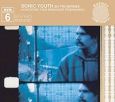
syr6This CD sees Sonic Youth playing an instrumental background to three silent films from Stan Brakhage.  It reminds me of the Jem Cohen DVD in which A Silver Mt Zion play the music for the silent Cohen film.

Now obviously, we don’t see the films on the CD.  In fact, as far as I can tell it doesn’t even say which films they are (the credits are in Lithuanian).  So, it’s impossible to tell if the pieces are contextually good.

As for the songs themselves, there are three short pieces.  The first is about 25 minutes, the second about 14 and the last about 27 (even though the disc itself lists one piece at about 65 minutes).  The pieces are leisurely and very abstract.  There’s very little in the way of Sonic Youth in evidence: minimal distorted guitars (or much of any guitars).  Rather, there are effects, percussion and occasional vocals from Kim.  There are no hooks of any kind.  But then what would you expect from soundtrack work?

Unlike the other SYR discs which were all about improvisation, this one feels more like a composition: abstract, strange and a little disorienting, but a composition nonetheless.   I imagine that the films are dark and mysterious.

This disc falls in line with the style of SYR 4 Goodbye 20th Century.  If you’re not really sure about SY, but you like abstract soundscapes, this is a good disc to check out.

[READ: August 30, 2009] The Convalescent

I had read a sample of the book about a month ago and was very intrigued.  When the book came in the mail I was pretty excited to read it all.

But how to explain this peculiar book?  Rovar Pfliegman is a mute, crippled man who lives in a broken down bus on the side of the road–out of which he sells meat.  His meat is the cheapest and freshest in town so even though he sells it out of  a bus on the side of the road, he has many clients.

Pfliegman is Hungarian, specifically, he comes from one of the eleven tribes who migrated over the Ural Mountains.  (History records only ten tribes, and the word Hungarian stems from the word onogur, which means ten arrows.)  This eleventh tribe, the Pliegmans tripped over their own feet, growled at strangers, stole other peoples food and were generally outcasts even amongst outcasts.  As an example of the sort of tribe the Pfliegmans are, Rovar’s father after receiving a VCR in 1984 spent four minutes examining the buttons and one minute examining the manual before bashing it in the face. (more…)

Read Full Post »

lydiaSOUNDTRACK: SONIC YOUTH-SYR8: Andre Sider Af Sonic Youth (2008).

syr8This final (so far) SYR release is another live recording and it sees the bands joined by saxophonist Mats Gustaffson and electronic wunderkind Merzbow.  This EP comes from the 2005 Roskilde Festival in Denmark (and the language is all written in Danish).  According to the SY website, the day before this, they had performed a set in support of Sonic Nurse. However, this set, “The Other Side of Sonic Youth” is an hour or so improvisation. It is basically broken down into 5 minute intervals:

1 min.  Kim (guitar) & Steve (drums) start
5 min. Thurston (guitar) joins
10 min. Lee (more guitar) joins
15 min. Jim O’ Rourke (bass/synth?) joins
20 min. Mats Gustaffson (saxophone) joins
25 min. Merzbow (laptop) joins
30 min. Kim & Steve leave
35 min. Thurston leaves
40 min. Lee leaves
45 min. Mats leaves
50 min. Merzbow finishes

All times are approximate, and even listening to the disc it’s not entirely clear when the new players come on (or when they leave). For the most part, the set is varying levels of noise and dissonance.  But it’s not just a wall of chaos. It starts fairly simply with the guitar and drums (although when Kim and Steve play it’s never really simple).  By the time Jim comes out, the band has morphed into all manner of sound scapes.

When Mats comes in and that saxophone starts squealing, it’s a whole new ballgame. I don’t find Merzbow’s entrance to be all that noteworthy, but by the end, when it’s just him and Mats (or him by himself) he’s doing some pretty amazing stuff.

It’s hard to imagine what the Roskilde people thought of this (although crowd noise seems to be positive).  This set was followed by Black Sabbath, which in and of itself is pretty funny.  Especially since the SY set seems far more dissonant.

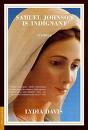
[READ: September 6, 2009] Samuel Johnson is Indignant

This collection of Davis’ work contains fifty-six of stories.  The stories range from one sentence (!) to some twenty pages.

The book is disconcerting in that it opens with several of the one to two page stories, leading you to suspect that they will all be that length. Then, when you actually get to the longer pieces it kind of throws you.

Those first stories are I guess what you’d call flash fiction.  Except that for the most part, it’s hard to tell whether the pieces are even meant to be fiction.  They are aphoristic, often.  Talking about neighbors and friends, uncomfortable moments, and mostly, lots of thinking about everyday activities.  Some of them are funny.  Some of them are thought-provoking.  Some of them are just weird.  And some of them make you wonder why they were written at all, or more to the point, why she would name this collection Samuel Johnson is Indignant, when this story,consists of this:

“Samuel Johnson is Indignant: that Scotland has so few trees.” (more…)

Read Full Post »

« Newer Posts - Older Posts »