Feeds:
Posts
Comments

Archive for the ‘History’ Category

SOUNDTRACK: THE DUCKWORTH-LEWIS METHOD-The Duckworth Lewis Method (2009).

This is a CD released by the combined forces of Neil Hannon of The Divine Comedy and Thomas Walsh of Pugwash.  And if that weren’t enough of a sales pitch, the title of the band is a method of calculating cricket scores!  And even more…in concordance with that, this CD is largely about cricket.  Huzzah!  Buncha sellouts.

I don’t know a thing about cricket, but I know about great orchestral pop, and this disc has it in spades.  Some of the more obvious cricket songs are even understandable to non cricketers (the themes of “Jiggery Pokery” are familiar to anyone who has failed in a sport–and musically it sounds like a silent film soundtrack).

“The Age of Revolution” begins with an olde-fashioned soundtrack as well (jazz swing, including tap dancing) but quickly jumps into a dancey discoey verse (the two soundtracks blend surprisingly well in the chorus).  And the revolution?  Well, it has something to do with cricket.  Next, “Gentlemen and Players” is a wonderfully Divine Comedy-esque track complete with harpsichords.

“The Sweet Spot” is another discoey dancey track with some funky bass work (and innuendo whispered vocals).  And “Rain Stops Play” is a fun musical interlude.

“Mason on the Boundary” is the first track that seems distinctly Pugwash-y.  Hannon and Walsh have similar singing styles, and I find it hard to know who is who sometimes.  But this track is clearly Walsh’s and it’s very nice indeed.  Similarly, “Flatten the Hay” has that distinct Pugwash XTC/Beach Boys vibe and it’s quite good.

“The Nighwatchman” is also a very DC type song (it even sounds a bit like “The Frog Princess” but pulls away before being a repeat of that great single by introducing some very 70s sounding strings).  The rest of the disc follows in this same wonderfully orchestrated pop feel.  This a great record that, as far as obscure bands that get no statewide attention go, is top notch.

Oh, an it’s even more fun with headphones!

[READ: October 9, 2010] Skippy Dies

Wow, there’s a lot going on in this book.  It’s exhausting just trying to think of all the topics covered: boarding school life, failed romance (two big ones), life as a teacher, the appeal of pop singer Bethani, the Catholic priest sex scandal, drugs of all kinds, sneaking into a girls’ school, World War I, institutional cover ups, M-theory–which is pretty much the entire universe, and donuts.

But let’s start at the beginning.  Yes.  Skippy dies.  In the first couple of pages.  And what’s fascinating about this is that we don’t care.  I mean, in the scene where he dies, he’s not even the major character.  But then Skippy turns out to be more or less the glue of the book once the story proper begins.

Skippy resides at Seabrook school in Dublin (the best, most prestigious Christian academy in the country–sorry Gonzaga).   His roommate is Ruprecht (perhaps the strangest major character name I’ve read in a long time).  Ruprecht is a large boy who is incredibly smart (he will single-handedly raise the school’s average on the year’s final exams).  He is a computer geek who is obsessed with aliens and SETI.  And he hopes to be able to communicate with the other world by using techniques suggested in M-Theory.  The book does an admirable job explaining M-theory and string theory.  I’m not going to take up space here, but there’s a fine description at Wikipedia (or, if you don’t like Wikipedia, here’s an academic explanation that is written for the lay person).

Anyhow, Skippy and Ruprecht are two of a few dozen boys who reside full time at the school.  (Most of the other kids are day students).  And they have a cadre of half a dozen friends that they hang out with who make jokes at each other’s expense.  It’s a very realistically written entourage.  Mario is Italian and claims to have had sex with many many women (thanks to his lucky condom which he has had for three years).  Dennis is the ballbreaker.  He’s the abusive one (but by most standards, he’s not a bad guy).  And a few other hangers on.

This story of dorm life is a good one.  The boys are funny, their stories believable, even if they are all eccentric in their own way.  And then, one day, Skippy sees a girl playing frisbee at the girls’ school across the way (Ruprecht has a telescope which he uses for the stars, while eveyrone else uses it for the girls’ school).  And Skippy winds up becoming rather obsessed with the unknown “frisbee girl.”

This girls’ school plays a part in the story in another way too.  Carl and Barry are the Seabrook’s thugs.  When Barry hits upon the idea of selling ADD meds to the locals (as diet pills), it’s the girls’ school that he mostly preys on.  For yes, this story is also about drugs. (more…)

Read Full Post »

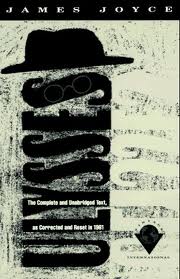
[LISTENED TO: Week of September 13, 2010] Ulysses

Episode 15 is a huge one, so I finished up that and 16 this week.

One thing I noted about Episode 15 is that in this section:

THE VOICE OF ALL THE DAMNED Htengier Tnetopinmo Dog Drol eht rot, Aiulella!
(From on high the voice of Adonai calls.)
ADONAI Dooooooooooog!
THE VOICE OF ALL THE BLESSED Alleluia, for the Lord God Omnipotent reigneth!
(From on high the voice of Adonai calls.)
ADONAI Goooooooooood!

the texts that are printed backwards are played as the forward recording flipped in reverse.  It was a cool effect.

I really didn’t enjoy Episode 16 while I was reading it.  I felt it was overly long and perhaps too focused on the mis-named sailor.  Plus, I was really looking forward to Episode 17 (which is my favorite).  But this time, with someone else reading the hard words, I was able to appreciate quite a lot more about this Episode.

Lar’s comments about Skin-the Goat also helped to give some background to this odd character.  And this leads me to a question that I sort of thought about while reading, but which comes up a lot more for me in this listen:  Joyce’s opinion of Ireland and of Irish independence.  The Citizen in the earlier episode was all about the Irish language and Gaelic sports.  And now in this Episode there is a lot of talk about Parnell returning.  Was this all included because it is what old men in Dublin talked in Dublin in 1904, or was it something that Joyce had a vested interest in (even while he was living in Paris where he wrote the book).  [I could investigate this, but that seems like an awful lot of work.] (more…)

Read Full Post »

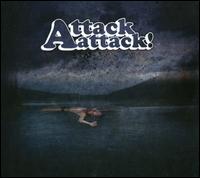
SOUNDTRACK: ATTACK ATTACK!-“Stick Stickly” (2010).

I discovered this video (again, considerably later than the controversy for it) because my friend Rich said he didn’t know there was a genre called “crabcore.”  A search for crabcore suggests that it is a goof “genre” named specifically for this band and the goofy way they dance around.

This song starts with very heavy riffing and some growls and screaming and then jumps quickly into an auto-tuned very catchy chorus (they sound like a more polished and poppy version of Alexisonfire).

Then comes the verses which are screamed very loudly and heavily followed by a bridge (?) that is even more cookie monster-vocals like (with a strange cartoon effect thrown at the end of each line of the chorus).  It’s almost like commercial death metal, and I kind of liked it.  They’re pushing boundaries

Then there’s more chugga chugga heavy riffing and the song is reaching the end and then WHAT? the songs shifts gears into a keyboard fueled discoey dance song.  First it’s hi energy and then it slows into a mellow auto-tuned bit that proceeds to the end.

What the hell?  I’m all for a band pushing the boundaries of genres, but holy cow.  And just to add one more gimmick, they’re a Christian band as well (although you’d never know from the lyrics, whatever the hell he’s singing about).  This is no “Jesus is My Friend,” let me tell you.

So yea, I don’t really know what to make of it. The video makes me laugh with their all black outfits and synchronized everything–and that may be why they have replaced it with a new video which is much more boring.  I assume they’re just anther trendy band that will disappear soon enough (there’s a lot of snarky fun at their expense at this definition of “crabcore“).

I don’t have a clue what the title is supposed to mean, nor half of their other titles on the album: “Fumbles O’Brian” “Renob, Nevada.”  I listened to some samples of the other songs and they seem far more dancey/discoey than death metal, so I’m not really sure what’s up with the rest of the record.

But whatever.  In the meantime, enjoy the silly video

[READ: July–September 10, 2010] K Blows Top

I heard about this book through a great interview on NPR in June of 2009.  It sounded like a really funny book and I was seriously considering reading it.  Of course, then I forgot about it.

About 8 months later, the library received a huge donation of books, and this was right on top, just begging me to read it.  So, I saved it for myself and decided it was about time to crack it open.  Several months after that I finally opened it and was totally hooked.

I didn’t know much about Khrushchev before reading this.  I knew vaguely about “the shoe” incident, but that was it.  In fact, the whole beginning of the cold war era was a bit of a mystery to me.  Since I lived through Reagan, I never felt compelled to find out what had caused the 80s.

But I’m super glad that I read this.  The book follows Khrushchev’s visits to the United States when he was premiere of  the Soviet Union. Carlson combed through tons of newspaper reports about his visit here (ostensibly to visit with Eisenhower, but more just to enjoy himself in the American heartland), and pulls together a fascinating story from a number of sources.

But more than just an interesting look at history, this book is very funny. (more…)

Read Full Post »

SOUNDTRACK: THE CHIEFTAINS-The Long Black Veil

Like the Dubliners, The Chieftains are a bunch of old men who play traditional Irish music.  Unlike the Dubliners, they have gained a fan base beyond the trad scene.  This album in particular features a great deal of crossover material.

Guest singers include: Sting (singing in Irish!), The Rolling Stones, Sinéad O’ Connor, Marianne Faithfull,Van Morrison and Tom Jones (!)

The Sinéad tracks are really great, as she uses her voice wonderfully on the spare musical tracks. “The Foggy Dew” is particularly powerful, and “He Moved Through the Fair” isn’t too shabby either).

Sting’s track is very Sting (with trad accompaniment); Mick Jagger sings the title track, but it doesn’t do a lot for me.  Van Morrison is Van Morrison, regardless of who he’s playing with.  And Tom Jones is so over the top on “Tennessee Waltz” that it’s hard not to laugh with him.

The song with no guests, “Changing Your Demeanor” is a cute Oirishy song with deedly-ee-ayes.

It’s the final song, “The Rocky Road to Dublin” (which I’ve already said is a favorite by other artists) that fares the worst here.  About midway through the song, The Stones seem to burst in (think Run DMC & Aerosmith but a lot older) and play a really sloppy version of “Satisfaction” while The Chieftains are playing their trad song.  Nobody fares well in this version and it’s a shame to have included it on an otherwise good disc.

This is not really a good place to hear the Chieftains as a trad outfit.  It’s certainly more of a showcase album.  But it might work as a crossover introduction to some of these songs.  And yes, the album is very adult contemporary…there’s not a lot of rocking going on here.

[READ: Week of August 16, 2010] Ulysses: Episode 15 [Circe]

This is the Episode I remember most from my previous reads.  I didn’t remember the details, mind you, just the absolute insanity of it.  This is also the place where you can look if you’ve ever wondered why this book was brought up on obscenity charges.  Those first few chapters, with the outhouse and the impure thoughts are mild; even Bloom’s masturbation, while controversial doesn’t hold a candle to all of the insanity that is contained within this Episode.

It was also the only week where we read just one Episode.  And that’s because it is loooooong.  True, it is written in play form (ie, lots of white space), but it is still about 4 times longer than any other Episode.  And man is it a doozy.

I’ve already read that Daryl was just going to write WTF about this Episode.  Of course, that’s sort of what I felt about the previous one, so I guess it’s no surprise that I did enjoy the nonsense of this one.  I’ve always had a great appreciation for the absurd, so this is right up my alley.  This is not in any way to suggest that I understood it, even a little.  But there were parts that I laughed at and parts that I smiled at and parts that I practically blushed at.  Good fun!

Of course, the big question in this chapter is (aside from what the hell is going on and why is it so long) what’s real and what’s Bloom’s fever dream.  This is preceded by the big question of why Bloom is having these fever dreams (or whatever they are).  I’ve been under the impression that he is drunk (but my tenuous following of the previous chapter makes me a little unsure just how drunk he was or if he drank at all.)

In a nutshell what happens is that Stephen (and Lynch) go to the red light district.  Bloom follows behind.  Bloom had a massive memory flashback/acid trip/freak out, and then he “rescues” Stephen (and his money) from the brothel.  He can’t save Stephen from getting punched in the face by a soldier, but he is able to keep him from getting arrested (with Corny Kelleher’s invaluable help).  Bloom, despite his inaction, then offers to take Stephen home.   (more…)

Read Full Post »

[VIEWED: August 5, 2010] America in Color 1939-1943

The Denver Post recently published 70 color photographs from the Depression.   You can see them all here.  The photographs are part of the Library of Congress’ collection of photos.  The Library of Congress’ collection houses 1,600 color and over 160,000 black and white photos from this period in American history.  It is a bit more for scholars, as you can’t just browse the pictures like in the Denver Post site, but for completeness, you really must check out the LOC prints.  They’re available here.

But back to the Denver Post.  The Post’s collection of 70s prints come from the Library of Congress’ 2006 Exhibit Bound for Glory: America in Color.  These Post’s pictures are very large and very clear (they are reproduced from slides).  And they are all downloadable.

They include photos from New Mexico, Connecticut, Maine, Massachusetts, Georgia, Oklahoma, Arizona, Colorado, Idaho, California, Texas, Nebraska, Ohio, Montana, South Carolina, Tennessee, Mississippi, Louisiana, Washington D.C., Illinois, Iowa, Virginia, Kansas, Kentucky and Michigan.

And, they show the amazingly diverse makeup of the country.  From a peach farmer to a railway worker.  From kids fishing, to kids playing in the snow.  From women at a fair, to women welding.  From men on horseback to men in front of bomber.  Not to mention, the creation of the Shasta Dam!  (It’s amazing — #28)

The thing that amazes me most about these pictures is that although some things have changed quite dramatically in sixty years, other things haven’t.  Kids still fish, stores still sell fruits and veggies, and people still love pictures of scenery and interesting faces.

You can obviously tell that these pictures are old.  Even the ones without people just look old, why is that?–see #2 in particular for one that looks old even though nothing in the picture is dated.  Or picture #11: the women’s faces simply look like the were photographed 60 years ago.  Or this one, which I’m including.  There’s nothing particularly dated about the picture, and yet you can tell this didn’t just happen in 2010.

(more…)

Read Full Post »

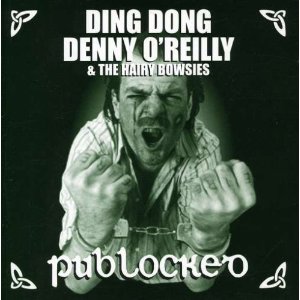
SOUNDTRACK: DING DONG DENNY O’REILLY & THE HAIRY BOWSIES-publocked (1996).

My friend Lar introduced me to this ol’fella (he may have even sent me this CD, as I can’t imagine where I’d have found it on my own).

Ding Dong Denny is the alter ego of Paul Woodfull (who created the Joshua Trio a U2 tribute/pisspull).  And, as I know precious little else about the man, I’ll let the more enlightened pass along the details.

Publocked is a lowbrow amalgam of all kinds of Oirish nonsense.  It’s vulgar and crass and often quite funny.  (Some of the bits stand up to repeated listening–the songs more than the chatty bits, although the chatty bits are especially funny).

Take “The Ballad of Jayus Christ” which sounds like a pretty standard simple ballad until you realize what he’s singing:  “Jaysus O Jaysus As cool as bleeding ice…It’s funny you never rode, coz its you I do my shouting for each time I shoot me load.”

But it’s not all blasphemy.  The “single” “Flow River Flow” is a very sensitive track about the benefits and majesty of the sacred waters (with tin whistles and everything): “When I was just a young man, I sit on the river bank  I loved your gentle water so much I’d have a wank”  With the glorious swelling chorus: “Flow river flow, fuck off to the sea, go where you are wanted, to the deserts of Gobi”

True, now, that’s all kind of crass.  But Ding Dong takes a political stance, too. Take “Spit at the Brits.”  “We Spit at the Brits an we showered’em in a lovely shade of green…we spit at the brits, and then they blew us all to smithereens.”

And what Irishman could ignore the Famine.   “The Potatoes Aren’t Looking the Best” is a view of the famine through the eyes of a farmer.  Shite.

Not everything is a winner, “I Get A Round” is a “cover” of “I Get Around.”   The lyrics are changed to reflect being in a pub (get it?).  And “My Heart Gets So Full (You’d Swear I Had Tits)” is pretty funny, especially since it’s played as an oh so serious ballad, but there’s not much in the world that’s funny for 7 minutes.

So, yes, it’s not quite Joyce, but then Joyce does talk about masturbating by the water, so it’s all equal, right?

[READ: Week of July 26, 2010] Ulysses: Episodes 7-9

Before I begin, I want to make sure that everyone has checked out Ulysses Seen.  It’s an illustrated rendition of the book.  The details are exquisite and you’ll no doubt pick up things that weren’t as apparent in the proper text.  The only bad thing I can say about it is that it’s not finished yet.  So far Robert Perry has only completed Episode One, and it sure looks like that took a long time (it’s really stunning); but between the details ion the drawing and the extensive reader’s guide that comes with it, one can perch there for quite a while.

I admit that this week’s slog through Ulysses was rather unpleasant for me.  The three episodes included here were massive doses of stream of consciousness.  I actually found them exhausting to read.  Not to mention, in terms of plot advancement, they’re rather paltry. (more…)

Read Full Post »

Our family visited Washington DC and went to a few museums.  We talked about subscribing to Smithsonian magazine (and getting a membership to the museums), but we put it off.  Then I received an offer in the mail to subscribe to the magazine and get a membership all for $12.  So we did.  And I’m thrilled with the magazine.

I recall subscribing to this magazine many years ago (turns out it was about fifteen years ago) as I distinctly remember reading, savoring and the keeping the September 1995 issue which featured a cover about James Gurney’s Dinotopia.  The cover is still blazed in my memory (even if I can’t find a better picture than this online).

As with many things, I find that as an adult (and a dad) I enjoy this sort of magazine a lot more than I did as a recent college grad.  It was also fascinating to learn in the new 40th anniversary issue that the magazine started not long after I was born.  It’s like we grew up together (but I ignored it for years). (more…)

Read Full Post »

SOUNDTRACK: AVI BUFFALO-“What’s In It For” (2010).

I received an email from Amazon telling me that their top 50 CDs of the year (so far) were online.  The second disc was by Avi Buffalo.  I’d never heard of Avi Buffalo, but they were on Sub Pop, so that’s a good sign.

I was going to listen to a sample, but saw that they had a video for “What’s In It For” on the Avi Buffalo page.

Avi himself looks about 12, which is disconcerting.  But his voice is really angelic (he sounds like one of those high voiced singer like from The Shins or Band of Horses or, indeed like Grant Lee Phillips) In fact, this song could be a B0H outtake.   And as such, that’s a good thing.

I’m not sure just how original the band is, and I’m also not sure if they are tagging onto this high-voiced folkie bandwagon (he doesn’t have a beard at least, so that’s a relief; of course, he may not be old enough to grow one).

A sampling of the rest of the songs shows more diversity than the “single?” indicates.  And, indeed, this looks like a great, quirky summer release.

[READ: July 20, 2010] “The Last Stand of Free Town”

Even though I read all the articles in The Believer, I don’t often talk about them, mostly because they are non-fiction, and I don’t tend to talk about non-fiction articles for whatever reason.

But anyhow, I’m mentioning this because it ties pretty directly to the Insurgent Summer story Letters of Insurgents that I and others are reading.

This article is about the pacifist commune that has existed in Christianshavn (part of Copenhagen, Denmark) since 1971:

That year, a group of squatters overtook an abandoned army base east of Prinsessegade, barricaded the roads, outlawed cars and guns, and created a self-ruling micro-nation in the heart of Copenhagen. They called the eighty-five-acre district Christiania Free Town, drew up a constitution, printed their own currency, banished property ownership, legalized marijuana, and essentially seceded from Denmark. The traditionally liberal Danish government allowed the settlement at first, dubbing Christiania a “social experiment.” Then it spent the next three decades trying to reclaim the area. Thirty-nine years and a dozen eviction notices later, the nine hundred residents of Free Town represent one of the longest-lasting social experiments in modern history.

Note that Christiania was founded in 1971 and Letters is from 1976, so something must have been in the air. (more…)

Read Full Post »

SOUNDTRACK: Thee Silver Mt. Zion Memorial Orchestra-Kollpas Tradixionales (2010).

Silver Mt. Zion are back!  And they are noisy!

This disc continues their fine output of haunting, rambling epics.  The opener is a 15 minute slow builder called “There is a Light” and the finale is a 14 minute story called “‘Piphany Rambler.”  In between we have  a couple of multi-part tracks: “I Built Myself a Metal Bird” and “I Fed My Metal Bird the Wings of Other Metal Birds” which are some of the fastest tracks they’ve recorded.  The other “suite” is 3 versions (and spellings) of the title track.

The one consistent thing about Silver Mt . Zion (in whatever version of their name they employ) is that they write incredibly passionate music.  It’s often raw and it swells and ebbs with feeling.  I especially enjoy the (multiple) climaxes that fill all of the longer songs.  And when the band brings in the horns and the strings and the whole group sings along, it’s very affecting.

The one thing that I’m still not totally on board with is Efrim’s voice.  On previous releases, I bought it because he sounded very angsty, but I’m starting to think that the tenor of his voice just doesn’t work with the bombast of the music.  When the backing singers chime in, the sound is glorious, but I find his voice to be simply the wrong sound.  There’s a few parts on the disc where he sings in a lower, softer register, and I found them really moving.  I think if he sang all of the parts like that, they would impact the songs more strongly (and maybe even be more understandable).

I realize that the vocals are an essential part to the disc, and I definitely get used to them after a few listens, I just feel like the whole disc (and not just the music) would be amazing if Efrim used that deeper register more.

Nevertheless, the music is really fantastic, and if you buy the LP, you get some great artwork, too.

[READ: May 13, 2010] McSweeney’s 34

After the enormous work of Panorama, (McSweeney’s newspaper (Issue 33)), they’ve returned with a somewhat more modest affair.  Two slim books totaling about 400 pages  Each is a paperback. The first is a collection of short stories artwork, etc.  The second is  nonfiction work about Iraq.  Both books are bound together in a clear plastic slipcover (with a fun design on it).  [UPDATE: I cannot for the life of me out the books back in the cover.  They simply will not sit without ripping the plastic.  Boo!]

The first collection opens with a Letters column, something that we haven’t seen in years!  And, as with the old letters column, the letters are absurd/funny/thoughtful and sometimes just weird. (more…)

Read Full Post »

I’ve waited to post this, my wrap up of ideas abut 2666, until I saw what others had to say about it.  Which is kind of a cop out but also kind of understandable.  This book is a giant mess of information, and I’m not entirely sure how to process it all.  So I’ve been looking for help.  And I’ve gotten some, but it’s all kinds of contradictory.  Most people seemed to hate the book.  A few people enjoyed it somewhat, and one or two people really felt moved by it.

I think I fall squarely in that middle camp.  As anyone who has been reading here knows, I became obsessed with Bolaño’s books, and read all of his short fiction (saving Savage Detectives for a read in a few weeks).  And yet I’m not exactly sure WHY I felt compelled to read these stories.  (I’m very glad I did…there will be more on Bolaño himself in a day or two).

I’ve decided to look back over what I wrote to get a sense of what I thought of the book (I knew these posts would come in handy). (more…)

Read Full Post »

« Newer Posts - Older Posts »