Feeds:
Posts
Comments

Archive for the ‘Funny (strange)’ Category

SOUNDTRACK: THE SULTANS OF PING FC-“Wheres Me Jumper?” (1992).

The Sultans of Ping were, of course, named after the Dire Straits song.  They were named when “it was sacrilege to say anything whatsoever funny or nasty about Dire Straits.”

This song (or 30 seconds of it) was used as the opening  to the TV show Moone Boy.

The song was an unexpected, presumably novelty, hit in 1992.  It’s stupidly catchy and amusingly nonsensical and your appreciation for it is pretty much entirely dependent on your appreciation for Niall O’Flaherty’s voice which is comical and rather shrill in this song.  The other songs on the record are somewhat less so, but are still delivered in his speak-singing style.

I get a sense of them being like Ireland’s answer to The Dead Milkmen with a sprinkle of John Lydon on vocals–a fun punk band that flaunted a silly side.  Of course, I wasn’t in Ireland at the time, so perhaps they’re more akin to the Ramones in punk legacy.

The Sultans of Ping (later named The Sultans) were (a subconscious at least) predecessor to bands like Fontaines D.C.

But whereas Fontaines D.C. tackles existential life in Dublin, this song tackles a more urgent and pressing concern:

Dancing in the disco, bumper to bumper
Wait a minute:
“Where’s me jumper?

It’s all right to say things can only get better
If you haven’t just lost your brand new sweater
I know I had it on when I had my tea
And I’m sure I had it on in the lavatory
Dancing in the disco, go go go
Dancing in the disco, oh no, oh no
Dancing in the disco, bumper to bumper
Wait a minute:
Where’s me jumper?…

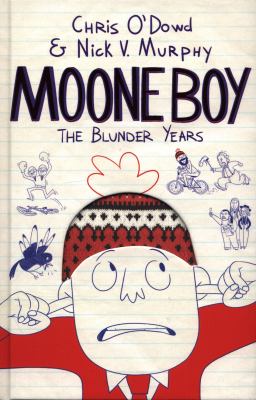
[READ: Summer 2019] Moone Boy

Chris O’Dowd is an Irish actor (we love him from the IT Crowd, and he has since been all over the place).  In 2012, he created Moone Boy as a sitcom based on his own childhood growing up in Boyle, County Roscommon, Ireland.

The show was a hit and they made three six-episode seasons.  This book came out around the time of the second season.

The story focuses on Martin Moone, a 12 year-old boy growing up in Boyle.  His friend Pádraic has an imaginary friend and Pádraic encourages him to get an imaginary friend (IF) of his own.  The rest of the book follows the exploits of Martin and his first (and second) imaginary friend.

But the book begins with some absurdist comedy.  Turns out he book is written from the point of view of the imaginary friend (we don’t really learn that until later) and he starts off with this:

Before we begin, I need to carry out a quick survey,

Are you reading this book because:

A. You have a scientific interest in the moon.
B. You have a scientific interest in the misspelling of the word “moon.”
C. You want to find out how quick and easy it is to obtain an imaginary friend that you’ll cherish for life.
D. You’ll read anything  You’re just like that.

If your answer is A or B, then I’m afraid you’re going to be disappointed.  There’s very little moon action in this story, apart from the brief appearance of a wrestler’s wrinkly bum.

If your answer is C, then you’ll be equally disappointed.  I suggest you pick up a copy of Imaginary Friends – The Quick and Easy Guide to Forever Friendship by a former colleague of mine, Customer Service Representative 263748.

If your answer is D, the good for you!  You’re my kind of reader.  I’m glad we got rid of that other bunch of idiots who picked A, B and C.

(more…)

Read Full Post »

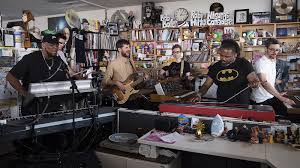
SOUNDTRACK: SNARKY PUPPY-Tiny Desk Concert #913 (November 20, 2019).

I feel like I’ve been hearing a lot about Snarky Puppy lately.  So much so that I assumed they were a new band.  Wrong:

Snarky Puppy has been a force for a while now, earning the ears of millions for more than a decade.  The band started as college friends in the jazz program at the University of North Texas back in 2003. But the formative era came a few years later, after Michael League [bassist and bandleader] became a part of the gospel scene in Dallas and eventually brought the jazz students to church, where music plays a different role than it does in the classroom. In the pulpit, it’s a channel for spiritual healing, a communal experience between players and congregation. As an experiment, League pulled his jazz friends and his gospel bandmates into one ensemble, where the two groups bonded together and established ground-zero for building the sonic identity of Snarky Puppy

I also had an idea that (because the name sounds similar to Skinny Puppy) that they might be a, what, young bratty dark punk band?  Wrong again.

Their secret sauce? A long-simmered recipe of jazz, funk and gospel.  Thirteen albums later, you can still hear these gospel and jazz orbits crashing into each other.

Oh, and one more thing.  They only play instrumentals.

They’re a band whose lyric-less melodies are still yelled (sung back) to them at their concerts around the world, as a shared catharsis for everyone in the room.

I really couldn’t have gotten that more wrong.

The band plays two songs in this lengthy set.

The first is called “Tarova.”  It opens with a wonderful sequence of keyboards.  Shaun Martin plays the keyboards with that talk box thing (made famous by Peter Frampton).  He seems to be having a kind of call and response solo with Bobby Sparks.  Sparks has the most fascinating thing on his keyboard.  A very large whammy bar/lever that he is able to push really far down to bend notes far more than any keyboard I’ve ever heard.  It was so much fun watching him do this, I was very glad he was up front.

During all of this, “JT” Thomas is keeping time on drums.  The song proper jumps in with a fun funky riff with lots of trumpets.  Everybody gets to do something impressive in this song and there’s a bunch of solos as well.

I really like the middle funky section that’s mostly bass and keys.

The song builds to a moment when everyone stops–after a two second pause which makes everyone clap, they resume with a great percussion solo from Nate Werth.

When the song ends, League introduces everyone and says who soloed.  He jokes, “That’s what you;re supposed to do in jazz, right, say who soloed n case anyone was confused that there were solos going on.”

Then he addresses the crowd.  He says that most people there are employees and family and an abundance of interns.  He wants to turn the cameras around for a minute (only one or two turn around) and force you into a musical rhythmic experiment.  Turns out that

Seconds before we hit record, Snarky Puppy’s bandleader, Michael League leaned in to ask if he could “do a little crowd work.” I suspect he waited until the last second on purpose, but it’s been easy to trust this band when they have an idea, judging by the three Grammy Awards they get to dust off at home after every tour run.

What resulted was a Tiny Desk first: League divided the audience into two sections, one side clapping out a 3/4 beat and the other half a 4/4 beat, creating a polyrhythm that I’m sure a handful of coworkers didn’t feel so confident trying to pull off. But this band pulls you in with simple instruction and a little faith.

League says, “we’re going to a polyrhythm because things have to get nerdy and unenjoyable.”  The crowd does admirably well with the two rhythms going on.  They are aided by Nate Werth on percussion who is really amazing (not necessarily here, but in the two songs).  I believe that they are creating 7/4.

The audience is warned that this polyrhythm will be used in the second song “Xavi,” dedicated to their friends in Morocco.

The song opens a funky bass and a lovely flute melody from Chris Bullock.  Then after a short guitar lick by Chris McQueen the whole band jumps in with a really funky melody.  The riff is taken over by two trumpets Justin Stanton (whose trumpet has a mute) and Jay Jennings (no mute) and Chris Bullock who is now on sax.

I was going to say you really don’t hear much of the violin in this set as it gets kind of melded with everything else.  Then mid way through the song, Zach Brock takes a wild and, often, effects-riddled solo in the middle of the song.  It might be my favorite part of a set that has many highlights.

The clapping part is used twice.  In the first one, the band is kind of quiet and the clapping is aided with great percussion from Werth and another lovely flute.

The guitar and bass in this song are fantastic even if they are never entirely prominent.  There’s also a very cool keyboard solo from trumpeter Justin Stanton.

Then the clapping comes around a second time.  During this one, there’s a guitar and keyboard making all kinds of sounds while the drums keep hitting everything, there;s more percussion and a little more flute.

The whole set is tremendous fun.  Totally not what I was expecting and so much better.

[READ: August 15, 2019] The Idiot

I grabbed this book because I had written down the author’s name as someone I wanted to read.  I also got a kick out of the title (and the obvious allusion to Dostoevsky).

I started the book and enjoyed it and then realized that I had read an excerpt from this story already.  And that is why I had written the author’s name down.

This book was written as a kind of response to her first book.  In an essay in The Guardian, she explained that:

In her first book, The Possessed, New Yorker journalist Elif Batuman complained that as an incipient novelist she was always being told to eschew books and focus on life. Literature since Don Quixote had been seen as false and sterile; disconnected from lived experience. After years as a graduate student of Russian literature, she decided to challenge this by writing an account of her own haphazard attempt to live with and through books.

Of the excerpt I wrote quite a lot (and quite a lot that almost gets left behind after the excerpt): (more…)

Read Full Post »

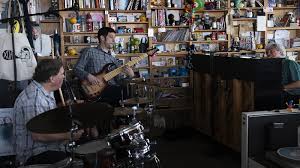
SOUNDTRACK: JOVINO SANTOS NETO-Tiny Desk Concert #904 (October 21, 2019).

Jovino Santos Neto plays piano–and then surprises by playing a lot more.

I have a come and go relationship with jazz.  I like some of it.  I like it sometimes.

But the blurb might explain why I liked this music right away:

Something happens for me when I hear jazz mixing it up with Brazilian rhythms. In the right hands it falls into the realm of magic.  Pianist, multi-instrumentalist and composer Jovino Santos Neto certainly cast a spell over those who gathered for this joyful turn behind the Tiny Desk.

I loved everything about this performance.

The trio rushed right out of the gate with the samba-influenced “Pantopé” that introduces the concept of the trio: seamless interaction between the musicians that make the band sound like one big, melodic rhythm machine.

“Pontapé” opens with slow piano and woodblocks from drummer Jeff Busch.  Then after about thirty seconds, the song takes off with some amazing piano playing and some great five-string bass from Tim Carey.

There’s a really impressive bass solo–Carey has got some really fast fingers.  Then, midway through the song–and a huge surprise if you’re not watching–Santos Neto pulls out a very solid-looking melodica and plays a really impressively fast solo on it.

It’s a solo that’s interspersed with some fun drum fills–cowbell, snare, wooblocks and a little whistle at the end.  It’s a wild and fun track for sure.

He explains that the name”Pontapé” means kick.  People who can play soccer can do amazing things with their feet.  But we do it with the notes instead.

Up next is “Sempre Sim.”  The song

starts with percussionist Jeff Busch riffing on the traditional percussion instrument called berimbau. 

It looks like a giant fishing rod.  Santos Neto says, “don’t be afraid it isn’t a weapon… I mean in the right hands.”  One plays the berimbau by hitting the instrument with a tiny drum stick (and also hits the cymbals with tiny stick).

its ethereal sound creating the perfect intro to the dreamy melody and solo from Santos Neto on piano, while bassist Tim Carey echoes the double beat on the bass drum that drives Brazilian music.

There’s some great piano and amazing bass.  The middle solo is an astonishing amelodic feast.  By then Busch has switched back to sticks and is playing drums.

They finish and Santos Neto seems to think they are done.  There’s a long pause with everyone looking off at someone.  Then he says Okay!  We’re going to play one more to much chuckling.

The final song is “Festa de Erê.”  He says that

Erê represents the spirits of children in the Brazilian Umbanda tradition, which makes “festa de Erê” an appropriate title for the intensely whimsical tune that weaves in and out of the different traditional rhythms performed by all three musicians.

The song starts bouncy and lively.  But they settle down so Santos Neto can play the main piano melodies.

Then midway through the song he surprises once again by playing a lengthy, pretty flute solo–the end of which consists of him playing the flute one-handed while he plays the piano with his right hand.

All the while Carey is tapping out the notes with both hands, but that impressive feat is overshadowed by the incredible stuff going on behind the piano.

Like the sometimes frenetic energy of the music they play, Jovino Santos Neto and his trio are perfect examples of musicians who have so much music coming from within, sometimes one instrument is just not enough.

Perhaps I like jazz best when it’s mixed with Brazilian rhythms too.

[READ: November 16, 2018] “The Trip”

I’ve only read one other story by Weike–a story of a difficult romance.

This story is also of a difficult romance, but in a very different way.

The story begins

In Beijing, he boiled the water.  It was August, so the hottest month of the year.  He put the water into a thermos and carried the thermos on a sling.  He called himself a cowboy because he thought he looked dumb. Other people in the group carried a thermos too, though he wife did not.

The opening is certainly confusing.  It continues to be so.  He and his wife go to the Great Wall.  She sprints along it to show him a particular spot hat her cousin showed her as a teenager.  Her cousin taught her the Chinese word for cool–imagine not knowing that word– shuang–until you were 13.  Can you imagine how that felt?  He says that she knew the word in English, though right?  She made a face and then sprinted on.

The trip had been a gift from her parents who wanted “her first husband to see China and have good memories from there and sample its regional foods and see the warmth of its people and not hate us civilians should our two great nations ever partake in nuclear war.”  At least that’s how she translated it. (more…)

Read Full Post »

SOUNDTRACK: JON BENJAMIN JAZZ DAREDEVIL–Well, I Should Have…* *Learned How To Play Piano (2015).

In 2015, H. Jon Benjamin released a jazz album on which he played piano.  He did this despite not knowing how to play piano.

This album should be a trainwreck.  However, he has employed the talents of Scott Kreitzer (saxophone), David Finck (bass), and Jonathan Peretz (drums) to assist him.  And they are really good.

It’s hard to believe that Benjamin has never played at all before, because while he’s not good by any definition, he certainly knows how to press the keys on the piano in a reasonable way.  Meaning, when he plays a solo he is at least trying to sound like he’s playing a solo.  It’s not like cats on a piano playing utterly random crap.  He’s certainly bad, but he’s bad within the ballpark, which makes this amusing to listen to and not intolerable.

Obviously, part of the joke is that Benjamin hates jazz and this pretty much mocks improv piano.  And yes, his playing sometimes sounds like an improv pianist deliberately plying wrong notes until the right ones come back into focus (although Benjamin’s never do come back in to focus).

The disc is quite short.  It’s under 30 minutes.  It includes a skit at the front called “Deal with the Devil.”  It is a really funny introduction in which H. Jon tries to sell his soul to the devil.  Kristen Schaal as the secretary get a very funny joke or two, but the devil (Aziz Ansari) explains that usually selling your soul is a last resort, not a first step.  There’s a vulgar joke (which I found really funny), but which makes the track unplayable for family gatherings (if you were to do such a thing).

There are four main pieces on the disc “I Can’t Play Piano” Parts 1-4.

“I Can’t Play Piano Part 1” (3:39) starts off with a rollicking sax solo and some bouncing jazz and then Jon’s tinkling at the high end of the piano.  The band even pauses a few times to give him a proper solo or four.  All of the solos are horribly inept and pretty funny.  Midway through the song, bassist David Finck takes a cool upright bass solo and you can hear Jon shout “play it Joe” or something like it.

Part 2 (3:09) has a riff that Jon tries to follow and fails to play spectacularly.  There’s less “soloing” in this one and more “playing with the band.”  At times you almost don’t quite realize that he’s playing with everyone else–something just seems slightly off.  There’s also some nice drum soloing from Jonathan Peretz.

There’s a hilarious skit [not on this record] by Paul F. Tompkins in which he talks about jazz as “a genre of music that is defying you to like it.”  He talks about going to a jazz show (by accident or because you lost a bet) and just at the point when you’re almost asleep, you think the bass player is going to play [blanhr] but instead he plays [blownhr].  And next.. this is the worst thing that jazz guys do.  The other guys on stage start laughing like it was the funniest thing they ever did see.  And you’re sitting in the audience thinking “I don’t get the jazz joke Why is that note so hilarious?  You’ve played many notes this evening, none of them particularly side splitting.”

This album is pretty much a musical rendition of that joke.

“It Had to Be You,” is a pretty conventional cover of the song (at least for the saxophone).  Jon clearly knows how the song goes, he just doesn’t know how to play it or which notes should even be in the song.  The middle of the song is a saxophone solo (no piano) and once again, you are kind of lulled into thinking the song is pretty straightforward, and then Jon comes back for a solo.  It’s a slow solo so at first it doesn’t seem so bad, but once he starts going, you realize how bad he really is.

“Soft Jazzercise” is a skit. Jon talks over a slow piano piece (presumably not by Jon as it is actually melodic).  Jon says that his soft jazzercise is very very very very very very very low impact.  You have to do it slow.  Like a turtle slow, like an opiated panda slow.

Back to the improv with “I Can’t Play Piano, Pt. 3” (4:57).  The song starts as a kind of call and response between the saxophone and the piano (hilariously bad every time).  Jon also gets a solo in the beginning.  He even slides his hand up and down the keys a few times–almost convincingly.  In the middle of the song you can hear Jon really getting into it shouting almost audible encouragement and saying “here we go!” and “dig this!” then the saxophone starts playing a response to what Jon is playing–can he even play that badly?  Jon even says “you can do better” at one point.  The sax almost plays “Have Yourself a Merry Little Christmas” twice before the riffing ends.

The final improv piece “I Can’t Play Piano, Pt. 4 – (Trill Baby Trill)” (5:25) starts with Jon’s piano and the rest of the band apparently trying to follow or keep up.  Once again it’s not as horrible as you might expect.  It’s not good, but it almost seems like it could be a serious improv.  There’s a lengthy bass solo (no funny notes that I can hear).   Then, after the drum solo when the sax takes the lead again, you kind of forget that Jon is even playing.

The final track is a funky/rap about anal sex.

The five instrumentals would be hilarious to mix into any dinner party to see what people thought or if they even notices.  The other three tracks are definitely NSFW.

[READ: June 1, 2018] Failure is an Option

I love H. Jon Benjamin.  Or, more specifically I love his voice.  He has voiced some of my favorite characters over the years including Archer and Bob Belcher.

But I have found that when I watch things that he has created, I don’t enjoy them quite as much.

So, which way would this ode to failure go?

It’s a mixed bag but overall it’s quite funny.

It has an introduction with this appropriate line:

I am writing this at the dawn of the Trump presidency, particularly apropos of failure being an option.  A very horrible and dangerous option in the case of a entire country’s future.

The opening talks, as many of these memoirs do, about how exhausting it is to write a memoir (“when I was saddled with the task of writing a book”). (more…)

Read Full Post »

SOUNDTRACK: SHARON VAN ETTEN-Tiny Desk Concert #899 (October 7, 2019).

It was Sharon Van Etten’s 2010 Tiny Desk Concert that introduced me to her.  I was blown away by the songs from Epic.

When Sharon Van Etten made her Tiny Desk debut back in the fall of 2010 [with about fifteen people in the audience], her voice exuded fragile, gentle grace. Performing songs from that year’s Epic, she huddled around a single acoustic guitar with backup singer Cat Martino to perform a set of tender and evocative folk-pop songs.

Sharon released a couple more albums and then took some time away from music.  She returned this year with the appropriately named comeback single “Comeback Kid.”  The big difference was that now there were synths!

Cut to nearly a decade later. One of only a handful of artists to get a repeat headlining engagement at the Tiny Desk [that handful is getting bigger and bigger it seems]. Van Etten has spent the last few years purging her bucket list: She’s become an actress (appearing as a guest star on The OA), released a string of increasingly aggressive albums (the latest of which is this year’s synth-driven Remind Me Tomorrow), toured the world, performed on Twin Peaks, written music for films, become a mom, gone back to school and popped up in collaborations with everyone from Land of Talk to Jeff Goldblum.

I had no idea that these things happened.  So good for her, I guess.

It’s only natural that this Tiny Desk concert feels different; you can hear it before Van Etten and her band even show up onscreen. Its pace set by the ticking beat of a drum machine, “Comeback Kid” is in full bloom here, with a swaying arrangement that fills the room before Van Etten opens her mouth.

“Comeback Kid” is super catchy.  It sounds similar to the recorded version although a little smaller, perhaps.  There’s also a few extra keyboard flourishes from Heather Woods Broderick (who played the Tiny Desk as a member of Horse Feathers way back in 2009).  Charley Damski plays the synth washes that fill the room.  Sharon plays acoustic guitar and sings with serious intensity.

“You Shadow” starts with bass (Devin Hoff) and a drum machine (Jorge Balbi).  There’s no guitar on this track, but Sharon’s voice sounds great:

 the singer performs with considerable intensity here, seething through “You Shadow.”

She quietly thanks everyone and introduces the band.  This moment of thanks and appreciation in no way prepares you for the intensity in which she sings the set-closing “Seventeen.”

The song also starts with synth and bass.  Sharon sings but doesn’t start playing acoustic guitar until after the first verse.  Everyone adds gorgeous backing vocals for the chorus.  Then Sharon starts getting intense while singing.  Normally “la la las” are kind of upbeat, but she comes out of them with a fire as she sings “with a scream that slashes through the office air.”

Her voice almost breaks and she seems to be quite moved by the performance.  It’s really tremendous.

I admit that I like her earlier stuff better–the way she sang, the way her backing singers complimented her and the intensity of her music.  But after seeing her live this summer and now watching this, her intensity is still there–it’s just used more sparingly and appropriately.

The only downside to this Tiny Desk is that Heather Woods Broderick–who is an amazing backing vocalist–is pretty subdued here.  It’s appropriately subdued in this setting, but it’s a shame to not hear her in full.

Here (left) is a picture from Sharon’s first Tiny Desk Concert.

[READ: November 7, 2019] “The Flier”

This story was very cool.

I really loved the way the entire story totally downplayed “one of the most wondrous occurrences in the history of humankind.”

It begins with the narrator explaining that his wife Viki had invited their friends Pam and Becky over: “short notice–but there’s something we’d like to talk over with you.”

As he describes the meal he’s made, in quite a lot of detail, Pam and Becky arrive.  The narrator hears them talk about him and he acknowledges that his illness has made him small and light.

After the pleasantries are over, Viki says matter-of-factly that the narrator “has developed the ability to fly.” (more…)

Read Full Post »

SOUNDTRACK: 47SOUL-Tiny Desk Concert #884 (August 26, 2019).

I had never heard of 47Soul and, surprisingly, the blurb doesn’t give any real background about the band.  So I had to turn to Wikipedia.

47Soul is a Jordanian Palestinian electronic music group.  The band’s first album, Shamstep, was released in 2015 and they are one of the main forces behind the Shamstep electronic dance music movement in the Middle East.

So what the heck is Shamstep?

Shamstep is based on mijwiz (a levantine folk musical style) and electronic dance.  ‘Sham’ refers to the local region of “Bilad al-Sham”, and ‘step’ refers to dubstep. The band’s music is also associated with the traditional dance called Dabke.

So, that’s a lot to take in, especially if you don’t know what half of those words mean.

The blurb does help a little bit more:

Shamstep is the creation of 47SOUL. At its heart is Arab roots music laced with dub, reggae and electronic dance music, including dubstep. It’s positive-force music with freedom, celebration and hope for the people of the Sham region (Palestine, Jordan, Lebanon, and Syria).

47SOUL play three songs and their instrumentation is pretty fascinating.  Three of the guys sing.  They also play bass drum (Walaa Sbeit); darbuka– a small hand drum (Tareq Abu Kwaik); guitar (Hamza Arnaout) and synthesizers (Ramzy Suleiman).

So what do they sound like?

Well, the first song “Mo Light” opens with some very synthesized “traditional” Middle Eastern music.  It sounds like an electronic version of traditional instrumentation.  The guitar comes in with a sound that alternates between heavy metal riffage and reggae stabs.  The three singers take turns singing.  Walaa Sbeit is up first singing in Arabic.  Then there’s a middle section sung by Tareq Abu Kwaik who is playing the darbuka and an electronic drum pad.  His voice is a bit rougher (the Arabic is quite guttural).  Meanwhile Ramzy Suleiman adds backing vocals and seems to sing loudest in English.

For the next song, Tareq Abu Kwaik does the narration while introducing Walaa Sbeit:

“Is it ok if I do a little dance on your desk?” asked 47SOUL singer and percussionist Walaa Sbeit on first seeing the Tiny Desk. I thought a minute, went under the desk, tightened the bolts, stuck some splints of wood under a few of the uneven legs and (feeling reassured) gave him the nod. It would be our first traditional Middle Eastern Dabke dancing atop the Tiny Desk and the first sounds of Shamstep (a kind of electronic dance music) behind it.

The dancing involves a shocking amount of deep knee bends!

“Don’t Care Where You From” opens with a cool synth rhythm and then sung in English.  It’s fun watching Walaa Sbeit walk around with the bass drum slung over his shoulder as he does some dancing while playing.  The song is one of inclusion

Well you might be from Philly (?) or Tripoli / from the mountains or from the sea
maybe got the key to the city / don’t mean anything to me.

They don’t care where you’re from, it’s where you are that counts.

47SOUL’s message of equality, heard here at the Tiny Desk (and on the group’s current album, Balfron Promise) is meant for all the world. This is music without borders, mixing old and new, acoustic and electronic from a band formed in Amman Jordan, singing in Arabic and English. It’s one big, positive and poignant party.

It segues into “Jerusalem” with the controversial-sounding lyric: “Jerusalem is a prison of philosophy and religion.”  The middle of the song had an Arabic rap which sounds more gangster than any gangster rap.  The end of the song is an electronic dance as everybody gets into it–clapping along and banging on drums.

It’s pretty great. I hope they tour around here, I’d love to see them live.

[READ: August 27, 2019] Submarine

I saw this book on the shelf and was attracted by its busy cover.  I also thought the authors name sounded familiar.   And so it was.  I have read some of Dunthorne’s poems in Five Dials magazines.

This was his first novel.  And it sounded unusual.  The back cover had this excerpt:

I used to write questionnaires for my parents. I wanted to get to know them better.  I asked things like:

What hereditary illnesses am I likely to inherit?
What money and land am I likely to inherit?

Multiple choice:
If you child was adopted at what aged would you choose to tell him about his real mother?
a) 4-8
B) 9-14
C) 15-18

Dunthorne is from Wales, which made this story a little exotic as well.  It is set in Swansea, by the sea (where people surf!) (more…)

Read Full Post »

SOUNDTRACK: DAN TEPFER-Tiny Desk Concert #885 (August 29, 2019).

Most of the time, a Tiny Desk Concert is an opportunity to see an artist in a quiet almost unplugged setting.  Sometimes, it’s an opportunity to see a band really show off in a close space.  And sometimes a Tiny Desk Concert will blow your freaking mind.

Like this one.

I have never seen anything like this.

Dan Tepfer has created a program that plays the piano along with him.  It’s for a project he calls Natural Machines.

Watch the keys and you’ll see this Disklavier — a player piano — plucking notes on its own. But it’s not a prerecorded script.

Here’s how it works: Tepfer plays a note, and a computer program he authored reads those notes and tells the piano what to play in response. Tepfer can load different algorithms into the program that determine the pattern of playback, like one that returns the same note, only an octave higher. Another will play the inverted note based on the center of the piano keys. These rules create interesting restrictions that Tepfer says make room for thoughtful improvisation. In his words, he’s not writing these songs, so much as writing the way they work.

Tepfer plays free improvisation–he “makes things up and tries to be present in the moment” but the computer responds to him in real time based on rules.

He says for “Canon At The Octave” theres’ an axis of symmetry on the piano and “everything I play on one side if reflected on the other side.  Super simple, but it leads to musical problems that lead to real music.”

Since he is improvising, he is also reacting to what the computer makes.

He explains that “Tremolo” is when a note is repeated very quickly.  He gives the example of a violin player playing a note quickly.  It’s much harder on piano than a violin and it’s impossible to do more than ten notes at once.

He plays single notes that generate a series of chords playing quickly all at once–it’s really cool to watch the piano take off as if with a mind of its own.

But watching the piano isn’t the only cool thing

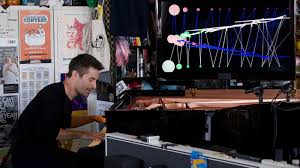
To better communicate what’s happening between him and the piano, Tepfer converted these audio-impulse data into visualizations on the screen behind him, displaying in real time the notes he plays followed by the piano’s feedback. [We dive even deeper into this project in a recent Jazz Night in America video piece].

He explains that these improvs are super short versions to show off how the programs work.

“TriadSculpture” is all about harmonic ratios.  Pythagoras discovered that sounds work with whole numbers.  The math behind music.  So Tepfer has mapped numbers as a 3-D object and he has been printing them–even more mind blowing.  The computer program generates these shapes–  everything he plays on his left hand creates those shaped in real time on the screen.

Perhaps the trickiest part here, unlike a human-to-human duo, is that the computer plays along with 100 percent accuracy based solely on Tepfer’s moves. He compares it to dancing with a robot that never misses a beat. Tepfer has to play in kind to keep the train on the tracks, but if he falls out of step, so does the computer.

Fortunately he never falls out of time (or at least it’s hard to tell since it’s all improvised.

The final piece is “Constant Motion” in which he plays a note and the computer responds to it by playing a note either up or down.  This creates a fun fast piece that explores the full range of the piano.  The visuals for it are very cool too.

I’m not sure if this would be fun to see live (at least any more fun than an improvising pianist is) because listening to it you don’t always really know what’s happening or that the piano is doing the work.  But seeing it up close like this is awesome.

[READ: August 21, 2019] Holy Cow

Like most people, ever since watching The X-Files, I’ve liked David Duchovny (why don’t you love me?).

I watched some of the Red Shoes Diaries just for him.  I watched some of Californication just for him (Didn’t have whatever network it was on, so never watched more than a bit of it).  But I’m always willing to give him a shot because I think he’s smart but goofy.

Enter Holy Cow.

This is Duchovny’s first novel and just what a pitch it must have been.

Hi, this is David Duchovny.  Yup, that one.  I’d like to write an adult book about a cow that wants to go to India once she finds out cows are worshiped there.  Yes, David Duchovny.

I had no idea he had written this book.  I just happened to see it on my library shelf when I was looking for something else.  The book was short and had (terrible) drawings in it and seemed like it would be absurdly funny.

So, with the caveat that if you think that a talking cow buying a plane ticket and going to Jerusalem with a pig and to Turkey with a turkey sounds stupid and juvenile.  Well, you’d be right.  But you’d be missing out on an enjoyable, silly romp if that kept you from reading it. (more…)

Read Full Post »

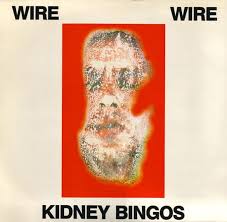
SOUNDTRACK: WIRE-Kidney Bingos (1988).

Wire’s first three albums are punk and post-pink classics.  So classic that a Britpop band ripped off one of their songs to make an even bigger hit.  (I rather like Elastica too).

After their hiatus in the early 1980s, they returned with a new sound.  Like King Crimson only with fewer notes.

Their second post-hiatus album A Bell is a Cup even had a single, “Kidney Bingos.”

This song is remarkably far from their early punk sound. It’s almost as if on their first albums, their guitars only had the low strings,  And on this one, they only have the high strings.

The guitars on this song are gentle and jangly.  The bass is pretty similar–nice and deep with a great resonance, although the tempo is much slower and more chill.

The chorus is a really catchy bit if pop fun, even if for 30 years I had no idea that he was saying

Money spines paper lung kidney bingos organ fun

which makes as much sense as what I thought he was saying.

The end of the song throws in some synths and a wordless singalong that shows a real depth to Newman’s voice.

[READ: June 29, 2019] “Pastoralia”

I was sure I had read this story before.  But it turns out I’ve had his collection Pastoralia on my “too read” list but had never actually read it.  In the collection, this story is almost 70 pages.  It’s pretty long in the New Yorker, but i do have to wonder if it is an excerpt as there’s so much that is unexplained.

This story is set in what I think of as the Saunders future.  There’s no ProperName objects as there usually are.  But this future has a lot of the mildly dystopian qualities that Saunders tends to put in his stories

This one includes an exhibit where humans act out historical scenarios in a museum of sorts (the details are never given).

The narrator’s name is never given.  Over the course of a few pages we determine that he is a caveman in an exhibit.  Every day he is supposed to “eat grubs,” “see” a herd of animals and not speak English.  He has a “wife,” Janet.  She is not his real wife, he has a real wife and children.  In fact he doesn’t especially like Janet. She tends to speak English a lot and disregards most other work protocols.

In many respects it doesn’t matter because hardly anyone comes into the museum.  But they are doing a job and they do have supervisors.

When the light dims as if it were night time they each go to their separate personal quarters where they have such modern amenities as a fax machine (this was written in 2000 so that’s not a goof, I don’t think).  (more…)

Read Full Post »

SOUNDTRACK: K.T. TUNSTALL-NonComm (May 16, 2019).

Most artists at NonCOMM get about 20 minutes.  The headliners get about 40 minutes.

When I saw K.T. Tunstall was playing, I assumed she would get 20 minutes–how could she be a headliner? Didn’t she have one hit like a decade ago with “Suddenly I See.”

But there she was with a 45 minute set.  I wondered why.  Possibly because she was playing World Cafe Live again the next night for a full show.  Or possibly because she had a huge hit that I didn’t realize was hers.

Tunstall was by herself on stage.  She had a guitar, a drum machine of some sort, a looping pedal and a kazoo.  Having a lengthy set also allowed for a looser, more talkative set.  She is very funny, bold, foul-mouthed (in the best Scottish way) and smart.

As the last night at NON-COMM was winding down, K.T. Tunstall was able to give the crowd one last hoorah. Tunstall’s set mixed the old and the new nicely, playing anything from covers and mashups to her most recognizable hits.

Tunstall started the set with “Little Red Thread,” the opener to her most recent release Wax. The tune was carried by Tunstall’s percussive guitar tapping and tambourine playing, and it sure got the crowd going.

It had a four note heavy riff with some echoey chords that propel the song.  After two verses she messes something up and says, “that’s a really shitty way to start,” but jumps right back in.

She liked playing the new song but then says, “Let’s trustfall into something familiar.”   She asked if anyone had a long-distance relationship.  “It’s a really fucking bad idea.  It’s good sex; it’s just not regular.”  This was an introduction to the quieter “Other Side of the World” off of her 2004 debut Eye to the Telescope.  The song opens with looping quiet percussion and her raspy voice singing over a gentle acoustic guitar.

“Backlash & Vinegar” is about someone trying to keep you down.  It stays quiet with just her guitar and voice.

She recalled going to a karaoke bar drunk with friends and looking for “Faith” by George Michael which they didn’t have.  WTF?!  The friend she was with said there was a song there that she knew all the words to.  It was her song!  What song was it?  There’s a bit more story.

When she first came to the States she performed her first shows inside Barnes & Noble stores. They close at 8 so you have to play at 7.  There were multiple hot women dressed like Jane Fonda.  Finally she asked a woman why she looked like Lydia from Fame.  She replied (in Tunstall’s great “American” accent: “Honey.  You don’t know? You’re huge in Jazzercise.”

So she plays her jazzercise hit “Black Horse And A Cherry Tree.”  This was the massive hit (and it was a massive hit because I’d heard it everywhere) that I had no idea was by her.  It starts immediately recognizably with the looped “who-hoo / whoo-hoo” and if that doesn’t remind you of the song, the chorus is “No no / no no no no / no no / you’re not the one for me.” It sounded sport on.

She ends the song with a kazoo (!) rendition of White Stripes’ “Seven Nation Army,” which she looped in the backgroud of the end of her song.

Up next is “The River” which is about taking a spiritual shower and washing the world from our brains.  It’s a catchy folk song that could easily have been a Starbucks hit (and maybe it was).

She then teaches everyone a Scottish word: “jobby” it means “shit.”  It’s like the name of the poo emoji.  She wrote this song as an antidote to when you have a nice pair of white high tops and just out of nowhere you step in a really big jobby.  It’s the kind you cant get off with a stick and you have to go into a meeting with the jobby–it’s a metaphor for life.  You can smell it, other people can smell it.  And what you need is a song to get you through.

This is the intro to “Feel It All,” a catchy simple guitar riff and a quiet vocal line.   I don’t know what these songs sound like on records but they translate into pretty folks songs here.

She felt like with everything going on (a lot of abortion bans being proposed), she needed a cover by a master.

Tunstall banged away as she sang a fantastic cover of Tom Petty’s “I Won’t Back Down,” mixing in percussive elements with her thrilling vocals once again.
a rocking raw version

She said she likes to be a purveyor of joy but she needs to speak up.  She dedicates this song to all the women who have achieved incredible things in their lives.  And one of the reasons they’ve been able to achieve it is because they and their partners have had reproductive rights .   This song is meant to give strength to any woman who might have it taken away.

And there was the song I knew from her: “Suddenly I See.”  She started the song, a shuffling rocker, and said, “Every songwriter is like a juicer. You put a few things in and you hope it doesn’t come out brown and weird. This is what happened when I listened to Patti Smith and Bo Diddley on the same day.”

I never would have thought that on my own, but I sure hear it this time.  The song sounds just like I remember it.  Her shockingly un-Scottish-sounding vocals and a super catchy chorus.

I’m glad she got a 45 minute set, it was a great re-introduction to someone I liked a while ago.

[READ: June 1, 2019] “The Smoker”

I don’t understand the title of this story, but I really enjoyed it’s odd revelations.

Douglas Kerchek is a teacher of 12th grade A.P. English at a prestigious all-girls Catholic school in New York City.

Nicole Bonner was a standout student.  He had already written her a recommendation for Princeton.

She read an entire novel every night and retained what she read.  When he proposed a pop quiz, instead of answering the questions, she wrote the entire first page of Moby Dick verbatim.

Although at the end of a recent essay, she had attached a note saying she had noticed the bruise on his ankle and wondered what he had banged it on. (more…)

Read Full Post »

SOUNDTRACK: MAGOS HERRERA AND BROOKLYN RIDER-Tiny Desk Concert #849 (May 15, 2019).

Brooklyn Rider was on a Tiny Desk nearly a decade ago.  My main take away was how poorly it was lit.  I enjoyed them for their multicultural take on classical music.  For this Tiny Desk, they team up with Mexican singer Magos Herrera (whom I’ve never heard of).

When the intrepid string quartet known as Brooklyn Rider first visited the Tiny Desk nine years ago, no one knew what the musicians might play. They’re as likely to trot out an Asian folk tune as they are a string quartet by Beethoven, or one of their own compositions.

For this visit though, we knew exactly what was on tap. The band, fronted by the smoky-voiced Magos Herrera and backed by percussionist Mathias Kunzli, performed three songs from the album Dreamers, a collection steeped in Latin American traditions.

The versatile Mexican singer, who has never sounded more expressive, notes that these songs emerge from struggle.

She says, “Although there is a lot of light and usually I don’t sing that early, my heart is warm and expanding.”

The first song, Gilberto Gil’s bossa nova-inspired “Eu vim da Bahia” is “a tribute to his home state. He released it in 1965 as Brazil’s military dictatorship took charge.”  I love that between the heart-felt words, there is a gorgeous instrumental passage from the quartet (Johnny Gandelsman and Colin Jacobsen: violins; Nicholas Cords: viola; Michael Nicolas: cello).

She says the songs transcend dark times with the values of their words.  Gil wrote the tune a year before the dictatorship was installed in Brazil

The atmospheric, flamenco-tinged “La Aurora de Nueva York,” composed by Vicente Amigo, has lyrics from a poem written by Federico García Lorca, the Spanish poet who wrote it while he was in residence in New York in the 1920s.  She says “A Poet in New York is my favorite book” and this poem is the most iconic poem from the book.  Her voice is smoky and impassioned.  There’s some wonderful pizzicato from the quartet.  There’s some lovely solo moments from the violins and some spectacular percussion sounds from Mathias Kunzli.

García Lorca, who fell to assassins during the Spanish Civil War in 1936.

The final track “Balderrama,” by the Argentine folk legend Gustavo Leguizamón, ruminates on a café which served as a safe haven for artists to talk about their work.

One of the members of Brooklyn Rider says that when they talked about this project, they wondered which songs to do.  Which would best represent beauty in the face of difficult circumstances–an antidote to cynicism.  What is most precious and beautiful to a culture.

This song and all of them certainly do that.

[READ: May 16, 2019] “The Presentation on Egypt”

I have enjoyed everything I’ve read by Bordas.  And I really enjoyed this one.  A story would have to be good if the apparent main character has your name and–before committing suicide–has to pull the plug on a brain-dead man with your son’s name.  [That was painful to read].

The story opens with Paul telling the wife of the brain-dead man that he is completely brain-dead.  Unlike on TV, he wasn’t going to magically snap out of it.  When the wife finally agreed to pull the plug and the main died, Paul went home, had a cigarette, and hanged himself.

Paul had a wife and a daughter (if either one had my wife or daughter’s name, I would have had to give Bordas a call).  Paul hanged himself in the laundry room, perhaps knowing that his daughter would never go in there. (more…)

Read Full Post »

« Newer Posts - Older Posts »