Feeds:
Posts
Comments

Archive for the ‘Film & TV’ Category

SOUNDTRACK: THURSTON MOORE-World Cafe Studio, November 16, 2007 (2007).

This World Cafe set is a nice contrast to the all-acoustic performance mentioned yesterday (even if it was recorded earlier).  Thurston has a full band with him (including Steve Shelly on drums).  Samara Lubelski from the other session is here too.  The band brings new dimensions to what are mostly the same set of songs.  Both sets included “The Shape is in a Trance,” and “Fri/End” but this one also includes “Honest James.”  The contrast is striking though.  The songs are bigger with the band (and allow for more intricacies) but they are still intimate.

  The interview is also interesting.  David Dye is a fantastic interviewer and he gets some great (and funny) answers out of Thurston. The whole description of how the lyrics to “Fri/End” came about is really cool (if unlikely).

Thurston and NPR: perfect together.

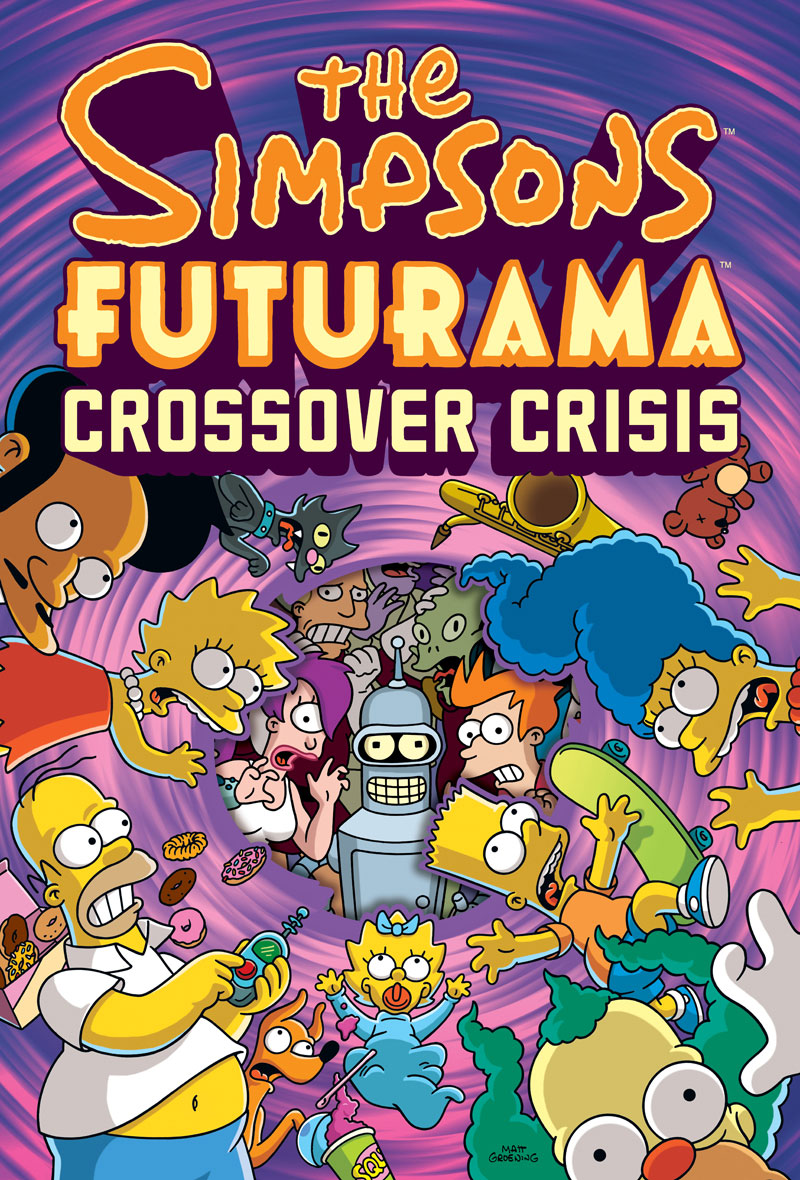
[READ: April 15, 2011] The Simpsons Futurama Crossover Crisis.

This was a wonderful Christmas surprise from Sarah this year.  It is a beautifully packaged (slipcase with a cut-away opening) hardcover edition of the 2002 & 2005 Simpson/Futurama crossover comics issues.

Despite all of my fondness for The Simpsons and Futurama, I never really got into the comics (gotta draw a line somewhere).  But they have Matt Groening’s seal of approval, and they play jokes with things that the show never really touches (not to mention, the shows never tries a crossover event–I can’t even imagine how that would work). (more…)

Read Full Post »

[WATCHED: March 19, 2011] Until the Light Takes Us

Soon after finishing Lords of Chaos, I heard a radio interview on the Sound of Young America with the directors of this movie (which is about the same black metal scene in Norway).  I finally got around to watching the film, and I’m really glad I did.

It covers much of the same terrain as Lords of Chaos (although the book covers much more stuff), but what’s cooler about the movie is actually seeing these guys talk to you.  And seeing how “normal these guys are.”  The two “stars” of the movie are Fenriz from Darkthrone and the main man in the scene, Varg Vikerens.

In the radio interview, the directors talked about the way they structured the film. And, I’ll reveal a bit of that.  So if you don’t know this particular fact, I’ll give the next line as a spoiler alert:

SPOILER ALERT: (Highlight the blank space to read it) Varg is in jail for murder and for the burning of several churches and was sentenced to 21 years in prison.

They don’t reveal this information until very late in the film.  So when we first meet Varg, he is a clean cut, handsome man in his late 30s.  He is in jail (although not explicitly stated, it is clear he is in jail).  And he is talking about the Norwegian black metal scene.  Vikerens formed the band Burzum in 1991.  He later joined the band Mayhem.

Mayhem is at the center of the black metal controversy.  The singer of Mayhem, Dead, killed himself with a shotgun.  The guitarist Euronymous found him and took pictures of him (one of which was used as a bootleg album cover–ewww) before calling the police (and it is believed he took some “souvenirs” from the scene).

Vikerens talks about growing up in idyllic Norway, which is peaceful and beautiful–but he undermines all of that by talking about the fairly typical suburban ennui that kids face.  Of course, in Norway it surfaced in violence and death.   Later, he talks about Christianity and how when it came into Norway there was no respect for the Norwegian culture.  Christians built churches on top of ceremonial grounds.  And it seems that he and his mates became very interested in Norwegian folklore and avenging the wrongs done to it. (more…)

Read Full Post »

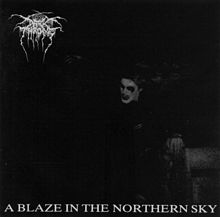
SOUNDTRACK: DARKTHRONE-“Kathaarian Life Code,” (1992), “Sacrificing to the God of Doubt” (2004), “Canadian Metal” (2007).

After watching Until the Light Takes Us, I wanted to check out some of Darkthrone’s music.  According to their Wikipedia page, over the years the band who pioneered black metal has morphed away from the sound.  They’ve added elements of punk and speed metal to their bludgeoning sound.  In the movie Fenriz says that he listens to all kinds of music and is very open-minded.

Kathaarian Life Code” is a ten minute dirge of black metal.  It opens the band’s second album (considered to be a black metal classic) with chanting and guttural spoken words.  Then it blasts forth with the jackhammer style of drums that is now standard in black metal.

It slows down from time to time, allowing for the really heavy parts to blast through the chaos of the fast parts.  It’s pretty intense and not for the faint of heart.  You can hear occasional guitars screaming through the din, but the production is intentionally murky, dark and noisy.  As they say in the movie, the bands intentionally recorded on the shittiest equipment they could find.

Sacrificing to the God of Doubt” is a later song, taken from what is considered their final album in the black metal style.  The band was turning away from the traditional black metal sound, and there are elements of punk (guitar riffs that are audible, and a sound that is less bass heavy) present.  And the production, while still mired by noise is relatively cleaner.

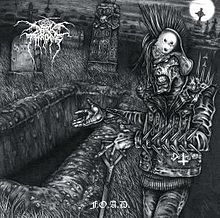
Canadian Metal” is from their third most recent album, after the shift from black metal was more or less official.  It sounds more like an early death metal song.  There’s low tuned notes, audible vocals (growled, but you can actually hear words) and a kind of headbanging aspect to it.  The album is called F.O.A.D. which was a song by Venom (and others, obviously), and this track reminds me of Venom somewhat.  I wouldn’t say that the band has sold out because there’s no way anyone is playing this on the radio, but it’s interesting to see how a band has managed to change things up and add new elements to its sound even though they were the forerunner and grandfather of a scene.

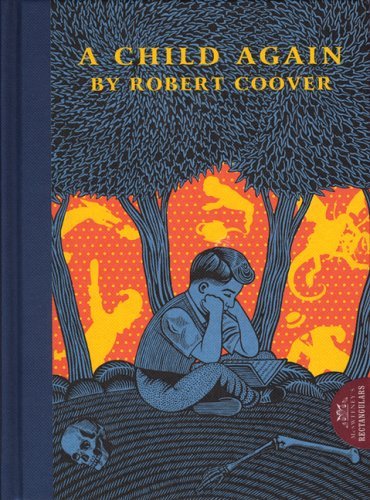
[READ: February and March 2011] A Child Again

This is a collection of short stories from Robert Coover.  There is a kind of theme throughout (most of) the stories about returning to childhood.  But the overall sense is one of despair, sadness, pointlessness and sex.  Lots and lots of sex.  And the sex is usually as vulgar and nasty as the tone of the book suggests it would be.  It’s a little off-putting, actually.

I was planning to say that I didn’t like this collection at all because I really didn’t enjoy the first half-dozen or so stories.  I continued because Coover has a great reputation that I didn’t want to give up after a few misfires.

The real disappointment came because the stories seem so promising: many of them are a kind of retelling of classic fairy tales that looks at “what happened afterward.”  However, and this was true for almost all of them, Coover tries to do two contradictory things with the stories.  He is playing with fairy tales but he is also writing stories that are completely unlike fairy tales.  By that I mean, Coover’s stories are long and very detailed, they bring far too much information to the story.  And a fairy tale is almost by definition short.  I mean, “Puff the Magic Dragon” is a song that’s about five paragraphs long.  But Coover’s “Sir John Paper Returns to Honah-Lee” is 26 pages long.  So instead of playing with the original, it feels like an original story that uses someone else’s characters.  It’s unsettling and unsatisfying.

It’s also not very funny.   And I’m not sure fit’s supposed to be.  But with a title like “Sir John Paper Returns to Honah-Lee” you expect the funny.  And there are funny moments.  I mean the whole premise is that little Jackie Paper has grown up into Sir John Paper.  He’s now an old Knight and he is sent to slay the dragon (Puff) who is plaguing the city.  Even though that is a tragic story, it is also inherently humorous.  And there are laughs when they reunite.  But it gets so bogged down in details, that the essence of the story seems to get lost.  Perhaps I’m just disappointed because it (they) turned out so unlike I wanted them to be. (more…)

Read Full Post »

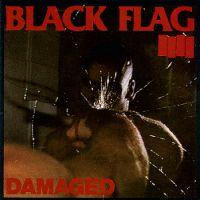
SOUNDTRACK: BLACK FLAG-Damaged (1981).

I’ve liked Black Flag since I bought Loose Nut on vinyl way back when (1985, the year punk broke for me).  And those four bars were iconic to me even before I had heard a note (although I just learned they are supposed to represent a flag waving).

And this is where their legend really took off.  So a few things I never knew about this album until I looked them up recently.  1) That’s Rollins on the cover punching the mirror.  2) He didn’t really punch the mirror (it was smashed prior and the blood is fake).  3) I knew that Black Flag existed for a while before Rollins’ arrival and that they’d had a series of singers before him.  But I didn’t realize what a their first EP (Nervous Breakdown–Keith Morris on vocals) came out in 1978, their second EP (Jealous Again–Ron Reyes on vocals–credited as Chavo Pederast (he left the band in the middle of a live show, so they changed his name to that rather offensive one)) came out in 1980.  Their third EP (Six Pack –Dez Cadena on vocals) came out in 1981.  Rollins joined a few months after that and Damaged–their first full length–came out in December 1981.

“Rise Above” is a wonderfully angry song.  The gang vocals of pure empowerment work so well with the chords.  It’s still effective thirty years later.  “Spray Paint” goes in the other direction: rather than an uplifting, catchy chorus, it’s a deliberately angular chorus that’s hard to sing along to (even for Rollins).

“Six Pack” represents the more “popular” side of the band.  And it is a wonderfully funny single.  I just can’t decide if it’s serious or ironic (see also “TV Party”).  These two dopey songs are great to sing along to and are simply awesome.  (Fridays!)

The rest of the album turns away from the lighthearted tracks.  “What I See” is a really dark moment on this album.  And the negativity is unusual especially given Rollins’ later penchant for lyrics about fighting back.  True, Rollins didn’t write these lyrics.

“Thirsty and Miserable” is a blast of noise with some of Ginn’s first real guitar solos (which Guitar World says is as one of the worst guitar solos in history…and I say really? that’s the solo they pick?  Ginn has done some pretty outlandishly bad solos over the years…of course the whole list is questionable at best).  “Police Story” is a simple but effective description of the punks vs cops scene at the time.

“Gimme Gimme Gimme” seems childish, but that’s clearly the point.  “Depression” is a super fast track.  (Trouser Press considered Black Flag America’s first hardcore band).  “Room 13” is an odd musical track, with pretty much no bass.  It’s just some roaring guitars and drums and Rollins’s screams.  This track stands out because Chuck Dukowski’s bass propels most of the songs here.

“No More” sounds “typically” hardcore: very fast with the chanted chorus of “No More No More No More No More.”  “Padded Cell” is also fast (and is pretty hard to understand) except for the “Manic” chant, but the following track “Life of Pain” features what would become a signature Greg Ginn sound…angular guitars playing a riff that seems slightly off somehow.  Compelling in a way that’s hard to explain.

It’s funny that a band that plays as fast as they did also released some pretty long songs. “Damaged II” is almost 3 and a half minutes long.  It has several different parts (and a pretty catchy chorus).  And the final song “Damaged I” is a kind of crazed rant from Rollins;  It’s one of his scariest vocal performances; he sounds really deranged.  Especially when it sounds like he just cant think of anything else to say so he just screams maniacally.  But his vocals are mixed behind the music as if he’s trying really hard to get heard.  There’s very little else on record like it.

It’s a wonderful end to an intense disc, and the beginning of a brief but powerful career.

[READ: March 25, 2011] The Life of Polycrates

I’ve been reading Connell for a few years now.  In fact, the first time I posted about his work came with a blistering dismissal of his story “The Life of Captain Gareth Caernarvon” in McSweeney’s 19.  That story is included here, and upon rereading it, I learned two things:

  • One: context is everything.
  • Two: I was totally and completely wrong in that original review, and I take it back.

But before I explain further, some background about this book.  This is a collection of eleven stories, eight of which have appeared elsewhere.  Unfortunately there’s no dates of publication included so I don’t know how old any of these stories are.

The other thing I’m fascinated about is Connell himself.  I’m not the kind of reader who wants to know a ton of details about the author, but I like a little bit of bio (or a photo) when I read someone.  The only bio that is consistently presented about Connell is that he was born in Santa Fe, New Mexico.  I’m fascinated by this because so many of his stories are set in Europe.  So I have concocted a master biography about Connell’s life and how he has lived and toured extensively in Europe, studied theology (and found it wanting) and investigated all of the world’s darker corners.

It’s this latter aspect that really altered my perception of Connell’s writing.  I’ve liked the last few things that he’s written, but I fear that I was not looking at him through the proper lens.  And this relates back to bullet point one above.

Connell writes in a world not unlike H.P. Lovecraft–a world that is unconventional, dark and more than a little twisted.  And yet, unlike Lovecraft, there is very little of the fantastical in his stories.  Rather, his characters reside in our own world (with a little chymical help from time to time), but they are all real.  They’re just not characters most of us choose to associate with.  So, reading that first story in McSweeney’s, where it was so different from all those others, I found it really distasteful.  In retrospect, I’m not going to say that it is meant to be distasteful, although some of his stories are, but it was certainly not a pleasant story by any means.

The other fascinating thing to note about this book is that all of the stories are written in short, Roman Numeraled segments.  So the title story has 35 segments.  But even some of the shorter ones has twelve or thirteen segments (sometimes a segment is just a few lines long).    I actually enjoy this style (especially when the segments introduce something totally new into the story–which many of these do). (more…)

Read Full Post »
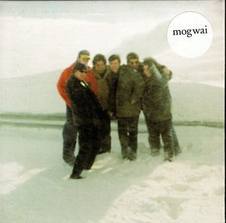
SOUNDTRACKMOGWAI-No Education = No Future (Fuck the Curfew) (1998).

This is a 3 song EP. The opener “Xmas Stripes” is one of my favorite early Mogwai songs.  The opening melody is really great, with a cool interesting bass and a nice guitar over the top.  At about 3:30 the song grows from a silent track to a menacing, growing beast until the drums start and the song and the main riff begins.  By 5 minutes it’s all out rock noise.  By 6 minutes the song is scaled back for the violin solo.  The remaining 7 (!) minutes are a denouement for the song.  Even though I love the track, I mostly love the first 8 or 9 minutes.  The ending tends to drag a bit.

But for all of their noise, Mogwai’s early releases were really quieter instrumentals, meditative songs that were really quite pretty.  “Rollerball” is a beautiful, sad three-minute track.

The last song “Small Children in the Background” continues in this quieter vein.  At nearly 7 minutes, it allows for a noisy middle section.  This noisy section is indeed mostly noise.  And yet the pretty melody of the rest of the track is just as loud throughout the mix, making for a very cool and very brief explosion mid-song.

Not all EPs are essential, but this one is pretty fantastic.  And I have Lar to thank for getting it for me.

[READ: March 10, 2011] Changing My Mind

It’s funny to me when that when I get into an author, I seem to wind up not reading the books that people most talk about until much later.  Take Zadie Smith.  Her debut, White Teeth, is something of a touchstone for many readers.  I missed it when it came out, but I loved On Beauty and figured I’d go back and read it.  That was almost a year ago.  And in that time I have read lots of little things by her and now this collection of essays.

Regardless, this collection of essays is a wonderful look in to the nonfiction world of a writer whom I admire.  And it was quite a treat.  Zadie is an intellectual, and that comes across in all of these paces.  Whether it’s the subjects she’s writing about, the footnotes she uses or just the acknowledgment that she likes art films and not blockbusters, we know where she’s speaking from.  And, of course, I’m right there with her.  The funny thing about this book then is how few of the subjects I know.

The book is broken down into five sections: Reading, Being, Seeing, Feeling and Remembering.  The Reading section is basically book reviews.  The Being section is about her experiences.  The Seeing section is about films.  The Feeling section is about her father and the Remembering section is about David Foster Wallace. (more…)

Read Full Post »

SOUNDTRACK: MOGWAI-Kicking a Dead Pig + Mogwai Fear Satan Remixes (1998).

This release came out soon after Young Team, when it seemed like Mogwai was just flooding the market.  It’s a remix album of a number of tracks from Young Team. And, when it was re-released it contained several mixes of the track “Fear Satan” as a bonus disc.

In general, I’m not a fan of remixes.  There, I’ve said it. Back in the flush 90s, when I used to buy a lot of import singles, I enjoyed the B-sides, but was always disappointed when there was a remix rack.  Some are fine.  Indeed, some are pretty good.  But for the most part you get a very long song that is mostly drum machine and sounds and noises.  And I know that they are designed for dancing, but I’m not a dancer, so despite how much techno I own, I’m very rarely thrilled to ge a remix.

Which is  as good a way as any to say that this is a pretty inessential disc, even for Mogwai fans. Even though Mogwai themselves throw a couple of remixes on there.  And for the most part, what we get are washes of sound.  Since Mogwai don’t really do lyrics, it’s not always very obvious what song the remixers are remixing.

  • Hood: “Like Herod” has some interesting staccato, which Mogawi typically doesn’t have.
  • Max Tundra: “Helicon 2” is primarily ride cymbal although a guitar motif does come in (with some pretty harmonics) eventually.
  • Klute: “Summer” (Weird Winter Remix). There’s nothing distinctive about this.
  • Arab Strap: “Gwai on 45.”  I actually expected a lot from this mix because Arab Strap are a weirdly wonderful band and the guys have worked with Mogwai.  But then, they’re not an exciting band–they’re very good, just understated.  And as a result, this remix is okay but nothing too exciting.
  • Third Eye Foundation: “A Cheery Wave from Stranded Youngsters” (Tet Offensive Remix) is also okay.
  • Alec Empire: “Like Herod” (Face the Future Remix).  Alec Empire usually turns all of his remixes into super fast like 500 bpm noise explosions (just like Atari Teenage Riot). He doesn’t do that here, and the song just kind of melds in with the rest.
  • DJ Q: “R U Still In 2 It” has a vocal, but it is mostly one word repeated over and over.
  • Kid Loco: “Tracy.”  I liked this track more than many others.
  • Mogwai: “Fear Satan.”  It’s weird to me that you would remix one of your own songs, although I guess it’s fun.  I still like the original better.  And I’m fairly certain this one is different from the one on the next disc.

The four “Fear Satan” remixes are by:

  • Mogwai: delicate, the washes of sound are quiet and warm, and it really features the flute quite a lot. Although by the end, the feedback does come in.
  • μ-Ziq: remix is much more staccato. The washes have been removed.  There’s very little connection to the original.
  • Surgeon: remix begins electronically and builds as a slow wave.  It’s pretty much one note getting louder and louder until about a minute left when it changes tone.  It’s hard to imagine even calling this a remix.
  • My Bloody Valentine: at 16 minutes,  the MBV remix stands out for length. After about five minutes of interesting feedback squalls it shifts to a high-pitched noise, almost like a drill. After a few minutes of this it shifts into a very pretty electronic song.  By the end it’s a pounding heavy drum fill rocker.  Any resemblance to “Fear Satan” seems purely coincidental, but it’s a wild ride.

[READ: March 11, 2011] The Revolution Will Be Accessorized

I only heard about this anthology when I read the Sam Lipsyte piece from it.  I didn’t really like his piece, but the rest of the anthology sounded intriguing.  It was put out by BlackBook magazine, which I have a sort of vague awareness of, but couldn’t really say anything about (it’s some kind of counter-cultural fashion magazine or something).  But it seems like the counter-cultural aspect really lends sway here.

This anthology is a collection of short stories, essays and interviews.  There’s also an introduction by Jay McInerney

JAY McINERNEY-Introduction
He talks about BlackBook and the essays contained here. (more…)

Read Full Post »

SOUNDTRACK: ANGST-“The Weather’s Fine” (1988).

I recently rediscovered the band Angst.  They were part of the second wave of SST bands (the ones who never went anywhere and were summarily dropped with no forwarding address).  I know of Angst from their song on The Blasting Concept Volume II (which I love).  I decided to investigate Angst a little further and my good friends at YouTube came through with a number of Angst tracks that I’d never heard.

Like this one.

Angst is a kind of jangly pop band.  This song in particular would not be out of place on the radio in 1992 or indeed now.  It has an early R.E.M. feel, but I think what makes it stand out somewhat is that the chorus feels kind of short–you kind of expect Peter Buck to sing a second part of the chorus, but that never materializes.

Angst is a band that could have been huge (SST was not much for marketing).  And as far as I can tell all of their discs are utterly out of print.  Pity.  This is some good stuff.

Tap your feet along!

[READ: March 22, 2011] The Meowmorphosis

I received this book as an Advance Reader’s Copy.  I absolutely loved Pride & Prejudice & Zombies.  I didn’t read Quirk Classics’ other mash-ups: Sense & Sensibility & Sea Monsters or Android Karenina (although I love the title of that one).  Nor did I read any of the other mash-ups that Quirk Press did not print.  It became rather passe after one great idea.

But this one seemed different somehow….  In part, Kafka.  But also, it’s not a classic novel plus horror.  It’s more horror plus…cats.  And the opening line is wonderful:

One morning, as Gregor Samsa was waking up from anxious dreams, he discovered that he had been changed into an adorable kitten.

Anyone who has read The Metamorphosis knows that it’s about 85 pages long.  So, how did Coleridge Cook (which is a pseudonym, FYI) get 200 pages out of it?  Well, it’s not simply The Metamorphosis.  It incorporates aspects of  The Trial and the short story “Little Woman” (and quite possible some other things as well).

And in that respect, it’s pretty neat.  He takes these three separate Kafka stories and interweaves them, all keeping with the same basic structure of The Metamorphosis with Gregor as a cat.

And so, as in the original, Gregor is abused by his family.  But unlike the original, he eventually escapes outside where he meets Josef K. and is put on trial.  He is eventually let go and returns home where he imagines the tearful return he will have with his sister.

But here’s the problem.  Unlike P&P&Z which made a whole new plot and added so much excitement to the original story, all that this mash-up does is to change him from a cockroach into a kitten.  So really, the story is exactly the same but instead of scenes with creepy, gross cockroach detail, we get scenes with cute and cuddly kitten details.  And as such, it’s hard to understand exactly why the family is so creeped out by him. (more…)

Read Full Post »

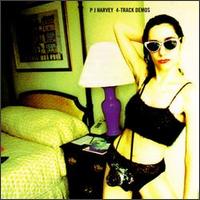
SOUNDTRACK: PJ HARVEY-4-Track Demos (1993).

After the intensity of the Steve Albini produced Rid of Me, Harvey releases this collection of demos.  The amazing thing is that these versions actually seem more intense than the Albini version. Or if not more intense, then certainly more raw.

The songs definitely have an unfinished feel about them, and yet they only vary from the final version in polish (and Albini’s stamp).

“Rid of Me” is just as quiet/loud, and has those high-pitched (and scary) backing vocals.  Speaking of scary vocals, her lead screams in “Legs” are far scarier here than on Rid of Me–like really creepy.  (Which sort of undermines that idea that this was released because Rid of Me was too intense for fans).   “Snake” actually features even creepier vocals–Harvey must have had a field day making these sounds!

I admit that I like the finished version of “50 Ft Queenie” better,”but there’s something about this version of “Yuri-G” that I like better.

The disc also has some tracks unreleased elsewhere.  “Reeling” is an organ-propelled song of female strength with the nice lyric: “Robert DeNiro sit on my face.”  “Hardly Wait” is a slow grinder that is fairly quiet for this time period.  “M-Bike” is a cool angry rocker about a guy and his motorcycle which is one of my favorite tracks on the disc.

It’s a great companion to Rid of Me.

[READ: end of February to early March]  original articles that comprise A Supposedly Fun Thing I’ll Never Do Again

As I mentioned last week, I decided to compare the articles in A Supposedly Fun Thing I’ll Never Do Again with the original publications to see what the differences were.  It quickly became obvious that there were a lot of additions to most of the articles, and it seems rather pointless (well, actually it seems exhausting and really outrageously time-consuming) to mention them all.  But what I did want to note was the things that are in the articles that have been removed from the book.   There’s not a lot but there are a few juicy tidbits (especially in the early articles) that are fun to note for anyone who read only the book and not the original articles.

My process for this was rather unthorough: I read the article and then right afterward I read the book.  If I noticed any changes, I made a note on the article version.  Many of them were surprisingly easy to note as DFW’s writing style (especially his idiosyncratic phrases) really stand out.  This is especially true in the Harper’s articles.  The academic ones were less notable, I believe, and I’m sure I missed a bunch.

I’m not sure in any way how these pieces were dealt with initially by the magazine or DFW.  I assume that DFW handed in the larger article (like we see in the book) and the magazine made suggested edits and DFW edited accordingly.  Then the book copies are probably the originals, bt which have also been updated in some way.

In most cases, it’s not really worth reading the original article, but I’m including links (thanks Howling Fantods), for the curious.

As for length, it’s hard to know exactly what the conversion from magazine article to book is.  The “Tornado Alley” tennis article is 8 pages (more like 4 pages when you take out the ads) and the book is 17.  Perhaps more accurately it seems like one Harper’s column = just under one book page.  I’ll try to figure out what the conversion is if I can.

One last note, whenever I say “article” I mean the original magazine version.  And obviously “book” means ASFTINDA. (more…)

Read Full Post »

SOUNDTRACK: PJ HARVEY-Rid of Me (1993).

For Rid of Me, PJ Harvey jumped to the big leagues (relatively) by enlisting maniac Steve Albini as a producer.  And he takes the rawness of Dry one step further into a sound that is both raw and sharp.  He really highlights the differences between the highs and lows, the louds and quiets.  And man, when this came out I loved it.

Like NIN’s “March of the Pigs,” the opening of “Rid Of Me” is so quiet that you have to crank up the song really loud.  And then it simply blasts out of the speakers after two quiet verses.

“Legs” turns Harvey’s moan into a voice of distress, really accentuating the hurt in her voice.  And Harvey hasn’t lightened up her attitudes since Dry, especially in the song “Dry” which has the wonderfully disparaging chorus: “You leave me dry.”

“Rub Til It Bleeds” is a simple song that opens with a few guitars and drums but in true Albini fashion it turns into a noisy rocker.  “Man Size Quartet” is a creepy string version of the later song “Man Size” (I’ll bet the two together would sound great).  And the wonderful “Me Jane” is a great mix of rocking guitars and crazy guitar skronk.   Albini really highlights the high-pitched (male) backing vocals, which add an element of creepiness that is very cool.

For me the highlight is “50 Foot Queenie”.  It just absolutely rocks the house from start to finish.  The song is amazing, from the powerful…well…everything including the amazing guitar solo.  “Snake” is a fast rocker (all of 90 seconds long) and “Ecstasy” is a song that feels wrung out, stretched to capacity, like they’ve got nothing left.

It’s not an easy record by any means, but it is very rewarding.  This is a CD that really calls for reamastering.  Because it is too quiet by half, and could really use–not a change in production–just an aural boost.

[READ: end of February and beginning of March] A Supposedly Fun Thing I’ll Never Do Again

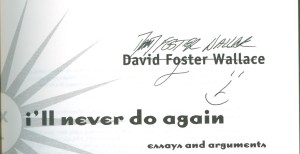
This is a collection of 7 essays that DFW wrote from 1990-1996.  Three were published in Harper’s, two in academic journals, one in Esquire and the last in Premiere.  I devoured this book when it came out (I had adored “Shipping Out” when it was published in Harper’s) and even saw DFW read in Boston (where he signed my copy!).

click to see larger

[Does anyone who was at the reading in Harvard Square…in the Brattle Theater I THINK…remember what excerpts he read?]

The epigram about these articles states: “The following essays have appeared previously (in somewhat different [and sometimes way shorter] forms:)”  It was the “way shorter” that intrigued me enough to check out the originals and compare them to the book versions.  Next week, I’ll be writing a post that compares the two versions, especially focusing on things that are in the articles but NOT in the book (WHA??).

But today I’m just taking about the book itself. (more…)

Read Full Post »

SOUNDTRACK: THE HEAD AND THE HEART-“Winter Song” (2010).

Sarah intended to get this disc for me for Christmas.  But evidently Sub Pop bought out the disc and put it out of print.  It’s now available as a download.  But a personal email from Sub Pop headquarters said they’d be releasing the disc in physical format sometime in April.  (Yay!)

This is a beautiful folk song which features wonderful harmonies.  It’s a simple guitar-picked song.  It opens with a male vocalist who sounds very familiar (I can’t quite place who he sounds like), but the end of the verse has a beautiful, brief blast of multi-part harmony.  The second verse is by a different vocalist (he sounds close to the first, I only noticed he was different after a few listens). The final verse is by a female vocalist which comes as a wonderful surprise as her voice brings a whole new shape to the sound.

The harmonies continue throughout the song and really flesh it out.  There’s not a lot to the song itself: a simple verse/chorus structure, but the execution and vocals are really lovely.

[READ: February 21, 2011] The Sword Thief

I can’t believe it has been five months since I read Book Two of this series.  It wasn’t for lack of enjoyment, sometimes other books get in the way!  But now that I’ve jumped back in, I’m in for a while (I’ve already started book 4).

One thing that I wanted to point out before talking about the book itself, was the way the various destinations are described in the book.  While I haven’t been to all (or really any) of the locations described, I have seen enough (in books and online) to know that the authors aren’t simply placing the kids in a generic location that pretends to be a city.  They really try to give each environment a full-bodied realism.  And I hope that young readers can really appreciate the sights and smells of the different countries.  It’s especially effective in Egypt (in book 4), but Tokyo really comes to life and Korea, although not fully explored, really shows the rural regions well.  Maybe this will encourage people to travel, but if not at least it’s instructive that not every place looks the same.

What I especially liked about this book is that the kids form a (brief) alliance (or two).  The first two books emphasized how all of the different family lines were in such competition with each other for the clues.  And, obviously that is the point of the books.  But it would be very tedious to simply have them run from place to place being chased by the different families.  So in this one, the kids form an alliance with Alistair Oh.  Better than that though is that Lerangis gives a detailed background of Alistair which makes him a more sympathetic, human character (even if we don’t fully trust him). (more…)

Read Full Post »

« Newer Posts - Older Posts »