Feeds:
Posts
Comments

Archive for the ‘Essays’ Category

propsectI recently received an e-mail from a nice person at Prospect (a British magazine).  The email asked if I’d like to review their magazine.  After being completely flattered, I said, “Of course!”  And then I waited nervously hoping that the magazine was good and that I wouldn’t have to say anything mean about it, because I would.  Oh yes, I would.

ctBut I don’t have to. They grabbed me right off the bat because the c & the t in the title are connected by a little filigree doodad.   I love typography, so that little flourish was a selling point (okay a superficial one, but I liked it immediately).

The “subtitle” of the magazine is “Good Writing About Things That Matter” and it is a totally apt description.  Prospect is a monthly magazine that covers all aspects of society: British, European, American and the world.  And, indeed, the writing is quite good.

In many ways it reminded me of The Walrus, a favorite magazine of mine.  (It’s a weird comparison since The Walrus has only been around for a few years, while Prospect has been around for about 13 (the November issue is number 164, so I’m guessing here), but it’s an apt comparison for its coverage: politics, culture, arts and more.

Because this was a new (to me)  magazine (and because I knew I’d be reviewing it), I decided to read every article.  There were a few that I thought I wouldn’t care much about.  But the writing totally grabbed me.  For instance, the article about Princess Diana (about whom I am indifferent) was fantastic.  It was cynical and funny and totally engaging.  And the same was true for just about every article in the magazine.

Normally I like to have at least two issues to refer to when reviewing.  So there may very well be things about this issue that are different from the others.  So, forgive, please, if I generalize incorrectly. (more…)

Read Full Post »

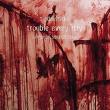
oatSOUNDTRACK: TINDERSTICKS-Trouble Every Day [soundtrack] (2001).

troublThis is the second soundtrack that Tindersticks made for director Clair Denis.  This disc is rather unlike Nenette Et Boni, in that this soundtrack is much more stark.  There are several moments on the disc where there is nothing but silence for several seconds.   “Core on Stairs” features a bass note or two and then even more silence, then one more note and more silence.  On “Room 231,” there are times when the only sound is a gently shaken maraca.  It’s rather eerie (and I’d like to believe it suits the film well).  But predominantly this is a string laden affair, highlighting the sadness of the movie.

The title track, however, contains the full band, including Stuart Staples’ singing.  And it’s a moody, evocative song.  Strings are plucked as Staples croons about trouble.  Actually the title song is broken up into the Opening and Closing Credits.  But they rather thoughtfully include the whole song at the end of the disc as well.

This is not an essential Tindersticks disc (you can get the title song elsewhere).  But if you like your music moody, this is a good one.  It may be a bit too sparse for casual listening, but it certain conjures up some interesting ideas.

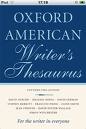
[READ: October 27, 2009 ] DFW’s comments in The Oxford American Writer’s Thesaurus

According to the Howling Fantods I have read all of the uncollected DFW pieces (except for the ones from the Pale King), and so this is my final piece (hooray!). It’s not really anything major.  As you can read from the Fantods’ summary below, this excerpt contains DFW’s comments inside this 1100 page Thesaurus.  Several authors contributed comments to the Thesaurus and all of their comments appear after the entry for the word.  They rest in boxes and are capped off by their initials.  The PDF that you can click on below is 85 pages long.  But if you search for DFW there are only 24 entries.  I copied and pasted them into a Word document that came out to 8 pages long.  So, it’s not unmanageable to read just DFW’s entries.

I’m not sure that this is the entirely of his contribution to the book.  (I assume it is, as I wouldn’t imagine The Fantods would skimp on us, but I’m also not going to find the book to confirm either.

“The Oxford American Writer’s Thesaurus”. Compiled by Christine A. Lindberg. Oxford University Press; October, 2004. [NOTES: This is an actual (1100-page plus) thesaurus for writers. Scattered throughout are ‘Word Notes’ wherein various authors, DFW among them, discuss usage and that forever quest for the perfect word. Read selections featuring DFW here.]

Basically what you get here is DFW’s knowledge about word usage.  Anyone who has read his work knows he’s practically memorized the OED.  And with his familial love of grammar, he is  stickler for using words correctly.  Which makes him kind of a prig, except that he’s not a prig; he’s very funny.  And the examples he cites are great! (more…)

Read Full Post »

pla

Although entire issues are available in PDF, I could find no cover images online.

Public Libraries is the magazine you get when you belong to the Public Library Association, a division of the American Library Association.  As you might gather, this division is for public librarians.

Like American Libraries, this magazine starts with a letter from the President of PLA.    But it’s the Tales from the Front section that I look at first.  This section discusses interesting events at public libraries around the country (Libraries using solar panels or digital bookmobiles, or even successful programs that other may wish to emulate). (more…)

Read Full Post »

reviewSOUNDTRACK: FIONA APPLE-When the Pawn… (1999).

when the pawnI learned about Fiona Apple from CMJ New Music Monthly before her debut came out.  I was convinced she was just another pretty thing with little talent. But then I heard “Shadowboxer” and I was really impressed by the depth of her voice.  When I got the album, I was pretty much blown away.

When When the Pawn came out it was mocked for its absurdly long title.  (Even Janine Garofalo got in on the mocking, for which, shame on her because even if Fiona made some bad decisions, she was still a young woman who was fighting for the causes of good).

But looking beyond the title, For When the Pawn, shows Fiona’s voice getting stronger and more subtle, and her songwriting is truly amazing.  She used the assistance of Jon Brion, multi-instrumentalist and all around dabbler in fun sounds.  And he creates a soundscape of weird instruments, crazy sounds and an enveloping sounds that keep the album an item unto itself.

I haven’t listened to the disc in quite a while, but playing it again, i was impressed by the audacity of some of the musical choices, especially for a “pretty young thing” with a successful (and disturbing) video on the charts (“Criminal“).

The crazy noises that start off the disc (carnival-like keyboards, electronic squeals) sound a mile away from the jazzy sounds of “Shadowboxer” but Fiona’s voice comes in and you know that she’s still her, and her voice sounds even richer.  There’s a wild disconnect on “To Your Love” with the delicate vibes (!) that fill the bridge and the rough sounds in the chorus (not to mention the crazy wordplay: “My derring-do allows me to dance the rigadoon Around you But by the time I’m close to you, I lose my desideratum and now you”‘).  And then “Limp,” an amazing musical concoction:  more delicate jazzy openings followed by a raucous chorus with the wonderful put down: “So call me crazy, hold me down / Make me cry; get off now, baby- / It wont be long till you’ll be / Lying limp in your own hand.”

And that’s just the first three songs.  The rest of the disc sways between mellow jazzy numbers, beautiful ballads, and rocking scorchers, but it is always fueled by a dissonance that counters Apple’s voice perfectly.

Another can’t miss track is “Fast as You Can,” a wonderfully propelled track that bounces along jauntily until it hits an amazingly fast syncopated chorus.  And the production is so clean, the drum clap before the bridge is striking.  The disc ends with a couple of delicate songs.  “Get Gone” is  delightful jazzy song (complete with brushed drums).  It remains pretty mellow until Fiona breaks from a pause with a brutal “fucking go!”  And finally, the delicate ending of “I Know” brings the disc to a close.

Ten years later, this disc is still a gem.  One can only hope it gets rediscovered so a new legion of fans can enjoy its masterful music.  And for the full title of the disc, check the bottom the post….

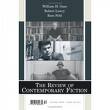
[READ: October 16, 2009] “Fictional Futures and the Conspicuously Young”

This article opens with a note that Evan Martin found this article but noticed that it wasn’t online.  It was mentioned in Steven Moore’s essay “The First Draft Version of Infinite Jest.”  So he retyped it and it is now hosted on theknowe.net.  Here’s the write-up & link from The Howling Fantods:

“Fictional Futures and the Conspicuously Young”. The Review of Contemporary Fiction Vol. 8, No. 3, 1988. [NOTES: Read it here.]

This is a fascinating article in which DFW looks at the state of fiction circa 1987.  Specifically, he is responding to criticisms that the popular authors of the day, collectively Conspicuously Young, all fall into three very basic and uninspired cliche-filled boxes:

  • Neiman-Marcus Nihilism
  • Catatonic Realism
  • Workshop Hermeticism (more…)

Read Full Post »

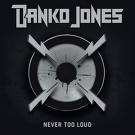
glassSOUNDTRACK: DANKO JONES-Never Too Loud (2008).

dankoDanko Jones is a hard and fast rock band, with a one track mind and a straightforward sound.  They deal in excessive cliches (album titles include: Sleep is the Enemy, We Sweat Blood, Never Too Loud, etc) and play mostly short songs.  And despite all that apparent negativity, I enjoy them beyond reason.

Their first full length was a compilation of their early EPs, and it was full of outrageously short songs about big dumb sex (a bunch of the tracks were under two minutes).  Danko’s voice sounds a but like Phil Lynott from Thin Lizzy, to give a frame of reference.

Never Too Loud, despite the name, actually changes their style a little bit.  He throws in a ballad (!), and he’s got one song “Take Me Home” which reminds me an awful lot of Kid Rock.   And songs like “King of Magazines” and “Forest for the Trees” similarly slow the pace down (Forest for the Trees is even 6 minutes long!).  But despite all that, Danko still rocks hard.

And yes, I admit that lyrically the disc isn’t ground breaking (“Still in High School” tends to sum up a lot of the themes here), but I don’t care.  Sometimes it’s fun to just rock out.  And Danko rocks with the best of them.

[READ: October 14, 2009] City of Glass

Douglas Coupland is from Vancouver.  And this book (and the revised edition) is like a love letter to the city (although he describes it as a personalized guide book).

When he first published this in 2000, Coupland had been experimenting with things other than novels, but this was the first book he released that was primarily photography (not his own, mind you).  He mixes photos of Vancouver landmarks as well as stock photos to illustrate the varied and multicultural life of Vancouver.

He also includes alphabetically titled texts in which he writes about a paragraph or two or three about the topic.  Most of these are personal insights into the city.  It’s not a work of fiction or even a collection of essays.  It’s more like love notes about this city. (more…)

Read Full Post »

al1You get American Libraries magazine if you’re a member of the American Library Association.  So you can see that the audience is rather specific.

A lot of the magazine is advocating for librarians (and for librarians to attend the annual ALA conference).  (The word advocacy appears about 200 times in each issue).

The magazine opens with letters from the editor and the president as well as letters from the readers.  Librarian letters are usually pretty enjoyable because those who write are usually pretty passionate.

alaAnd then there’s news about ALA, the organization (like their endorsement of the Public option in the Health Care debate).  As the news items continue there’s a lot of items for librarians, but there’ also a lot of news about books and media in general.  So, here we learn that J.D. Salinger won his lawsuit against Frederick Colting who wrote an unauthroized sequel to Catcher in the Rye. (more…)

Read Full Post »

walrus1I found out about The Walrus while watching an interview with Noah Richler on Book Television (back when I had Canadian satellite).  During the interview, they mentioned that the first issue of this cool new magazine, The Walrus, had just come out.  I was very intrigued; amazingly, the local Barnes & Noble had a copy!  I was delighted.  And since then The Walrus has become one of my favorite magazines.

In fact, in comparison to similar magazines (Harper’s, maybe The New Yorker) it is the only magazine that I read cover to cover.  I’m not sure why I insist on this (it’s probably got to do with it being an import from Canada, but really it’s just so well written that I enjoy everything), but I never regret reading every piece.

The magazine has recently had a face lift, a new cover design and, what seems to me to be a little more white space…it feels like each issue is a little less text-heavy.  Which is obviously a little disappointing, and yet when you have a lack of free time, as I do, it makes it a bit easier. (more…)

Read Full Post »

rapperSOUNDTRACK: SCHOOLLY D-Smoke Some Kill (1988).

schoolySince this disc is featured so prominently in Signifying Rappers (and the book is named after the best track on this disc) I thought I’d dust it off and listen to it again.  I got this disc probably in 1989 at the suggestion of my friend Al.  He recommended “No More Rock N’ Roll,” I think.

I haven’t listened to the disc in years, probably a decade.  The last time I listened, I think I wasn’t all that impressed by it, which is why it’s funny to me how much significance the book gives this disc/track.  In listening again, I felt more or less the way I did last time, although interestingly, after reading the book, I agreed that some of the tracks are pretty good.

“Signifying Rapper” in particular, seemed better after DFW’s analysis of it (he discusses it in the tradition of the trickster narrator, and I agree it’s a good one).  Although, at one point in the book DFW decries the misogyny in a lot of rap, but he doesn’t mention the homophobia.  And, despite the trickster style in this song, the homophobia is pretty outrageous (even if, in a surprising twist, the “faggot” kicks the “pimp’s” ass).  But really, the thing that upsets the pimp so much, that he went off to fight the faggot about is this rather absurdly childish set of insults:  your dad’s a faggot, your mom’s a whore, your granny’s a dyke and your brother’s a faggot too.  Now, homophobia aside, would these insults really get anyone so angry?   Hard to say.   But regardless of the whole thing, the song is set to the riff from Led Zeppelin’s “Kashmir” so, that’s pretty fun.

The rest of the disc is a mix of kind of lame tracks and a few good ones.  “Here We Go Again” has some great scratching on it (in fact the scratching throughout the disc is quite good), and there’s some really good background samples on “Gangster Boogie II.”  Although I think the best tracks come near the end: “Treacherous” (which samples or reinterprets Gil Scot-Heron’s “The Revolution Will Not Televised”) and “Black Man” which features the cool shout-out “What’s the Word?  Johannesburg!).

A few tracks are kind of flat.  “Mr Big Dick,” is, at best, silly and even the title track “Smoke Some Kill” is sort of uninspired.  What’s interesting about somewhat flat style is that this disc has come out after Public Enemy’s wall of sound changed the face of rap.  But Schoolly is sticking with the very sparse Run D.M.C. style.  The difference is that with Run, you had two vocalists, but Schoolly is by himself.  It’s just not quite as exciting.

And, then there’s the aforementioned “No More Rock N’ Roll” which is a companion to “We Don’t Rock, We Rap”.  The whole anti-rock trope rings hollow especially since he samples from it so freely.

It was still early days, but rap has progressed pretty far from this CD.  It also turns out that this disc is really hard to find.  It’s discontinued and lists on Amazon for $50.  How lucky for me!

[READ: October 2, 2009] Signifying Rappers

I wasn’t planning on reading this book this soon.  (I’m  not turning into a DFW addict, I swear).  But this showed up all because of the whims of the interlibrary loan system.  I put holds on books for people all the time, and usually it’s for new, popular books, so it’s often several weeks, sometimes months before the books come in.  I tend to forget that a 19 year old book that nobody is clamoring to read will show up in about 3 days.

So, those of you thinking about reading this book because you want to complete the DFW ouvre were probably wondering if this co-authored book should really count.  And, like, how would you know what he wrote?  Well, I didn’t immediately figure out the patently obvious system that they used in the book: When Mark Costello writes a section it is introduced with a large M.  When DFW gets a section it starts with a large D (see, obvious).   You can also tell because DFW’s section are laden with footnotes and very large words (no, really?)

I think for all readers, the main question is what are these two white, educated, twentysomethings doing writing about rap.  And, they both answer in their own way that, well, they like rap.  A lot.  In fact, DFW goes on to say that rap circa 1989 is the only musical genre that is interesting after some five years of commercial pap (and he’s pretty accurate with that, actually).  He also notes that as of their writing of the book there had been no real in-depth treatises written on rap.  Oh, and lastly, in the spirit of rap itself, they did it because they wanted to do it. (more…)

Read Full Post »

federeerSOUNDTRACK: SONIC YOUTH-The Destroyed Room: B-Sides and Rarities (2006).
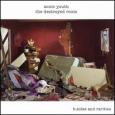
destroyedIt’s hard to imagine what gets relegated to a Sonic Youth B-side.  Not that they are indiscriminate in their selections, but unlike many bands, their discs (as of late) haven’t been all that long, so it’s not like they couldn’t squeeze the extra track on there). Of course, I rather prefer when they don’t force extra tracks onto a disc, and so, a collection like this is a good place for these songs.

Fortunately, the liner notes give a context and explanation for all of the songs, which really helps to locate them in time (and in what SY were doing at the time).  The disc opens with the 11 minute jam “Fire Engine Dream.”  It’s loud and raucous and yet also beautiful.  And the liner note comment:  “Let’s see who’s here and who’s not” is just fantastic.

The surprising track for me is “Razor Blade” a folky singalong by Kim (she’s done a few of these, so I’m not sure why I’m surprised).  The next piece is also one of Kim’s.  “Blink” is one of her more ambient/talking pieces.

There’s a couple of interesting noise experiments “Loop Cat” and “Campfire,” and they are followed by the beautiful “Kim’s Chords,” an amazing, amazing instrumental.

The last few tracks are all furniture themed (as evidenced by the cover of the disc).  According to the liner notes, the furniture was essential in that they played them and sat on them.  The titles don’t actually reflect the furniture involved, however.   The instrumentals are surprisingly melodic and, for a first or second take, sound very complete.

The disc ends with a 25 minute version of “The Diamond Sea” (as if the 20 minute version on Washing Machine weren’t long enough!).  It’s not too revelatory, but it is a great song nonetheless, so why not add a few extra minutes to it!

As with most B-side collections, this is mostly for SY fans.  Although anyone interested in esoteric pieces (nothing too outlandish like on the SYR series) would find plenty to enjoy on this disc.  Since the pieces all come from 1994 and later, if you like this period SY, it’s a worthy addition.

[READ: September 27, 2009] Federer as Religious Experience

The anal retentive part of me wishes that I had written about this article in the same post as “Democracy and Commerce at the U.S. Open,” because they would serve as a very interesting contrast in styles from an early essay to a later one. However, this piece is so marvelous that it really does stand on its own.

In the years since DFW was last paid to go to a tennis match (at least I assume that a) he was paid to go to this one and b) that he was actually at this match,) his persona has evolved from the golly-gee, so-much-to-see naif of the first piece to the I’m-here-to-watch-this-phenomenal-guy of this piece. And I have to say, his enthusiasm is infectious. (more…)

Read Full Post »

sierraThis is another periodical that’s not really a “real” magazine.  Sierra comes free when you join the Sierra Club.  I originally didn’t really look at this magazine much either.  Then one day the cover caught my eye, and I discovered there’s a lot of cool stuff in it.  Not the least of which is that there are some gorgeous photos of landscapes and animals (which the kids love) and there’s a ton of good information for living greener.

The early pages of the magazine have lots of interesting short articles, especially about things (that I suppose you could cynically comment about consumption and the planet) that you can buy.  (Things like cereal or trail bars, or, a personal favorite, straws made out of (virtually) unbreakable glass that you don’t discard).  This is followed by “Hey Mr. Green” a column where you can find out how to live a more green and earth-healthy lifestyle. (more…)

Read Full Post »

« Newer Posts - Older Posts »