Feeds:
Posts
Comments

Archive for the ‘Essays’ Category

SOUNDTRACK: RUSH-Caress of Steel (1975).

Despite the fact that this album is largely considered a failure, it’s one of my favorite Rush albums.  There’s so much weirdness about it that I can see why it isn’t terribly popular but there’s so much goodness that it makes me a bit bummed that some glorious tracks are overlooked.

It opens with the one track people know from the disc: “Bastille Day,” a rough raw rocker that is heavy and really sets the tone for the first side of the disc. The heavy heavy riff is reminiscent of Black Sabbath and other early metal pioneers.  I also learned that they were touring with Kiss around this time, so maybe that’s where they got some of their heavy riff ideas from. I of course cannot imagine Rush and Kiss touring together.  That must have been a real trip.

The second song, the amusing “I Think I’m Going Bald” is rather obvious, especially the way he delivers the title line, but man the guitar solo just rocks and rocks and rocks.  “Lakeside Park,” a real location outside of Toronto is a gentle tribute to youth.   This quote amuses me no end, and is something I just read about.

The first real highlight for me is “The Necromancer,” a wacked out 12-minute mini epic.  It opens with a spoken word introduction, setting the tale of three travelers fording a river. The first part is pure psychedelia, with screaming guitars going from ear to ear.  The second part is heavy with a slow pounding riff and Geddy’s screamed vocals  It features a long headphone-happy guitar solo.  And just when you think it’s over, there’s some crazy sound effects and, yes more guitar soloing.

The third and final movement sees the return of By-Tor from “By-Tor and the Snow Dog.”  By-Tor is now a good guy and he scares off the Necromancer.  I always enjoyed playing this part on the guitar as the chord progression is really pretty.

Side Two is one song, a full side, their first proper epic. Called “The Fountain of Lamneth” it focuses on a man’s quest for this elusive Fountain.  It has six parts.  The first, “In the Valley” is a pretty, acoustic ballad that expands into a loud rocker.  It introduces our anonymous narrator, and by the end its sets the tone with a loud/quiet explanation of his satisfaction and dissatisfaction with his life.

It’s followed by the insane “Didacts and Narpets” (Teachers and Parents (anagram on Narpets).  It’s just drums and shouting.  Evidently it’s designed to show a young man fighting with teachers and parents, and sure why not.  It’s pretty out there, but it’s only 90 seconds long.  (I’ve always enjoyed it).

The middle sections are really quite mellow.  More of that beautiful classical guitar that Alex does so well.  The songs don’t remain mellow the whole time, with “No One at The Bridge” adding some loud aggressive bits.  But “Panacea” stays quite mellow, with some beautiful guitar harmonics.  The next bit, “Bacchus Plateau” is a really pretty song despite its ultimately downer message, and probably could have been a hit if tit weren’t part of  20 minute song..

The song ends with him finding the fountain.  And yet rather than rejoice, he’s exhausted.  But I’ve always enjoyed the “message” of the song: “Life is just a candle but the dream must give it flame.”  It’s inspirational and depressing at the same time.  It ends with a reprise of the opening acoustic bit. It’s a tidy song and a wonderful first attempt at an epic track.

The only reason I’m surprised this didn’t sell well is that it works so well as a trippy 70s disc, ideal for sitting around with headphones on in one of those round chairs.  I assume its the heaviness that turned away fans of Pink Floyd and the like.  And, well, probably the downer message and really weird title of the disc (what does Caress of Steel mean anyhow?) might have had something to do with it.

[READ: March 10, 2010] Rush, Rock Music and the Middle Class

I read about this book in an article from The Walrus. And I thought to myself, it’s geeky enough to love Rush, but how about reading an academic treatise about Rush? I’m so there.

Well, I haven’t really read a truly academic (as in published by a University Press) book in a while, but it didn’t take too long to get back in the swing of things.  Plus, if I may be so bold, ethnomusicology seems like a lot more fun than philosophy.

As the subtitle implies, this book looks at Rush as music for the middle class.  The only thing I had a hard time with the book was the definition of middle class.  It is specifically aimed at a U.S./Canadian middle class (although the UK does enter into it too), and with all of the definitions thrown around, middle class seems very broad.  The easiest breakdown to see was based on employment and the most prominent type of employment among Rush fans was “professional” (including librarians and IT people).  So, evidently I am middle class.  I only say this because for the most part classes are hidden in the US (they aren’t, of course, but there are many attempts to try to keep them hidden).

This concept of class obviously pervades the entire book.  But before we get too hung up on that, we must not forget that the real focus of the book: the music of Rush. (more…)

Read Full Post »

SOUNDTRACK: BLUE ÖYSTER CULT-compilations and live releases (1978-2010).

For a band that had basically two hits (“Don’t Fear the Reaper” and “Burnin’ for You”) and maybe a half a dozen other songs that people might have heard of, BOC has an astonishing number of “greatest hits” collections.

Starting in 1987 we got Career of Evil: The Metal Years (1987), Don’t Fear the Reaper (1989), On Flame with Rock n’ Roll (1990), Cult Classic (which is actually the band re-recording their old tracks (!)) (1994), and the two cd collection Workshop of the Telescopes (1995).  There’s even Singles Collection, (2005) which is a collection of their European singles & Bsides.

This doesn’t include any of the “budget price” collections: E.T.I. Revisited, Tattoo Vampire, Super Hits, Then and Now, The Essential, Are You Ready To Rock?, Shooting Shark, Best of, and the 2010 release: Playlist: The Very Best of).

The lesson is that you evidently won’t lose money making a BOC collection.

I don’t know that any of these collections are any better than the others.

The 2 CD one is for completists, but for the most part you’re going to get the same basic tracks on all of them.

And, although none of them have “Monsters” for the average person looking for some BOC, any disc is a good one.

Regardless of the number of hits they had, BOC was tremendous live.  And, as a result, there have also been a ton of live records released.  Initially the band (like Rush) released a live album after every three studio albums. On Your Feet or On Your Knees (1975) Some Enchanted Evening (1978) and Extraterrestrial Live (1982) were the “real releases.”

Then, in 1994 we got Live 1976 as both CD and DVD (which spares us nothing, including Eric Bloom’s lengthy harangue about the unfairness of…the speed limit).  It’s the most raw and unpolished on live sets.  2002 saw the release of A Long Day’s Night, a recording of a 2002 concert (also on DVD) which had Eric Bloom, Buck Dharma an Allan Lanier reunited.

They also have a number of might-be real live releases (fans debate the legitimacy of many of these).  Picking a concert disc is tough if only because it depends on the era you like.  ETLive is regarded as the best “real” live disc, although the reissued double disc set of Some Enchanted Evening is hard to pass up.  Likewise, the 2002 recording is a good overview of their career, and includes some of their more recent work.

If you consider live albums best of’s (which many people do) I think it’s far to say that BOC has more best of’s than original discs.  Fascinating.  Many BOC fans believe that if they buy all the best of discs, it will convince Columbia to finally reissue the rest of the original discs (and there are a number of worthy contenders!) in deluxe packages.  I don’t know if it will work, but I applaud the effort.

[READ: October 2009-February 2010] State By State

This is a big book. And, since it’s a collection essays, it’s not really the kind of big book that you read straight through.  It’s a perfect dip in book.  And that’s why it took me so long to get through.

I would love to spend a huge amount of time devoting a post to each essay in the book.  But, well, there’s 51 (including D.C.) and quite a few of them I read so long ago I couldn’t say anything meaningful about.  But I will summarize or at least give a sentence about each essay, because they’re all so different.

I’ll also say that I read the Introduction and Preface last (which may have been a mistake, but whatever).  The Preface reveals that what I took to be a flaw in the book was actually intentional.  But let me back up and set up the book better.

The catalyst for the book is the WPA American Guide Series and sort of Steinbeck’s Travels with Charley.  The WPA Guides were written in the 1930s as part of the Works Progress Administration.  48 guide books were written, one for each state.  Some famous writers wrote the books, but they were ultimately edited (and many say watered down) by a committee.  I haven’t read any of them, but am quite interested in them (and am looking to get the New Jersey one).  Each guide was multiple hundreds of pages (the New Jersey one is over 800).

State By State is written in the spirit of that series, except the whole book is 500 pages (which is about 10 pages per state, give or take).  And, once again, famous writers were asked to contribute (no committee edited this book, though).  I’ve included the entire list of authors at the end of the post, for quick access.

So I started the book with New Jersey, of course.  I didn’t realize who Anthony Bourdain was until I looked him up in the contributor’s list (I’m sure he is thrilled to hear that).  And his contribution was simultaneously exciting and disappointing,.  Exciting because he and I had quite similar upbringings: he grew up in North Jersey (although in the wealitheir county next to mine) and had similar (although, again, more wealthy) experiences. The disappointing thing for me was that Bourdain fled the state  for New York City (and, as I now know, untold wealth and fame (except by me))  I felt that his fleeing the state, while something many people aspire to, is not really representative of the residents of the state as a whole.

And that dissatisfaction is what I thought of as the flaw of the book (until I read the Preface).  In the Preface, Matt Weiland explains that they asked all different authors to write about states.  They asked some natives, they asked some moved-ins, they asked some temporary residents and they asked a couple of people to go to a state for the first time.  In reality, this decision makes for a very diverse and highly entertaining reading.  In my idealized world, I feel like it’s disingenuous to have people who just stop in to give their impression of an area.  But hey, that’s not the kind of book they wanted to compile, and I did enjoy what they gave us, so idealism be damned.

For most of the book, whenever I read an essay by someone who wasn’t a native or a resident of a state, I assumed that there weren’t any famous writers from that state.  I’ve no idea if that played into anything or not.  From what I gather, they had a list of authors, and a list of states (I was delighted to read that three people wanted to write about New Jersey-if the other two writers ever decided to put 1,000 words  to paper, I’d love to read them (hey editors, how about State by State Bonus Features online, including any extra essays that people may have wanted to write).

From New Jersey, I proceeded alphabetically.  And, I have to say that I’m a little glad I did.  I say this because the first few states in the book come across as rather negative and kind of unpleasant.  Alabama (written by George Packer) comes across as downtrodden, like a place you’d really have to love to live there.  Even Alaska, which ended up being a very cool story, felt like a veil of oppression resided over the state (or at  least the part of the state that Paul Greenberg wrote bout.)  But what I liked about this essay and the book in general was that the authors often focused on unexpected or little known aspects of each state.  So the Alaska essay focused on Native fisherman and the salmon industry.  Obviously it doesn’t do justice to the rest of that enormous state,  but that’s not what the book is about.

The book is meant to be a personal account of the author’s experiences in the state. (more…)

Read Full Post »

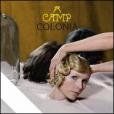
SOUNDTRACK: A CAMP-Colonia (2009).

This is the second album from the side project of The Cardigan’s Nina Persson.  This disc was created with her husband Nathan Larson from Shudder to Think.  Their first album had a country flair to it, but this one eschews that entirely for a pop feel that is entirely different from The Cardigans’ two main styles: the “cheesy” happy pop of “Lovefool” and the bitter guitar pop of their later discs.

Although like the Cardigans, Nina uses her beautiful, almost angelic voice to mask the critical, often bitter lyrics that fuel this disc.  The music is kind of sparse, which really allows for Nina’s voice to shine through. “Stronger Than Jesus” is a wonderful song about, of all things, love.  While “Bear on the Beach” opens with a delicate twinkling piano. And “Love Has Left the Room” has soaring vocals and a wonderfully catchy melody line.

The best track is probably “Golden Teeth and Silver Medals” a cool duet with a tongue-twisting chorus.

They also have a bit of fun with genres, so “Here Are Many Wild Animals” opens like a doo-wop song, but swerves into a cool minor key masterpiece.  Even the album closer, the slow, meandering “The Weed Had Got There First” works nicely with Nina’s voice (although I wouldn’t want a whole album like this).

Anyone who misses the Cardigans would do well to track down this disc; or, if you find the Cardigans too treacly, this is a great representation of the true side of Nina’s character.  I just can’t decide if the A in the band name is the indefinite article or the letter A.

[READ: March 3, 2010] “By Song, Not Album”

My friend and coworker Anna loaned me this issue of The Sun saying that she thought I would enjoy it.  I’d never heard of it before, but I’m always up for new things, so I decided to check it out.  I really enjoyed the Photo Essay “With Eyes Shut.”  And I read two of the longer pieces as well.

This first one, is, I believe non-fiction.  And if it is non-fiction, it is the least believable non-fiction piece I may have ever read.  I was interested to read it because of the title, which seemed an interesting conceit for a story.  And while that does come into play, the story is really about a young woman who is studying abroad in France who is suffering from a severe depression.

The only one who can pull her through is her father, who is similarly afflicted with depression.  He flies over to assist her and they wind up spending several days together.

What I found unbelievable, was the way her father behaves.   (more…)

Read Full Post »

SOUNDTRACK: RUSH, obviously (1974-present).

I’ve loved Rush since seventh grade.  They introduced me to prog rock, Canadian accents, Lakeside Park and Ayn Rand.  They taught me how to play killer bass lines, wild guitar solos and to ponder the existence of washing machines on stage.

[READ: March 5, 2010] “Living on a Lighted Stage”

I don’t often write about non-fiction pieces in magazines, but because this one is about Rush, it seemed necessary to bring it up.

The rather humorous subtitle of the piece sets the tone here. Rush has been together since 1974.  They’ve been taken seriously by musicians and die-hard fans, but aside from that, the average person likes “Tom Sawyer” and that’s about it.

This article notes that Rush is appearing more and more in unexpectedly public places (to both the delight and consternation of fans).  From the Colbert Report (their first time on American TV in 30-some years), to appearances is movies, including appearing as themselves playing live in I Love You, Man.

In addition to all of this there are two new works that are designed to really delve into the history of Rush. One is a new book, an academic treatise that I am sure I never would have heard about if it weren’t for this article, called Rush, Rock Music and the Middle Class: Dreaming in Middletown by Chris McDonald (which I just received and hope to start reading shortly).  And, there’s also a new documentary coming out (possibly in the Spring) tentatively called: Rush A Documentary.

And finally, a new film coming out has Alex Lifeson (as well as about 100 other musicians) in a cameo (he plays a border guard). It’s called Suck, and you can see the trailer (which has Lifeson in it) at Rushisaband.com.

I can’t possibly explain the recent influx of Rush (“Tom Sawyer” even played a major plot point on Chuck not too long ago) except to suggest that maybe all the die-hard Rush fans have grown up and gotten jobs in some kind of prominence.

Some Rush fans bristle at the idea of the guys selling out (yeah, right) or, heaven forbid, having fun.  They’ve always had a silly side (read the liner notes, look at Geddy wearing a Devo pin in the late 80s), and it’s nice to see them showing that side off a bit.  And the thing is, none of this attention is going to make “Cygnus X-1” any more popular than it is.  But if it gets some new people into prog rock, well, where’s the harm in that?

I won’t be first in line when the documentary comes out, but I’ll certainly watch it!

This article is available here.

Read Full Post »

SOUNDTRACK: DO MAKE SAY THINK-Other Truths [CST062] (2009).

I’ve always enjoyed Do Make Say Think’s CDs.  They play instrumentals that are always intriguing and which never get dull.

But this CD far exceeds anything they have done so far (and  they’ve done some great work).   There are only four tracks, and they range from 8 to 12 minutes long.  Each track is named for a word in the band’s name: Do, Make, Say, Think.  And each one is a fully realized mini epic.

“Do” sounds like a gorgeous Mogwai track.  While “Make” has wonderfully diverse elements: a cool percussion midsection and a horn-fueled end section that works perfectly with the maniacal drumming.  “Say” is another Mogwai-like exploration, although it is nicely complemented by horns.  It also ends with a slow jazzy section that works in context but is somewhat unexpected. Finally, “Think” closes the disc with a delightful denouement.  It’s the slowest (and shortest) track, and it shows that even slowing down their instrumentals doesn’t make them dull.

It’s a fantastic record from start to finish.  This is hands down my favorite Constellation release in quite some time.

[READ: December 2009 – January 13, 2010] McSweeney’s #33.

The ever-evolving McSweeney’s has set out to do the unlikely: they printed Issue #33 as a Sunday Newspaper.  It is called The San Francisco Panorama and, indeed, it is just like a huge Sunday newspaper. It has real news in (it is meant to be current as of December 7, 2009).  As well as a Sports section, a magazine section and even comics!

[DIGRESSION] I stopped reading newspapers quite some time ago.  I worked for one in college and have long been aware that the news is just something to fill the space between ads.  I do like newspapers in theory, and certainly hope they don’t all go away but print issues are a dying breed.  When I think about the waste that accompanies a newspaper, I’m horrified.  Sarah and I even did a Sunday New York Times subscription for a while, but there were half a dozen sections that we would simply discard unopened.  And, realistically that’s understandable.  Given how long it took me  to read all of the Panorama, if you actually tried to read the whole Sunday paper, you’d be finished the following Sunday (or even two Sundays later).

Their lofty goal here was to show what print journalism can still do. And with that I concur heartily.  Even if I don’t read the newspaper, the newspapers as entities are worth saving.  Because it is pretty much only print journalism that finds real, honest to God, worthy news stories.  TV news is a joke.  There is virtually nothing of value on network TV.  Fox News is beyond a joke.  CNBC is sad (although Rachel Maddow is awesome!) and even CNN, the originator of all of this 24 hour news nonsense still can’t fill their airtime with non-sensationalized news.

Obviously, there are some decent internet sites, but for the most part they don’t have the budget to support real news investigation.  You either get sensationalized crap like Drudge or rebroadcasts of real news.

So, print is the last bastion of news.  And you can see that in journalistic pieces in The New Yorker, Harper’s, The Walrus, Prospect and, yes, in newspapers.

But enough.  What about THIS newspaper?  Oh and unlike other McSweeney’s reviews I’ve done, there is NO WAY that I am writing a thorough comment on everything in here.  There’s just way too much.  Plus, there are many sections that are just news blurbs.  Larger articles and familiar authors will be addressed, however.  [UPDATE: January 18]: If, however, like Alia Malek below, you bring it to my attention that I’ve left you out (or gotten something wrong!) drop me a line, and I’ll correct things.

There is in fact a Panorama Information Pamphlet which answers a lot of basic questions, like why, how and how often (just this once, they promise!). There’s also a Numbers section which details the size, scope and cost of making this (it shows that with an initial start up, anyone could make a newspaper if they talked enough about what the readers were interested in). (more…)

Read Full Post »

SOUNDTRACK: THE DECEMBERISTS-Austin City Limits (2007).

I’ve recently discovered the awesomeness of Austin City Limits.  And in the two or so years that I’ve been watching, I’ve seen some great live shows (even is most bands are reduced to 30 minutes).  This re-broadcast of The Decemberists, however, just blew me away.

The concert comes from The Crane Wife tour, and it is just a wonderful exploration of this fantastic CD.  I’ve liked the Decemberists for years, and have listened to all of their discs multiple times, but there was something about this recording, in particular the wailing guitar work of Colin Meloy (seeing him lying on the floor making crazed feedback was pretty impressive), and the amazing solo work of Chris Funk that gave me even more respect for this wonderful album and the band.

It is highly recommended. For more info see here.

[READ: January 14, 2010] 100 Page Tribute to David Foster Wallace

I was able to order a copy of this journal directly from The University of Arizona and received it not too long ago.  It is a two part issue (55/56) that is chock full of all kinds of things, including this 100 page tribute to DFW.  I intend to read the whole thing, or at least more than just the DFW stuff, but as I don’t see that happening too soon, I wanted to address this tribute section directly.

DFW received his MFA from UA and he was also an editor at Sonora Review.  He also published “/Solomon Silverfish/” there shortly after getting his MFA.  So the tributes make sense from this publication.  All of the tributes here come from varied people and are all either interesting or moving to the Wallace fan. (more…)

Read Full Post »

I received my second issue of Prospect magazine just in time for the Thanksgiving holiday.  I’m pleased to say that this issue not only confirmed my suspicions of the magazine, it actually impressed me a little bit more.  And it sort of made me wish I had done something similar with all the magazines:  do a write up and then see how the latest issue compares (but I won’t).

I’m not going to go into extravagant detail with this issue, since I just wrote about the previous issue, but I wanted to mention the article that I was not only fascinated by, but that made me wonder why I had to cross the Atlantic to read about them. (more…)

Read Full Post »

17Many many years ago, I discovered Might magazine.  It was a funny, silly magazine that spoofed everything (but had a serious backbone, too).  (You can order back issues here).  And so, I subscribed around issue 13.  When the magazine folded (with issue 16–and you can read a little bit about that in the intro to Shiny Adidas Track Suits) it somehow morphed into McSweeney‘s, and much of the creative team behind Might went with them.

The early volumes (1-5 are reviewed in these pages, and the rest will come one of these days) are a more literary enterprise than Might was.  There’s still a lot of the same humor (and a lot of silliness), but there are also lengthy non-fiction pieces.  The big difference is that McSweeney’s was bound as a softcover book rather than as a magazine. And, I guess technically it is called Timothy McSweeney’s Quarterly Concern as opposed to Timothy McSweeney’s Internet Tendency. (more…)

Read Full Post »

socSOUNDTRACK: TINDERSTICKS-The Hungry Saw [CST055] (2008).

hungryIt was the releases of this Tindersticks disc (their first in 5 years) on the venerable Constellation Records (in North America) that inspired my trip through their back catalog. I was completely surprised to see them released on Constellation, as the band doesn’t exactly fit with the label’s stereotypical style (although, realistically with the last dozen or so releases, Constellation has really expanded the kind of music they release).

And this is a fantastic Tindersticks release!  There’s not a bad song on the disc. And, even though nothing is as immediately gripping as say “Can We Start Again,” the disc contains some of the band’s strongest songs.  “The Hungry Saw” is simply amazing, both lyrically and in its catchy (yet creepy) chorus.  But the highlight is probably “Boobar, Come Back to Me,” a song that begins slowly and builds gloriously, including a call and response segment that makes this song really swagger.

“Mother Dear” features a strangely comical musical episode.  In an otherwise very mellow piano based track, right in the middle of the song, come slashing, somewhat atonal guitar chords.  It’s as if a more rocking song is trying to overtake the mellow track.  (The coup is rebuffed, though).

The biggest thing to note about the disc is that longtime co-songwriter Dickon has left the band.  And so, some of the co-writing duties have been taken up by David Boulter.  While it is obviously sad that Dickon has left, Staples seems revitalized on this disc, and Boulter’s additions (especially his quirky instrumentals) bring a new point of view to the proceedings.  Also of note is something of a return to the orchestral style (albeit a much more understated version).  However, different songs emphasize different aspects: horns on one, strings on another, but always underscored by the ubiquitous Hammond organ.

It’s not a radical departure or anything like that.  It’s more of a continuation after a well earned vacation.  And it’s certainly their strongest release since their first four.

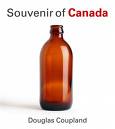
[READ & WATCHED: October 2009] Souvenir of Canada, Souvenir of Canada 2 & Souvenir of Canada (the movie)

I got the first Souvenir of Canada when it came out.  (I was on a big Coupland kick and may have even bought it in Montreal).  I didn’t get #2 when it came out, probably because I didn’t really invest a lot of effort into the first one.  But after recently reading City of Glass, I wanted to get a little more involved in Coupland’s visual art.  So, I picked up #2 and, while investigating this second book, I discovered that he had made a film of the books, too.

Coupland explains in the introduction that this book is his personal vision of what Canada is like. It is designed for Canadians as something of a nostalgia trip, but it is also something of an introduction to unseen Canada for non-Canadians.  And so, what you don’t get is pictures of mounties and Tim Hortons and other things that fit the stereotypical Canadian bill. Rather, you get things that are significant to Coupland (and maybe the average Canadian born on the West Coast in the 60s). (more…)

Read Full Post »

harpersaugSOUNDTRACK: TINDERSTICKS-Donkeys 92-97 (1998).
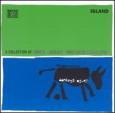
donkeysDonkeys is a collection of singles, rarities and unreleased recordings.  It came out just before Simple Pleasure, and has tracks from the era of the first four discs.

With the reissue of those first four discs (and all the bonus tracks therein) and the Greatest Hits collection, it’s not really necessary to get this for these rare tracks.  (I admit that I haven’t actually checked to see if all of the tracks here are now available elsewhere…there seems to be a number of different mixes and versions of songs, so I’ll let someone else do the legwork).

However, if you’re disinclined to get the reissued discs for whatever reason, this is a great collection of songs that are worth having for any Tindersticks fan.  And, interestingly, it works quite well as an introduction for the newbie: it features several of the most accessible songs from the first few discs.  But, for fans, the highlights include their great cover of “I’ve Been Loving You Too Long.”  Also “Plus de Liaisons” a French version of  “No More Affairs.”  It also has the fabulous duet with Isabella Rossilini (“A Marriage Made in Heaven”) and another version of “For Those”  (I’m not entirely sure how many versions of that song exist, but there’s got to be about 3 or 4.

This disc is probably easy to track down cheaply since all the tracks are available elsewhere now (although my copy came from my friend Lar and has the Euro symbol on the Used sticker to prove it). Or, maybe it’s now totally rare and out of print and is hugely expensive.  Either way, it’s still a great collection of tracks.

[READ: November 5, 2009] “Too Much Happiness”

It’s a little lame to lump these two pieces together, but the Charles Foran article isn’t something I would review on its own.  Nevertheless, it is a very interesting look at Alice Munro’s hometown, and the Self-Guided Tour of Points of Interest in the Town of Wingham Relating to Alice Munro sounds like a fun thing to do if you’re in Ontario.  (Even if Munro herself is never actually there).

But onto Munro’s story.

I’ve only read a few stories by Alice Munro (they’ve all been reviewed here).  And yet, I’ve come to think of her as writing a certain type of story.  And this one does not conform to any of my notions of a Munro story.

First, it’s rather long. Second, it’s not set in Canada.  And third, it’s a historical piece about a real person.  There’s an author’s note at the end of the story which informs us that she learned about Sophia Kovalesky when she was looking up something else in the Encyclopedia Britannica (which I find charming in and of itself).  So, all of this seems to be something of a departure for her (at least from what I’ve read). (more…)

Read Full Post »

« Newer Posts - Older Posts »