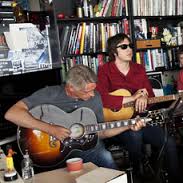
Daughter is a quiet folk band (at least in this Tiny Desk Concert) in which two acoustic guitars (Elena Tonra and Igor Haefeli) and one drum (Remi Aguilella) play behind Tonra’s gorgeous, angsty vocals.
For all three of these songs, she sings delicate whispered vocals that are quite lovely, but also quite dark.
Like this line from “Youth” “Most of us are bitter over someone / setting fire to our insides for fun.” I love the way Haefeli’s guitar harmonics sound like keyboards and how powerful the martial drumming sounds when it comes in.
“Landfill” opens with thudding drums (Mallets instead of sticks) which are louder and bigger and yet still feel gentle. And yet, as the blurb says: The song is “achingly pretty and melancholy, the track builds to an absolute gut-punch of a line — “I want you so much, but I hate your guts” — that conjures a pitch-perfect mix of gloom, desire and hostility.”
They put out an EP and in 2013 released an album:
the lovely If You Leave, but Daughter was kind enough to resuscitate “Landfill” for this stripped-down performance at the Tiny Desk. As you’ll see and hear, that aforementioned gut-punch is a recurring specialty for the band: In all three of these sad, searing songs, singer Elena Tonra showcases a remarkable gift for coolly but approachably dishing out weary words that resonate and devastate.
Between these two songs, Bob asks if this is an awkward place to play, and she responds, “No, we’re just awkward people.”
For “Tomorrow” there is a beautiful ascending guitar melody and loud drums. I really like the way the guitars play off of each other–even though they are both acoustic, they sound very different and complement each other nicely. Like in the wonderful melody at the end. Despite how pretty the song was, apparently she was unhappy with it saying “a bit ropey, that one.” I hadn’t heard that before, but evidently it means “unwell…usually alcohol related” so that’s pretty funny.
[READ: August 30, 2016] Science: Ruining Everything Since 1543
Zach Weinersmith writes the daily webcomic Saturday Morning Breakfast Cereal. I supported the Kickstarter project for his book Religion: Ruining Everything Since 4004 BC and this book was part of my funding level.
I was more interested in the religious comics, but I am tickled by how funny the Science comics are. Weinersmith knows a lot of science (or at least scientists) and make some really funny jokes about the subject.
The one thing I have to say off the bat is that I don’t love his drawing style. There’s something about it that I simply can’t get into. Even after two full books of these drawings, it just never gels for me. But that’s fine. because I’m here for the jokes. And they are awesome. (more…)
SOUNDTRACK: OLIVER ‘TUKU’ MTUKUDZI-Tiny Desk Concert #307 (September 30, 2017).
The blurb says that this guitarist is a legend, which makes me feel bad that I’ve never heard of him.
He seemed so casual — sitting on a bar stool behind the Tiny Desk, acoustic guitar in hand — but when you hear that husky voice, you’ll know why he’s a legend. Oliver Mtukudzi, or “Tuku” as his fans lovingly call him, plays spirited music, born from the soul of Zimbabwe. He’s been recording since the late 1970s, with about as many albums as his age: 60.
But Mtukudzi’s new record reveals a heavier heart than before: Sarawoga is his first recording since the loss of his son Sam. He and Sam — also a guitar player, as well as a saxophonist — had a special relationship touring together. But in March 2010, Sam Mtukudzi was killed in a car crash at the age of 21. Oliver Mtukudzi recently told NPR’s Tell Me More that “the only way to console myself is to carry on doing what we loved doing most. Sitting down [to] cry and mourn — I think it would have killed me.”
All three songs, “Todii,” “Huroi” and “Haidyoreke” are all gentle, with Tuku’s guitar playing mellow meandering melodies and his gravelly voice being soothing at the same time. It’s interesting that for “Todii,” a more upbeat song he is clearly singing not in English, but the chorus (sung by the backing musicians) is “What Shall We Do.” The backing musicians are there for percussion–congas, and maracas–and backing vocals. And their vocals are done in a traditional way.
[READ: January 2, 2017] Volcanoes
This Science Comics book was very different from the previous two. It was designed as a fictional story full of with factual information.
At first I found this really weird and off-putting, but by the end, I thought the story was pretty compelling and that the factual information was presented in an interesting and informative way. And what I realized afterward was not that I didn’t like the fictional aspect but that I really didn’t like the illustrations.
For some reason, Chad chose to have the main characters with very distinctive and unusual features. Aurora, the main character had a line of black hair down her forehead. Her sister, Luna, has really really big eyes and their guardian, Pallas, has a block of gray hair. I found all of these choices to be unsettling and unpleasing to look at (although it does allow us to tell them apart quite easily). However the volcano and other nature images were really fantastic. (more…)
Sackville released two full length albums. This was the first. They’d added a second guitar which gave their songs a bit more texture. But they still had a kind of gritty folk music sound. I saw the term “urban country” used to describe them, which is strangely apt.
“Sydney Mines” is a slow folk song with a quiet slow guitar motif. I love the descriptive lyrics: “In the dead of winter in Sydney Mines they take their cars out on the ice.” The song is accented by a slow, scratchy violin that comes in after the first verse. But the chorus gets rocking and kind of fun/sloppy with the drums really taking over. The vocals don’t really change the laconic style but they do get noticeably louder. “Clothesline” retains that slowness although the verses have a bit more sing-song quality. And once again the chorus bursts into life with a raw violin and loud drums.
The excellent guitar riff that opens “Good Citizen” is quite a change—the song picks up speed (and the vocals sound very different–clipped and quick). It’s a great alt folk song. The chorus is lurching and interesting as well. “Upstate” has an early 1990s guitar line and pounding chords at the end of each verse. The juxtaposition of his voice with this electric song works nicely. “Tie Back Yr Hair” returns to the slow style of the earlier songs although this melody is mostly led by the violin. “Lines and Barriers” is a slow ballad, mostly guitar—it reminds me of Syd Barrett.
“The Frame-Up’ has more loud drums and quiet creaking violins. Nearly four minutes in, the violin takes over with a staccato refrain that gets the song sounding more intense. “Bender” adds a pleasant surprise with guest vocalist Genevieve Heistek taking lead vocals. The music is much the same but her voice changes the overall style of the music quite a bit. The addition of fuzzy static at the end adds an alt-rock touch. “Invisible Ink” has the prettiest violin melody yet, an unscratchy ascending melody that complements the slow guitars. And just as it seems to be another slow ballad, the 3rd minute ramps up the electric guitar and the song soars for about 20 seconds before returning to that main melody.
“Her Ghost Will One Day Rise Again” has the most country feel of the album—the violin is much more fiddle than violin and the simple melody is very catchy, but in a drunken hillbilly kind of way rather than a country song proper (which means a I like it better). On “Border Towns” he sounds the most like the lead singer from Social Distortion. This is a lurching kinda punk y song, although it’s the chorus that really has that Social D feel—a slow catchy chorus in which his delivery is uncanny. “Pioneers” ends the disc with a downbeat song with really catchy lyrics: “It’s hard to be a pioneer” in the keening voice of the 12-year-old protagonist.
Given the popularity of alt-country, Sackville was sadly ignored.
[READ: June 10, 2016] Coral Reefs
Wicks created the Human Body Theater graphic novel (also from First Second), which I absolutely loved. This book is part of First Second’s new Science Comics series, in which they take a good hard look at scientific things and present a ton of information in a fun cartoony format–easily digestible chunks with awesome pictures that convey a lot of information.
I loved the dinosaurs one for just how much new information I’d learned from it.
This book has a really inspirational forward about scuba diving which I thought was by wicks (and I wondered how she was so scholarly AND an artist), but it was actually by Randi Rotjan from the New England Aquarium (and is still inspirational).
I didn’t know a ton about coral reefs going into this book and man, is it full of information about them: how they grow and form (yes, they are animals), who lives among them and what we can do to protect them. (more…)
SOUNDTRACK: PAUL WELLER-Tiny Desk Concert #457 (July 28, 2015).
Paul Weller is a highly regarded and well respected elder statesman of rock. Some of his songs with The Jam are my favorite songs from the 80s. Weller hops from genre to genre quite a lot, and I did not care for The Style Council at all. So even though he’s been making music forever, I haven’t really paid him much attention. In this tiny Desk, he brings a fairly large band (6 people (4 guitars!)) to sing an acoustic collection of songs. There’s a drums (just a snare) and a percussionist too. And everyone sings.
His voice sounds fantastic—older but still really strong.
They play four songs. Three are from his new album Saturns Pattern. Like “Dusk Til Dawn” which is a delightful folk song. The band sounds really loud, or not loud but big, like there are really 6 people out there. This is especially true on “I’m Where I Should Be” which also has some great harmony vocals and percussive guitar techniques. I love how much the harmonies contribute to the song and the general song structure is great.
“Out of the Sinking” goes back to Weller’s most popular album Stanley Road (which I don’t know). It’s a wonderful song. It showcases Weller’s gruffer vocals and nice finger picking. There’s some more great harmonies from the bongo player. And the song has a real nice campfire song feel (it reminds me a bit of Van Morrison’s folkier songs).
For “Going My Way” Weller switches to piano. It’s a simple song with some great backing vocals and harmonies, (and hand claps), although I prefer the middle two songs.
I hadn’t really given much thought to Weller in the last few decades, but this set was really enjoyable.
[READ: August 7, 2015] The Wallcreeper
This is Nell Zink’s first published novel (she has another novel, 1998’s Sailing Towards the Sunset by Avner Shats) which I read about that I would love to find, but I don’t think it has ever been published).
I really enjoyed Zink’s Mislaid and wanted to see what her earlier work was about. There was an article in the New Yorker which gave an interesting background to this story which involved a long correspondence with Jonathan Franzen and resulted in a book that I would suggest is not completely unlike something he might create–expect that it is way shorter and slightly more erratic.
Zink does not follow conventional story structure exactly. This is not to say that the story is weird or avant garde, not at all. She just doesn’t like to set things up conventionally. For instance, the first sentence of the story is: “I was looking at the map when Stephen swerved, hit the rock, and occasioned the miscarriage.” (more…)
SOUNDTRACK: CRASH TEST DUMMIES-Jingle all the way… (2002).
Even though the Crash Test Dummies are often seen as a joke band or a one hit wonder (which I guess they are), I’ve liked them for a while (their earlier stuff a lot more than their later stuff, admittedly). But it seemed like they’d have a fun take on Christmas music.
And it starts out in a comical sort of way with Brad Robert’s deeper-than-ever voice reciting about his life in Los Angeles, where it is warm and sunny at Christmas time. I like that he rhymes 24th with up north. The spoken section is quite loud in the mix (it sounds like he is right in your ear). Unfortunately, that is the case when he starts singing too–he is uncomfortably loud in the mix and it sounds like he is holding back because of it–he doesn’t sound great and his voice sounds more comical than interesting. Which is a shame because the music (with cheesey keyboards) is great.
Roberts sings lead on about half of the songs. Ellen Reid sings lead on the other half except for a couple where they split lead duties.
The rest of Robert’s songs include: “Jingle Bells” (which is certainly comical–it sounds like a chain gang song with the “Hey!s” sounding almost like a prison chant). It’s weird and cool though (even if his voice is once again too loud in the mix). “God Rest Ye Merry Gentlemen” has his voice mixed much better–he seems to be really singing. And this version–a loungey/jazzy rendition is much great fun. “God King Wenceslas” sounds proper (with Reid’s close backing vocals). It has a pretty penny whistle keeping the song going.
Ellen Reid has a great voice and I love hearing her sing. But in the first two songs she sings lead on in this disc she sounds like she is singing too slowly. “O Little Town of Bethlehem” especially sounds like the music is going to pass her up at any minute. I also don’t like the country vibe of the song. “In the Bleak Midwinter” is also (intentionally) slow, which I don’t like. Perhaps I just don’t like this song (although I do think the melody is lovely). “The Little Drummer Boy” is beautiful and Robert’s bass backing vocals are perfect. “Silent Night” is done in a countryish style, but I like this version. Although normally this song can make me cry, this version absolutely does not–too honky tonkish.
The final song, “The Huron Carol” is quite formal and proper–just Reid and a piano opening the song. It sounds very holy, very pretty. When Robert’s bass backing vocals come in, it adds more depth to the song. And it’s a lovely way to end.
[READ: October 30, 2014] Freedom
I read this a couple months ago and then got so caught up in reading other things that I never got around to posting about it. And that’s a bummer because I really liked the book a lot and I fear that I won’t remember everything I wanted to say about it.
I had read a couple of excerpts from the book in the New Yorker (quite some time ago). They were helpful in grounding the story for me, but they didn’t prepare me for the breadth of the story. It follows one family, the Berglunds, through several decades, focusing on each of them in great detail as they navigate through the Reagan, Bush, Clinton, Bush and a smidge of the Obama years.
The Berglunds are a liberal family. They were among the first white families to move onto their urban street in St. Paul, Minnesota (after white flight to the burbs). Patty is a charming (some say smug) homemaker and Walter is a lawyer (public defendant, naturally). They have two kids, Jessica and Joey. Patty dotes on Joey to an embarrassing degree (Joey is embarrassed by it, Jessica is infuriated by it and even Patty is kind of embarrassed when she really thinks about it). At the same time she is rather neglectful of Jessica. Naturally, Jessica becomes quite the success (loves reading, committed to the environment), while Joey rebels and finds all kinds of ways to disappoint them and make money. (This isn’t a bad thing, but the family has plenty of money and Joey doesn’t need to (especially not the way he goes about it). Not to mention Walter and Patty are not into the money for money’s sake thing.
The book opens that there was some “news” about Walter. He and Patty had moved to Washington DC two years earlier. He clearly did something bad (we won’t find out until much later). But that serves as an introduction to the Berglunds. And then we go back to see them, years earlier, settling into St Paul. (more…)
For Sloan’s 11th album, the four members of the band each wrote the songs of a side. I originally thought that they recorded all of the music alone, but that seems to be wrong–and would hardly be a Sloan album). In conjunction with the album, each guy was given a suit of cards (and an actual deck was made as well). While this doesn’t necessarily mean the album is very different from their others (it still sounds very Sloan), it seems to have given the guys a bit more room to experiment.
The final side of Commonwealth is by drummer Andrew Scott. Scott has written three singles for Sloan over the years: “500 Up”, “People of the Sky”, and “I’ve Gotta Try.” But for this album, he has created a 17 minute and 49 second epic called “Forty-Eight Portraits.” This makes it seem like it could be 48 small songs which it isn’t. But it also isn’t one long song exactly. There are, by my count 15 sections–although there could be more or fewer depending on how you break it up.
So my demarcations:
The song opens with a dog barking. There’s complex percussion and a smattering of piano seemingly searching for a melody.
At 3 minutes the first real song proper starts. We’ll call it “You say you’re going with me.” There’s acoustic guitars and a bouncy melody. It’s a great song with a neat guitar riff that overlays around 4 minutes in. But
At 4:23 the song changes dramatically. It grinds to a slow pensive section, call it the “Don’t ask for a second chance.” But it doesn’t last long,
At 5:16, the next part jumps in, it’s a bit faster and feels like it could be an extension of the previous section. Call it the “Do the things I do” section. It speeds up
At 5:41, to a similar style as the “first song.” It has a sing along starting “How Does It Feel?” It’s got one verse before a time signature change and instrumental break.
At 6:40 the next section comes in. Aggressive guitars and spoken word lyrics “There’s something happening here.” It also has one of the few uses of the word “fucking” in a Sloan song.
At 7:25 it shifts to a falsetto style and higher pitched guitars. It’s vaguely Beach Boys-like for a verse “Do you think she loves you?” until
At 7:48 it’s back to a reprise of the “How does it feel” section.
At 8:15 it shifts to a new slow piano section. This feels like the most fully realized song section of the epic. “I can’t believe you never told me the truth.” It leads into a big chorus sounding section (two lines) around 8:40 (“What it is us unsustainable”). There’s even a repeat of this “verse” and “chorus” as well.
At 10:26 a new guitar section is introduced. It works as a transition “You said you’re coming with me.” It morphs
At 10:52 into a very cool slowed down section “I asked for a proper glass.” And then
At 11:22 the song again returns to the “How did it feel” section.
At 12 minutes the song transitions with a “ba ba ba” and horns which move into the “Sometimes I feel like I’m slipping away” section. The song feels like it might end at 13 minutes as the last notes seem to ring out. But
At 13:21, the song rebuilds again with the “inside a cloud” section. This feels like the final section of the song is built around a similar construct. It’s a guitar riff that introduces a children’s chorus at around the 14 minute mark. There’s a slow guitar solo and pizzicato strings that keep this section from being to easy, but that guitar riff and children’s section reunite the end which concludes with the spoken “W.W.L.R.D.?” (which I assume the L.R. refers to Lou Reed).
At 16 minutes, the chaos of the beginning returns with a dog bark, but the concluding riff is strong and seems to really draw out the end.
I really haven’t listened to the lyrics that carefully to know exactly what’s going on, but I really enjoy the “choruses.” While a 17 minute song is not everyone’s cup of tea, there are so many parts and so many interesting and catchy sections, that it feels like a whole collection of short songs rather than one long song. It’s a cool experiment and one that I find myself singling out as I try to parse it a bit more.
[READ: October 11, 2014] “Part of the Main” and “Watching the Cop Show in Bed”
The Walrus’ summer reading issue presents three stories and two poems in which: “The Walrus presents fresh takes on old crimes.” Each story is about a crime of some kind, but seemed from an unexpected way. I rather enjoyed the way the writers played around with the crime genre to make them something very different. These were two poems.
I’ve don’t normally review the poetry in The Walrus, but since I had four sides and only three stories it seemed worthwhile to throw the two poems in as well 9especially since the finally song was so unusual).
The first one “Part of the Main” is written with wonderfully evocative language as it talks about something so base.
The first stanza talks about the inevitability of the tide, of life. With beautiful language like: “the contours of the and effaced by the saintly patience of the tide.” But the second stanza shifts gears. In it, the narrator says that you can show him dire things on the television: “bloated bellies…bomb blasts” and he will weep and clench his fists “but otherwise do nothing.” It is sadly an uncomfortably relatable attitude. (more…)
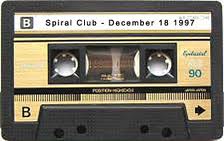
This show has an interesting technical glitch that the owner thankfully fixed. It was a soundboard recording (which is awesome), but evidently there was static in the right channel that rendered it unlistenable. So he simply removed the right channel and mixed it mono. The sound is actually excellent—one of the best early shows they’ve done. But since there is only own channel, you miss a lot of what, I think, is Dave’s guitar. When guest Tyler McPherson plays his solo, I believe you can’t hear it. Yet despite that, it still sounds great.
I feel like the band was a having a lot of fun on this Thursday night in Guelph (every night in Guelph is a weekend). They mention that their Nightlines episode was aired on the night of Lady Diana’s death (so they feel some kind of weird connection to her).
There’s a few firsts in this set as well. It’s the first time they plated “Junction Foil Ball” (from Nightlines). They seem to have finally settled in with “Harmelodia” not “California” in “Easy to Be with You.” They toss in a bit of “Tubthumping” at the beginning of “Horses,” and a bit of the Monkees, song “Look Out Here Comes Tomorrow)” at the beginning of “Queer.”
Of course there are some flubs as well. Martin messes up California Dreamline big time and Dave gets lost in the counting of “Four Little Songs” (and then says he never went to school).
But it’s the banter that is the fun part of this show. They ask the crowd not to shout out requests for a couple of songs. There’s a very funny sequence in which they try to play a Coors lite anthem. And Martin says he’s out of his mind. Dave says he’s a madman and Martin calls him a manatee. And then someone offers Dave an Islanders jersey which he says he can’t accept—it is too generous, but he’ll always remember it (and now so will we).
Before the end of the set, they offer the crowd some of the food they have backstage (if you like olives). But then they say that $18 was a bit steep of a ticket price for the show (can you imagine?). So they’re going to play extra long because the ticket price was so high. Man, how cool is that?
[READ: Summer 2013] Brief Encounters with Che Guevara
Several years ago (long before Billy Lynn’s Long Halftime Walk) I read about Ben Fountain…somewhere. I was reading an interview with a writer who talked about some new writers that he liked. Ben Fountain was one of them, and this writer specifically mentioned this collection. A week or so later I was in a dollar store of all places and saw this book on their piles of books. I couldn’t believe the serendipity. So I bought it (for a dollar). And then kind of forgot about it (so much for my theory that if I buy a book I’ll read it). But I did eventually get around to reading it and now sadly not only do I have no idea who originally introduced me to Fountain, I can’t even find it with online searching (and frankly I could have read it anywhere). Also, Fountain has since written Billy Lynn which received all kinds of praise (and which I haven’t read), so trying to find specific praise for Fountain from 7 years ago is a lost cause.
And just as I forgot to read it I forgot to write about it until now. This was his first collection of stories. There are eight in total. Even though it has been awhile, most of the stories were so powerful and well constructed that I remember them quite well. (more…)
SOUNDTRACK: An open letter to the Rheostatics (2014).
To Dave, Martin, Tim and assorted drummers:
I’ve been a fan of the Rheostatics for a long time. I recall traveling to Toronto from New Jersey back in the 90s and tracking down Introducing Happiness at Sam the Record Man. And then later driving around the Niagara Falls region listening to the strange and wonderful album. I’ve enjoyed all of the subsequent albums.
You were a unique band with a unique sound. I was sad when you split up, even if that meant that now there were three solo projects to enjoy. Of course, there’s been a lot of bands that have broken up, it’s just part of being a fan. But the thing about the Rheostatics breakup is that you three (or four or five or six) have remained friendly. You’ve done a few reunion shows since the breakup, which I think that’s super cool. It’s especially cool because RheostaticsLive tends to post them after a while so that those of us who don’t make the shows can hear them.
I’ve never seen you guys live, and I imagine I never will. And I’m okay with that. What I’m mostly bummed about is that there will be no more new music from you. You put out approximately ten albums (there’s a few miscellaneous things that are hard to qualify). Those records include soundtracks and live albums and all manner of things, so there’s really seven proper albums (the others are great, don’t get me wrong). Anyhow, my gut feeling is that there needs to be some new Rheostatics music. I know you’ve all been doing solo stuff (and I have it), but sometimes the sum is greater, etc.
Clearly I’m getting at that it’s time for a new album from the Rheostatics. Before you scoff, I’m not talking reuniting for a grand tour, or even any tour, I’m not even talking a live show. Heck, I’m not even talking about you guys hanging out for more than a couple weeks. Just an album of new songs. A decade ago it would have been unthinkable that you would get together for the expense of an album without major label support. But now, the cost is so much lower and with your fan base expanding, I assume it would be easy to recoup the expenses.
So what do you say? Since it seems like everyone is still friendly and creative, maybe you can throw some ideas around in the email, see if there’s anything magical happening. Obviously, if there’s nothing there or you just can’t work together, then don’t continue. No one wants to hear a crappy Rheostatics album. But if there’s even a chance that you guys can throw some ideas together and pull out another “Horses,” or “Northern Wish” or “CCYPA,” or holy cow, “King of the Past,” or, hell, anything you’ve done, then it’s absolutely worth it.
I don’t imagine any of you will read this, but maybe if you google yourselves, Tim Vesely, Dave Bidini, Martin Tielli, you’ll see this and think that, yes, dammit, seven records of Rheostatics music is not enough.
Thanks for the music, Paul Debraski.
[READ: January 26, 2014] Worst. Person. Ever.
I told myself that I wanted to read this book before anyone requested it. And I did. In fact, I wanted to finish it before the weekend was up, which I did as well. It’s nice to meet a minor goal.
The last few Coupland books that I read (see last week) were very dark. Since those books, he has broadened his palette somewhat, including writing a children’s book and some more non-fiction. And then we get this. A vulgar, very funny sendup of modern culture. The introduction to the book says that it was based on a short story that he wrote for McSweeney’s #31 called “Survivior.” That story was written in the style known a biji which they described as
Biji is sort of a notebook, which contains legends, anecdotes, scientific notes and local wisdom. Accounts of everyday life mix with travel narratives as well as lists. It is meant to represent a picture of the culture at the time of writing.
I thought that this style was well suited to Coupland, because he includes all of that stuff anyway. And so he has taken that story and fleshed it out into this full novel.
The worst person ever is named Raymond Gunt. He thinks he’s Jason Bourne, but he’s really just a metaphorical extra in a Bourne movie (one who probably gets killed). Gunt is a cameraman working in England. He is divorced. His wife is a raging harpy (at least from his point of view, which is all we see). Since their divorce, she has become wildly successful in television production. He calls in on her at work and she tells him about a job working as a B cameraman on a show called Survival. He knows that the job must suck or she wouldn’t give it to him, but he needs to work. Of course, he is most upset at the thought of having to work with Americans (Americans are majorly abused in this story). Although by its very nature a B cameraman position is not as good as an A cameraman, Ray needs the work, so he agrees to fly to some godforsaken tropical island to watch beautiful people starve and try to have sex with each other.
On his way out of the building he sees a homeless guy. And since Ray is the worst person ever, he kicks him. But the homeless guy is no pushover and he chases after Ray. He catches Ray in an alley and pummels him, ultimately pushing his face into some garbage. The man is Neal and although he acts crazy, he’s actually quite sharp (why he is homeless is not addressed). After forcing Ray to sing the female verses of “Don’t You Want Me,” Neal gives him this sage advice:
“Stop being a cunt to the world and the world will stop being a cunt to you.”
Advice which Ray simply cannot follow.
When ray learns that he needs a personal assistant, um, slave, he immediately thinks of Neal. So he tracks him down, cleans him up and gives him a job. And off they jet to make some TV.
In the course of the book, a series of crazy things–the kind of things only Coupland thinks of–sidetrack them from Ray’s goal. (His real goal is to get laid, naturally). First, it turns out that Neal, despite being homeless, is a total babe magnet. And throughout the story, as he gets cleaner and fresher, he becomes irresistible This, of course, ruins Ray’s plans of bedding hot women. And as Neal gets cleaner, he becomes less and less Rays assistant and more and more Ray’s equal.
They jet to L.A., (he was supposed to be in first class, but was bumped and is super angry). He also gets in trouble with the airport bartender, Lacey, who comes back to haunt him in ways one could never predict. He gets first class seats on the way to Hawaii and he abuses the privilege. Then, because of unforeseen circumstances, they have to stay in Honolulu (with lots of Spam jokes). And because of those unforseen circumstances, they need to recast the show, which means Ray’s wife has to jet down and be around them. And Ray’s wife, Fiona, is delighted to make Ray’s life miserable. Eventually, they head to their intended island and prepare to set up for the show.
In the meantime, the U.S. has decided to destroy the Great Pacific Garbage Patch–in a very imaginative way. And ray is on hand to witness the destruction. This plan causes all manner of trouble with shipping and airplane traffic. Which has the effect of isolating everyone on the Survivor island–causing a literal survival situation.
Raymond Gunt may not be the worst person ever, but he is pretty darn close. He tries to sleep with anyone. He tries to screw over everyone else (but never seems to get anywhere). And he genuinely likes to torment others. And all the while he repeats his mantra, “I consider myself a reasonable enough citizen.” Despite Gunt’s personality, he (or at least the story) is funny enough that you want to keep reading (and maybe even to succeed in some of his designs). And that made this story a major page turner. And it was very funny as well.
Coupland really gets the feel for writing a British story. It doesn’t read like any of his other books and while it’s not full of crazy accents or overt Britishisms, his main character is defiantly not American. As I said, all Americans are fat, sweaty, stupid and prudish in Ray’s mind.
This is also the worst person that Coupland has ever written. He is such an abominable person with an incredibly filthy mouth. The above quote is just one of just many curses in the book. In fact there’s a whole subplot about how prudish Americans are about people saying “fuck” despite their cavalier acceptance of violence and other things (we say friggin, when everyone knows we mean fucking).
I have to assume Coupland had a ton of fun writing this. And it really comes through. I’m also going to guess that a lot of people’ won’t like this book because Gunt is so reprehensible. But if you can get past that, the story is funny, and makes some pointedly humorous observations about a lot of contemporary life. Like “Survival [sic] is a popular reality TV show… You’re either into this show or you’re not. It’s binary.” or “‘Come on Eileen’ was a single in 1982…What’s weird about this song is that it was so huge at the time and now you listen to it and wonder, what the hell was everyone thinking? Well, that’s pop culture for you.” It even has what seem like Wikipedia entries of things throughout in the book (and a YouTube link which is bizarre to see in print).
I really enjoyed this, and I’m thrilled that Coupland has unleashed his inner black humorist.
Watch him talk about the book with Jian Ghomeshi, a great interviewer
SOUNDTRACK: LAURA GIBSON-Tiny Desk Concert #1 (April 22, 2008).
I have enjoyed many of NPR’s Tiny Desk Concerts over the years. And while I was listening to an All Songs Considered show, it was mentioned that there have been over 200 shows (I believe it is now over 300). And I realized that I had missed dozens of good ones. So, being the kind of person I am, I decided to start watching/listening to them all. I don’t typically watch most of them as they’re usually not very visually interesting–they’re fun to watch for a minute or so, but most of the artists are there to sing, not to do visual entertainment. So usually I just listen while doing something else.
I toyed with the idea of writing about one a day until I was done. But the logistics of that made my head hurt. So instead, I will write about them all over the course of however long it takes. (And since they don’t post one every day, I will catch up eventually).
Laura Gibson had the first ever Tiny Desk show, and there’s some notable things about the show itself. First, look how empty Bob’s shelves are! And the camera work is a little wonky, I think. I also enjoy how they introduce this performance without a clue as to whether there would be more of them!
I had never heard of Laura Gibson before listening to this. She plays simple but beautiful guitar (I enjoyed watching how confidently she played the chords and individual strings). But the big selling point is her voice. Her voice is very quiet (this was the impetus for the Tiny Desk concept–they saw her in a club and the crowd was too loud for them to enjoy her so they invited her up to their office). But her voice is also slightly peculiar (in a very engaging way), which you can especially hear on “A Good Word, An Honest Man,” where she is practically a capella.
She sings four songs: “Hands in Pockets,” “A Good Word, An Honest Man,” “Come by Storm,” “Night Watch.” The sing-along at the end of the last song is really pretty–shame the audience wasn’t mic’d. All four songs are beautiful and slightly haunting–her delivery is so spare you kind of lean in to hear more. She currently has three albums out, and I’d like to investigate her music further.
[READ: October 31, 2013] “A Comet’s Tale”
Despite the fact that this article talks about and more or less guarantees the end of the world by asteroid or comet it was incredibly enjoyable and staggeringly informative.
Bissell begins by talking about the Biblical Apocalypse and how in 1862 Premillennial Dispensationalism (premillennialism is the belief that Christ will return before setting up his millennial kingdom and dispensationalism divides up the Bible and human history into various eras or dispensations, based on how God deals with humanity) was smuggled into the Americas and it has never left. Fully 59% of Americans now believe that Revelations will come to pass (although what that could possibly literally mean is another question). [Incidentally the book is not called Revelations, it is Revelation or more specifically Revelation to John. And all of that numerology (666) must mean something right? Well, yes, it means that the Ancient world was obsessed with numerology. The bible makes great use of the trick of predicting the future by describing the past.
Bissell pulls back from the bible to look at planet Earth “the most ambitious mass murderer in the galaxy.” He then lists all the atrocities that have happened from natural causes to all species in the history of the planet. But even recent tragedies (which seem to only happen to people in far off countries says the westerner) are only by happenstance happening there. Between overpopulation and global warming we are preparing for our own apocalypse. Although we also mustn’t look too crazy like in The Late Great Planet Earth (which still sells around 10,00 copies a year). In that book Hal Lindsey predicted the end of the world but also the rise of a single world religion, a Soviet Ethiopian invasion of Israel and the obliteration of Tokyo, London and New York. But astonishingly, Lindsey also worked for the Reagan administration, much like Tim LeHaye (famed “author” of the Left Behind series) was co-chairman of Jack Kemp’s 1988 presidential campaign. Apocalyptos have way too much power in this country.
But even if we weren’t preparing for our own doom, there would still be space items to do it for us. Like 1950DA an asteroid that has near-missed the earth fifteen times and may just not miss us in the future. (more…)
After Farmhouse, Phish went on a hiatus. No one knew it would be quite so brief, but there was really a feeling that they were done.
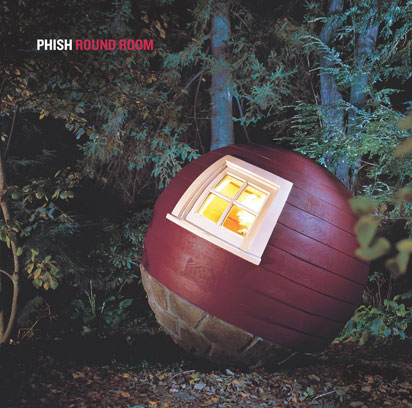
And then they quietly released Round Room in 2002. And it bursts forth with an 11 minute song.
“Pebbles and Marbles” has an interesting riff—complex and pretty. And when I listened to it again recently I didn’t really quite recognize it. But that’s because it’s nearly 12 minutes long and the really catchy part comes later in the song. At around 5 minutes, the catchy chorus of “pebbles and marbles and things on my mind” announces itself. And it is a good one.
“Anything but Me” is a pretty, mature song that is slow and piano heavy. “Round Room” is a boppy little ditty (clearly a song written by Mike). It is sweet and a little weird. “Mexican Cousin” sounds a lot like a cover (maybe an old song by The Band) except for the solo which is very Trey. It’s a funny, silly ode to Tequila. “Friday” is a slow six minute song with two sections. The verses are spaced out a bit, delicate riffs that are mostly piano once again. The middle section is sung by Mike (which makes it more mellow somehow).
“Seven Below” is an 8 minute song. It has another great riff (and the intro music is cool and bouncey). When the vocals come in, it’s got gentle harmonies as they croon the sweet song). Most of the 8 minutes are taking up with a guitar solo. “Mock Song” is another of Mike’s songs. This one seems to be a random selection of items sung to a nice melody. Then when the chorus comes it’s quite nice, how this is a “just a mock song.” The first verse is sung by Mike, then Trey does a kind of fugue vocal with different words in verse two.
“46 Days” opens with funky cowbells and turns into what seems like a classic rocking folk song—few words but a great classic rock melody (complete with 70s era keyboards). “All of These Dreams” is a mellow piano piece, another mature song. “Walls of the Cave” has an interesting piano melody that opens the song. The song is nearly ten minutes long and the middle part has a nice flowing feel to it. There’s also a few sections that are separated be drum breaks—something that doesn’t often happen in Phish songs. When the third part opens (to almost exclusively percussion, their vocals all work in a very nice harmony. It’s a long song but with so many parts it always stays interesting. “Thunderhead” is another piano-based song with some guitar riffs thrown on top. But it is largely a slow, mellow piece.
“Waves” is an 11 minute song with long instrumental passages. It also begins with a kind of Santana feel to it, but it is a largely meandering song, with a simple melody that they stretch out for much of the song. So this album proves to be an interesting mix of long jams and mellow ballady type songs. It seems like Phish had a big mix of things to let loose.
[READ: November 1, 2013] If Walls Could Talk
This book reminds me of the work of Mary Roach—exploring a topic in great detail and including lots of amusing insights. The two big differences here are that Worsley is British and that she goes back very far in British history to give us this fascinating information about the development of certain rooms of the house.
Worsley begins with the bedroom. She looks at the furniture—the history of the bed from lumps with straw to fantastically ornate full poster beds that were made for kings who might never actually use them.
Then she moves on to more personal matters—sex (including deviant sex and venereal disease); breast feeding (for centuries mothers felt they were not equipped to take care of and nurse their own children, hence wet-nurses) and knickers (royalty had an entourage designed specifically to assist with underthings). Indeed, privacy was an unknown thing in olden times. Even royalty was expected to receive people in all of the rooms in the house. Initially the bed chamber was for their most intimate friends, not just for sleeping.
The section on old medicine was also fascinating, they believed that it was vaporous miasma that did you more harm than say, excrement-filled water.
The section on Sleep discusses what was also in a recent article by Gideon Lewis-Kraus—that there were two sleep times at night. With no electricity there was no artificial light to keep people up late so they would go to sleep early, wake up in the middle of the night (the best time for conception of children) and then sleep again. (more…)
 SOUNDTRACK: DAUGHTER-Tiny Desk Concert #313 (October 21, 2013).
 Daughter is a quiet folk band (at least in this Tiny Desk Concert) in which two acoustic guitars (Elena Tonra and Igor Haefeli) and one drum (Remi Aguilella) play behind Tonra’s gorgeous, angsty vocals.












 I Just Read About That...