Feeds:
Posts
Comments

Archive for the ‘Drugs’ Category

SOUNDTRACK: PETER, BJORN & JOHN-Living Thing (2009).

After the raging (relative) success of Writer’s Block, with their crazily catchy whistling song, “Young Folks”, PB&J could have gone in any direction.

And I was quite surprised when the opening song of this follow up (actually, there’s an instrumental disc in between) opened with single note and drum sounds and virtually a capella vocals.  But unlike a typical a capella song, the thudding notes were kind of dissonant and unpleasant.  And there wasn’t much more to the song than that.

Even the second song starts out starkly.  A single piano note plays a simple riff.  The verse kicks in with some simple electronic drums (and again minimal accompaniment).  And this sparseness is the main musical theme on the disc.

And I have to say it took almost a half a dozen listen before I really enjoyed what they were doing.  They are eschewing the pop structure that won them popularity and they’re shifting their melodies to the vocal lines rather than the instruments (I guess).  It’s a risky proposition, but it pays off.

Take “Nothing to Worry About.”   It opens with what sounds like a distorted children’s choir singing the chorus at full volume.  But then it settles down into, again, a simple drum and vocals song with just a hint of instrumentation.  (Did they get all their music out on the instrumental?  I don’t know I’ve not heard it).  Even the title track is sparse guitar noises and clicked drums.  But, man, is it catchy (it reminds me in a weird way of Paul Simon).

And then, continuing my contention that the best and catchiest songs always have curses in them, “Lay It Down” with the chorus, “Hey, shut the fuck up boy, you’re starting to piss me off” will stick in your head for days.

The end of the disc (the last three songs) are considerably mellower.  They’re less catchy, but they use the starkness very well.

Initially I really didn’t like this album.  It had none of the immediacy of the previous disc.  But I found myself really enjoying it.  I wouldn’t want all of their albums to sound like this, but it was an enjoyable twist on a good formula.

[READ: October 7, 2010] Garden State

I mentioned the other day that I just found out about this book when looking up information about Rick Moody.  I was so excited to read a book set in Haledon (two towns from where I grew up) that I checked it out and begin it immediately (it’s only 200 pages, so that helped too).  But I have to say I was really disappointed with the book (even if it did win the Editor’s Book Award).

My first gripe is about the supposed setting in New Jersey.  I have no problem with fictionalizing an area.  Writers do it all the time.  But Moody fictionalizes the area in two ways to suit his thesis, and as a lover of New Jersey and a former resident of the region, I found the lack of reality to be very upsetting.

The first minor, and I have to say really weird thing is that despite the real towns included (Haledon, Paterson, Paramus) he makes up towns nearby–Fleece, Tyre– and he makes up a river–The Dern River.  He also plays around with the names of the highways that run through the state, constantly referring to the non-existent Garden State Thruway.  Now, again, there’s no problem with making things up, but nobody in the story ever goes to Fleece or Tyre, the Dern River doesn’t come into play aside from being a river that people refer to (it’s not a renamed Passaic river, because that’s included in the story, too).  So, why make up random town names?  Why say that you drive from Haledon to the edge of Paterson near Boonton, when that is not geographically correct (or relevant to the story)?  It just seems like he didn’t have access to a map. (more…)

Read Full Post »

SOUNDTRACK: THE DUCKWORTH-LEWIS METHOD-The Duckworth Lewis Method (2009).

This is a CD released by the combined forces of Neil Hannon of The Divine Comedy and Thomas Walsh of Pugwash.  And if that weren’t enough of a sales pitch, the title of the band is a method of calculating cricket scores!  And even more…in concordance with that, this CD is largely about cricket.  Huzzah!  Buncha sellouts.

I don’t know a thing about cricket, but I know about great orchestral pop, and this disc has it in spades.  Some of the more obvious cricket songs are even understandable to non cricketers (the themes of “Jiggery Pokery” are familiar to anyone who has failed in a sport–and musically it sounds like a silent film soundtrack).

“The Age of Revolution” begins with an olde-fashioned soundtrack as well (jazz swing, including tap dancing) but quickly jumps into a dancey discoey verse (the two soundtracks blend surprisingly well in the chorus).  And the revolution?  Well, it has something to do with cricket.  Next, “Gentlemen and Players” is a wonderfully Divine Comedy-esque track complete with harpsichords.

“The Sweet Spot” is another discoey dancey track with some funky bass work (and innuendo whispered vocals).  And “Rain Stops Play” is a fun musical interlude.

“Mason on the Boundary” is the first track that seems distinctly Pugwash-y.  Hannon and Walsh have similar singing styles, and I find it hard to know who is who sometimes.  But this track is clearly Walsh’s and it’s very nice indeed.  Similarly, “Flatten the Hay” has that distinct Pugwash XTC/Beach Boys vibe and it’s quite good.

“The Nighwatchman” is also a very DC type song (it even sounds a bit like “The Frog Princess” but pulls away before being a repeat of that great single by introducing some very 70s sounding strings).  The rest of the disc follows in this same wonderfully orchestrated pop feel.  This a great record that, as far as obscure bands that get no statewide attention go, is top notch.

Oh, an it’s even more fun with headphones!

[READ: October 9, 2010] Skippy Dies

Wow, there’s a lot going on in this book.  It’s exhausting just trying to think of all the topics covered: boarding school life, failed romance (two big ones), life as a teacher, the appeal of pop singer Bethani, the Catholic priest sex scandal, drugs of all kinds, sneaking into a girls’ school, World War I, institutional cover ups, M-theory–which is pretty much the entire universe, and donuts.

But let’s start at the beginning.  Yes.  Skippy dies.  In the first couple of pages.  And what’s fascinating about this is that we don’t care.  I mean, in the scene where he dies, he’s not even the major character.  But then Skippy turns out to be more or less the glue of the book once the story proper begins.

Skippy resides at Seabrook school in Dublin (the best, most prestigious Christian academy in the country–sorry Gonzaga).   His roommate is Ruprecht (perhaps the strangest major character name I’ve read in a long time).  Ruprecht is a large boy who is incredibly smart (he will single-handedly raise the school’s average on the year’s final exams).  He is a computer geek who is obsessed with aliens and SETI.  And he hopes to be able to communicate with the other world by using techniques suggested in M-Theory.  The book does an admirable job explaining M-theory and string theory.  I’m not going to take up space here, but there’s a fine description at Wikipedia (or, if you don’t like Wikipedia, here’s an academic explanation that is written for the lay person).

Anyhow, Skippy and Ruprecht are two of a few dozen boys who reside full time at the school.  (Most of the other kids are day students).  And they have a cadre of half a dozen friends that they hang out with who make jokes at each other’s expense.  It’s a very realistically written entourage.  Mario is Italian and claims to have had sex with many many women (thanks to his lucky condom which he has had for three years).  Dennis is the ballbreaker.  He’s the abusive one (but by most standards, he’s not a bad guy).  And a few other hangers on.

This story of dorm life is a good one.  The boys are funny, their stories believable, even if they are all eccentric in their own way.  And then, one day, Skippy sees a girl playing frisbee at the girls’ school across the way (Ruprecht has a telescope which he uses for the stars, while eveyrone else uses it for the girls’ school).  And Skippy winds up becoming rather obsessed with the unknown “frisbee girl.”

This girls’ school plays a part in the story in another way too.  Carl and Barry are the Seabrook’s thugs.  When Barry hits upon the idea of selling ADD meds to the locals (as diet pills), it’s the girls’ school that he mostly preys on.  For yes, this story is also about drugs. (more…)

Read Full Post »

SOUNDTRACK: PAVEMENT-Crooked Rain, Crooked Rain (1993).

Now this album, Pavement’s second (after the Watery, Domestic EP, which I’ve never heard) is my idea of perfect Pavement.  Some might complain that this album is too commercial (although it hardly is) but to me is shows a consolidation of the talents into actual songs.

It opens with “Silence Kit” which sounds like a twisted take on a Buddy Holly song–disconcerting and familiar at the same time.  The second track “Elevate Me Later” ups the ante a bit with a noisy raucous chorus.

“Stop Breathin'” is a dark song, a sort of minor ballad that sounds even more disconsolate with the slightly out of tune guitar work.   But the lengthy instrumental at the end is (although simple) quite pretty.

And then there is the sublime nonsense of “Cut Your Hair.”  This was the first Pavement song I’d ever heard all those years ago.  And from the silly “oo oos” at the beginning to the crazy screaming guitar solo and crunchy “NO BIG HAIR” line I fell in love immediately. It was a wonderful left field hit (not unlike “She Don’t Use Jelly”) that brought a great band some attention.

It’s followed by “Newark Wilder,” a slow track that fits wonderfully after “Hair.”  One might even call it a ballad.  But it is definitely not standard fare, when the bass (or baritone guitar) plays a riff instead of a bridge.

The album picks up the rocking vibe again with, “Unfair” which I noticed is like a rough precursor to Weezer’s “Beverly Hills.”  It’s a fairly conventional song but it’s made unconventional by Malkmus’ delivery and guitar style (and would probably be a hit if it was released today).

I recently mentioned “Gold Soundz”.  (And it’s amazing how much the live version sounds just like the studio–as if everything was intentional).  It’s followed by the goofy Dave Brubeck parody/tribute “5-4=Unity.”  And of course, “Range Life” is just an awesome slacker anthem.  It’s got everything.

The last three songs offer a lot of diversity.  “Heaven is a Truck” is a piano based, drunken-sounding ballad.  “Hit the Plane Down” is a rambling wonderful shambles that devolves into a complete chaos, and “Fillmore Jive” is a 6 minute “epic.”  It opens slowly, and then builds into a fairly conventional sounding (drunken, sloppy, end of the concert) rock song.

I feel that Pavement peaked with this disc.  It’s really fantastic.

[READ: September 23, 2010] “Lost in the Mail”

As I am wont to do, I have gotten a little obsessed with an author. Recently it was Wells Tower (there’s still a few Harper’s pieces by him I haven’t read yet). And right now its Jonathan Franzen (even though I haven’t read any of his novels yet).  After reading the previous New Yorker piece, I wanted to see what else he had written for them.  Seeing his entire list at the New Yorker site is daunting and it makes it seem like he was constantly writing quite long pieces for them.  And yet, parsing it out, it comes out to about one article a year.  And yet some of these article, whoo boy, are 12 or 13 pages…quite lengthy for the New Yorker.

And so, I’m going to read these pieces over the next few weeks–I thought about reading each year’s piece during a different week, but that seems too regimented.  And since the majority of these pieces are non fiction (there are about 5 short stories in the mix) I’m going to be reading them with an eye towards these questions: Can a good writer make a story that I don’t care interesting?  Would I enjoy this same piece if it were written by someone else?  As a reporter (at large) does Franzen bring some kind of personality to the way the piece is constructed that someone else may not have?

This questions are unanswerable of course, because no one else wrote the piece in a different way.  But, when scanning the titles, some of the subjects interest me but others do not.  And those will be the real test.

This piece, about the Chicago Post Office is something that I didn’t care about specifically.  However, I have a certain love of the Postal System, and so I found this story heartbreaking and something of an illusion-shatterer. (more…)

Read Full Post »

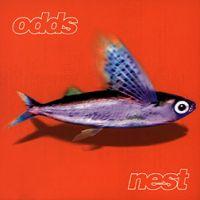
SOUNDTRACK: Odds-nest (1996).

My friend Amber from Vancouver copied this disc onto cassette for me sometime around when it came out.   I had heard “Heterosexual Man” when it was a minor novelty hit in the early 90s, but Amber wanted me to hear more from this Vancouver band.

Since the Odds dissolved, Craig Northey has become a proficient soundtrack man (Corner Gas, Kids in the Hall, and much more). But back in the 90s, Northey was simply put, a great pop songwriter (his bandmate Steven Drake was no slouch either).

“Someone Who’s Cool” is a fantastic song that should have been huge: powerful pop with a hint of 90’s rock added to keep it from being treacly.  And, of course, Northey’s voice is great.  There’s nothing particularly notable about it: it’s not whiny or deep or twangy or anything, it’s just a good singing voice (which is kind of unusual these days).

“Make You Mad” and “Hurt Me” have really catchy opening guitar riffs (and are a bit heavier than “Cool,” and yet they feature choruses that are full of harmonies and sing alongs.

“Tears & Laughter” has a jagged, wild guitar sound that, while not overtly heavy or anything, really rocks on this disc. “Nothing Beautiful” should have been a huge indie rock hit, but maybe it was too polished for indie cred.  It’s a great minor key song with, yes, a very catchy chorus.

This was the final Odds record.  It’s a solid collection of songs.  Of course, the band has recently sort of reunited as the New Odds, so we’ve not heard the last from them.

[READ: September 11, 2010] “My Kushy New Job”

This article sees Wells Tower heading off to Amsterdam for a crash course in learning to sell drugs.  He is assigned a two-week job as a dealer in a Dutch coffeeshop.

I’ve been to Amsterdam and I checked out a coffeeshop while I was there, but this article provides more information than I ever knew about them (and suggests that they are trying to spruce up their image since then). It seems that the selling of pot in Amsterdam is still a nebulous area, legally.

Shops can only have a certain amount of supply on hand (which means that most stores have offsite premises where they keep their extra stash; they house more than the legal amount and are therefore illegal.  And, technically, the people who transport the stash from offsite to onsite can be arrested up until the moment they enter the shop.  Customers can only by a small amount at time and, strangely enough, coffeshops cannot advertise (more on this later).

Tower finds the whole experience to be far less “woah, cool man” than everyone who hears about the job thinks it will be.  First, he finds that the buyers are really intense (and don’t appreciate how long it takes him to measure a gram of hash).  But by the end, he finds most of them to be simply rude and a little dead inside. (more…)

Read Full Post »

SOUNDTRACK: A HOUSE-Live in Concert (1998).

This is a strange live collection of songs.  The first half are “band” efforts.  And they are pretty good, although the backing vocals on some of the later songs seem a bit much.

The second half of the disc, however, is an acoustic set.  I initially thought it was just Dave Couse, but there are clearly two guitars.  This more intimate set is cool because it shows that their songs are solid even without the effects and silliness some of the originals had. I especially liked “Blind Faith” because he sort of teases the audience into singing with him.

This disc is certainly not essential A House listening (In fact, I can find virtually no record of its existence on line–Wikipedia and Zop list it but there’s precious little information about it).  Hey, maybe it’s a collector’s item (that I bought used for $2 used).  But since there’s no other live recordings of A House that I’m aware of, this will have to do.

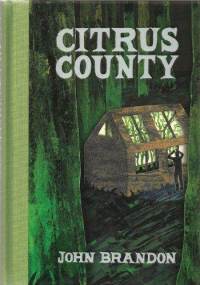
[READ: June 26, 2010] Citrus County

I read this book several months ago, but with all of the big summer projects, I didn’t have a chance to say anything about it.

Citrus County is a dark book.  Make no mistake.  It is set in a world of adolescents, high school and crime.  And even within those dark boundaries, this book is quite dark.  And yet it is also kind of funny.

The story is also something of an indictment of Citrus County, Florida, a county I didn’t know existed, although sure why wouldn’t it.  When Shelby Register moves there, she thinks that she’ll be in Disneyland, or at least by the beach, but what she finds herself in is a kind of backwater swampland.  Just what ever teenaged girl wants. (more…)

Read Full Post »

SOUNDTRACK: DAVE BIDINI-The Upstairs, Sydney Nova Scotia July 26 2007 (2007).

Dave Bidini recorded three shows in 2007 in eastern Canada which are all available on the Rheostatics Live website.  They were acoustic shows and featured a reading from his then new book called Around the World in 57½ Gigs.

On this particular venue, he gives two readings (and the readings are very good.  His writing has grown even more engaging since this first book).

The songs he plays are a couple from the Rheostatics: “My First Rock Show” which sounds good in this format.  “Me and Stupid” which is almost made for this format and “Horses.”  Now “Horses” is a wild and raucous song, typically full of Martin Tielli’s amazing guitar pyrotechnics.  The acoustic version is much more mellow, but no less affecting.

He’s got a number of what I assume are new songs (I haven’t heard any BidiniBand songs yet, so I don’t know from whence they come).  “Song Ain’t Good” is a kind of jokey song about how the song itself isn’t any good.  Lyrically, the song grows on you as it progresses.   “The List” is indeed a list of people and things that are killing us now: Tim Hortons, Chad Kroeger, Stephen Harper etc.  It’s a protest song and is kind of catchy.

“The Land is Wild” is a more interesting song, musically.  Lyrically it’s about Bryan Fogarty, a dead hockey player.  And the final track is “The Ballad of Zeke Roberts” the story of a Liberian singer.

The other shows feature essentially the same songs (one of them includes “Fat” instead of “Horses”).

The difference with these new songs as opposed to the Rheos songs is that these are more pointedly about something.  They are quite message driven.  And one needs to care about the message I suppose.  Bidini does not have a great voice. Or, more to the point, he has a limited voice that works great for certain things, but it’s not always at its strongest in this acoustic setting.  Nevertheless, he has great rapport with the audience, and is a very charming performer.

I’m rather interested in hearing what the BidiniBand have to offer.  There’s an interesting interview with the Bidini here.

[READ: September 1, 2010] On a Cold Road

So Dave Bidini was in the Rheostatics.  This book is a chronicle of their tour as the opening act for The Tragically Hip on their tour across Canada.

The book offers lots of insights into the ins and outs of touring–the frustration, the loneliness, the elation, the confusion, the shattering disappointments, everything.  As a fan of the Rheos and the Hip, I found this to be a really interesting chronicle of a cross-country tour.

And what I found interesting about the book itself is that the main guys aren’t a small band struggling, nor are they a headlining megaband.  They’re a reasonably small band but they are successful, and are certainly well looked after on this  tour.  So it gives the feeling of being the underdog without actually working too much about pathos.

The Rheos are simultaneously jealous of the Hip, but also very grateful to them.   It makes for an interesting read. (more…)

Read Full Post »

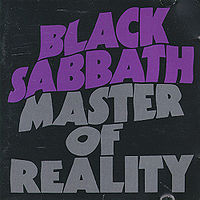
SOUNDTRACK: BLACK SABBATH-Master of Reality.

I recently reviewed this album.  And in light of this book I investigated some of the things that Darnielle’s character mentions.

First: according to Wikipedia, the US release of the LP/cassette DID have “extra” tracks on it.  When you listen on CD, and see the time settings of the songs, it’s kind of understandable what they are.

I have no idea what “The Elegy” is supposed to be (as part of “After Forever”) (unless it’s the intro part…no time is given in Wikipedia).  But “The Haunting” after “Children of the Grave” times perfectly to the “Ch Ch Children” part at the end of the song.

“Step Up” which, as he mentions, is a ridiculous name for a Sabbath song can be seen as the 30 second intro riff to “Lord of This World” as it is very different from that song.

The most unlikely “extra song”  is “Death Mask” as part of “Into the Void.”  The timing claims that it is the first half of the song.  The song changes at the 3 minute mark but it also reverts back to the original, so this “song” is specious at best.

But I do appreciate the book for giving some insight into the songs that I hadn’t considered before.

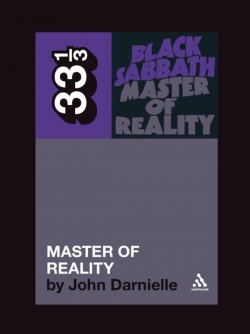
[READ: August 31, 2010] Master of Reality

When my friend Andrew told me about this book (and the series), I assumed it was writers (or musicians) writing about their favorite albums.  I had no idea it would be like this (and, I don’t know if they are all like this).

Darnielle has created a fiction (I assume) about a young man in a psych ward in 1985.  As part of his time there he is told to write in his diary every day.  After the first or second day (in which he just writes Fuck You!) he learns that Gary, the man in charge of him, is reading the diary.  And soon, he begins to use his diary as a way to get his Walkman and cassettes back (they were taken from him when he entered the ward).

Specifically, he wants Master of Reality back.   (more…)

Read Full Post »

[WATCHED: August 26, 2010] Everything’s Gone Green

I’m including this film because it was written by Douglas Coupland (and he’s one of those writers that I read a lot).

Everything’s Gone Green is a story of suburban life in Vancouver.  As the film opens the main character gets dumped by his girlfriend and loses his job.  And he hasn’t won the lottery (this sequence with his family is hilarious).  However, calling the BC Win line (is this what you do when you win the lottery?) gets him a job at the BC lottery.  [This entire job and company absolutely fascinated me.  It was an excellent location for a film].

From there the movie settled into Douglas Coupland territory: scenes from Vancouver, working in a cubicle, scenes from Vancouver, unattainable love, scenes from Vancouver, the Asian community of BC, and more scenes from Vancouver.

We had recently watched the TV series of JPod (based on his book).  Steph Song from JPod is in this film (and it’s nice to see her with a different type of character).  But what’s surprising (or maybe it’s not?) is how much of this film he recycled into JPod (or actually, they seem to be written concurrently, so I’m not sure which came first). (more…)

Read Full Post »

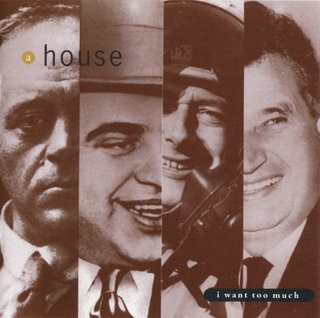
SOUNDTRACK: A HOUSE-I Want Too Much (1990).

I Want Too Much saw a bit of a stylistic shift from the sort of generic indie rock of the first album.  Dave Couse’s voice begins to really come into its own with a lot of yelping and higher notes.

The album overall is more experimental, a good stepping stone towards I Am the Greatest.  This is probably the last A House record I bought (from Amoeba Records!).  And again, had I bought it in 1990, I think I would have loved it.

As it is, it reminds me, once again, of the era (in fact, this album reminds me a lot of James circa 1990).  The lyrics are slightly more deep than on the first disc, but I honestly can’t say that the songs really stick out for me.

I may have come to the party too late for this one.

[READ: August 20, 2010] “Los Malos”

This was something of a banner issue of Harper’s for me.  I’d been kind of down on the magazine over the last several months as I felt the really good stuff just hadn’t been here.  But this issue was packed with great articles.

I was keenly interested in this article because I have recently read Roberto Bolaños’ 2666.  That novel is concerned with the senseless and random killings of so many women around Juarez, Mexico.  That news story seemed to be just catching on in the mainstream press when it was supplanted by this new horror story that border cities in Mexico are hotbeds of drug-related murders (of men and women).  Strangely, I don’t know if the Juarez situation has calmed down or if this is a concurrent mass murder scenario along the border. (more…)

Read Full Post »

SOUNDTRACK: RUSH-“The Trees” (1978).

I suppose many people know this kind-of popular song from Rush.  But lyrically it seemed relevant to Insurgent Summer.

There is unrest in the forest,
There is trouble with the trees,
For the maples want more sunlight
And the oaks ignore their please.

The trouble with the maples,
(And they’re quite convinced they’re right)
They say the oaks are just too lofty
And they grab up all the light.
But the oaks can’t help their feelings
If they like the way they’re made.
And they wonder why the maples
Can’t be happy in their shade.

There is trouble in the forest,
And the creatures all have fled,
As the maples scream “Oppression!”
And the oaks just shake their heads

So the maples formed a union
And demanded equal rights.
“The oaks are just too greedy;
We will make them give us light.”
Now there’s no more oak oppression,
For they passed a noble law,
And the trees are all kept equal
By hatchet, axe, and saw.

I’ve liked this song for some twenty-five years and my interpretation of it changes every once in a while.  I’m not sure if the book influences my thoughts on the song, but it seemed relevant.

Oh, and it totally rocks, too.

[READ: Week of July 30, 2010] Letters of Insurgents [Eighth Letters]

Yarostan replies to Sophia’s letter by saying that her victory is complete, that he has been looking through opaque lenses all these years.

But the main focus of this letter is the dance at the factory that Yara and Mirna have coordinated.  They decorated the whole room (moving machinery aside) to have the experience of the life that Sabina lived.  It even included signs that said “everything is allowed” and “nothing is banned.”

The dance is basically a retelling of Mirna’s story, complete with Mother with Broom, Devil, and all the other characters that we’ve heard about in their bizarre “love games”  Although the dancing part with the spinning and circling and all the music sounds like it might have been fun, I feel like the audience must have been very confused and a little bummed that there wasn’t more dancing for all.

After the dance Jasna reveals that she asked Titus to marry her.  Twice.  And Jasna reveals that Titus has said some awful things about Luisa and Vera (and, yes, Mirna) over the years.  Yara still hates him. (more…)

Read Full Post »

« Newer Posts - Older Posts »