Feeds:
Posts
Comments

Archive for the ‘Drinking’ Category

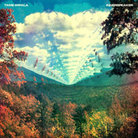
SOUNDTRACK: TAME IMPALA-“Lucidity” (2010).

I heard this song on the NPR’s 5 Artists You Should Have Known in 2010.  The album, Innerspace, is only available in Australia (imported on Amazon for big bucks) but I guess that’s why people download music.

This song is really cool. It feels very My Bloody Valentine to me.  However, inevitable comparisons to The Beatles abound, but that’s mostly in the vocals (which is kind of funny since they are Australian).  But it’s really a very sixties British vocal sound–not unlike early Who).

The big difference comes in the music which is psychedelic and wild in ways that The Beatles never quite managed.  There are great big washes of noise, and the sound quality sounds retro, even though it obviously isn’t.  Comparisons to the great Swedish band Dungen are not misplaced either.

I’ve listened to a few more tracks by them on YouTube, and I think this album could easily be one of the best of 2010 if only more people could hear it!

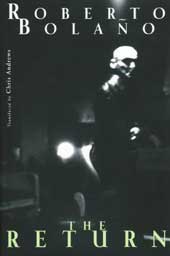
[READ: January 3, 2010] The Return

With the completion of this collection of short stories, I have now caught up with all of the published works of Roberto Bolaño (in English of course).  [The next book, Between Parentheses, a collection of nonfiction, is slated for June].

So The Return contains the 13 short stories that were not published in Last Evenings on Earth.  That collection inexplicably took shorts stories from his two Spanish collections Llamadas telefónicas (1997) and Putas asesinas (2001) and combined them into one collection in English.  It wasn’t quite as evident in Last Evenings, but it seems more obvious here that the stories in Putas asesinas are grouped together for a stylistic reason.  So, to have them split up is a bit of a bummer.  And yet, having them all translated is really the important thing.  And, again, Chris Andrews does an amazing job in the translation

This collection of stories was very strong.  I had read a few pieces in Harper’s and the New Yorker, but the majority were new to me.  Bolaño is an excellent short story writer.  Even if his stories don’t go anywhere (like his novels that never quite reach their destination), it’s his writing that is compelling and absorbing.

This collection also had some different subject matter for Bolaño (it wasn’t all poets on searches). (more…)

Read Full Post »

SOUNDTRACK: BROKEN BELLS-Broken Bells (2010).

When I first played this disc I was really disappointed by it.  I’ve grown to expect crazy magic from Danger Mouse, and I assumed that this collaboration with James Mercer of The Shins would be crazy awesome.  But it seemed very mellow to me.  Mellow in a way that just kind of sat there.  So I put it aside for a while.

Then I listened to it again a little later and I found that I really liked it this time.  In fact, it rapidly grew into one of my favorite releases of 2010.

The disc is a wonderfully paced mixture of acoustic guitars, interesting keyboard sounds and, often, downright bizarre electronic choices (subtle, yet bizarre).  The weird sounds that open the disc, a kind of backwards keyboard, are disorienting but also very catchy.  And the song itself is instantly familiar.  It’s followed by “Vaporize” a simple acoustic number that bursts out with some great organ and (very) distorted drums.  It also features a fascinating horn solo!

“Your Head is on Fire” settles things down a bit with a mellow track which, after some cool introduction, sounds like a  pretty typical sounding Shins track (ie, very nice indeed–and more on this in a moment).

“The Ghost Inside” feels like a ubiquitous single.  I’m not sure if it is or if it’s just so catchy (with dancey bits and hand claps and a great falsetto) that it should be everywhere.  “Sailing to Nowhere” reminds me, I think, of Air.  And the great weird drums/cymbals that punctuate each verse are weird and cool.

One of the best songs is “Mongrel Heart” it opens with a western-inspired sound, but quickly shifts to a quiet verse.  The bridge picks up the electronics to add a sinister air (and all of this is accompanied by nice backing vocals, too).  But it’s the mid section of the song that’s really a surprise: it suddenly breaks into a Western movie soundtrack (ala Morricone) with a lone trumpet playing a melancholy solo.  And this surprise is, paradoxically, somewhat typical of the disc: lots of songs have quirky surprises in them, which is pretty cool.

Having said all this, there are a few tracks where it feels like the two aren’t so much collaborating as just playing with each other.  And that may have been my initial disappointment.  I was expecting a great work from a combined powerhouse, and I think what we get is two artists writing great stuff while seemingly respecting each other too much to step on each others toes.

There is another Broken Bells disc in the works.  And I have to assume that they’ll feel more comfortable with each other and simply knock our socks off next time.  But in the meantime we have this really wonderful disc to enjoy.

[READ: October 21, 2010] The Broom of the System

It dawned on me sometime last summer that I had never read DFW’s first novel.  I bought it not long after reading Infinite Jest and then for some reason, never read it.  And by around this time I had a not very convincing reason for not reading it.  DFW seemed to dismiss his “earlier work” as not very good.  I now assume that he’s referring to his pre-Broom writings, but I was a little nervous that maybe this book was just not very good.

Well I need not have worried.

It’s hard not to talk about this book in the context of his other books, but I’m going to try.  Broom is set in the (then) future of 1990.  But the past of the book is not the same past that we inhabited.  While the world that we know is not radically different, there is one huge difference in the United States: the Great Ohio Desert.  The scene in which the desert comes about (in 1972) is one of the many outstanding set pieces of the book, so I’ll refrain from revealing the details of it.  Suffice it to say that the desert is important for many reasons in the book, and its origin is fascinating and rather funny. (more…)

Read Full Post »

[LISTENED TO: October 20, 2010] Dubliners Part II

This collection covers the last five stories from the book.  They are all longer stories, especially the fantastic novella “The Dead,” which runs well over an hour.  The titles included in Part II are:

A Painful Case
Ivy Day in the Committee Room
A Mother
Grace
The Dead

These last five stories look at (continuing the theme from my previous post) middle age and later life.  The protagonists are all older, and as with the first part, they all must deal with harsh realities and even death.

“A Painful Case” is the first story in the book where the title doesn’t directly apply to the protagonist (even  though, of course, it does).  Mr Duffy is a solitary man.  He goes out from time to time but is not really social.  At a concert he meets Mrs Sinico and they form a friendship.  Her husband approves of the friendship because he believes that Mr Duffy is really after their daughter.  The relationship grows stronger and stronger and Mrs Sinico feels closer to him than she does to her husband.  Then, Mrs Sinico make a gesture indicating she’d like a more intimate relationship.  Mr Duffy is immediately turned off by this and vows to himself to see her no more.  This leads to a quote that I assume is not original to Joyce, and yet it is still common today: “Love between man and man is impossible because there must not be sexual intercourse and friendship between man and woman is impossible because there must be sexual intercourse.”  The strange thing about this story is that it then jumps ahead four years.  We learn that Mrs Sinico took the dissolution of their friendship very hard indeed.  And naturally, Mr Duffy is made to rethink his life choices.  It’s yet another story of despair. (more…)

Read Full Post »

SOUNDTRACK: PETER, BJORN & JOHN-Living Thing (2009).

After the raging (relative) success of Writer’s Block, with their crazily catchy whistling song, “Young Folks”, PB&J could have gone in any direction.

And I was quite surprised when the opening song of this follow up (actually, there’s an instrumental disc in between) opened with single note and drum sounds and virtually a capella vocals.  But unlike a typical a capella song, the thudding notes were kind of dissonant and unpleasant.  And there wasn’t much more to the song than that.

Even the second song starts out starkly.  A single piano note plays a simple riff.  The verse kicks in with some simple electronic drums (and again minimal accompaniment).  And this sparseness is the main musical theme on the disc.

And I have to say it took almost a half a dozen listen before I really enjoyed what they were doing.  They are eschewing the pop structure that won them popularity and they’re shifting their melodies to the vocal lines rather than the instruments (I guess).  It’s a risky proposition, but it pays off.

Take “Nothing to Worry About.”   It opens with what sounds like a distorted children’s choir singing the chorus at full volume.  But then it settles down into, again, a simple drum and vocals song with just a hint of instrumentation.  (Did they get all their music out on the instrumental?  I don’t know I’ve not heard it).  Even the title track is sparse guitar noises and clicked drums.  But, man, is it catchy (it reminds me in a weird way of Paul Simon).

And then, continuing my contention that the best and catchiest songs always have curses in them, “Lay It Down” with the chorus, “Hey, shut the fuck up boy, you’re starting to piss me off” will stick in your head for days.

The end of the disc (the last three songs) are considerably mellower.  They’re less catchy, but they use the starkness very well.

Initially I really didn’t like this album.  It had none of the immediacy of the previous disc.  But I found myself really enjoying it.  I wouldn’t want all of their albums to sound like this, but it was an enjoyable twist on a good formula.

[READ: October 7, 2010] Garden State

I mentioned the other day that I just found out about this book when looking up information about Rick Moody.  I was so excited to read a book set in Haledon (two towns from where I grew up) that I checked it out and begin it immediately (it’s only 200 pages, so that helped too).  But I have to say I was really disappointed with the book (even if it did win the Editor’s Book Award).

My first gripe is about the supposed setting in New Jersey.  I have no problem with fictionalizing an area.  Writers do it all the time.  But Moody fictionalizes the area in two ways to suit his thesis, and as a lover of New Jersey and a former resident of the region, I found the lack of reality to be very upsetting.

The first minor, and I have to say really weird thing is that despite the real towns included (Haledon, Paterson, Paramus) he makes up towns nearby–Fleece, Tyre– and he makes up a river–The Dern River.  He also plays around with the names of the highways that run through the state, constantly referring to the non-existent Garden State Thruway.  Now, again, there’s no problem with making things up, but nobody in the story ever goes to Fleece or Tyre, the Dern River doesn’t come into play aside from being a river that people refer to (it’s not a renamed Passaic river, because that’s included in the story, too).  So, why make up random town names?  Why say that you drive from Haledon to the edge of Paterson near Boonton, when that is not geographically correct (or relevant to the story)?  It just seems like he didn’t have access to a map. (more…)

Read Full Post »

[LISTENED TO: October 5, 2010] Dubliners Part I

I found listening to Ulysses to be rather satisfying.  And, since I have recently commenced an indoor exercise regime, I thought it would be “fun” to listen to some audio books during the workout.  I started with Dubliners because and because Jim Norton is the reader (and I enjoyed his style on the abridged Ulysses) and because I own it.

It’s disconcerting to read/listen to Dubliners after Ulysses because Dubliners is such a conventional collection of stories.  There’s nothing untoward about them, there’s nothing scandalous (except for drinking and mistreating wives), and there’s nothing to be confused about (except maybe early 20th century Irish political references).  But one thing that  is abundantly clear is that Joyce was a great writer, right from the get go.

This disc’s stories are mostly between 10 and 21 minutes long, although “A Little Cloud” runs to half an hour.  The titles included in Part I are:

The Sisters
An Encounter
Araby
Eveline
After the Race
Two Gallants
The Boarding House
A Little Cloud
Counterparts
Clay

I’m not really going to review the quality of the audio.  It is uniformly very good, with Norton conveying accents wonderfully.  And those accents really bring the stories to life.  There is music in between each story, and the songs are all relevant to the time, if not the individual story. As with most of these audio books, it could be mixed louder, but that’s a minor quibble. (more…)

Read Full Post »

SOUNDTRACK: THE DUCKWORTH-LEWIS METHOD-The Duckworth Lewis Method (2009).

This is a CD released by the combined forces of Neil Hannon of The Divine Comedy and Thomas Walsh of Pugwash.  And if that weren’t enough of a sales pitch, the title of the band is a method of calculating cricket scores!  And even more…in concordance with that, this CD is largely about cricket.  Huzzah!  Buncha sellouts.

I don’t know a thing about cricket, but I know about great orchestral pop, and this disc has it in spades.  Some of the more obvious cricket songs are even understandable to non cricketers (the themes of “Jiggery Pokery” are familiar to anyone who has failed in a sport–and musically it sounds like a silent film soundtrack).

“The Age of Revolution” begins with an olde-fashioned soundtrack as well (jazz swing, including tap dancing) but quickly jumps into a dancey discoey verse (the two soundtracks blend surprisingly well in the chorus).  And the revolution?  Well, it has something to do with cricket.  Next, “Gentlemen and Players” is a wonderfully Divine Comedy-esque track complete with harpsichords.

“The Sweet Spot” is another discoey dancey track with some funky bass work (and innuendo whispered vocals).  And “Rain Stops Play” is a fun musical interlude.

“Mason on the Boundary” is the first track that seems distinctly Pugwash-y.  Hannon and Walsh have similar singing styles, and I find it hard to know who is who sometimes.  But this track is clearly Walsh’s and it’s very nice indeed.  Similarly, “Flatten the Hay” has that distinct Pugwash XTC/Beach Boys vibe and it’s quite good.

“The Nighwatchman” is also a very DC type song (it even sounds a bit like “The Frog Princess” but pulls away before being a repeat of that great single by introducing some very 70s sounding strings).  The rest of the disc follows in this same wonderfully orchestrated pop feel.  This a great record that, as far as obscure bands that get no statewide attention go, is top notch.

Oh, an it’s even more fun with headphones!

[READ: October 9, 2010] Skippy Dies

Wow, there’s a lot going on in this book.  It’s exhausting just trying to think of all the topics covered: boarding school life, failed romance (two big ones), life as a teacher, the appeal of pop singer Bethani, the Catholic priest sex scandal, drugs of all kinds, sneaking into a girls’ school, World War I, institutional cover ups, M-theory–which is pretty much the entire universe, and donuts.

But let’s start at the beginning.  Yes.  Skippy dies.  In the first couple of pages.  And what’s fascinating about this is that we don’t care.  I mean, in the scene where he dies, he’s not even the major character.  But then Skippy turns out to be more or less the glue of the book once the story proper begins.

Skippy resides at Seabrook school in Dublin (the best, most prestigious Christian academy in the country–sorry Gonzaga).   His roommate is Ruprecht (perhaps the strangest major character name I’ve read in a long time).  Ruprecht is a large boy who is incredibly smart (he will single-handedly raise the school’s average on the year’s final exams).  He is a computer geek who is obsessed with aliens and SETI.  And he hopes to be able to communicate with the other world by using techniques suggested in M-Theory.  The book does an admirable job explaining M-theory and string theory.  I’m not going to take up space here, but there’s a fine description at Wikipedia (or, if you don’t like Wikipedia, here’s an academic explanation that is written for the lay person).

Anyhow, Skippy and Ruprecht are two of a few dozen boys who reside full time at the school.  (Most of the other kids are day students).  And they have a cadre of half a dozen friends that they hang out with who make jokes at each other’s expense.  It’s a very realistically written entourage.  Mario is Italian and claims to have had sex with many many women (thanks to his lucky condom which he has had for three years).  Dennis is the ballbreaker.  He’s the abusive one (but by most standards, he’s not a bad guy).  And a few other hangers on.

This story of dorm life is a good one.  The boys are funny, their stories believable, even if they are all eccentric in their own way.  And then, one day, Skippy sees a girl playing frisbee at the girls’ school across the way (Ruprecht has a telescope which he uses for the stars, while eveyrone else uses it for the girls’ school).  And Skippy winds up becoming rather obsessed with the unknown “frisbee girl.”

This girls’ school plays a part in the story in another way too.  Carl and Barry are the Seabrook’s thugs.  When Barry hits upon the idea of selling ADD meds to the locals (as diet pills), it’s the girls’ school that he mostly preys on.  For yes, this story is also about drugs. (more…)

Read Full Post »
SOUNDTRACK: PAVEMENT-Crooked Rain, Crooked Rain (1993).

Now this album, Pavement’s second (after the Watery, Domestic EP, which I’ve never heard) is my idea of perfect Pavement.  Some might complain that this album is too commercial (although it hardly is) but to me is shows a consolidation of the talents into actual songs.

It opens with “Silence Kit” which sounds like a twisted take on a Buddy Holly song–disconcerting and familiar at the same time.  The second track “Elevate Me Later” ups the ante a bit with a noisy raucous chorus.

“Stop Breathin'” is a dark song, a sort of minor ballad that sounds even more disconsolate with the slightly out of tune guitar work.   But the lengthy instrumental at the end is (although simple) quite pretty.

And then there is the sublime nonsense of “Cut Your Hair.”  This was the first Pavement song I’d ever heard all those years ago.  And from the silly “oo oos” at the beginning to the crazy screaming guitar solo and crunchy “NO BIG HAIR” line I fell in love immediately. It was a wonderful left field hit (not unlike “She Don’t Use Jelly”) that brought a great band some attention.

It’s followed by “Newark Wilder,” a slow track that fits wonderfully after “Hair.”  One might even call it a ballad.  But it is definitely not standard fare, when the bass (or baritone guitar) plays a riff instead of a bridge.

The album picks up the rocking vibe again with, “Unfair” which I noticed is like a rough precursor to Weezer’s “Beverly Hills.”  It’s a fairly conventional song but it’s made unconventional by Malkmus’ delivery and guitar style (and would probably be a hit if it was released today).

I recently mentioned “Gold Soundz”.  (And it’s amazing how much the live version sounds just like the studio–as if everything was intentional).  It’s followed by the goofy Dave Brubeck parody/tribute “5-4=Unity.”  And of course, “Range Life” is just an awesome slacker anthem.  It’s got everything.

The last three songs offer a lot of diversity.  “Heaven is a Truck” is a piano based, drunken-sounding ballad.  “Hit the Plane Down” is a rambling wonderful shambles that devolves into a complete chaos, and “Fillmore Jive” is a 6 minute “epic.”  It opens slowly, and then builds into a fairly conventional sounding (drunken, sloppy, end of the concert) rock song.

I feel that Pavement peaked with this disc.  It’s really fantastic.

[READ: September 23, 2010] “Lost in the Mail”

As I am wont to do, I have gotten a little obsessed with an author. Recently it was Wells Tower (there’s still a few Harper’s pieces by him I haven’t read yet). And right now its Jonathan Franzen (even though I haven’t read any of his novels yet).  After reading the previous New Yorker piece, I wanted to see what else he had written for them.  Seeing his entire list at the New Yorker site is daunting and it makes it seem like he was constantly writing quite long pieces for them.  And yet, parsing it out, it comes out to about one article a year.  And yet some of these article, whoo boy, are 12 or 13 pages…quite lengthy for the New Yorker.

And so, I’m going to read these pieces over the next few weeks–I thought about reading each year’s piece during a different week, but that seems too regimented.  And since the majority of these pieces are non fiction (there are about 5 short stories in the mix) I’m going to be reading them with an eye towards these questions: Can a good writer make a story that I don’t care interesting?  Would I enjoy this same piece if it were written by someone else?  As a reporter (at large) does Franzen bring some kind of personality to the way the piece is constructed that someone else may not have?

This questions are unanswerable of course, because no one else wrote the piece in a different way.  But, when scanning the titles, some of the subjects interest me but others do not.  And those will be the real test.

This piece, about the Chicago Post Office is something that I didn’t care about specifically.  However, I have a certain love of the Postal System, and so I found this story heartbreaking and something of an illusion-shatterer. (more…)

Read Full Post »

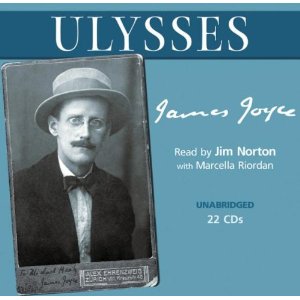
[LISTENED TO: September 27, 2010] Ulysses [abridged]

Because I am a glutton for punishment, I decided to listen to the abridged version of Ulysses as well (what’s 4 more hours of my life?).  (This edition is by Naxos, which Amazon is selling as a download).  I decided that the main reason was that since I have the text so fresh in my mind, it would be interesting to see what they abridged.  I mentioned in a recent post that the abridged version is 4 discs (just under 5 hours).  That is a serious abridgment, from 40 to 5 hours (actually the Naxos unabridged version is only 22 discs…how come theirs is so much shorter?  It seems that Jim Norton reads much faster).  And I am curious to see what they consider the “essential” text of the book.  Plus, realistically, I would never really want to do it at a later date.

So this version is read by two different people: Jim Norton (who read Dubliners, Portrait, and an abridged Finnegans Wake too) and Marcella Riordan.  There are a number of places where the two interact (she is Molly in the early scene in bed and she is some of the whores in the nightwon scene…it adds some real dramatic resonance to the story). (more…)

Read Full Post »

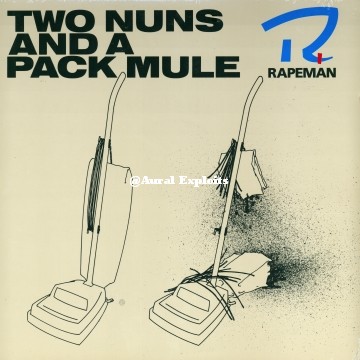
SOUNDTRACK: RAPEMAN-Two Nuns an a Pack Mule (1989).

One of Steve Albini’s many groups, Rapeman made one album and an EP (both are included on the CD).  Probably the most striking thing about this CD is Albini’s guitar which is so sharp it practically hurts (and when your guitar is more notable than the lyrics from a band named Rapeman, you know that sound is pretty striking).  [You can hear hints of this sound on Nirvana’s In Utero (which Albini produced), particularly the screamy parts of “Scentless Apprentice”.  The template is the same, although Nirvana’s drums are much much bigger. And, of course, Albini leaves the sonic edge really sharp for himself].

Although the guitar is what really stands out on this disc, the album would be far less interesting if the rhythm section wasn’t so strong.  The bass is mixed really well, running lines that are never in concert with the guitar lines but which blend nicely and provide some needed low end.  And the drums are sharp and punctuate the noise perfectly.

The opening of “Monobrow” is squeaks and feedback (I wonder if you could even write the music for it).  When the rhythm kick in, it gives a herky jerky momentum.  There’s an interesting twist on a song like “Trouser Minnow” which is written from a woman’s perspective (and yet she’s not an exemplary woman either) so you can read it a couple of ways.  Of course, the opener, “Steak and Black Onions” is unequivocal: “Why don’t you snuff it man, you plant-eating pussy.”

But there’s definitely a sense of humor to all of this.  In “Up beat” Albini gets angry and suggests that he’d beat a guy up.  It ends, “I suppose I’m not too threatening presently.  But wait till I start Nautilus.”  There’s also something funny (I think) about them covering ZZ Top’s “Just Got Paid.”  Funny or not, this version rocks like no one’s business, and it shows that Albini can actually play the guitar, not just make noise.

The Budd EP was recorded live.  I love the description of the review here.  It sounds less screechy (and more bass heavy), but no less menacing.

[READ: September, 16, 2010] The Wasp Factory

I bought this book many many years ago (I found a card in the pages from when I used to live in Brighton, MA (circa 1992) as a “bookmark.”  But I think that the bookmark must have been not a real placeholder as nothing in the book was familiar, I just knew that it was supposed to be a dark, disturbing book.

And so it is.

The story concerns Frank, a 16-year-old who lives on an island outside of Scotland (my knowledge of Scottish geography is awful, so I don’t know exactly what he meant by an island, but suffice it to say that Frank’s family is isolated where they live).  Frank is a disturbed individual.  As the story opens, we learn that death and carnage follow Frank everywhere.  In fact, Frank admits responsibility for three of these deaths. (more…)

Read Full Post »

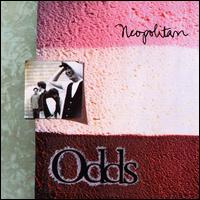
SOUNDTRACK: ODDS-Neopolitan (1991).

This was the first Odds album.  For such a quirky name, Odds played some pretty standard music. I’m not even sure if the first song qualifies as “alternative” as it sounds not unlike an early Phish song, only less quirky (and much shorter).

The disc offers a pretty nice range of poppy tracks, from acoustic based songs like “Are You Listening?” to louder guitar rockers liked “Evolution Time” (probably the most interesting track here).

Another notable song is “Wendy Under the Stars” a surprisingly explicit song about the day Elvis died.  The other track that stands out is “Love is the Subject” which has a harder more abrupt sound that is actually a bit premature for that style and sounds quite funky for this album.

Lyrically, the cleverest song (and one that seems to foreshadow their future songs is “Domesticated Blind” “Making babies, buying houses.  A French guy’s name is on our trousers.  We used to be such rabble rousers.  Before the world revolved around us; I’ve been domesticated blind”

I like this album, but I admit that it’s not the kind of disc that makes people go, “Ooh, who is this?  I want to get it!”

[READ: September 12, 2010] “Vogalooooonga”

This is the last of the Outside pieces that Tower wrote (not chronologically, just for my reading schedule).  And I’m really pleased that I saved it for last.

It does what Tower does best: tell a story while relating an event.  In fact, if he just changed a few details, this would make a great short story.

Wells and his brother have apparently been on many “assignments” together, and it transpires that when they travel together they often end up at each others throats.  So the piece opens with them agreeing to never do another story together again.  Then they get a call to go to Venice together to ride in the Vogalonga, “a 19-mile noncompetitive rowing regatta, held in late May, that promises a breathtaking tour of the old republic’s lagoon and outer islands” and that is traversed only in vehicles that can be paddled.  Wells’ brother says that they can’t pass up a trip to Venice, so he agrees to go along.

Based on the other stories that Wells has written, he is an athletic guy (and his brother is evidently bigger and stronger than he is).  Nevertheless, a 19 mile canoe trip in the canals of Venice can only lead to trouble.

And so this piece reads a bit like a David Sedaris story of familial in-fighting (although it’s a lot more manly than any of Sedaris’ pieces).  They fight from the get go (including his brother’s suggestion that they assemble their 17-foot canoe in their 10-foot hotel room.  And aggressive hilarity ensues. (more…)

Read Full Post »

« Newer Posts - Older Posts »