Feeds:
Posts
Comments

Archive for the ‘Death’ Category

SOUNDTRACK: COLIN STETSON-Live at SXSW (2011).

NPR has made available three songs from Stetson’s SXSW performance.  I’m not sure why there’s only three songs as surely his set was longer than 15 minutes.

He opens with the first two songs of New History Warfare Vol. 2: Judges, “Awake on Foreign Shores” which segues into the masterful, noisy “Judges.”  It’s a wonderful 7-minutes of music. True, it is not as dynamic as the album (how could it be?), but hearing him play this stuff live, unaccompanied, is amazing.

The final track, “The Righteous Wrath of an Honorable Man” is a beautiful short piece that really shows off his ability to keep these riffs going more or less continuously.  Unlike the other songs, this one is more tenor than bass-sounding (although I believe it is all the same instrument) and it sounds equally impressive.

This is just a taste of what Colin can do, and I do wish there was more from this show available online (the sound is pristine, and you can actually hear him talking, which you can’t do at the All Tomorrow’s Parties show).  The NPR page says that there were four songs.  I’m not sure why the fourth isn’t here, but I’m happy to get at least these three.

[READ: October 10, 2011] “Oubliette”

This was a strange story for me because, really, nothing happened.  Well, that’s not true.  Something happened, but it was told in such a straightforward manner, in such a non-inflected way, that it seemed more like a news account than a story.

It is the brief account of a girl whose mother began treating her worse and worse as she got older.  It seems like a fairly natural deterioration of the relationship between mother and daughter, but then her mother’s behavior becomes more erratic and more violent.  Then one incident causes everything to change.  Her mother is diagnosed with Huntington’s. 

Both the girl and her father visit their mother, knowing that there’s very little they can do for her except to try to keep her calm.  So they hold their tongue and try to be nice.  (more…)

Read Full Post »

SOUNDTRACK: COLIN STETSON-New History Warfare, Vol. 2: Judges [CST075] (2011).

When you learn that Stetson played saxophone for Tom Waits, it makes perfect sense.  The middle of the second song, “Judges” sounds like the instrumental break for any of Waits’ newer songs.  Of course, once Stetson starts really wailing you realize that Stetson doesn’t need Waits’ lyrics to tell a story. With just one big-assed bass saxophone, Steston can say quite a lot.  He plays with circular breathing, meaning that he doesn’t have to stop to take a breath, he breathes in through his nose and out through his mouth at the same time (this is of course impossible).  The bass saxophone weighs some 20 pounds and is massive and Stetson makes it sound like everything from an oil tanker to a field of runaway horses.  Oh, and he also has pretty melodies and songs that sound longing.

This disc is part two of a trilogy, but this is the first of his records that I bought (thanks to a release via the folks at Constellation–I wonder if they will redistribute Pt 1).  There is a story that runs through these discs, although honestly, I’m not entirely sure what it is.  But that doesn’t matter to me, what matters is Steston’s amazing skills.

There are evidently a couple of overdubs on this disc, but for the most part it is just him and his saxophone (and 24 microphones).  The microphones were placed all over the room, on the instrument itself (to pick up the clacking of the keys) and even on his throat (when he makes those “voices muffled by a pillow” sound, that’s the throat mike picking up voice–singing while he is playing (which is impossible)).

The album features a couple of spoken word sections by Laurie Anderson, whose clipped, non-inflected voice gives this otherworldy music an even more otherworldy feel.  And there’s two songs sung by Shara Worden.  Other than that, it’s just the man himself.

Prepare to be amazed by this man’s talent.  But also prepare to be a little frightened by what you hear.  This is not timid music by any stretch.  There’s some scary stuff on this record, especially if you listen in the dark.  More especially if you listen loud (which you absolutely must do to hear all the nuances).  On first listen, this may sound like a noisy jazz record, but the more you get into it, the more amazing it becomes.

[READ: October 11, 2011] Moby Dick-in Pictures

Matt Kish has accomplished an amazing thing.  He has drawn a picture a day (more or less) to accompany every page of the 552 page paperback version of Moby-Dick.  He takes a small passage from each page and renders an image for it.  One thing this book is not is an illustrated version of Moby-Dick.  It doesn’t purport to be.  You won’t get the whole story from this book.  It’s not a cheat sheet for high school students.  If you haven’t readMoby-Dick, this will give you a taste for the story–almost like a preview for a movie.  And hopefully it will compel people to read the original.  If you have read Moby-Dick, this is a wonderful companion.  Not only will the pictures give you fascinating insights into the story (and into Kish, of course), but seeing sentences excised from the book to stand alone makes you aware of the book in ways you just aren’t when you’re reading it as a novel.

Kish admits he is not an artist, which while not false modesty, is certainly selling himself short.  He has an awesome style of illustration.  I am especially excited by his vast pictures with small details (lots of pages where there are small circles with lines in them or, for instance, the details on Queequeg’s face) and when he uses bold lines to create vast, weighty iconic pictures.  Here’s one example of his awesome use of multiple straight lines.  I mean, it’s gorgeous.

But I also love the whole conceit that an artistic shortcoming for him has turned out to be an absolute boon.  Kish says he cannot render the human form and so he made the conscious decision to make the seamen more like avatars than people.  It’s daring and a little odd, but it works wonders.  I admit that I was a little less than excited by the very first page of the book–I was disconcerted by Ishmael and his utter lack of features. (I actually like the way he is rendered later in the book better–call it an artistic growth).  But by the time her gets to Queequeg, or the  gorgeous Tashtego  it’s obvious that his decision was genius.  Just take a look at the marvel that is is Ahab (left).  First off, the colors are amazing.  As are the details of the whale in the corners.  But look at him–he’s a metal machine–shiny and tough–part ship, part whale.  Look at the awesome shading and detailing of the blue “coat” that he’s wearing.  He’s even got the badge of Moby-Dick on his belt!  And then there’s the pegleg–the most beautifully drawn pegleg ever.  It’s really stunning.

Now you’re also noticing that there’s all kinds of diagrams behind Ahab.  Kish used to work at a bookstore and he hated seeing old pages of books thrown away (he has since become a librarian, which makes sense–although as I librarian I learned that librarians are actually quite cavalier about throwing away old books once they are beyond use).  So he brought these pages home.  And, given the density of the layers of meaning in Moby-Dick, he decided to draw his pictures on these old pages.  So on virtually every page you can see something in the background.  Most of the time they are these circuital diagrams, which are wonderful. But there are several drawings where the found pages are pages of text from books.  And I have to say if these were serendipitous findings then he has amazing fortune.  Some of the pages tie in so perfectly it is wonderful.

Like the page that is headed “Cetology” and is from what, a textbook on whales?  Or several other pages that I wish I had taken notes on, because they were really wonderfully chosen.  He even has a drawing on a title page of Moby-Dick. I have to ask, did he really find that or did he buy it for the project? (more…)

Read Full Post »

SOUNDTRACK: KISS-Rock and Roll Over (1976).

After Alive!, Kiss released what I think of as the cartoon albums.  These next three discs all had cartoon covers, which also coincides with their huge ascent into fame.  I tend to think of Destroyer and Love Gun more than this one (maybe full-bodied pictures are more memorable than just their faces), even though this one has a huge share of important Kiss songs like “I Want You” (which has an amazingly long version on Alive II). 

I never really liked “Take Me,” there’s something about the chanting backing vocals that irks me (although “Put your hand in my pocket, grab onto my rocket” is one of my favorite Kiss couplets).  But “Calling Dr. Love” is a wonderful twisted song (the falsetto backing vocals are so doo wop, it’s funny to contemplate the band’s musical direction at this point).  I loved this song so much it even features in one of my first short stories

As an eight year old, I could never figure out what Gene would be doing in the “Ladies Room”–since he was a boy and all.  Naiveté is a wonderful thing to have as a young person listening to Kiss–I had no idea what was going on in most of the songs–I wonder if my parents bothered to listen to the lyrics at all.

I also never really liked “Baby Driver” all that much–I don’t know if it’s Peter’s voice, or that I can’t figure out what the hell this song is about but it’s still just okay to me–although I like the guitars at the end.   I love the solo in “Love ‘Em Leave ‘Em”–although the sentiment is not the best.  Of course, the sentiment in “Mr. Speed” cracks me up: “I’m so fast, that’s why the ladies call me Mr. Speed.”  Did that mean something different in 1976?

“See You in Your Dreams” was covered by Gene on his solo album, and I think I like that version better (it’s more theatrical).  Although this one has very interesting use of Beatlesesque harmonies.  “Hard Luck Woman” is wonderful song, and I do like Peter’s voice here, yes.  But who the hell is Rhett?  “Making Love” ends the disc.  I like the break in the middle and the awesome guitar solo.  Also, Paul’s vocals have some cool effects on them. 

This is a fun album.  Even the songs I don’t love are still songs that I like quite a bit.  It’s a nice contrast from the bombast of Destroyer.  The amazing thing is that both this album and Destroyer are barely over 30 minutes long.  Were they making albums so frequently that they didn’t have any more songs, or were they just following the Beatles model: make an album every 7 months to stay in the public’s eye?

[READ: October 2, 2011] Dogwalker

I can’t believe how quickly I read this book.  I wasn’t even planning on reading the whole thing just yet, but I started the first story and it was so quick to read and so enjoyable that I couldn’t stop.  I finished the whole book in a couple of hours (it helps that a number of stories are barely 4 pages and that it’s barely 150 pages).  The title of the book is something of a mystery as there are a lot of dogs in the stories, but walking is about the furthest thing from what happens to them.  I was also somewhat surprised to see how many of these pieces I had already read (Bradford was in five of the first six McSweeney’s issues). 

This collection is certainly not for everyone.  In fact when I recounted the story “Dogs,” Sarah was disgusted and said she would never read the story.  Bradford definitely pushes some boundaries, but they’re mostly in an attempt to find humor, so I think that’s cool. Sarah even admitted that the end of “Dogs” sounded funny (although she was still disgusted).  The two things I found odd about the stories were that two of them featured a three-legged dog, which seems a little lazy to me–although I don’t know what the dog might signify.  And two of them featured someone or something singing unexpectedly and the narrator getting a tape recorder to surreptitiously save this special recording.  Again, it’s a really unusual thing to happen at all, but to have that happen in two stories?

Aside from those little complaints, the stories were fun, funny and certainly weird. (more…)

Read Full Post »

SOUNDTRACK: HELLBENDER-Hellbender (1993).

Hellbender is a band that Wells Tower was in before he became a professional writer.  He played guitar and sang backing vocals (and wrote some lyrics, but not on this album).  The drummer, Harrison Hayes is now the drummer for Les Savy Fav and the bassist and singer Al Burian is most notable for his zine Burn Collector (for a time he was the most famous former Hellbender, although I’d never heard of him).  They were always pretty small time, although their third album did receive some attention.

This first album is pretty rough–quickly made and cheaply mastered and yet there are good dynamics, cool breaks and a whole lot of punk.  Al Burian’s voice is in shouty punk mode (lyrics are not all decipherable) and although his voice works it’s a bit samey throughout the disc.  The drums don’t always sound great, but there are often cool drum breaks.  And the guitars are quite assured.  Despite the punk attitude, it’s not all flat out speed.

There are some dynamic breaks, like in the second track “Housebroken,” which has some cool moments when the drums highlight an unexpected tempo changed.  “Clocked Out” was the single they released prior to the CD and it has some real production values (and a very funny intro from a local DJ).  The guitar highlights the trebly end in a kind of ska riff which is quite different from the rest; there’s also some discernable bass lines and a cool bass/guitar solo (punk, yes, but branching out a bit).  It’s a great track.

“Two Twenty Two” made it onto a couple of local compilations.  It has a slightly less heavy feel, with some interesting guitar lines.  “Aisle Ten” has verses that end with some really heavy (reminding me of Metallica) riffs that really punctuate the vocals.  “Peeling” has some cool backing vocal chanting (as well as what sounds like an answering machine message) that sets it apart from the other songs.  “Clarence” has a really long instrumental opening (1 minute out of a 2 and a half-minute song) that shows of more of Burian’s bass lines.

“Couch” was the B-side to “Two Twenty Two” and it has better production values as well–and lots more dynamic parts.  The final song, Retread” is a sorta political song, “Do you remember when we were young–revolution seemed like fun.  I thought I could get things done by yelling at the top of my lungs.”  Not mind-blowing lyrically but a good sentiment nonetheless.

The band is very tight–their breaks and starts and stops are right on–many of their songs end suddenly and the band pulls it off very well.  When I first listened to the album, I thought it was kind of pedestrian, but after really listening, I realized this is a very well-formed debut. It’s an interesting addition to any punk fan’s collection and an interesting footnote for any fan of Wells Tower.  You can find a copy of the disc at Metro/Sea.

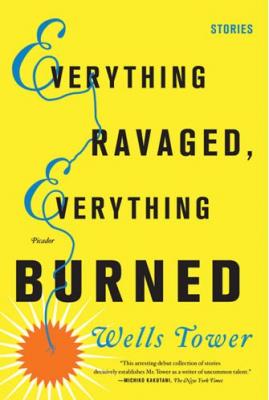
[READ: September 30, 2011] Everything Ravaged, Everything Burned

After talking about Wells Tower for a while and reading all of his uncollected stories and nonfiction, I finally got around to reading his short story collection.  And I think I have an interesting perspective on the book because at least two of the stories were totally reworked from their original release.  Not simply updating a thing or two, but totally revamped.  In my experience, aside from the David Foster Wallace essays that were truncated in their original form, this is the only book I know where the stories inside were totally rewritten for the compilation.

There are nine stories in the collection.  And I have to say as an overview to this book, I can’t get over how much I enjoyed them.  I mean, I knew I liked Tower from what I had read before, but I didn’t expect to enjoy this book quite so much because Tower writes a very manly kind of story.  He usually writes about tough guys and men who have a hard time interacting with their fathers and other situations that are out of my ken.  But Tower upends many conventions in his stories and his prose is tight and succinct and his stories are very quick to read and really enjoyable. (more…)

Read Full Post »

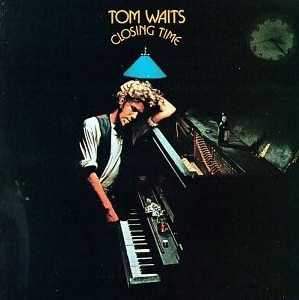
SOUNDTRACK: TOM WAITS-Closing Time (1973). 

This is the first official Tom Waits release.  There’s a couple “Early Years” collections which are really fascinating for how much he doesn’t sound like the 21st century Tom Waits, but these at least show glimpses of the man to come.  There are some songs on here that I knew of from different artists, and had no idea TW had written them  (Tim Buckley covered “Martha” the same year this came out (that’s pretty amazing), The Eagles covered “Ol’ 55” on their album the following year.  However, Van Halen’s “Ice Cream Man” is not a cover of Tom’s song). The funny thing about the record is how much he sounds like a late 70s lounge singer. How can an album as stripped down as this sound of an era? I don’t know, but it does. It’s also nice to know that his opening song “Ol’ 55” has had such a long life.

My wife does not like Tom Waits, but I think I could sneak this album past her.  You can tell that it’s Tom (before years of abuse to his vocal chords).  His voice is in fine non-gravelly form, just a little bass heavy.  And he is crooning to us.  He even has one of his sweet songs (“Midnight Lullaby”).  It’s hard (but not impossible) to imagine that this man would have turned into the man from Bone Machine.

As I was saying about the mid 70’s, the style of songs here could easily have been played on the same radio station as Springsteen (this album came out the same year as Greetings from Asbury Park–and Springsteen made famous “Jersey Girl” one of Tom’s early songs).  Indeed, many of these songs were covered by other artists.  The funny thing to me about the album is that although Tom is the pianist, I feel like the album is more focused on the trumpet (that muted trumpet seems to be everywhere (giving the album more of a jazzy feel than a rock feel).  And yet, despite this overall jazziness, “I Hope That I Don’t Fall in Love with You” and “Old Shoes (& Picture Postcards)” is a pretty straight-ahead folk song.  There’s also the beautiful ballad “Martha” played only on piano–such a gorgeous melody.  Perhaps the least exciting song is the instrumental ballad “Closing Time.”  It’s a simple piano melody with more trumpet.  There’s nothing wrong with it, it’s just not that inspirational.

I find that as I get older I like this album more (which is somewhat ironic since he recorded it when he was 24).  It’s tempting to say that the album–with its many styles–is unfocused, but Waits’ albums all seem to follow in this multiple-styles vein.  He’s not afraid to try something new (see his entire output since 1983).  But this one is a surprisingly straightforward album.  I can’t wait to see if Sarah likes it.

[READ: September 21, 2011] “Town of Cats”

Murakami is (in my limited experience) a master of the surreal. And yet for his more recent short stories, he seems to be switching into more of a story within a story conceit.  And that’s fine too, because the stories and the stories within the stories are clever and creative and still a bit surreal.

This story starts out a little awkwardly: at Koenji Station, Tengo boards a train with absolutely no destination in mind.  He can get off anywhere that he wants, he decides. He imagines going to the beach and enjoying a nice day.  But then he realizes that all along he has ben heading in one specific direction: to visit his father in a nursing home.  This is especially surprising for Tengo as he has not visited his father in over two years (and Tengo is his only relative).

As Tengo thinks back to his childhood, it is full of nothing but anger.  Anger that his father took him on his work (collecting fees for Japanese TV) every Sunday and that Tengo never had any chance for fun.  In fairness to Tengo’s father, Tengo’s mother died when Tengo was just a baby and his father had to take care of him as best as he could.  But there was no love, no warmth, no emotion.  And the more he thought about his father he realizes that that’s what his father was like–no intellectual curiosity of any kind.  Just work work work.

And yet Tengo can’t shake a memory from when he was only a year and a half or so of his mother standing near hs crib with a man who wasn’t his father kissing her naked breasts.  This memory has always been with him and he can’t help but wonder if his father really isn’t his father at all.  (more…)

Read Full Post »

SOUNDTRACK: DINOSAUR JR.-Live at the 9:30 Club, Washington D.C. October 8, 2009 (2009).

This was one of the first shows I downloaded from NPR.  I’ve been a fan of Dinosaur Jr. since my friend Al turned me on to Green Mind back in college.

This is an amazing show created by the original Dino Jr. members.  This tour is in support of their second album since reuniting, Farm. This set-list is an outstanding mix of old songs, new songs, Barlow-sung songs and even some songs from when Barlow and Murph weren’t in the band.  (Green Mind is still my favorite album by them).

When the band reunited there was much joy, and I’ve said in reviews of the newer albums, I’m not entirely sure why.  I mean, Dino Jr has always been about Mascis, and it’s not like Barlow is such an unusual bassist (although Murph’s drumming is always solid).  I’ve nothing against Barlow (I love Sebadoh and Folk Implosion) or Murph, it just seems odd to get excited about having them back in the band aside from nostalgic reasons.

Having said that, the band sounds amazing (and yes, Barlow does get to sing on “Imagination Blind”).  What never really came across to me until hearing all of these great songs live was that Mascis has always been a great pop song writer.  These songs are catchy as hell. But Mascis buries them under loud squalling guitars and a voice that is almost whiny, almost off-key, a total slacker voice.  (But you’ll notice it is never actually off-key.  He must work very hard at that.)

By the nd of the show Mascis chastises the audience for not moving (we obviously can’t see what they’re doing), saying he forgets that people don’t move in Washington, D.C.  But during the encore break, NPR host, Bob Boilen, points out that Mascis himself doesn’t move either–he just stands in front of that wall of Marshall stacks (Boilen wonders how he can hear anything anymore).  And looking at the pictures it’s comical the way he looks, surrounded by amps.  The picture above doesn’t fully do it justice, but check out the extra photos at the NPR page.  And while you’re there, listen to this show. It is amazing.  For a total slacker, Mascis can rock a guitar solo like nobody’s business.

[READ: July 20, 2011] The Best American Non Required Reading

I’d been meaning to read this series for years (yup, Eggers fan), But I have a hard time starting “collections” because I feel like I’d rather be reading a novel.  Nevertheless, I have most of these Nonrequired books, so it seemed like I should dive into one and see what it was like (I don’t think the year really matters all that much–some of the articles are topical but most are not exactly).  Then Sarah said this would be a great book to read on vacation because it’s all short essays, and she was right.  It was perfect for late nights when I wanted something to read but didn’t feel like getting involved in the novel I was reading.

DAVE EGGERS-Introduction
Eggers’ introduction is actually a partial short story about kids who go swimming in pools around town. It reminded me of the opening of Life After God by Douglas Coupland, but of course, lots of kids did that so I’m not saying it was “lifted” from DC.  The story “ends” (it doesn’t really end so much as stop) with an interesting scene between two unlikely kids who get caught.

After this story Eggers includes these three notes about the collection: It’s not scientific, It’s alphabetical, and We had a lot of help with this.  Of the three, it’s the middle one that’s most useful because Eggers says that you shouldn’t necessarily read them in order just because they are printed this way: “In the first half of this collection, you get a good deal of hard journalism, primarily about war and refugees, from Afghanistan to the Sudan, followed immediately by a number of less serious pieces, about malls and Marilyn Manson.  We didn’t group anything by theme , and won’t be offended if you skip around.”  This was good to know (not that we needed the permission of course), but yes, the beginning of the book is pretty heavy. (more…)

Read Full Post »

SOUNDTRACK: JUNE TABOR & OYSTERBAND-“Bonnie Bunch of Roses” (2011).

Two artists that I have heard of for years but who I have never really listened to. This was described in the NPR music review as something The Decemberists might sing.  And indeed, it has a very Decemberists feel to it (which makes sense as this is a traditional song and, evidently, Tabor has been a master of this style for years.  ( I had no idea her voice was so deep–it adds a nice level of malice to this song about Napoleon.

The band is tight as they play this rollicking, dark shanty and Tabor’s voice is haunting (do I detect a similar style to Linda Thompson?) as she sings these lyrics of loss.  The music builds and builds as the song reaches its climax, but what’s neat is that Tabor never really changes her tone.  She is matter of fact, despite how sinister the music becomes.  It’s a very cool song.

I did some research and found out that tabor and the Oysterband got together in 1990 for the album Freedom and Rain, which was a collection of traditional songs as well as covers of Richard Thompson, The Velvet Underground, The Pogues, and Jefferson Airplane (I can’t believe that album is pretty well out of print–it sounds amazing).  This collaboration is more or less a follow-up, with more traditional songs and covers of PJ Harvey, Joy Division and others.

I’m really looking forward to listening to this disc and to what will certainly be the triumphant re-release of their first disc collaboration quite soon.

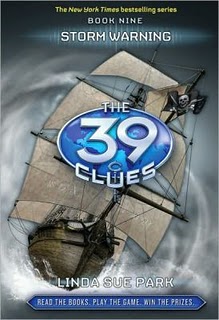
[READ: September 14, 2011] Storm Warning

Book Nine in the 39 Clues series made me feel like a kid again.  I started reading it when I got home from work and I stayed up till way late in the night to finish it.  Unlike when I was a kid, though, I am really suffering for staying up so late last night.

Storm Warning was written by Linda Sue Park, the first woman to write in the series.  And, appropriately, this is a very female-centered book.  We learn a lot about Nellie (finally, her story is explained!), the story focuses somewhat more on Amy than on Dan, there’s more evilness from Isabel Kabra, but most importantly, the clues lead them to two important women in history. 

They head down to the Caribbean–although they are undecided about whether to go to the Bahamas or Jamaica (Dan wants to go to the Bahamas to go to the greatest water park in the world: Oceanus–which is really the Atlantis Water Park) but Amy believes the answer is in Jamaica.  Dan convinces her and they decide to go to the Bahamas and the water park for a few hours of fun.  But the crazy thing is that before they even bought their tickets to the Bahamas, Nellie went into the bathroom and Dan received a message that the Holts were on their way to the Bahamas too.  Could Nellie be ratting them out?

On the flight down, they grill her about what’s going on.  But what happens is that for the first time in the series, we get into Nellie’s head.  Not completely, but we get to hear her thoughts.  So we know that she’s still hiding some truths, but she reveals that she has been working for Mr McIntyre and reporting to him about all of the family’s moves.  She was well paid for her services and she knew that there would be danger, but she had no idea exactly what the kids would be getting up to.  Dan and Amy are stunned.  They are betrayed and furious.  [I have to say I think they totally overreacted–Nellie saved their asses many many times along the way].  They agree to let Nellie come along with them but they’re not going to share any plans with her. (more…)

Read Full Post »

SOUNDTRACK: MEGAFAUN-“Find Your Mark” (2008).

After listening to the new Megafaun track, I checked the NPR archives.  They have this one song from their debut available for a listen as well.

It’s hard to believe that this is the same band.  Or perhaps I should say that a band can change a lot in three years.  This song begins as a three-part near-a capella barbershop/bar trio.  It reminds me in many ways of a Fleet Foxes track, except they seems more rowdy.  The song merges into a delicate guitar picking section with all of the voices “ba ba ba” ing.  Then, that guitar melody expands to an electric guitar and full band sound.

The introduction to the track (from the NPR DJ says that the album may not be everyone’s cup of tea.  But I like this track so much (even though it is so very different from their 2011 release), that I need to listen to more from this band.  Spotify, here I come. [Actually the album has some pretty crazy noises on it!].

[READ: August 20, 2011] “The Losing End”

This is a strange story about a man named Lamb.  The reason it is strange is because the middle of the story–the exciting part, the part I most enjoyed–is not really the point of the story, at least if the ending is to be believed.

As the story opens, Lamb has just been to his father’s wake.  He is feeling adrift so he goes to a parking lot to sit and think.  In addition to his father, Lamb is also thinking about his wife and his girlfriend.  I’m a little unclear exactly what is happening with his wife (Cathy) but he definitely trying to get time away from her to spend it with Linnie. While he is sitting there lost in thought, a young girl in an ill-fitting tube top approaches him. (more…)

Read Full Post »

SOUNDTRACK: EXPLOSIONS IN THE SKY-Take Care, Take Care, Take Care (2011).

I found out about Explosions in the Sky because of the events of 9/11.  Back when everyone was looking for albums to point fingers at in some kind of hysteria (that’s also how I found out about I am the World Trade Center who are not as exciting as Explosions…).

EITS make beautiful epic instrumental music (as well as the soundtrack for Friday Night Lights).  They play music in a similar vein to Mogwai, but they take their epic instrumentals in a different direction.  And this album is perhaps their most commercial to date (as commercial as you can be when you write 10 minute instrumentals).  And while “commercial” is not usually an adjective that I give as praise, for this album it is indeed.

Take Care, Take Care Take Care is a terrific album.  It ‘s not as visceral as past releases; rather, it seems like a more experienced band playing with their sound and tweaking it in subtle ways to make it less obviously dramatic but somehow more powerful.

On “Last Known Surroundings,” there are soaring guitars that give way to simple, pretty guitar riffs.  Martial drums propel the songs forward, even if they lead to unexpected places.  It’s soundtrack music that’s not background music.

Perhaps the biggest difference with this album and previous ones is that this album doesn’t quite live up to the band’s name.  There’s no major explosive crescendos.  There are noisy bits but they’re not climactic per se.   “Human Qualities” slows to a quiet drum beat and while you’d expect to come out of that with a cacophonous explosion, it doesn’t.  The explosion does come later, but only after it has worked up to it again.

“Trembling Hands” features “voices.”  Or maybe just one voice.  It’s on a loop that becomes more of a sound than a voice.  The song is only 3 minutes long, but it’s an intense 3 minutes–more great drum work on this one.

“Be Comfortable, Creature” has a beautiful delicate guitar opening that drifts into a kind of solo.  After 3 minutes it settles into the main riff, a winding guitar line that send you on a journey.  “Postcard from 1952” is a great song. It begins as quiet intertwining guitars and slowly builds and builds into a gorgeous rocking conclusion.  7 minutes of steady growth with a nice epilogue at the end.

The final song, “Let Me Back In” also has kind of spooky voices that appears throughout the song (distorted and repeated).  But you know this song is a winner from the get go (even if the opening chord structure is a bit like Duran Duran’s “Come Undone.”)  It’s a slow builder, a cool, moody ten minute piece.  When you get to the beautiful descending guitar riff that shoots out after about 2 minutes, it’s an ecstatic moment–air guitars are mandatory.

And let’s talk packaging.  The album comes in a gate-fold type of cardboard.  If you open it up all the way it can be folded into a little house (with windows and a door and a chimney).  That’s pretty cool, guys.

If I have one compliant about the album it’s that the quiets are really quiet and he louds are really loud.  That makes this a very difficult album to listen to say, at work, or basically anywhere where other people will be blown away by your speakers.  The middle of “Human Qualities” for instance, is really quiet, you feel like you need to turn it up to hear the drum beat–there’s too much volume fiddling (listening in the car by yourself negates any reason for this complaint, of course).

Keep it up, guys.

More “controversy” from the band

[READ: September 10, 2011] New Yorker essays

Ten years ago, The New Yorker published several short essays by famous and (to me anyway) not so famous writers.  They were all written directly in the aftermath of the attacks and they were moving and powerful.  I was going to wait until today to re-read them and post about them, but for various reasons, I decided to do it on May 12.

Now, ten years later, The New Yorker has published several more essays by famous and (to me anyway) not so famous writers.  I note that none of the authors are the same (that might have been interesting) although Zadie Smith does quote from John Updike’s piece of ten years ago.

The strange thing to me about these pieces is that ten years seems to have hindered the writers’ ability to focus on the incident and to talk about What It Means.  In this collection of essays, we have a few that talk about an individual and how his life has changed since 9/11.  These are pretty powerful, although it’s odd that they would talk about another person and not themselves. We have a couple of essays that talk about the writer him or herself, but these seem kind of unfocused.  And then we have ones that talk about the state oft he world; honestly, what can you say about that.

It’s possible that I’m jaded or in a bad mood and that’s why I didn’t appreciate these essays.  Or perhaps I’m just facing the futility of things.

This is not to say that I think that writing about 9/11 is easy (you’ll notice I’m not doing it).  Indeed, I think talking about it in any kind of meaningful, non-strident, non-cliched way is nigh impossible.

But these writers do give it a try.  And I am grateful for that. (more…)

Read Full Post »

SOUNDTRACK:  MY MORNING JACKET-“Touch Me, I’m Going to Scream (Part 2)” (From the Basement) (2009).

As I mentioned, My Morning Jacket is one of the few bands that has two videos up on the From the Basement site.  So here is Part 2 of the song from yesterday.  While Part 1 is a beautiful, smooth, folkie kind of song, Part 2 delves into a more electronic sound.  It starts with some keyboard noodlings, morphs into a loud rocker and then ends with more keyboards noodlings. 

I enjoyed watching this because Jim James is playing the keyboardy parts on a very small contraption the size of an iPad.  It’s one of those new fangled instruments that make me show my age.  I gather it’s a sampler, but even looking at the buttons I have no idea what he’s doing with it.  About midway through the song, James puts down the keyboard object and pulls on the Flying V guitar for some good loud guitars. 

Again, the harmonies are fantastic and it’s cool to see the whole band sing along.  I also enjoyed watching the other guitarist play the slide on his guitar.  

By the end of the video, it’s amusing to see them all sink lower and lower to the ground as the music fades and regresses into tiny quiet twinklings.  Until, that is, the surprising (and unannounced) addition of the 6 second “Good Intentions.”

Jim James does not wear a cape during this song, by the way.

[READ: September 1, 2011] “Trading Stories”

I have still yet to read much Lahiri, a woman whom I know I should be reading.  And now that I just learned she won a Pulitzer, it seems even more egregious that I haven’t. 

This personal history is about growing up without books.  Her father was a librarian so they borrowed a lot of books; however, but she never really owned any.  [My wife and I are not that kind of librarian–books litter our house]. 

The story reveals Jhumpa as a child writing stories with a friend in school (even during recess).  They were immensely creative and inventive and they loved it.  But she slowly began losing interest in writing.  (more…)

Read Full Post »

« Newer Posts - Older Posts »