Feeds:
Posts
Comments

Archive for the ‘Death’ Category

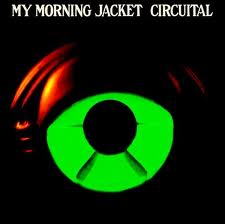
SOUNDTRACK: MY MORNING JACKET-Circuital (2011).

I have really gotten into My Morning Jacket with their last couple of albums.  I know that they are quite different from their earlier releases, so I’m not quite as surprised by the diversity that’s on them.  With each release, they keep exploring new territory, although it’s all held together nicely by Jim James’ (or Yim Yames’) amazing voice.

The first half of the disc is much more wild than the second half, with longer songs, and more unusual textures.  The second half slows things down and feels almost, but not quite, acoustic.

“Victory Dance” is a slinky song and a cool intro to the disc.  It’s quickly followed by “Circuital,” a 7 minute long epic with two distinct parts.  The first is a kind of quiet echoey introduction, but when the guitars roar in at around 2:30, it turns into a big anthemy song…very ctahcy

“The Day is Coming” opens like a 70s AM radio song, with lots of da da das.  It’s a mellow song, the kind of song the MMJ flesh out with wonderful vocals so it never gets dull.

“Wonderful” is a simply beautiful song.  A gentle ballad about feeling wonderful.  I just found out that this song was originally intended for The Muppet Movie.  It would have been perfect.  Of course, the band are on the soundtrack doing a cover, so I guess that’s kinda close.

“Outta My System” is another catchy little number, also reminiscent of 70s AM radio, although it’s all about doing bad things as a youth and getting them out of your system.  Musically it would also work very well for the Muppets, but I suspect lyrically it might be a bit outré for the movie (granted I haven’t actually seen it so I can’t say for sure).

All the recent MMJ albums have one crazy track and on this one it’s “Holdin’ on to Black Metal.”  So the title is pretty unexpected but it’s nowhere near as unexpected as the content of the song.  It is complete with a children’s chorus and what sounds like horns, although I suspect they are keyboards.  It’s full of blasts of sound and woah woah ohs.  It’s crazy.  I love it.  Much like I love the crazy song, “Highly Suspicious”  from the previous album.  And I just found out that this song is more or less a cover (although with different words of “E-Saew Tam Punha Huajai” by Kwan Jai & Kwan Jit Sriprajan from the album Siamese Soul: Thai Spectacular 1960s-80s Volume 2.  More on that tomorrow.

  After that bizarre track, the album really settles down into an easy groove.  “First Light is a pretty traditional, simple song.  It also has lots of horns.  “You Wanna Freak Out” is also unexpected for the title, as it’s a pretty straightforward rocker. “Slow Slow Tune” doesn not belie its title.  It has a kind of 70s Pink Floyd feel and continues the more mellow second half od the disc.  The disc ends with “Movin’ Away” a slow, piano ballad.

  Although the album has a very comfortable, familiar feel, MMJ have little tricks (great soaring guitars and, again, James’ voice) to make it rise above the ordinary.  It’s great disc that warrants multiple listens.

[READ: January 28, 2012] How I Became a Nun

I didn’t love Aira’s Ghosts because it was too ephemeral for me (as befitting a book called Ghosts, right?).  How I Became a Nun is the exact opposite: a terrifically visceral story that is straightforward and easy to follow, except for perhaps two things.

The first thing is something that’s mentioned on the back of the book (so I’m not threatening a spoiler here).  The main character is named César.  Whenever someone talks to him, they address him as César or boy or him.  And yet, the whole book is written from the point of view of young César, and César describes himself as a girl.  In the fourth paragraph, the narrator states, “I was a devoted daughter.”  And yet, shortly thereafter, another character says about the narrator, “Is it my fault if the boy didn’t like it?”

This goes on throughout the story–not a lot–but enough to keep it in your mind.

The second thing is the ending.  Which I don’t want to spoil.

So what is this wonderfully titled story about?  Well, six-year old César begins, “My story, the story of ‘how I became a nun’ began very early in my life.”  The opening chapter tells the story of César’s first experience with ice-cream.

It is a wonderful chapter, with César’s father promising the wondrous delights of ice cream and taking them both out for a cone.  César’s father enjoys his cone very much, but César, although instantly in love with the pink strawberry color is instantly disgusted by the taste. He even retches a little bit. (more…)

Read Full Post »

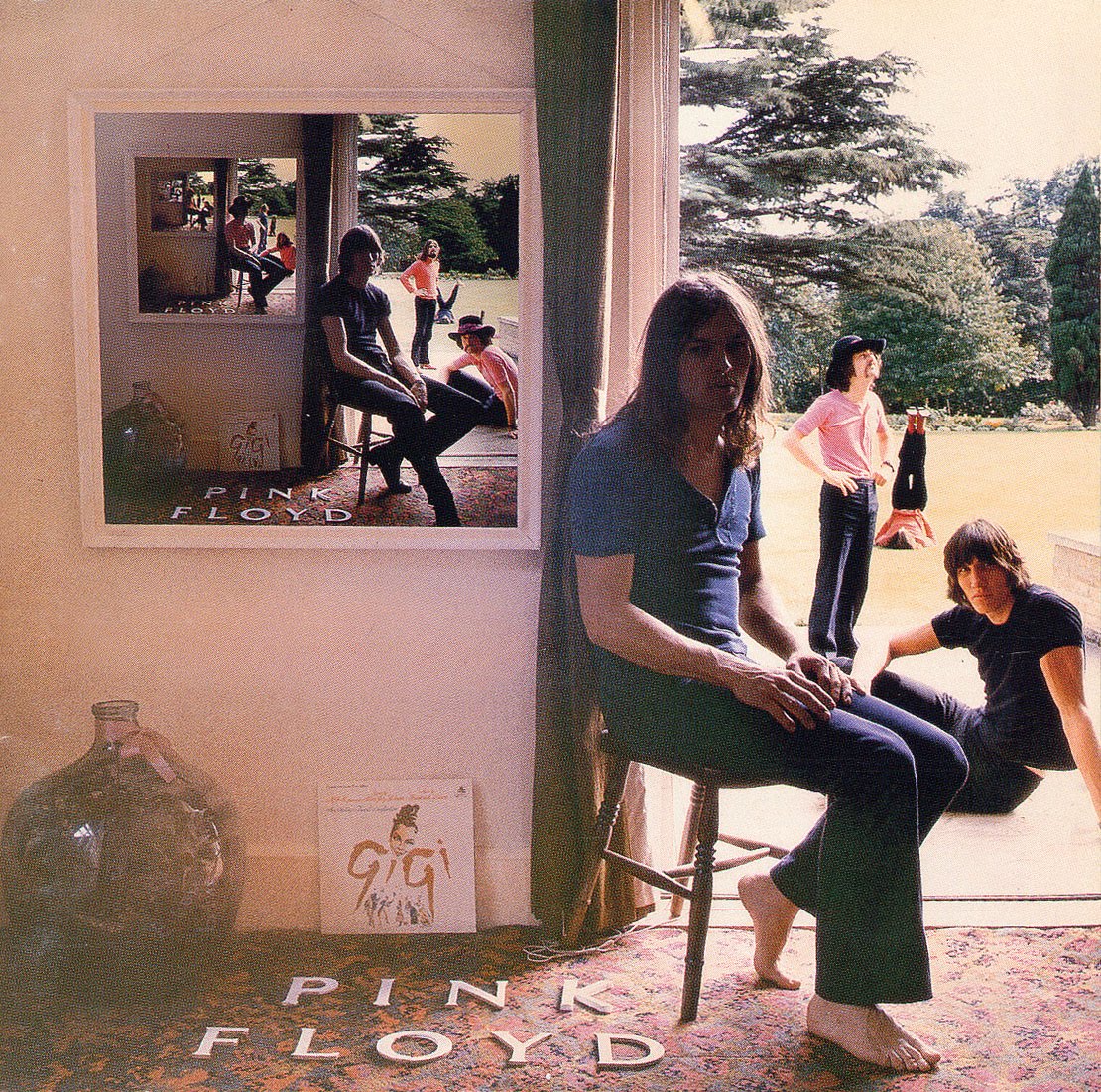
SOUNDTRACK: PINK FLOYD-“Several Species of Small Furry Animals Gathered Together in a Cave and Grooving with a Pict” (1969).

I‘ve mentioned this song a few times here so I figured I’d talk about it itself.  This bizarre song comes from PinkFloyd’s bizarre album Ummagumma.  Back in high school we ranked albums by a very specific content rating and this one received the highest: SDI-seriously drug induced.

Disc One is a live album but disc two contains compositions by each of the band members.  They each received about thirteen minutes of time to do what they wanted.  And they really seemed to go to town.

Roger Waters created this track, and it is very, very weird.  I’ve always loved it, probably because it is so audacious.  Wikipedia gives us this:

The track consists of several minutes of noises resembling rodents and birds simulated by Waters’ voice and other techniques, such as tapping the microphone played at different speeds, followed by Waters providing a few stanzas of spoken word in an exaggerated Scottish burr.

The Picts were the indigenous people of what is now Scotland who merged with the Scots.

You can hear it in all its glory (and then marvel that the guy who made it later when on to make some of the most famous music ever released) in this video.

I also love that someone liked this bizarre thing enough to put it on a Pink Floyd compilation (Works) as well.

And the wind cried Mary.

[READ: January 25, 2012] “Terminator: Attack of the Drone”

I found a link to this story somewhere, I can’t recall where, now.  It was mentioned with excited breath that Moshin Hamid, who I don’t know, had written this exclusive short story for The Guardian.  Hamid has been shortlisted for the Man Booker prize and has written two novels: The Reluctant Fundamentalist (2007) and Moth Smoke (2000).

This story was not quite what I expected from the brief biography I’d read.  Because of the ominous title, I assumed it might have something to do with Iraq (I realize that this came out before the recent downing of the U.S. drone in Iraq, but it still seemed plausible).  Rather, what we get is a bit of sci-fi about smart machine that are on a murderous rampage.

The story is not really as sci-fi as all that, except that what I wrote is true. But it’s more about two boys as they try to deal with this new world of death, machines and heroism.

It begins with the note that “the machines are huntin’ tonight.”  (There’s an interesting dialect in the story, especially from someone who lives in Lahore, New York and London.  We get lines like “Sky’s light enough so’s we’d maybe see the machine but all’s quiet and it ain’t about,” which I register as Southern American.  And yet the characters are named Omar and Yousuf.  I can’t decide if that’s an attempt to show a future world of total integration or just a total disconnect.)

There aren’t many humans left–his Pa is dead, his ma got her leg blown off by a landmine.   But at least his sisters are still alive–that’s more than most people have.

The machines come thundering through, crushing everything in their sight.  They also fly–you can’t see them, but you can hear them.  No one has ever killed a machine. (more…)

Read Full Post »

SOUNDTRACK: tUnE-yArDs-Tiny Desk Concert #179 (December 1, 2011).

tUnE-yArDs perform three songs in this Tiny Desk concert.  Merrill Garbus doesn’t chat a lot between songs, but she’s clearly having a good time (witness them all jumping at the end of “You, Yes You” and how much she smiles at the end of the set.  This is a wonderful opportunity to see and hear her live sampling technique in a small setting (with close up cameras!).

Her voice sounds great–she pulls off all of those voices that she conjures on the record.  And her ability to sample herself and make it work is wonderful to witness (I never imagined that some of those “sirens” and “keyboards” are actually her voice).

The live band is also really hot.  The bassist really hold everything together and the horns sound great–duplicating the sound of the record with just enough flare to keep it original.

And to think she’s making all of  that guitar noise with a ukulele!  It’s pretty groovy.

Watch it here.

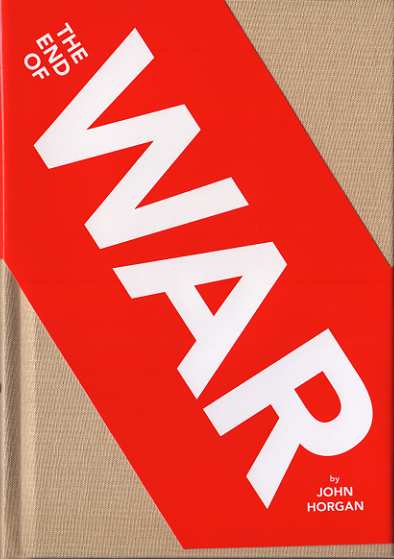
[READ: January 21, 2012] The End of War

This is a non-fiction book in which Horgan believes that in the not too distant future (his lifetime I believe), we will see the end of war.  Not the end of violence, nor anger nor aggression–he’s not crazy–but military campaigns against another country could be ended if we reversed our fatalism about war’s inevitability.

Horgan is a writer for Scientific American and in this book he uses the scientific method to show that ending war is utterly possible.  Now, although Horgan is himself kind of a pacifist (he’s not entirely one, this interview explains), his family is not–his father and grandfather are both veterans and his son is looking to enlist in the army.  Nevertheless, Horgan feels that war is not a viable way to solve problems and that the cost of human life is never worth it.

His research shows him that war should be thought of as a solvable, scientific problem—like curing cancer.  The difference is that cancer is outside of our control, while war is not.  But like cancer, war can infect any society–there is no “reason” for it, but it is like a virus–it infects all cultures, even peaceful ones.  If one culture is aggressive the peaceful neighbors need to prepare for war or move away.

Horgan anticipates skepticism, indeed, many of the sources he quotes are skeptics, and he deals with all of their arguments accordingly.  He looks at those who say that war is genetically part of humanity (as many people believe) or that the best way to prepare for peace is to prepare for war (as just about everyone seems to believe).  He looks at those who say that scarcity causes war (not necessarily true), to those who say that as long as there are guns there will be war (he disagrees).  He has a reasonable, believable argument for all of these doubts.  He even shows that the whole “alpha male, XXY chromosome” argument has been disproven and while men are more prone to violence, they are not more prone to wage war.

He also shows scientific evidence that war has not been around as long as people (or even apes) have existed.  Indeed, the first evidence for “war” (as opposed to violence) is 10,000 years ago (not much in humanity’s timeline).

He culls data from previous wars to show that the causes of wars can never be narrowed down to one thing.  And yet, rather than seeing this as a negative–that so many things cause war, he sees it as a positive–that causes of war are not monolithic and impervious to breakdown.

I was skeptical of this book when I started reading it.  I was willing to accept the various scientific answers that he showed (that war is not innate, for example) but my skepticism came because of what I guess you call the military industrial complex–that our military budget is huge and is not going to go down any time soon.  Just see how much protest is garnered by the miniscule amount that President Obama wants to reduce it.  [Everybody knows this truth but it’s worth seeing in print–our military budget is more than almost every other country combined.  China, who spends the next largest amount on their military has a budget that is 1/6 the size of ours.  That is shocking and depressing and a horrific waste of money].

But his point is that like with so many other things that we have outlawed or abolished over the years: slavery, apartheid, monarchy (as opposed to democracy), acceptance of torture; if we have enough consensus we can also abolish war.  He gives examples that it’s actually not as hard as we might think.  Germany and Japan become pacifist virtually overnight (it was forced on them, but they have taken to it with no problem) and even better, Sweden and Switzerland are pacifist voluntarily.

He also points out that war is already on the wane–although the United States was in two wars very recently, the warlike nature of the world is much less than it was even as recently as the first half of the 20th century.  The number of casualties from war has dropped dramatically compared to World War I.  We simply need to find ways to solve crises that do not involve killing people.

All of the chapters were interesting in this book (the book is more or less set up to deal with an issue per chapter).  Some of the chapters were a little long but at 186 pages (plus a bunch of citation pages) this book is short overall.  I appreciate all of his scientific rigor and his ability to show the arguments and then knock them down.

For me, the most interesting and satisfying chapter was the one that found that preparing for war, despite claims that it is necessary, actually does not keep a people safe. That the allocation of resources towards war removes resources from things that actually make people’s lives  better: art, culture, medicine, health.  Preparing for war doesn’t keep us safe, it actually harms us.

Similarly, he shows that competition for resources is not necessarily a cause for war.  To the contrary they have found that in some cultures scarcity brings out altruism.

In short, he says that the only thing that prevents us from abolishing wars is our fatalism that war is inevitable.  The more fatalistic we are about war the more we accept hawkish ideas which perpetuates more war. Once we stop believing that and we try to work towards the end, he believes that we war can end very quickly.

Horgan doesn’t really calm my fears about the military industrial complex–but who knows with enough popular opinion, maybe voters can change things.  It’s a wonderful thought.  And here’s hoping that this post can spread the good word.

And here’s an interview with Horgan that addresses a lot of these questions.

Read Full Post »

SOUNDTRACK: WILD FLAG-SXSW April 1, 2011 (2011).

Wild Flag has released one of the best albums of 2011.  I can’t stop listening to it.  So, it’s funny that this show has been sitting on NPR’s download page for months without me checking it out because I didn’t know who the band was until the album came out.  Wild Flag is Carrie Brownstein, Mary Timony and Janet Weiss (and a keyboardist who I will never remember because I never heard of the band she was originally in). 

This show at SXSW is one of their earlier shows.  It’s so early that one of the songs in the setlist appears on the album with a different title.  And the band is full of raw energy and passion. 

Although research shows that they’d been touring since November, Mary Timony seems somewhat hesitant in a few songs.  But Carrie Brownstein seems fired up to be playing again, and she rages and jumps around the stage, her voice as aggressive and fun as it was in Sleater-Kinney.  Janet Weiss, as ever, kicks massive ass on the drum kit.  man can she wail–she is a vastly underrated drummer. 

The band has great cohesion and they seem like they’re really enjoying themselves. 

 In many respects this band sounds like Sleater-Kinney (2/3 of the band are here).  But the addition of Timony’s lyrics and more gentle voice bring a cool change.  And the keyboards flesh out the songs in wonderful ways as well–for a band with no bassist, it’s funny that the most pronounced keyboards riffs are at the high end of the register.

There’s a few flubs during the set, in one of the more pronounced keyboard riffs, there’s a pretty major gaffe.  And sometimes it seems like they don’t know exactly how they should be harmonizing with each other (not true on the record at all).  And during the extended soloing of “Glass Tambourine” (6 minutes), I’m not really sure what Mary is up to.  But that’s okay.  The band is all about rawness, so that can be forgiven. 

While the album is better, this live show is a good introduction to the band. 

Since Carrie Brownstein worked for NPR I almost expect all of their shows to be available here.  But for now, watch the whole show here.

[READ: January 17, 2012] “Old Mrs. J”

Stephen Snyder translated this story that was originally written in Japanese.  It’s interesting to me when a work is translated from another culture.  Does the translator intend to keep the other culture obvious or does the translator try to make the story, in this case, more European or American.  There’s some inevitability in that, since the language is changed, and yet the sensibility of the original often remains.

I bring this up because I tend to think of Japanese writing as being very distinctive.  And yet this story didn’t really “read” very Japanese to me (Kiwi fruit aside).  It did read a little bizarre, but that was the fun part.

The story starts out simply enough: a young writer (who is a woman, although you don’t find that out until very late in the story unless, unlike me, you assume the main character is a woman because the author’s name is Yoko).  The author works late and sleeps in til noon or so.  It’s a quiet, peaceful place.  The landlady is older and somewhat feeble.  Until, that is, she gets into her garden and then she seems possessed by a fire. 

The landlady hasn’t really talked to the writer.  Then one day the writer hears the landlady in the garden cursing at a stray cat.  The landlady hates cats and curses them up and down.  Finally the writer tells her to put pine needles down, that cats hate prickly things on their feet.  This I did not know.

And they strike up a friendship.  The landlady reveals that her husband was no good and that he left her.  She also reveals that she gives massages.  And she begins leaving the writer vegetables from her garden.  Then one day, the landlady brings her a strange carrot with 5 “fingers” coming off of the central stalk.  The carrots are quite special.  And she keeps them a secret until sure enough, she begins growing lots and lots of them.  Even the newspaper comes to take a picture.

This idyllic story is interrupted in the last few paragraphs.  First by what seems like metaphorical scariness and then, ultimately, with reality.  It is a wonderfully realized story, wonderfully told and with enough hints of magical realism throughout that the ending isn’t totally unbelievable–even if it is quite unexpected.

Read Full Post »

SOUNDTRACK: ADELE-Tiny Desk Concert #112 (February 17, 2011).

Adele is one of the few pop superstars who I not only like but who I like quite a lot.  21 is a really great album.  And what this Tiny Desk Concert proves is that, whatever she is marketed as, she is not just a pop singer.

Adele sings three songs here (and she has a cold or something).  She does the biggie, “Someone Like You” which sounds even more naked and unprotected in this version, because the piano is mixed quite low.  Next is “Chasing Pavements,” a song I knew from when it was first released two years ago.  It’s got a straightforward adult alternative vibe and sounds great here.

The final track is “Rolling in the Deep” which is one of my favorite songs lately, even if I don’t quite understand what the lyrics mean.  But this is where you know that Adele’s voice is amazing.  She belts this song out like she’s in a massive concert hall, not a tiny office.  And she sounds incredible.  It’s a wonderful version of the song.

The funniest thing about this Tiny Desk Concert is hearing Adele talk.  I don’t know a thing about her.  And I had no idea that her speaking voice was so heavily accented. She sounds like some crazy teen from a British sitcom.  Especially when she cackles.  To hear her prattling on about something and then shift in a second to that amazing singing voice is a moment of mystery to behold.

Check it out here.

[READ: January 13, 2012] “A Brief Encounter with the Enemy”

Saïd Sayrafiezadeh has written some very cool stories (and some cool pieces for Five Dials).  But I have to admit I was a little concerned when I saw that this was going to be a military story.

Lately I’ve been reading outside of my comfort zone quite a bit.  And this is another one.  I just don’t like military stories.  I’m not a war guy, I don’t really like guns, and in my limited experience, military stories are about little more than degradation, death and violence, glorious violence.

But as I said, I’ve enjoyed Sayrafiezadeh’s varied stories quite a lot, so I wondered what his take on the issue would be.  And I was pleasantly surprised by the story.  Even though, really, the story (the bulk of it anyway) is kind of a downer.  (more…)

Read Full Post »

[LISTENED TO: January 12, 2012] Girl with Curious Hair
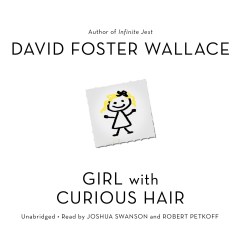
I saw a placeholder on Amazon for this audio book in early 2011.  And then I promptly forgot all about it.  My friend George just asked if anyone had heard it yet, so I decided to check it out.  I downloaded it through Audible.com.

And here’s my two cents about Audible.  Although it was free (for a 30 day trial), it was a lot of work.  The entire book (14 hours) downloaded in two files.  Each was about 7 hours with no breaks or chapters of any kind–just two huge 7 hour files.  Okay, I often download stuff and bring it into Audacity to make my own chapter breaks.  But you can’t import this file into Audacity because it is its own proprietary format and doesn’t want you to put it in MP3 format.  So, I had to burn it to CD (but not in MP3, only in WAV) and then put the CDs back in to iTunes to import them as MP3.  From there I could import them into Audacity and put tracks where I wanted.  That’s a lot of work to save $29.

I’m also going to say that I didn’t want a membership to Audacity because it costs $15/mo and the savings aren’t really that good anyhow.  Even kids books are about $10 each.  Oh, and just see how many hoops they have you go through to try and cancel.   Heavens to Betsy.

And but so on to the actual audiobook.

The book was read by Robert Petkoff (who is Reader A below) and Joshua Swanson (who is reader B below).  I don’t know anything about them, but their websites will give you more info about them.

I found the readings to be simply wonderful.  They were impassioned and articulate and dealt with some of DFW’s tongue twisting word choices with ease.  They also handle DFW’s dialect and accents with ease.  And while Swanson has a much much broader range of voices to play around with (his women voices are far superior to Petkoff’s), Petkoff also pulls of some amazing voices, especially in “John Billy.”  I never questioned what was happening.

Some of these stories are challenging and I admit I found them difficult to read.  But the audio versions seemed to really clarify things.  (There are all kinds of reasons why this could be so, but I’m not going to delve into that, for there lies madness).  Nevertheless, this was a great way to hear these stories.  Especially the ones that had heavy dialect.

“Little Expressionless Animals” [Petkoff] (90 minutes)
Petkoff sounds uncannily like Kyle McLachlan–no bad thing.  Although Petkoff doesn’t work too hard trying to do different voices, he puts in enough distinction to make the characters distinguishable.  (We have been listening to a lot of kid’s audio books, and the narrators of those are amazing with the kind of vocal acrobatics they can do!).  Petkoff is more subtle, but it is also effective–it’s not just a straight voice, which I think might get confusing especially in the dialogue scenes.

There is a hint of Alex Trebek’s voice when doing Alex Trebek, but he’s definitely not trying to mimic the voices of the celebrities.  For the most part, the voices are slight variations of the main narrator.  Indeed, during the later Faye and Julie dialogue section, he does slight differences between their voices to help distinguish the characters.  Which is quite helpful in the story.

This story works very well in audio book format.

One of the things that I loved about this story this time was really piecing together all of the various compnents.  Inclduing things like the revealtion of why Julie does poorly on the subject of animals.  It’s quite obvious when the story ends, but through the whole story you keep wondering, what is it about the animals?  I’m aslo intrigued at the number of gay characters in the book.

And, of course, this story has a major obsession with pop culture, especially TV.  And knowing (from interviews) that DFW sais he would just get sucked in to watching TV all day if it wa svailable, his tone (as is Petkoff’s) is perfect when dealing with the TV issues.

“Luckily the Account Representative Knew CPR” [Petkoff] (18 minutes)
Petkoff sounds slightly differnt than in “LEA.”  Since thist story has no dialogue, there’s not a lot of differentiation in the story.  His deadpan delivery is perfect for all of the details in the story. Although at the end, his “Help”s are quite empassioned, letting you know there’s a little bit more going on.

“Girl with Curious Hair” [Swanson] (50 minutes)
Swanson’s voice is of a much higher timbre, and it’s kind of fun to have two different voices in this book.  This story benefits quite well from an audio format.

The story is deliebrately flat and, I have to admit, is not terribly easy to read.  Swanson handles the flatness very well, he reads it incredibly deadpan and yet he puts enough inflection in it to keep it from being monotone.  I have to assume it wasn’t easy to read this.  I think that he has really made this disturbing character quite real.

Obsevrations about the story.  Hearing this story out loud was more shocking than reading it.  The explicit sex is pretty shocking for DFW and the revelation about what happened to Sick Puppy when he was a kid is prodoundly distrubing, especially when it is read in this non-inflected voice.  It was uncomforatble and very effetcive.

There were times when I wondered about the believability of the charcter.  The use of the word negro, the utter flatness of him. I realize that he is quite damaged, but at times it seemed like maybe this story was too much.  Which is a bit of a surprise, as I find DFW’s charcatersto be very real.

“Lyndon”  [Swanson] [1 hr 45 min]
I didn’t really enjoy “Lyndon” when I read the story.  It’s a little long and had many different things going on.  I kept wondering about Lyndon himself.  About what made DFW write a story based around Lyndon Johnson, around jhis life and politics.

But hearing this story read aloud, with the Swanson’s various voices and accents and newspaper stories all differentiated really brought this to life.  I felt like it was so much more vibrant and alive and passionate in this audio version.  I read in my post that i found the ending quite moving when I read the story, but it felt even more so, with Lady Bird’s quiet, dignified delivery, here.

Observations on the story.  How odd that he chose to make this story that is about a real, and quite famous and well studied person.  I don’t know a thing about Lyndon, so I have no idea how much of this is true (the few LBJ quiotes I looked up seem faked).  I don’t think I spent enough time thinking about the main character when I read the story.  Boyd is so fully realized and amazing that Lyndon is really superflous.  This is awonderfully emotive story.  And Swanson really does an amazing job.

“John Billy” [Petkoff] (1hr 10 min)
I thought “John Billy” was a real challenge to read.  The dialect is pretty crazy.  And the story is not exactly easy to begin with.  But much like Swanson in “Lyndon,” Petkoff’s voices are outstanding here.  The main voice of John Billy is great–he handles the accent and the crazy word choices that John Billy has with ease.  The story flows perfectly.  It’s really impressive.

And while the voice of Glory Joy isn’t wonderful (Petkoff’s women are just softer versions of his voice), he more than makes up for it with the amazing transformation of Simple Ranger.  In the reading, it is clear that Simple Ranger “grows younger” from a quiet, hard to hear older to a youthful loud charcater.  And Petkoff takes that literally so you can really hear him change into a man with a “curious plus haunting voice that was not…of his gravelly, gray-lunged voice somehow, his own, somehow.”  And then, later in the story Ranger’s voice changes again when he “whispered, the big sharp clear new Ranger in a smooth new clear young voice.”   But nothing prepared me for the voice of T Rex Minogue. It is stunning.  It’s an amazingly processed voice that is as malevolent as it is “mechanical.”  It’ s masterful.

As for the story itself, the whole saga of C.Nunn Jr is bizarre and wonderful, a crazy hyperbole of a story.  It also seems crazily over the top hearing it aloud (like in “GwCH”).  The whole story’s end with C Nunn’s eyes is preposterous (what is it with people’s eyes in this book?).  And yet it feels like the nonsense is there as a balance for the heaviness.

The story is funny and silly but by the end it gets incredibly dark and thoughtful.  It’s a challenge to listen to, especially the end, but I think it benefits from an audio version.

“Here and There” [Swanson] (55 min)
I found this story somehow more confusing while listening than when reading.  There’s so much back and forth with voices and the whole conceit that this is some kind of fiction therpay doesn’t really translate easily here.  I also found some of the more academic sections to be kind of dull in his reading.  It’s a challenge to read aloud and keep interesting, I’m sure, but I found this story to be the least successful of the collection.

“My Appearnce” [Petkoff] (58 minutes)
This is written in frist person from a woman.  Petkoff, who has quite a deep voice conveys a woman very well.  This is a great reading for this story.  He does “versions” of David Letterman and Paul Schaffer.  They are not impersonantions by any means, but he has the tone down perfectly.   The male voices whispering in her ear are done in a very simple whisepred voice.  Very effective.

This is a great story and the audio is also wonderful.

“Say Never” [Petkoff and Swanson] (42 minutes)
Petkoff does a very good job with the accents in this story.  Labov’s heavy Jewish accent is very impressive.  And although Mrs Tebof is not very different from Labov, it is different enough to convey the accent and the tone.   He also does Lenny’s voice, which is the bulk of the story.

Swanson also comes in this story as well, doing the voices of Mikey and Louis (two very distinct voices, even if they are both a little Hollywood Gangster from the 40s).  I would have been interesting to hear them interact more in the book somehow.

I was struck by this story more in the listening than the reading.  There’s something about hearing people say these things that makes them more shocking.  Especially the note that he sends to his family (talking about his wife’s lack of sex drive–gasp!).  This is another one of DFW’s stories that ends before something big happens.  It’s funny how many of his stories seem like preludes.

“Everything is Green” [Petkoff] (3 minutes)
It’s also amazing that this whole story is only 3 minutes and thirty seconds long.  Petkoff reads this story in a perfect DFW deadpan style.  He even does May Flys voice with a (slight) accent.

“Westward the Course of Empire Takes it Way”  [Swanson] (6 hours)
Swanson does an amazing job with this difficult story.  There are nearly a dozen charaters in here and he manages to keep them all separate and distinct.  It’s really great.  This is especially true late in the story, when they are in the car on the way to Collison.  He has six people in the car and he manages to make sthem all unique:  J.D. is dark and gravelly while DeHaven has a kind of Midwestern Stoner tone.  Tom Sternberg is neurotic and aggressive at the same time.  D.L. is snotty and presumptuous (although it may be Swanson’s weakest voice, it really conveys the character well).  Magda is exhausted.  And Mark is a solid late teenager.

Let’s not froget the pissed off Fertilizer salesman, the Avis clerk and the bartender.  And the narrator of course.

This story is also fairly complex and hard to follow (when reading).  There so much going on what with the narrator’s interruptions and the metafiction.

What I really noticed this time is how the parts that are not metafictional, the actual narrative of the story is really good, really strong and emotional.  Not to say that the more meta- sections of it are bad, they just don’t have the same kind of impact.  Of course, the whole point of the story is to play around with meta-fiction, so I’m not entirely sure how successful it is in that regard.

Nevertheless, it’s a fascinting look at youth in America.  And I have to say that it really works as a foreshdaowing of issues that he would explore more in his later stories and IJ.

Some things I notice din this listen.  DFW uses the word “plus” instead of “and” a lot.  It’s a fascinating word choice, and one that I think virtually no one uses.  Sometimes it’s effective and other times it’s very clunky.  I never noticed it while reading but it’s very obvious when listening.

I just read my review of the short story collection, which I think was kind of brief.  I feel like I got a lot more out of the book this time around. Of course this is my second reading so that makes sense as well.  It’s also interesting how I enjoyed some stories more and other stories less.

Overall though, this is an excellent audio book.

Read Full Post »

SOUNDTRACK: tUnE-yArDs-WHOKILL (2011).

I bought this album because NPR was raving about it back in the summer.  When I first played it I was really disappointed.  rather than the interesting experimental music, it sounded like a kind of unpleasant R&B.  So I put it aside for a while.  And when I listened to it again, I was really blown away by it.

For those of you unfamiliar with tUnE-yArDs, there are three or four different singers in the band.  There’s the raspy voiced R&B singer that opens the album.  There’s the whispering vocalist and the spoken word backing vocalists of “Es-So.”  And there’s the rasta singer of “Gangsta.”  There’s the soulful male who sings “Powa” and the woman who can hit the amazing high notes at the end of “Powa.”  And all of those singers are named Merrill Garbus.  For she is more or less the one woman operation behind the band.  (I’m a little unclear if the rest of the musicians are part of her band or just session folks).

I have deliberately been avoiding reading about Merrill Garbus before writing this because I didn’t want to be influenced by reality.  I honestly had no idea who she was or what she looked like when I started listening to the disc.  I assumed, by her voice, that she was a black woman.  But then the liner notes talk about Jewish grandparents and the disc itself includes samples of them, and they are clearly white.  And then yes I saw a photo of her, and she’s quite white.  None of that is of any consequence except to really highlight the chameleonic nature of the music and how it really transcends genres.  That’s pretty awesome.

 The trick that you will read about ad nauseam about tUnE-yArDs is that Garbus loops her own stuff live.  It’s not screamingly apparent on the disc but you can certainly hear stuffed looped as the disc goes along.

This album made almost every best of year-end list.  And that surprises me somewhat because it’s not always easy listening.  “My Country” has all kinds of screamed parts, a staccato horn solo and a cacophonous ending.   The second song, “Es-So” opens with a some clunking drums and what seems like a slightly out of tune guitar playing a simple, aggressive riff.  The rhythm and tune of the song is infectious and yet so…odd.  “Gangsta” is one of my favorite songs of the year.  It opens with a great bassline and then several “sirens” which I suspect are Merril’s own voice.  It seems to end after 2 minutes but there’s more…a bizarre interlude in which the song seems to have a hard time starting up again.  (“bang bang bang oy, never move to my hood coz danger is crawling out the wood”).

“Powa” is probably my least favorite song on the album although I still like it.  It’s slow and kind of ballady but the vocals are just so wild it keeps it from being dull.  “Riotriot” is strange meandering song full of peculiar percussion.  It’s a bit too long, but there’s some really interesting parts, especially at about 3 minutes when the song suddenly turns into a psychedelic freak out.  “Bizness” opens with Garbus’ crazy distorted voice over some pretty descending notes (which I assume are from Garbus’ pretty singing voice).

“Doorstep” has a bunch of fast sha la las that I normally dislike but which work so well within the song and with Garbus’ amazing, angsty singing near the middle of the song.  “You Yes You” has some great guitar work in the beginning and a very fun segment that ends with a big “Ha!”  “Wooly Wooly Gong” is a cool slow song, minor key with delicate vocals.  The disc ends with “Killa” another great song featuring Garbus’ rough voice and scratchy guitars.

The whole album keeps you on your toes.  There’s something for everyone, but it’s all mashed together so it’s not always clear than anyone will like it.  It’s a really fun release and although it took me several listens to really appreciate it, I simply can’t stop playing it now.

[READ: January 9, 2012] Ghosts

I had planned to read this book a little earlier than I did, but then three holds came in from the library which pushed everything back (those were all new and this book, well, to be fair, I’m not sure it was ever checked out, so I was allowed to renew it).  The only bummer thing about it is that this entire story is set on New Year’s Eve, so it would have been nice to post it then.  Oh well, what’s two weeks?

So, this is the first novel by Aira that I have read.  I really enjoyed his short story recently and, since Roberto Bolaño is a big fan, I wanted to see what he had written.  As I’ve mentioned elsewhere, Aira has written approximately forty-five novels (!) (since 1981 (!!)) He had five in 2005.  Most of them are fairly short (Ghosts is less than 140 pages), so it’s not quite as daunting as it could be.  And for English readers, there are only seven books translated into English.  So now is the time to jump on his bandwagon!

This novel was translated by Chris Andrews, who has translated many of Bolaño’s shorter works as well.  I did notice one or two British/Australian spellings in there (Andrews is Australian).  But I am very impressed with the translation, especially the occasional fifty-cent words that were wonderful choices (I wish I had written them down).

The story itself is fairly simple, although there are waves of complex ideas that come throughout.  As I mentioned, the entire story is set on New Year’s Eve in Argentina (which, North Americans please note, is really really hot–like super crazy hot, which is a little disconcerting to read during a cold January].  It’s also almost entirely set in one building (there’s a quick trip to the market).  And the bulk of the story centers around one (extended) family.

But as it starts, we see something altogether different. The building in question is a condominium.  It was supposed to be finished on January 31, but, of course, it isn’t.  All of the families who have bought into the condo have shown up to see the proceedings.  They are pretty much all there at the same time although some are coming and others are going.  We learn a lot about the building itself, the pool on the roof, the rooms and cabinets, the elevators.  It’s a pretty nice place.  We meet most of the families who will be living there when it is finally finished. The kids love running around in the unfinished house, watching the workmen carting things away and being a mild nuisance.  But it’s basically a holiday so no one cares all that much.

Oh, and there are ghosts all over the building.  (more…)

Read Full Post »

SOUNDTRACK: BELLE & SEBASTIAN-Write About Love (2010).

I’ve enjoyed Belle and Sebastian’s music since their debut album all those years ago.  For some reason I didn’t get into this album as much as previous releases.  In part it’s because the band has morphed quite a lot from what they used to do.  It’s true that I have really enjoyed their more rocking songs on their more recent albums, and this one is full of them.  It’s also true that a band needs to evolve, but somehow this album just never really gripped me.  I think it’s because the album takes so long to start.  The fade in is like 20 seconds!  But I’ve listened again with renewed interest recently and I’m changing my mind a bit about it.  There are plenty of great songs on this disc. 

“I Didn’t See It Coming” is a classic B&S song (after that awful delay).  It’s a wonderful duet with Sarah Martin (this is how to do a duet, guys–the ending is fantastic!).  “Come on Sister” is one of the great faster B&S songs.  The “gotta have a little FAITH” line is great and then the unexpected shift into the third part of the sing is just stunning.  I also love “Calculating Bimbo” first because who would every have thought there’d be a song with that title but also because Murdoch sings it so wonderfully.  I generally don’t like slow music, but there’s something about slow B&S song that I find myself leaning in instead of tuning out.

“I Want the World to Stop” is another wonderful “rocker.”  It’s a fast paced little ditty with great backing vocals (and it always makes me go “two, three, four” before the chorus kicks in–always the sign of a great song).

“Little Lou, Ugly Jack, Prophet John” slows things down really far.  Possibly too far for me. It’s a duet and it reminds me just a little too much of a Beautiful South duet (not a particular song, just their style).  And I have to say that The Beautiful South would have done it better.  After looking at the liner notes I realized that Norah Jones is the duettist here.  I like that Jones has been providing her services across a wide spectrum of music (Foo Fighters, OutKast etc) but I really just don’t have anything good to say about her.  The melody is nice though.  I also didn’t realize that the sing came out on Norah’s disc before the B&S disc.

The album quickly redeems itself with “Write About Love,” a great keyboard fueled rocker (with backing vocals from Carey Mulligan who I don’t know, but who nails the song “I haaate my job”).  “I’m Not Living in the Real World” has lots more keyboards and oooh vocals (it reminds me of a Who songs from Sell Out) and it’s sung by Stevie. 

From the there, the disc kind of slows down.  “The Ghost of Rockschool” is the least memorable song on the disc for me (although the horn section is nice).  “Read the Blessed Pages” is so quiet (even for B&S) that it kind of gets lost on the disc.  (The instrumental break is pretty though).  “I Can See Your Future” opens with a catchy horn blast that kind of wakes you from the slumber of the previous song.  “Sunday’s Pretty Icons” opens with a cool guitar riff, but it’s not all that memorable either.   While these last few songs are fine, they’re not as strong as the beginning of the album.  They kind of meld together. 

So I guess what I’m saying is that the first half of the disc is great and the second half is okay.  The  good songs are worth it though.  I’ll stop being so hard on the disc.

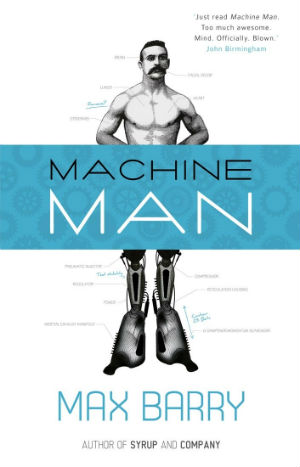
[READ: January 5, 2012] Machine Man

Don’t worry if you’re suffering from Barry blog overload, this post is about Barry’s new novel, which I just finished.

I have enjoyed Barry’s previous novels quite a lot.  They typically deal with corporate skewering and this book is no exception.  Except that the corporate skewering takes a back seat to the major sci-fi elements of the story.  Before I mention the story itself, I wanted to mention the origin of the story.  In the Acknowledgements at the end of the book, Barry explains that his fans had been nudging him to write something.  And while he had been doing projects, he hadn’t written a book in a while.  So he decided to write the book online.  He wrote a few hundred words a day and posted them online.  And then he sat back and waited for the comments to come in.

He talks about how he’s basically showing everyone his rough draft of a story and letting people tear it apart.  But he found that his fans were supportive and even offered ideas (which he then callously stole, muhahaha).  And so the story online is actually rather different from what appeared as the final draft.  (No, I’m not going to read the online version, but you can.  It’s available here).

Anyhow, as the story opens, Dr Charlie Neumann (I just got the bad pun of that name, shame on him and shame on me for not seeing it sooner) loses his phone.  He feels totally cut off without his phone.  The scene seems a little over the top (he checks his car while wearing only a towel) but it shows how technologically dependent he (and we) feel most of the time.  This kind of mild slapstick scene resolves itself in a shockingly brutal way.  When Dr Neumann gets to his office (he’s an engineer at Better Future) he finally sees where he left his phone.  Unfortunately, he has already started an industrial vice and he’s distracted by his phone long enough to have his leg crushed by said vice.

When he wakes up in the hospital, he is surrounded by people trying to help him–nurses, doctors, therapists, but he’s really just distraught about the loss of his leg.  And then he sees Lola Banks, who is bringing him a pile of artificial legs.  Lola is quite possibly the first woman who Charlie has ever spoken to who seems in any way empathetic to him (Charlie is, admittedly a pretty cold and cerebral individual). She shows him some prosthetics which he’s not too thrilled by.  But when Lola reveals that Better Future is paying for top of the line stuff for him, she shows him the highest end of the high end legs.  And Charlie falls in love (with Lola and the legs). 

Lola Banks proves to be an interesting person.  Not ony does she not recoil from Charlie and his handicap (it is her job), but she seems to almost admire Charlie for seeing the beauty in the prostheses.  Lola proves to be the kind of woman who falls for certain kinds of men, but with Charlie it’s different.  Really, it is.  Shut up, it is.

Although Charlie does see the beauty in the prostheses, he can’t help but see how they can be improved (he is an engineer after all).  And so, he sets out to make the artificial legs not just replacements but better than their human counterpart.  Better Future is on board with helping Charlie recover (which is quite nice, and somewhat unexpected coming from corporation hater Barry), but we see that Better Future knows what it has with Charlie–a single-minded, focused engineer. A man who only wants things to be more efficient.  So when Charlie starts outfitting the prosthetics with motors (and considers putting in wifi) the company is kind of impressed.  And so is Charlie.  The leg is heavy and a little unwieldy, and it’s not very pretty (it has hooves), but it sure works. 

The problem, as Charlie sees it, is that his intact leg is holding back his new invention.  How can he fully test the artificial legs if his human leg is less than the prosthetic? (more…)

Read Full Post »

SOUNDTRACK: DAVILA 666-“Eso Que Me Haces” (2011).

The Davila 666 album Tan Bajo made NPR’s Best Albums of the Year list.  And they cite this song as an example. 

This is a fuzzy, kind of tinny guitar song (that reminds me a bit of Wavves).  It’s only two minutes long and the riff is simple and catchy.  The vocals are shouted and the chorus is gang shouted.   And there’s a big “Oh Oh!” to really grab you.

So basically it’s catchy but nothing original.  The novelty of the song is that the whole thing is sung in Spanish.  If you don’t speak Spanish the vocals sound distorted enough that you may not even realize they’re in Spanish.  This band is from Puerto Rico.  And this album has been a hit both in Puerto Rico and in garage rock circles in the States. 

I’m pretty intrigued, and I’m going to have to check out the rest of their album.  NPR says it’s kind of offensive–maybe I need to re-learn Spanish.

[READ: January 4, 2012] “Chechnya”

Karen Carlson also recommended this story.  She wrote: “I didn’t think I’d like this, but it grew on me, and by the end it had me in the palm of its… well, if a story had a hand, it would’ve had me there.” 

This was a dark story.  It was a little slow to get going but once it started flowing it was really gripping.  It was as if the story picked up adrenaline as it (and the danger) progressed.  While at first the story seemed pretty obviously about Sonja, it is really about Chechnya. 

As the story opens, we meet Sonja, a nurse in war-torn Chechnya.  We learn that she works in the only hospital in the area and that even they were bombed not too long ago.  All that is left is a maternity ward and a trauma ward, and they can’t spare any electricity because their generator can’t handle anything more.  Sonja is one of the few nurses on call.  She hasn’t been home in ages and she just sleeps at the hospital. 

When Sonja wakes up, she hears that a man is waiting to talk to her.  He asks if the hospital will take in an eight-year-old girl, since both of her parents were killed.  Sonja informs the man that they are not an orphanage.  But the man, whose name is Akhmed, says that he will work at the hospital (he was in training when his wife got sick) if they will help the girl.  he immediately gets to work. 

The story then follows the parallel lives of Sonja and Akhmed as they work at the hospital.  Akhmed’s wife is delusional and dying at home.  So he can be out for 16 hours at the hospital and she doesn’t realize how long he has been gone.   Sonja forgets immediately about the girl and just stets about healing the sick.  What else can she do? (more…)

Read Full Post »

SOUNDTRACK: THE SWELL SEASON-Strict Joy (2009).

I bought this disc for Sarah after it came out.  I didn’t think that I would enjoy it that much because while I loved the movie Once, I wasn’t sure if I needed more from Glen and Marketa.  But then I found a whole slew of free concerts from NPR and I became hooked on the band.

The disc opens with “Low Rising” (what I think of as the “Van Morrison” song).  It gets better with each listen.  It’s a slow ballad which is followed by “Feeling the Pull,” a more up-tempo song that really highlights Marketa’s beautiful harmonies.  “In These Arms” is a gorgeous song.  The verses are downbeat and somber “if you stay…with that asshole…it will only lead to harm” but again the harmonies are gorgeous.  “The Rain” is a more rocking tune (within reason, of course).  It has an interesting middle section that quiets down, but it’s a solid folk rocking song.

“Fantasy Man” is Marketa’s first lead vocal song on the disc.  I like her voice but sometimes I find her lead songs to be a bit too wispy, too quiet.  I like this song, but it feels long (and at 5 minutes, it is).  “Paper Cup” is one of Glen’s quiet ballads.  It’s a pretty song.  “High Horses” is one that I didn’t know from the live sets, I guess it’s not too popular with the band, but I think it’s strong.  It runs a little long but that’s because it has a cool middle section that keeps building and building with more instruments and voices.  “The Verb” is another song that I didn’t know.  It has a cool intensity to it and while it doesn’t stand out as a hit, it’s certainly an enjoyable song.

“I Have Loved You Wrong” is another pretty Marketa song, but again it’s very slow and very long.  I don’t think I could buy her solo album because although her voice is lovely and her melodies are nice, they’re just so ephemeral I can’t really get into them.  “Love That Conquers” is an interesting song.  It sounds nothing like The Swell Season (must be the banjo).  It’s a nice addition to the album and should maybe have been placed a little earlier to break up the sound style a bit more.  “Back Broke” ends the disc very strongly.  Although I think the song works better live (with audience participation), the melody and tone of the song are somberly beautiful.

There are moments of this disc when it turns out to be what I feared the whole disc would be–bland folkiness. But overall this is an enjoyable album for a rainy day.  And Hansard really has an amazing voice.  However, I really like them better live.

[READ: December 26, 2011] Third Reich

I was pretty excited when I heard about this book, although I must admit I was a little concerned by the title.  Bolaño has a kind of weird Nazi fascination.  There is Nazi Literature in America and then a whole section of 2666 is given over to Nazi Germany.  He doesn’t like Nazis or anything but he writes about them a lot and it can be a little exhausting.  So it was with some relief that I learned that Third Reich is the name of a game that the main character plays.  It is a kind of historical reimagining kind of game (I guess like Risk but more specific and with more at stake).  It is set during the time of the Third Reich and the players represent various countries (or perhaps even powers).

I am giving up on explaining the game from here on because a) there’s a lot about the game in the book and b) I’m not sure if it wasn’t explained very thoroughly or if I just missed out on exactly what was happening.  During the book he talks about Hexes 65 through 68 and so on.  So I assume the map of the world is a hex grid.  But he never gives any context (or even a picture!–and this makes sense as it’s written as the diary of a well-regarded player who is not trying to teach us the game).  So while I understand the general tenets and play of the game (there’s a die (or dice) and tokens that reside on the board), the specifics are completely nebulous.  But that’s okay.  Because the game specifics don’t impact the book, but the game overall is at the heart of the book.  I think it’s neat that Bolaño invented a game (and several others games are named, but no details are given).  He is clearly very gifted at inventing people, games, things.

But as I said, the game is only a part of the book and in fact, the game details don’t enter into the book until about half way through. (more…)

Read Full Post »

« Newer Posts - Older Posts »