 SOUNDTRACK: RE:Mnant [CST015] (2001).
 There is a (tiny) gimmick with this album. The band is called Re: and all of the songs have titles that work when you add “re” as a prefix. So song titles include: 1. scue 2. duce 3. solute 4. cipe 5. straint 6. buke 7. pent 8. legate 9. volve 10. ject 11. gulate. This makes me smile, even as the music can be a bit more challenging.
The first track is simply noise and electronic pulsing for 2 minutes. It melds into track 2 in which the noise ends but the electronic pulsing continues. Then a faster, newer noise comes in and stays there while the beeping gives us a rhythm. Then all the noise drops out and it is replaced by a more delicate wave of almost strings. Then what sounds like detuned strings play some notes while the noise is buzzing in the background and swirling around your head. The 7 minute track 3 is a bit much. It opens with the sound of a kind of static and mechanical sounds. It has a feel of a horror movie soundtrack, especially as it builds and tension mounts with the “bass” notes that come through. Even though I find it long, by the time it really gets going I could listen to a lot more of it, I think the buildup at the beginning is too long.
The fourth track brings in some interesting percussive sounds, but mostly it seems to be about the background noises that swell and get in your head (those piercing high notes). Track 5 introduces an acoustic guitar. I feel like this should have gone earlier so it’s not as much of a surprise at this stage. It’s quite a pretty melody (with more of those electronic noises floating around the background and it’s a nice interlude among all of the mechanicals. 6 also has a guitars–this time electric–playing a staccato rhythm. The chords are nice and there’s that persistent electronic noise floating around to keep it somewhat edgy. 7 employs feedback sounds and beats with what sounds like human voices. And interesting piece of soundtrack noise.
Track 8 starts off quietly but introduces some more guitar. There’ an interesting melody with the electronics buzzing around in the background. 9 has big percussion sounds and lasts a reasonable 3 minutes. 10 is an acoustic guitar song that reminds me of something Beck might do, and it’s too short at 2:15. The final track, 11, is mostly low pulsing sounds. It’s kind of meandering end to the disc that features a lot of uptempo noisy music.
[READ: April 25, 2014] A Million Heavens
I’ve enjoyed John Brandon’s other novels, and I had read an excerpt from this one in McSweeney’s #41. I found it enjoyable and somewhat confusing. And, actually that’s a bit how I feel about the book as a whole.
Each section of the book (from a paragraph to several pages) has a different character as its title. What’s confusing is that it starts off with “The Wolf” who is a major character and is (for the most part) sentient and thoughtful. The wolf roams the periphery (as wolves do) coming close to interacting with characters but seeming more like a narrator than a character. The next character we meet is Soren’s Father.
Soren’s Father’s story is a catalyst for much of the book’s action. Soren was at piano practice. He was a new student. When the teacher walked away, he played a piece of beautiful music for about 15 seconds and then passed into a coma. He has been in the coma for a few months now with no real hope of recovery but with no real indication of not recovering either. Soren’s Father is a pragmatic man, not interested in the music his son played, nor in the plans and prayers of the people who are holding a vigil outside. Really he just wants this over so he can go back to his old life. But he is ever faithful to his son, sitting with him every day, letting his business slowly erode. Over the course of the story, several people become connected to Soren’s Father.
The Piano Teacher is another character. She feels responsible for all of this. She didn’t want any kind of prodigy, if that’s what Soren is, she just wanted kids to play the piano badly so she could teach them to do better. (more…)














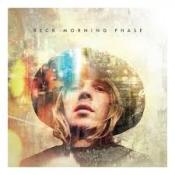 The release of Beck’s latest album is what got me investigating Beck’s back catalog–just to see how Beck arrived at this mellow chillout place.

 A few years ago, Beck suffered from a debilitating back injury that required spinal cord surgery. This limited his output significantly over those years. It also gave him a chance to re imagine releasing music. And so around 2012 he started releasing singles with no albums attached.


 I Just Read About That...