Feeds:
Posts
Comments

Archive for the ‘Death’ Category

shantySOUNDTRACK: RHEOSTATICS-Mrs. Robinson’s, Kitchener, Ontario (December 20, 1997).

kitchener

What’s most fascinating about these Rheostatics live shows is coming across venues that have no internet presence.  I can’t find a photo or anything of Mrs Robinson’s in Kitchener.  Did it even exist?  Who knows?

The quality of this show is very good although the overall volume is too low. There are also complaints from Dave about his monitor not working.  It doesn’t impact the sound for us, but I guess he couldn’t hear very well.  The intro of “Michael Jackson” is all messed up, but they play on through it.  Then they actually take a pause for an unspecified length of time to fix it (but still do a show that’s over 2 hours long).

Martin and Dave are very chatty for this show.  The intro is quite long, with some good banter including a discussion of the weird table in front of the stage which people can use for stage diving or go go dancing.  Martin explains the origins of “Junction Foil Ball” (about a guy who makes a ball out of the tin foil in cigarette packs.  They make a joke about Don the drummer being from Kirkwood Lake which is where Alan Thicke is from.  And a joke about Polkaroo.

They also introduce Tim Mech (their guitar tech) whose band PEEP-SHOW was one of the winners of Musician magazine’s “Best Unsigned Band Competition” in 1997.  He takes a long solo in “Claire.”

This was their last show of 1997, so this wish everyone a Merry Christmas.

[READ: March 3, 2014] Shantytown

This has been my favorite Aira book so far (and I’m now caught up to his English language releases).  The plot was simple and interesting, and the fantastical elements really worked with the story instead of overshadowing it (which his stories sometimes allow, but which isn’t really a criticism per se, just a point of fact).

This story begins with Maxi, a kind-hearted, but not terribly smart or sensible young man.  He is unemployed, did not finish any real schooling and doesn’t have a lot to do.  He has been going to the gym daily, so he is very strong. And he has recently begun helping the garbage scavengers.

These scavengers are people who live in the Shantytown nearby.  It is a collection of houses, most very tiny and quickly constructed, where the poorest people live.  And many of these people collect and either sell or use rich people’s garbage.  They come up every night before a garbage pick up and root through the streets for anything they can use.  And Maxi has begun helping them shift their carts  Since he is so strong, he finds that none of the their carts are very heavy.  And although he has never spoken to any of them and they have not spoken to him, he decided to start helping them and now he gets great satisfaction in carrying their stuff.

The shantytown is an unsavory place where drugs are sold and not too long ago a young girl was murdered.  Recently a policeman, Agent Cabezas has been trying to get to the bottom of this whole drug thing.  The drug of choice is proxidine which makes things clearer. Even Cabezas himself takes it (even though it is illegal).  But there has been a lot of suspicious activity with a man dressed as a pastor who might be a dealer.  And then there’s Maxi who is suddenly hanging around the shantytown.  And, quite frankly, Cabezas has decided that he’s tired of being a good cop.  He is ready to take what is his. (more…)

Read Full Post »

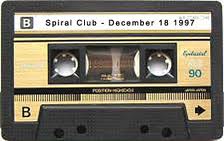
briefSOUNDTRACK: RHEOSTATICS-Spiral Club, Guelph Ontario (December 18 1997).

spiral This show has an interesting technical glitch that the owner thankfully fixed. It was a soundboard recording (which is awesome), but evidently there was static in the right channel that rendered it unlistenable.  So he simply removed the right channel and mixed it mono.  The sound is actually excellent—one of the best early shows they’ve done.  But since there is only own channel, you miss a lot of what, I think, is Dave’s guitar.  When guest Tyler McPherson plays his solo, I believe you can’t hear it.  Yet despite that, it still sounds great.

I feel like the band was a having a lot of fun on this Thursday night in Guelph (every night in Guelph is a weekend). They mention that their Nightlines episode was aired on the night of Lady Diana’s death (so they feel some kind of weird connection to her).

There’s a few firsts in this set as well.  It’s the first time they plated “Junction Foil Ball” (from Nightlines).  They seem to have finally settled in with “Harmelodia” not “California” in “Easy to Be with You.”  They toss in a bit of “Tubthumping” at the beginning of “Horses,” and a bit of the Monkees, song “Look Out Here Comes Tomorrow)” at the beginning of “Queer.”

Of course there are some flubs as well.  Martin messes up California Dreamline big time and Dave gets lost in the counting of “Four Little Songs” (and then says he never went to school).

But it’s the banter that is the fun part of this show.  They ask the crowd not to shout out requests for a couple of songs.  There’s a very funny sequence in which they try to play a Coors lite anthem.  And Martin says he’s out of his mind.  Dave says he’s a madman and Martin calls him a manatee.  And then someone offers Dave an Islanders jersey which he says he can’t accept—it is too generous, but he’ll always remember it (and now so will we).

Before the end of the set, they offer the crowd some of the food they have backstage (if you like olives). But then they say that $18 was a bit steep of a ticket price for the show (can you imagine?).  So they’re going to play extra long because the ticket price was so high.  Man, how cool is that?

[READ: Summer 2013] Brief Encounters with Che Guevara

Several years ago (long before Billy Lynn’s Long Halftime Walk) I read about Ben Fountain…somewhere.  I was reading an interview with a writer who talked about some new writers that he liked.  Ben Fountain was one of them, and this writer specifically mentioned this collection.  A week or so later I was in a dollar store of all places and saw this book on their piles of books.  I couldn’t believe the serendipity. So I bought it (for a dollar).  And then kind of forgot about it (so much for my theory that if I buy a book I’ll read it).  But I did eventually get around to reading it and now sadly not only do I have no idea who originally introduced me to Fountain, I can’t even find it with online searching (and frankly I could have read it anywhere).  Also, Fountain has since written Billy Lynn which received all kinds of praise (and which I haven’t read), so trying to find specific praise for Fountain from 7 years ago is a lost cause.

And just as I forgot to read it I forgot to write about it until now.  This was his first collection of stories.  There are eight in total.  Even though it has been awhile, most of the stories were so powerful and well constructed that I remember them quite well. (more…)

Read Full Post »

[LISTENED TO: October 2013] Warbound

warboundI loved Book I and Book II of The Grimnoir Chronicles immensely. The first was an amazing introduction to this new world and the second upped the scale and intensity to an amazing level (nearly destroying Washington D.C.).

And since the beginning of Book II picked up shortly after the events of Book II, it seemed pretty safe to assume that we would be heading into the giant conflict that was predicted at the end of Book II–fighting the creature that was coming to kill The Power.  For real context, read the other two reviews first (I mean, really), but for simple context, a sizable minority of the population has the gift of Magic.  This gift comes from The Power and it allows people to do all kinds of things–bend gravity, transport from one place to another, talk through animals, fade into walls, etc.

It has only been recently, through the work of our heroes, that people understood just how people got the power.  It came from The Power, a creature that gave humans magic and then fed off of them when they died.  It was a symbiotic relationship.  But of course people who did not have Power hated those with Power.  Even though the people with Power often use their power for good, there were of course people who didn’t.  Consequently all people with The Power were scapegoated.  This is all laid on a backdrop of alternate reality 1930s America, where the Nipponese are ascending and offer a very credible threat–especially since their Magicals are organized and brutal. (more…)

Read Full Post »

chomuSOUNDTRACK: THE FAINT-“Help in the Head” (2014)

doom“Help in the Head” opens with an incredible amount of feedback and squalling noise–some of it natural and other parts sounding quite processed.  After ten seconds the song begins properly with a pounding drum and buzzing guitars.  The song is quite simple–a catchy melody that blossoms once the bridge kicks in (with some “oh ohs”).  The chorus is also simple and catchy, “I just meant you needed help in the head” with all kinds of fuzzy screaming swirling around.  A few minutes later, the song ends with more noise, just as it began.

The Faint has been around a long time and are on Saddle Creek records, home to Conor Oberst and his many bands (he was in an original incarnation of The Faint). The song has much in common with Oberst’s style of pop–simple melodies and very catchy structures, but it is so overlaid with noise and distortion that it takes it out of the realm of simple pop music into a pop music that is actually abrasive..

[READ: February 21, 2014] The Galaxy Club

Brendan Connell is back with his most daring book yet.  Daring, because it is so very different from what he usually writes.

I have really enjoyed Connell’s audacity in his previous books–whether it was the extensive research done into both cooking and history in Lives of Notorious Cooks (2012) or the brutality that religion can inspire in The Architect (2012) or his exploration into extremely transgressive behavior in Metrophilias (2010).  He has never been afraid to push the edge of the envelope into unexpected areas.  But what makes this book so daring is that it is, for the most part, pretty “normal.”  Book covers don’t typically indicate anything really, but this book cover, in sober black and white, really conveys the feeling of the book–gritty, small town, hardscrabble Southwest.

And yet despite the somewhat conventional nature of the story, there are also fantastical elements.  Each chapter is narrated by a different (sometimes recurring) character.  Some are narrated by “Those Underground,” and “Demon Taming Stick” and even “Prawn Dragon Colonel.”  But they are also narrated by normal folks.  Connell’s past work in creating manifold characters in his short stories really pays off for the number and divergent characters he has here.

The main characters are a man named Cleopatra–who claims to be the Queen of the Nile herself.  The Montoya family: Ibbie, Theodore and their son Blue Boy.  The Roybal family: Elmer and his aunt Ramona.  And a police officer named Alfonso Torcuato Southerland-Hevia y Miranda who claims to be switched at birth with Elmer–but he claims he bears no grudge. (more…)

Read Full Post »

goonSOUNDTRACK:BOWERBIRDS-Tiny Desk Concert #35 (November 16, 2009).

bowerThis show was recorded July 7, 2009.  It’s fascinating that it didn’t get posted until four months later.

As the Bowerbirds first started I didn’t think I would like them primarily because of the opening lyrics of “Hooves” “Back to when I was born on a full moon, I nearly split my mama in two.” It just seemed an offputting way to start especially when sung over very simple acoustic guitar.  But after the first verse, the band joins in with some Ahhs, which flesh out the song very nicely.  The accordion and violin fill in where necessary and make this a much more compelling-sounding song.

The second song, “Teeth” opens with a very full sound–I really like it–bowed double bass, violin, accordion and guitar and when the backing vocals complement the lead vocal, it’s really quite beautiful.  “House of Diamonds”  is a folkie song, but the final track “In Our talons” (which comes from their first album) is really dramatic, with a some great vocals, a cool section that slows down the tempo and rousing accordion-driven conclusion.  (There’s something a bout an accordion that when played right can add incredible tension to a song).

You can watch it here.

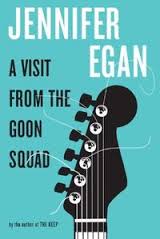
[READ: February 13, 2014] A Visit from the Good Squad

This book made many best of list at the end of 2010.  I’ve wanted to read it for some time now, so when I saw it remaindered at Barnes & Noble, I grabbed it (yes, the library is cheaper, but I find that sometimes I will read things more quickly if I buy them).

I was expecting to be blown away by the book.  But I wasn’t.  At least not at first.  And the real reason for that was because I read it over too long of a span of time.  There are a lot of intricacies in this book that demand attention.  It’s not a difficult book, but the structure of the book is not linear, and there are connections that are made and lost and resumed.  And if you’re not paying attention, it’s easy to miss them.  I enjoyed it quite a lot and I really liked the way the story filled in parts as it went along (you’ll see why that is significant shortly).  And I loved the way the end tied everything together so nicely.  But I found that I got even more out of it while writing this recap because it helped me to make connections I initially missed.  So definitely read this, but either read it quickly or read it twice in a row.

So this book is set up that every chapter is narrated by or focuses on a different person at a different time in the story’s history.  It’s a fascinating way to tell a story for the obvious reasons, but also because most of the characters are interrelated in some way (which was the clever part).  And other characters arrive and disappear while still keeping continuity in the story.

There are thirteen chapters, which means 13 stories.  Naturally there are more than 13 characters, so this makes for an interesting look at this world.

The first chapter and more or less the thread throughout the stories is Sasha.  In the first chapter, (which is third person but in which Sasha is the protagonist), we see her planning to steal the wallet from a woman in the bathroom stall next to hers.  She is on a date with a man named Alex, who is new to New York and is still kind of wide-eyed about it.  He is amazed when later on he sees that Sasha has a bathtub in her kitchen (which she never uses).  Sasha’s chapter is interspersed with her at the therapist’s office as she talks about her kleptomania and about her life as the assistant for Bennie Salazar–THE Bennie Salazar, record producer extraordinaire who discovered The Conduits. (more…)

Read Full Post »

momentSOUNDTRACK: NICK BUZZ-Circo (1996).

nickbuzzNick Buzz is a side project of Rheostatics singer/lead guitarist Martin Tielli.  This album was reissued in 2002, when I bought it  But it came out in 1996, right around the time of the concerts I’ve been posting about.  Martin says that this album is pure pop, and that he is genuinely surprised that people don’t see this.  Of course, when your album has screeching monkeys, cars honking and circus music, pop is not the first thing that comes to mind.  There are certainly pretty songs on here, but it is an album that resists easy entrance.  There are short manic pieces, slow, languorous, almost lounge music pieces, and an improved cover of Joni Mitchell’s “River.” And then there’s the instrumentation: piano, violin, guitar, voice (no drums, although there is percussion on some tracks) and other weird sound effects.

“Step Inside” opens the disc.  It seems like a normal, mellow song (with slightly falsettoed vocals).  But 34 seconds in the circus music starts—a deviant and unsettling circus that pushes its way into the song briefly then vacating and allowing the pretty melody to return.  It’s like a mild form of Mr Bungle (with more actual circus).  It’s unsettling at first but then strangely catchy after a few listens.  There is fanfare as the song ends, interrupted by the sound of a tape speeding up (or going backwards) until song two bursts in.

“That’s What You et for having Fun” is less than three minutes and while weird, it is certainly accessible and funny.  The guitar sounds like he is slapping the strings rather than strumming them.  The refrain of “there’s a monkey in my underwear” gives a sense of the absurdity (especially when the President of Canada (sic) says he has one too).  “Just Because” mellows things out a lot—simple guitar with a kind of lullaby feel (it’s a bout wishing on stars).  It’s so slow after the craziness of the first two songs.  After  3 minutes of a lounge type song, it ends with a distant radio sound of an even more loungey song which melds into the live version of “River.”

The mellow “River” is followed by a raucous bass clarinet solo and wild guitar solo that is interrupted by the long (nearly 6 minutes) “Sane, So Sane.”  This is the most conventional song on the record—a simple piano melody with repeated lyrics (conventional aside from the weird distant music in the background of course).  Although it does gone on a bit long.  “A Hymn to the Situation” is an eerie two-minute wobbly song.

“Fornica Tango” is indeed a tango presumably sung in Italian. This song features a crying baby, an interesting sounding “Italian” chorus and the screeching monkey at the end.  “Love Streams” is a pretty, slow ballad.  “Aliens Break a Heart” is another pretty song.  Although this is the song that ends with traffic sounds.  “The Italian Singer/Just Because I’m Nick the Buzz” has a kind of Kurt Weill atmosphere to it with spoken words and falsettos.

It took me several listens before I could really find purchase with these songs.  I find that I really enjoy most of them now–some of those slow ones are a little too meandering for my liking.  But it seems like a fun outlet for Tielli’s songcraft.

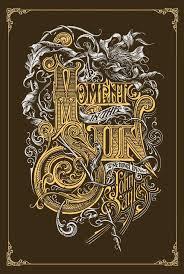
[READ: October & November 2013] A Moment in the Sun

I read this book last year…finished it just before Thanksgiving, in fact (I was proud of my pacing).  But it was so huge that I didn’t want to write about it until I had a good amount of time.  And now here it is four months later and I probably have forgotten more details than I should have and the post will be nowhere near as in depth as I was saving time for in the first place.  Bah.

When people see this book, they say, “That’s a big book.”  And it is a big book.  It’s 955 pages (and they are thick pages, so the book itself is nearly three inches thick–see the bottom of this post for an “actual size” photo); it’s got three “books” and dozens of characters whose stories we read about in full.  It is about the United States, racism, The Gold Rush, the assassination of a President, the Spanish American War, a World’s Fair and even the exploration of moving pictures.  This is a fairly comprehensive look at the Unites States from the 1890s to the early 1900s.  And, man was it good.

John Sayles is known more for his movies than his books (18 films directed, nearly as many different ones written and only 4 novels), but the cinematic quality that is clearly in his blood comes through in this book as well. (more…)

Read Full Post »

Pete Seeger [1919-2014]

seegerPete Seeger died last night at the age of 94.  I love his anti-war quote: “Sometimes I think [about] that old saying,’The pen is mightier than the sword.’ Well, my one hope is the guitar is gonna be mightier than the bomb.”

When I was a kid, I knew a few of his songs (and didn’t really like them) because of an organ songbook we had (did everyone have an organ in the 70s?).  I can remember pounding on the wheezing organ and making up silly lyrics to “If I Had a Hammer” and “Where Have All the Flowers Gone?”  It’s amazing to think that these songs, which were written in the sixties, are often seen as eternal classics.  It’s also amazing to think that Seeger wrote “Turn! Turn! Turn!” which I never associated with him.  Indeed, like Woody Guthrie, much of American folk music can be traced to Pete Seeger (even if he adapted much of it himself).

I really started getting into Seeger when I had kids, as I found his music was fun to teach the kids to sing along to–it was designed for singing along to.  In fact, he wrote a ton of children’s music as well. (He released FIFTY-TWO studio albums, along with 22 live albums and 23 compilations).  His first solo album was a collection of traditional folk songs for children (he didn’t write them, which may be why it’s confusing to know which songs were actually his).  And I don’t even know anything about his first band The Weavers, who had hits with “Goodnight Irene,” “On Top of Old Smokey,” “So Long (It’s Been Good to Know You)” and “Wimoweh.”

(more…)

Read Full Post »

eleanorSOUNDTRACK: BILL CALLAHAN-Tiny Desk Concert #21 (July 13, 2009).

billcBill Callahan (formerly known as Smog) plays beautiful slow ballads.  He has a deep, calming, gorgeous voice.  And his songs have a very traditional acoustic feel (even when he plays electric guitar).  He is excellent at what he does.

But I’m afraid I just don’t really like his style all that much.  I can absolutely appreciate why he is so well-regarded, because even as I’m listening to this Tiny Desk set I keep thinking how good everything he is doing is.  Man, his voice is so interesting, and his music is so pretty (the strings add a very nice touch).

But I just can’t imagine myself ever choosing to listen to his album.

In fairness, a song on a mix tape would probably be awesome, and I did enjoy the three songs here: “Jim Cain,” “Rococo Zephyr” (great title, and my favorite of the three) and “Too Many Birds.”  And I can imagine if I was ever on a mellow music kick that this would be where I’d start.  So if you enjoy pretty, mellow music done incredibly well, Bill Callahan is definitely your guy.  I feel like he is not as well-known as he ought to be, so check him out.

[READ: January 23, 2014] Eleanor Rigby

Completing three Douglas Coupland novels in two weeks may seem daunting, and it is especially so when the books are as dark as these have been.  (With Coupland’s follow up book, JPod, he would go in a different direction and kind of break the darkness somewhat.  And the new book which just came out seems like it is more humorous than dark).  This book is perhaps the most insular of his career and perhaps the most insular book I’ve read.  The title is puzzling (and is ultimately revealed), although Coupland says that he was inspired by wondering what happened to Eleanor Rigby after the (Beatles, duh) song was over.

So in this story, the main character is named Liz Dunn.  Liz is a blank.  She claims that she is so dull that if she were an extra in movies, she would be asked to leave the scene because she is too devoid of character to even be an extra.  (Actually, Liz lays the self-pity on a little too thickly throughout the book–we got the point).  Liz has a brother, who is an accomplished world traveller, and a sister who lives nearby and pops in to check on her once in a while.  Both are married and have their lives together, unlike Liz who lives by herself in a room with no personality at all.

Liz’ sister is beautiful and got up to all kinds of trouble in school and William has always been successful, but Liz was…nothing.  She didn’t like to do much.  And she pretty much holds herself up as the antithesis of her sister.  She watches movies all the time in her living room. And then she goes to sleep.  She works at a well paying but dull job and she has saved a ton of money because she never spends it on anything.

As the story starts, she is getting wisdom teeth out. She takes a week off from work, but he boss (the Dwarf Whom I Report To) calls to say that someone will bring some work over to keep her busy.  She has bought a bunch of tear jerker movies in hopes of riding out the painkillers with them.  And then she gets a phone call.  A man named Jeremy has her name on his medic alert bracelet and he is in the hospital.

Liz doesn’t know who he is, but then takes a guess and goes to see him in the hospital.  And it turns out to be…her son. (more…)

Read Full Post »

heynosSOUNDTRACK: JULIE DOIRON-Tiny Desk Concert #20 (July 6, 2009).

julieI don’t know Julie Doiron exactly–her name sounds familiar, and I know the band Eric’s Trip (she was the bassist), but I don’t really recognize her.

Nevertheless, I really enjoyed her Tiny Desk Concert.  Unlike most of the musicians, she busts out an electric guitar, and although it’s quiet, there’s some good buzzy distortion on it, especially in the first song “Heavy Snow.”  And it sounds good with her voice, which is powerful, even if she does seem nervous.

On “Ce Charmant Coeur” she sings in French and then messes up when she admits she’s thinking of other things and is distracted by the intimacy of the setting.  Bob and company calm her by saying that she is sweating less than Tom Jones did (and there’s very funny joke about her breasts popping out (they don’t)).

She plays “Tailor.” It seems like she tried earlier and stopped half way through and is now trying again (the Concert itself starts midway through, so I assume that’s what was cut off).  It’s a pretty, mellow song (very different sounding from “Heavy Snow”).

For the last song she plays “Consolation Prize” which she says is unlike any she’d written before.  There’s a chaotic section in the middle which they agree we can just imagine because shes not going to play it in this setting.  The blurb with the show says that she normally rocks out pretty hard–something that I’d like to see.

In looking up Doiron’s past she was on Kill Rock Stars and Sub Pop, so I must have seen her name a lot back in the day.  I now see she has recorded with all kinds of bands that I like, and I’m curious to hear her more rocking edge (especially since she is so polite and sweet and nervous here).

Check it out here.

[READ: January 11, 2014] Hey Nostradamus!

After finishing the exciting All Families are Psychotic I moved on to his novel with my least favorite title and with a horrendous cover.  You’d think that I would remember these books but I had no memory of this one either, and I’m fairly certain I read it within the last ten years.

Coupland must have been in a very dark place with this book as well.

There are four sections, each from a different person’s point of view.  This technique of having a person tell his or her story is something Coupland does very well in all of his works–he loves to tell stories about telling stories.

But the darkness about the book is that it is set in a school just as three student gunman come in and shoot up the cafeteria, killing dozens of students, including the first narrator, Cheryl.  This was written with the Columbine shootings in mind, although it has nothing specifically to do with Columbine.

In Part 1, Cheryl has already been killed as she is relating this story to us.  She tells us about herself and her decision to join Youth Alive! a religious group in school.  She and her friends in the group are very moral and are quite clique-y (and they are not widely liked).

The latest thing in Cheryl’s life which has her preoccupied and which has her Youth Alive! group very upset is that she has been spending a lot of unchaperoned time with Jason.  Everyone knew they were dating, but it seems to have gone further now.  And Cheryl explains to us (but not them) that she and Jason have started having sex.  But not until after they rushed off to Vegas and were quickie-married (which no one knows, not even their parents). (more…)

Read Full Post »

CV1_TNY_10_07_13Kalman.inddSOUNDTRACK: DAVID DONDERO-Tiny Desk Concert #10 (December 5, 2008).

donderoBob and Robin at NPR love David Dondero.  I have never heard of him outside of their show (where they play his new songs when they come out).  Apparently he has some kind of connection to Conor Oberst (their voices sound similar—although I gather that Dondero came first).  I don’t care for Oberst in general, although I find that Dondero’s voice is more palatable to me.

He plays four songs on acoustic guitar.  And they’re all enjoyable.  They are simple folks songs “We’re All Just Babies in Our Mama’s Eyes,” is a little fast.  While “Rothko Chapel” is probably my favorite of the four.  I was really intrigued by the Chapel (which is real and which I’d never heard of) and which sounds cool—his song is an interesting look at it. “In Love With the Living and the Dead” and “It’s Peaceful Here” round out the set.

I feel that more than his music (which is good but not especially memorable), it’s his lyrics that Dondero is known for.  his songs are thoughtful and interesting and look at a variety of subjects.

[READ: January 6, 2014] “I’m the Meat, You’re the Knife”

This is an interesting story constructed in a way that lets you know that something big has happened between two people.  But we are never told exactly what happened, we are simply given a lot of stories with which to construct the event ourselves.

Jay is walking home—his father has just died—and he is greeted by an old friend, Ed Hankey.  Jay doesn’t feel like talking to Ed about his father, especially when Ed tells him that Murray Cutler is currently in hospice.  Murray was their English teacher–Jay has become a writer—with Ed emphasizing how important Murray was to them.

The story bounces back and forth between the preparations for Jay’s father’s funeral and his visits to Murray in hospice.  The differences are pronounced but not emphasized: Jay’s family is there to make arrangements, to plan for all of the details.  Meanwhile, Murray has no family, no one to visit him in hospice.  Indeed, when Jay visits him, a volunteer is reading to him. (more…)

Read Full Post »

« Newer Posts - Older Posts »