Feeds:
Posts
Comments

Archive for the ‘Death’ Category

SOUNDTRACKLOS CAMPESINOS! Live in studio at WEXP, July 31, 2008 (2008).

For this brief in studio performance Los Campesinos! play four songs from their debut album Hold on Now, Youngster.  The band sounds great in this setting.  I don’t have this album, so I don’t know if they deviate at all from the originals, but the live versions are tight and very effective.

The interviews are informative and rather gushing (I’ve never heard a DJ kiss the ass of a performer in such a nice way before…and the band seems really flattered by it…it’s all very sweet).  The DJ also has a funny conversation about their tendency to scream in their songs.  (It’s cathartic).

What I didn’t notice so much on Romance is Boring was how many different lead singers the band has.  With these four songs, there are enough lead vocalists to show a lot of diversity (and a lot of screaming, too–“don’t read Jane Eyre!”).  And, as one might expect if you know their later disc, the lyrics are smart, funny and wicked.

The difference between Romance and Hold On, seems to be that the band were much punkier on this early disc, and that all comes out in these live tracks.  And the songs are all short: 3 minutes and under.  They really pack a lot in here.

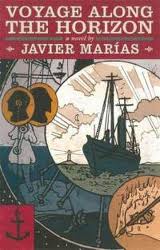
[READ: January 13, 2011] Voyage Along the Horizon

Most of Javier Marías’ books are translated and released through New Directions. But for reasons I’m unclear about, this book, Marías’ 2nd novel, was published by Believer Books (an imprint of McSweeney’s).   I haven’t read any of Marías’ other novels, so I have no idea if this is similar to any of the others (there’s a Q&A at the back of the book which suggests that this is typical of his earlier novels), but it absolutely makes me want to read more by him.

What I loved about this story first off was the sense of distance we received from the main story itself.  (Marías is Spanish, but this is a technique employed by Roberto Bolaño (Chilean) extensively…. Obviously, others do this as well).

The set up of the story is this:  1) An unnamed narrator has a party at his house.  At this party, two individuals, Miss Bunnage and Mr Branshaw (or is it Bragshawe?–he never learns) discuss author Victor Arledge.  Miss Bunnage is a scholar of Arledge and Mr Branshaw has in his house an unpublished novel that investigates the disappearance of Arledge and why he stopped writing.  And so, Branshaw invites Bunnage and the narrator to his house the next day to have the novel (called Voyage Along the Horizon) read to them.

2) So, the next morning, the two go to Branshaw’s house where he does not let them see the book, preferring rather to read the novel aloud (which gives us essentially 3 levels of remove from the action of the story).  That’s a long way to go before you even get to the meat of the book. (more…)

Read Full Post »

SOUNDTRACK: THE BODY-“Empty Heath” (2010).

This is Viking’s fourth pick for album of the year.  (I skipped number three because it is an acoustic finger picked-instrumental album which I liked fine but which wasn’t anything special to me).  The Body is a fascinating band, and they are hard to learn anything definitive about online.   But if you’re looking for the album, All the Waters of the Earth Turn to Blood, you can get it on Amazon, or (cheaper) from At a Loss Recordings.

This song opens quietly with a person saying “together.”   It’s followed by a fascinating chorus singing what sounds like possibly Peruvian throat singing.  And then the guitars bash in.  Heavy droning guitars (with a screaming “lead” vocalist buried in the mix).  The song often stutters to a halt only to pick up the doom and mysterious gloom.

The notes about this album say that it is a duo (why is some of the heaviest, most menacing music made by duos?)  At some point in the song, the music stops and you hear just the chanting (which now sounds like it’s reversed vocals).  I have no idea what to make of this song or if the rest of the disc sounds like this, but I’m really intrigued by it.  Viking calls it “the most surreal doom-metal record of 2010” and I agree.

[READ: December 30, 2010] ”Dealing with the Dead”

Jenifer Egan’s A Visit from the Goon Squad is on my short list of books to read this January so I was intrigued to read this little piece by her.

Her Something Borrowed article (the third in the series) is quite different from the others.  It begins with a fairly shocking account of her mother’s robbery at gunpoint. She had been working in a gallery and the robbers thought they would have cash on hand (they didn’t).  There was talk of shooting them until they were inadvertently rescued by a delivery man.

This rather exciting story mellows out pretty quickly in to a far more reflective and mellow story. (more…)

Read Full Post »

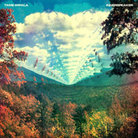
SOUNDTRACK: TAME IMPALA-“Lucidity” (2010).

I heard this song on the NPR’s 5 Artists You Should Have Known in 2010.  The album, Innerspace, is only available in Australia (imported on Amazon for big bucks) but I guess that’s why people download music.

This song is really cool. It feels very My Bloody Valentine to me.  However, inevitable comparisons to The Beatles abound, but that’s mostly in the vocals (which is kind of funny since they are Australian).  But it’s really a very sixties British vocal sound–not unlike early Who).

The big difference comes in the music which is psychedelic and wild in ways that The Beatles never quite managed.  There are great big washes of noise, and the sound quality sounds retro, even though it obviously isn’t.  Comparisons to the great Swedish band Dungen are not misplaced either.

I’ve listened to a few more tracks by them on YouTube, and I think this album could easily be one of the best of 2010 if only more people could hear it!

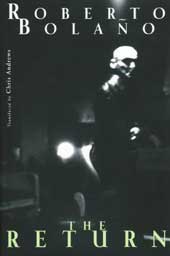
[READ: January 3, 2010] The Return

With the completion of this collection of short stories, I have now caught up with all of the published works of Roberto Bolaño (in English of course).  [The next book, Between Parentheses, a collection of nonfiction, is slated for June].

So The Return contains the 13 short stories that were not published in Last Evenings on Earth.  That collection inexplicably took shorts stories from his two Spanish collections Llamadas telefónicas (1997) and Putas asesinas (2001) and combined them into one collection in English.  It wasn’t quite as evident in Last Evenings, but it seems more obvious here that the stories in Putas asesinas are grouped together for a stylistic reason.  So, to have them split up is a bit of a bummer.  And yet, having them all translated is really the important thing.  And, again, Chris Andrews does an amazing job in the translation

This collection of stories was very strong.  I had read a few pieces in Harper’s and the New Yorker, but the majority were new to me.  Bolaño is an excellent short story writer.  Even if his stories don’t go anywhere (like his novels that never quite reach their destination), it’s his writing that is compelling and absorbing.

This collection also had some different subject matter for Bolaño (it wasn’t all poets on searches). (more…)

Read Full Post »

SOUNDTRACK: RADIOHEAD-OK Computer (1998).

The Bends showed amazing maturation for Radiohead, but OK Computer was like going from black and white to color.  It opens with “Airbag” a blast of music, oddly off kilter and unsettling but which immediately brings you into a great riff.  About midway through, the song splits in stereo with two competing solos vying for attention.   It ends with a loud stretched out chord.  And then comes one of the most bizarre singles around.  A nearly 7 minute multi-segmented song which, the first time I heard it, I couldn’t even find a melody.  I rather wish I could go back to that naive time, because my mind was blown away by the outlandishness of the song.  Now I know all the melodies and I think it’s just brilliant.

The minor chords of “Subterranean Homesick Alien” are accented with outer space sounds and yet despite its subject (alien abduction), the song is pretty well grounded: a simple, easy rocking track.  It’s followed by “Exit Music (for a Film)”, a gorgeous building minor chord song that opens with simple acoustic guitars and slowly builds to a scorching rocker (when the drums kick in at nearly 3 minutes, it’s like a wake up call).

“Let Down” is another slow builder, although it features a much more singable verse and chorus structure (it’s incredibly catchy).  It’s followed by “Karma Police” another catchy monster of a song.  It starts with a pleasant enough piano riff and features the politely sung threat: “this is what you get when you mess with us” and the beautiful falsettoed apology: “for a minute there I lost myself.”

It segues into the odd 2 minute computer-voice-recited (and barely listed as a track) “Fitter, Happier.”  This song foreshadows future Radiohead experiments.  It seems like a blow-off track, a filler, and yet like so many of the newer Radiohead songs, it works like glue holding the big hits together.  Check out how weird, wild and intricate the music behind the voice is.

“Electioneering” is one of the noisiest, most raucous songs in the Radiohead catalog.  It opens with this steel guitar sounding riff and crashes in with loud, distorted guitars and all kinds of drums.  Thom Yorke’s vocals are really loud in the mix, so when he gets to the bridge it’s practically a wall of noise, but listen to the great ascending and descending guitar riffs behind his vocals.  They’re really intriguing.  As is the skronking noisy guitar solo.

“Climbing Up the Walls” has all kinds of insane sound effects going on in the background of one ear (as befitting the title).  It’s a drum-heavy track with eerie almost unadorned vocals (until the very end when Yorke goes berserk).  It segues into the most delicate track on the disc, “No Surprises.”  The chorus of “no alarms and no surprises, please,” has always been very affecting.  And the delicate bells that adorn the verses are a very nice touch.  The penultimate track, “Lucky” is a sort of optimistic track, despite its mellow music and, I suspect, really not very optimistic ending. But the utterly uplifting scream of “it’s going to be a glorious day, I feel my luck could change” is spine tingling.

I feel like “Lucky” is such a great ending song that I tend to forget the final track, “The Tourist”.  It’s a slow, drawn out  track…”idiot, slow down.”  It’s probably my least favorite song on the disc, but it’s kind of a good ending after all of the high points of the disc.

And with the final bell of the final song, Radiohead became untouchable.

[READ: December 29, 2010] “Escape from Spiderhead”

George Saunders must live in a dark, dark world.  His comedy is dark (but very funny) yet I feel he is often quite under-served when people refer to his as a funny storyteller.  This story, which actually has many funny elements, is incredibly dark.  And even though I laughed out loud at a few things, no one comes away from this story happy.

One of the great things about Saunders is his almost obsessive mockery of corporate/medical culture.  He has more trademarks in his story than anyone I’ve ever read (even if they are all for things he has made up).  Now to me, that’s funny in itself (especially the names he gives them), but it serves a much more telling purpose: a portent of a very dark future.

This story is set in a lab, where the main character, Jeff, is being communicated with by Mr Abnesti (a very hard name to keep straight).  Jeff is in a room with Heather, and both are being fed the experimental drug ED556, a shame inhibitor.  And so they rip off their clothes and have at it (he was obviously given some Visistif™ because they do it three times).  They are also given some Verbaluce™ which helps them elucidate their experience (from more than just grunts and moans).  This Verbaluce™ is essential to all of their experiments because without their comments, the proceedings are undocumented. (more…)

Read Full Post »

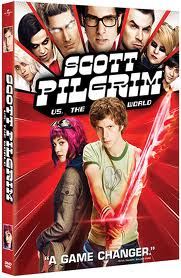
[WATCHED: December 17, 2010] Scott Pilgrim vs the World.

I was delighted to finally get to see Scott Pilgrim vs the World on DVD. And man, it did not disappoint.  I love Michael Cera, so even though he’s not who I pictured as Scott Pilgrim, he played the character quite wonderfully (although he was within the realm of the “Michael Cera” character, he had an air of the sinister about him which was quite captivating).

The movie did  great job at capturing the hyper real video game quality of the books (I love all the little extra details which were not cute comic book details (like the phones printing RIIIIIIIIING) but simply part of the world they lived in.

I thought that the compression of this long (but not too long) series was wonderfully done.  Although I missed some aspects of the book, I thought it was all handled very well.  Plus, I liked the increased presence of the awesome Wallace and I really liked the way they adjusted the Knives storyline so that it could conclude at the same time as Ramona’s.  That’s very different from the final book, and, while I think the book’s version is more elegant (and fitting a longer story), for the movie, that truncation worked very well and allowed for a fantastic conclusion.  The end was great thanks to the introduction of the cool video game that Scott and Knives play early in the movie–a game which was made up for the movie.

I’m also thrilled to finally know how to pronounced Sex Bob-omb and I’m also thrilled to hear how much they rocked (Beck did most of the band music and über-god Nigel Godrich made the score for the rest of the film. Other great bands on the soundtrack include Metric, Broken Social Scene, Dan the Automator and Kid Koala.  I sort of ignored the soundtrack when it came out but I think i may have to go check it out now.

So in the movie, Scott must battle Ramona’s seven evil exes to win her love.  As for the seven evil exes themselves, they were all fun (and nicely diverse).  I enjoyed seeing Ann Veal (her?) working with George Michael Bluth again and Jason Schwartzman was simply terrific as the evil Gideon.  Also terrific was Satya Bhabha as the over-the-top first evil ex and Chris Evans as the bad-ass actor boyfriend.  I was only bummed that the Katayanagi brothers were given kind of short shrift (but hey you can only have so many characters).  The fight scenes were really well executed and fun.

The only weakness I would say in the film is that I thought Ramona was a little flat.  It was hard to know just what was so compelling about her for Scott (aside from the act that she was in his mind-portal all that time).  The book gives more details that show their relationship build, but the movie left that out.  I’ve never seen her in anything else, so I don’t know whose fault that was.  This compromises the ending a little bit because the decision between Knives and Ramona is actually kind of difficult (where it really shouldn’t be).  And yet, I thought the ending was really well done, with Ellen Wong really stealing the show).

The DVD itself is pretty awesome and there are a ton of special features.  Although Scott Pilgrim vs the Bloopers was a major let-down.  The movie is so understated that none of the bloopers are over-the-top hilarious.  However, the trivia track that you can play during the movie (I watched about ten minutes of it) was very interesting.  I especially enjoyed reading how parts of the movie that were finished before the book actually made their way into the book because O’Malley liked them so much.

I’m also thrilled that they filmed the movie in Toronto.  The trivia track points out all kinds of interesting locations.  From The Torontoist:

The first thing Wright did when he met O’Malley here in 2005 was visit all the real-life locations.”Pretty much everything that was in the book, we shot the same place Bryan had drawn,” he says.

A perfect example is the house in which Scott and his pal Wallace live. In reality, O’Malley lived at 27 Alberta Avenue, though he thinly disguised it as “Albert Avenue.”

As any true fan knows, however, the drawings in the book are actually at number 65, down the street. So, that’s where they shot, turning the garage door into the apartment door.

And there’s plenty more details in that article.  Like that those romantic and perilous stairs are real stairs on Baldwin St.  (I love crap like that).

It’s a really enjoyable romp of a film, unjustly ignored in the theaters.  And perhaps best of all…in no way is it setting itself up for a sequel!  A movie that just ends….how novel!

Read Full Post »

SOUNDTRACK: BUKE AND GASS-“Page Break” (2010).

NPR has selected the 50 best CDs of 2010.  I knew a few of them but had never heard of a bunch of other ones (about 20% are classical).  This CD with the bizarre cover has a great write up:

The wannabe tech-geek in me was initially attracted to Buke and Gass for the band’s two handmade instruments, which modify a baritone-ukulele and a guitar/bass hybrid run through heavy-duty amps (also handmade, mind you).

The problem (and perhaps its because I’m listening at Xmas time) is that the main melody line of the bridge makes me want to sing “Hark, Hear the Bells” and so this feels like a Christmas song even though it’s not.

Whoops– check that.  That melody is certainly there, but I just learned that I was listening to it in mono.  The other speaker presents all kinds of interesting things that distract from that melody (and project much more coolness).

I like the intensity of the track (and the fact that it’s under 2 minutes long).  It’s pretty heavy and the female vocals are nicely aggressive.  And by the end of the song, the syncopation is downright awesome.

It’s amazing how listening to the ENTIRE song can really change your mind.  This is definitely a cool track and will make me investigate the band more.

[READ: December 22, 2010] “One Night of Love”

I had recently gotten interested in reading Javier Marías when I was looking for information about Roberto Bolaño.  I discovered that New Directions Press, the publisher of all of Bolaño’s smaller books also published translations of all of Marías’ books too.  This story comes from his new collection of short stories While the Women Are Sleeping.  (I had also forgotten that McSweeney’s published his book Voyage on the Horizon a few years ago).

I didn’t know where Marías was from when I first started this (I assumed he was Mexican because of the New Directions connection–he’s actually from Spain).  Anyhow, when I thought he was from Mexico, I wondered if there was some kind of connection between his style and Bolaño’s, but also if he was trying to reintroduce magical realism to Bolaño (who abhorred magical realism).

Well that’s moot, (he may be doing that but not because he is from Mexico).

So this story concerns a man who is dissatisfied with his wife’s sexual appetite and performance.  He has taken to visiting prostitutes (see why the Bolaño thing rang true?), but he is concerned because the prostitutes  have grown “increasingly nervous and increasingly expensive” ([Nervous]?). (more…)

Read Full Post »

SOUNDTRACKPHISH-LivePhish 10.21.95 Lincoln, Nebraska (2007).

This Phish show is pretty unusual, even for a band whose live sets are by definition unusual.  It opens with a reprise (“Tweezer Reprise”) which is basically the end of a song.  There’s also a song that is not itself unusual but it’s one that I’ve never heard before:  an all acoustic guitar song called “Acoustic Army.”

But aside from those minor oddities, it also features the craziness of “Kung” which is more or less just nonsensical screaming.  Then Set One ends with a great cover of “Good Times Bad Times.”

Set Two is where the madness comes full bore.  After some great versions of “David Bowie” and Lifeboy” we get a 24 minute version of “You Enjoy Myself.”  After about twenty minutes the song devolves into a vocal extravaganza, with each of the four guys trying to outdo themselves with weird noises and vocals sound effects for 5 minutes.  And just when you think the nonsense is over, the band covers Prince’s “Purple Rain.”  Fish, the drummer, sings the song (rather poorly, it must be said), but the “highlight” is his vacuum cleaner solo.  Yes, vacuum cleaner solo.

I have included a video from this portion of the show to see just how odd this concert must have been (although I believe that other concerts featured similar nonsense too).  If you get bored by the noise in the beginning of the video, remember that it’s out of context and not really representative of the rest of the  show, but do fast forward to when the guy in the dress pulls out the vacuum cleaner and tell me that that’s not the best damn vacuum cleaner solo you’ve ever heard.

The set ends with Trey noodling the riff from “Beat It,” although they never play the full song.   Then there’s an encore cover of “Highway to Hell” (which rocks).  The disc comes with a bonus track, a twenty some minute soundcheck where you can hear the band experimenting with sounds and ideas for the show.  Not essential but interesting.

Lest you think this whole show is weird, there’s some great renditions of “Chalk Dust Torture” and “Guelah Papyrus.”

[READ: December 15, 2010] “The Yellow”

This story opens with a forty-something year old guy who has moved home with his parents.  To the consternation of his father (“have you turned faggot?”), he paints his attic bedroom yellow.  Who would have guessed that this (four-page) story about a sad middle-aged man would end with casual sex and zombies?

Roy is frustrated with his life (obviously).  He gets out of his parent’s house and goes for a drive.  While scanning the classic rock stations looking for the next great thing, he feels a thump and realizes that he has hit an animal.  He’s fairly certain it’s a dog. (more…)

Read Full Post »

SOUNDTRACK: LOS CAMPESINOS!-Tiny Desk Concert #67 (July 5, 2010).

This Tiny Desk show really accentuates what fun can be had with the Tiny Desk format. Los Campesinos! are an eight piece band, but only four of them could come (or could fit, anyhow) in the tiny office.  And so we get a hugely stripped down set from the wonderful Welsh band.

One of the real benefits of these Tiny Desk shows is that it really highlights the songs themselves.  I enjoy Los Campesinos!, but sometimes I feel like their songs are so busy it’s not always easy to know exactly what’s going on.  This set shows how cool and interesting these three songs are underneath all the wild sounds and effects.

It’s also fascinating to watch these four folks perform in this room with nothing to hide behind.  The singer doesn’t even have a microphone, he’s just standing there with his arms behind his back singing to a small room.  And how odd it must be to sing to a dozen or strangers the a capella ending of “Straight in at 101.”

The three tracks all come from Romance is Boring and include the wonderfully titled: “A Heat Rash In The Shape Of The Show Me State; Or, Letters From Me To Charlotte”, “Straight In At 101” and “The Sea Is A Good Place To Think Of The Future.”

As you might be able to guess from the titles, the band is wordy and articulate.  What you might not be able to guess is just how sexually explicit their lyrics are.  Not dirty (well, a little dirty) just unabashedly frank (and its made even more so in this quiet setting).

You can watch (and download here).

[READ: December 15, 2010] Echo #25 & #26

These next two books in the series are really fantastic.  Issue #25 brings the confrontation with Cain to a head.  It almost comes too quickly–there has been so much lead-up to it that when they finally meet the confrontation is (necessarily) brief and explosive.  They finally meet at the top of a mountain (where yet another really gruesome act is done to someone–although really it pales to what happened to the guy who was practically a skeleton).  The intensity of the confrontation, and the excitement of the denouement made me think that the series was just about to end.

But them comes Issue #26 in which the final panel changes the entire game!  (more…)

Read Full Post »

SOUNDTRACK: All Songs Considered Year End Music Roundup (2010).

Every year, I like to check various sources to see if there were any albums that I missed.  My definition of good resources: allmusic, amazon, pitchfork.  (There’s another fascinating list available here at Best Albums Ever, a site I’ve never seen before, and I have a large portion of the Top 50 albums.  I didn’t buy a lot of music this year, but evidently I chose wisely!).  I don’t necessarily agree with these lists, but if I see the same album on a few lists, I know it’s worth at least listening to.

This year, since I spent so much time on All Songs Considered, I thought I’d see their Best of Lists.  What’s awesome about the site is that you can hear not only selected songs in their entirety, you can also download the audio of the original show…where the DJs talk about their selections and play excerpts from them.   There are many different lists to investigate.

The most obvious one to star with is 50 Favorite Albums of 2010.  This shows the staff’s 50 favorite albums in all genres.  I admit that there’s going to be a lot on this list that I won’t bother exploring (I’m not really that interested in new classical or jazz and I’m not too excited by most pop music, although I was pleasantly surprised by how much I enjoyed the Kanye West songs here).

But some albums did stand out that I hadn’t heard, and I will investigate them further in 2011:

Buke And Gass, ‘Riposte’
Deerhunter, ‘Halcyon Digest’ (I know, this is on many best of lists)
The National, ‘High Violet’ (This is also on everyone’s list)

Bob Boilen, All Songs Considered’s most awesome host, picks his Top 9 of the year.  I’m on board with about 1/2 of his list (haven’t heard the other half).  Sufjan Stevens is his #1.

Robin Hilton, Boilen’s partner in crime, has a Top Ten which is remarkably similar to Boilen’s.  It has most of the same albums just appearing in a slightly different order.  Lower Dens is #1. (I’ve never heard of them).

Carrie Brownstein (of beloved Sleater-Kinney and now evidently a permanent member of the NPR team) has a Top Ten (Plus One)–funny that she liked more than ten when Boilen liked less than ten.  I’m really surprised by her selection of albums because her own music is so punk and abrasive, but her top ten features R&B and some folky bands.  Her top album is by Royal Baths, a band I’ve never heard of.

Stephen Thompson also picked his Top Ten.  He has an interesting mix of alt rock and jazz.  His number one is by Jonsi from Sigur Rós. (A great album).

Perhaps the best list comes from 5 Artists You Should Have Known in 2010.  I didn’t know any of the 5.  Sarah bought me two CDs for Christmas (and she was pleased to have gotten me good music that I hadn’t heard of!).  The Head and the Heart hasn’t arrived yet, but The Capstan Shafts is great.  I’m also really excited by Tame Impala.

Another great list is Viking’s Choice: Best Metal and Outer Sound (stay tuned for much more from this list).  It is dominated by black metal, but there are a few surprises in there as well.

Even the All Songs Considered Top 25 Listener’s List was great.  I had most of the list (except for The Black Keys who I simply cannot get into).

Although I enjoyed a lot of new music this year, it’s always nice to see that there is some new (to me) stuff to investigate.  Who knows maybe some day I’ll even have listened to enough new music in a year to make my own Top Ten.

[READ: December 31, 2010] McSweeney’s #36

With McSweeney’s #36, it’s like they made my conceptual ideal.  Its weird packaging is fantastic and the contents are simply wonderful.  But let’s start with the obvious: this issue comes in a box.  And the box is drawn to look like a head.  You open up the man’s head to get to the contents.  Brilliant.  The head is drawn by Matt Furie (with interior from Jules de Balincourt’s Power Flower.

Inside the box are eleven items.  The largest are smallish books (postcard sized) running between 32 and 144 pages.  The smaller items are a 12 page comic strip, a nineteenth century mediation (8 pages) and 4 postcards that create a whole picture.  The final item is a scroll of fortune cookie papers.   The scroll is forty inches long with cut lines for inserting them into your own fortunes (I wonder if they will sell this item separately?)

Aside from the bizarre head/box gimmick (and the fact that there is ample room in the box for more items), the contents are really top-notch.  For while many of the books included are individual titles, there is also an actual “issue” of McSweeney’s (with letter column and shorter stories) as well.  So let’s begin there

ISSUE #36: New Stories and Letters.  The resurrected letters page continues with more nonsense.  I’ve often wondered if these are really written like letters or if they are just short pieces that have no other place to reside.  (Oh, and the back of this booklet contains the bios for everyone in here as well as assorted other folks who don’t have room for a bio on their items).

LETTERS (more…)

Read Full Post »

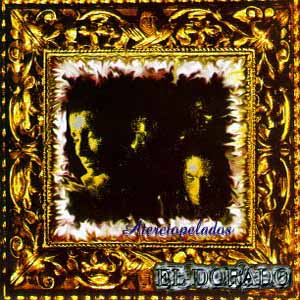
SOUNDTRACKATERCIOPELADOS-El Dorado (1995).

One of the other Rock en Español bands I bought in the 90s was Aterciopelados (the hardest to pronounce).  Aterciopelados come from Colombia and they play a variety of styles of music.  They also feature a female vocalist (Andrea Echeverri) who has a great voice in a variety of styles.

The opening song “Florecita Rockera” is a heavy blast of punk.  “Suenos del 95” is a kind of a lite pop song.  “Candela” is a latin-infused song that sounds not unlike a more psychedelic Santana track.  And “Bolero Falaz” is a winning acoustic ballad.  Meanwhile “Las Estaca” is a sort of county/cowboy song that breaks into a fun rocking chorus.

“No Futuro” starts as a slow balald and builds and builds to a heavy rocker.  I would have liked this song to go a bout a minute longer to get really crazy.  The rest of the disc works within this broad framework: ballads that turn into heavy rockers (“De Tripas Corazón”), hints of punk and latin accents.  And then there’s a song like “Colombia Conexión” which reminds me a bit of The Dead Milkmen: simple sparse verses with heavy punk choruses.  Meanwhile “Pilas!” is straight ahead punk.  The final song “Mujer Gala” has some ska-lite aspects as well (and I have to say that it seems like No Doubt may have been inspired by them).

Although for all of the different styles of music, the disc is really a venue for Echeverri’s voice.  She’s not a rocker or a screamer and she could easily sing pop ballads, but because she chooses to sing over so many styles, she really showcases the multifacted nature of her voice.  She can hold a note for quite a while and although she never really shows off, it’s clear that she’s got a powerful voice.  She even sings beautifully over the punkier tracks, never devolving into a scream, but never losing her edge either.

Aterciopelados is a hard band to pin down (especially with this one disc).  Of the rock en Español bands, Aterciopelados had one of the longer lifespans.  They released several albums with very different styles.

El Dorado suffers from weak production, some more highs and lows would really makes the listening experience better, but it’s a solid disc overall.

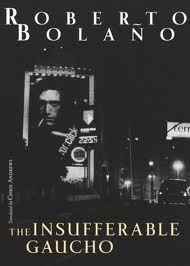
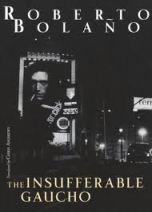
[READ: December 10, 2010] The Insufferable Gaucho

This is a collection of five short stories and two essays.  Two of the short stories appeared elsewhere (which I read previously).  This is the first time I’ve seen the essays translated into English.  The fabulous translation is once again by Chris Andrews, who really brings Bolaño’s shorter books to life.  They are vibrant and (in light of The Savage Detectives, this is funny) visceral.

“Jim” is a four page story which focuses very specifically on a man named Jim.  As the story ends, we see Jim locked in an existential struggle.  For such a short work, it’s very powerful.

“The Insufferable Gaucho” (which I had read in The New Yorker) was even better after a second read.  I find this to be true for much of Bolaño’s work.  He tends to write in a nontraditional, nonlinear fashion so you can’t always anticipate what is going to happen (quite often, nothing happens).  In this story, a man in Buenos Aires, feeling that the city is sinking, heads out to his long neglected ranch in the country.  He spends several years there, slowly morphing from a cosmopolitan man to a weather-beaten gaucho who doesn’t shave and carries a knife.  But there is much more to the story.  The countryside is virtually dead: barren, wasted and overrun by feral rabbits.  The rabbits offer an interesting metaphor for the wilderness as well.  His interactions with the few other people he encounters are wonderfully weird, and the ending is thought-provoking.  It’s a wonderfully realized world he has created.

“Police Rat,” is that strangest of Bolaño stories: a straight ahead narrative that works like a police procedural.  I assumed from the title that it would be something about a metaphorical rat in the police force.  Rather, this is a story about an actual rat who works on the rat police force.  Bolaño spends a lot of time setting up the story (details are abundant) making it seem like perhaps there would be no plot.  But soon enough, a plot unfurls itself.  And although the story is basically a police story, the underlying reality behind it is fantastic and quite profound.  The story is beyond metaphor.

“Álvaro Rousselot’s Journey” was published in The New Yorker.  This story was also better on a second reading.  In many ways this story is a microcosm of Bolaño’s stories: a man goes on a quest for an elusive man.  Unlike the other stories, he actually catches up to the elusive guy.  But, as if Bolaño were commenting on his other stories, actually catching the guy doesn’t really solve the crisis.

This basic premise is that a writer believes that a filmmaker is stealing his ideas for his films (even though he is from a different country).  But more than just the simple plot, when Álvaro Rousselot leaves the comfort of his homeland things change fundamentally within him.

“Two Catholic Tales” is, indeed, two tales.  I had to read this piece twice before I really “got” the whole thing.  There are two separate stories (each story is a solid block of text but there are 30 numbered sections (which don’t seem to correspond to anything so I’m not sure why they are there).  The first tale is of a young boy who desires to be like St. Vincent, with designs for the priesthood.  As the story ends, he is inspired by a monk who he sees walking barefoot in the snow.  The second tale (we don’t realize until later) is about the monk himself.  It rather undermines the piousness that the boy sees.  On the second reading I realized just how dark of a tale this turned out to be.  It’s very good.

“Literature + Illness = Illness”
This is the first non-fiction by Bolaño that I have read.  It is a meditation about his terminal illness.  The essay is broken down into 12 sections about Illness. They range in attitude from the realization that when you are gravely ill you simply want to fuck everything to the fear that grips you when you finally accept your illness.  Despite the concreteness of the subject, the essay retains Bolaño’s metaphorical style.  Each subdivision is “about” an aspect of illness.  “Illness and Freedom,” “Illness and Height,” “Illness and Apollo,” “Illness and French Poetry.”  But it’s when he nears the end and he’s in a tiny elevator with a tiny Japanese doctor (who he wants to fuck right there on the gurney but can’t bring himself to say anything), and she runs him through his tests showing how far advanced his liver failure is, that the reality of his illness really sinks in.

“The Myths of Cthulhu” is the other essay in the book and I have to say it’s the only thing in the book that I’m a little frustrated by.  About midway through, he reveals that this is a speech and I wish that an introductory note would have given context for this speech, or indeed, indicated whether it was really a speech or not.

One of things that struck me about it (and also about “Literature +Illness=Illness” is how frequently he is unspecific about his research (and just never bothered to go back and fix it).  For instance:

For books about theology, there’s no one to match Sánchez Dragó.  For books about popular science, there’s no one to match some guy whose name escapes me for the moment, a specialist in UFOs.

Because I don’t know his non-fiction and I don’t have context (and I’ve no idea who Sánchez Dragó is) I don’t know what to make of that unspecific recommendation.  As for Sánchez Dragó, in the speech he’s noted as a TV presenter (Wikipedia confirms this).  But why the uncertainty in a written piece?  Laziness or deliberate commentary?

This essay has many elements of local information that are completely lost on me.  However, by the end, he brings it back to folklore and literature.  He also makes some biting criticisms of George Bush, Fidel Castro, Penelope Cruz (!) and Mother Teresa. Actually, I’m not sure if he’s mocking Penelope Cruz, although he is definitely mocking Mother Teresa.

The ending is general moaning about the state of Latin American fiction.  Even though I didn’t follow all of what he was talking about, there’s something about his delivery which is so different from his fiction. It’s honest and fast and kind of funny and enjoyable to read.

——

This may be something of a minor work, and yet the stories are really wonderful and are certainly a treat to read.  The essays definitely need more context, but it is interesting to finally have a chance to read the “real” Bolaño.

Read Full Post »
« Newer Posts - Older Posts »