Feeds:
Posts
Comments

Archive for the ‘Death’ Category

SOUNDTRACK: THE TRAGICALLY HIP-Up To Here (1989).

Up to Here is a pretty big leap from their first EP.  There’s more guitar soloing (not grandiose solos, just little guitar noodling in the songs “Blow at High Dough,” which was used wonderfully for the show Made in Canada (also known as The Industry).

Downie’s voice is more in keeping with what we’d come to know later, and lyrically the songs are esoteric and interesting.

“Blow at High Dough” opens the disc with a very cool guitar intro (“They shot a movie once, in my hometown”) “I Believe in You (Or I’ll Be Leaving You Tonight)” a not terribly good song has some proto-Downieisms: spoken passages, stories in a breakdown of the song, but the subject matter is not that exciting.  Of course, it’s hard to sound good when you’re followed by “New Orleans is Sinking” another fantastic song that still sounds great today (especially in their live versions).

“38 Years Old” is a surprisingly moving song with some slides guitars…a nod to their country/folk roots that they tend to bury under raw rock guitars.

But even some of the less memorable, less exciting songs have great aspects to them.  Songs like “She Didn’t Know” are pretty standard rock songs.  Better than average, but not exceptional.  But the band puts little things into them that bring them up from the mundane: the guitar licks, the backing vocals (slightly R.E.M.-ish).

Even “Boots to Hears” which sounds a bit too much like John Mellencamp in the intro really wins you over by the end (the lyrics are great).  For what really is a debut album, it’s solid and shows great songwriting skills and promise.

They still haven’t quite gotten the hang of cover art yet, though.

[READ: January 26, 2011] “You Go First”

This was the first of four flash fictions in this issue.  Flash fiction doesn’t really have a definition per se (except that it is very short).  There are some masters of flash fiction who can write very compelling stories with astonishing brevity.  These stories are all short (one magazine page a piece), but they feel kind of bloated compared to the writers like Lydia Davis.

Gibb’s story actually feels a lot longer than it is.  It opens with us meeting the narrator’s next door neighbors, Carl the cremator, his obese wife Brenda and their son Jason.  The narrator doesn’t really like Jason, but he’s the only person who will hang out her because he wasn’t around for her birthday party last year.  At that party, her hippie parents encouraged everyone to play a game called Getting to Know Our Bodies. (more…)

Read Full Post »

SOUNDTRACK: DAVID FRANCEY AND MIKE FORD-Seaway (2009).

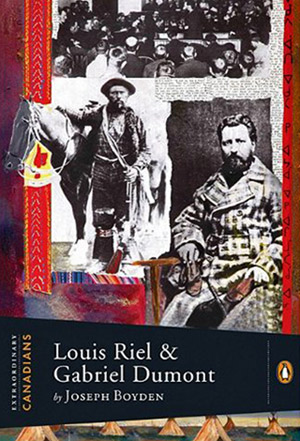
Mike Ford introduced me to Louis Riel on his album Canada Needs You, Volume One.  The song “Louis & Gabriel” features the lyrics “Oh, Louis Reil, here comes your friend Gabriel” outrageously simplistic (it is for kids after all) but so incredibly catchy it’s in my head whenever I see this book.  This is Ford’s most recent album, a collection of songs by himself and David Francey–who I didn’t know before this disc.

Seaway is a collection of 16 songs which are in one way or another about the sea.  Two of the songs appear on Ford’s release Satellite Hotstove, but the rest are new.  I don’t know if Francey’s songs are new or not.  I’m also unclear from the credits if Ford and Francey worked on these songs together (the notes suggest they did) or if they were recorded separately and then compiled.

The songs are primarily folk–simple acoustic numbers, often solo guitar, but sometimes with accompaniment.  Mike Ford has a great, strong voice, and is capable of some interesting stylistic changes.  His songs are more vibrant on this disc.  Francey has a wonderful, almost whispered voice.  He has a gentle Scottish accent which is great for his storytelling songs.  Mostly he speak-sings, but on some tracks, like “The Unloading” he sings a full-bodied chorus.

But it’s Ford’s song that bring a lot of variety to the disc.  “There’s No Rush” has a sort of calypso feel to it and “When You’re the Skip” has a wonderfully dramatic sea-shanty/musical feel to it.   And “21st Century Great Lake Navigators” is a rap–Ford frequently raps a song on his various albums.  His voice is very well suited to it, and his rhymes are clever and often funny.

This is a charming disc.  I wouldn’t say it’s essential, but it’s a good introduction to both singers, and, of course .

[READ: January 26, 2010] Louis Riel & Gabriel Dumont

Of the six Extraordinary Canadians books, I was least excited to read this one.  I’m not sure why, but I wound up leaving it for last.  But lo and behold it was easily the most engaging and, dare I say, exciting story of the six.  I’m sure part of that is because I didn’t know the outcome (even if Gabriel was somewhat famous in the U.S., I still didn’t know what had happened to him or to Louis).  And by the end of the book, I absolutely couldn’t put it down.

Joseph Boyden is a Métis writer (who I’ve never read before).  It’s obvious from the get-go that he is sympathetic to Riel and Dumont (which is to be expected in a biography, I would think).  He gets a tad heavy-handed about John A. Macdonald, but it seems justified.  For really you can pretty much take only one of two points of view about Riel and Dumont: they are either rebel heroes, standing up for the oppressed Métis, or they are traitors, intent upon destroying Canada’s expansion.

Now, I admit that I don’t know much about Canada’s expansion.  The first prime minister, John A. Macdonald, was instrumental in Canadian Confederation and was the driving proponent for the completion of the Canadian Pacific Railway.   But as with American westward expansion, Native cultures are in the way of this expansion. (more…)

Read Full Post »

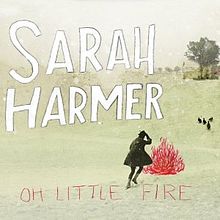
SOUNDTRACK: SARAH HARMER-Oh Little Fire (2010).

I found Sarah Harmer when she had a left field hit (“Basement Apt”) in the states.  I went back and discovered her band Weeping Tile (who are quite good and recorded a version of the song on their EP Eepee) and have been following her continued solo career.

Since that first record, she released a killer second disc, followed by a re-release of an intimate 1999 record she made for her dad which let her revel in her country roots.  She followed this up with I’m a Mountain, a very country, but very catchy album.  Finally, four years later, she put out Oh Little Fire.

Although she hasn’t lost her country roots, this album returns to more of the rock sound that first attracted me to her.  It’s not hard or heavy by any stretch, but it’s moved beyond the country of I’m a Mountain.

Sarah and I listened to this album a lot at night when it first came out, and it slowly seeped into my system.  I had kind of forgotten about it for a while, and upon rediscovering it I was delighted to hear that the melodies were fresh and still with me.  The album seems like a simple indie folk or the work of an adult alternative singer songwriter, but the thing with Harmer is that she has that wonderful background with Weeping Tile, a band that was always slightly off-center.  So, she writes beautiful melodies but puts little grace notes into them to keep them from being disposable.  And yet they are still super catchy.

The only hard thing about this disc is wondering which song will be stuck in your head after listening to it.

[READ: January 7, 2011] L. M. Montgomery

I’ve never read any L. M. Montgomery (although I’ve seen the miniseries of Anne of Green Gables) and I’ve never read any Jane Urquhart (but I love her name!).

This biography is so radically different from the other three I’ve read so far.  I wondered immediately if it was because Montgomery (and Urquhart) are women.  It deals with subjects that the other books didn’t at all: lost loves, mental incapacitation, family crises.  But it becomes clear through the book that these issues were THE issues that a woman at Montgomery’s time would have dealt with.  Unlike the men in the other books, Montgomery did not have a professional life (outside of being an author, which she did at home).  She was hardly a public figure, and since she was a woman, she was always in danger of losing what she had.

This biography is also vastly different from the others in the way it is constructed.  You can tell by some of the chapter headings: Her Death (the first chapter), Orphan, Sorrow, Madness.  You can also tell by these chapter titles that Montgomery did not have a happy life.

Indeed, between a husband who believed he was destined for Hell (he was a preacher!) and children whose life choices she disapproved of, not to mention terrible insomnia coupled with nightmares, her late adult life was nothing but torment.  But, sadly for her, her early life was nothing but torment either.  Her mother died when she was two, she was sent to live with her aunt and uncle (which was never a happy place).  But the most depressing of all of these events is when she lost her dearest friend at a terribly young age, a death she never really recovered from.

So how is it possible that Montgomery wrote such charming stories?

The answer to that (and the basis for most of this biography) is in her diaries.  Montgomery kept meticulous diaries (which she wrote and rewrote and then rewrote with posterity in mind).  She wrote about her childhood and her life as (sort of) an orphan.  She wrote about the places where she lived and the beautiful outdoors which impressed her.  She wrote about the sadness and the happiness.  Nothing was lost on her, and she saved it all (she also took photos of everything she loved, which are a beautiful and sometimes contradictory records of her diaries), and there are many published volumes that we can read to learn even more about her.

To me, the most fascinating (and horrible) part of the story was when she finally had Anne of Green Gables published.  The publishers took complete advantage of her.  They forced her to write sequels that she didn’t want to (although they are still quite good) and even compiled a final book from castoffs of the previous books (Return to Avonlea) that they published in her name.  Eventually the case was settled in her favor, phew, and she was able to write new characters that inspired her.

Montgomery had a rough life, and as her diaries come to an end, she stopped writing about things.   It’s hard to know exactly what she went through towards the end, but it doesn’t seem very positive.  And yet for all of her disappointments in life, she left us with some engaging and memorable stories.

The last chapter is a fascinating personal account of how Montgomery’s stories impacted Urquhart’s family.  It was incredibly touching and convinced me that Urquhart’s fiction would be enjoyable too.  Some day, some day.

This was a really enjoyable (but major downer) biography.  And, more than anything it has really inspired me to read Montgomery’s stories (and even one or two or Urquhart’s).

And, here’s a shameless plug to the folks at Penguin Canada–I will absolutely post about all of the books in this series if you want to send me the rest of them.  I don’t know how much attention these titles will get outside of Canada, but I am quite interested in a number of the subjects, and will happily read all of the books if you want to send them to me.  Just contact me here!

Read Full Post »
SOUNDTRACK: SHAD-TSOL (2010).

I first heard Shad on CBC Radio 3 online.  The track was “Yaa I Get It” and I really enjoyed it.  I haven’t listened to a lot of rap in the last few years; I’ve more or less grown bored by the genre, especially all the violence.  So, I was happy to hear this track, which was boastful but funny.

I decided to get the whole disc, and I wasn’t disappointed.  “Rose Garden” features a sample of “I Never Promised You a Rose Garden” which sets some of the tone of the disc.  But it’s on the next song “Keep Shining” that Shad’s uniqueness shines through.  This song is about women.  But not in any way that I’ve heard in rap before: “I can’t speak for women.  We need more women for that.”  And the inspiring final verse:

My mom taught me where to keep my heart.
My aunt taught me how to sing two parts.
My sis taught me how to parallel park,
and tried to teach me math but she way to too smart.
My grandma in the 80’s is still sharp.
My girl’s cousin is in activism in art.
They taught there’s no curls to tight, no mind too bright, no skin too dark to keep shining.

Later on the disc is “We Are the Ones” an oddball jam that sounds like one of those bizarre Atlanta rap tracks (funky vocals and all) and an amusing line about being Lost like Matthew Fox.  But his name checks aren’t all pop culture (Moredcai Richler gets a mention as does Glenn Beck (he “better duck like foie gras”).

And of course, there’s the wonderful “Yaa I Get It.”  With great horn blast samples and all kinds of noise competing for our attention.  Yet, throughout the lyrics stand out: “Maybe I’m not big cus I don’t blog or twitter…Dawg, I’m bitter.”  And there’s this wonderful couplet: The precision of my flows in terms of tone and diction/Is akin to that of the old masters of prose and fiction.”  Or take this lyrics from “Call Waiting,” “But what they say is hard for a pimp is harder for a man of faith.”

“Listen” has some great scratching on a heavy rocking track.  It’s followed by “At the Same Time.”  This is a mellow, sad song, which I don’t really like, yet which I find very affecting.  And lyrically, it’s great: “I never laughed and cried at the same time… Until, I heard a church pray for the death of Obama.  And wondered if they knew they share that prayer with Osama.”

The disc ends with “We, Myself and I” another noisy rocker and the one minute “Outro” an acapella rant.

Shad is a great rapper, doing interesting things and trying to make a difference.  He’s worth checking out.

[READ: November 1, 2010] “Marshall McLuhan”

I learned about this book because I’m a fan of Douglas Coupland.  And, as it turns out I’ve always had a vague interest in Marshall McLuhan, so it seemed like a sure thing. The problem was that the book was not readily available in the U.S.  So, I had to order it from Amazon.ca.  And, since you can’t get free shipping to a U.S. address from amazon.ca, I thought it would make sense to order 6 titles in the series, all of which I’ll post about this week.

So, here’s a shameless plug to the folks at Penguin Canada–I will absolutely post about all of the books in this series if you want to send me the rest of them.  I don’t know how much attention these titles will get outside of Canada, but I am quite interested in a number of the subjects, and will happily read all of the books if you want to send them to me.  Just contact me here!

Each book in the series has an introduction by John Ralston Saul, in which he explains the purpose of the series and states globally why these individuals were selected (“they produce a grand sweep of the creation of modern Canada, from our first steps as a democracy in 1848 to our questioning of modernity late in the twentieth century”).  It also mentions that a documentary is being filmed about each subject.

Perhaps the most compelling sentence in the intro is: “each of these stories is a revelation of the tough choices unusual people must make to find their way.”  And that’s what got me to read thee books.

This volume was probably a bad place to start in the Extraordinary Canadians series if only because it appears that Coupland’s volume is markedly different from the others.  Coupland being Coupland, he has all manner of textual fun wit the book.  The other authors seem to write pretty straightforward books, but you know something is up right away when you open the book and the first six pages comprise a list of anagrams of “Marshall McLuhan.”

On to Marshall McLuhan.  The Medium is the Message.  That’s about all anyone who has heard of McLuhan knows about him (and that he has a hilarious cameo in Annie Hall).

When I was a freshman in college, I took a class in Communications which focused an awful lot on Marshall McLuhan.  I didn’t like the teacher very much, but the message stayed with me all these years.   And so even though I’m not a student of McLuhan or anything, I was happy to relearn what I should have known about the man and his ideas.

(more…)

Read Full Post »

SOUNDTRACK: SHAD & DALLAS-“Live Forever” (2010).

Shad and Dallas Green (from Alexisonfire) recorded an EP called Two Songs and the profits go to Skate4Cancer.  The A Side is the new song “Live Forever.”  Shad is a great rapper, and make no mistake, this is a Shad song.  Green sings the hook-filled chorus (and an intro line).

Shad’s rapping is great and his rhymes are clever and interesting (he even does a fast double-time section which I’d never heard him do before). But the music itself is kind of bland.  I listened to it three times and I never really got into the flow of it.

I rather hope that sales are good (for the charity’s sake) but I’m afraid I’m not that excited by the track.

[READ: January 23, 2011] “Choynski”

I recently noticed that I had reviewed a whole bunch of stories from The Walrus.  So I wondered just how many stories there were in previous issues of the maagzine that I hadn’t posted about.  The magazine only started in 2003, and I still have all the issues (yes, that’s right…  I bought Issue 1 on the newsstand), so it wasn’t that hard to figure out.  In the early days, not every issue had fiction in it.  I started calculating and discovered that there were only about 25 stories to go.  So I thought, why not go back and read them all, eh?

This story was in Issue #2, and I have to say, good for them for picking David Bezmozgis to be their first author.  His issue bio reads that his first short story collection Natasha will be published in June.  And if you check now, you’ll see that Natasha won a Commonwealth Writers’ Prize and was a New York Times Notable Book.  Not bad.

There are essentially two stories in this piece and they tie together quite nicely.  The first arc concerns the narrator’s dying grandmother.  She is an old Russian Jew whose English isn’t great so she tries to speak in Yiddish to make up for it.  Her family understands but few others (like her doctor) know what she’s talking about.  As the story progresses, her family tries to keep the truth of her condition from her, but she is no dummy.

The second story concerns the narrator’s attempt to learn more information about Joe Choynski.  Choynski was being inducted into the International Boxing Hall of Fame (Old Timers division) and the narrator was going to the ceremony.  In trying to learn more about Choynski (considered America’s frst great fighting Jew), he enlists the help of Charley Davis, an old man who knows more than just about anyone else about the Choynski.  (more…)

Read Full Post »

SOUNDTRACK: THE DEARS-Live on QTV (2008).

The Dears are a wonderful band from Montreal. They create epochal noise, make concerts that are unholy messes (and yet totally amazing) and they seem perpetually about to self-destruct.   Murray Lightburn, the singer and song writer of the band is has an amazing voice and great songwriting skills.  They create full blown orchestral rock, but they’re not afraid to totally rock out (see the 20-minute live version of “Pinned Together Falling Apart” on their live album.)

These three tracks are acoustic and totally stripped down.  It’s just Murray on guitar and his bandmate (and wife) Natalia singing backing vocals.  These three songs come from the album Missiles.  Although I am partial to their over the top renditions, these stripped down version showcase how great the songs themselves are.

Dream Job” is a slow track with limited backing vocals.  “Lights Out” is a bit faster with some really great chord changes.  And finally, “Money Babies” is an amazing duet, really letting Natalia harmonize brilliantly.

You can hear more songs from The Dears at All Songs Considered.

[READ: January 11, 2011] “Meet You at the Door”

This is easily my favorite story in The Walrus in years, possibly ever.  It’s also one of my favorite stories that I’ve read in a long, long time.  It has so much to recommend it: it is wonderfully paced and it is really engaging.

The basic story is of a twenty-something black man who must travel to Gull Lake, Saskatchewan to start a job at a railroad junction house.  But that simple plot doesn’t do any justice to the multifaceted aspects of the story’s construction.

First, the position requires excellence in typing (relays that come from the main train location must be typed on an old manual typewriter in carbon.  With no typos.  And they must be typed fast!  Split second decisions must be made and any errors could be fatal.  So the employee must be smart and skilled (there’s a 75% failure rate on the test).

When the narrator passes the test he must ship off to Gull Lake that night.  And, this being “in the age of dinosaurs” the narrator is carrying his portable typewriter, a guitar and a huge afro.  And he needs a place to stay.  Fast.

He’s obviously not well received at first, until we meet the lady who will take him in.  And she is the second great aspect of this story.  She is a wonderful character (and could easily have many more pages written about her, but Hill is concise which really moves the story along).  She sizes him up, deems him worthy, and lets him have the spare room. (more…)

Read Full Post »

SOUNDTRACK: LIGHTS-“February Air” (2006).

Lights is a Canadian singer who is managed by Jian Ghomeshi.  She is a young cute pop singer and this was her second hit (I think–Wikipedia says it was used in an Old Navy ad).  I admit that I’d never heard of her before seeing her on Jian’s page.

I think of everything that Jian touches to be unique and always interesting.  And although this is certainly poppy and catchy, it’s only mildly  interesting and is kind of indistinguishable from a lot of other poppy catchy songs (the middle section stands out a bit, admittedly).

She’s received a number of accolades (best new artist at the 2009 Junos), so good for her (and Jian).  But I think I’ll be passing on her discs.

[READ: January 10, 2001] “Minnows”

This very short story (two pages) is dark and quite twisted.  Both in content and in structure.

The story opens with a woman seeing her daughter at the door.  We quickly learn that the daughter is not happy, but when the visit turns violent it’s unclear whether the older woman is crazy or hallucinating or if the violence is really happening.

Then we get some background story about their relationship.  Which sets things straight (sort of). (more…)

Read Full Post »

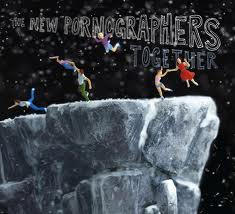
SOUNDTRACK: NEW PORNOGRAPHERS-Together (2010).

I enjoyed The New Pornographers’ debut album Mass Romantic, but I didn’t bother getting their later discs.  In the ensuing years, I’ve grown appreciative of both Neko Case solo and Dan Bejar’s Destroyer.  And, while I intend to get the NP’s middle discs, in the meantime, I am totally enamored of this one.

Their first disc sounded like a group of great songwriters doing their own thing.  This disc (their fifth) sounds like a group of great songwriters working together.  The album sounds cohesive and, frankly, wonderful.  It’s hard for me to pick a favorite song, because when the disc is over I find myself singing bits and pieces from so many of them.

The songs work well together, with different vocalists coming to the fore.  But there’s an overall cohesiveness to the disc.  Even the Dan Bejar songs (three on this disc), which sound very distinctly Bejar, act like a change of pace but retain the album’s style, rather than sounding like Bejar solo songs.

And I like the Bejar songs quite a lot (“Silver Jenny Dollar” is always in my head), but it’s the Newman songs (those sung by Neko Case and otherwise) which rise into the pop stratosphere.  The gorgeous delayed chorus of “Up in the Dark,” the beautiful cello of “Moves.”  Even a song like “Valkyrie in the Roller Disco” which opens a little quietly compared to the rest of the disc, pulls out a stunning chorus.

“A Bite Out of My Bed” is weird and wonderful and, of course, those first 6 songs are amazing.  “My Shepherd” is a stunning song and “Your Hands (Together)” is a catchy rocker which should have been a huge single.  Just when you think that “As a Rule” couldn’t possibly get any catchier, along comes a whistle solo.  Fabulous. And the album closer, “We End Up Together” has great group vocals and a nice return to those catchy strings from the opening.  It’s a great release from start to finish.

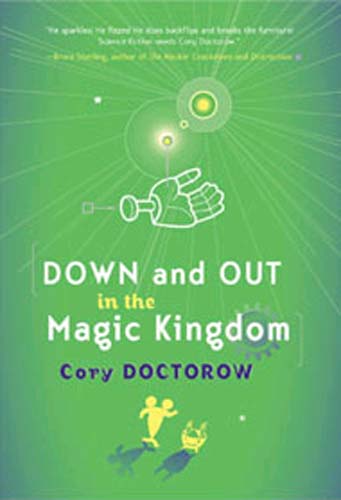
[READ: January 24, 2011] Down and Out in the Magic Kingdom

I loved Doctorow’s Little Brother.  And when I recently said I would be going to Disney, an astute reader said I should read Down and Out in the Magic Kingdom (which I’d never heard of).

Knowing what I know about Doctorow (this and all of his books are published under a Creative Commons license and if you go to his site, you can download the entire book for free), I expected that this book might bash Disney (the main source for our current copyright extension laws–see The Copyright Extension Act also known as The Mickey Mouse Protection Act).  The title also hinted at is as well.  But in fact, this book does not bash Disney World in any way.

Rather, it embraces the Magic Kingdom as a sort of traditional refuge, something that should be immune to technological update.  Of course, since it is a science fiction novel, it is also futuristic, full of bizarre technologies and lots and lots of behavior control.

The book opens in the undetermined future (although later in the book we learn that it’s probably sometime around 2069).  The Prologue is full of words that won’t be defined until later in the book (if at all):  “Deadhead” as a verb, “Bitchun Society,” and this whole sentence: “I took a moment to conjure a HUD with his Whuffie score on it.”

So, we know that this is not a typical story.  And it stays atypical.  Chapter One opens:

My girlfriend was 15 percent of my age, and I was old-fashioned enough that it bugged me. Her name was Lil, and she was second-generation Disney World, her parents being among the original ad-hocracy that took over the management of Liberty Square and Tom Sawyer Island. She was, quite literally, raised in Walt Disney World and it showed.

The story is set in Disney World.  Julius, the narrator who is 100+ years old but has been rebooted several times and appears 40, is dating Lil, who was 19 or so when they met.  And despite her youth and apparent airheadedness, they really hit it off.

As stated, her parents were more in less in charge of portions of Disney.  So, when they decide to deadhead, it puts Lil (and by proxy Julius) in charge.  Lil’s domain is the Hall of Presidents (and there’s fun insider knowledge about the Hall, and Lil is often seen with her head inside Abraham Lincoln).  Julius, meanwhile, loves loves loves The Haunted Mansion (and the story of his first time(s) there is really great).  And he works behind the scenes there now, constantly trying to make it better (shave a few seconds off here, make this part a little scarier, etc).

And all is great until Julius is killed. (more…)

Read Full Post »

SOUNDTRACK: THE DECEMBERISTS-“The King is Dead Live from Portland” on OPB (Oregon Public Broadcasting) (2011).

NPR loves The Decemberists, and so do I.  Not only did NPR stream their new album before it came out, they are also showing the audio and the video of this hour-long concert of the band playing The King is Dead start to finish.

I haven’t really had time to digest the whole album yet, but I am quite fond of it.  I’ve listened a few times and it’s very different from their previous releases, it has a much more folk/country feel (with harmonicas!).  And from what I can tell this live set is quite faithful to the recording.

Interestingly, when they played the entirety of The Hazards of Love live (also available from NPR), they played that entire epic album straight through with no chatter in between.  This live set is much more cordial and relaxed (like the disc itself), with some amusing delays and chatter between tracks.  (There’s an amusing reference to the lyrics of the new IFC show Portlandia).  There are tuning and tech malfunctions, and everyone plays along very nicely.  It really shows the difference between the two albums and how adaptable the band is.

Much has been made of the fact that Peter Buck plays on the album, and I have to say that the live mixing of “Down By the Water” makes it sound even more like R.E.M.’s “The One I Love” (that guitar, wow).  But it’s the country and bluegrass really comes out in this setting.  Sara Watkins’ violin really stands out.  They also mention the band’s side project, which I’d not heard of before now.  The band is Black Prairie and features Chris Funk, Jenny Conlee and Nate Query (I guess Colin Meloy is  real taskmaster that they needed to escape?).

The middle of the set is an interview with the OPB DJ (unnamed as far as I can tell) and Colin Meloy.  They talk about Hazards and the new one.  And at the end of the set there’s a Q&A from the audience (hear of Jenny’s wardrobe malfunction!).

But stay until the end because they also play “We Both Go Down Together.”  It’s a great, fun, loose set.

[READ: January 23, 2010] “The Hare’s Mask”

One of the fun things about vacations for me is that I bring all the magazines that have been idling around my house and I read them during down time.  So, I grabbed all of the magazines that were unread or half-read and put them in my suitcase.  After long days at Disney, when the family crashed, I took the time to finish those final pages.

I often find myself falling very far behind on my magazine reading, but I was delighted that after this vacation I was totally caught up (except for the 4 that awaited me when I got home).  This Harper’s story (and the next post) were the only stragglers from the trip.

And I find that I have much more to say about my trip and my magazines than about this story.  I feel like it was meant to be profound, and it certainly had the ingredients for profundity, but it failed to move me.

Perhaps it was the metaphor of tying fishing lures, which I don’t care about. Perhaps it was the rabbit killing, which was heart-string tugging, but was more distasteful than anything else. (more…)

Read Full Post »

SOUNDTRACK: FROU FROU-Details (2002).

Many years ago I bought Imogen Heap’s debut album because it was described as being similar to Tori Amos’ work.  I think that it’s really closer to someone like Heather Nova, but regardless, it was enjoyable, with her cool voice that had an unexpected falsetto thing that I rather liked.

I promptly forgot about her, although the single “Come Here Boy” stuck with me.  I was recently turned on to Frou Frou somewhere even though this album came out almost ten years ago.  Since a decade is a long time I can’t recall if 2002 was the time of this sort of music or not (well, Dido came out in 1999, so maybe this was the tail end?)

Anyhow, this album plays nicely into the continuum of slightly more complex than normal pop songs sung by a woman with a cool if not unique voice.  Heap provides the vocals, and I suppose the most notable quality is her breathiness.  She seems to be able to sing in a whisper, which is pretty neat and, again, there’s that falsetto which doesn’t seem to get higher so much as otherwordly.

She’s an excellent match for Guy Siggworth who creates music (at least I assume he did the music, I’m not sure how it was divided exactly) that is interesting and electronic but also soft and welcoming.  Despite the fact that the music is obviously a dude with a keyboard, his choices are not electronic and dancey, they are more enchanting (although they are also very catchy and dancey).

They work wonders as a team, and if you miss this sort of not-pure pop album (circa 2000), this is a great disc to pick up.  Heap’s voice may be one to get used to, but I find it far more engaging than the autotuned voices circa 2010.

A couple of stand out tracks include: “Must Be Dreaming” which has some especially nifty effects that make the song stand out.  The most Björkian song “Psychobabble” also offers cool sound effects which take it well out of the pop realm (her voice is particularly cool on this track).  And “Maddening Shroud” is probably the best poppy song I’ve heard in a long time.

[READ: January 11, 2011] “The King of Norway”

In my mind Amos Oz is a capital-A Author, somehow promising Thoughts.  Maybe it’s because he writes in Hebrew.  Maybe it’s because of the mystical name Oz, but he seems like a Prophet or something.  And in that respect, I suppose I am simply not full of Grace enough to get the Point of this story.

I know that it is utterly unfair to hold this man up to these made up standards, especially since I’ve never actually read him before.  But that’s all moot, because I feel like there’s more to this than meets the eye and I am just not that interested in finding out what.

It’s utterly coincidental that tonight we watched the first half of A Serious Man (which also features Hebrew prominently), but I am suffused with Jewish thought this evening.  (I enjoyed A Serious Man a lot more than this story, by the way). (more…)

Read Full Post »

« Newer Posts - Older Posts »