Feeds:
Posts
Comments

Archive for the ‘Death’ Category

SOUNDTRACK: THERION-Theli (1997).

I bought this disc when I was living in Boston and I immediately fell for it.  I seem to recall I was doing a lot of driving at the time, and this mix of extreme metal, orchestral accompaniment and twinned vocals was very captivating.  It was also really fun to play very loud on a dark highway.

I’d read a very good review of this disc that claimed it was a big step forward in styles of thrash/black metal (and if you Google reviews for this album they are pretty universally great).  The disc is exemplified by the track “To Mega Therion” which is almost entirely a full choir singing what I guess is the chorus.  The verses are populated by a guy screaming in a guttural voice who is answered by an almost mechanically twinned voice which sounds great but is even harder to understand.  Follow this with a beautiful piano (!) solo not unlike something Randy Rhoads put together for Blizzard of Oz, and add a pounding double bass drum all the way through (truth be told the album could be a little heavier in the bass) and you get a crazy mix of styles which is catchy and creepy at the same time.

It’s hard to match a song like that.  And, admittedly, the band doesn’t quite manage to do so, but the rest of the album keeps up this orchestral death metal throughout.

Reading about Therion has taught me that this album is something of  touchstone for a new genre of metal, called variously symphonic or operatic metal (I suppose we have this to blame for the Trans Siberian Orchestra?).

In addition to the choirs and guitars there are a lot of keyboards. They are disconcerting when you’re thinking death metal and yet really they add an even fuller sound, even if at times they are not as grand or powerful as anything else.  At times the album seems cheesey, but that may have more to do with thirteen years distance than the music itself.

Anyone who has seen The Exorcist knows that choirs can be spooky.  And when you mix it with the heavy guitars and guttural vocals, you get a really cool sinister yet catchy (and possibly uplifting) album.  There are certainly a lot heavier albums, but this one is pretty stellar.

[READ: Summer of 2010, finished December 12, 2010] Lords of Chaos

My brother-in-law gave me this book for my birthday this year.  I was familiar with it as it is fairly well-known in heavy metal circles as a fascinating read.  And so it was.

This book is basically a history of black metal in Norway and how some bands’ antics went beyond music into burning churches and even murder.  The authors present a pretty neutral account of the story.  They let the main participants (criminals) have their say and the interviews don’t comment on their answers, they just let them tell their side of the story.  The authors also know a lot about the music scene.  Of course, in the end, the authors (thankfully) disapprove of the violence.  It makes for an interesting and somewhat conflicting read. (more…)

Read Full Post »

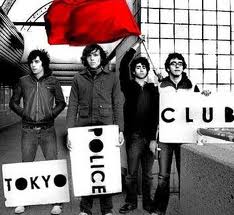
SOUNDTRACK: TOKYO POLICE CLUB-“Bambi” (2010).

I loved the first couple of Tokyo Police Club albums, but I missed this one when it came out.  My friend Al said it was one of his favorite albums of the year and that this song was one of his favorite songs.

I was disconcerted when I started listening to this because TPC is all about short, heavy, punk blasts of music.  And this song starts with…keyboards.

But it’s clear that this is still TPC, just with new bits and pieces added.  The keyboards are strangely out of pitch–they sound off somehow–and they add these bizarre little accents to this super catchy song.  The aggressive punk guitars are gone, but the attitude remains and this is a fantastic tune. One that I’ll listen to a lot more.

[READ: December 8, 2010] “Emptying the Skies”

I didn’t think it would happen, but I reached my Franzen saturation point with this article.  This is his third article about the disappearance of birds.  Originally, these articles came several years apart, so they wouldn’t seem so overwhelming.  But reading them all within a few days of each other, I’ve about had it with the doom and gloom.

These articles are devoid of Franzen’s usually charm and wit.  Obviously, a story about the disappearance of the earth’s birds should not have charm and wit, so he did his job well.  But man, I’m overwhelmed by the devastation of Europe’s migration paths.

The essay looks at three Mediterranean countries and their (reprehensible) attitudes towards birds: Cyprus, Malta and Italy. (more…)

Read Full Post »

SOUNDTRACK: BAD BRAINS-I Against I (1983).

I don’t remember buying this album, but I remember getting it because of the connection to SST records (not because Bad Brains were an amazing hardcore band–I didn’t know that yet).

All of these years later, this album is still pretty astonishing.  The heavy punk blends so well with the reggae-inspired jams.  Perhaps the biggest band where Bad Brains influence is evident is Fishbone (especially their later metal songs).  But you can hear t hem in Faith No More and many other mid 90’s bands as well.

The disc opens with a great off-beat instrumental (“Intro”) which leads into the amazing yell-along “I Against I.”  “House of Suffering” follows with some more speedy hardcore.  Then it all slows down with “Re-Ignition,” the first indication that this is an album unafraid to take risks.  Although the thumpy riff and heavy beats are still there, the vocals are more of a reggae style (especially towards the end).  “Secret 77” follows with a kind of funk experiment (but those drums are still loud and stark–Earl is a maniac!).

Darryl’s bass work is tremendous throughout the disc, and Dr. Know’s guitar is amazing–speeding fast soloing, heavy punk riffs and delicate intricate reggae sections intermingle with ease.  And, of course, we can’t forget about H.R.’s vocals.  He has several different delivery styles from the speedy punk to the reggae deliveries and the all over the place (including high-pitched shrieks on “Return to Heaven”).

The second half of the disc experiments with more diversity, and it is somewhat less punk sounding (although not by much).

Historically, it’s hard (for me) to place exactly how influential they were.  Listening to  the disc today (which doesn’t sound dated in any way) it sounds utterly contemporary in stylistic choices.  Did they come up with the mosh break?  They certainly are the first punk band the embrace Jah (that’s a trend that never really took off though, eh?), but their funk metal sound predates the popular Faith No More style by over a decade.

[READ: November 21, 2010] “The Kids Are Far-Right”

I know I subscribed to Harper’s when this article was published (I distinctly remember the jelly bean portraits of Reagan), but I’m pretty sure I didn’t read it then because the whole idea of it sounded depressing (the subtitle: “Hippie hunting, bunny bashing, and the new conservatism”) was just too much for me in 2006 (and was almost too much for me in 2010).

And so our correspondent (not long after his trip through the Bush/Cheney volunteer minefield) heads out to the twenty-eighth National Conservative Student Conference.  He meets exactly what you would expect: right-wing campus types (several from ultra-religious schools) who are there to learn to hate liberals even more than they already do (and boy do they).

Wells’ article is full of details about all of the speeches and programs, as well as biographical information about some of the attendees.  Most of them just want to get rid of liberals on campus, but some want to go into politics themselves someday (they are viewed with suspicion here).  Many also hate George W. Bush because he raised taxes.  In hindsight what we have here is the origins of the tea party.

The only comforting news to come from the article is that only 400 people attended (but they were willing to spend a few hundred dollars and give up a week of their summer vacation, so it’s still a pretty high number). (more…)

Read Full Post »

SOUNDTRACK: STEREOLAB-“Everybody’s Weird Except Me” (2010).

I was able to listen to another track from the upcoming Stereolab album Not Music.  This song is just fantastic.  It’s a faster, uptempo track.   Laetitia’s voice is backed by some other female singers (I wonder who they are, is it just Laetitia multitracked?).  And the propulsive beat is infectious.  The backing track of the music sounds like their earlier experiments with “space age” sounds.  Yet the guitar over the top is warm and inviting.

The song drops out at about the 90 second mark and offers a very cool respite from the bopping around that the song is doing.  After the break, the song seems to jump back and forth between this new mellow bit and the bouncy earlier part.  It’s a great track and a welcome opening to their last CD before going on hiatus.  Because, yes, according to the information on the NPR page, Stereolab is going on hiatus.

This CD is full of songs that were created around the time of their previous disc Chemical Chords, and it’s also packed with mixes, remixes and seemingly alternate version of some of those songs.  I haven’t heard the whole disc but it sounds like they’re going out with a winner.

[READ: November 15, 2010] “A Good Death: Exit Strategies”

I’ve mentioned before about my reader-relationship with Vollmann–I feel that I ought to read a lot more of him, yet I haven’t brought myself to do it (those books are huge!).  Nevertheless, I’ll keep reading the new pieces that I stumble upon.

So this piece is a nonfiction essay.  I’m tempted to say it’s more personal than the other pieces that I’ve read because it concerns the death of his father.  Yet from the little Vollmann I have read, it feels like he takes all of his writings very personally and invests himself pretty much bodily into them.

So, this piece, as I said, is sort of about the death of his father.  He died just a few months ago and Vollmann wants to find out a number of answers about death: should he be afraid of it, will he suffer, what should he expect?  So he interviews several “experts” in different fields:  coroners, funeral directors and many religious people of different faiths (Vollmann and his companion/translator are agnostic).  He’s given a vast array of answers, some of which are comforting to him and others just kind of piss him off. (more…)

Read Full Post »

SOUNDTRACK: NPR Live Concerts from All Songs Considered (Podcasts).

For a couple of months now I have been exploring the All Songs Considered Podcasts.  I recently stumbled upon a link to a whole slew of Live Recordings that are available for free.  All of them are available for listening and most of them are available for downloading.

Some of the recordings seem to be acoustic in-studio sessions that last about 15 minutes (called the Tiny Desk Concerts), but there are many which are full concerts recorded from the soundboard.  I happened upon this site because of a 2008 Radiohead show which runs just over 2 hours.  Some other full concerts (most of which are recorded at the 9:30 club in Washington D.C. include: Superchunk, Dinosaur Jr., New Pornographers, Public Image Ltd., Tom Waits, and a whole bunch of shows from SXSW.  The Tiny Desk shows include “Weird Al” Yankovic, Phoenix and my new discovery Sharon Van Etten.  And there’s even videos of many of the shows, too.

I’m pretty excited to have discovered this, as there are a surprising number of great shows available here (as I’m scrolling to the bottom of the list, I keep finding more and more bands that I like).  And all you need is to download iTunes to hear them (and if you’re a geek like me, you download Audacity and insert track numbers for ease of cataloging).

[READ: November 21, 2010] “My Bird Problem”

Of all of the Franzen non-fiction pieces that I’ve read, this one has been my least favorite.  And one of the reasons for that is that it made me feel kind of uncomfortable.   Not because of the main content of the article (bird watching) but because of some of the personal information that he (as per usual) included in the article.

The first uncomfortable part concerns his at-the-time-wife.  It feels the like he is including information that seems like he would have needed her permission to write (especially since we know who he is and therefore know who she is,  I can’t believe she would give it).

The second thing was just how misanthropic Franzen is.  When he goes out into the woods to look for birds, he finds that the mere awareness of other people sends him into a fury.  (“Oh no, were those human voices coming up behind us?”).  And while I’ve certainly felt like that, to see it in print and to see it so often is more than a little unsettling. (more…)

Read Full Post »

SOUNDTRACK: PREFAB SPROUT-Let’s Change the World with Music (2009).

This album was unreleased back in 1992 (it was supposed to be the follow-up to the wonderful Jordan: The Comeback).  Record label confusion left it shelved for many years.  It’s been released now because lead Sprout Paddy McAloon has been having health issues and won’t be releasing any new Sprout music anytime soon.  So he has released this album in what is essentially demo form.

Unlike many demos, though, this one is pretty fully realized.  It’s full of keyboards (where there might be strings for instance) and there are no backing vocals (or any other musicians), and yet for all of that, it doesn’t sound like a scratched out demo or a home-recorded cassette (and Paddy sings his heart out).  There are certainly moments (most evident in the drums at the beginning and end of songs) that sound kind of sparse, but the bulk of the disc is fully formed and quite well realized.

The opening is pretty odd, with Paddy (who normally has a soaring tenor voice) speaking a deep almost rap over a funky beat.  In fact, as the song continues, with Paddy’s voice returning to “normal,” that funky beat continues.  Nevertheless, but the time the sweeping dreamy chorus kicks in we’re back to less funky, more smooth sounding Sprout that I know and love.

Like Steely Dan, Prefab Sprout is not really meant to be enjoyed by the young.  It’s borderline treacly, it’s very sweet and earnest, an my high school self would have scoffed at my enjoying them at all.  And yet for all of that, the songwriting is really magical.  There is religious imagery all over the disc, but it’s there to convey the magical power of music.  And it’s entirely authentic.

And when you combine that with Paddy’s voice its adult contemporary music that is still interesting (certainly too interesting to be played on pop radio).  I think the real key to the success of the disc is the unpretentious, unforced and completely unironic joy that Paddy gets from music.  And there’s nothing wrong with that.

[READ: November 14, 2010] “Five Stories from Flaubert”

I really enjoyed Madame Bovary many many years ago when I read it.  Recently, writer Lydia Davis translated Madame Bovary and her translation is supposed to be exceptional, light years above the translation that I read.  One of these days I plan to read her version.  In the meantime, I’ve got these little short short stories.

I had a hard time deciphering what these little stories were, exactly.  The introduction says that they are “adapted from letters Flaubert wrote to his lover.”  So I guess Flaubert gets a co-writing credit?  There’s a couple more stories online at The Paris Review (but you need to buy the issue to get all ten). (more…)

Read Full Post »

SOUNDTRACK: PATTI SMITH: “You Light Up My Life” (Live on Kids Are People Too) (1979).

While browsing YouTube, I found a bunch of fun videos from the kids’ programs Wonderama and Kids Are People Too.  And that’s where I found this video of Patti Smith, of all people, singing this dainty pop confection.

Her introduction to the kids is weirdly wonderful (she says she wanted to be a missionary).  And the kids ask some pretty good questions (I would think she was too scary to be on this show back then, but no one says anything remotely risqué).  And she seems to genuinely want to inspire the kids.  It’s really quite cool.

I listened to the original just now for the first time since the 70s, I’m sure.   Although the first verse doesn’t sound drastically different from Patti’s version, once the chorus kicks in, Patti transforms this song into an angst-filled song of loss.  And man, can Patti sing.

Check it out here.

[READ: November 7, 2010] “Boys Town”

When I first saw this author’s name I thought it was Jean Shepherd author of In God We Trust…All Others Pay Cash (otherwise known as A Christmas Story).  And  I thought that maybe it was going to be a quaint look at growing up.

It isn’t. (more…)

Read Full Post »

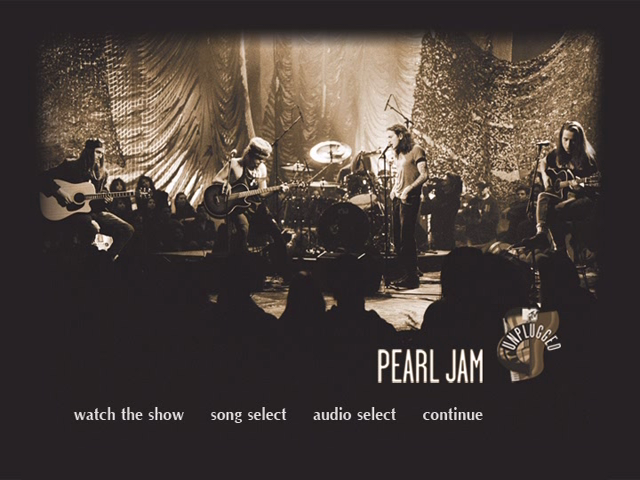
SOUNDTRACKPEARL JAM-Unplugged (1992).

The video of this nearly twenty year old concert came with the remastered version of Ten.  I hadn’t had a chance to watch it until now.  While watching I was pretty certain that I had seen the show either when it aired or sometime right after.  Some of the scenes, maybe from “Alive” looked familiar.  And when “Porch” was ending I had this vague memory of Eddie climbing on the stool and writing something on his arm (he writes “Pro-Choice”).

This is a seven song set of tracks from Ten (Dave Abbruzzese is drumming with them).  And, as advertised, it is unplugged.  Except that it really isn’t.

This set was recorded in 1992 (Unplugged started in 1989).  In my estimation, “Unplugged” shows were a chance to really strip down, play all acoustic and get really mellow (the Nirvana one (1993) is quite a good example) .  But here, we get Mike McCready and Stone Gossard (and all of their hair, holy cow!) playing acoustic guitars.  But Jeff Ament (and his crazy hat) is playing an electric bass (which is funny since in recent years he has been playing a standup bass).  Dave Abbruzzese is banging the crap out of his full set.  I mean, really the only thing that makes this unplugged at all is that the guitars are acoustic, but McCready still plays his rocking solos full tilt.

Nevertheless, the set sounds great.  Eddie barely talks (something about a love song to his surf board and a mumbled line about “State of Love and Trust”), and it’s pretty much all business.

“Oceans” works well in the Unplugged setting…Ament’s watery bass is the real star.  But difficulty sets in with “State of Love and Trust.”  It is just too fast, too loud, and too rocking to really be considered “Unplugged.”  So from then on, we’ll throw the Unplugged label out the window and just rock.  Of course, when the solos kicks in and you hear this really distant acoustic guitar instead of McCready’s ripping electric, you think, well, maybe I’d rather have it plugged.

“Alive” opens kind of in an unplugged state, but again, but the end, it seems like McCready is fighting against the other “plugged” guys.

Title criticisms aside, the set is great.  The band sounds in fantastic form and by the end (when Eddie is falling off and climbing onto his stool) even Ament is getting silly and jumping on the drum set.  It’s a good view (and a good listen too).

[READ: November 10, 2010] “Under the God Gun”

I honestly didn’t think I would like this article and I wasn’t looking forward to it.  I didn’t quite understand the subtitle (Battling a fake insurgency in an imitation Iraq) and in general I don’t enjoy articles about military training and the Iraq war, etc.

And when it started, I was confused by what was happening until I got to the third paragraph where he mentions a prosthetic arm being applied to an amputee.  Then I re-read the beginning and I was pretty well hooked.

The article looks at the fake governance of Talatha and its small villages like Mosalah.  All of this exists within the borders of Louisiana at the army training based called Fort Polk.  It shows how these fake villages were created from the ground up to look just like an Iraqi city.  They even pay citizen extras to be Iraqi citizens (they get paid about $220 a day and are required to speak no English).

In these fake towns they run military training exercises that are designed to replicate the actual conditions in Iraq (hence the prosthetics, fake blood, explosions and lack of English).  It’s a fascinating look at something that I had no idea existed. (more…)

Read Full Post »

SOUNDTRACK: fIREHOSE-“fROMOHIO” (1989).

After the punk of The Minutemen, you wouldn’t expect the sound of fROMOHIO to come from Mike Watt and friends.  This is fIREHOSE’s second album and the opening song, “Riddle of the Eighties” is quite poppy, but with a countryish flair.  In fact, much of the beginning of the disc sounds like Meat Puppets-inspired-southwestern punk.  Track two, “In My Mind,” has a wonderful latin/Mexican feel to it (singer Ed Crawford has that whole southwestern vibe down quite well, even if they are from Pedro).

The disc also has what I’ve learned is that peculiar SST Records sound–almost nonexistent bass, despite what Watt is accomplishing.  Actually the bass is there, and it’s mixed fine but it’s lower than you might expect for what the kind of punk they’re playing.

Even track three “Whisperin’ While Hollerin'” which is all about the bass (with funk bass and cool blasts of guitar over the top) doesn’t have a lot of low end in it.  The bass sounds crisp and clear (which is good), just not very deep.  “Mas Cojones” is a weird one.  Funk bass with disco guitars over the top and some odd spoken word from Watt.

The highlight is “What Gets Heard,” a great funky fast bassline with angular guitars and vocals by Watt.  Near the end of the disc, “Some Things” is another solid song, really typical of this period: great bass, great guitar work and yet still a lot of punk.  There’s also some fun, unexpected bits.  There’s a pretty acoustic guitar solo called, “Vastopol” and two (!) drum solos: “Let the Drummer Have Some,” and the wonderfully titled, “‘Nuf That Shit, George.”  Finally, “Liberty for Our Friend” is a great folk singalong, and I dare you not to singalong by the end.

Its all packaged in really short songs (most around 2 minutes, with later songs running longer).  fIREHOSE was a successful SST band that burnt out rather quickly.

[READ: October 22, 2010] “My Father’s Brain”

This is a story about, yes Franzen’s father’s brain.  But it’s not in any way what I imagined it would be like.  As the piece opens, Franzen receives an autopsy report about his father’s brain from his mother.  It comes in a package with other items, and the occasion of the package is, hilariously enough, Valentine’s Day.  (And the darkly humorous anecdote of his mother sending this on Valentine’s Day is spoken quite often to friends and really anyone who will listen).

We pull back from the incident to look at Franzen’s family in toto and the story becomes a far more personal/familial story than I imagined it would.  We learn about his parents’ unhappy marriage and all of the complaints that his mother had about his father.  Franzen’s mother would regularly send Jonathan letters bemoaning her husband’s lack of concern/empathy/sense of humor.  And then soon enough, the letters started expressing fear that Franzen’s father simply couldn’t be left by himself–for his own safety and the safety of the house.  Frazen’s father was eventually diagnosed with Alzheimer’s.

The bulk of the middle of the article is given over to the science of brain study.  Although this article is 10 years old I was surprised that I thought they were just learning about the brain were evidently known back then (for instance, how faulty our memories are).  He also gives an argument that I have felt–not about Alzheimer’s specifically but about the “diagnosing” of people in general–that science or the medical community wants to quickly label people to make it easier for them.   He feels this way several years before his father is diagnosed and is a bit resistance to the initial diagnosis; however, when he finally sees him, he agrees with the assessment. (more…)

Read Full Post »

SOUNDTRACK: TRACY BONHAM-Live on Mountain Stage, September 29, 2010 (2010).

I loved Tracy Bonham when she first came out.  Her EP and first LP were amazing explorations of controlled anger with great bursts of violin.

As with many angry songwriters from the 90s, Bonham seems to have become, shall we say, happier.  She has a new album out this year called Masts of Manhatta.

I haven’t heard the album, so I don’t know if this Mountain Stage performance represents it well or not.  I’m guessing that the Mountain Stage setting has made it somewhat more mellow than the original (steel guitars and fiddle solos?), but that may not be the case.

Regardless of the tone of the album, the songwriting tricks that Bonham has always employed are still in evidence here.  In fact, even though I’d never heard these songs before, the chord progressions (and of course, her voice) make these songs sound distinctly hers.  And lyrically she’s still clever as anything–witness most of the lyrics to “We Moved Our City to the Country”  which also features a very conventional fiddle (no, not violin) solo.

It seems like Bonham has grown as an artist and is exploring lots of different styles. And although I really love her early rocking stuff, and I was a little concerned that she had gone soft, it’s clear she’s just channeled her hardness in a different direction.  She’s also got great stage presence.

Manhatta here I come.  The show is available here.

[READ: October 12, 2010] “The Third and Final Continent”

Jhumpa Lahiri was the final writer in the 1999 New Yorker 20 Under 4o issue.

I have heard such wonderful things about Jhumpa Lahiri, and I have been intending to read her novels and short story collections for quite some time.  I’m a bit saddened that this is the first fiction by her that I’ve read.  But it was an excellent place to start.

The story is a masterful telling of what, even the main character admits, is “quite ordinary.”  And yet it is touching and moving and a wholly realized experience.  [DIGRESSION: I have been listening to old interviews with David Foster Wallace and in most of his interviews he argues that good writing should be “real” as opposed to ironic and sarcastic.  He worries that hipster irony has eroded people’s ability to tell real stories.]  Well, this is a very real story.  It is simple and honest and wholly believable–just what the doctor ordered].

The story opens with an Indian man leaving India for London in 1964.  In 1969 he gets a job offer to work in the library at M.I.T.  Before leaving though, he confirms his arranged marriage, meets his bride and officially weds.  But days later he has left for America with the intention of her following in about six weeks.  He lands in Massachusetts on the day of the moon landing.

After staying at the YMCA, and adjusting to American life, he finds an apartment at an old woman’s house.  He tells the old woman that he is married bit she is insistent  that he has no female visitors.  The old lady is strict and a little crazy (she makes him marvel about the moon landing on a nightly basis).  And yet, despite herself, it is clear that she approves of this polite man. (I was a little surprised that she would be so approving of a foreigner, but maybe she was more progressive than I give her credit).

And the bulk of the story is made up of his life in this small apartment with this ever-present landlady who he feels somewhat indebted to, even though all he really owes her is $8 a week. (more…)

Read Full Post »

« Newer Posts - Older Posts »