SOUNDTRACK: RHEOSTATICS-Vertigo, Victoria British Columbia, (January 21, 2000).
I recently learned that the Rheostatics Live website has added dozens of new (old) shows. It has been almost exactly a year since I last did a tour of some of these live shows, so it was time to move into 2000 (with one new show added since I last looked).
As of 2000, the band is still touring the Harmelodia album, and the set has a lot of songs from that album. I recently relistened to the album (something I don’t listen to all that much). I was surprised to hear how many songs had narration–which pretty much precludes them from playing them live. So that explains why they focus on just a few songs live.
Lucky’s notes for this show state: The Rheos were on a short west-coast swing and they played in Whistler the night before this show. In fact, the inspiration for ‘Satan Is The Whistler’ (from their following album) came from this trip, as Martin remarked something along the lines of ‘They are a bunch of Fascists in Whistler!’.
This is a really good set. The sound quality is excellent and the band is in very good form. There’s some great harmonies on “Loving Arms” and Martin really rocks the guitar on “I Fab Thee.” “Junction Foil Ball” sounds awesome here–a good breakdown in the middle. And it’s a rare sighting of “Oneilly’s Strange Dream” and a replay of “Good Canadian.”
It’s always fun when the band is feeling chatty. In this show they joke about the Crash Test Dummies and even sing, “Superman never made any money saving the world from Crash Test Dummies.” They also have fun with “My First Rock Show” with talk of blood on the seats.
The band has some technical failures, and they play a Stompin’ Tom song (“Bud the Spud”) while they get fixed. But it doesn’t mess them up as they play a killer version of “Stolen Car” with a great solo.
Luke Doucet (now of Whitehorse, then of opening act Veal) plays during “Legal Age Life” and the band jokes about the Vealostatics.
The whole show ran for nearly two hours. It’s a great set and the first of two nights at Vertigo.
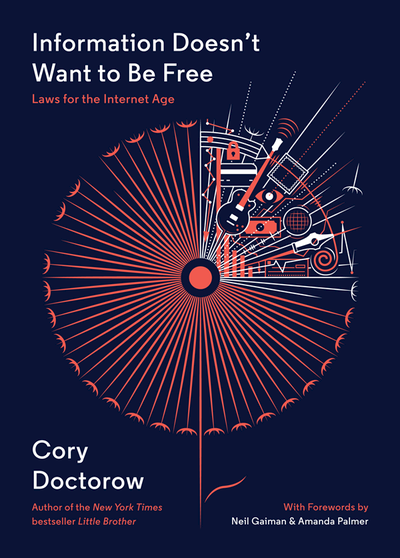
[READ: February 10, 2015] Information Doesn’t Want to Be Free
This short book is Doctorow’s plea for Copyright common sense, Net Neutrality and internet freedoms (among other things). Of course Net Neutrality just passed–hurrah!– which makes this book less urgent but no less spot on and worth remembering while going forward.
Doctorow starts each section by stating his three laws:
“Anytime someone puts a lock on something you own, against your wishes, and doesn’t give you the key, they’re not doing it for your benefit.”
“Fame Won’t Make You Rich, But Yo Can’t Get Paid Without It” (or as Tim O’Reilly said “The problem for most artists isn’t piracy, it’s obscurity.”)
SOUNDTRACK: CRASH TEST DUMMIES-Jingle all the way… (2002).
Even though the Crash Test Dummies are often seen as a joke band or a one hit wonder (which I guess they are), I’ve liked them for a while (their earlier stuff a lot more than their later stuff, admittedly). But it seemed like they’d have a fun take on Christmas music.
And it starts out in a comical sort of way with Brad Robert’s deeper-than-ever voice reciting about his life in Los Angeles, where it is warm and sunny at Christmas time. I like that he rhymes 24th with up north. The spoken section is quite loud in the mix (it sounds like he is right in your ear). Unfortunately, that is the case when he starts singing too–he is uncomfortably loud in the mix and it sounds like he is holding back because of it–he doesn’t sound great and his voice sounds more comical than interesting. Which is a shame because the music (with cheesey keyboards) is great.
Roberts sings lead on about half of the songs. Ellen Reid sings lead on the other half except for a couple where they split lead duties.
The rest of Robert’s songs include: “Jingle Bells” (which is certainly comical–it sounds like a chain gang song with the “Hey!s” sounding almost like a prison chant). It’s weird and cool though (even if his voice is once again too loud in the mix). “God Rest Ye Merry Gentlemen” has his voice mixed much better–he seems to be really singing. And this version–a loungey/jazzy rendition is much great fun. “God King Wenceslas” sounds proper (with Reid’s close backing vocals). It has a pretty penny whistle keeping the song going.
Ellen Reid has a great voice and I love hearing her sing. But in the first two songs she sings lead on in this disc she sounds like she is singing too slowly. “O Little Town of Bethlehem” especially sounds like the music is going to pass her up at any minute. I also don’t like the country vibe of the song. “In the Bleak Midwinter” is also (intentionally) slow, which I don’t like. Perhaps I just don’t like this song (although I do think the melody is lovely). “The Little Drummer Boy” is beautiful and Robert’s bass backing vocals are perfect. “Silent Night” is done in a countryish style, but I like this version. Although normally this song can make me cry, this version absolutely does not–too honky tonkish.
The final song, “The Huron Carol” is quite formal and proper–just Reid and a piano opening the song. It sounds very holy, very pretty. When Robert’s bass backing vocals come in, it adds more depth to the song. And it’s a lovely way to end.
[READ: October 30, 2014] Freedom
I read this a couple months ago and then got so caught up in reading other things that I never got around to posting about it. And that’s a bummer because I really liked the book a lot and I fear that I won’t remember everything I wanted to say about it.
I had read a couple of excerpts from the book in the New Yorker (quite some time ago). They were helpful in grounding the story for me, but they didn’t prepare me for the breadth of the story. It follows one family, the Berglunds, through several decades, focusing on each of them in great detail as they navigate through the Reagan, Bush, Clinton, Bush and a smidge of the Obama years.
The Berglunds are a liberal family. They were among the first white families to move onto their urban street in St. Paul, Minnesota (after white flight to the burbs). Patty is a charming (some say smug) homemaker and Walter is a lawyer (public defendant, naturally). They have two kids, Jessica and Joey. Patty dotes on Joey to an embarrassing degree (Joey is embarrassed by it, Jessica is infuriated by it and even Patty is kind of embarrassed when she really thinks about it). At the same time she is rather neglectful of Jessica. Naturally, Jessica becomes quite the success (loves reading, committed to the environment), while Joey rebels and finds all kinds of ways to disappoint them and make money. (This isn’t a bad thing, but the family has plenty of money and Joey doesn’t need to (especially not the way he goes about it). Not to mention Walter and Patty are not into the money for money’s sake thing.
The book opens that there was some “news” about Walter. He and Patty had moved to Washington DC two years earlier. He clearly did something bad (we won’t find out until much later). But that serves as an introduction to the Berglunds. And then we go back to see them, years earlier, settling into St Paul. (more…)
After the distortion heavy and heaviness of At War with the Mystics and Embryonic (to say nothing of their other experimental releases), I wasn’t sure what to expect from an album called The Terror. Yet with a title like that the album is far more invested in psychological terror than in pummeling you with scary noises and music. The album is more unsettling and spooky with existential dread.
Wayne Coyne has always been a pretty optimistic guy–weird, sure, dealing with feelings of dread, sure, but never so dark and insular. But I learned that before recording this album and most likely as an impetus to record it, Coyne separated from his partner of 25 years, Michelle, and Lips multi-instrumentalist Steven Drozd temporarily relapsed into addiction.
In an interview, Drozd says the album is like a crisis of life confidence. He also says that the uniformity in sonic style was intentional: “Instead of writing songs and then figuring out sounds, we’d write the other way around: create sounds then make songs out of those sounds.”
So the vocals are quite low in the mix, and there is not a lot of “music” in the album. Rather there are layers of sounds–swishing synths, spiraling noises, percussion effects that seems to almost cover up the vocals, giving it a very claustrophobic effect. “Look… The Sun Rising” opens the disc. It is primarily percussion with some noisy sounds and really sharp piercing guitars (that play noisy counterpoint to the soothing chorus of Oh Oh Ohs). And yet after all of that noise and chaos, the very lovely “Be Free, A Way” surfaces as a quiet introspective song. There are gentle keyboard notes (not unlike on Yoshimi) that propel this song along. “Try to Explain” is a pretty song with some unusual sound effects swirling around it (The Lips can’t so straight up pretty, right?). And yet lyrically, this song, along with the rest, is very dark indeed.
“You Lust” is a 13 minute (!) invocation about various forms of lust. It opens with the couplet: “You’ve got a lot of nerve/A lot of nerve to fuck with me.” The middle of the song is a kind of Pink Floydian keyboard workout. It’s a lengthy jam that’s kind of samey, but I’ll bet if you can really sit (with headphones) and close your eyes and focus it’s pretty intense. After about ten minutes of that repetitive claustrophobia, some lightening occurs with sprinkled keyboard notes.
“The Terror” is primarily in Coyne’s falsetto, and it seems gentle until the mechanized noises come bursting forth. “You Are Alone” is the shortest thing here, under 4 minutes of squeaking noises. And again, a lovely melody despite the title. I feel like this song summarizes the album pretty well. In it, Coyne sings “I’m not alone” while a deeper voice replies, “you are alone.” Whose voice will ultimately win?
“Butterfly, How Long It Takes to Die” returns to that abrasive guitar of the earlier tracks, but the main body of this 7 minute song is just bass, keening keyboards and Coyne’s whispered voice. There’s a recurring synth line that is magical and/or creepy depending on your frame of mind. It, along with many of the other songs, have a kind of coda that links the songs. This one is mostly just choral voices, but it twists the ends of the songs in a different direction. “Turning Violent” is a quiet track, in which Coyne sounds nearly defeated until the second half of the song grows louder and more animated with layers of vocals. The disc ends with “Always There…In Our Hearts” which seems to offer some hope…maybe. There’s signs of uplift in the melody, and when the drums kick in at the end, it seems to propel the song into a more intense frame of mind.
And lyrically, despite all of the darkness that is always there in our hearts, there is a light peeking out: “always therein our hearts a joy of life that overwhelms.”
Although most reviewers find this album unremittingly bleak, I find the music to be beautiful in an aching sort of way–a beautiful way to deal with pain (better than getting the same tattoo as Miley Cyrus, anyway).
[READ: October 31, 2014] The Kraus Project
The title page of this book read: The Kraus Project: Essays by Karl Kraus translated and annotated by Jonathan Franzen with assistance and additional notes from Paul Reitter and Daniel Kehlmann.
So just what is this thing anyhow? Well Karl Kraus was a German writer (1874-1936) whose main contributions to letters were some essays and a newsletter Die Fackel (The Torch). The authors compare the newspaper (favorably) to a blog (while also complaining about what blogs have done to letters). He started Die Fackel in 1899 and he continued to direct, publish, and write it until his death. He used the paper to launch attacks on hypocrisy, psychoanalysis, corruption of the Habsburg empire, nationalism of the pan-German movement, laissez-faire economic policies, and numerous other subjects. For the first ten or so years, Kraus was the editor, accepting contributions from around the German speaking word. But in 1911, he became the sole contributor to the newsletter.
He also wrote many essays (he did not care much for fiction), including the two main ones that compression this book: “Heine and the Consequences” (1910) and “Nestroy and Posterity” (1912). The book also includes two follow up essays: “Afterword to Heine and the Consequences” and “Between Two Strains of Life: Final Word to Heine and the Consequences” (1917) and a poem: “Let No One Ask…” (1934).
The essays themselves are quite brief. Despite the first coming in at 135 pages, note that the left pages are all in German (so reduce 135 by half), nearly all of the English pages are filled with footnotes (reduce by half again) and some of the footnotes run for several pages. So the essay could be said to be about 25-30 pages.
The same is true for all of the pages in the book. The left sides are in German (except the footnotes) and most pages are split in half because of the footnotes. Which means that Franzen and friends write far more than Kraus did. Ultimately, this book is actually three things: It is a collection of Kraus’ essays with Franzen’s fine translation; it is an explication of Kraus’ attitude and about life in Germany during Kraus’ life and finally it is an insight into Franzen as a young man living in Germany and why Kraus was so appealing to him.
It was with this Tiny Desk Concert that I was able to get the numbers of the more recent ones. They proudly announce that this was the three hundred and fiftieth TDC. Which is pretty hard to believe. They have almost a year’s worth. And it seems lately that they have been putting them up at the rate of more than one a week. How;sa guy ever supposed to catch up?
So I’d never heard of Johnnyswim before. The band is comprised of husband and wife Abner Ramirez and Amanda Sudano. They sing duets mostly but he seems to have the main voice. And it is booming and powerful. They have been street buskers and they have a great chemistry with each other and the audience (she says she wants to have his baby someday).
The two start as duo then for the last song the full band comes out. And their third song with the full band “Diamonds,” is a big catchy uplifting anthem that could be absolutely huge, especially with the big sing along oh’s. And yet the thing is, I don’t really like their voices. I completely understand the appeal of catchy sings like “Home” and “Falling For Me,” but I just didn’t really enjoy them.
I imagine their songs will be in soundtracks this summer and I’ll get tired of hearing them. But for now, they’re just not my thing.
[READ: June 6, 2014] “Pending Vegan”
I enjoyed most of this story because it deals with issues that I think many carnivores (at least those who are relatively sensitive) deal with—how do you eat animals but also like animals. And yet this is not a preachy story. I also liked it because it is set at Sea World, a place that the narrator (and many people) find questionable (at best) with regard to its animal care.
The protagonist, Paul, is taking his family to Sea World even though he really doesn’t want to go. His wife thinks its important for their kids to see the animals before they are all gone. Paul is also quitting the antidepressant Celexa, which his therapist (a very funny, inappropriate man who says things like “black folks and Orientals”) says will make him see a lot of bad things (like bums and pickpockets) wherever he looks.
We also learn that in his own mind, Paul has changed his name to Pending Vegan. It was a bit of a mortification but something that he felt was a step in the right direction (even if he still ate what he wanted). He of course doesn’t know how to explain this name change to anyone (especially his daughters). And of course, he doesn’t know how to explain the questionable (at best) behaviors at Sea World. But he toughs it out for his family. (more…)
SOUNDTRACK: An open letter to the Rheostatics (2014).
To Dave, Martin, Tim and assorted drummers:
I’ve been a fan of the Rheostatics for a long time. I recall traveling to Toronto from New Jersey back in the 90s and tracking down Introducing Happiness at Sam the Record Man. And then later driving around the Niagara Falls region listening to the strange and wonderful album. I’ve enjoyed all of the subsequent albums.
You were a unique band with a unique sound. I was sad when you split up, even if that meant that now there were three solo projects to enjoy. Of course, there’s been a lot of bands that have broken up, it’s just part of being a fan. But the thing about the Rheostatics breakup is that you three (or four or five or six) have remained friendly. You’ve done a few reunion shows since the breakup, which I think that’s super cool. It’s especially cool because RheostaticsLive tends to post them after a while so that those of us who don’t make the shows can hear them.
I’ve never seen you guys live, and I imagine I never will. And I’m okay with that. What I’m mostly bummed about is that there will be no more new music from you. You put out approximately ten albums (there’s a few miscellaneous things that are hard to qualify). Those records include soundtracks and live albums and all manner of things, so there’s really seven proper albums (the others are great, don’t get me wrong). Anyhow, my gut feeling is that there needs to be some new Rheostatics music. I know you’ve all been doing solo stuff (and I have it), but sometimes the sum is greater, etc.
Clearly I’m getting at that it’s time for a new album from the Rheostatics. Before you scoff, I’m not talking reuniting for a grand tour, or even any tour, I’m not even talking a live show. Heck, I’m not even talking about you guys hanging out for more than a couple weeks. Just an album of new songs. A decade ago it would have been unthinkable that you would get together for the expense of an album without major label support. But now, the cost is so much lower and with your fan base expanding, I assume it would be easy to recoup the expenses.
So what do you say? Since it seems like everyone is still friendly and creative, maybe you can throw some ideas around in the email, see if there’s anything magical happening. Obviously, if there’s nothing there or you just can’t work together, then don’t continue. No one wants to hear a crappy Rheostatics album. But if there’s even a chance that you guys can throw some ideas together and pull out another “Horses,” or “Northern Wish” or “CCYPA,” or holy cow, “King of the Past,” or, hell, anything you’ve done, then it’s absolutely worth it.
I don’t imagine any of you will read this, but maybe if you google yourselves, Tim Vesely, Dave Bidini, Martin Tielli, you’ll see this and think that, yes, dammit, seven records of Rheostatics music is not enough.
Thanks for the music, Paul Debraski.
[READ: January 26, 2014] Worst. Person. Ever.
I told myself that I wanted to read this book before anyone requested it. And I did. In fact, I wanted to finish it before the weekend was up, which I did as well. It’s nice to meet a minor goal.
The last few Coupland books that I read (see last week) were very dark. Since those books, he has broadened his palette somewhat, including writing a children’s book and some more non-fiction. And then we get this. A vulgar, very funny sendup of modern culture. The introduction to the book says that it was based on a short story that he wrote for McSweeney’s #31 called “Survivior.” That story was written in the style known a biji which they described as
Biji is sort of a notebook, which contains legends, anecdotes, scientific notes and local wisdom. Accounts of everyday life mix with travel narratives as well as lists. It is meant to represent a picture of the culture at the time of writing.
I thought that this style was well suited to Coupland, because he includes all of that stuff anyway. And so he has taken that story and fleshed it out into this full novel.
The worst person ever is named Raymond Gunt. He thinks he’s Jason Bourne, but he’s really just a metaphorical extra in a Bourne movie (one who probably gets killed). Gunt is a cameraman working in England. He is divorced. His wife is a raging harpy (at least from his point of view, which is all we see). Since their divorce, she has become wildly successful in television production. He calls in on her at work and she tells him about a job working as a B cameraman on a show called Survival. He knows that the job must suck or she wouldn’t give it to him, but he needs to work. Of course, he is most upset at the thought of having to work with Americans (Americans are majorly abused in this story). Although by its very nature a B cameraman position is not as good as an A cameraman, Ray needs the work, so he agrees to fly to some godforsaken tropical island to watch beautiful people starve and try to have sex with each other.
On his way out of the building he sees a homeless guy. And since Ray is the worst person ever, he kicks him. But the homeless guy is no pushover and he chases after Ray. He catches Ray in an alley and pummels him, ultimately pushing his face into some garbage. The man is Neal and although he acts crazy, he’s actually quite sharp (why he is homeless is not addressed). After forcing Ray to sing the female verses of “Don’t You Want Me,” Neal gives him this sage advice:
“Stop being a cunt to the world and the world will stop being a cunt to you.”
Advice which Ray simply cannot follow.
When ray learns that he needs a personal assistant, um, slave, he immediately thinks of Neal. So he tracks him down, cleans him up and gives him a job. And off they jet to make some TV.
In the course of the book, a series of crazy things–the kind of things only Coupland thinks of–sidetrack them from Ray’s goal. (His real goal is to get laid, naturally). First, it turns out that Neal, despite being homeless, is a total babe magnet. And throughout the story, as he gets cleaner and fresher, he becomes irresistible This, of course, ruins Ray’s plans of bedding hot women. And as Neal gets cleaner, he becomes less and less Rays assistant and more and more Ray’s equal.
They jet to L.A., (he was supposed to be in first class, but was bumped and is super angry). He also gets in trouble with the airport bartender, Lacey, who comes back to haunt him in ways one could never predict. He gets first class seats on the way to Hawaii and he abuses the privilege. Then, because of unforeseen circumstances, they have to stay in Honolulu (with lots of Spam jokes). And because of those unforseen circumstances, they need to recast the show, which means Ray’s wife has to jet down and be around them. And Ray’s wife, Fiona, is delighted to make Ray’s life miserable. Eventually, they head to their intended island and prepare to set up for the show.
In the meantime, the U.S. has decided to destroy the Great Pacific Garbage Patch–in a very imaginative way. And ray is on hand to witness the destruction. This plan causes all manner of trouble with shipping and airplane traffic. Which has the effect of isolating everyone on the Survivor island–causing a literal survival situation.
Raymond Gunt may not be the worst person ever, but he is pretty darn close. He tries to sleep with anyone. He tries to screw over everyone else (but never seems to get anywhere). And he genuinely likes to torment others. And all the while he repeats his mantra, “I consider myself a reasonable enough citizen.” Despite Gunt’s personality, he (or at least the story) is funny enough that you want to keep reading (and maybe even to succeed in some of his designs). And that made this story a major page turner. And it was very funny as well.
Coupland really gets the feel for writing a British story. It doesn’t read like any of his other books and while it’s not full of crazy accents or overt Britishisms, his main character is defiantly not American. As I said, all Americans are fat, sweaty, stupid and prudish in Ray’s mind.
This is also the worst person that Coupland has ever written. He is such an abominable person with an incredibly filthy mouth. The above quote is just one of just many curses in the book. In fact there’s a whole subplot about how prudish Americans are about people saying “fuck” despite their cavalier acceptance of violence and other things (we say friggin, when everyone knows we mean fucking).
I have to assume Coupland had a ton of fun writing this. And it really comes through. I’m also going to guess that a lot of people’ won’t like this book because Gunt is so reprehensible. But if you can get past that, the story is funny, and makes some pointedly humorous observations about a lot of contemporary life. Like “Survival [sic] is a popular reality TV show… You’re either into this show or you’re not. It’s binary.” or “‘Come on Eileen’ was a single in 1982…What’s weird about this song is that it was so huge at the time and now you listen to it and wonder, what the hell was everyone thinking? Well, that’s pop culture for you.” It even has what seem like Wikipedia entries of things throughout in the book (and a YouTube link which is bizarre to see in print).
I really enjoyed this, and I’m thrilled that Coupland has unleashed his inner black humorist.
Watch him talk about the book with Jian Ghomeshi, a great interviewer
Pete Seeger died last night at the age of 94. I love his anti-war quote: “Sometimes I think [about] that old saying,’The pen is mightier than the sword.’ Well, my one hope is the guitar is gonna be mightier than the bomb.”
When I was a kid, I knew a few of his songs (and didn’t really like them) because of an organ songbook we had (did everyone have an organ in the 70s?). I can remember pounding on the wheezing organ and making up silly lyrics to “If I Had a Hammer” and “Where Have All the Flowers Gone?” It’s amazing to think that these songs, which were written in the sixties, are often seen as eternal classics. It’s also amazing to think that Seeger wrote “Turn! Turn! Turn!” which I never associated with him. Indeed, like Woody Guthrie, much of American folk music can be traced to Pete Seeger (even if he adapted much of it himself).
I really started getting into Seeger when I had kids, as I found his music was fun to teach the kids to sing along to–it was designed for singing along to. In fact, he wrote a ton of children’s music as well. (He released FIFTY-TWO studio albums, along with 22 live albums and 23 compilations). His first solo album was a collection of traditional folk songs for children (he didn’t write them, which may be why it’s confusing to know which songs were actually his). And I don’t even know anything about his first band The Weavers, who had hits with “Goodnight Irene,” “On Top of Old Smokey,” “So Long (It’s Been Good to Know You)” and “Wimoweh.”
SOUNDTRACK: JIM WHITE-Tiny Desk Concert #8 (November 7, 2008).
I didn’t know who Jim White was before this Tiny Desk Concert. And I’m still not entirely sure who is he. But he’s a gifted songwriter and storyteller.
Bob explains how he and Jim tried to work together for All Songs Considered, but that every time Bob asked Jim to do a 3 minute piece, he’d hand in a 15 minute piece. And then somehow Jim would edit it into a 17 minute piece. Jim admits that anything can set him off on a tangent (most of which are thoroughly engaging). He also says that he writes songs not a bout “you” but about “me.”
So with him and a drum machine, he sings some really pretty songs. “Jailbird” is a slow ballad that is quite beautiful. I enjoyed that he played his harmonica solo without playing the guitar at the same time (I don’t know if the guitar was prerecorded or looped, I think prerecorded).
Then he gives a funny story about working with the guitarist for P.M. Dawn. “Turquoise House” is a boppy little number about not fitting in. It’s a wonderful song. “Stranger Candy” is a darker song (full of lessons). He says that it took him several tries to get the music right for this one.
There’s a fascinating story about a gift that Jim sent to Bob. The story goes on about a racist incident in which his daughter rises above racism.
“Somewhere in the World” is a gentle ballad about finding the person you are waiting for. I like it (except for that falsetto note at the end). Then he talks about how for his old songs (like the previous one) he was kind of bummed. But he has grown up and is happier. And that has made his songwriting much more difficult.
The final song is called “A Town Called Amen.” It’s another boppy little song, charming and sweet. And Jim White seems about the sweetest, nicest musician in the world.
I came away from this Tiny Desk Concert really enjoying Jim White and wanting to hear more from him.
[READ: December 15, 2013] The Braindead Megaphone
This is Saunders’ first collection of essays and non-fiction. At some point, I stated that I thought I would enjoy his non-fiction more than his fiction. That is both true and not. I enjoyed his “reporting” essays (from GQ) quite a lot. But I found his shorter, sillier pieces to be a but too much. Nevertheless, he is an inquisitive reporter, looking for truth and traveling far and wide to find it (even braving the depths of FOX news). It’s a good collection and only slightly dated.
The Braindead Megaphone
This essay seemed a bit like a blunt instrument hitting a soft object. Although 2007 is seven years ago, I feel like the subjects (dumb newscasters) were pretty soft even then. However, it’s entirely possible that people who were apolitical or just simply not that interested in what obnoxious outlets like FOX were doing may not have been entirely aware that the Braindead Megaphone (ie. all news outlets) were not doing us any favors with their spouting of nonsense and being incurious about where stories are really news worthy or even accurate. I imagine this is mostly just preaching to the converted. I was a little worried that the whole book would be just as unsubtle, but that proved to be a foundless worry. This is not to say that I didn’t agree with everything he said in this essay. He was spot on. And often he was pretty funny too. (more…)
After releasing their first album, Sigur Rós was approached by Icelandic musicians to remix the album. And thus came Recycle Bin. I realized too late that I really just don’t like remix albums all that much–they’re mostly just faster drums plopped on top of existing songs. And such is the case here. Despite the interesting musical pedigrees of the remixers, there’s nothing anywhere near as interesting as on Von itself. There are ten tracks, but only 5 songs.
”Syndir Guðs” gets two remixes:
Biogen keeps the bass but adds some more drumlike sounds.
Múm removes the bass, adds some wild drums and trippy textures and reduces the 7 minutes to 5. It is quite pretty but very far from the original.
“Leit að lífi” gets three remixes
Plasmic takes a spacey 3 minute wordless noodle and turns it into a heavy fast dance song with speedy drums, big bass notes and with spacey sounds.
Thor brings in some fast skittery drums and keeps the spacey sounds (which sound sped up). And of course bigger bass noises.
Sigur Rós recycle their own song into a dance song by adding funky bass and drums.
“Myrkur” gets two remixes. the original is a fast-paced groovy track.
Ilo begins it as a spacey non-musical sounding piece. After two minutes they add a beat of very mechanical-sounding drums. It’s probably the most interesting remix here.
Dirty-Bix adds big, slow drums. It keeps the same melody and vocals as the original but totally changes the rhythm and texture of the song, (removing the guitar completely).
The remaining three songs get one remix each.
The original “18 Sekúndur Fyrir Sólarupprás” is 18 seconds of silence. Curver turns it into “180 Sekúndur Fyrir Sólarupprás” and makes a muffled drum beat and some other samples from the album, I think. It constantly sounds like it is glitching apart until the end where it practically disintegrates–an interesting remix of silence.
“Hún Jörð” 7 min Hassbræður increases the drums and adds a more buzzsaw guitar sound and makes the vocals stand out a bit more.
“Von” has delicate strings and Jónsi voice. The remix by Gusgus adds low end bass and drums making it a thumping rather than soaring track.
I prefer the original, but I much prefer their next album to the first one.
[READ: end of October to early November 2013] original articles that comprise Both Flesh and Not
As I mentioned last week, I decided to compare the articles in Both Flesh and Not with the original publications to see what the differences were. I had done this before with A Supposedly Fun Thing… and that was interesting and enlightening (about the editing process).
This time around the book has a lot more information than the original articles did. Although as I come to understand it, the original DFW submitted article is likely what is being printed in the book with all of the editing done by the magazine (presumably with DFW’s approval). So basically, if you had read the original articles and figured you didn’t need the book, this is what you’re missing.
Quite a lot of the changes are word choice changes (this seems to belie the idea that DFW approved the changes as they are often one word changes). Most of the changes are dropped footnotes (at least in one article) or whole sections chopped out (in others).
For the most part the changes were that the book version added things that were left out or more likely removed from the article. If the addition in the book is more than a sentence, I only include the first few words as I assume most readers have the book and can find it for themselves. The way to read the construct below is that most of the time the first quote is from the original article. The second quote is how it appears in Both Flesh and Not. At the end of each bullet, I have put in parentheses the page in BFAN where you’ll find it. I don’t include the page number of the article. And when I specifically mention a footnote (FN 1, for example), I am referring to the book as many times the articles drop footnotes and they are not always in sync.
Note: I tried most of the time to put quotes around the text, but man is that labor intensive, so if I forgot, it’s not meant to be anything significant. (more…)
SOUNDTRACK: BEN FOLDS FIVE-The Sound of the Life of the Mind (2013).
The first Ben Folds Five album in over a decade opens with a big noisy sound and then quickly shows the diversity of the band by pulling back and showing a mellow verse with Ben’s piano and occasional bass. But then the chorus comes in and Robert Sledge’s bass is once again masterful. While Ben is clearly the leader of the band, there is something about the BFF’s bass that is so notable. And this album rocks in BFF’s unique way–rollicking piano, and noisy buzzy bass.
“Michael Praytor, Five Years Later” has some great harmonies (the kind that BFF do so well). “Sky High” is the kind of social commentary ballad that Ben excels at. And the title track is a fast moving rocker that has more great harmonies.
“On Being Frank” is a Sinatra inspired song with strings. While “Draw a Crowd” continues Ben’s humorous vulgarity in a very unexpected way: “if you’re feeling small, and you can’t draw a crowd…draw dicks on a wall.” “Do It Anyway” the single, which inexplicably wasn’t huge, gets more and more fun with each listen–to scream along with “OKAY!” is very cathartic.
“Hold That Thought” is one of those mellow but speedy numbers that I love from Ben. And when then bass plays that high solo bit near the end (oh that bass), the song kicks into new levels of excellence. “Away When You were Down” is another string-filled mellow song. The final track “Thank You for Breaking My Heart” reminds me of “Boxing”, a mellow piano ballad which is, obviously, heartbreaking.
This is a great return to form. There’s some heavy rockers and some pretty ballads. It’s nice to hear the Five back together again.
[READ: October 5, 2013] 3 book reviews
This month Bissell reviewed three books.
The first book is a biography of Flavius Jospehus called A Jew Among Romans by Frederic Raphael (who also wrote the screen play for Eyes Wide Shut). I had never heard of Flavius Jospehus but evidently without him we would have no historical accounts of time from around the beginning of the Common Era. His writings are pretty much the only works that have survived.
And his story itself is interesting too. In 70 A.D. the Romans destroyed Jerusalem. This attack has had more impact on current life than can be explained. Judaism lost the Second temple, Jewish Christianity soon disappeared beneath the waves of Gentile Christianity, even Islam was shaped by this because a Mosque now stands where the Second Temple was. And nearly all modern forms of anti-Semitism can be traced back to this attack in some way. Flavius Jospehus chronicled this time as a Jew in a reasonably impartial way (which led many to call him a traitor). His books Jewish Antiquities and The Jewish War are the sources for almost all of our knowledge of that era, including about Pontius Pilate. (more…)
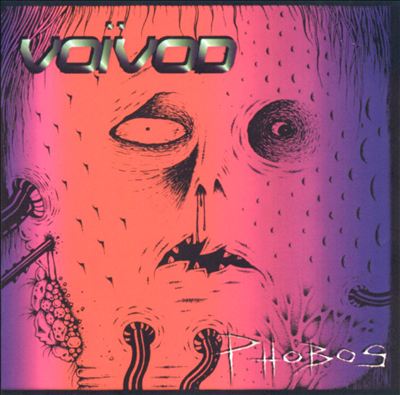
It’s tempting to say that Phobos is a carbon copy of Negatron, but that’s not true. While the line up is the same, and the overall tone is very similar—very heavy, aggressive music—there are subtle differences. The first is that the album sounds vaguely more electronic, as if they were really flirting with industrial after the experiment with Jim Thirwell on the last album. E-Force’s vocals, while still abrasive and screamed have a lot of processing on them which makes them far more interesting and actually quite a bit more understandable. There’s also a lot of weird electronic effects that link the album and make it feel more “spacey.”
And while there are different sections of songs and parts that are actually quiet, this i still a difficult album–the vocals especially are exceedingly harsh and will turn off people who like the instrumental sections. I hate to sound like the band’s declining popular are all down to E-Force, but he is the weakest link in the band at this point. Whats weird about thee two E-Force era albums is that although they are very very heavy with several weird parts per song, the basic structure of them is very conventional. So instead of sounding proggy and weird, they sound more like a bludgeoning metal band. Which didn’t really work for them. Indeed, the band intended to if not call it quits at least take a hiatus after this album.
Phobos opens with “Catalepsy I” an introductory song—noises and whatnot. And indeed, these electronic noises link all of the songs of the record, with different sounds in between the tracks (like the way “Bacteria” opens with spacey effects and electronic drum noises for 35 seconds). But the first proper song “Rise,” has an opening guitar riff that is quite normal—dark, but normal. It’s true that the heaviness of the chugging section is heavier than most (like earlier Voivod), but it’s still not that strange. Until the verses come in. And here’s where E-Force’s vocals are a little different—more processed and robotic sounding. It actually works a lot better. And in the middle of the song while the heaviness is ongoing, that opening normal guitar riff comes back. Rather conventionally.
“Mercury” has a more typical Voivod guitar riff although the pounding heavy chords are still quite heavy. There’s more of the distorted vocals and weird chords for the bridge. It also begins a series of increasingly longer songs. This one is nearly 6 minutes. While “Phobos” is nearly 7. It also has an interesting echoing staccato guitar riff with E-Force’s vocals very distorted (like Nine Inch Nails or Skinny Puppy). The bridge is a crazy noisy monstrosity and yet the middle section is very simple: loud chords delivered at a slow pace with interesting effects and fiddly guitar solo noises. “Bacteria” reaches over 8 minutes long. But it is unlike any of their earlier prog songs. It has an interesting echoing guitar opening and a bunch of staggered parts. But once the song’s major chords start up it sounds probably most like the previous album except for the lengthy instrumental/psychedelic section starting at around 5 minutes.
The album slows down somewhat with the 1:48 “Temps Mort” a short instrumental with what sounds alike an accordion. It’s a weird little time out (which is what the title means), and I like it a lot.
“The Tower” has an underwater kind of feel to it amidst the bludgeoning guitars. The middle and the end have some very cool heavy trippy/spacey metal which is so radically different from the heavy Voivod chords that make up the proper song. Indeed the very end is a minute of mellow spacey guitars. “Quantum” is a pretty straight ahead (for Voivod) metal song with echoed vocals that take some of th edge off (until he screams the chorus). There’s another cool instrumental section. In fact, the whole album has great instrumental sections, it’s kind of a shame the vocals are so offputting (although at the end of this song they are so distorted and computerized that they sound very cool)
“Neutrino” opens with those big loud slow ringing chords of noise before the simple but creepy solo riff comes in. It’s 6 minutes long and has another interesting guitar line amid the noise. It takes 3 minutes (of 7) before the vocals come in and the song gets much darker. “Forlorn” is the closest thing to a hit on the album. The chorus is really easy to sing along to. And the verses are actually pretty straightforward. It’s very very heavy and isn’t going to make the radio anywhere, but it’s still catchy. The album proper ends with “Catalepsy II,” more swirling noises that sound like the beginning.
There are two bonus tracks on the CD. “M-Body” was written by Jason Newsted and is the most industrial mechanized/voiced songs on the album. It’s certainly out of place, although it does hint at what is to come on their next album. “21st Century Schizoid Man” is a cover of the King Crimson song. They’d done Pink Floyd and King Crimson fits pretty nicely. As with the Floyd covers this one is very heavy. Piggy gets the guitars right. But as with the rest of the album, E-Force’s vocals just don’t work. Whereas Snake’s weird pronunciations accented the covers in a cool way, E-Force just seems to be forcing his way through the track (the fact that he puts 3 syllables in “century” is pretty unforgivable. Overall the song is pretty great, although I’m not so sure about the guitar solo which sounds like Piggy doesn’t really know what to do.
And that’s the end of this Voivod lineup. Two albums and a lot of lost fans.
[READ: September 20, 2013] Terry
I have known about this book for a pretty long time. I was never really that interested in reading it because, while I don’t know all that much about Terry Fox, I felt like I knew enough about him to not bother with a full bio.
For those who don’t know (basically anyone from the U.S.), Terry Fox was a young man who developed cancer at the age of 19 in 1977. and had his leg amputated. To draw attention to cancer research he decided to run (yes run) across Canada on the Trans Canada Highway. He had a prosthetic leg, he practiced running every day (he was already a natural athlete) and he decided that in 1980 he would run from the Atlantic Ocean to the Pacific (he even had a bottle of water from the Atlantic that he wanted to pour into the Pacific). His plan was to run between 26 miles a day. Yes, run a marathon every day. He called it the Marathon of Hope.
When he started out, the media coverage was nothing but as he progressed and his friend (who drove the van alongside him) started making media attention, Terry’s cause became more well known. And by the time he made it to Ontario, he was a huge personality—making TV appearances, talking to anyone and, most importantly, making a ton of money for cancer research. (more…)
 SOUNDTRACK: RHEOSTATICS-Vertigo, Victoria British Columbia, (January 21, 2000).
 I recently learned that the Rheostatics Live website has added dozens of new (old) shows. It has been almost exactly a year since I last did a tour of some of these live shows, so it was time to move into 2000 (with one new show added since I last looked).














 I Just Read About That...