Feeds:
Posts
Comments

Archive for the ‘Boredom’ Category

SOUNDTRACK: LOW-“Try to Sleep” (2011)

This was NPR’s song of the day for March 2.  I don’t really know Low all that well.  I know they play very slow music (which I’m typically not a fan of –slow music, not Low specifically).

I think I have been kind of frightened off of Low as being so soporific that it would make me sad.  But this song is a delight.  It’s not particularly slow and there’s a very cheery bell motif that pecks out the gorgeous melody.

The vocals are very nice harmony between the male voice (which reminds me a bit of lower register Damon Albarn–in fact the song gives of kind of an Albarn vibe) and the high-register female vocals.   It’s a really beautiful song.

In fact, this song has really changed my opinion of Low, and I may have to check out more by them.

[READ: March 2, 2011] “Backbone”

This is an excerpt from DFW’s forthcoming posthumous novel The Pale King.  Wallaceheads have already heard and/or read a variant on this piece which DFW read aloud at the Lannan Foundation.

I was reluctant to read this piece for a couple of reasons:  The Pale King is coming out in a little over a month.  I have read/listened to this particular piece not terribly long ago.  And, I didn’t love it all that much.

Well, it turns out that much like any draft or work in progress, with a bit of tweaking and editing, the passage can be made very strong and quite enjoyable.  This finalized version also intercuts a lot more information about other characters than was in the original version, making it a far more compelling piece of fiction in toto. (more…)

Read Full Post »

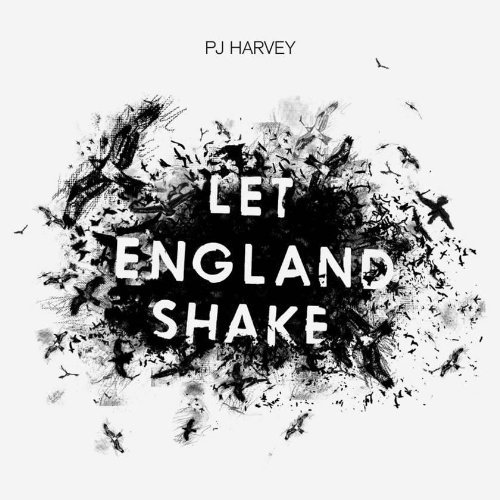
SOUNDTRACK: PJ HARVEY-Let England Shake (2011).
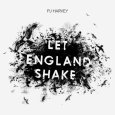
I’ve listened to this disc several times online; I have no details about the recording.  There’s samples, but I don’t know what they are and I can’t really tell what all the lyrics are (it’s obvious she’s pretty angry, but the details are lost to me).

The first question for me on hearing this disc is what happened to PJ Harvey’s voice?  It comes as such a shock when you compare it to Dry.  But once I accepted that this is not the PJ Harvey of Rid of Me, I listened to it as a new artist and I really like it.  But it’s a weird record to be sure.

The title track is played on an autoharp (!).  In fact the autoharp is a dominant instrument here.  It’s got a cool melody and, once you accept that she sounds like the singer from Rasputina, you can really appreciate what’s going on.

The second track, “The Last Living Rose,” returns somewhat to the PJ of old (the opening “God damn” sounds like she’s about to bust out some good-ol’ invective).  And there are guitars, but the music is upbeat (as are the vocal melodies) and there’s even a horn!  “The Glorious Land” has samples from the cavalry (I can see the horses riding across the plains) and a cool, slinky guitar (or is that the autoharp?).  There’s male vocals in the middle of the song, and it makes for disconcerting harmonizing (especially when PJ,’s voice ratchets up the weirdness and sounds more like Kate Bush).  But musically this song is great, it’s got a wonderful 80’s alt-rock feel.

“The Words That Maketh Murder” also has horns and some interesting male vocals chanting the lyrics.  This has one of the least subtle lyrics I’ve heard in a long time, although the re-imagining of the “Summertime Blues” refrain is pretty genius.

“All and Everyone” opens with more autoharp, and I think I’m realizing that the autoharp is what I think of as the interesting guitar sound (this song opens like a Smiths’ ballad.)  There’s more horns on this track which adds a weird dimension of sadness to it.  “On Battleship Hill” is a fast but delicate track in which PJ pulls out an astonishing falsetto–completely unexpected.  After the first verses, the rest of the song has, again, a kind of slinky 60s vibe.  “England” brings out the Kate Bush voice in PJ again.  This is a very delicate song, the music is mixed so low in the background that it feels like acapella–I guess Harvey has grown much more confident in her voiuce.  The music builds and builds though and there’s an unexpected middle eastern sounding vocal in the background.

“In the Dark Places” brings out Harvey’s guitar (in this case the Harvey is Mick Harvey, I believe) and her lower register vocals. While “Bitter Branches” is probably the loudest song on the disc, with a bunch of screamed vocals.  It’s rather startling considering the rest of the disc, but it’s nice to know just how much fire PJ still has.

“Hanging in the Wire” is another delicate song, with quiet pianos and Harvey’s sedate voice.  “Written on the Forehead” returns to that middle eastern vibe (“people throwing dinars at the belly dancers”) and that Kate Bush vocal–the backing vocals remind me of Peter Gabriel.  The album ends with “The Colour of the Earth.”  It’s the most disconcerting song of the bunch becuase it opens with a male singer (John Parrish?) singing what sounds like an old trad song (the melody is very traditional).  Then PJ joins in and makes the song her own.

It’s obvious that the lyrics are the main aspect of this disc, and I know that I’m missing something by not having them. I’m also missing a lot by not knowing all that much about England’s history.  It sounds like she has a lot of gripes with Eng-a-lund, and I’m curious to know what she’s on about.  But more than that, I’m totally hooked by the music.  It’s a great reinvention of a great artist.

[READ: February 9, 2011] The Ask

I was planning to read nothing except books from the pile by my bed for the foreseeable future.  And then, as if calling to me, I saw this book, which I was planning to read eventually, on a display right in front of me called Booklist Editor’s Choice (a new display for our library).  I stared at it for three hours and just had to check it out.

And I’m glad I did.  For the most part I really enjoyed this book, it was quite funny and the main character, kind of a schlub, was completely relatable.  I say for the most part because I felt like it dragged a bit about 2/3 of the way through (more on that later).  But its possible that it dragged because the first half of the book was just fantastic–fast paced and clever with lots of wonderfully funny lines (more on that later too).  And a setting that I found very entertaining.

The story is about Milo Burke. He is married to Maura and they have a going-on-four-year-old boy Bernie who is nothing if not precocious.  The titular ask concerns Bernie’s job.  He works for a small arts college in New York (which he called Mediocre University).  His job is to basically ask (hence the title) rich people for money for the college. We see him in his office as the book opens and we meet the rest of the staff: the surprisingly unslacker slacker Hubert (with whom Milo shares space and ribald jokes…this section is the funniest; many paragraphs end with sentences that hilariously undermine what he just described.

We often called it, with what we considered a certain amount of panache, the Mediocre University at NewYork City.  By we, I mean Horace and I.  By often, I mean once (4).

His supervisor is Vargina.  (This name, which is obviously over the top and childish and which I absolutely laughed at and then felt was maybe too easy of a laugh, has a great origin story and is really never not funny no matter how often you see it).  Milo has obscene fantasies about Vargina, but he is a (somewhat) happily married man and would not cheat on his wife.

He’s not very good at his job, but the other askers do alright so his job is safe.  Until, that is, he insults the daughter of one of the university’s biggest donors and he is summarily let go, without severance.  And then we get to see a lot about his home life. (more…)

Read Full Post »
SOUNDTRACK: RHEOSTATICS-Live at the Bathurst Street Theatre, Toronto ON, April 4, 1997 (1997).

This concert is free as a download on the Rheostatics Live website.  According to the on-stage banter, the band had just finished a string of live dates with the Inbreds that were recorded for their amazing Double Live album.  They even say that this night’s show is also being recorded for the disc.  And the set list is pretty amazing.

Which is why this show is such a disappointment.  Part of the problem is obviously the quality of the recording, and you can’t fault anyone for that…a bootleg is a bootleg after all.  But the band makes some really odd flubs and some of the songs seem really lackluster.  This is all the more surprising because the band seems in really good spirits –making jokes with each other and with the crowd (they make someone take off a Mr. Bean T-shirt!).

The biggest gaff comes in “King of the Past” where (I think Dave) begins the chorus a measure early (yipes!).  “Fan Letter to Michael Jackson” for some reason removes the loud rocking “Michael!” and “Jackson!” sections and replaces them with whispers.  It’s an interesting change, but the intensity is completely lost.  Something is also missing from “Sweet Rich Beautiful Mine,” there’s no oomph to it.  And, my favorite song “Claire” sounds off to me (I think it’s the recording though).

On the plus side, “My First Rock Concert” is great and well-received.  Dave introduces it as if it was the first time they’ve played it, which is very exciting.  The end of the show picks things up and the band sounds better.  In fact the last two songs are really great (and you can really hear Neil Young’s influence on the guitar).  I’m willing to blame some of my disappointment on the sound quality…it’s missing a fullness that you really need to appreciate the band, but this is not an A+ show.  They played another show the following night there (also available online).

Heh, I just learned that they used a number of recordings from this show on Double Live.  They used “Torque, Torque,” “Claire,” “Bread Meat Peas & Rice” and “Feed Yourself.”  Listening back, “Torque” and “Peas” sound great in the set and “Jesus Was Once a Teenager, Too” is a fun, light version.  “Claire” still sounds funny to me (even on Double Live), but it’s definitely worse on this bootleg.  The mixing is so much better on Double Live (of course!), that it really accentuates the guitar solo and backing vocals much more.

[READ: February 1, 2011] Shampoo Planet

On the inside cover of my copy of Shampoo Planet, I scribbled my name and “December 1992.”  I was in a phase of putting my name on all my books (which is kind of cool looking back, but really rather silly).  This is Douglas Coupland’s second book, and I remember being very excited when it came out.

I’m sure I read it then, but upon re-reading it (admittedly almost twenty years later), I didn’t remember anything from it.  Does that mean I didn’t read it, or that the book was just ephemeral?  Well, in some ways it is ephemeral, because it’s such a document of its time.  It also seems to me that either Coupland is (or was) unique in his writing style, or that very few writers dealt with 90’s culture as directly as he did.  Off the top of my head, I can’t think of another writer who approached 90s culture in the same way

In many ways, this book is all about dealing with the wealth of the 90s, when money was everywhere and people felt free to experiment with their lives.  And, yes reading this now the story feels so light and free and I wish that I had the problems that these kids deal with.  I also wondered if anyone could write a story like this now, with youth culture being so very different.

The inside front and back cover are (different) periodic tables that he has personalized with 103 elements of the 90s.  (Lu=Moon, A=Ambition, Dd=The Dead).  This is the only nod to unconventional book tropes here (where Gen X had all of those definitions that he footnoted).  In fact, the novel is fairly straightforward and conventional.

The main character, Tyler, is a twenty year old who cares more for his hair (he has a vast array of products–my favorite observation: “always better to buy well-advertised products–preferably those products endorsed by a celebrity” (133)).  He was raised in a hippie commune off on Vancouver Island (the only real nod to Canada in the book), but when his parents divorced, his mother Jasmine took the kids to Lancaster, a suburb of Seattle.  And, as seems to happen, the children of hippies became proto-yuppies. (more…)

Read Full Post »

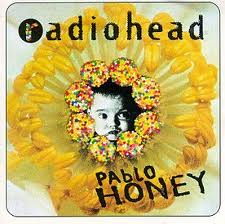
SOUNDTRACK: RADIOHEAD-Pablo Honey (1993).

I haven’t listened to Pablo Honey in years.  I think of it as an almost proto-Radiohead release with one huge single.  But as I was listening to it again recently I remembered that I used to listen to this disc a LOT, and I know all the songs very well.  I’m also really impressed with how well the album stands up to the mayhem that they unleashed later on.  It’s also pretty crazy that the album is named after a Jerky Boys skit (and not a particularly inspired one at that).

True, the album is very simple: a guitar band in the grunge era.  And yet, despite the grunge inflections of “Creep,” it’s quite apparent that there’s a lot more going on here than slacker anthems.

On first listen (17 years ago (!)), a song like “Thinking About You” sounded like a conventional ballad that goes along with this type of album, revealing a softer side to a grungy band.  But really, it’s a complicated mellow song placed right in the middle of the album and the break in styles is very nice.  Conversely, a quick rocker like “How Do You?” is certainly a simple song, and yet it shows another dimension that the band would later investigate (it also samples the Jerky Boys deep in the mix, which I never noticed before).  Even the opener “You,” is intricate and complex, with wonderful guitar riffs and solos, easily foreshadowing some of the great stuff that Jonny Greenwood would produce later on.

The more memorable songs also reveal things all these years later.  “Stop Whispering” has a real Pavement feel to it (and who knows if Radiohead had even heard Pavement (who only had one album out) at that time, but it’s some cool foreshadowing of their indie rock style).  And “Anyone Can Play Guitar,” a truly great song, is like a stripped down version of “Paranoid Android,” but with a really really catchy chorus.

By the end of the disc, it seems like Radiohead has run through its tricks although the oddly titled “Lurgee” points to future greatness as well.  It’s easy and lazy to say that this album is a blueprint for the future Radiohead, and yet it’s surprisingly true.  Not the techno stuff, obviously, but the song structures and intricacies easily foreshadow what was to come.  Yet who would have ever guessed that the “you’re so fucking special” band would turn into what they did.

It’s also foolish to dismiss this record as an early version of the band, because although the album has some slow moments, it holds up very well, and actually revealed somethings that I’m sure I missed a decade and a half ago.  Oh, and “Creep” is still awesome.

[READ: December 21, 2010] “The Tree Line, Kansas, 1934”

This is the story of two FBI agents on a stake out.  The story gets into the head of the older agent (Lee) as he listens to the endless droning of the younger agent (Barnes).

The two have been on the stake out for several days waiting for the criminal Carson to come back to his uncle’s farm, where a boot full of loot is waiting him.  They have been keeping utterly still, noting the uncle plow the barren field, taking occasional smoke breaks and really just watching the grass grow,

Barnes says t the whole stake out is futile, there’s no way that Carson is coming back here, he’ll know there are agents there, etc.  Lee, on the other hand, believes the Bureau is correct, believes that Carson will return.  I enjoyed the digression into Lee’s head about how a feeling in your gut turns into a hunch. (more…)

Read Full Post »

SOUNDTRACKPEARL JAM-Unplugged (1992).

The video of this nearly twenty year old concert came with the remastered version of Ten.  I hadn’t had a chance to watch it until now.  While watching I was pretty certain that I had seen the show either when it aired or sometime right after.  Some of the scenes, maybe from “Alive” looked familiar.  And when “Porch” was ending I had this vague memory of Eddie climbing on the stool and writing something on his arm (he writes “Pro-Choice”).

This is a seven song set of tracks from Ten (Dave Abbruzzese is drumming with them).  And, as advertised, it is unplugged.  Except that it really isn’t.

This set was recorded in 1992 (Unplugged started in 1989).  In my estimation, “Unplugged” shows were a chance to really strip down, play all acoustic and get really mellow (the Nirvana one (1993) is quite a good example) .  But here, we get Mike McCready and Stone Gossard (and all of their hair, holy cow!) playing acoustic guitars.  But Jeff Ament (and his crazy hat) is playing an electric bass (which is funny since in recent years he has been playing a standup bass).  Dave Abbruzzese is banging the crap out of his full set.  I mean, really the only thing that makes this unplugged at all is that the guitars are acoustic, but McCready still plays his rocking solos full tilt.

Nevertheless, the set sounds great.  Eddie barely talks (something about a love song to his surf board and a mumbled line about “State of Love and Trust”), and it’s pretty much all business.

“Oceans” works well in the Unplugged setting…Ament’s watery bass is the real star.  But difficulty sets in with “State of Love and Trust.”  It is just too fast, too loud, and too rocking to really be considered “Unplugged.”  So from then on, we’ll throw the Unplugged label out the window and just rock.  Of course, when the solos kicks in and you hear this really distant acoustic guitar instead of McCready’s ripping electric, you think, well, maybe I’d rather have it plugged.

“Alive” opens kind of in an unplugged state, but again, but the end, it seems like McCready is fighting against the other “plugged” guys.

Title criticisms aside, the set is great.  The band sounds in fantastic form and by the end (when Eddie is falling off and climbing onto his stool) even Ament is getting silly and jumping on the drum set.  It’s a good view (and a good listen too).

[READ: November 10, 2010] “Under the God Gun”

I honestly didn’t think I would like this article and I wasn’t looking forward to it.  I didn’t quite understand the subtitle (Battling a fake insurgency in an imitation Iraq) and in general I don’t enjoy articles about military training and the Iraq war, etc.

And when it started, I was confused by what was happening until I got to the third paragraph where he mentions a prosthetic arm being applied to an amputee.  Then I re-read the beginning and I was pretty well hooked.

The article looks at the fake governance of Talatha and its small villages like Mosalah.  All of this exists within the borders of Louisiana at the army training based called Fort Polk.  It shows how these fake villages were created from the ground up to look just like an Iraqi city.  They even pay citizen extras to be Iraqi citizens (they get paid about $220 a day and are required to speak no English).

In these fake towns they run military training exercises that are designed to replicate the actual conditions in Iraq (hence the prosthetics, fake blood, explosions and lack of English).  It’s a fascinating look at something that I had no idea existed. (more…)

Read Full Post »

[LISTENED TO: October 20, 2010] Readings

This (all too brief) collection of readings by David Foster Wallace includes several excerpts and a few shorter pieces.  I’ve noticed that there seem to be more and more videos (audios) of DFW reading on YouTube.  If I had time I would try to gather all of these videos (or even just try to watch them), but for now, I’ll stick with what’s at the David Foster Wallace Audio Project.

The Consider the Lobster reading is an excerpt from”The View from Mrs. Thompson’s”.  I’d never heard him read this piece before and it is a fascinating look at the events of 9/11/01 from Bloomington, Indiana.  I haven’t read the piece in a few years and it was quite affecting to hear him read it aloud.  The introduction was also interesting because he mentions that this is the quickest piece he has ever written (I wonder how many drafts he was able to do in that short period). (more…)

Read Full Post »

SOUNDTRACK: PETER, BJORN & JOHN-Living Thing (2009).

After the raging (relative) success of Writer’s Block, with their crazily catchy whistling song, “Young Folks”, PB&J could have gone in any direction.

And I was quite surprised when the opening song of this follow up (actually, there’s an instrumental disc in between) opened with single note and drum sounds and virtually a capella vocals.  But unlike a typical a capella song, the thudding notes were kind of dissonant and unpleasant.  And there wasn’t much more to the song than that.

Even the second song starts out starkly.  A single piano note plays a simple riff.  The verse kicks in with some simple electronic drums (and again minimal accompaniment).  And this sparseness is the main musical theme on the disc.

And I have to say it took almost a half a dozen listen before I really enjoyed what they were doing.  They are eschewing the pop structure that won them popularity and they’re shifting their melodies to the vocal lines rather than the instruments (I guess).  It’s a risky proposition, but it pays off.

Take “Nothing to Worry About.”   It opens with what sounds like a distorted children’s choir singing the chorus at full volume.  But then it settles down into, again, a simple drum and vocals song with just a hint of instrumentation.  (Did they get all their music out on the instrumental?  I don’t know I’ve not heard it).  Even the title track is sparse guitar noises and clicked drums.  But, man, is it catchy (it reminds me in a weird way of Paul Simon).

And then, continuing my contention that the best and catchiest songs always have curses in them, “Lay It Down” with the chorus, “Hey, shut the fuck up boy, you’re starting to piss me off” will stick in your head for days.

The end of the disc (the last three songs) are considerably mellower.  They’re less catchy, but they use the starkness very well.

Initially I really didn’t like this album.  It had none of the immediacy of the previous disc.  But I found myself really enjoying it.  I wouldn’t want all of their albums to sound like this, but it was an enjoyable twist on a good formula.

[READ: October 7, 2010] Garden State

I mentioned the other day that I just found out about this book when looking up information about Rick Moody.  I was so excited to read a book set in Haledon (two towns from where I grew up) that I checked it out and begin it immediately (it’s only 200 pages, so that helped too).  But I have to say I was really disappointed with the book (even if it did win the Editor’s Book Award).

My first gripe is about the supposed setting in New Jersey.  I have no problem with fictionalizing an area.  Writers do it all the time.  But Moody fictionalizes the area in two ways to suit his thesis, and as a lover of New Jersey and a former resident of the region, I found the lack of reality to be very upsetting.

The first minor, and I have to say really weird thing is that despite the real towns included (Haledon, Paterson, Paramus) he makes up towns nearby–Fleece, Tyre– and he makes up a river–The Dern River.  He also plays around with the names of the highways that run through the state, constantly referring to the non-existent Garden State Thruway.  Now, again, there’s no problem with making things up, but nobody in the story ever goes to Fleece or Tyre, the Dern River doesn’t come into play aside from being a river that people refer to (it’s not a renamed Passaic river, because that’s included in the story, too).  So, why make up random town names?  Why say that you drive from Haledon to the edge of Paterson near Boonton, when that is not geographically correct (or relevant to the story)?  It just seems like he didn’t have access to a map. (more…)

Read Full Post »

[LISTENED TO: October 19, 2010] David Foster Wallace Eulogies

There are some really nice eulogies done for when DFW died.  The official (written) memorial service eulogies (from Jonathan Franzen, Zadie Smith, George Saunders and others) are available here (from an outstanding online journal called Five Dials).  They’re all beautiful (I was amused that the second longest one comes from DFW’s editor!).

The audio eulogies are available at The David Foster Wallace Audio Project.  They include two very long full length ceremonies and several news (NPR mostly) reports.  And there’s a lengthy interview with David’s sister, Amy, which is by far the most moving one.

The first of the lengthy pieces is the ceremony from Amherst.  It consists of colleagues, friends and students all telling stories about DFW.  And their collective memories join together to create a great portrait of the man; things that you’d never know about him (except you kind of would) from reading his work.  The thing that really struck me from this memorial was just how many friends he had.  This seems like an insult but it isn’t meant to be; rather, the impression I had was that he was quite a solitary man, holing up with his dogs and his pens.  But the stories and love from his friends during his college years especially are really quite nice to hear, and showcase a side of him that he left out of his work (except, of course, really he didn’t). (more…)

Read Full Post »

SOUNDTRACK: THE DUCKWORTH-LEWIS METHOD-The Duckworth Lewis Method (2009).

This is a CD released by the combined forces of Neil Hannon of The Divine Comedy and Thomas Walsh of Pugwash.  And if that weren’t enough of a sales pitch, the title of the band is a method of calculating cricket scores!  And even more…in concordance with that, this CD is largely about cricket.  Huzzah!  Buncha sellouts.

I don’t know a thing about cricket, but I know about great orchestral pop, and this disc has it in spades.  Some of the more obvious cricket songs are even understandable to non cricketers (the themes of “Jiggery Pokery” are familiar to anyone who has failed in a sport–and musically it sounds like a silent film soundtrack).

“The Age of Revolution” begins with an olde-fashioned soundtrack as well (jazz swing, including tap dancing) but quickly jumps into a dancey discoey verse (the two soundtracks blend surprisingly well in the chorus).  And the revolution?  Well, it has something to do with cricket.  Next, “Gentlemen and Players” is a wonderfully Divine Comedy-esque track complete with harpsichords.

“The Sweet Spot” is another discoey dancey track with some funky bass work (and innuendo whispered vocals).  And “Rain Stops Play” is a fun musical interlude.

“Mason on the Boundary” is the first track that seems distinctly Pugwash-y.  Hannon and Walsh have similar singing styles, and I find it hard to know who is who sometimes.  But this track is clearly Walsh’s and it’s very nice indeed.  Similarly, “Flatten the Hay” has that distinct Pugwash XTC/Beach Boys vibe and it’s quite good.

“The Nighwatchman” is also a very DC type song (it even sounds a bit like “The Frog Princess” but pulls away before being a repeat of that great single by introducing some very 70s sounding strings).  The rest of the disc follows in this same wonderfully orchestrated pop feel.  This a great record that, as far as obscure bands that get no statewide attention go, is top notch.

Oh, an it’s even more fun with headphones!

[READ: October 9, 2010] Skippy Dies

Wow, there’s a lot going on in this book.  It’s exhausting just trying to think of all the topics covered: boarding school life, failed romance (two big ones), life as a teacher, the appeal of pop singer Bethani, the Catholic priest sex scandal, drugs of all kinds, sneaking into a girls’ school, World War I, institutional cover ups, M-theory–which is pretty much the entire universe, and donuts.

But let’s start at the beginning.  Yes.  Skippy dies.  In the first couple of pages.  And what’s fascinating about this is that we don’t care.  I mean, in the scene where he dies, he’s not even the major character.  But then Skippy turns out to be more or less the glue of the book once the story proper begins.

Skippy resides at Seabrook school in Dublin (the best, most prestigious Christian academy in the country–sorry Gonzaga).   His roommate is Ruprecht (perhaps the strangest major character name I’ve read in a long time).  Ruprecht is a large boy who is incredibly smart (he will single-handedly raise the school’s average on the year’s final exams).  He is a computer geek who is obsessed with aliens and SETI.  And he hopes to be able to communicate with the other world by using techniques suggested in M-Theory.  The book does an admirable job explaining M-theory and string theory.  I’m not going to take up space here, but there’s a fine description at Wikipedia (or, if you don’t like Wikipedia, here’s an academic explanation that is written for the lay person).

Anyhow, Skippy and Ruprecht are two of a few dozen boys who reside full time at the school.  (Most of the other kids are day students).  And they have a cadre of half a dozen friends that they hang out with who make jokes at each other’s expense.  It’s a very realistically written entourage.  Mario is Italian and claims to have had sex with many many women (thanks to his lucky condom which he has had for three years).  Dennis is the ballbreaker.  He’s the abusive one (but by most standards, he’s not a bad guy).  And a few other hangers on.

This story of dorm life is a good one.  The boys are funny, their stories believable, even if they are all eccentric in their own way.  And then, one day, Skippy sees a girl playing frisbee at the girls’ school across the way (Ruprecht has a telescope which he uses for the stars, while eveyrone else uses it for the girls’ school).  And Skippy winds up becoming rather obsessed with the unknown “frisbee girl.”

This girls’ school plays a part in the story in another way too.  Carl and Barry are the Seabrook’s thugs.  When Barry hits upon the idea of selling ADD meds to the locals (as diet pills), it’s the girls’ school that he mostly preys on.  For yes, this story is also about drugs. (more…)

Read Full Post »

SOUNDTRACK: SUPERCHUNK-Mower (1993).

It was a robin’s egg and it was blue. Such is the oft-repeated line in the title track. It’s another great single from Superchunk:  poppy and cool and fun to bounce around to.

The second song, “On the Mouth” is a much faster, more punk track, apparently about frustrated love.

The final track is a live version of the song “Fishing.”  It’s one of the few live Superchunk tracks that I’ve heard (and it lasts over 5 minutes!).  It’s full of feedback squalls and lots of noise.  When the drums eventually kick in, it’s a fast-paced thundering experience.  The squealing guitar (and feedbacking outro) leads me to suspect that their lives shows were even more energetic than their albums.

[READ: October 4, 2010] “The Warm Fuzzies”

I have The Children’s Hospital from Adrian which I’ve been meaning to read for ages, but so many other things get in the way.  I have read a few of his short stories in McSweeney’s and the New Yorker. Adrian’s story was the final one of the 20 Under 40 stories in this year’s New Yorker list.

I felt this story was a little clunky at first.  I had a hard time keeping the story straight. And yet, once it settled down I found it really engaging and rather fascinating.

The story is about the Carter Family.  Not that Carter family, but another singing Carter Family. One day both mother and father Carter woke up and decided to stop being just the Carters; they decided to devote their life to Jesus in song.  And so, as it opens, we see The Carter Family practicing another one of their four chord songs.

In this particular practice, a new kid is playing the tambourine.   This new kid is, like all of the other new kids, a foster child and black.  This new foster child is named Paul, although he tells them all his name is Peabo.

The confusing thing in the beginning was just getting the hang of who all the family members were.  But once they were settled in, it was very easy to keep straight, and more importantly, to get hooked into the story.  We get a brief look at the family before music enter their lives, and we see how the children treat each other.  Each new foster child brings something new to the sound. And Paul/Peabo brings a bit of unexpected flair to their rather tepid music.  But the only one who seems to notice is Molly.  And really, this is Molly’s story. (more…)

Read Full Post »

« Newer Posts - Older Posts »