Feeds:
Posts
Comments

Archive for the ‘Books about writers’ Category

SOUNDTRACK: SILVERSUN PICKUPS-Live on KEXP, May 11, 2012 (2012).

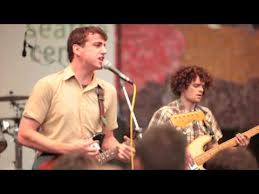
Following the other day’s review of Silversun Pickups, I have this more recent show.  In this one, only two members of the band are here–singer/guitarist Brian Aubert and bassist Nikki Monninger for a stripped down acoustic show.

This set is much more enjoyable than the older set.  The songs are certainly stronger, especially “Bloody Mary” and “The Pit.”  But there’s also something refreshing about hearing this band who is usually so fuzzed out sounding clean and simple.  I wouldn’t want an entire acoustic album from these guys, but it’s so dynamic in this version.  You can really hear the construction of the songs in this simple setting.

And the rapport between Brian and DJ Cheryl Waters is relaxed (they are very funny) and engaging–I really want to like these guys.

It’s interesting that in the five years from the previous set the Billy Corganisms have not gone away at all, but I guess one can’t help what one’s voice sounds like.  It’s kind of hard to get past that, but it’s not impossible, and the songs are so good, you can overlook it.  This makes me want to check out their latest album.  You can hear it here.

And for  those who watch TV, Silversun Pickups were on Up All Night this week (in a very weird mash up of pop culture).  Is that how lesser known bands get publicity, or was that meant to be a draw for the show (I don’t know how popular they are–Sarah had never heard of them).

[READ: October 18, 2012] Marshall McLuhan: You Know Nothing of My Work!

I had not heard of this book until I saw it in my local library.  I wasn’t prepared to read another biography of Marshall McLuhan, and indeed, this isn’t one.  This is the American edition of Extraordinary Canadians: Marshall McLuhan with a spiffy new title.  And it is virtually identical.

There are several things that were in the Canadian edition that were left out of the American edition (although they did leave in all of the “u”s in words like “colour”).

The things that were left out are: (more…)

Read Full Post »

SOUNDTRACK: DEERHOOF-Live at CMJ Gibson Showroom (2008).

I don’t know much about Deerhoof (I certainly didn’t know they’d been around over a decade).  I heard them on Pitchfork TV (they had two videos on it about two years ago which I rather liked).  This set was recorded live at CMJ by KEXP.

The DJ is very familiar with the band, and the repertoire is casual and funny (although the Gibson joke falls flat).  They play four songs and each one is virtually an instrumental.  The voice is mixed so low on “Blue Cash,” I didn’t even realize she was singing until the third time I listened, so I don’t know which songs have words.  “Tears of Music and Love” is a bit wilder (with some great crazy drumming in the middle).  “Fresh Born” has a bit more of a sinister edge what with the intense riff and the scratchy feedbacky bridge.  It’s my favorite song of the set.  “Basketball Get Your Groove Back” sounds a bit like “Roadrunner” so it’s less than thrilling end to the set.

I expected the band to be a lot weirder than this, I admit, but it’s still a good set.  You can listen here.

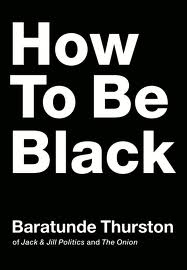
[READ: September 20, 2012] How to Be Black

Karen at A Just Recompense posted about this book a little while ago and after just a few lines, I had to stop reading her post so I could get the book.  I had no idea who Thurston was before I read the book, but it sounded so good.  And it was.  Although it wasn’t exactly what I was expecting.

This book is a combination autobiography of Thurston and “how to” book.  Thurston went to a Quaker School and a black militant program at the same time and also went to Harvard before becoming a stand up comedian; he’s co-creator of Jack & Jill Politics and director of digital at The Onion (that’s some serious cred for a geek like me).  As I said, in addition to being his autobiography, this is also something of a how-to manual for being black.  It’s funny, but not cheesy-over-the-top funny (stereotypes are played with but also deconstructed), it’s “serious” funny, and it’s very enjoyable.  And it covers topics that one might not expect, like talking about the Nigerians he has met who are offended at his name.  Baratunde is a twist on a Nigerian name, although his family is not Nigerian, his mother wanted him to have a traditional African name.  And he is quite annoyed at the Nigerians who assume he doesn’t know what his named means.  He does (and the example he gives is very funny). (more…)

Read Full Post »

SOUNDTRACK: CYMBALS EAT GUITARS-Live on KEXP June 18, 2009 (2009).

Cymbals Eat Guitars are from Staten Island (with members from New Jersey).  They have released two albums, although this recording is from after the release of their first album.    They play four songs:  “And the Hazy Sea,” “Cold Spring,” “Tunguska,” and “Wind Phoenix.”   They are noisy songs (mostly) with squalls of guitars (squalls is a good word since two of the guys are from Manahawkin, New Jersey.

The band has true progenitors in the indie rock scene–there’s sounds of Pavement, The Replacements,  even more melodic Sonic Youth .  They play noisy guitars and the vocals veer from softly sung to loudly screamed (often within the same line).    “Cold Spring” starts like a kind of shoegazery song and then after almost three minutes it turns into a  blast of pummeling rock with a noisy guitar section, before moving into a third more melodic section.

There’s   a lengthy interview with the band, where they give a shout out to New Jersey and seem genuinely surprised by the success they’ve had.  It’s a good show, and you can hear it here

[READ: September 25, 2012] God Bless You, Dr. Kevorkian

Again, against my better judgment I brought this Vonnegut book home too because it was on the shelf (and it was very short).  I still haven’t finished Bluebeard yet, but I have been curious about this book for some time.  It references Vonnegut’s early novel God Bless You, Mr Rosewater, but it also name checks Dr Jack Kevorkian.  So just what is it?

Well, it is collection of radio spots that Vonnegut did for WNYC radio in New York back in 1998.  Vonnegut claimed that he went to Kevorkian’s facility, was strapped in and almost killed multiple times, but Kevorkian brought him back each time creating a near-death experience. And each time Vonnegut travelled through that “blue tunnel,” he would interview a dead person.

The people he interviews vary quite a lot in fame and stature: (more…)

Read Full Post »

SOUNDTRACK: SISKIYOU-“Bad Days” (2012).

Siskiyou has had some medical problems and have canceled their recent tour.  They are also going on a brief haitus.  This is a shame as after their second album, they really had momentum and they sounded better than ever.

As a kind of peace offering to fans who would not be able to see the band, they recorded a cover of The Flaming Lip’s “Bad Days.”  The cover souds remarkably like the original, with one big difference: rather than squalls of feedback, Siskiyou uses only piano.  And it works very well, getting down  to the basics of the song and sounding a bit like Wayne Coyne singing.

It’s a nice tribute and  a nice “until later”

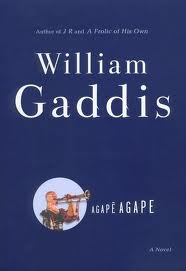
[READ: August 27, 2012] Agapē Agape

I have a long history with this book.

I was working at Baker and Taylor, a book supplier, when this book was released.  Some of the higher ups were able to get free books from the publishers they dealt with.  The guy who dealt Viking was not the friendliest guy, but since B&T paid absoluet crap wages, I was going try to get any books I could for free.   So, I asked for this book.  It was embarrassing enough to walk in and say this title with confidence, since I knew how it was pronounced (yes I took Greek in college), but knew he didn’t.  After some groveling, his reaction led me to think I wouldn’t be getting it.

But lo and behold a few weeks later it was sitting on my desk.

And now, ten years later, I’ve finally read it.

In JR, Jack Gibbs is writing a book with the name Agapē Agape, it is a jumbled history of the mechanization of the arts, starting with the player piano.  JR was finished in 1975–who knows for how long he had been working on it until then.  According to the Afterword of this book by Joseph Tabbi, Gaddis was pretty all-consumed by the idea of the player piano.  (It’s really quite an obsession).

This book is the culmination of all of Gaddis’ work on the player piano and how it removed all of the artistry from music (this theme of art and mechanization is in JR as well).   But rather than write this as an essay, which he didn’t think would be very effective, Gaddis decided to make this a novel.   I admit to not really knowing if he finished it–Gaddis died in 1998.  While it doesn’t feel unfinihsed, I’m just not sure if he was “done” with it. (more…)

Read Full Post »

SOUNDTRACK: OF MONSTERS AND MEN-Live from Iceland Airwaves (2011).

This brief set was recorded at KEX hostel in Reykjavik, Iceland (how on earth KEXP in Seattle was there I don’t know).  This set was performed before the release of their debut EP, although “Dirty Paws” which they play was not on that EP.  “Little Talks” their (reasonably) huge hit them was on the EP and is on their full length album–it’s a great duet (and reminds me a bit of Stars).

There’s an amusing fail in the horn solo on “Lake House,” which is kind of surprising, but not terribly tragic or anything.  The band sounds great, especially in front of a home country crowd (I love hearing them say “Takk” at the end of the songs).  There’s five songs in all, and by  the final one, they feel  sound like they’re really enjoying themselves.

[READ: September 1, 2012] Wampeters, Foma & Granfaloons

This collection contains essays reviews and speeches.  So it’s non-fiction.  Except that, ever the contrarian, Vonnegut includes one fiction piece–a short play.  The title of this book comes from three words from his novel Cat’s Cradle: “a wampeter is an object around which the lives of many otherwise unrelated people may revolve.  The Holy Grail would be a case in point.  Foma are harmless untruths, intended to comfort simple souls.  An example: ‘Prosperity is just around the corner.’ A granfallooon is a proud and meaningless association of human beings.”

That all comes from the preface.  The preface also says that there are people who have collected everything he has ever written (even stuff he has forgotten about) but he will not let most of that see the light of day.  Here he has whittled down the least embarrassing stuff for publication.  He also explains that at some point (supported by reading this) he decided to stop giving speeches; to stop “talking” and to concentrate on writing.  So he did.

The final straw for this was a comment from the President of the American Academy of Arts and Letters.  Vonnegut had prepared a speech.  The president reread it and hated it, but the president told Vonnegut that nobody would actually listen to the words: “People are seldom interested in the actual content of a speech.  They simply want to learn from your tone and gestures and expressions whether or not you are an honest man.”

While Vonnegut’s essays are powerful and effective, it’s the Preface that really tells it straightg.”Not nearly as many Biafrans were butchered by the Nigerians at the end of the war as I had thought would be.  At a minimum those damaged children at the exact middle of the universe will be more honorable than Richard M Nixon.  [Nixon] is the first president to hate the American people and all they stand for.”

Get ready for a happy collection. (more…)

Read Full Post »

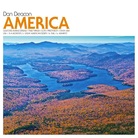
SOUNDTRACK: DAN DEACON-“Guilford Avenue Bridge” (2012).

I only know Dan Deacon from his “cover” of “Call me Maybe” (in which he layered the song on top of itself 147 times).  Deacon has a new proper album out and while it’s not quite as outlandish as the “Call Me Maybe” cover, it’s still pretty out there.

This is the opening track–a noisy barrage of sound set to a really catchy drum beat and bassline.  But you almost have to listen hard for that beat because it is just a wall of noise that goes on for 90 seconds until the song completely stops and is replaced by a manipulated banjo solo (I think).  This slowly morphs into pianos and then waves of delicate keyboards (all of which I’m sure is some kind of manipulated sound).  With about 30 seconds left the noise comes back and the songs ends much like it started.  Although it ends with a very happy chord.

This is definitely not for most, but the experimental nature is quite fun, and it’s definitely not something you’re going to hear on the radio very often.

[READ: August 22, 2012] “The College Borough”

I hadn’t read any Joshua Cohen before this story (he wrote the 800+ page buzz book Witz, but is NOT the author of a book called Leverage which Sarah reacted very strongly to–that would be Joshua C. Cohen, this one is Joshua A Cohen).  Also, I put it off because it was long.

Before I summarize, I want to state that this story is flipped on its own head by the final line.  The final few words completely changed how I felt about this story.  And I have to wonder what the risk is for a writer to do something like this.  For the entire story we don’t know why the narrator acts the way he does (in the present).  The flashback that the story provided is very thorough and detailed but it does not answer our pressing question.  Even when we return to the present, and the past comes to meet them, it still doesn’t explain it. It is literally the last few words that justify everything.  That’s audacious.

I’ll say more about this at the end.

It also begins with an audacious statement: “I helped build the Flatiron Building though I’ve never been to New York.”  Indeed, it seems that the narrator never wanted to go to New York.  But ow that his daughter, a junior in high school, wants to go to college in Manhattan (they hope she’ll stay in-state), he agrees for them all to go to New York City.

The narrator met his wife, Dem, in college (at in-state college).  They were both in the writing program and they’d had some classes together before they enrolled in Professor Greener’s seminar.

The beginning of the story is mostly the narrator’s complaints about New York.  I especially enjoyed this line: “I know no city can contain all the amenities you’d find at a place like our alma mater.”  Back home they have more pools, more StairMasters and their very own Flatiron Building (dubbed the Fauxiron).

Then the story pulls back so we can figure out what the hell this guy is talking about. (more…)

Read Full Post »

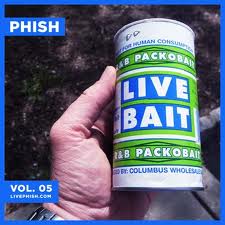
SOUNDTRACK: PHISH-Live Bait 5 (2011).

When this was released it was an astonishing free giveaway.  A mix of previously released and brand new recordings that spanned from 1987 to 2009!  Over 6 hours of music!  For free.

It’s fun to hear the really early stuff–like the songs that are from “Ian McLean’s Party at Connie Condon’s Farm” where the band is laughing with the audience (which seems like it’s about 100 people).  And when they invite everyone to another free part coming up.   This was back in 1987 before they had released their official debut Junta (who was taping all this stuff for them back then?  And with such good quality?).  But this one is especially fun because you can hear dogs barking during the quieter parts.

There’s also a big chunk of live Gamehendge material from Townshend Family Park in Vermont (circa 1989).  The middle block features the addition of The Giant Country Horns who play on “Flat Fee” and great versions of “David Bowie” and “Gumbo.”  I wouldn’t want the horns all the time, but they do add something to these shows.

Then there’s a jump to 1996 and a whole series of songs from shows at Loring Air Force base (through 1998).  There’s a 27 minute “Down with Disease” and a fun “Bathtub Gin.”  There’s then a bunch of songs from one show at the Big Cypress Seminole Reservation.

After a few year’s hiatus, they resume in 2003 back at Loring.  There’s a great version of “Waves,” although I found the “Mike’s Song” from this era kind of anemic.  And then, interestingly, there’s a “Split Open and Melt Jam” which is indeed, just the jam from the song and not the song itself.  “Suzy Greenberg” features Sharon Jones–it’s funny to me to hear r&b singers singing about a Jewish woman going to a neurologist. Fish, by the way has some of the funniest lines during the “forgotten my name bit.”  I’m also intrigued by the 2009 version of “McGrupp and the Watchful Hosemasters,” a pretty but kind of goofy song that dates back to 1985!

All in all, this was a very cool freebie to give to fans.

[READ: July 5, 2011] Five Dials 24

The newest Five Dials came as something of a surprise since Number 23 came out not too long ago and there was talk of the next issue being quite large.  But I like the small editions of Five Dials.  And this one is a cool, bite-sized nugget–a little fiction, an interview and an essay.  I have to assume this one was released when it was because it has a remembrance of David Rakoff, making this release rather timely.

…plus bear illustrations like you won’t believe by BECKY BARNICOAT (funny and dark drawings), LIZZY STEWART (beautiful pencil drawings) and NEAL JONES (blue bears). (more…)

Read Full Post »

SOUNDTRACK: THE FLAMING LIPS-“Smoke on the Water” (2012).

There’s a new Deep Purple tribute album coming out shortly (is this the year of tributes?  what’s going on?).  Anyway, the lineup isn’t all that inspired, but I was curious to see what the Flaming Lips would do with that song

As with their recent reinterpretation of Dark Side of the Moon, this cover is respectful and utterly disrespectful.  Musically the song is pretty accurate. Well, the notes are the same.  But the style is very different, kind of wahwahed delicate chords–no heavy bass or anything.  But it’s the vocals that are the contentious point–he recites the entire song (which kind of works because it is a story) in a stilted, faux British accent.

The second verse has a very computerized voice singing an autotuned melody along with the recitation–sort of a harmony but not.  This voice continues through to the chorus (which the main vocals also simply recite).

I appreciate the Flaming Lips’ approaches to popular songs, but this version renders a big loud song kind of anemic.  Which is so weird because the last few Lips albums were so loud and bass-heavy.  I listened twice, I probably don’t need to listen again.

So, this is yet another tribute I won’t be buying.

[READ: August 22, 2012] Don’t Get Too Comfortable

I’m already making good on my promise to read more David Rakoff.  Indeed, as soon as I heard that he died, I put this book on hold at the library.  The strange thing about this book is that I feel like I read parts of it already.  I don’t feel like I read the whole book because some things were unfamiliar to me, and yet there was a strange feeling of déjà vu throughout the book.  But I looked in the front of the book to see where these essays had appeared and I don’t read any of the magazines where they initially showed up.  And while I like This American Life, I don’t really listen to it very often.  So either I read this book seven years ago or these pieces are inspirations for other pieces I have read (which is possible–two or three articles in here reminded me of things that A.J .Jacobs has since done).

So this collection of essays takes place during the early 2000s, George W. Bush’s first term (not the happiest time to be a gay Canadian living in New York).  But in addition to the first essay which is all about his quest for citizenship, it seems that Rakoff was now gainfully employed as a freelance writer.  Most of these essays seem to have been requested for magazines–like they sought him out to write them.  So his fame was clearly growing.  And, again, like A.J. Jacobs, he seems to have been picked as a guinea pig for certain pieces.   I don’t really know if this is a “genre” per se, I mean lots of un-knowledgeable people have gone into new experiences to write about them (insert inevitable David Foster Wallace reference here–but of course he wasn’t the first either).  But Rakoff’s subjects in the last couple essays seem to be closer to what Wikipedia calls Jacob’s “stunt” journalism. (more…)

Read Full Post »

SOUNDTRACK: RED HOT CHILI PEPPERS-“Magic Johnson” (1989).

Just before the Red Hot Chili Peppers totally took off and became stadium stars, they released Mother’s Milk.  It was a commercialized realization of their three earlier more raw sounding funk rock records.  It was one of my favorite records of the late 80s.

Since Flea is interviewed in this issue of Grantland, and since he’s still a fan of the Lakers, it seemed like a good time to mention this song.

It opens with some martial drums (from then new drummer Chad Smith) and band chanting about M A G I C.  The lyrics are sung very quickly (I’m not even sure what they say half the time).  About 80 seconds in some wild guitar work burst forth, but it’s largely a chanted song of bass and drums.  There’ s a brief jam at the end where Flea shows off some great basswork and John Frusciante gets to do his thing again.

I don’t think I’ve ever heard it played anywhere (maybe at Lakers games?), so here’s a chance to hear it:

[READ: May 8, 2012] Grantland 3

One thing is for sure, Grantland loves it some basketball.  Basketball is the most widely covered sport in the published Grantlands so far. (The first issue even looked like one).  Since basketball is such a pop culture-referencing sport it actually works pretty well as a subject–with lots of different angles–especially given the state of the NBA lately.  Some other things on the Grantland staff’s minds include–the dangers of football and inadequacy of helmets to protect kids and Tim frickin Tebow (still!).  I don’t think an issue has past without talking about him yet.  I realize that’s a function of the time of these publications but… ew!

Nevertheless, the writing remains exciting and interesting, even for a non-sports guy like me.

(more…)

Read Full Post »

SOUNDTRACK: PINK FLOYD-Alan’s Psychedelic Christmas (1970).

I’ve always loved Pink Floyd’s Atom Heart Mother.  I have no recollection of how I stumbled upon this live bootleg, but when I saw that it contained one of the few live recordings of “Alan’s Psychedelic Breakfast” I had to give it a listen.

So this show is from 1970 and was recorded in Sheffield just before Christmas (Nick Mason evidently introduced the show while wearing a Santa Claus suit).  The sound quality is pretty good given that it is 40 some years old.  There’s a bunch of hiss, and the quieter talking bits are hard to understand, but the music sounds fine.

So the show opens with “Alan’s Psychedelic Breakfast” and what is so silly (and I assume funny to watch (a little less funny on bootleg) is that the band made and ate breakfast on stage.  As Collectors Music reviews writes: “This is the only known live recording of ‘Alan’s Psychedelic Breakfast’ but also hosts an amazing performance by the band which included them making morning tea on stage which is audible. Just like most of their earlier performances, the performance of “Alan’s Psychedelic Breakfast” slightly differs from the album version due to some nice jamming done by the band, especially Gilmour with his delay pedal.” As I said, some of the audio is static and hard to make out in this song–the band is conversing during their tea, but who knows what they are saying.  And who know what is o the radio.

Then the band gets down to business.  One of things I love about this period Floyd which is so different from their later work is that the played really long spacey jams often with very few lyrics.  So we get a 12-minute version of “The Embryo” (the only available studio version is a very short one on Works which is quite a shame as the song is really good).  A 14-minute workout of “Fat Old Sun” which is usually only about 5 minutes.

There’s a great version of “Careful with that Axe Eugene” and “Set the Controls for the Heart of the Sun” (15 and 12 minutes respectively).

Then in a killer version of “Saucerful of Secrets,” just as they get to the end, there’s a power failure (at least according to the song title).  The band is rocking out just hitting the climax when suddenly all you can hear are un-miked drums.  Ha. After a couple of minutes, power comes back and they pick up from just before where they left off.

Then the band launches into a full 31-minute version of “Atom Heart Mother” complete with horns and choir  of voices.  It sounds quite good (the horns seem a little sketchy but that might be expected with such staccato music).

The set ends and the band needs an encore.  Apparently they couldn’t remember anything else because they just re-do the last few minutes of “Atom Heart Mother” again.

One of the things that cracks me up about these shows in the 70s in England, is that the audience is so polite. Their applause sounds like a classical theater rather than a rock show.  And with a bootleg you know they didn’t try to make the audience sound bigger than they are.

The whole package is a fun trip.

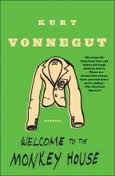
[READ: August 17, 2012] Welcome to the Monkey House

So this book is Vonnegut’s second collection of short stories.  But there’s a twist.  This collection contains all of the short stories from Canary in a Cat House except one. It also contains many of the stories he had written since then as well as stories not collected in Canary.  So you get basically 18 years worth of stories here.  And it’s interesting to see how much he has changed over those years (during which he wrote 5 novels, but not yet Slaughterhouse Five).

Since I read Canary a little while ago (see comments about the stories here), I knew that his 50’s era stories were influenced by WWII.  So it’s interesting to see how his stories from the 690s are not.  They deal more with day to day things and, of course, abstract concepts about humanity, although politics do enter the picture again once Kennedy is elected .

  • Where I Live (1964)

This was a good story to open with because it shows the then-later-period Vonnegut’s mindset and location.  This story is about Barnstable Village on Cape Cod (where I assume Vonnegut lived since there are a number of stories set on the Cape).  This is a very casually written story about an encyclopedia salesman who goes to the local library and sees that their two encyclopedias are from 1910 and 1938.  I enjoyed this line: “He said that many important things had happened since 1938, naming among others, penicillin and Hitler’s invasion of Poland.”  He is told to talk to the library directors who are at the yacht club.  I love the attitude that Vonnegut creates around the village which “has a policy of never accepting anything.  As a happy consequence, it changes about as fast as the rules of chess.” For really, this story is about the Village more than the encyclopedia salesman, and it’s an interesting look at people who move into a new place and want it to never change. (more…)

Read Full Post »

« Newer Posts - Older Posts »