Feeds:
Posts
Comments

Archive for the ‘Book Reviews’ Category

bolano

SOUNDTRACK: OS MUTANTES-“Fool Metal Jack” (2013).

Iosmut have known about Os Mutantes for years.  I never knew anything about them (and never really understood their name–although now that I have been working with Brazilian books at work I realize that their name is Portuguese for The Mutants (it was the Os that always threw me off).  I had no idea that a) they’d been around since the 60s and were part of the psychedelic scene or b) that they were still around (after some breakups and with a largely new lineup) or c) that they sang in English (which they do on several songs on this album) or d) that their new album kicked so much ass.
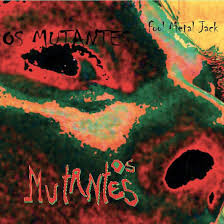
The album is called Fool Metal Jack and it is a fantastic mixture of fast heavy rock, Brazilian traditional sounds, what I assume are Native Brazilian chants and a heavy dose of weirdness.  All wrapped up in an anti-war stance, like on this track “Fool Metal Jack.”

A creepy, distorted  bassline introduces this song which sounds like the guy from Gogol Bordello singing a Tom Waits march.  It’s about a soldier in the middle of a war.  The bridge means more voices come in, bringing in an even more disorienting sound.  And the chorus chanted “Yes.  No More War” completes the song.  By the time the wailing guitar solo comes in the chants of “This is the war of hell” have even more impact.

This stomping song was a great introduction to this band who I now need to explore further.

[READ: April 18. 2013] The Last Interview

I enjoyed Kurt Vonnegut’s “Last Interview” and since I had always intended to read Bolaño’s I was delighted to see that our library had it.  Bolaño is a fascinating interview subject because you never really know what he is going to say.  There are even serious questions about the veracity of his life story which many people believe he fabricated for more dramatic effect.

But the one thing that is absolutely consistent about Bolaño is that he always praises writers whom he respects (and will trash those he doesn’t, although that seems to come more from the interviewer’s  instigation (not that he needs a lot).    So the last interview that he did is the one from Mexican Playboy which has been collected in Between Parentheses.  But the other three are earlier and, it seems, a little more “truthful” or at least less naughty-seeming.

What’s fascinating about this book is that the introduction by Marcela Valdes (“Alone Among the Ghosts”) is over 30 pages long!  The article originally appeared in The Nation on Dec 8, 2008 (read it here).  As such it’s not an introduction to this book, it’s introduction for English readers to Bolaño circa 2666.  And it’s a great read.  It is primarily about 2666, which Valdes has read many times.  She goes into interesting depth about the story but mostly she relates it to Bolaño’s own experiences while writing the book.  It focuses especially on his research about the real murders.  His interest was genuine and he sought help from a reporter who was doing genuinely decent work (ie. not accepting the word of the state about what was going on).

Bolaño has said he wished he was a detective rather than a writer, which explains The Savage Detectives and Woes of the True Policeman.  But Valdes also points out how almost all of his shorter novels have some kind of detective work involved–seeking someone who is lost or hiding.  The article was really great and is worth a read for anyone interested in Bolaño, whether you have read him or not. (more…)

Read Full Post »

vonlastintSOUNDTRACKSURFER BLOOD-“Demon Dance” (Live at SXSW, March 27, 2013).

surfer blood

I’ve liked Surfer Blood since I first heard them.  They write catchy, mostly short, poppy songs.  And usually after a few listens, the hooks really grab you.  The strange thing about the band is that the hooks aren’t always readily apparent, which makes their songs sound kind of samey sometimes.

Of course, samey isn’t a bad thing, necessarily.  Surfer Blood is quite distinctive and I tend to enjoy everything they do.  This new song sounds like their other stuff, which is fine.  But the most distinctive thing about the band of probably their singer who sounds like a less-affected Morrissey.

Having also listened to the song from the album I can say that the singer is far harder to understand live, so maybe live is not the best way to hear a new song from them, but for an old favorite, Surfer Blood has a great energy live.

Watch the show here and hear the studio version here.

[READ: March 27, 2013] The Last Interview and Other Conversations

Melville House has published a number of these “Last Interview” books, and as a completist I feel compelled to read them.  I have read criticisms of the series primarily because what the books are are collections of interviews including the last interview that the writer gave.  They don’t have anything new or proprietary.  The last interview just happens to be the last one he gave.   So it seems a little disingenuous, but is not technically wrong.

There’s so far five books in the series, and I figured I’d read at least three (Vonnegut, David Foster Wallace and Roberto Bolaño–the other two turned out to be Jorge Luis Borges–who I would be interested in reading about and Jacques Derrida (!) who I have always loved–I guess this series was tailor made for me).

At any rate, these interviews are from various times and locations in Vonnegut’s career.  There are six in total.  I don’t know if the titles they give here were the titles in the original publications but here’s what’s inside:

  • “Kurt Vonnegut: The Art of Fiction” from The Paris Review, Spring 1977 (by David Hayman, David Michaelis, George Plimpton, Richard Rhodes)
  • “There Must be More to Love Than Death” from The Nation, August 1980 (by Robert K. Musil)
  • “The Joe & Kurt Show” from Playboy, May 1982 (by Joseph Heller and Carole Mallory)
  • “The Melancholia of Everything Completed” from Stop Smiling, August 2006 (by J.C. Gabel)
  • “God Bless You, Mr. Vonnegut” from U.S. Airways Magazine (!!!), June 2007 (by J. Rentilly)
  • “The Last Interview” from In These Times May 9, 2007 (by Heather Augustyn) (more…)

Read Full Post »

dtmaxSOUNDTRACK: TOM WAITS & KEITH RICHARDS-“Shenandoah” (2013).

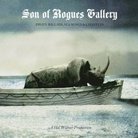
roguesgallery-f8be47f3887d51de57ea842a129f0a722e53ef74-s1This tune comes from the album Son Of Rogues Gallery.  The album is, of all things, a sequel to the album Rogues Gallery.  The full title is Son Of Rogues Gallery: Pirate Ballads, Sea Songs & Chanteys.  The first album was a kind of novelty–I can’t even say novelty hit as I don;t know if it was.  But it must have had some success because here’s a second one (and there’s no Pirates of the Caribbean movie to tie it to).

The album has 36 songs (!) by a delightful collection of artists, including: Shane MacGowan, Nick Cave, Macy Gray, Broken Social Scene, Richard Thompson, Michael Gira and Mary Margaret O’Hara (among many others).  I enjoyed the first one, but I think the line up on this one is even better.

“Shenandoah” is not a song that I particulalry like.  Because it is traditional, I have a few people doing versions of it, but I don’t gravitate twoards it–it’s a little slow and meandering (like the river I guess) for me. And this version is not much different.  What it does have going for it is Waits’ crazed warbling along with even crazier backing viclas from Keith Richards (there;s no guitar on the track).

[READ: January 7, 2012] Every Love Story is a Ghost Story

I had mixed feelings about reading this biography.  I’m a huge fan of David Foster Wallace, but I often find it simply disappointing to read about people you like.  And yet, DFW was such an interesting mind, that it seemed worthwhile to find out more about him. Plus, I’ve read everything by the guy, and a lot of things about him…realistically it’s not like I wasn’t going to read this.  I think I was afraid of being seriously bummed out.  So Sarah got me this for Christmas and I really really enjoyed reading it.

Now I didn’t know a ton about DFW going into this book–I knew basics and I had read a ton of interviews, but he never talked a lot about himself, it was predominantly about his work.  So if I say that Max is correct and did his research, I say it from the point of someone full of ignorance and because it seems comprehensive.  I’m not claiming that he was right just that he was convincing.  And Max is very convincing.  And he really did his research.

It’s also convenient that DFW wrote a lot of letters–Max has a ton of letters to quote from.  And DFW wrote to all kinds of people–friends, fellow authors  girlfriends, colleagues….  Aside from old friends, his two main correspondents were Don DeLillo, whom he thought of as a kind of mentor, and Jonathan Franzen, whom he considered one of his best friends and rivals.  I guess we can also be thankful that these recipients held on to the letters. (more…)

Read Full Post »

SOUNDTRACK: RA RA RIOT-“Is It Too Much” (2013).

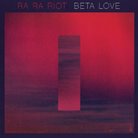
raraI loved the first Ra Ra Riot album The Rhumb Line.  This song expands on some of the ideas from that album, but I fear that it goes in the one direction I would have preferred they not go.  The album had strings, nice harmonies and a great singer all melded into an interesting rock structure.

This song retains all of the elements that were interesting, but it removes it from the rock structure, making it  sound much more lightweight.  It’s pushing too far into easy-listening.  And do I hear autotune on the vocals?  The instrumental middle section is the most interesting part of the song.  But Ra Ra Riot seems to have removed the riot part of their sound.  If this is the direction of the album, I’m afraid I won’t be following.

[READ: January 8, 2013] “Consider the Writer”

I just finished the D.T. Max biography of David Foster Wallace.  I was curious what kind of reception it received.  And lo, here’s a review by Rivka Galchen (something I would have read anyhow since I enjoy her so much).

Galchen opens with two main points–the biography is gripping (and it is, I’ll be saying more about that tomorrow, too).  She writes: “In writing a chronologically narrated, thoroughly researched, objective-as-­imaginable biography, Max has created a page turner.”

The second idea is that you keep thinking “that you just don’t find Wallace all that nice”  (which I also thought).  But then she wonders if it is fair to be worried about that.  We should not judge others after all.  Especially since, as she points out, “We don’t always find ourselves asking whether a writer is nice. I’ve never heard anyone wonder this at length about, say, Haruki Murakami or Jennifer Egan.”  So why is that a concern about Wallace?  Because niceness is what Wallace wrote about, tried to encourage.  And perhaps “One understandably slips from reading something concerned with how to be a good person to expecting the writer to have been more naturally kind himself.”  But that is not necessarily the case–people strive for things that they cannot achieve.   I like her example “the co-founder of A.A., Bill W., is a guru of sobriety precisely because sobriety was so difficult for him.”   And her conclusion: “Wallace’s fiction is, in its attentiveness and labor and genuine love and play, very nice. But what is achieved on the page, if it is achieved, may not hold stable in real life.”

And Galchen talks a bit abut DFW himself (the book is a biography after all).  How he wore the bandana because he sweated so much–how self conscious he was about that and by extension nearly everything he did.  This mitigates his not-niceness somewhat.  It also ties in to his alcoholism  drug use and depression.  And his competitiveness, which is obvious in the biography.  She enjoys the pleasure of Wallace’s correspondences, “especially with his close friend and combatant Jonathan Franzen, but also with just about every white male writer he might ever have viewed as a rival or mentor. Aggressive self-abasement, grandstanding, veiled abuse, genuine thoughtfulness, thin-skinned pandering — it’s all there.”  I rather wished that the authors’ own reactions were included (of course it’s not biographies of them, and they are still alive), just to see if they sparred back with Wallace or if they were put off by yet indulgent of his needs. (more…)

Read Full Post »

SOUNDTRACK: SUNN O)))-Flight of the Behemoth (2002).

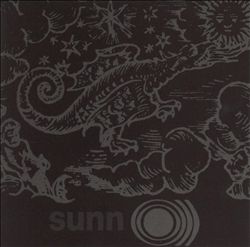
I hadn’t really heard Sunn O))) until this record (which may not be typical as they collaborated with Merzbow on this one).  I knew that Sunn O))) played loud droney “music.”  And so it is here.  On “Mocking Solemnity” (9 minutes) and “Death Becomes You” (13 minutes) (which meld into each other seamlessly), the songs are mostly slow drones on electric guitar.  The chords are heavy and heavily distorted and they ring out for a few bars–not until the chords die naturally, there is a kind of pacing involved, but for a few bars until the chords are played again (often the same chord).  This is for those who thought Metal Machine Music was too complicated.

On paper this sounds unimpressive (or downright awful, depending) but in reality it is a very physical experience (if played loud enough).

The staticy noise of “Death” melds into track 3 “O))) Bow 1” which adds what sounds like radically modified piano playing a kind of melody.  It’s about 6 minutes and it really changes the tone of the record to suddenly add an atonal racket to the almost calming drone of the bass.  But by the middle of the song, the piano becomes what sounds like a chainsaw.  Merzbow mixed that track and  “O))) Bow 2” which is 13 minutes of the same slow pulsating noise.  It’s not exactly soothing.

The final track is “F.W.T.B.T.” a “remake” of “Metallica’s “For Whom the Bell Tolls.”  I can’t hear a thing that sounds like the original, but that’s what makes a cover interesting.  Although admittedly around the four and a half minute mark there’s some faster chords (for this band anyhow) that could be Metallica-like.  There are also drums (and vocals, although I have no idea what they are saying) on this ten-minute workout.

Not for the faint of heart (or fans of melody).

[READ: November 17, 2012] How to Be Alone

I read most of the articles in this book already.  But I read them over two years ago, so I thought it would be safe to wade into the world of Franzen again.  What I find most interesting about the title of this book is just how many of these articles are about being alone, wanting to be alone or feeling like you are alone.  Obviously that is by design but it seems surprising just how apt the title proved to be, especially given the variety of subjects  his father’s brain, being a novelist, the US Postal Service, New York City.

I’m not going to go into major detail about each article this time, although I am providing a link to the earlier review–my feelings didn’t really change about the pieces (except that from time to time I got a bit exhausted at his…whininess?  No, not that exactly…maybe his persecution complex.  But I will give a line summary about each one just to keep everyone up to speed.  The four pieces that I hadn’t read before I will give a few more words about.

One overall feeling is that when Franzen isn’t writing about the state of the novel (which he is very passionate about) his articles are well researched well documented which is kind of surprising given the state of panic he seems to be in the novel articles.  It’s also kind of funny how out of touch these articles seem (some are almost 20 years old and are kind of laughably outdated), but it’s also funny to see how poorly his predictions panned out.  The death of the novel is rather overrated (just see the success of his own Freedom.

So the book contains: (more…)

Read Full Post »

SOUNDTRACK: OF MONSTERS AND MEN-Live from Iceland Airwaves (2011).

This brief set was recorded at KEX hostel in Reykjavik, Iceland (how on earth KEXP in Seattle was there I don’t know).  This set was performed before the release of their debut EP, although “Dirty Paws” which they play was not on that EP.  “Little Talks” their (reasonably) huge hit them was on the EP and is on their full length album–it’s a great duet (and reminds me a bit of Stars).

There’s an amusing fail in the horn solo on “Lake House,” which is kind of surprising, but not terribly tragic or anything.  The band sounds great, especially in front of a home country crowd (I love hearing them say “Takk” at the end of the songs).  There’s five songs in all, and by  the final one, they feel  sound like they’re really enjoying themselves.

[READ: September 1, 2012] Wampeters, Foma & Granfaloons

This collection contains essays reviews and speeches.  So it’s non-fiction.  Except that, ever the contrarian, Vonnegut includes one fiction piece–a short play.  The title of this book comes from three words from his novel Cat’s Cradle: “a wampeter is an object around which the lives of many otherwise unrelated people may revolve.  The Holy Grail would be a case in point.  Foma are harmless untruths, intended to comfort simple souls.  An example: ‘Prosperity is just around the corner.’ A granfallooon is a proud and meaningless association of human beings.”

That all comes from the preface.  The preface also says that there are people who have collected everything he has ever written (even stuff he has forgotten about) but he will not let most of that see the light of day.  Here he has whittled down the least embarrassing stuff for publication.  He also explains that at some point (supported by reading this) he decided to stop giving speeches; to stop “talking” and to concentrate on writing.  So he did.

The final straw for this was a comment from the President of the American Academy of Arts and Letters.  Vonnegut had prepared a speech.  The president reread it and hated it, but the president told Vonnegut that nobody would actually listen to the words: “People are seldom interested in the actual content of a speech.  They simply want to learn from your tone and gestures and expressions whether or not you are an honest man.”

While Vonnegut’s essays are powerful and effective, it’s the Preface that really tells it straightg.”Not nearly as many Biafrans were butchered by the Nigerians at the end of the war as I had thought would be.  At a minimum those damaged children at the exact middle of the universe will be more honorable than Richard M Nixon.  [Nixon] is the first president to hate the American people and all they stand for.”

Get ready for a happy collection. (more…)

Read Full Post »

SOUNDTRACK: DAN DEACON-“Call Me Maybe Acapella 147 Times Exponentially Layered” (2012).

Dan Deacon (whose twitter handle is “ebaynetflix” ha!), created a cover of Carly Rae Jepsen’s “Call Me Maybe,” for a digital album with 43 artists covering the pop delicacy.  I listened to a few samples from the album and they span the gamut from kind of serious to kind of crazy to mocking to Deacon.

Stereogum describes Deacon’s version this way: “Dan Deacon piles “Call Me Maybe” on itself over and over again, creating the most dissonant, harrowing take on Carli Rae Jepsen’s [sic] hit known to man.”

He begins with a sample from the verse, then he adds some lines from the chorus (while the verse is playing). You can hear “here’s my number, so call me maybe” a few times, but the background is growing in intensity and menace.  By 90 seconds in, you can still hear her a little bit, but she is almost entirely consumed by noise.  Then around 2 minutes, things seems to calm down a bit (she’s still plugging away at the chorus).  By 4 minutes the whole thing has seemingly collapsed in on itself.  And the whole time, there seems to be a steady beat that you can dance to.  This track may indeed produce insanity.

You can listen to Deacon’s monstrosity below, or go to the original site.

  To see the lineup for the whole album, go here.

[READ: August 22, 2012] 3 Book Reviews

I don’t quite understand how Cohen pulled this off, but in the July issue of Harper‘s right after his story, “The College Borough,” which I mentioned yesterday, he also had three book reviews.  How does one get two bylines in Harper’s?  Has that ever happened before?

Because I liked the story so much, I decided I would read these reviews too.  Cohen sets up the reviews with the idea of political gestation periods (12 months for donkeys, 22 months for elephants) and how novelists work even slower when it comes to writing about events.  Norman Mailer’s The Naked and the Dead came out 32 months after V-J Day, John Steinbeck wrote about the depression from 1937-1945.  So now in 2012 we see the “spawn of Bush’s two terms of excruciating contractions.”  Books that fictionalize the realities of post-9/11 life: “that the canniest distraction from class war is war-war.” (more…)

Read Full Post »

SOUNDTRACK: KISS-Alive III (1993).

Kiss put out Alive! after just three albums.  Alive II also came out after three albums.  Alive III has 14 albums between it and Alive II (if you count the solo albums as 4).  I guess poor sales and poorly attended concerts don’t really suggest live albums.  But Revenge revitalized them somewhat so it was time for a new one–their first with no makeup!  And it’s a pretty good one.

But it’s also like Kiss has forgotten all about being Kiss.  There’s no “You wanted the best, you got the best, the hottest band in the world…Kiss” (which would have been untrue at the time anyhow, but since when has that stopped Kiss?)  The tracklisting is pretty darn good though.  For Alive II, the band didn’t want to repeat any tracks from Alive! (that’s such an endearing thing to say about the band with 400 repackaged hits records).  Since there are tons of records since Alive II, you’d assume Alive III was all 80s songs.  But that’s not the case.  There are a few inevitable duplicates (how could there not be–all their biggest hits were from the 70s), but I’m surprised they didn’t throw more current stuff on the disc.

It opens with “Creatures of the Night” a great heavy version.  Then they go way back to “Deuce” which is a cool surprise.  Since this was the tour for Revenge, you’d think there might be more songs from it, but there’s only three: “I Just Wanna” “Unholy” and “Domino.”  “I Just Wanna” was perfectly crafted for Paul to banter with the audience and get them to sing “I just wanna fuck” (which was edited from the album I understand).  And in this live setting “Unholy” sounds great.

“Heaven’s on Fire” works well live, even if I don’t really like the song–but the band can really ham it up here.  The big surprise has got to be “Watching You,” a totally unexpected song form the past.  And even if it was on Alive!, this version is quite different (no Peter Criss cowbell).  I don’t think much of “Domino” anyhow (well, the music is great but the lyrics, ick), but in this version Gene just seems kind of bored.

Another surprise comes in “I Was Made for Lovin’ You”  true it’s one of Kiss; biggest hits but they often try to distance themselves from the “disco” era.  Nevertheless this version sounds revitalized.  And since there were no live albums in the 80s, there’s no official live recordings of it.  “I Still Love You” is another great chance for Paul to shine.  “I Love It Loud” sounds great (although the harmonies get a little sketchy at times.  But it’s weird to hear “Rock N Roll All Nite” in the middle of the set instead of at the end.  It’s also odd to start off this song with “It ain’t bullshit when you say rock and roll all nite and party every day.”   The intro to “Detroit Rock City” is also very strange “It doesn’t matter where you’re born ,it doesn’t matter where you come from, it matters where your head is at. This one;s called Detroit Rock City.”  Huh.

There’s not much you can do with a dreadful song like “Lick It Up,” and ad-libbing “I wanna lick you” doesn’t make it any better.  The disc ends with “God Gave Rock n Roll to You II,” which I don’t like, but which sounds good live, a lot of energy.  And it wraps up with a very odd thing–a guitar solo version of the Star Spangled Banner.  It doesn’t compare to Alive! or Alive II, but Alive III is a good live album from a good live band.

[READ: August 15, 2012] “From the Pencil Zone”

This is a review of the microscripts of Robert Walser, an author whom I have never heard of.  Walser was born in Switzerland in 1878 and he published several shorts and several novels (which were admired by Kafka!).

As the market for shorts dried up, so did his career, and he moved into smaller and smaller places.  Accordingly, his handwriting grew smaller and smaller, too.  Eventually he cheeked himself into a series of mental institutions.

Walser’s early novels dealt with everyday life, like the “young boyish man” who wants to become a bookshop proprietor in The Tanners.  The character (whose name we don’t learn for a long time) is effusive, praising the job to the heavens as a divine calling!  And lo he is given the job.  A week later he declares, “the entire book trade is nothing less than ghastly.”  Wasler himself had a multifaceted career: butler, inventor’s assistant, clerk, journalist.  But he was eventually diagnosed with schizophrenia and is responsible for this quotable quote: “I’m not here to write.  I’m here to be mad.”

After Walser died, people discovered a treasure trove of 526 pages of “microscripts.”  The writing was so small that these 526 pages, when written in book form came to six VOLUMES of books.  They were released as Aus dem Bleistifsebiet (From the Pencil Zone).  Galchen’s review here is for the short one volume New Directions collection called Robert Walser: Microscripts.  Interestingly, most of the stories have no title and some seem unfinished.  New Directions (and Harper’s) include images of this man’s microscopic writings (all done in pencil of course).  He wrote in Kurrent, a widely used script at the time which was a version of medieval shorthand and which dramatically reduced the number of strokes per character.  His letters were often one or two millimeters tall.  He was able to fit six stories on a postcard received from a newspaper editor. (more…)

Read Full Post »

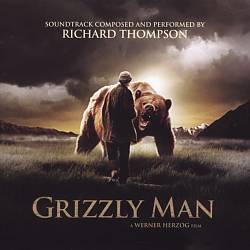
SOUNDTRACK: RICHARD THOMPSON-Grizzly Man Soundtrack (2005).

This is a largely instrumental soundtrack by Richard Thompson.  It features some wonderful guitar work (no surprise there).  There are several slow acoustic numbers (“Tim & the Bears,” “Foxes”–which is in the style of his old traditional folk ballads) there’s also the slow impassioned electric guitar solo (set over a simple beat) of “Main Title.”  “Ghosts in the Maze ” is a dark piece, the exact opposite of “Glencoe” a traditional-sounding song, both of these are under two minutes long.  “Parents” adds a cello, which means a sombre song.  “Twilight Cowboy” is one of the longer pieces, and it really conveys an openness of nature.

“Treadwell No More” is a slow six-minute dirge type song.  “That’s My Story” has spoken dialogue by Treadwell, over a simple unobtrusive guitar.  But as the title of the record says, Music composed and performed by Richard Thompson.  Which means there are other musicians on the soundtrack too.  “Small Racket” is where things start to get noisy and a little uncomfortable.  There’s some squeaks and slashes of sound, but it’s mostly a tense guitar feel.  Then comes the darker, scarier stuff.  “Bear Fight,” is a series of cello noises and swipes.  “Big Racket” is indeed that, with guitar from Henry Kaiser and noises from Jim O’Rourke.  “Corona for Mr Chocolate” is all Jim O’Rourke, it’s also odd noises and moods.  None of these three songs are terribly off-putting but they reflect a very different tone.

The album ends with “Main Title Revisited,” which is what it says and “Coyotes” by Don Edwards which has some coyote yodels.

It’s a good soundtrack, really conveying what the movie is about, and while not essential Richard Thompson, it is still some great guitar work

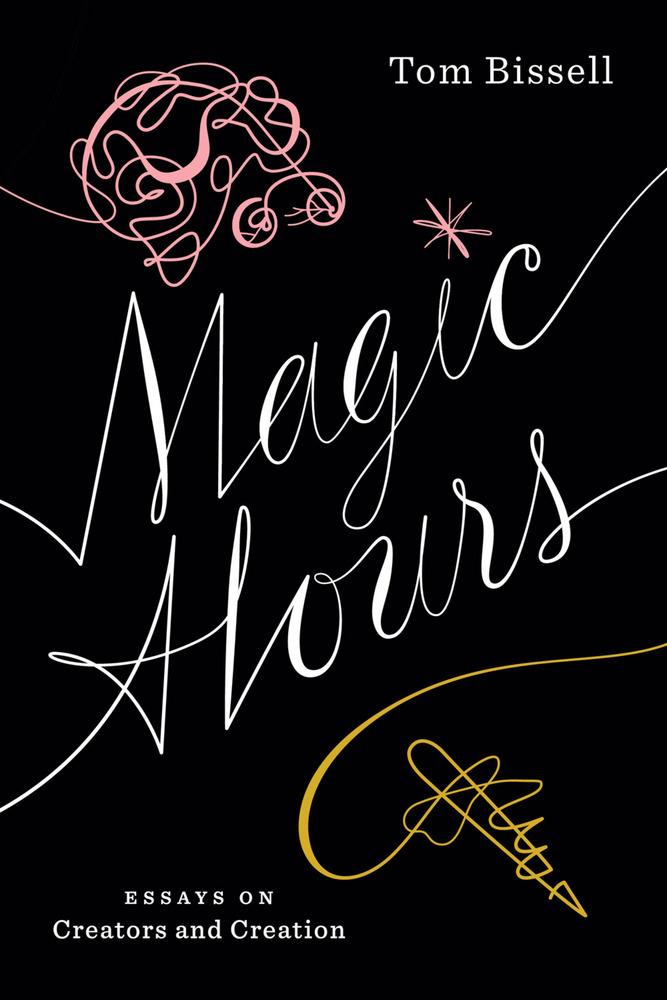
[READ: July 23, 2012] Magic Hours

I thought that I had never heard of Tom Bissell, but I see that I have read three of these articles already (I guess I don’t always pay attention to the author’s name).

This collection of essays comes from the last eleven years (2000-2011).  The articles have appeared in The Believer & The New Yorker (these are the ones I have read) and Boston Review, Harper’s, New York Times Magazine, Virginia Quarterly Review, New York Times Book Review and Outside (which I am starting to think I should really check out more).

Primarily they are articles about writing–he looks at fiction, non-fiction, film or a combination of them.  Bissell is a strong writer and he does not hold back when he sees something he likes or dislikes.  I found his articles (all of which are quite long–about 30 pages each) to be engaging, funny and very persuasive.  I’m really glad I read the book (and was even glad to re-read the articles that I had read before). (more…)

Read Full Post »

SOUNDTRACK: SQUAREPUSHER-“Dark Steering” (2012).

Hot on the heels of a review of LMFAO I get to the other side of the spectrum in electronic music—Squarepusher.   There’s no big choruses, heck there’s no words, but this music shares something with LMFAO.  Well, actually it really doesn’t—except maybe keyboards.

Squarepusher play dark angular music. It’s very electronic and alien (and sounds like it may have been used in the background of Skinny Puppy songs back in the day). It’s abrasive and the sounds are otherworldly and yet in this song, there’s a melody to it.  I have but one Squarepusher CD—that’s probably enough for me.  But I am always interested to hear new music by him.  It’s impressive the way he can take a song that starts out so noisy and get it to sound like real music by the end.  It like the science fiction of music.

[READ: June 5, 2012] “Forward Thinking”

I have read only one book by China Miéville—Perdido Street Station.  I found it to be quite challenging for a bunch of reasons and figured I wouldn’t read more by him.  And yet I find that images from that book stay with me to this day (at least ten years on).  So maybe it’s time to give him another shot.  But where to start?

This entry in the New Yorker’s Sci-Fi issue is written as an “E-mail sent back in time to a young science-fiction fan.”  And I loved it.  I enjoyed how it started (with the author knowing that E-mail doesn’t exist at the time the recipient will get this—so who will it show up?)  And I loved the central question: “How did you get into this stuff?”  The sender knows that the kid will get asked this a lot, but the question should be turned around: “How did you get out of it?”  Because all kids love sci-fi concepts.  It’s just that some move away from it as they get older.

Miéville includes a few key moments in (his) sci-fi history: Page 40 of “The Tale of Mr. Jeremy Fisher” by Beatrix Potter.  What?  Indeed, for this is the first time that (you) will be ware of knowing something the protagonist doesn’t—that there’s  fish coming up to get him.

Next is Chapter 13 of Golem100 by Alfred Bester.  I have never heard of this book.  Although Miéville does warn us about it—he read it far too young and there’s some sadistic violence in it, what attracted him (and me, now) is the disrespect for text—part of the story is a musical score, another is a picture.  It sounds cool.  And of course it is long out of print. (more…)

Read Full Post »

« Newer Posts - Older Posts »