Feeds:
Posts
Comments

Archive for the ‘Biography’ Category

dfwSOUNDTRACK: BUILT TO SPILL-Ultimate Alternative Wavers (1993).
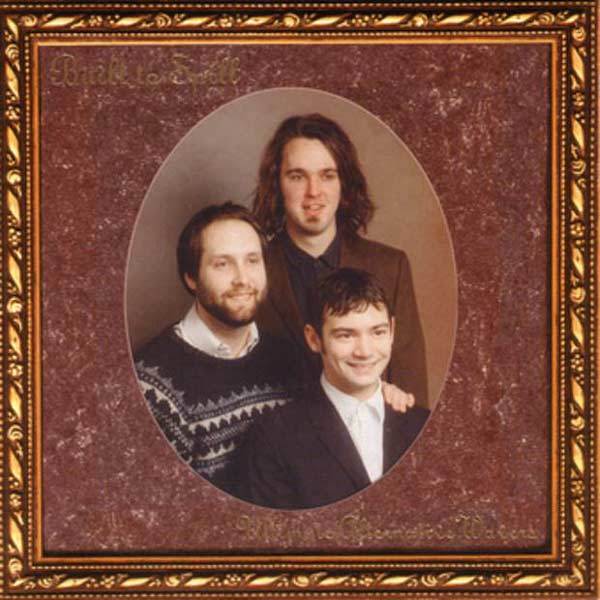
Bts I am going to see Built to Spill this Friday.  I was supposed to see them back in 2001, but then some bad things happened in New York City and their show was cancelled (or I opted not to go–I see on Setlist that they did play that night).  Since then, I have enjoyed each new album more than the previous one, so I am really excited to see them.

I thought it would be interesting to revisit their earlier records.  In reading about the band I learned that Doug Martsch was in Treepeople (which I didn’t know and who I don’t really know at all).  I also learned that his plan for BtS was to have just him with a different line up for each album.  That didn’t quite work out, but there has been a bit of change over the years.

Their debut album is surprisingly cohesive and right in line with their newer material.  It’s not to say that they haven’t changed or grown, but there’s a few songs on here that with a little better production could easily appear on a newer album.  Martsch’s voice sounds more or less the same, and the catchiness is already present (even if it sometimes buried under all kinds of things).  And of course, Marstch’s guitar skill is apparent throughout.  The album (released on the tiny C/Z label) also plays around a lot with experimental sounds and multitracking.  When listening closely, it gives the album a kind of lurching quality, with backing vocals and guitars at different levels of volume throughout the disc.

But “The First Song” sounds like a fully formed BtS song–the voice and guitar and catchy chorus are all there..  The only real difference is the presence of the organ in the background.  “Three Years Ago Today” feels a bit more slackery–it sounds very 90s (like the irony of the cover), which isn’t a bad thing.  The song switches between slow and fast and a completely new section later in the song.  “Revolution” opens with acoustic guitars and then an occasional really heavy electric guitar riff that seems to come from nowhere.  The end of the song is experimental with weird sounds and doubled voices and even a cough used as a kind of percussion.

“Shameful Dread” is an 8 minute song.   There’s a slow section, a fast section, a big noisy section and a coda that features the guys singing “la la la la la”.  Of course the most fun is that the song ends and then Nelson from The Simpsons says “ha ha” and a distorted kind of acoustic outro completes the last two minutes.

“Nowhere Nuthin’ Fuckup” is one of my favorite songs on the record.  There’s a sound in the background that is probably guitar but sounds like harbor seals barking.  I recently learned that the lyrics are an interpretation of the Velvet Underground’s “Oh! Sweet Nuthin.”  They aren’t exactly the same but are very close for some verses.  The rest of the music is not VU at all.  In fact the chorus gets really loud and angular.  I love the way the guitars build and then stop dramatically.

“Get a Life” opens with a wild riff that reminds me of Modest Mouse (who cite BtS as an influence), but the song quickly settles down (with more multitracked voices).  I love how at around 4 minutes a big swath of noise takes over and it is resolved with a really catchy noisy end section.  “Built to Spill” starts out slow and quiet, and grows louder with a catchy chorus.  In the background there’s all kinds of noisy guitars and superfuzzed bass.

“Lie for a Lie” is pretty much a simple song with s constant riff running throughout.  The verses are catchy, but the middle section is just crazy–with snippets of guitars, out of tune piano, a cowbell and random guitar squawking and even shouts and screams throughout the “solo” section.  “Hazy” is a slow song with many a lot of soloing.  The disc ends with the nine minute “Built Too Long, Pts 1,2 and 3”  Part 1 is a slow rumbling take on a riff (with slide guitar and piano).  It last about 90 seconds before Part 2 comes in.  It has a big fuzzy bass (with a similar if not identical riff) and wailing guitar solos.  Over the course of its five or so minutes it get twisted and morphed in various bizarre ways.  With about 30 seconds left, Chuck D shouts “Bring that beat back” and the song returns, sort of, to the opening acoustic section.

While the album definitely has a lot of “immature” moments (and why shouldn’t the band have fun?) there’s a lot of really great stuff here.

btstix

[READ: September 26, 2015] Critical Insights: David Foster Wallace

It’s unlikely that a non-academic would read a book of critical insights about an author.  Of course, if you really like an author you might be persuaded to read some dry academic prose about that author’s work.  But as it turns out, this book is not dry at all.  In fact, I found it really enjoyable (well, all but one or two articles).

One of the things that makes a book like this enjoyable (and perhaps questionable in terms of honest scholarship) is that everyone who writes essays for this collection is basically a fan of DFW’s work.  (Who wants to spend years thoroughly researching an author only to say means things about him or her anyway?).  So while there are certainly criticisms, it’s not going to be a book that bashes the author.  This is of course good for the fan of DFW and brings a pleasant tone to the book overall.

For the most part the authors of this collection were good writers who avoided a lot of jargon and made compelling arguments about either the book in question or about how it connected to something else.  I didn’t realize until after I looked at the biographies of the authors that nearly everyone writing in this book was from England or Ireland.  I don’t think that makes any difference to anything but it was unexpected to have such an Anglocentric collection about such an American writer (although one of the essays in this book is about how DFW writes globally).

Philip Coleman is the editor and he write three more or less introductory pieces.  Then there are two primary sections: Critical Insights and Critical Essays. (more…)

Read Full Post »

ayoade SOUNDTRACK: MAVIS STAPLES-Tiny Desk Concert #72 (August 9, 2010).

mavisMavis Staples is a legend.  She has been singing for decades.  And her voice still sounds amazing.

For this Tiny Desk Concert, it’s just her singing and Rick Holmstrom playing guitar.  Staples sings two songs from her then new album (recorded at Wilco’s studio).  In fact, the first song she sings “Only the Lord Knows” was written by Jeff Tweedy.  It’s a great bluesy number.  And Staples hits notes all over the place–it’s great.

Before the second song, she calls Rick Holmstrom “Pops Jr.” and he says “I wish.”

Next she plays “You’re Not Alone.”  There’s a funny moment after the first verse where she forgets the words–she shouts “don’t tell nobody.”  She says she was busy looking at all the friendly faces and got lost.  But she comes back and knocks the song out.

For a brief encore she does a few verses and a chorus of “I’ll Take You There.”  And you can hear the disappointment in the audience when she sings, “And that’s all for today” after a chorus.  She is happy and claps and does apologize saying “you all will make me hurt myself.”

It’s amazing how good Mavis sounds after all these years, and how she wins over the crowd in an instant.

[READ: July 15, 2015] Ayoade on Ayoade

Richard Ayoade is best known by me as Moss on The It Crowd.  Probably the most frequently asked question by me about him is how the Rhell you say his last name.  The book does not help with that, although online searches reveal eye-oo-WAH-dee to be pretty accurate.

Ayoade cracks me up whenever I see him.  And he even starts the funny before you open the cover of the book.  The cover sticker notes: “Once in every generation, a man writes a book.  This is that book. I am a man.”

I knew that Ayoade had recently released The Double (I read the screenplay), but I wasn’t aware of his previous film, Submarine.  (I have subsequently watched it and enjoyed it very much–it’s an unusually dark comedy about young love).  And these facts, along with maybe one or two others are what I gleaned from this book.  The rest is pure nonsense–a right silly lark, full of Ayoade’s outrageously self-deprecating wit and scathing comments about his own writing, acting and directing skills. (more…)

Read Full Post »

woolfSOUNDTRACK: SHAMIR-Tiny Desk Concert #458 (July 31, 2015).

shamirShamir has an amazing voice–a high countertenor that is unsettling and pretty at the same time. He usually creates dance music, but in this Tiny Desk it’s just him and his guitar (on a stool).

The notes say that they asked the interns and staff to sit around him like at a campfire since he looked so alone up there by himself (and after the first song he says he is quite nervous).

He sings three songs. I don’t know the originals (I only know the one dance song from his record “On the Regular” which he doesn’t play here). But these versions are so different from that one that it’s quite shocking.

“In for the Kill” has a lot of intensity in his delivery and the chord structure (even if he plays he guitar rather softly).

The story of his writing “Demons” is very funny.  He was at work at Ross’ and he ran to the changing room when this melody came to him to write it down.  So he was hiding tin the dressing room plinking out notes and humming to himself while trying to get it down before he forgot.  I really like the twist in a song about demons: “If I’m a demon, you’re the beast that made me.”

I’m not sure I’d ever get his record, but I enjoyed hearing this acoustic version of such a dancey singer.

[READ: June 4, 2015] Virginia Woolf

This book comes from a series called Life Portraits.

This is a very brief (128 pages, but mostly one sentence per page) biography of Virginia Woolf.  But the real “selling” point of the book are the beautiful illustrations/paintings by Nina Cosford.  They are lovely watercolors that do a great job illustrating whatever detail is listed on the page.

Although the biography is short it is still quite comprehensive–skimming over many details in her life to get to the heart of the matter.

We get basic birth details–born Virginia Stephen on 25th January 1882.  We learn about her parents (ferociously intellectual father and philanthropic mother).  There’s even an illustrated family tree.

Then we learn that death followed her everywhere.  Her mother died when Virginia was young.  And that a few years later her half-sister and her father also died.  She remained with her sister Vanessa and her brother Thoby as companions. (more…)

Read Full Post »

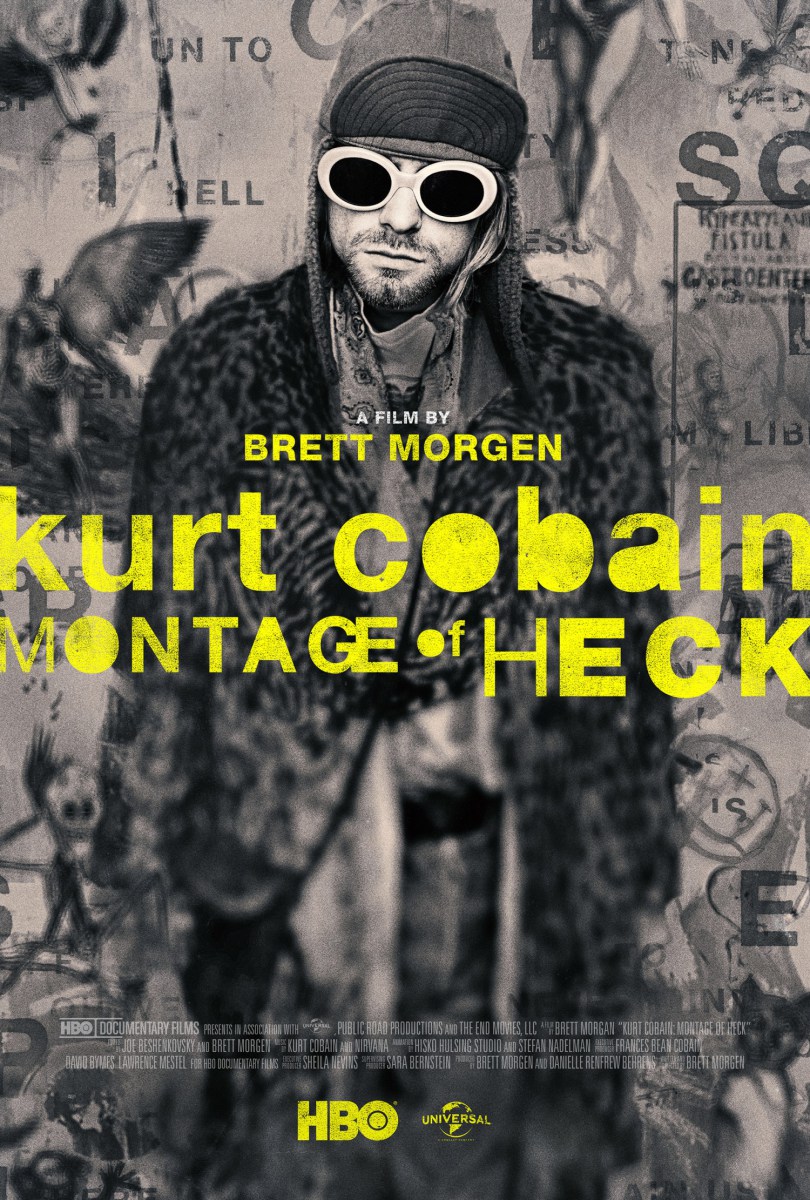
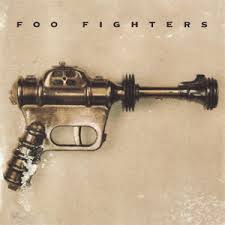
kurt-cobain-montage-of-heck-psterSOUNDTRACK: FOO FIGHTERS-Foo Fighters (1995).

ffDave Grohl was like the anti-Kurt Cobain.  How many photos do you see of him with a big stupid grin on his face.  He seems to be silly and fun all the time (despite some apparent angst in his life).  And how surprising was it to find out that not only could he bang the hell out of the drums, he could also write songs (and play guitar).  Of course we all looked for songs “about” Kurt, on this record, but I realize that Dave only knew Kurt for a couple of years, he likely didn’t even really know him that well.  Dave has other things on his mind.

And somehow, despite the really aggressive often heavy metal feel  of Foo Fighters albums, they are always popular.  Foo Fighters have gotten so big, it’s easy to forget that Grohl was even in Nirvana, which is saying something.

The Foo Fighters debut album was written and performed entirely by Dave Grohl.  I remember when it came out (well, after it was revealed to be Grohls’ album–it was a secret for a little while) listening to it in an apartment in Boston.  I must have listened to it a lot because I know the whole thing so well.

Grohl uses some of the loud/quite format of Nirvana, but mostly he just writes songs with simple lyrics (easy to sing along to even if you don’t know what he’s saying (bridge to “I’ll Stick Around” anyone?) and big catchy choruses.

If you like loud rocking songs, this album is fantastic.  “This is a Call” and “I’ll Stick Around” are super catchy heavy songs.  “Alone + Easy Target” is a bit less catchy, although the chorus has a very cool riff in it.  “Good Grief” is super heavy with an aggressive chorus.

But it’s also git some sweet songs.  “Big Me” is quite tender and it makes me laugh because the drums are so incredibly simple and gentle for a basher like Grohl.  “Floaty” is a really pretty song with some cool fuzzy guitars and a cool riff that goes from bridge to chorus.  The chorus has an aggressive punk riff which complements the rest of the song in an interesting way.

“Weenie Beenie” (I had no idea that’s what the song was called) is loud and aggressive with a massively distorted vocal. It’s kind of a throwaway but shows Grohl’s love of punk.  “Watershed” is a similarly fast punk track and is only 2 minutes.

“Oh, George” is a mid tempo song, with some very catchy moments and a classic rock style guitar solo.  “For All the Cows” opens with a kind of jazzy guitar and drum sound and then really rocks out.  It was released as a single but never did anything, which is a shame because it seems like a joke but is actually quite good.

Even though Grohl did everything on the album, he had a little help from Greg Dulli who played guitar on “X-Static.”  I would never have noticed it was Dulli, although knowing that it’s someone else playing, you can hear a different style in the guitar.  The disc ends with “Exhausted,” a song which sets a kind of trend of longish more meandering songs near the end of Foo Fighters albums.  I don’t love it but its a fine ending.

So many things could have been wrong with this album–a drummer writing songs, and an ex-famous drummer at that.  He even initially wanted to record it with Krist Novoselic, but was afraid that people would think it was a Nirvana band (and he’s very right about that).  Despite all of that, it turned out to be pretty great.  And it was the start of something of a phenomenon.

[READ: May 20, 2015] Montage of Heck

So I was a huge fan of Nirvana (like the rest of the world) when they came crashing forth on my speakers.  And yes, I knew that they saved rock.  But by the time Kurt killed himself, I was bummed but not distraught.  I was never going to have a poster of him on my wall or anything like that.

I was intrigued when I heard this documentary was coming out. But I didn’t have any plans to see it.  And then NPR played an audio excerpt from the movie in which a drugged up Kurt is getting yelled at by Courtney while their infant baby is lying next to them.  And I decided I didn’t need to see that film–it was brutal just to listen to.

Then I saw this book at work and thought it might be an easier dosage than the film.  (Although my friend Eugenie has seen it and says it’s excellent).

It turns out the book has a lot more stuff that the film does (although I can’t say what as I haven’t seen the film).  It consists entirely of interviews and illustrations (very cool ones by Hisko Hulsing and very creepy ones from Stefan Nadelman.   There’s lots of photos and a few excerpts from Kurt’ diaries and the like.

The interview subjects are listed on the page 18-19 spread of the book.  Each has a photo.  There’s Don Cobain and Jenny Cobain (Kurt’s father and stepmother).  Then there’s Wendy O’Connor, Kurt’s mom and she looks exactly like Courtney Love WHAT IS UP WITH THAT?  In her early younger photos she doesn’t.  It is creepy. (more…)

Read Full Post »

sistersSOUNDTRACK: DANIEL LANOIS-Tiny Desk Concert #415 (January 13, 2015).

lanoisI don’t really know very much about Daniel Lanois. I know he’s a great producer.  I know that he’s worked with Brian Eno on an umber of projects. I even know that he has at least one album out of his own.  But other than that he’s an enigma to me.

And he remains so here.

He and his bassist Jim Wilson and drummer Brian Blade, play three instrumentals that are more or less improvised.

Lanois stands with his back to the audience, facing the other two guys. And aside from some closeups of his gear, the only interesting thing visually that happens is that the drummer knocks over an LP during a song and picks it up.

Lanois’ gear is totally perplexing to me—there’s knobs and buttons but no keyboards, so I don’t know where the sounds are coming from.  The bassist keeps a steady rhythm while Lanois turns and spins and slides things. Musically it’s not all that interesting—it’s sort of mellow background electronica.

The best part of the whole deal is the drummer. He plays some amazing fills and runs on that snare and hi hat.  It’s amazing the complexity he is able to achieve with just a bass, snare and hi hat. He also smiles a lot which is nice to see from these rather dour men.

Lanois doesn’t say a thing during the set, not even when it’s over.  You can see it here.

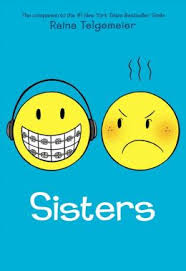
[READ: February 10, 2015] Sisters

I really enjoyed Smile, although I found out about Smile when Sisters came out.  So this is a sequel to Smile (although Raina still has her braces on during the book, so I guess it’s more of a concurrent story).

As the story opens, Raina (age 14) and her family (her mom and dad. her baby brother (6) and, grr, her sister (age 9)) are visiting relatives in Colorado.  Their dad has some work to attend to so he will be flying in a few days later, but everyone else is going to hop in the van and drive from Colorado to California and then back–so that’s basically two weeks in the car and one week in California.  Ugh.

The only saving grace is that their van has three rows of seats so each girl has a seat to herself while their brother rides shotgun.

Before they head out, we see that Raina and her sister Amara are on each other’s nerves constantly–with Raina ultimately shouting “Why did I ever ask for a sister?!”  Then we see flashback of Raina as a young girl desperately wanting a sister to play with.  And when Amara finally came–Raina was in love–until she realized that the baby would be sharing room with her.  There’s a joke about Amara meaning “immortal” in Sanskrit and “love” in Latin and her father muttering “it also means bitter one.”  And it turns out that Amara is a pretty cranky kid–especially where Raina is concerned. (more…)

Read Full Post »

 dancingSOUNDTRACK: deLILLOS-“Forelsket” (1987).

delilloKarl Ove mentions many bands in this book, but the deLillos are the only Norwegian band that he plays.  They sing in Norwegian and play sprightly, jangly guitar pop–they would fit in very well with some of the lighter alt bands from the late 80s and early 90s.

I have no idea what they’re singing about (well, the title translates to “love” so I guess I know what they are singing about.

The singer has a high, delicate voice and there’s some interesting harmonies.  I really like the way the song transitions from verse to chorus with the picked guitar notes–very catchy.

It comes from their second album, Før var det morsomt med sne  (Before it was fun in the snow), which along with their first was quite popular and was reissued with a bonus disc in the 90s.  Having said that I see that Amazon has one copy of the disc and no album cover listed.  Worse yet, I can’t find many other songs online (Spotify lists the album, but I can’t get it to play).

Sorry, deLillos (even searching for you gives us more Don DeLillo than you guys).

[READ: June 24, 2014] My Struggle Book Four

struggle4I started including the British edition page numbers because at my work we received both editions of the book, and I received the British one first so I grabbed it and started reading.  I noticed the page numbers were quite different (the British book is taller and the print is quite bigger, although this doesn’t explain why the previous books have fewer pages).

I had been interested in the differences between editions from the get go.  I had enjoyed the American editions, but I enjoyed reading this British edition more (bigger print?).  But when I noticed on one of the pages that the word “realise” was spelled as I typed it, it made me wonder if the American edition changed that to the American spelling.  [Actually, I see that Don Bartlett lives in Virginia, so perhaps he translates it into American first].  While I wasn’t about to go into a deep inspection of the topic, when I saw the American edition on a shelf at work, I had to do a little comparison.

And what I found out was that even though Don Bartlett is the (amazing) translator for both editions, someone (perhaps Bartlett himself?) is translating the American into British (or vice versa).  I looked at a couple of pages and noticed these changes from British to American:

  • BRITISH EDITION = AMERICAN EDITION
  • Pack it in, now = Give it up, now
  • roll-up = rollie [about hand rolled cigarettes]
  • looked daggers at = gave her a dirty look
  • a complete prat = completely useless
  • is that possible? = really?
  • to cook and wash up = cooking and doing the dishes
  • I had got = I’d gotten
  • had penned = had written
  • and yes, realised = realized.

Other than select phrases, every word is exactly the same.  So somebody goes through the books and changes them to British english idioms and spellings.  That’s fascinating.

I also see that this is the first book I had not read an excerpt from first.  Not that it would have made any difference as to whether I read the fourth one.  I couldn’t wait to get my hands on it.

So book four is set in Håfjord, a town in Northern Norway near Finnsnes (a five hour flight away–okay I had no idea Norway was so big!).  Karl Ove is 18 and has decided to become a grade school teacher there for one year.  The tax breaks are great if you teach, and he plans to teach and write his masterpieces and then get out.  He has no interest in teaching, but the town is small (most grades are 3-7 students), so he figures it can’t be too hard.

As in most of Karl Ove’s books, the stories jump around and flash back and do not stay all in this one time, but it is largely set in this locale.

My first thought was that I have never read a story with as much semen (both nocturnal emission and premature ejaculation) in my life.  It is a strange take away from the book, but there it is.  Karl Ove is 18 and really wants to have sex for the first time.  About 3/4 of the way through the book he reveals that he never masturbated (it just never occurred to him, apparently, and at 18 he’s too old to start–what!?).  As such, he seems to have wet dreams every night.  And every time he gets near a woman, he has an orgasm too soon.  He is horny all the time–it’s a bit disconcerting.

And since I mentioned that, I don’t know if Karl Ove’s life is typical of Norway, but I am shocked by the number of women who take their clothes off around him (he may have never had sex, but he was about to on at least a half-dozen occasions).  And he says that all through school (from around age 13 and up) it was common place for the boys to lift up the girls’ shirts and kiss and or fondle their breasts.  It is mind-boggling to me.  And the 16 year olds all seem to be having sex all the time–this may be skewed from Karl Ove’s perspective, but that’s what I now believe happens in Norway.

But while sex is the main theme of the book–sex, sex sex, there is more to it.

Karl Ove’s parents have split up and his father has started drinking in earnest.  The dad has remarried and has just had a baby.  Incidentally, I was also shocked to read that Karl Ove’s father, who is an abusive stodgy old man who is cranky and mean and abusive and all the stuff that we read about in the other volumes was only 43 at the time that Karl Ove was 18.  So the old man who I pictured as a gray-haired curmudgeon in this book is actually younger than me.  Great.

In Håfjord, Karl Ove is teaching kids who range from age 13 to 16.  It’s disconcerting to read about him thinking lustful thoughts about his students, until he reminds us that for most of the students, he is only 2 years older than them.  I am pleased to say that he behaves himself (except in his mind) with all of the students.  There’s even a really interesting flash forward to eleven years later when he runs into two of them again.

He proves to be a pretty decent teacher it seems.  The kids mostly like him (the girls all think he is hot) and he is young and tries to make it fun (he himself hated school and everything about it).  He even seems to help out an awkward boy (although that is never resolved).  We see him teaching, trying to interact with the kids and generally being a pretty good guy.

Until the booze comes out.

For in addition to semen, this book is chock full of alcohol.  Before graduating from gymnas (high school), Karl Ove basically stopped caring about anything.  He spent most of his time drunk.  It is astonishing the amount of drinking he does–it’s practically like an Amish Rumspringa how crazy he goes.  But even in this retrospective look, he talks about how much he likes it, how it loosens him up and makes him less nervous.

But really he just spends most of his time drunk, hungover or sick. He even got into the hash scene for a while.  He was living with his mom at the time and she was appalled at the way he acted–especially when he threw a party which trashed their house.   She even kicked him out for a time.

He seemed to be over the drink in Håfjord, but it turns out that there’s precious little else to do except drink up there, especially when it grows dark for most of the day.  So there is much drinking–he only misses class once or twice because of it but he comes very close a lot.

The irony that he is appalled at his father’s drinking, while drinking so much himself, is apparently lost on him.

The other main preoccupation with Karl Ove is music.   He talks a lot about his great taste in music (he reminds me of me–a little insufferable).  Back when he was in gymnas, he spent a lot of time discussing his favorite bands and favorite songs.  He got a job (at 16) writing reviews for a local paper (holy crap, jealous!) and then later gets a job writing a column for another paper.  For the previous book I listed a lot of the bands he mentioned, and I wish I had written them down for this one.  U2 features prominently (this is 1987, so I’m guessing Joshua Tree), but also Talking Heads, a Scottish post-punk/new wave band The Associates and their album Sulk which he describes as “an utterly insane LP.”  he and his brother really like The Church and Simple Minds (before they got so commercial).  He also has a whole thread in which he makes connections with albums:

Briano Eno, for example, started in Roxy Music, released solo records, produced U2 and worked with Jon Hassell, David Byrne, David Bowie, and Robert Fripp; Robert Fripp played on Bowie’s Scary Monsters; Bowie produced Lou Reed, who came from Velvet Underground, and Iggy Pop, who came from the Stooges, while David Byrne was in Talking Heads, who on their best record, Remain in Light, used the guitarist Adrian Belew, who in turn played on several of Bowie’s records and was his favorite live guitarist for years. (64).

He also specifically raves about “The Great Curve” from the Talking Heads album, and of course, he raves about the first Led Zeppelin album as well.

Music is a huge part of his life (and he dresses accordingly too).  It’s unclear whether the kids think this is awesome or not, but he may be a bit too much for some of the locals.  The locals are mostly fishermen (which makes sense), and Karl Ove is a bit intimidated that he is so wimpy compared to them–one of the women even teases him about his tiny arms.

But his main focus is writing.  He writes a few shorts stories (to my knowledge he has never published any of them).  We see some excerpts and they seem fine–he fancies himself Hemingway.  But he also mentions a bunch of Norwegian authors (I love when he does that).  Sadly again, not too many of them have been translated into English.  [I really hope that some mega fan creates a database of all of the bands and authors he mentions].  He also talks briefly about his first novel which alludes to his time teaching here.  I happened to read a small summary of said novel (Out of the World) and feared that it spoiled what was going to happen.  But, in fact there does appear to be a difference between his fiction and non-fiction.

The book moves very quickly–from party to party, from failed sexual attempt to the next, even from his staying up all night long trying to write.  And most of the time he comes off as kind of a dick–he is also very self-critical, which somehow tempers that dickishness.

As with the other books I cannot figure out exactly why I am so addicted to his writing.  I brought the book home on Thursday night and finished it (all 548 pages of it) Monday night.  This really completes the picture of himself as he moved from childhood to adulthood and really lays the foundation for whatever is to come next.   Early in the book he talks about the books that he loved at that age, books that talk about the move from childhood to adulthood.  And thus, this book becomes something of a bildungsroman as well.  Although whether or not Karl Ove actually grew up at the end of this book will have to wait until volume 5 (which I have to assume is still another year away as there is no information about it online at all!).

For ease of searching, I include: Hafjord, For var det morsomt med sne.


Read Full Post »

01cover-articleLarge-v3SOUNDTRACK: DIANA GAMEROS-“Ligerita(Tiny Desk Contest Runner-Up 2015).

ligeritaLast week, a Tiny Desk Contest winner was announced. This week, All Songs Considered posted ten runners up that they especially liked.  And I want to draw extra attention to a couple of them.

Diana Gameros doesn’t do anything flashy or fancy in this video.  She simply plays the acoustic guitar (amazingly) and sings.  And man, does she have a beautiful voice.  Even more impressive is the way her guitar begins as delicate finger-picked melody in the verses and then transforms into a rollicking Spanish guitar style beauty for the chorus—the way she uses her right hand for the chord playing is great.

This is an absolutely beautiful song, and I was happy to read that she was recently featured on Alt.Latino.

I’m not sure what relaxing location she is in, but it’s nice little room. And even her cat—Lulu—seems to have enjoyed the song.

[READ: February 26, 2015] “My Saga Part One”

I didn’t know that Karl Ove had written this piece for the New Yorke Times magazine until someone brought it to my attention.  I was pretty excited to read it because Book Four of My Struggle isn’t due out until April and I think I’m going through Karl Ove withdrawal.

This first part of the story (because of course it would have to be in two parts) was, I have to admit, a little disappointing.  It features everything that I’ve come to expect from Karl Ove–minutiae, history, shock at people who are unlike him, and a general misanthropy.  But it almost feels like Karl Ove lite–like the Times asked him to write a piece like My Struggle, but, you know, more suitable for a newspaper.  Which may even be how they phrased it.  Of course, it may also be the translation.  Unlike the books, this was translated by Ingvild Burkey.  It’s not that the translation is bad, it seems perfectly fine to me, but the story isn’t as compelling in some way, and perhaps Don Bartlett knows how to capture Karl Ove’s voice better? (more…)

Read Full Post »

smileSOUNDTRACK: THE BEATLES–Let It Be…Naked (2003).

220px-LetItBeNakedI talked about this once before and mentioned how I was anticipating a huge difference between this version and the original.  But really, most of the changes are quite subtle.  Reading a bit more about it, it seems like McCartney mostly wanted to fix “The Long and Winding Road” and then took the time to tweak little things (he fixes some bum notes for instance).

This seemed like a chance for Paul to take the record back from Phil Spector, although I guess Spector didn’t really do all that much to the album—he really only tweaked four songs: Across The Universe, I Me Mine, Let It Be and The Long And Winding Road.  And so Paul removes Phil’s hand on those–and those are really the most notable changes.  As for the rest of the disc, he took out all the chatting between and silly songs (Dig It and Maggie Mae) and adds “Don’t Le Me Down,” from the rooftop concert.

I assume that if I were a Beatles die hard, I would immediately notice all of the changes on this disc.  But, for a casual listener, here’s what I noticed: “Get Back” is even shorter than the original.  “Dig a Pony” is the same rooftop, although it seems to be mixed better.  “For You Blue” has a bit more acoustic guitar but is otherwise not too different.

“The Long and Winding Road” has the most notable changes.  The strings and chorus are removed.  The dramatic BUH BUH before the chorus is still there–almost more pronounced on the organ.  I like this version more than the original, although I have to say it sounds an awful lot like Wings or McCartney solo in this version.

“Two of Us” doesn’t sound all that different—a little cleaner maybe.  “I’ve Got a Feeling” sounds a bit cleaner too–apparently it is a composite of the two versions from the rooftop concert.  “1 after 909” sounds about the same–a little cleaner and with out the Danny Boy at the end.  This version makes it sounds even more like an “old” song since the rawness of the recording has been removed.

“Don’t Let Me Down” was not on the original.  This version was taken from the rooftop concert.  And it sounds great here.  Strange that it wasn’t included in the first place.  “I Me Mine” removes the chorus and overdubs, and sounds a bit more rocking.  “Across the Universe”–I like this version a lot better.  It’s much cleaner and really lets the music shine, rather than there being so much echo on it.  “Let It Be” is stripped down as well, and the guitar solo sounds a little different.

In general, I like this version better, although I do miss the funny bits a little.  This feels more like a record than a soundtrack to a film.  But again, the changes aren’t that substantial overall.

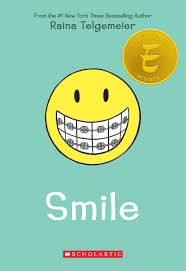
[READ: January 10, 2015] Smile

I had heard of this book–I’d heard that it was a huge sensation.  Of course it wasn’t really on my radar of books, so I wasn’t really sure what it was about.  I read an interview with Telgemeier recently which made the book sound really interesting so I decided to check it out (and was frankly surprised that there was a copy in the library).

And I really liked the book a lot.  From the little I knew about it, I assumed it was just her life with braces (and from the interview, I gathered that her little sister was really a pain–she apparently is a big presence in the sequel).  Well, the sister is a pain, but that’s mostly in the beginning of the book (the sister is very funny and they tease each other mercilessly).  Yes, the book is about braces, but it ‘s about much more than that.

Oh and it’s also autobiographical, which was pretty obvious.

So, Raina is in 6th grade and she is scheduled to get braces.  She is freaked out about this, of course, because everyone makes fun of people with braces.  (Although they never made fun of me and I understand they don’t anymore, but we’ll see if my kids need them).  Although she has lots of friends, so they should support her. (more…)

Read Full Post »

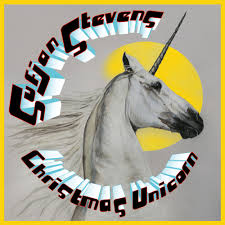
bolano SOUNDTRACK: SUFJAN STEVENS Christmas Unicorn: Songs for Christmas, Vol. X (2010).

sufjan 10This is the final disc in the second Sufjan Steven Christmas box set.  It is comprised of mostly shorter songs except for the final one which is 13 minutes long.

Interspersed in the disc are three short instrumentals (under a minute each).  “It Came Upon A Midnight Clear” “Angels We Have Heard On High” and “We Three Kings” are all pretty with flutes and minimal electronics.

The more traditional songs are “Have Yourself A Merry Little Christmas” which sounds very much like a Sufjan song with some fun electronic sounds and orchestration and some unusual vocals.  “Up on the Housetop” features lots of drums and layered vocals. It is the standard version but tinkered with with in fun ways.  “We Need a Little Christmas” is a fun and traditional version with choral vocals.

The other three tracks are originals from Sufjan.  “Happy Karma Christmas” a slow track of mostly drums and echoed vocals. It reminds me of Beck’s discoey electronic moments.  “Justice Delivers Its Death” is based on the lyrics of “Silver and Gold” (from Rudolph) but it is a much darker song (obviously, given the title) and sounds nothing like it.

The final track is “Christmas Unicorn.”  It’s a sweet song with funny/thoughtful lyrics.  After three minutes it turns into a nice instrumental.  At the four minute mark a new refrain begins. It sounds like the song is going to fade to end, but it doesn’t. At 6:30, drums come back in and the song takes off with more singers and a fugue style of interweaving vocals.  At 7:36 a new melody is introduced which is, Joy Divisions’ “Love will Tear Us Apart.” They incorporate that into the fugue vocals and it works very well.  It’s a strange song and very unChristmassey, but it’s very cool and quite catchy by the end.

I don’t enjoy this second box set as much as the first, since it is so unChristmassey, but it has some really interesting songs on it.

[READ: December 13, 2014] Bolaño: A Biography in Conversations

I don’t often read biographies about authors I like, but once in a while one will catch my eye.  I knew Maristain’s name from Bolaño’s last published interview, so I was curious what she would do with this collection.  It was translated by Kit Maude, and I am also curious about some of the words that Maude chose to use (the word savage/savages comes up an awful lot when not referring to The Savage Detectives).  But overall it was an easy, quick read.

As the subtitle suggests, Maristain has compiled a loose biography of Bolaño based on interviews with others.  Some are interviews that she has conducted and others are previously existing interviews that she has cobbled together.  The people interviewed are primarily his family and his fellow poets/novelists/friends.

Bolaño was born April 28 1953 in Santiago de Chile.  Soon after, they moved to Valparaiso, and then other smaller towns in Chile. In 1968 they moved to the Mexico City because of his mother’s asthma (although he never set foot in Sonora, the scene of the crimes in 2666). They lived close to the Olympic park and were within walking distance of the Olympic torch during the 1968 Olympics.

He had a difficult upbringing, with his parents splitting up and his mother moving out and taking his sister with her.  Roberto, meanwhile, stayed with his father.  They eventually had a falling out and Roberto went twenty years without seeing him.  His father was a boxer and an opinionated man, and there are lots of quotes from him in the book.

In 1977 Bolaño left Mexico for Spain (and never went back) and that’s when we start getting into his publishing history. (more…)

Read Full Post »

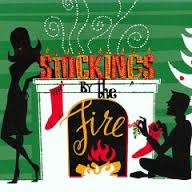
andreSOUNDTRACK: STOCKINGS BY THE FIRE (2007).

stockThis is a Starbucks compilation (Starbucks is pretty good for Christmas compilations).  But I find that the overall vibe of this disc is too mellow for my liking.  Most of the songs are quite pretty, but it feels like a Christmas Party for one by your lonesome rather than a party proper.  Of course, the picture on the cover suggests a romantic night in, so maybe that’s the vibe they’re going for (it’s still kind of sad though).

RAY CHARLES & BETTY CARTER-“Baby, It’s Cold Outside.”  There’s are dozens of versions of this song.  I like this one fine, but it’s not one of my faves (although Ray has some good turns of phrase).  But I think Betty’s voice may be too squeaky for me.
SARAH McLACHLAN-“I Heard the Bells on Christmas Day” McLachlan has a beautiful voice, but I like her earlier more robust singing than her latter day TV Commercial songs.  So this winds up being very pretty but a little mopey.  It’s also way too long.
FRANK SINATRA-“I’ll Be Home for Christmas” is also a little slower than I remember.  But I have to assume that if Frank did it this way, this is the tempo it’s meant to be.
HEM-“Have Yourself a Merry Little Christmas” has quiet, whispered version. It’s pretty, if rather stripped down (just piano and chimes).
ELLA FITZGERALD-“Sleigh Ride” is a great version, full of high spirits and fun.  Ella is awesome.
RUFUS WAINWRIGHT-“What Are You Doing New Year’s Eve?” is also a slow version.  Perhaps this song is slower than I realize.  It’s a very Wainwright-sounding version with his wonderful warble.
HERBIE HANCOCK-“River” is pretty–Corinne Bailey Rae’s voice is lovely, although I don’t care for the jazzy accompaniment.

The next few songs are the highlight of the disc to me:
JACK JOHNSON-“Rudolph, the Red Nosed Reindeer” is a great version.  Johnson’ voice suits this very well an I love that he added an extra verse about being nice to Rudolph.
THE BIRD AND THE BEE-“Carol of the Bells” has a wonderful trippy quality.  I found out last year that The Bird and the Bee do my favorite version of the 12 Days of Christmas, which is sadly unavailable on record anywhere.  But this version of “Carol of the Bells” has the same qualities that I love in the 12 days.  Love this version.
A FINE FRENZY-“Let It Snow” there’s something wonderfully breathy about this version that I like a lot.  It works very well with The Bird and the Bee song.
NAT KING COLE-“The Christmas Song” is one of my favorite Christmas songs ever.
DEAN MARTIN-“I’ve Got My Love to Keep Me Warm” is another classic version of this track.

Those few tracks are the big highlight for me.
DIANA KRALL-“Winter Wonderland” I don’t care for the way she sings this although the musical accompaniment is cool. And I do like “frolic and play the Canadian way.”
MAHALIA JACKSON-“Do You Hear What I Hear?” I feel like I am supposed to really like this version, but I really do not like it at all. It is way too melodramatic
JOHN LEGEND-“It Don’t Have to Change” not my style of music at all, I’d skip this if it came up on shuffle.  It’s also not really a Christmas song even though it does mention Christmas.
AIMEE MANN-“White Christmas” Aimee tends to write beautiful downer songs.  And you can tell by the opening thuds of the rums that this is not going to be an uptempo thriller.  But Mann has a great voice and a great sense of arrangement and this song ends this quiet disc quite nicely.

[READ: December 4, 2014] Andre the Giant

I really enjoyed this biography of wrestler and actor Andre the Giant (released by our friends at First Second).  I’ve always been a fan of him, but I really didn’t know that much about him.  And, honestly I would never have wanted to read a whole biography about him.  So this was a perfect bite-sized chunk of information about the legend.

Brown opens the book with a discussion of the “fakeness” of wrestling.  It’s a great summary of the “controversy” and how it has been dealt with, especially now that Vince McMahon is running WWE.

And then we move on to Andre. (more…)

Read Full Post »

« Newer Posts - Older Posts »