Nope, I never heard of the musician Pale King until I searched for a song to put here.
This song begins as a piano instrumental (with some keyboards layered over). It swells and lifts through some simple chord changes. A martial beat comes in from time to time to give it some urgency.
This might actually work as a the opening credits to the never-to-be made movie of The Pale King, or perhaps a soundtrack to §1 (which is a short prose poem type of thing).
At about 1:45, some guitars burst through (adding some drama), and the drums grow louder. It builds slowly until it starts to taper off and ends much like it began
I don’t know much or anything about the artist except that he’s from Toronto and he has a bandcamp site where you can hear this track.
[READ: July 14, 2014] Pale Summer Week 1 (§1-§9)
In other Summer Reading Group posts, I have tried to summarize chapters, make connections between characters that I may have missed in earlier readings of the book and, just tried to be more microscopic about my reading. I don’t usually philosophize too much about the stories, but I do wax poetic from time to time. Having said all that, The Pale King presents its own unique challenges because the book is unfinished. So it’s not always clear if any connections can be made from chapters that are elliptical. DFW in particular likes to write scenes without naming characters, giving the reader something to discover later on, perhaps. So you may have a scene that has no named people in it, but their speech patterns or details are referenced later, allowing you to piece things together.
There is definitely some of that piecing going on here, but as I said, when a book is unfinished, and this one was largely pieced together by editor Michael Pietsch, it’s not clear if you are missing something or if it simply isn’t there. So there will be some speculation, and some omissions for sure, but we press on.
A further complication is the collection of Notes and Asides at the end of the book. Some reveal information about characters that is not necessarily evident in the book, some talk about things that might have happened or even might have been removed if DFW had played around with the text more. In general I am not going to read these now, so as to avoid spoilers. But I may insert them later (with spoiler warnings) to make it easier to make sense of the book later.
The primary setting for the book is the IRS Regional Examination Center in Peoria, IL set in 1985. Editor Michael Pietsch (in his thoughtful and helpful Editor’s note which is mandatory reading if you are going to read the novel) says that DFW described the book as “torandic,” with elements coming in and going out over and over.
The other key question is just how unfinished is this? We have no idea. It feels like it could go on for a ton longer, and yet it no doubt would have been edited down to a more manageable size afterwards. There are sections that seem like they could have more and others that seems like they would have been trimmed a lot. And then of course, there could be other things that never even saw the light of day. None of that should keep anyone from reading the book though. (more…)
SOUNDTRACK: AUSTRALIAN CHAMBER ORCHESTRA-Tiny Desk Concert #40 (December 21, 2009).
This was a very nice classical Tiny Desk Concert. The Orchestra plays three songs. The first two are a Ravel String Quartet, and a Kaddish based on Ravel written by one of the members of the Orchestra.
Then comes a surprise. Composer Joseph Tawadros accompanies them on the Egyptian oud and his brother James plays percussion on Tawadros’ song “Oasis.” I love the addition of the oud to the orchestra–it brings a wonderfully alien sound to the piece. You can see the whole show here.
This was the final Tiny Desk Concert of 2009.
[READ: May 29, 2014] “The Naturals”
I have enjoyed just about everything that Sam Lipsyte has written and this story was no exception. As with many of Lipsyte’s stories, the main character has an unusual name: Caperton. Caperton works as a consultant for a marketing firm. He is trying to secure a job for a lakefront property. The man in charge of the meeting keeps calling the kiosk that they are going to install a “koisk” (this alone made me love the story).
Caperton has recently broken up with his girlfriend because he confirmed to her that he did not want to have children. He’s a little bummed but not heartbroken.
But the main action of the story is that Caperton’s father is dying and his stepmother has called him to come home. Evidently Caperton’s father has been on the verge of death many times so Caperton’s not entirely sad about the situation. But he goes nonetheless. And we learn that Stell, his stepmother is nice enough but has always had one rule–stay out of her refrigerator. She is happy to fix anything for anyone as long as they keep out of the fridge. (This also made me love the story).
SOUNDTRACK: An open letter to the Rheostatics (2014).
To Dave, Martin, Tim and assorted drummers:
I’ve been a fan of the Rheostatics for a long time. I recall traveling to Toronto from New Jersey back in the 90s and tracking down Introducing Happiness at Sam the Record Man. And then later driving around the Niagara Falls region listening to the strange and wonderful album. I’ve enjoyed all of the subsequent albums.
You were a unique band with a unique sound. I was sad when you split up, even if that meant that now there were three solo projects to enjoy. Of course, there’s been a lot of bands that have broken up, it’s just part of being a fan. But the thing about the Rheostatics breakup is that you three (or four or five or six) have remained friendly. You’ve done a few reunion shows since the breakup, which I think that’s super cool. It’s especially cool because RheostaticsLive tends to post them after a while so that those of us who don’t make the shows can hear them.
I’ve never seen you guys live, and I imagine I never will. And I’m okay with that. What I’m mostly bummed about is that there will be no more new music from you. You put out approximately ten albums (there’s a few miscellaneous things that are hard to qualify). Those records include soundtracks and live albums and all manner of things, so there’s really seven proper albums (the others are great, don’t get me wrong). Anyhow, my gut feeling is that there needs to be some new Rheostatics music. I know you’ve all been doing solo stuff (and I have it), but sometimes the sum is greater, etc.
Clearly I’m getting at that it’s time for a new album from the Rheostatics. Before you scoff, I’m not talking reuniting for a grand tour, or even any tour, I’m not even talking a live show. Heck, I’m not even talking about you guys hanging out for more than a couple weeks. Just an album of new songs. A decade ago it would have been unthinkable that you would get together for the expense of an album without major label support. But now, the cost is so much lower and with your fan base expanding, I assume it would be easy to recoup the expenses.
So what do you say? Since it seems like everyone is still friendly and creative, maybe you can throw some ideas around in the email, see if there’s anything magical happening. Obviously, if there’s nothing there or you just can’t work together, then don’t continue. No one wants to hear a crappy Rheostatics album. But if there’s even a chance that you guys can throw some ideas together and pull out another “Horses,” or “Northern Wish” or “CCYPA,” or holy cow, “King of the Past,” or, hell, anything you’ve done, then it’s absolutely worth it.
I don’t imagine any of you will read this, but maybe if you google yourselves, Tim Vesely, Dave Bidini, Martin Tielli, you’ll see this and think that, yes, dammit, seven records of Rheostatics music is not enough.
Thanks for the music, Paul Debraski.
[READ: January 26, 2014] Worst. Person. Ever.
I told myself that I wanted to read this book before anyone requested it. And I did. In fact, I wanted to finish it before the weekend was up, which I did as well. It’s nice to meet a minor goal.
The last few Coupland books that I read (see last week) were very dark. Since those books, he has broadened his palette somewhat, including writing a children’s book and some more non-fiction. And then we get this. A vulgar, very funny sendup of modern culture. The introduction to the book says that it was based on a short story that he wrote for McSweeney’s #31 called “Survivior.” That story was written in the style known a biji which they described as
Biji is sort of a notebook, which contains legends, anecdotes, scientific notes and local wisdom. Accounts of everyday life mix with travel narratives as well as lists. It is meant to represent a picture of the culture at the time of writing.
I thought that this style was well suited to Coupland, because he includes all of that stuff anyway. And so he has taken that story and fleshed it out into this full novel.
The worst person ever is named Raymond Gunt. He thinks he’s Jason Bourne, but he’s really just a metaphorical extra in a Bourne movie (one who probably gets killed). Gunt is a cameraman working in England. He is divorced. His wife is a raging harpy (at least from his point of view, which is all we see). Since their divorce, she has become wildly successful in television production. He calls in on her at work and she tells him about a job working as a B cameraman on a show called Survival. He knows that the job must suck or she wouldn’t give it to him, but he needs to work. Of course, he is most upset at the thought of having to work with Americans (Americans are majorly abused in this story). Although by its very nature a B cameraman position is not as good as an A cameraman, Ray needs the work, so he agrees to fly to some godforsaken tropical island to watch beautiful people starve and try to have sex with each other.
On his way out of the building he sees a homeless guy. And since Ray is the worst person ever, he kicks him. But the homeless guy is no pushover and he chases after Ray. He catches Ray in an alley and pummels him, ultimately pushing his face into some garbage. The man is Neal and although he acts crazy, he’s actually quite sharp (why he is homeless is not addressed). After forcing Ray to sing the female verses of “Don’t You Want Me,” Neal gives him this sage advice:
“Stop being a cunt to the world and the world will stop being a cunt to you.”
Advice which Ray simply cannot follow.
When ray learns that he needs a personal assistant, um, slave, he immediately thinks of Neal. So he tracks him down, cleans him up and gives him a job. And off they jet to make some TV.
In the course of the book, a series of crazy things–the kind of things only Coupland thinks of–sidetrack them from Ray’s goal. (His real goal is to get laid, naturally). First, it turns out that Neal, despite being homeless, is a total babe magnet. And throughout the story, as he gets cleaner and fresher, he becomes irresistible This, of course, ruins Ray’s plans of bedding hot women. And as Neal gets cleaner, he becomes less and less Rays assistant and more and more Ray’s equal.
They jet to L.A., (he was supposed to be in first class, but was bumped and is super angry). He also gets in trouble with the airport bartender, Lacey, who comes back to haunt him in ways one could never predict. He gets first class seats on the way to Hawaii and he abuses the privilege. Then, because of unforeseen circumstances, they have to stay in Honolulu (with lots of Spam jokes). And because of those unforseen circumstances, they need to recast the show, which means Ray’s wife has to jet down and be around them. And Ray’s wife, Fiona, is delighted to make Ray’s life miserable. Eventually, they head to their intended island and prepare to set up for the show.
In the meantime, the U.S. has decided to destroy the Great Pacific Garbage Patch–in a very imaginative way. And ray is on hand to witness the destruction. This plan causes all manner of trouble with shipping and airplane traffic. Which has the effect of isolating everyone on the Survivor island–causing a literal survival situation.
Raymond Gunt may not be the worst person ever, but he is pretty darn close. He tries to sleep with anyone. He tries to screw over everyone else (but never seems to get anywhere). And he genuinely likes to torment others. And all the while he repeats his mantra, “I consider myself a reasonable enough citizen.” Despite Gunt’s personality, he (or at least the story) is funny enough that you want to keep reading (and maybe even to succeed in some of his designs). And that made this story a major page turner. And it was very funny as well.
Coupland really gets the feel for writing a British story. It doesn’t read like any of his other books and while it’s not full of crazy accents or overt Britishisms, his main character is defiantly not American. As I said, all Americans are fat, sweaty, stupid and prudish in Ray’s mind.
This is also the worst person that Coupland has ever written. He is such an abominable person with an incredibly filthy mouth. The above quote is just one of just many curses in the book. In fact there’s a whole subplot about how prudish Americans are about people saying “fuck” despite their cavalier acceptance of violence and other things (we say friggin, when everyone knows we mean fucking).
I have to assume Coupland had a ton of fun writing this. And it really comes through. I’m also going to guess that a lot of people’ won’t like this book because Gunt is so reprehensible. But if you can get past that, the story is funny, and makes some pointedly humorous observations about a lot of contemporary life. Like “Survival [sic] is a popular reality TV show… You’re either into this show or you’re not. It’s binary.” or “‘Come on Eileen’ was a single in 1982…What’s weird about this song is that it was so huge at the time and now you listen to it and wonder, what the hell was everyone thinking? Well, that’s pop culture for you.” It even has what seem like Wikipedia entries of things throughout in the book (and a YouTube link which is bizarre to see in print).
I really enjoyed this, and I’m thrilled that Coupland has unleashed his inner black humorist.
Watch him talk about the book with Jian Ghomeshi, a great interviewer
SOUNDTRACK: JIM WHITE-Tiny Desk Concert #8 (November 7, 2008).
I didn’t know who Jim White was before this Tiny Desk Concert. And I’m still not entirely sure who is he. But he’s a gifted songwriter and storyteller.
Bob explains how he and Jim tried to work together for All Songs Considered, but that every time Bob asked Jim to do a 3 minute piece, he’d hand in a 15 minute piece. And then somehow Jim would edit it into a 17 minute piece. Jim admits that anything can set him off on a tangent (most of which are thoroughly engaging). He also says that he writes songs not a bout “you” but about “me.”
So with him and a drum machine, he sings some really pretty songs. “Jailbird” is a slow ballad that is quite beautiful. I enjoyed that he played his harmonica solo without playing the guitar at the same time (I don’t know if the guitar was prerecorded or looped, I think prerecorded).
Then he gives a funny story about working with the guitarist for P.M. Dawn. “Turquoise House” is a boppy little number about not fitting in. It’s a wonderful song. “Stranger Candy” is a darker song (full of lessons). He says that it took him several tries to get the music right for this one.
There’s a fascinating story about a gift that Jim sent to Bob. The story goes on about a racist incident in which his daughter rises above racism.
“Somewhere in the World” is a gentle ballad about finding the person you are waiting for. I like it (except for that falsetto note at the end). Then he talks about how for his old songs (like the previous one) he was kind of bummed. But he has grown up and is happier. And that has made his songwriting much more difficult.
The final song is called “A Town Called Amen.” It’s another boppy little song, charming and sweet. And Jim White seems about the sweetest, nicest musician in the world.
I came away from this Tiny Desk Concert really enjoying Jim White and wanting to hear more from him.
[READ: December 15, 2013] The Braindead Megaphone
This is Saunders’ first collection of essays and non-fiction. At some point, I stated that I thought I would enjoy his non-fiction more than his fiction. That is both true and not. I enjoyed his “reporting” essays (from GQ) quite a lot. But I found his shorter, sillier pieces to be a but too much. Nevertheless, he is an inquisitive reporter, looking for truth and traveling far and wide to find it (even braving the depths of FOX news). It’s a good collection and only slightly dated.
The Braindead Megaphone
This essay seemed a bit like a blunt instrument hitting a soft object. Although 2007 is seven years ago, I feel like the subjects (dumb newscasters) were pretty soft even then. However, it’s entirely possible that people who were apolitical or just simply not that interested in what obnoxious outlets like FOX were doing may not have been entirely aware that the Braindead Megaphone (ie. all news outlets) were not doing us any favors with their spouting of nonsense and being incurious about where stories are really news worthy or even accurate. I imagine this is mostly just preaching to the converted. I was a little worried that the whole book would be just as unsubtle, but that proved to be a foundless worry. This is not to say that I didn’t agree with everything he said in this essay. He was spot on. And often he was pretty funny too. (more…)
This song from The Blow is what Bob Boilen played the other day on NPR. He had just seen them live and liked the show so much that he listened to the whole album three times in a row on the way home. He said the live show was amazing—Khaela Maricich is on stage singing and talking to the audience all by herself. He thought that the music was all backing tapes, but then he realized that her partner was back at the soundboard—creating the music and doing the lights at the same time.
Yesterday I said that The Blow’s “Parentheses” was the perfect pop confection. “Make It Up” is far more complicated anc more challenging. It has many elements of pop perfection but it is nowhere near as immediate as “Parentheses.”
The song, despite its simplicity, has many complicated elements—the opening drum sequence is elaborate with all kinds of rhythms and sounds. But when the verse starts, the vocals are delicate and simple and the keyboards are single notes. Until the chorus when the complexity jumps in again—in addition to the drums, we get several versions of Maricich‘s voice doing background vocals, singing leads, making sound effects and then they disappearing again. The third part introduces a new, simple, very pretty melody with beautiful voices playing counterpoint to each other.
The song feels so busy but it is really just a few simple elements piled on top of each other. It’s simultaneously pretty and mind-boggling. More pop songs should do that.
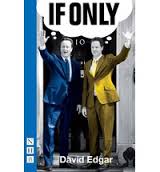
[READ: September 25, 2013] If Only
You shouldn’t judge a book by its cover, but sometimes a cover grabs you. I have no idea what it was about this cover that made me look at this book twice, but I did. And when I investigated the author, I discovered that Edgar is a prolific playwright and that this play is a contemporary political story set in current and future England.
What struck me immediately was this disclaimer at the bottom of the character page: “The second half of the play concerns the future of the coalition government. This text went to press before the end of rehearsals and so may differ considerably from the play as performed.” How interesting is that? First that they would do that and second that it might actually be a different play that I have read.
The opening of the play takes place in the spring of 2010, right after the eruption of the Icelandic volcano which grounded European air traffic to a halt. In the airport are three politicos: Peter, who works for the Conservatives, Jo, who works for the Liberal Democrats and Sam, who works for Labour. They are all fairly high up in the party (but not name recognized). They are stuck because of the volcano and are seeking any way to get back home as the general election is but a few weeks away. I really enjoyed the continual jokes about charges for their phones and devices.
Most of the first act concerns their attempts to get back home and their discussions about the upcoming election. Thy can’t get back home despite their various clever ideas, until they learn that they can by a car for a few hundred pounds and can all drive together back home.
The political discussion is far more complicated—and it certainly helps if you know more about British politics than I did [I had no idea what UKID was or who Clegg was, for instance]. (more…)
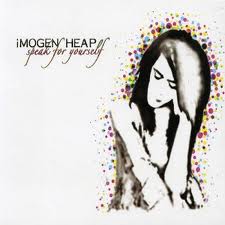
SOUNDTRACK: iMOGEN HEAP-Speak for Yourself (2005).
I really liked Heap’s first album i Megaphone, but I didn’t really think to much about her after that. Sometime last year I heard a track she was in with Frou Frou, which I liked. So I thought I’d get this album which was highly regarded.
The problem with it is that I have listened to it a bunch of times, often several times in a row and it really just never sticks with me. I keep relistening to see if it ever does but it’s just a kind of nebulous dancey pop. Heap has an interesting voice–she can hit major highs, but she can also do a raspy voice that is unusual and intriguing. But I suppose the problem is that there’s so much going on that she is effectively lost in the sound.
The standout track is “Hide and Seek” but that’s because her voice is manipulated by a vocoder, making her sound like a machine. It’s a very cool effect, especially when she hits a very high note, but it can’t really be a good sign that the most memorable track on the album is the one where you sound like a machine.
This is not to say that the album is bad–there are a number of interesting moments on it, unfortunately there aren’t a lot of great songs. When I was looking this disc up to see other comments about it, I see that it was very highly regarded in the dance genre. And maybe given those parameters I should revise somewhat as well. As dance music this is more interesting than your average four on the floor stuff. I can see how it led to the duet of Frou Frou. And yet, compared to i Megaphone, I fear that it’s a lot less exciting.
[READ: January 12, 2013] The Dangerous Animals Club
I don’t often read autobiographies or memoirs. I really never even look for them. But I was waiting online at the library and this book jumped out at me. I don’t really know why. The title is kind of interesting and catchy. And the author’s named seemed, if not familiar, then at least compelling in a very-long-and-Polish-or-Russian way. So I started flipping through it. And it sounded interesting.
But who the hell is Stephen Tobolowsky? Well, if you have seen just about any movie or TV show, you have seen him. He has been in a ton of things. He was in GroundhogDay, he was in Heroes, he is in Glee, he was in The Mindy Project briefly. Community? yup. The New Adventures of Old Christine? you bet. Deadwood for a lot of the show. That 70’s Show for one episode. He was in the unaired pilot of Buffy the Vampire Slayer. He was even in a 1976 movie called Keep My Grave Open!
SOUNDTRACK: THE FLAMING LIPS-“Smoke on the Water” (2012).
There’s a new Deep Purple tribute album coming out shortly (is this the year of tributes? what’s going on?). Anyway, the lineup isn’t all that inspired, but I was curious to see what the Flaming Lips would do with that song
As with their recent reinterpretation of Dark Side of the Moon, this cover is respectful and utterly disrespectful. Musically the song is pretty accurate. Well, the notes are the same. But the style is very different, kind of wahwahed delicate chords–no heavy bass or anything. But it’s the vocals that are the contentious point–he recites the entire song (which kind of works because it is a story) in a stilted, faux British accent.
The second verse has a very computerized voice singing an autotuned melody along with the recitation–sort of a harmony but not. This voice continues through to the chorus (which the main vocals also simply recite).
I appreciate the Flaming Lips’ approaches to popular songs, but this version renders a big loud song kind of anemic. Which is so weird because the last few Lips albums were so loud and bass-heavy. I listened twice, I probably don’t need to listen again.
So, this is yet another tribute I won’t be buying.
[READ: August 22, 2012] Don’t Get Too Comfortable
I’m already making good on my promise to read more David Rakoff. Indeed, as soon as I heard that he died, I put this book on hold at the library. The strange thing about this book is that I feel like I read parts of it already. I don’t feel like I read the whole book because some things were unfamiliar to me, and yet there was a strange feeling of déjà vu throughout the book. But I looked in the front of the book to see where these essays had appeared and I don’t read any of the magazines where they initially showed up. And while I like This American Life, I don’t really listen to it very often. So either I read this book seven years ago or these pieces are inspirations for other pieces I have read (which is possible–two or three articles in here reminded me of things that A.J .Jacobs has since done).
So this collection of essays takes place during the early 2000s, George W. Bush’s first term (not the happiest time to be a gay Canadian living in New York). But in addition to the first essay which is all about his quest for citizenship, it seems that Rakoff was now gainfully employed as a freelance writer. Most of these essays seem to have been requested for magazines–like they sought him out to write them. So his fame was clearly growing. And, again, like A.J. Jacobs, he seems to have been picked as a guinea pig for certain pieces. I don’t really know if this is a “genre” per se, I mean lots of un-knowledgeable people have gone into new experiences to write about them (insert inevitable David Foster Wallace reference here–but of course he wasn’t the first either). But Rakoff’s subjects in the last couple essays seem to be closer to what Wikipedia calls Jacob’s “stunt” journalism. (more…)
SOUNDTRACK: EXPLOSIONS IN THE SKY-Take Care, Take Care, Take Care (2011).
I found out about Explosions in the Sky because of the events of 9/11. Back when everyone was looking for albums to point fingers at in some kind of hysteria (that’s also how I found out about I am the World Trade Center who are not as exciting as Explosions…).
EITS make beautiful epic instrumental music (as well as the soundtrack for Friday Night Lights). They play music in a similar vein to Mogwai, but they take their epic instrumentals in a different direction. And this album is perhaps their most commercial to date (as commercial as you can be when you write 10 minute instrumentals). And while “commercial” is not usually an adjective that I give as praise, for this album it is indeed.
Take Care, Take Care Take Care is a terrific album. It ‘s not as visceral as past releases; rather, it seems like a more experienced band playing with their sound and tweaking it in subtle ways to make it less obviously dramatic but somehow more powerful.
On “Last Known Surroundings,” there are soaring guitars that give way to simple, pretty guitar riffs. Martial drums propel the songs forward, even if they lead to unexpected places. It’s soundtrack music that’s not background music.
Perhaps the biggest difference with this album and previous ones is that this album doesn’t quite live up to the band’s name. There’s no major explosive crescendos. There are noisy bits but they’re not climactic per se. “Human Qualities” slows to a quiet drum beat and while you’d expect to come out of that with a cacophonous explosion, it doesn’t. The explosion does come later, but only after it has worked up to it again.
“Trembling Hands” features “voices.” Or maybe just one voice. It’s on a loop that becomes more of a sound than a voice. The song is only 3 minutes long, but it’s an intense 3 minutes–more great drum work on this one.
“Be Comfortable, Creature” has a beautiful delicate guitar opening that drifts into a kind of solo. After 3 minutes it settles into the main riff, a winding guitar line that send you on a journey. “Postcard from 1952” is a great song. It begins as quiet intertwining guitars and slowly builds and builds into a gorgeous rocking conclusion. 7 minutes of steady growth with a nice epilogue at the end.
The final song, “Let Me Back In” also has kind of spooky voices that appears throughout the song (distorted and repeated). But you know this song is a winner from the get go (even if the opening chord structure is a bit like Duran Duran’s “Come Undone.”) It’s a slow builder, a cool, moody ten minute piece. When you get to the beautiful descending guitar riff that shoots out after about 2 minutes, it’s an ecstatic moment–air guitars are mandatory.
And let’s talk packaging. The album comes in a gate-fold type of cardboard. If you open it up all the way it can be folded into a little house (with windows and a door and a chimney). That’s pretty cool, guys.
If I have one compliant about the album it’s that the quiets are really quiet and he louds are really loud. That makes this a very difficult album to listen to say, at work, or basically anywhere where other people will be blown away by your speakers. The middle of “Human Qualities” for instance, is really quiet, you feel like you need to turn it up to hear the drum beat–there’s too much volume fiddling (listening in the car by yourself negates any reason for this complaint, of course).
Keep it up, guys.
More “controversy” from the band
[READ: September 10, 2011] New Yorker essays
Ten years ago, The New Yorker published several short essays by famous and (to me anyway) not so famous writers. They were all written directly in the aftermath of the attacks and they were moving and powerful. I was going to wait until today to re-read them and post about them, but for various reasons, I decided to do it on May 12.
Now, ten years later, The New Yorker has published several more essays by famous and (to me anyway) not so famous writers. I note that none of the authors are the same (that might have been interesting) although Zadie Smith does quote from John Updike’s piece of ten years ago.
The strange thing to me about these pieces is that ten years seems to have hindered the writers’ ability to focus on the incident and to talk about What It Means. In this collection of essays, we have a few that talk about an individual and how his life has changed since 9/11. These are pretty powerful, although it’s odd that they would talk about another person and not themselves. We have a couple of essays that talk about the writer him or herself, but these seem kind of unfocused. And then we have ones that talk about the state oft he world; honestly, what can you say about that.
It’s possible that I’m jaded or in a bad mood and that’s why I didn’t appreciate these essays. Or perhaps I’m just facing the futility of things.
This is not to say that I think that writing about 9/11 is easy (you’ll notice I’m not doing it). Indeed, I think talking about it in any kind of meaningful, non-strident, non-cliched way is nigh impossible.
But these writers do give it a try. And I am grateful for that. (more…)
SOUNDTRACK: RA RA RIOT-Live at the Black Cat, Washington DC, October 12, 2008 (2008).
I really like Ra Ra Riot’s album The Rhumb Line, and this concert is basically a showcase for that album. There’ s an interview at the end of the show (all downloadable from NPR), in which the band says that critics raved about their live show as much as their album.
I don’t really hear that the show is more energetic than the album (maybe visually they are wild), but it did sound fantastic. It’s amazing to hear a rock band that is dominated by strings–the cello and violin are often louder than the guitar (but not in a competing/drown you out kind of way, more of a strings do the melodies and the guitar adds bulk to the sound).
I always enjoy hearing a band that is grateful to their audience for showing up (this is most evident in young bands, who seem so much more genuine about their love of the audience) and Ra Ra Riot are certainly that . They seem genuinely surprised at the turn out, and they play a great set accordingly.
There are two songs that aren’t on the album here “A Manner to Act” and the encore “Everest.” They both feel like they came off the album, which bodes well for their second album, Orchard, which just came out in May. Ra Ra Riot also do a great cover of the obscure Kate Bush song “Suspended in Gaffa.” At the end of the show they tack on a cover of “Hounds of Love.” Lead singer Wesley Miles has a wonderfully strong voice and he can reach some pretty high notes–not soprano or anything like that, just strong enough to be able to pull off a Kate Bush cover.
This is a great show. And when you read about the tragedy they suffered just as they were starting to take off, their obsession with death may not be so surprising. I’m looking forward to Orchard.
[READ: 1995 and August 18, 2011] Microserfs
After reading Life After God and thinking about Microserfs, I looked up Coupland’s bibliography and saw that indeed Microserfs came next. And I was really excited to read it. I have recently watched the JPod TV show and I knew that JPod was a kind of follow-up to Microserfs, so I wanted to see how much of it rang true. And I’ve got to say that I really rather enjoyed this book.
While I was reading this, I started taking notes about what was happening in the book. Not the plot, which is fairly straightforward, but about the zeitgeisty elements in the book. And, since I’m a big fan of David Foster Wallace, I was also noting how many zeitgeisty things this book had in common with Infinite Jest. I’m thinking of tying it all together in a separate post, maybe next week. But I’ll mention a few things here.
My son also loved the cover of this book because it has a Lego dude on it and he has been really getting into Lego lately.
So Microserfs is the story of a bunch of underpaid, overworked coders who work for Microsoft. The book is written as the journal of Daniel Underwood (Coupland still hadn’t really branched out of the first person narrative style, but the journal does allow for some interesting insights). The story begins in Fall 1993. I felt compelled to look up some ancient history to see what was happening in the computer world circa 1993 just for context. In 1991, Apple released System 7. In 1993, Windows introduced Windows NT, Intel released the first Pentium chip, Myst was released and Wired magazine launched. In 1994, Al Gore coined the term Information Superhighway. Yahoo is created. The Netscape browser is introduced. So we’re still in computer infancy here. It’s pretty far-seeing of DC to write about this.
Daniel works at Microsoft with several friends. Daniel is a bug tester, Michael (who has an office, not a cube) is a coder, Todd (a bodybuilder) is a bug tester. There’s also Susan (smart and independent), Abe (secret millionaire) and Bug Barbecue (an old man–he’s like 35). The five of them live in a house on “campus.” There’s also Karla (a type A bossyboots who doesn’t like seeing time wasted) who works with them but lives up the street.
As the story opens, Michael has just received a flame email from Bill Gates himself and has locked himself in his office. This leads to a very funny scene and ongoing joke in which the office mates feed slide two-dimensional food under his door and he vows to eat only things that are flat. (more…)
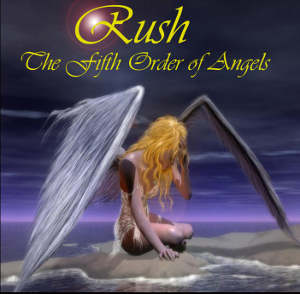
So the bootleg that I mentioned yesterday was in fact incomplete. On the Up the Downstair site, the track list includes “What You’re Doing” and “Garden Road.” When I wrote to the cool host of Up the Downstair, he said that these two songs were available on You Tube and that he’d try to find them and add them to the site.
So in the meantime, I got to listen to the song on YouTube. This is a song that the band wrote but which they never recorded (same is true for “Fancy Dancer”). I have to imagine that they wrote these songs for their second album (along with “In the End” which they kept) around the time that Neil Peart joined the band. Once they realized that Neil could write better lyrics, they scrapped these two heavy rockers. Both songs have great riffs, even if lyrically they’re pretty poor.
The song rocks pretty well, although the solo seems to have been put to better use in “Working Man.” I enjoy how the song breaks for the shouts of the Garden Road chorus (kind of like “Bad Boy”–perhaps it was a “thing” for them). I rather like this song, and I think I like it better than a couple of the songs on Rush.
Check it out.
Maybe it’s time to release these old chestnuts for the fans?
[READ: August 10, 2011] Life After God
After the success of Shampoo Planet, Douglas Coupland wrote several short books (which were really short stories). They were compiled in Life After God. To me this book also stands out as another odd one from DC, because it is very tiny. Not in length, but in height. It’s a small book, about the size of a mass market paperback. But it makes sense that it was made this short because it is written with lots of short paragraphs that lead to page breaks (kind of like Vonnegut).
For instance, the first story contains at most two paragraphs per “chapter” about–16 lines of text and then a page break. At the top of each page is a drawing from DC himself which illustrates to a small degree the information on the page. It leads to incredibly fast reading and even though the book is 360 pages, you can polish it off pretty quickly.
But what’s it about? Well, mostly the stories seem autobiographical (even though they are classified as fiction. And actually, I don’t know anything about DC’s personal life so I don’t know if they are based on anything real, although I do know he doesn’t have any kids, so those can’t be true at any rate). There are eight stories. They are all told from the first person and are more or less directed at “you.” They all seem to deal with existential crises of some sort. They are honest and emotional. To my ear, sometimes they seem a little forced, maybe it’s contextual, but it’s hard to write this kind of massively introspective piece and have it sound “real.” (But maybe I’m not very introspective about things like this myself). (more…)
 SOUNDTRACK: PALE KING-“An Airing” (2013).
 Nope, I never heard of the musician Pale King until I searched for a song to put here.










 I Just Read About That...